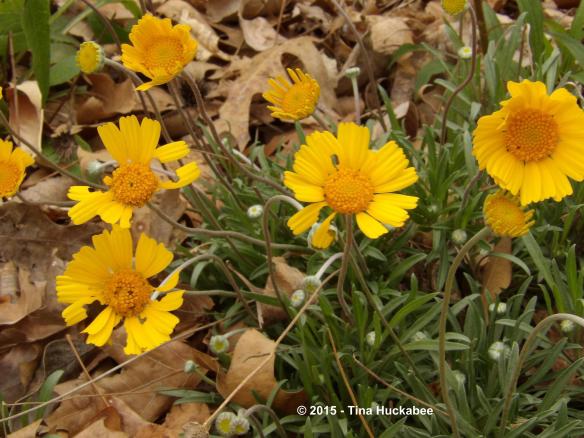
All hail, indeed!! For those gardeners living in Texas and northwestward states to Colorado, as well as southward into Mexico, it’s a tough proposition to find a longer blooming, better-behaved, cheery daisy to place in the garden than the perennial Hymenoxys, Tetraneuris scaposa.
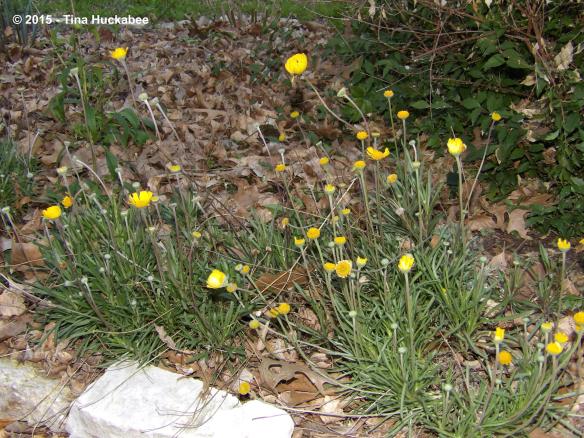
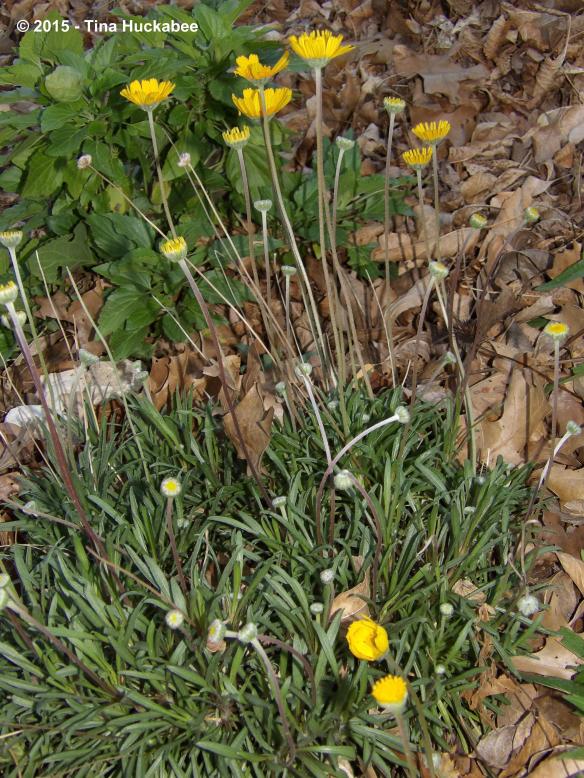
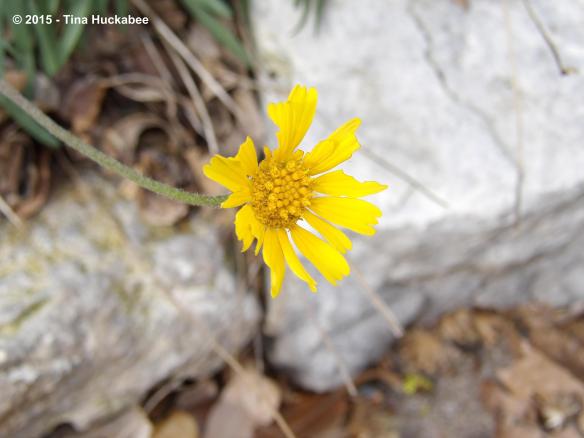
Commonly called Four-nerve Daisy (because of the veins inside the petals, which the Lady Bird Johnson Wildflower Center describes as “dark purple,” but look green to me),
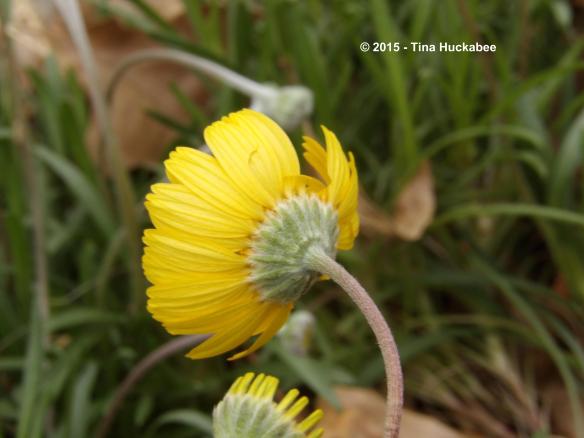 …it’s also known as Stemmy Four-nerve Daisy, Yellow Daisy, and Bitterweed. It’s a ray of sunshine, year-round, in the home garden or along the highway.
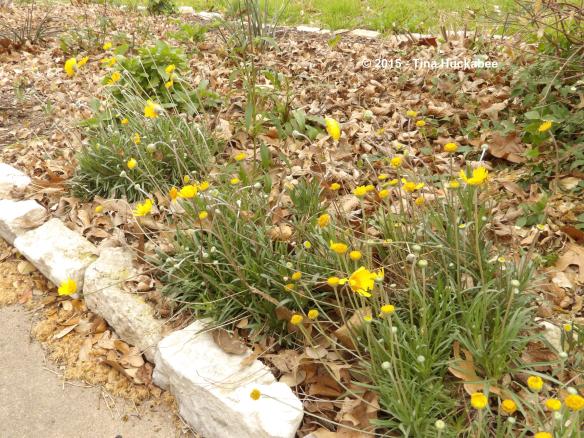
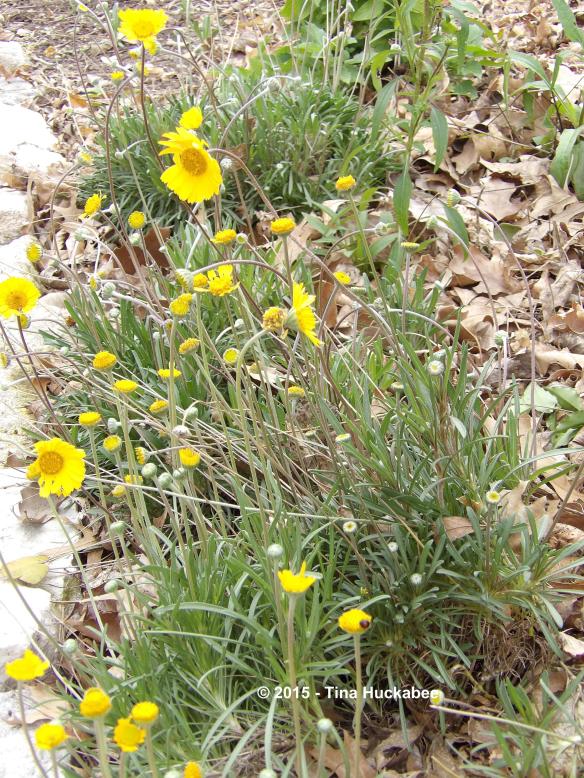
I first planted Hymenoxys over 20 years ago in a spot in my backyard when I began the conversion from a high-maintenance lawn to a low-maintenance, native plants garden. The one I planted didn’t last long and that was because I planted it in a shady spot. I’ve made lots of mistakes like that over the years and (hopefully) have learned from those mistakes. That’s the best garden education there is–screw up, learn, redo correctly. Or at least redo; some of us take longer to learn than others of us. Over the years, I was enamored and distracted with other aster perennials and never replanted Hymenoxys in my gardens. When I designed the long, narrow Driveway Garden in spring 2014, I purchased and planted three Hymenoxys daisies. I knew they would be great additions to this garden,
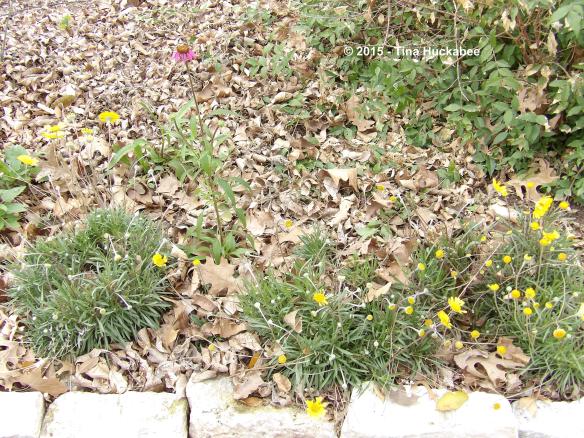
…and so they are. These sweet, dancing-in-the-breezes daisies have bloomed non-stop since being popped in the ground a year ago.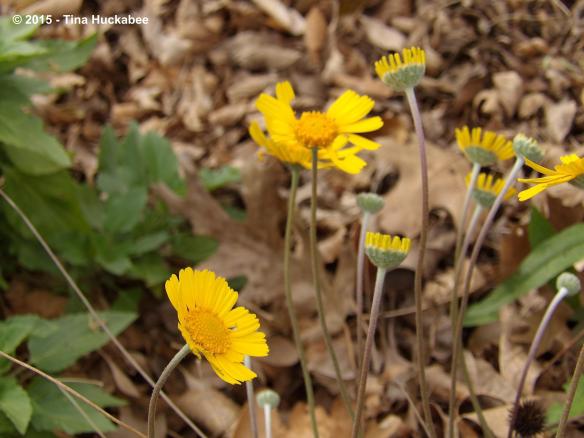
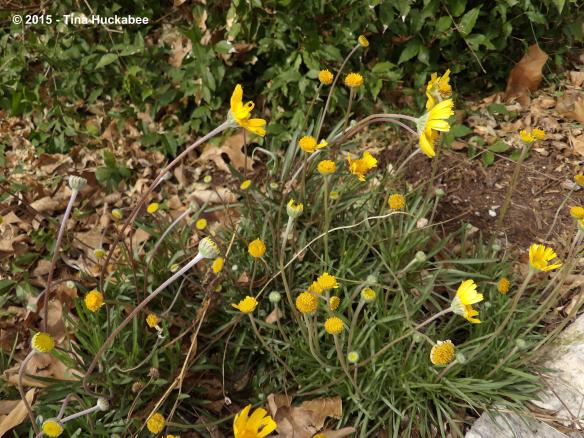
Borne from an evergreen clump of slender grey-green foliage,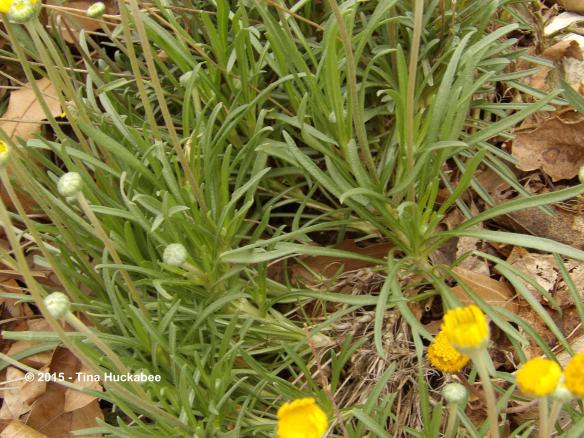
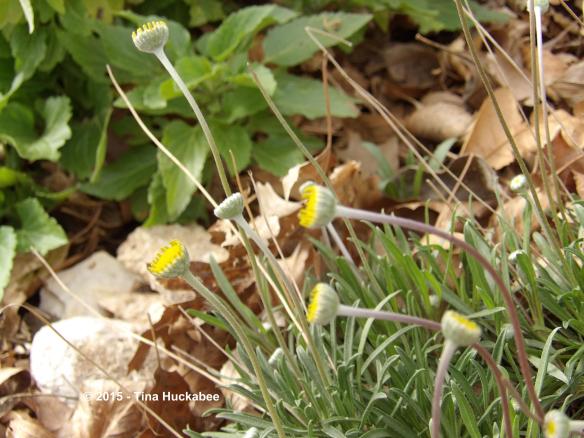
…the leafless stems, the ‘scape’ of scaposa, rise about 6-8 inches, topped by a single daisy. The stems show a slightly purple tinge (which I do see as purple),
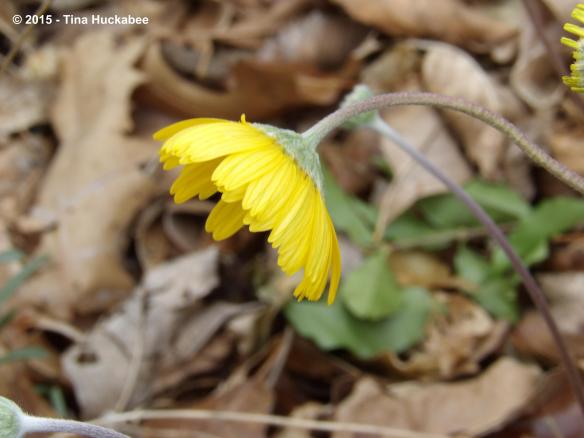
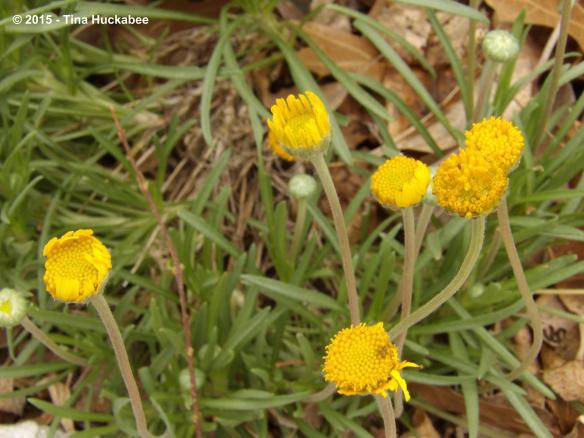
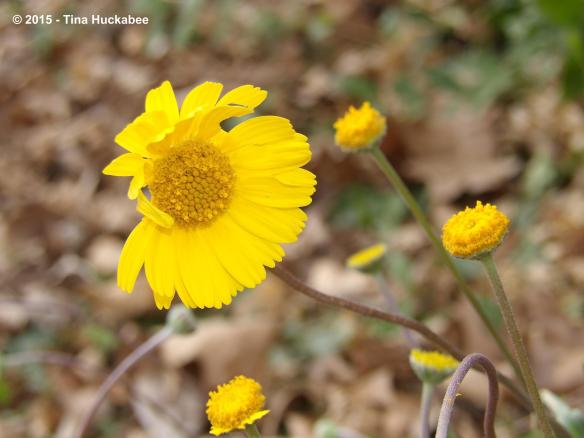
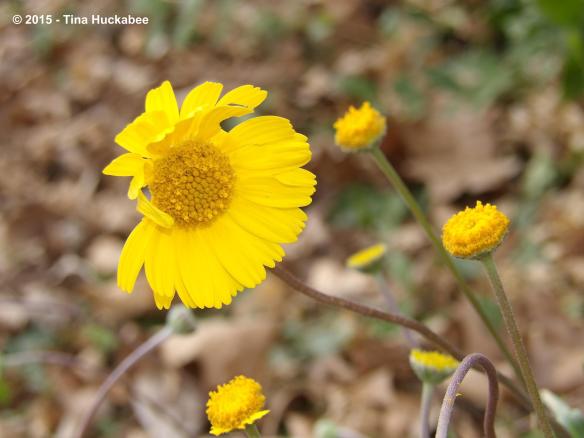
….and in all phases of flower development, the blooms are attractive.
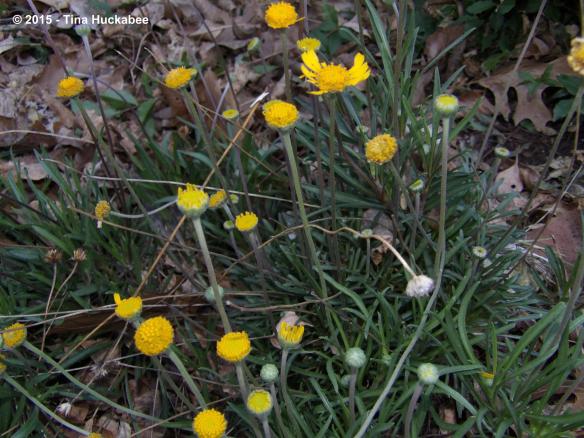
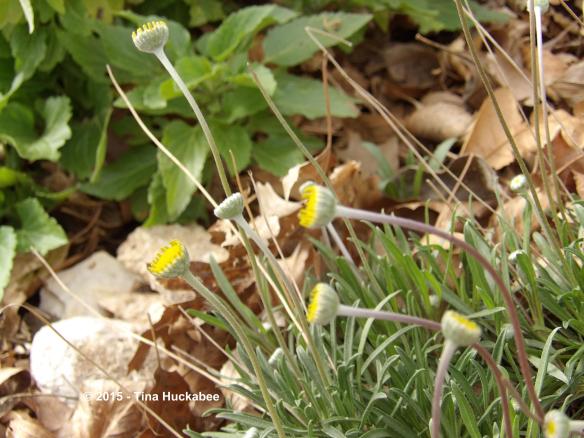
The petals are bright yellow and each ends in three lobes.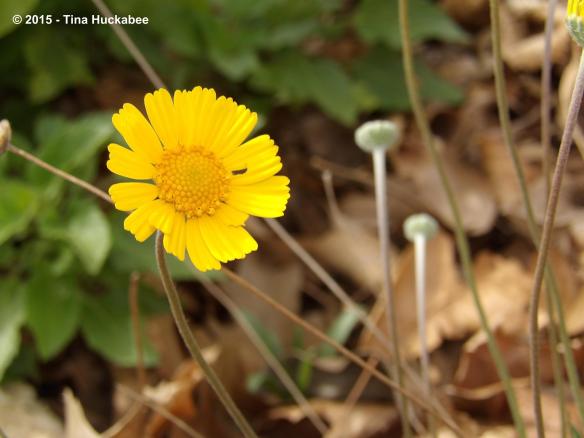
Hymenoxys is a perennial that works well in many styles of gardens, including sparse rock/succulent gardens and lush perennial beds. Hymenoxys is a small plant, so it’s best placed in the front of a bed, rather than behind something that will tower or flop over it. That’s one of the reasons I remembered Hymenoxys for my Driveway Garden–it’s very tidy and doesn’t grow huge like so many perennial shrubs. It fits well in a narrow spot.
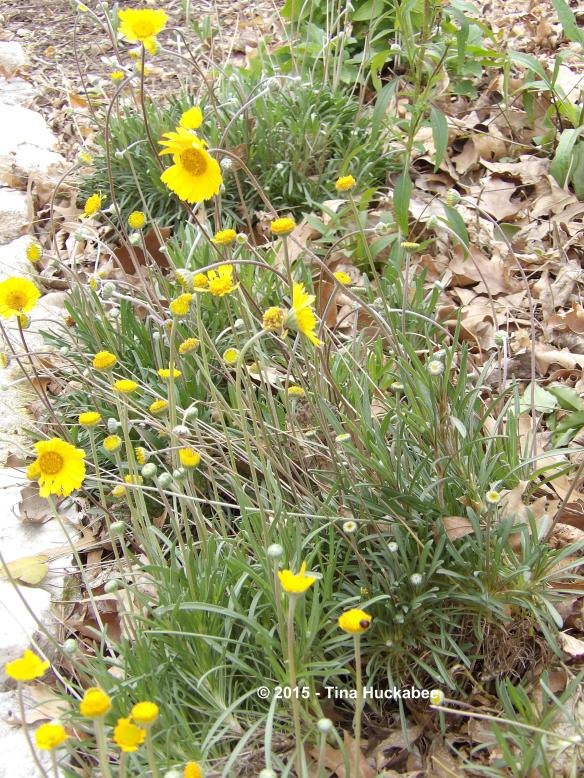
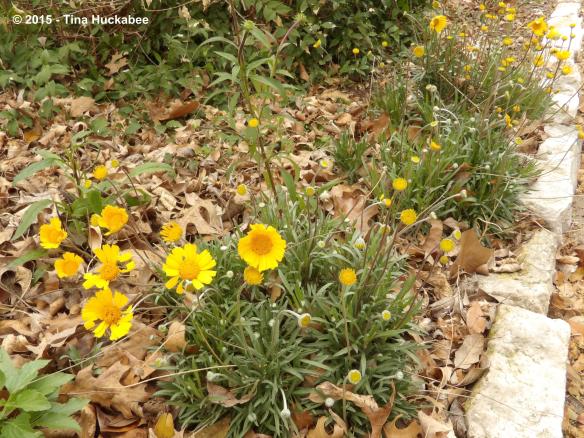
It will seed out prolifically if planted in good soil. I don’t view that as a bad thing, though I’m sure I’ll eventually have to toss some seedlings into the compost because I won’t have any other spot in my gardens to plant the new additions. This past fall, I transplanted some seedlings from the mother plants,
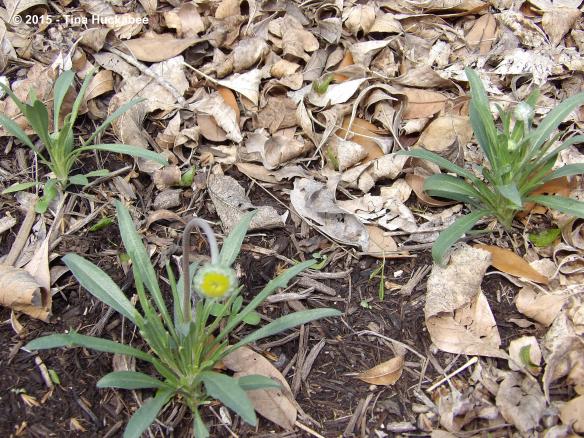
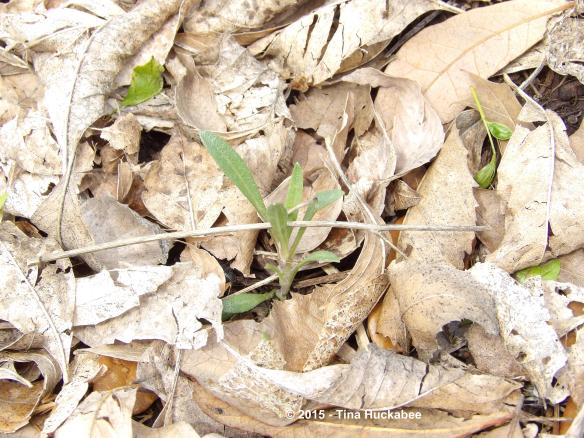 …and they’ve flourished. Of course they have.
My patch of Hymenoxys bloomed all winter and that’s another great quality about this plant, its remarkably long bloom time.
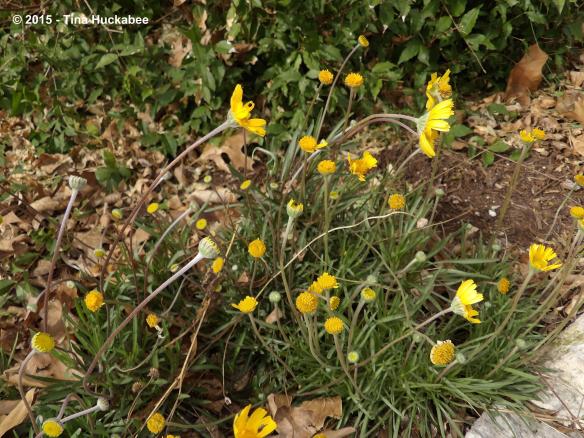
Hymenoxys is tolerant of a variety of soil types and is heat and drought resistant during our long summers. The flowers attract pollinators–I’ve seen bees and butterflies at mine. Additionally, drum roll please, Hymenoxys is highly deer resistant.
Wow! The perfect plant!
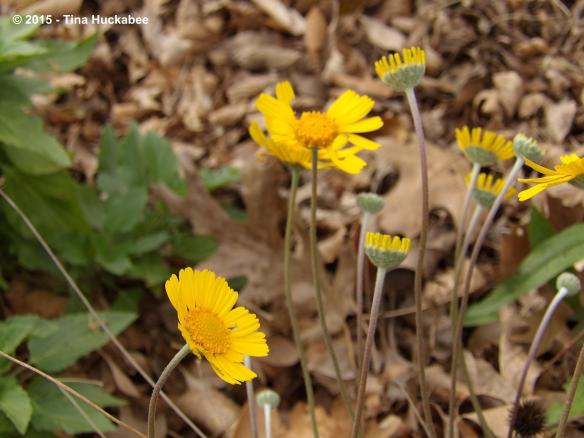

Unless you’re not fond of pretty yellow flowers!



 My Gardener Says...