It’s Fall, Y’all

Letting you know that it’s fall in Texas–thus, the y’all, y’all.  A conjunction of you + all, and common in the vernacular of the American South, it’s a friendly and practical  term for inclusion and invitation to a conversation.  This conversation is about the beginning of our second blooming season, so-named “Autumn” or “Fall” in most of the Northern Hemisphere. Here in Texas?  We usually refer to it as, I’m so glad summer’s over!!

While in most places plants are beginning the decline of growth and production in anticipation of winter, many of our tough customers are readying for their second spring. The days still reach into the low 90’s F, but nights and mornings are cool and lovely, and even the afternoon warmth feels different from the summer heat.  Or so I tell myself. Human rationalizations aside, with a smidge of rain and gentler temperatures becoming normative, every Texas gardener eagerly awaits the garden’s emergence from summer’s dormancy.

It’s about time!

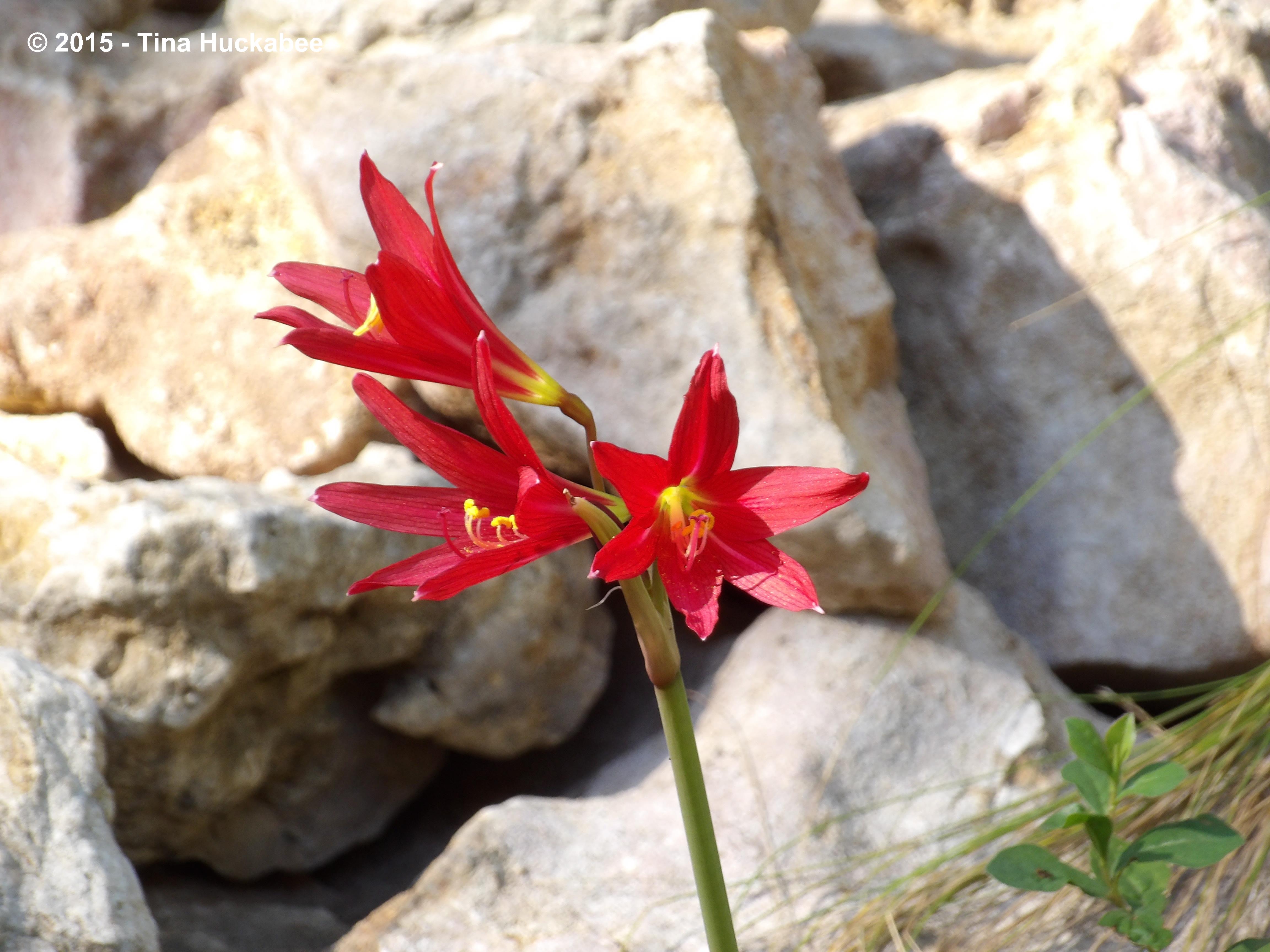
Native to Argentina but naturalized throughout much of Texas, Oxblood  or Schoolhouse Lily,  Rhodophiala bifida, in my garden have unfolded in a couple of waves this fall.

IMGP1078.new

IMGP1081.new

The stratification of blooming time has been a nice change.  Usually these individual bulbs jut out of the ground, stalk with buds, then blooms atop, bursting open with showy flowers, all with a few days of one another.  Oxblood fade away until the next September, leaving only foliage as a reminder–and not even that remains after winter.

And there’s a romance in the garden, too, this early fall.
IMGP1079.new

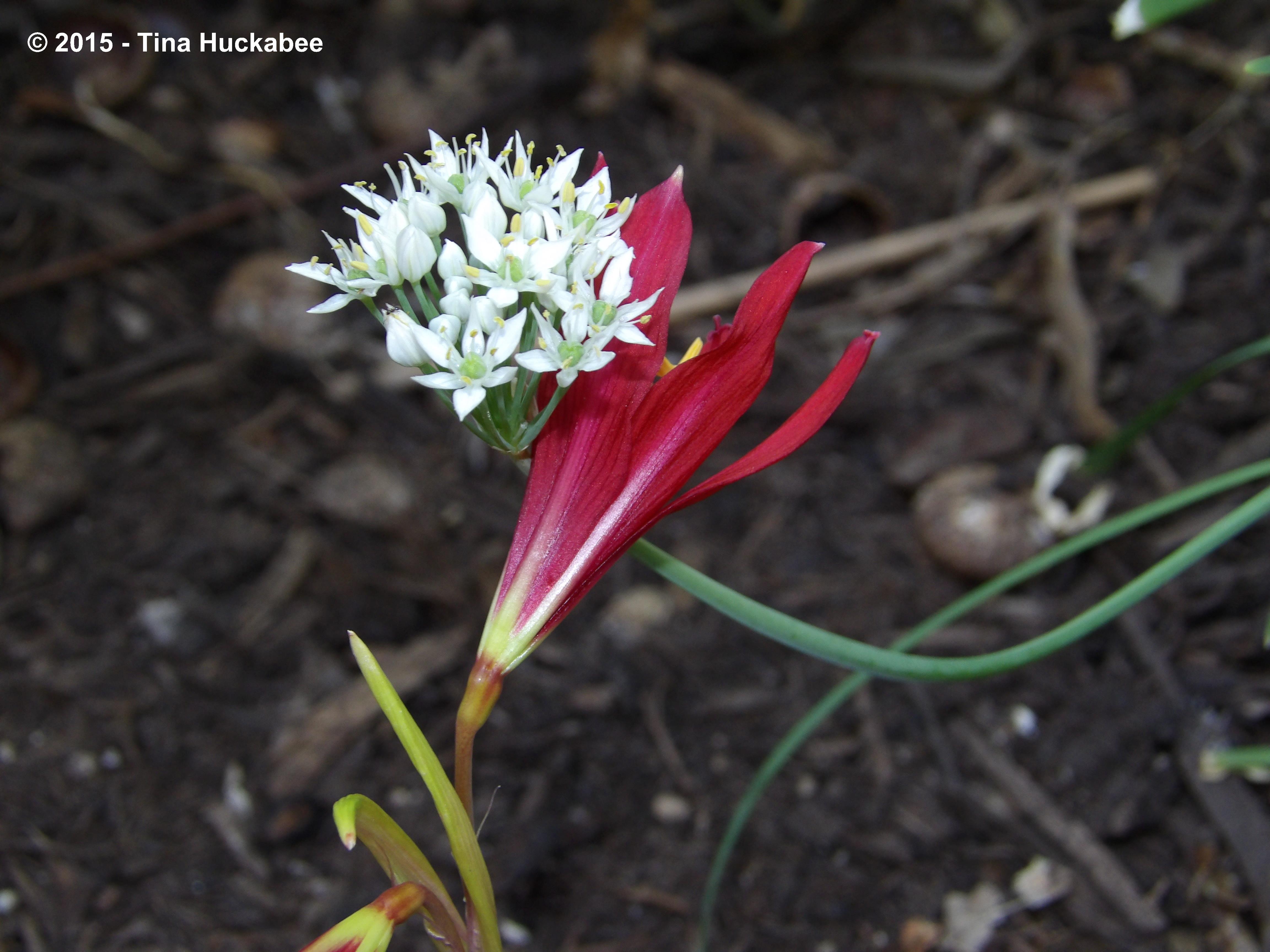
Hugs between this extrovert Oxblood and a reserved Garlic Chive, Allium tuberosum–I guess it’s true that opposites attract.

Another Garlic Chive waits alone, early in the morning,  for honeybee suitors.

IMGP1800.new

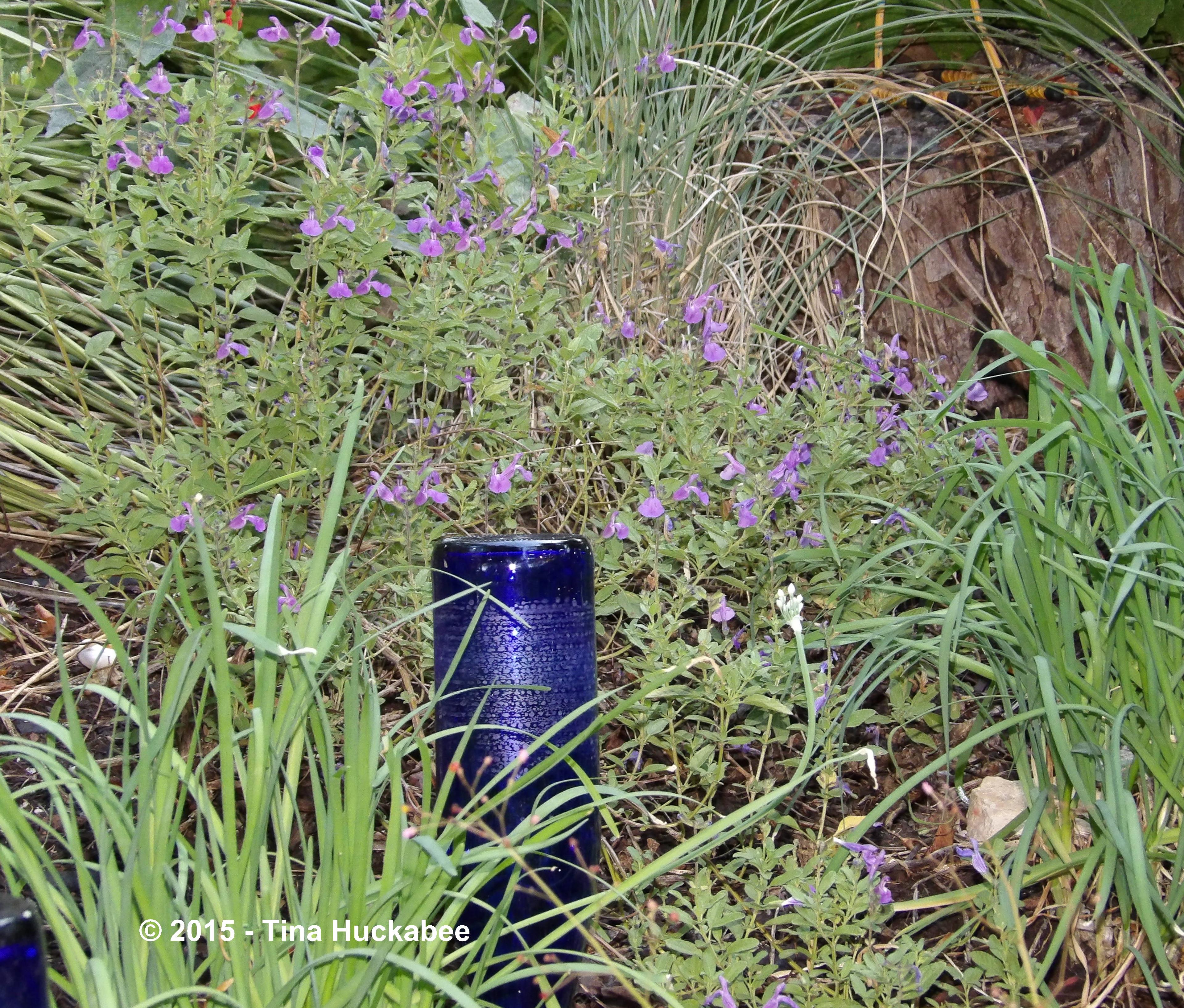
A new-ish bloomer for me is this purple grape juice colored Autumn Sage, Salvia greggii x Salvia microphylla.
IMGP1677_cropped_3839x3268..new

I purchased three plants from a locally owned nursery well over a year ago and am finally seeing clusters of blooms, though there were a smattering throughout summer.   The story told is that one of the employees of the nursery spied the mother plant, un-named and un-tagged,  at a big box store.  The plant was purchased, cuttings were taking, and now the big-box plant descendants are sold from time-to-time at that nursery, usually during summer.   It’s an attractive purple salvia, water-wise and tough, and beloved by my honey and native bees.

IMGP1799.new

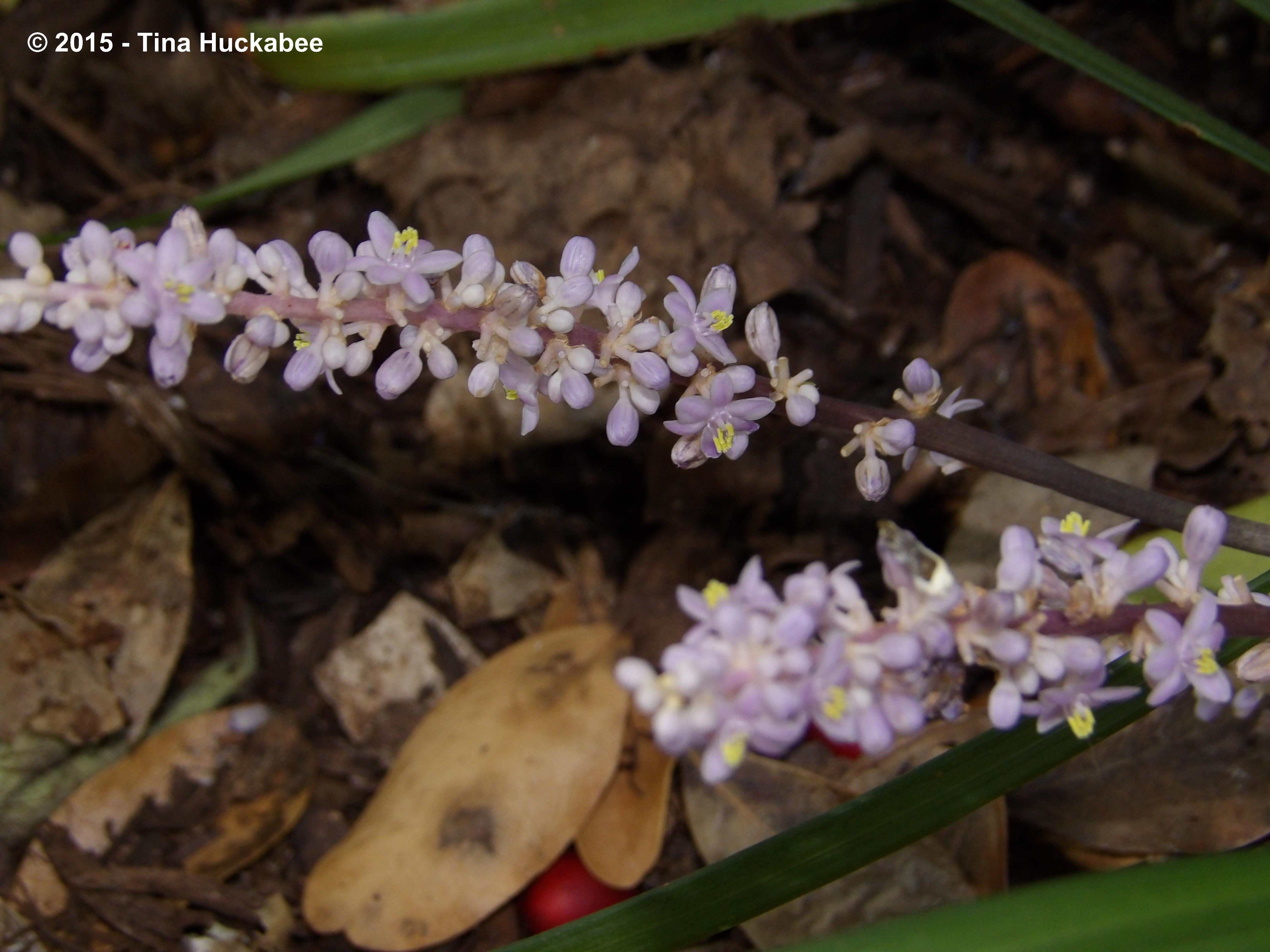
Stalking a honeybee as she worked, partially hidden in the grassy foliage of a Giant Liriope,  Liriope muscari  ‘Evergreen Giant’, I snapped shots of the pretty lavender bloom spikes.  If you look closely, you can see a little bee butt.

IMGP1681.new

These ornamental and drought-tolerant grasses don’t bloom often, though they are very welcomed when they do, usually in early fall.
IMGP1683.new

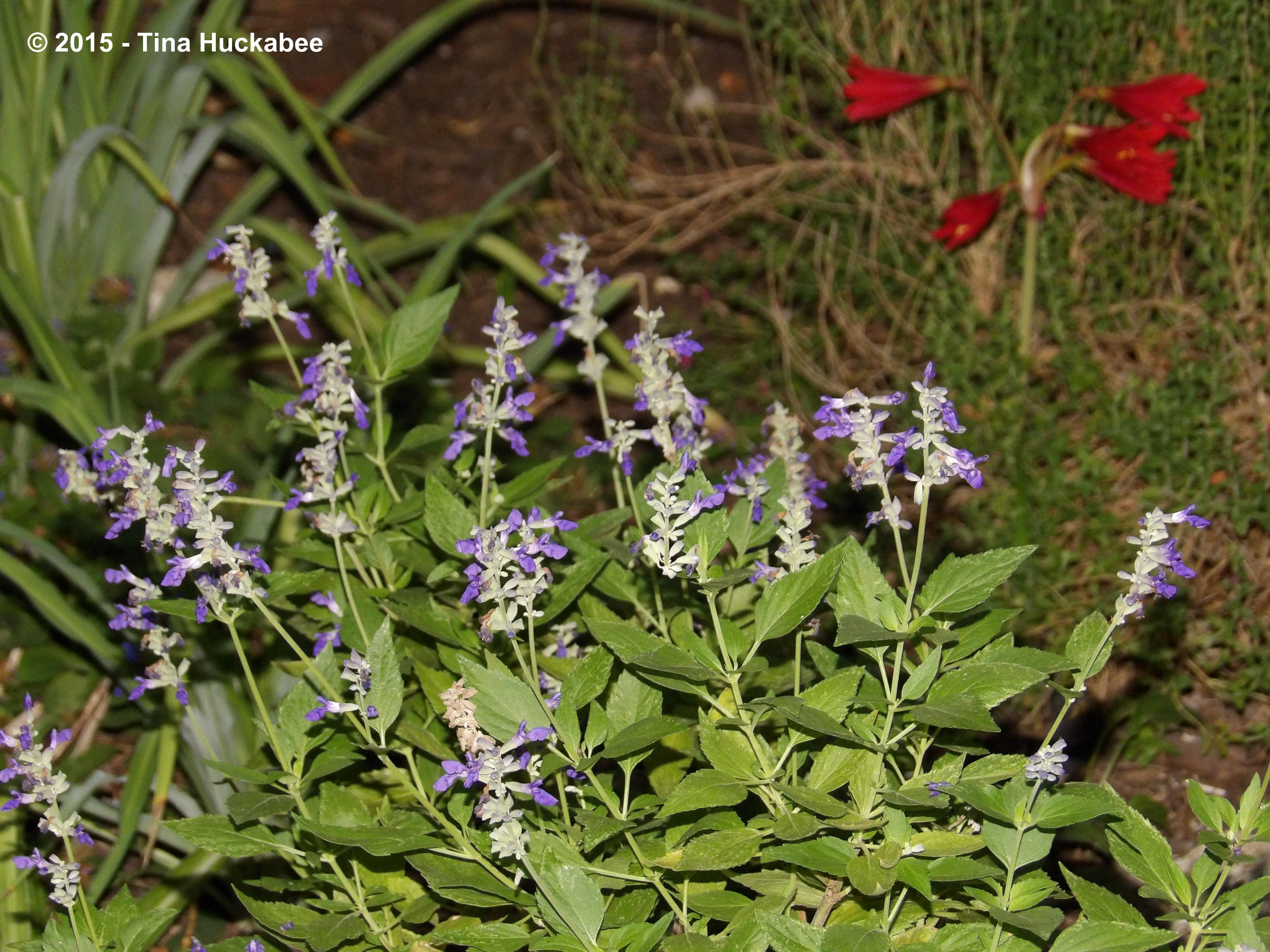
In late July I pruned the bountiful Henry Duelberg Sage, Salvia farinacea, ‘Henry Duelberg’, in preparation for fall blooms.  This beautiful native perennial is an excellent food source for wildlife–pollinators and seed-eaters–and provides a great fall (and spring/summer) flower show for me.

IMGP1694.new

IMGP1808.new

That show has begun and will not disappoint–either the pollinators or the gardener.


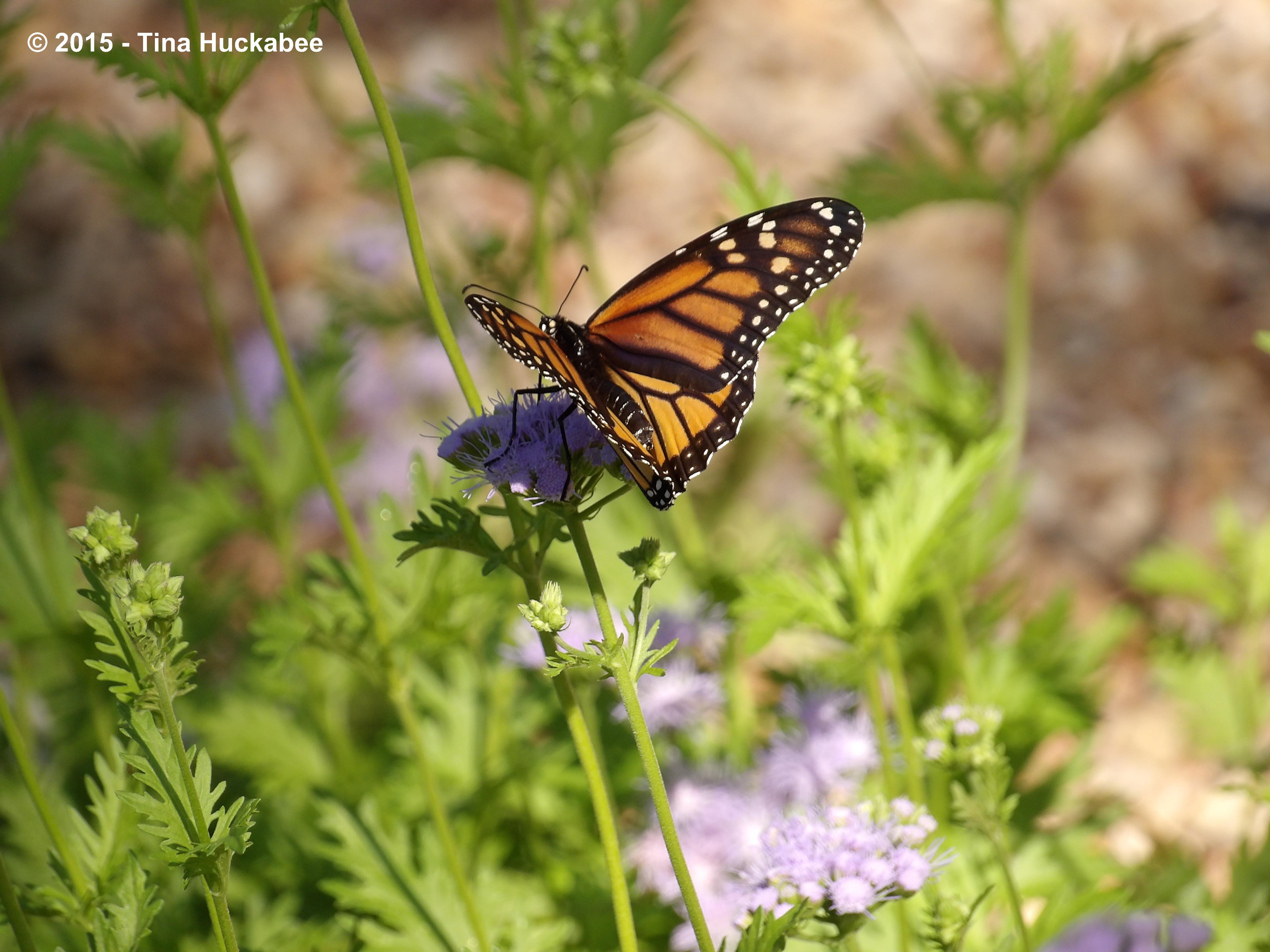
‘Henry’ is nice, planted in conjunction with the open-for-nectaring business, Gregg’s Mistflower, Conoclinium greggii, blooming just behind.

IMGP1810.new

I think this migrating Monarch butterfly,
IMGP1860.new

..and pollen-gathering, nectar-sipping honeybee,

IMGP1874.new

…would readily agree–huzzah for the fall bloomers!

The white and red Tropical Sage, Salvia coccinea, have blossomed for the past month or so, even before the moderate cooling.

IMGP1819.new


Mexican Butterfly Vine,  Mascagnia macroptera, are showcasing cheery yellow blooms,

IMGP1783.new

…and a few “butterfly” seedpods.

IMGP1867.new


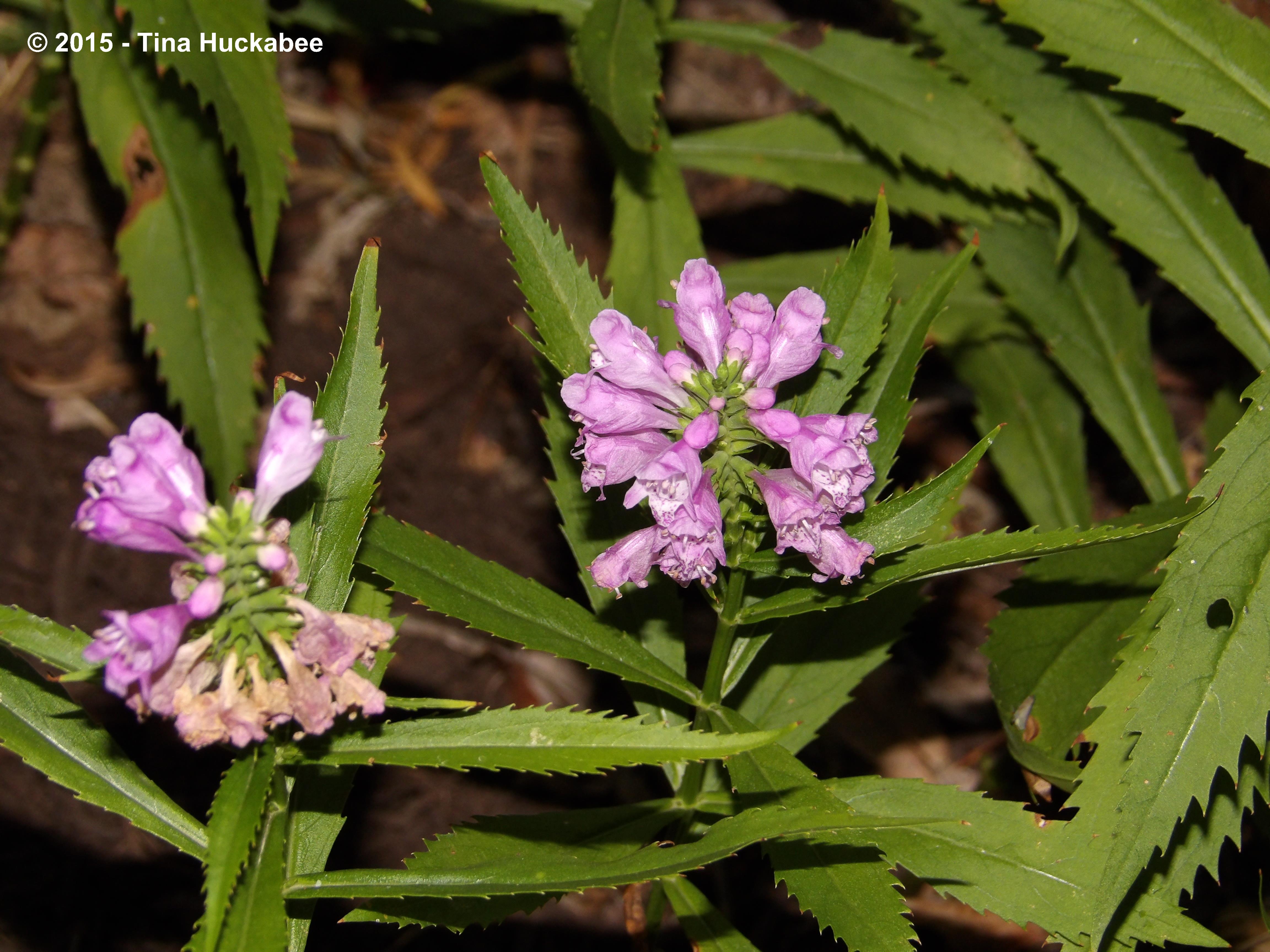
Fall Obedient, Physostegia virginiana, is a re-introduced perennial for me–I grew it many years ago.
IMGP1831.new

I’m happy to host this charming bloomer and tough native again.  How did I go so long without it??

Frostweed, Verbesina virginica,

IMGP1792_cropped_3531x3148..new

…Goldeneye, Viguiera dentata,

IMGP1793.new

IMGP1833.new

IMGP1830.new

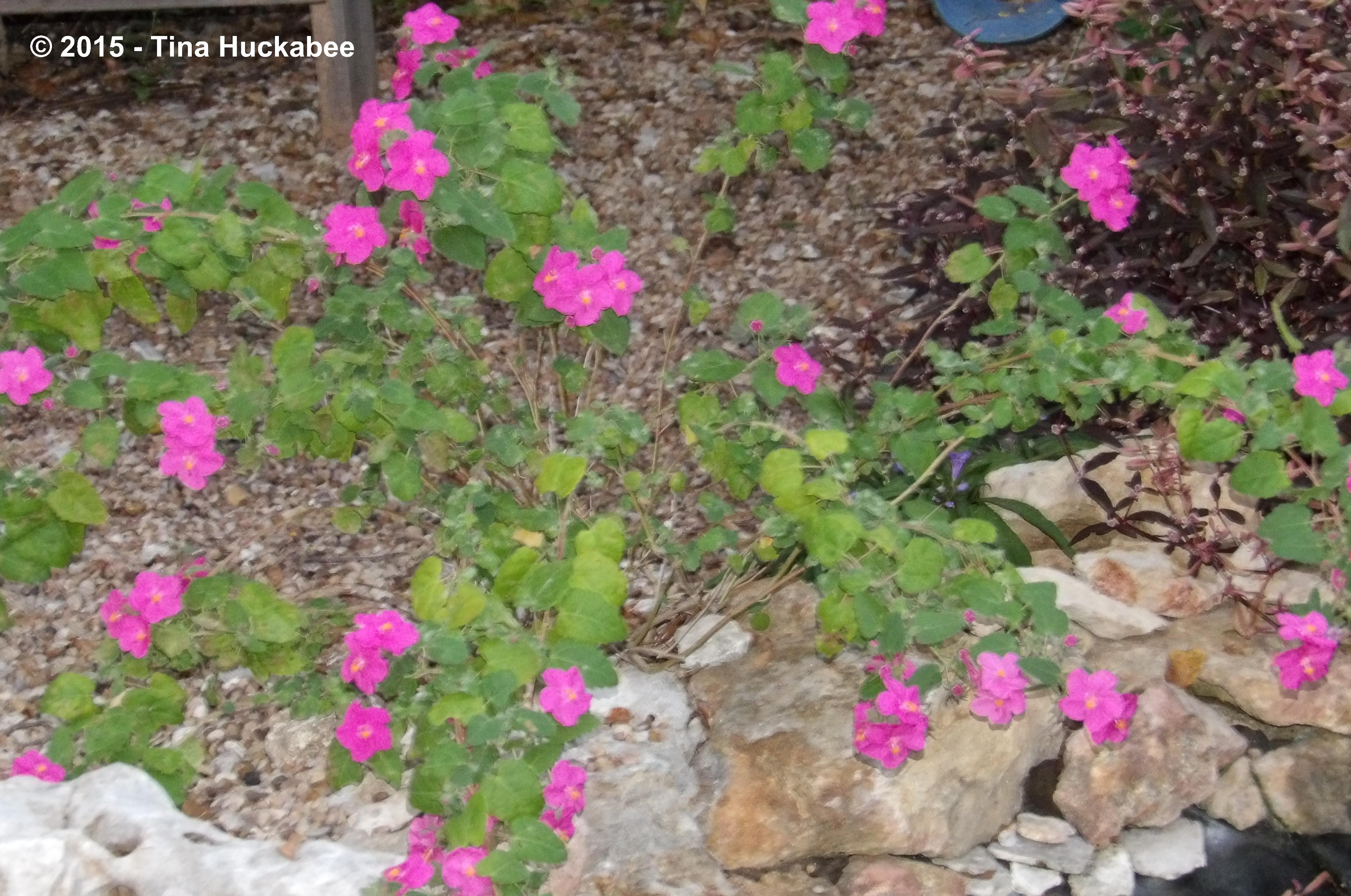
…and Rock Rose, Pavonia lasiopetala, are full-flush with fall flowers.
IMGP1795_cropped_4466x2963..new

The Rock Rose blooms crinkle a wee bit against the afternoon heat, but are staying open-ish.  That’s a definite change from the summer xeric practice of shuttering the petals by mid-afternoon.

IMGP1872.new


Zexmenia,  Wedelia acapulcensis var. hispida, are also back in top form.

IMGP1796.new

IMGP1846.new

IMGP1844.new

All of these perennials are ready for visits from pollinators, and later for the seed-munching warblers, wrens and finches.

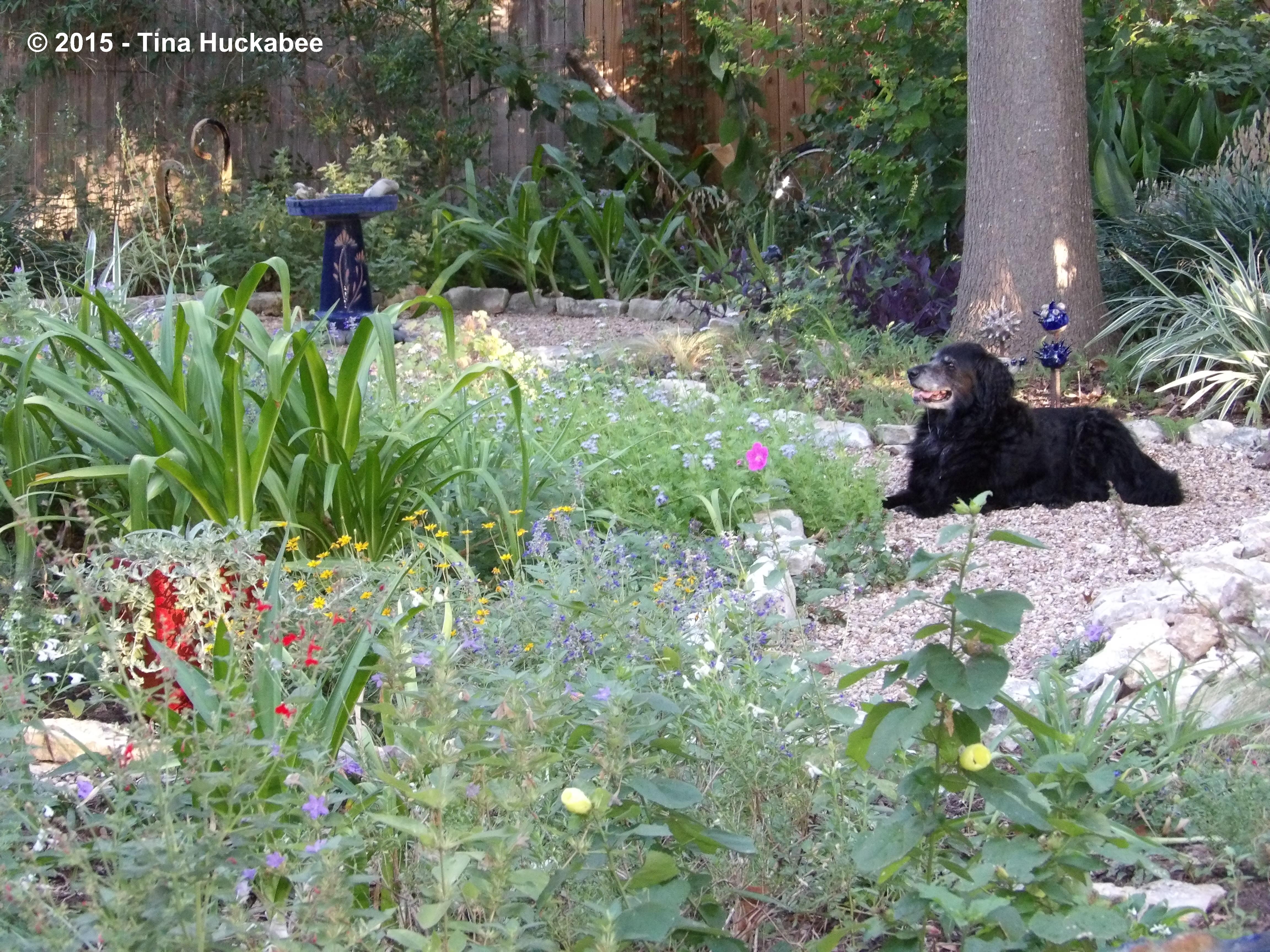
And my good friend,  sweet Asher-the-Dog?  He’s happy to rest on the cool pebbles, enjoying an early fall Texas morning.
IMGP1859.new

Happy Autumn, y’all!


Hummingbird Horseplay

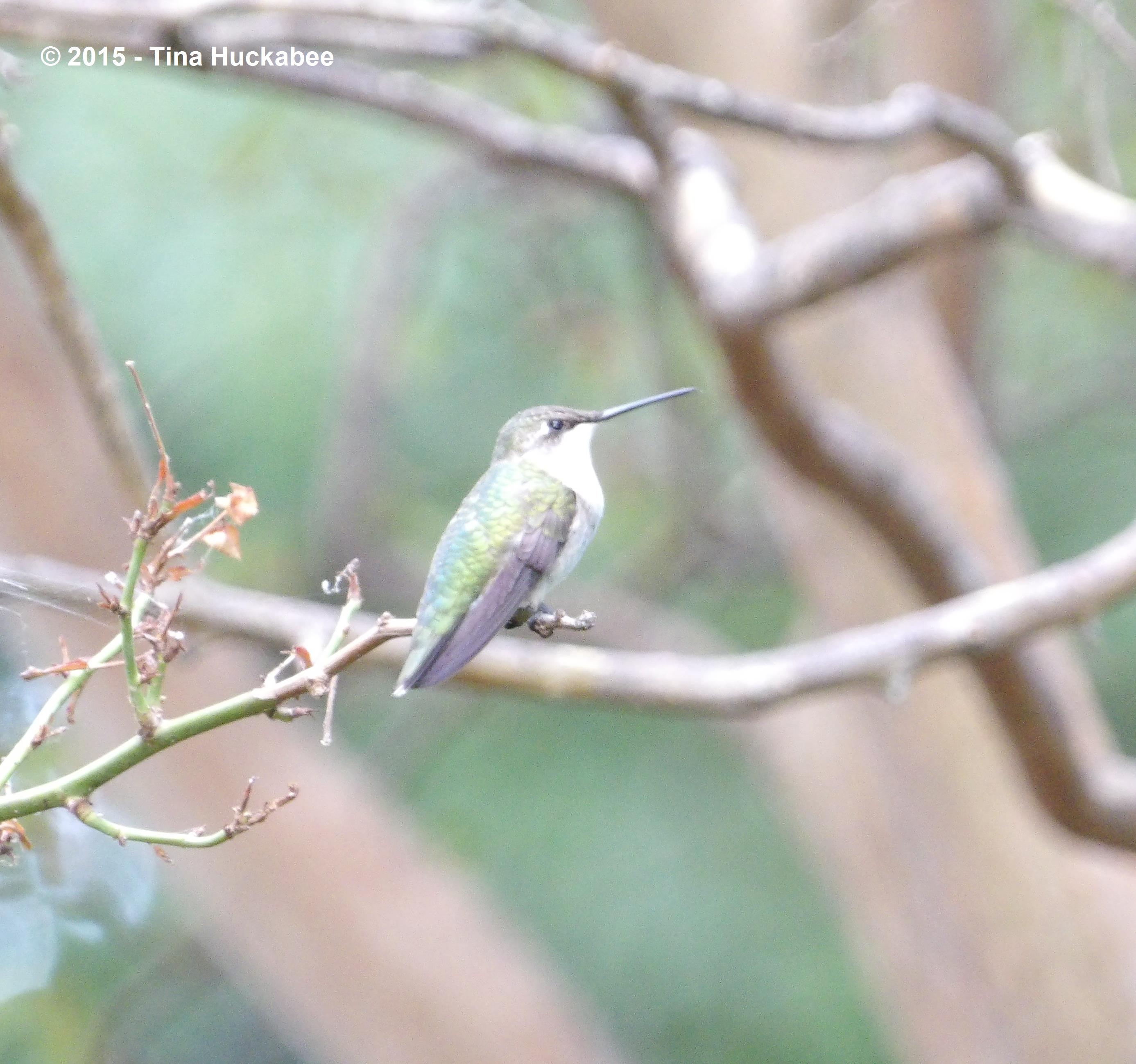
Hummingbird wars–that’s what I call the zooming, zipping, and general territory defending that the teensy winged wonders engage in, especially toward the end of their time here in Central Texas.  Hummingbirds are now preparing for their fall migration (some have already left), and their wintering in Mexico and Central America.  This summer, I’ve observed both a male and female Black-chinned Hummingbird, Archilochus alexandri, in my garden, though I was never able to get clear captures of either.  Here,

IMGP0190_cropped_2774x2599..new

IMGP0197_cropped_3682x2898..new

…a female Ruby-throated Hummingbird, Archilochus colubris, rests while surveying her territory, also known as my back garden.  The literature about the Ruby-throated suggests that the male is the main aggressor, defending his territory and food sources with great vim and vigor, but I’ve noticed that both genders appear enthusiastically antagonistic to encroachments by critters, especially when those critters are other hummingbirds. Though it isn’t always other hummers that are chased;  in July I witnessed a female chase a Carolina Chickadee around the garden–that was a hoot!

I employ in a bit of eye-rolling when I hear people exclaim how “mean” hummingbirds are, as if human beings can pass judgement on any other creature in the nastiness quotient.  I usually respond to the hummingbirds-are-mean comments with a you’d be mean too, if you were tiny and vulnerable, traveled alone for hundreds to thousands of miles, back and forth, attempting to locate enough food to survive and thrive while doing so.  The hummingbird’s migration is a feat that requires a certain level of courage and I’m certainly not going to pass judgement on any critter with that kind of chutzpah.

This is the same (?) or perhaps another, female Ruby-throated enjoying a quick junk-food snack of sugar syrup.

M0061343_cropped_1440x1564..new

I haven’t hung a hummingbird feeder for quite a few years, but bought one this year in a weak moment.  I grow lots of plants that hummers love:  Turk’s Cap, Malvaviscus arboreus,  is a huge favorite,

M0010689_cropped_1699x1698..new

…but they also love Yellow Bells, Tecoma stans, as well as most plants in the salvia family.  But when these adorable birds are feeding, they’re often far across the garden and not easily seen as they move about the shrubs and around the limbs of plants.  For purely selfish reasons, I hung a feeder on the back patio cover to better observe and enjoy their visits.  They chase one another from the feeder, buzzing past the astonished and thrilled gardener.  Hummers also demonstrate possessiveness with their favorite plants, too. Throughout August and into September, one male Ruby-throat claimed three Turk’s Cap shrubs in my back garden as HIS!  He spent lots of calories defending his particular nectar-loaded buffet.

To augment their liquid diet with protein, hummingbirds eat a variety of insects like mosquitoes (not nearly enough, if you ask me), flies and even aphids, which  are plucked off of plants.

The Ruby-throated is so named for the brilliant red feathers adorning the throat of the male of the species.   This male Ruby-throated Hummingbird, rested in my Desert Willow, Chilopsis linearis,

M0101420_cropped_1667x1310..new

…but wasn’t situated quite right for the show of scarlet feathers.  At off angles, the feathers appear rusty-brown to dull red.  After this photo was taken the bird flew away from the tree and toward me in hot pursuit of another hummer which I didn’t see at first. That ruby-red throat came directly at me, in brilliant, flashing color. You’ll  have to take my word for it because I wasn’t quick enough with the camera to capture a bird flying that fast.

Bummer.

As cool fronts move through Central Texas over the next few weeks, the remaining hummingbirds will wing their way south, surfing blustery winds.  I’ve notice fewer hummingbird antics this past week; Mr.That-Turk’s-Cap-is-mine-Mine-MINE!!  is no longer around and I think  one or two of the female visitors are gone. There are the occasional hummers who overwinter here, but mostly they reside in sunny Mexico until spring migration northward.  They’ll be back in my garden next spring for their courting, during summer for raising chicks, and in early autumn, careening around the garden, chasing each other and providing entertainment for this gardener and backyard birder.

And since I think the hummingbirds are looking good in my garden, I’m joining with Gillian at Country Garden UK and her new Looking Good in the Garden meme, which will be a regular Friday feature.   Pop on over to read about what’s looking good in her garden, as well as other gardens.

Wildlife Wednesday, September 2015

It seems that August was mostly about the insects in my gardens, though a sprinkling of birds and spiders and lizards added a bit of spice to things. Welcome to Wildlife Wednesday, marked each month on the first Wednesday in observance and celebration of the wonderful wild creatures that we share our world with and who are necessary for gardens to be.

My good camera has spent this past month at the camera hospital, with a full recovery predicted.  No matter, I took decent photos of most things–plants and critters, with a reliable, but limited, point-n-shoot camera.

I’m flustered when birds don’t perch still and pose nicely for me.  With the good camera, shots are crisp and clear, birds flitting and flying notwithstanding. With the point-n-shoot, bird photos are never quite what I see in real life. Nevertheless, there are lots of birds in the late summer garden and a few presentable photos in which to profile them. The birds of August in Austin are the the usual suspects–Grackles, European House Sparrows, doves of various sorts, hummingbirds, Blue Jays, and Northern Cardinals, Cardinalis cardinalis, like this awkward juvenile male.

P1070663.new

Doesn’t he look like a typical teenager, pretending to be cool and looking around to see if anyone notices him, but underneath his splotchiness, just so terribly unsure of himself?   He can’t decide if he’s ready to take on adult responsibilities and the blasting, brilliant red that is his namesake, or if he’d rather be safe, with blander coloration, blending into the background as he prepares to make his way in the big, bad world.  Personally, I look forward to his adult suit, to his attracting a partner, and to the next generation of scarlet and mottled visitors to my garden.

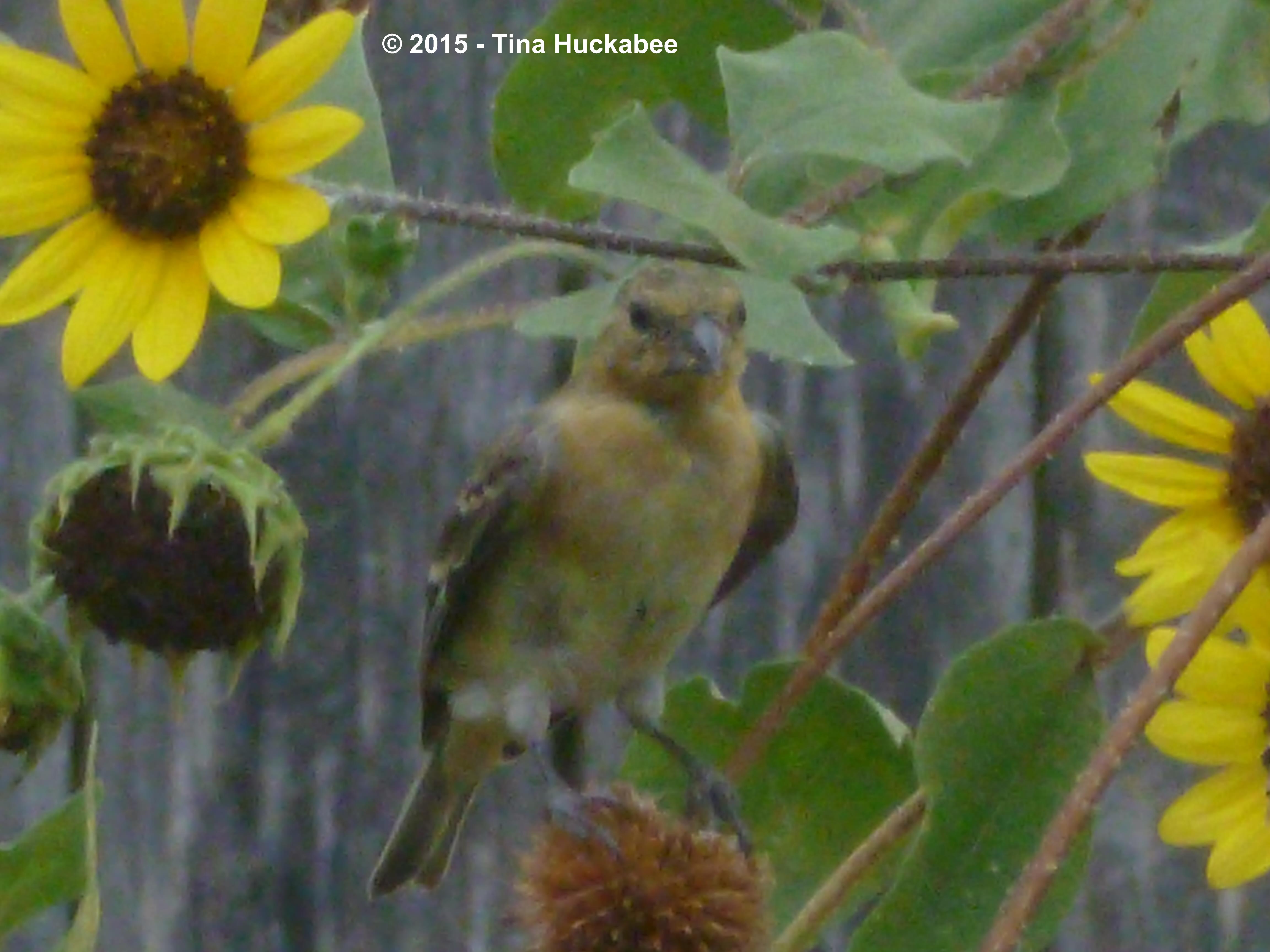
Lesser Goldfinches, Spinus psaltria, girls and boys alike, continued to enjoy the long-lasting sunflower seeds.

P1070619.new

P1070591.new

P1070629.new

And also, the water provided during this hottest month of the year.

P1070667.new

This guy,

P1070542.new

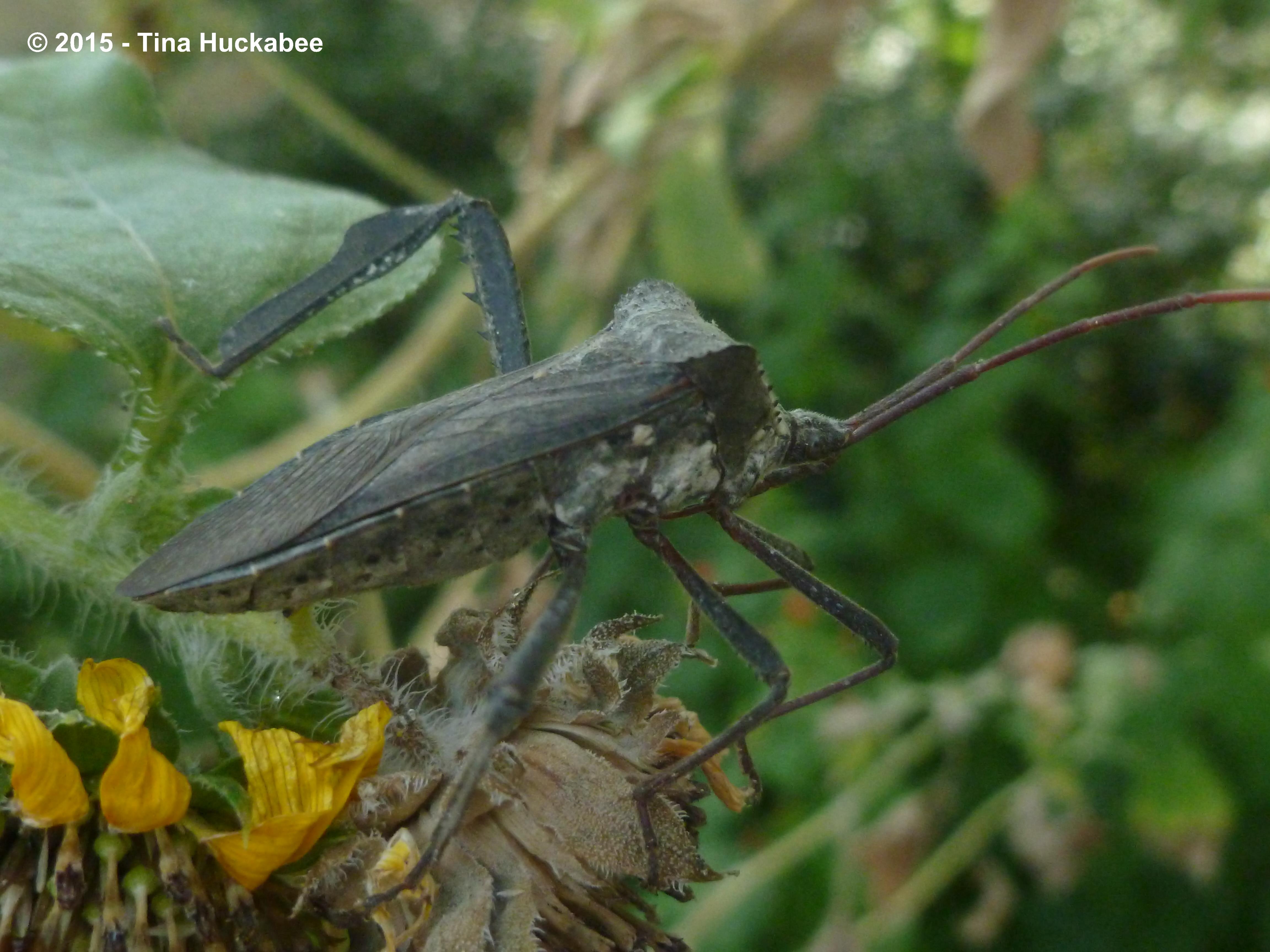
…a Leaf-footed Bug, Acanthocephala terminalis, hung out in the front garden for a couple of days.  Common in Austin, these bugs and their kin feed on leaves of many plants.  The terminalis part of the name is because of the red to yellow marking at the end of its antennae, though in my photo, the red isn’t all that noticeable.  I love this shot of the bug:

P1070541.new

I imagine it as a Leaf-footed Superhero Bug, profiled handsomely in shadow as it poses, stalwart and brave, overlooking the territory it protects. Dramatic music plays in the background as it surveys its realm.

I do believe that my brain is fried from the heat.

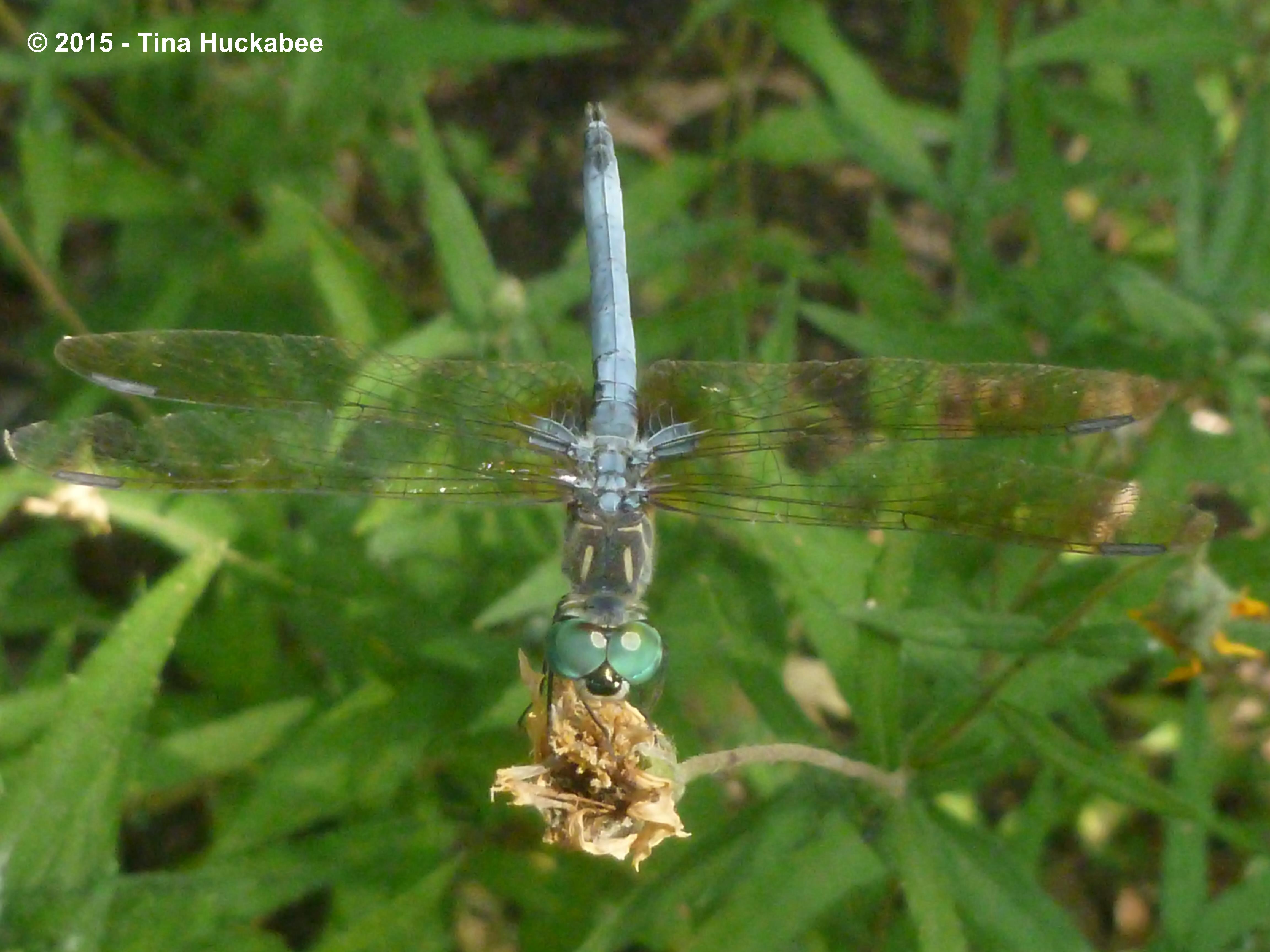
The dragons and damsels are busily hovering around the pond, hunting anything smaller than themselves, mating, and being gorgeous.  This male Blue Dasher, Pachydiplax longipennis,

P1070756.new

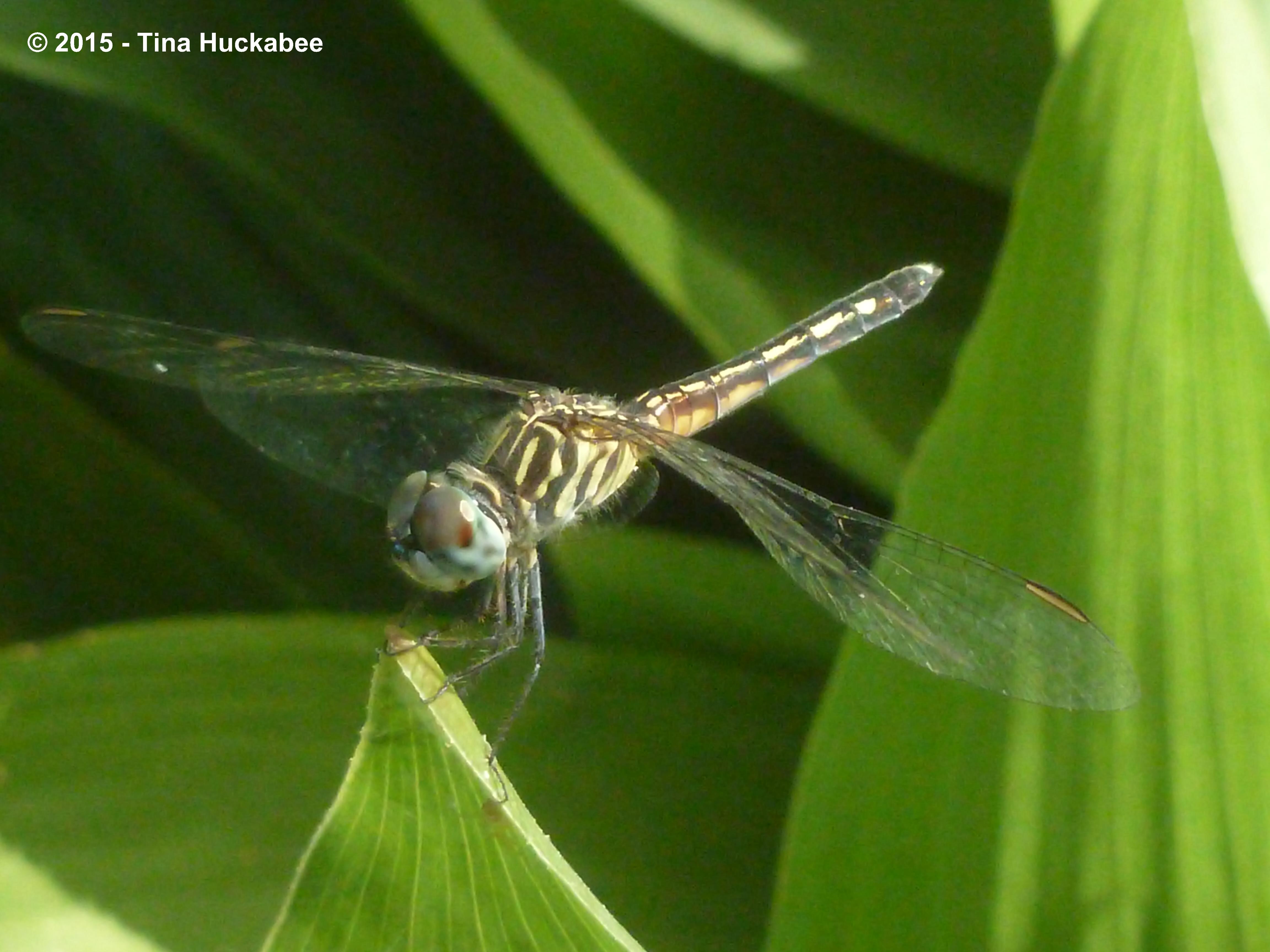
…and a female of the same species are two of the many who are living in my garden.

P1070549.new

I love to watch them–the combination of beauty, fascinating life cycle, and flying agility make the Odonata species worth attracting to the garden.  If you build a pond, or similar water structure, they will come. 

Green Anoles, Carolinensis anolis, regularly adorn foliage, and often, the walls and fences in my gardens.  There are smaller ones roaming the verge in August, the offspring of the older, early summer generation.

P1070690.new

Just as charming as their parents, these little garden buddies hunt insects and stare ( or is it a glare??) at the gardener/photographer.

P1070691_cropped_3180x2111..new

I was thrilled one morning to observe this native Metallic Sweat Bee, Augochloropsis metallica(?), sunning itself on the leaf of a Drummond’s Wild Ruellia.

P1070698.new

So beautiful and such valuable pollinators, I have a hard time capturing these bees in photo form because I usually see them hovering over blooms in constant, flashing-green motion.  They alight on a flower, moving quickly around the bloom, before taking off in flight a few seconds later.  I’m  content with watching and marveling, rather than wasting time attempting to capture with the camera what my eyes behold, thus missing the action.

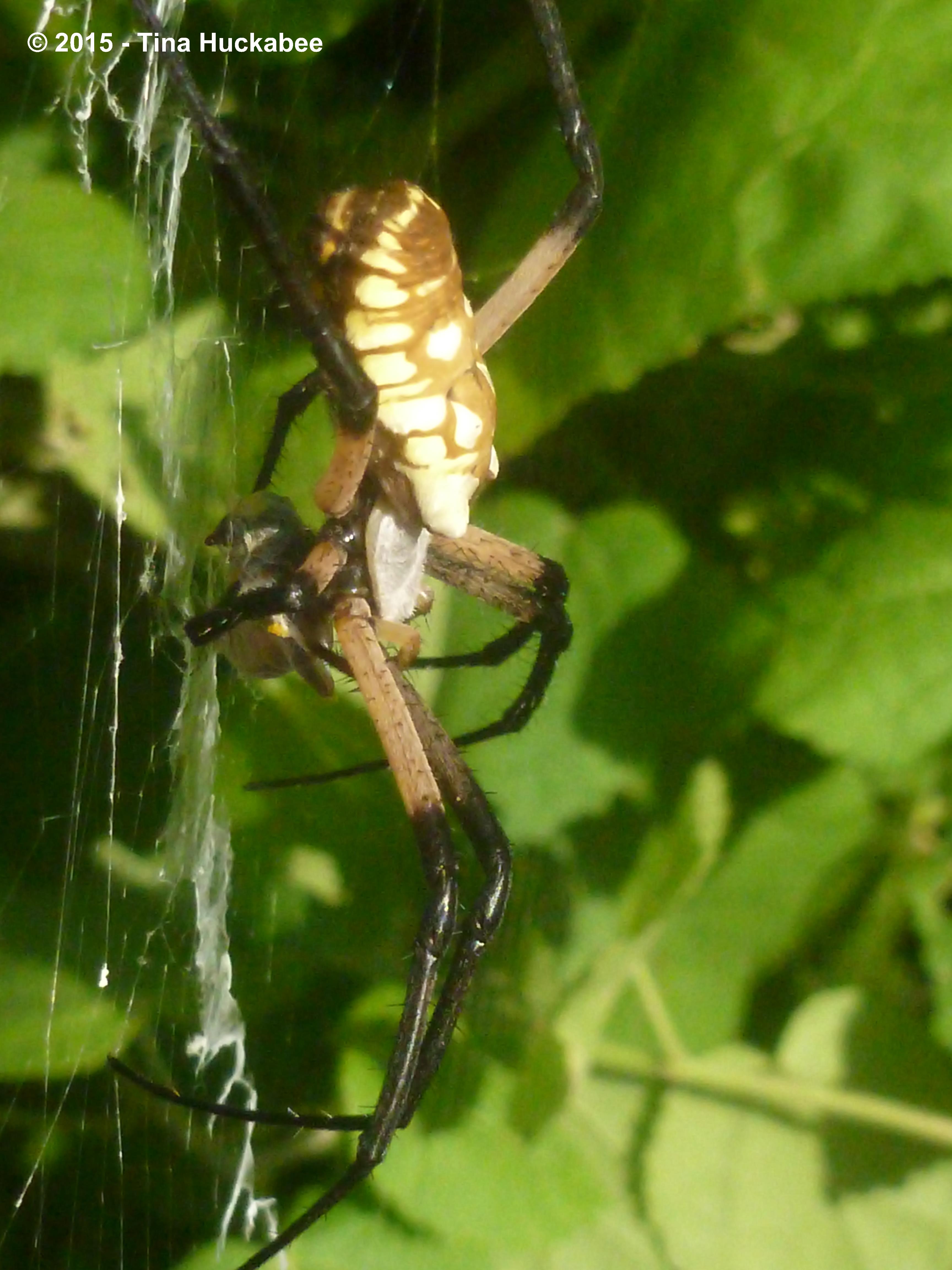
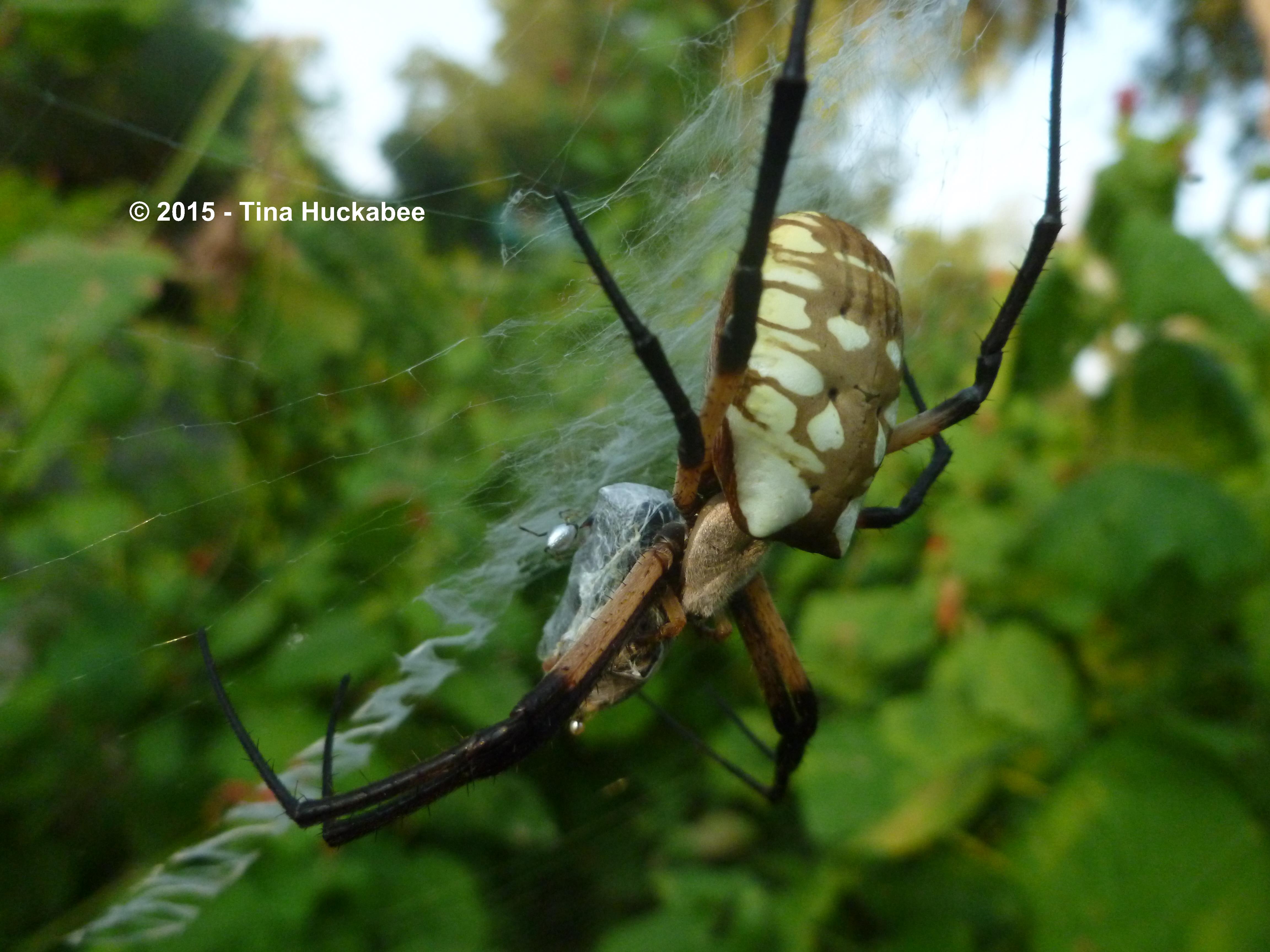
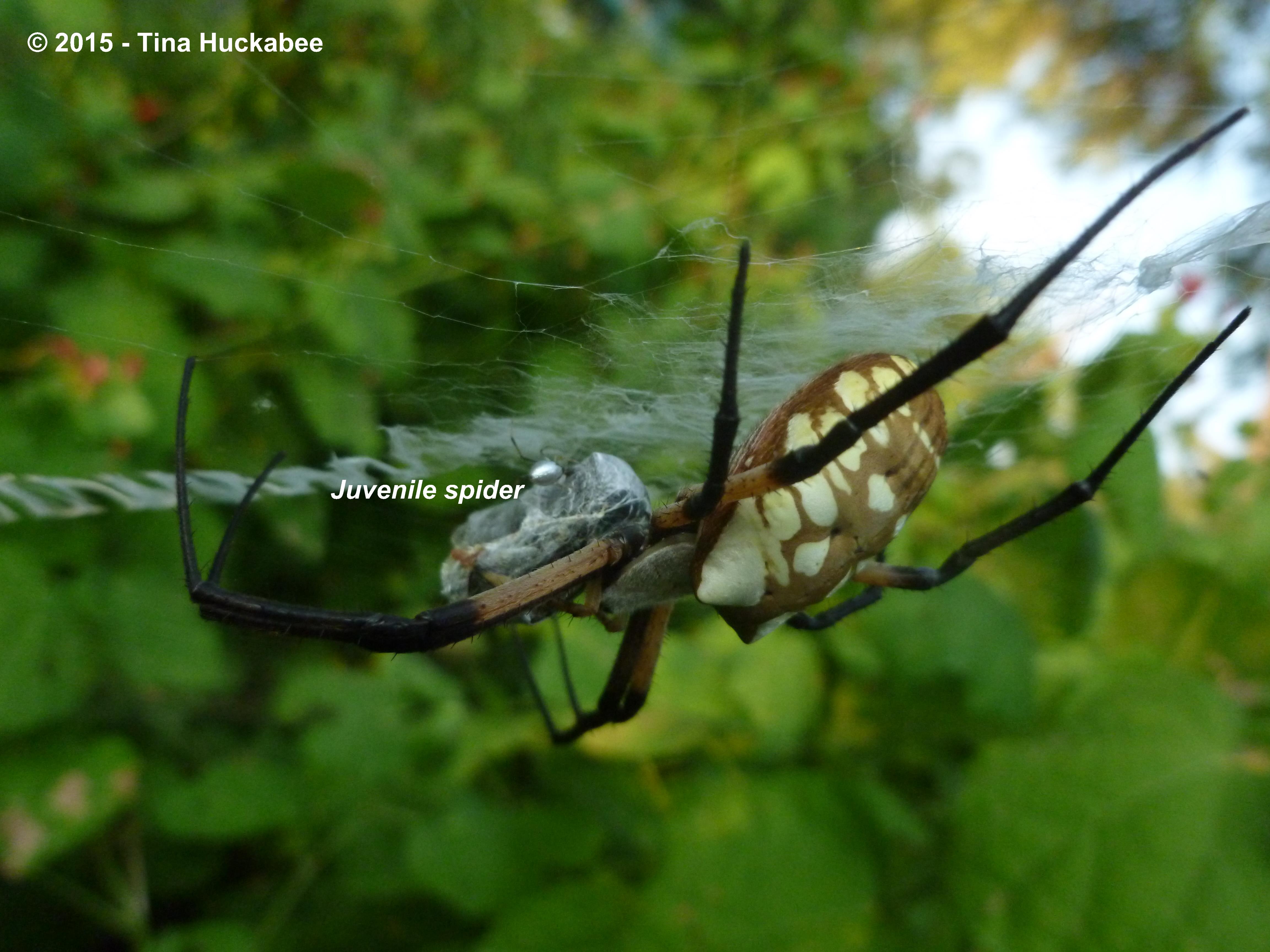
I wrote last month about the common garden spider, the Black and Yellow Argiope, Argiope aurantia, who’d taken up residence in a large shrub of Turk’s Cap.  Ms. Giant Spider had a sweet spot here in the Turk’s Cap because the flowers are favorites of bees and butterflies, therefore, no shortage of meals for her.

P1070738.new

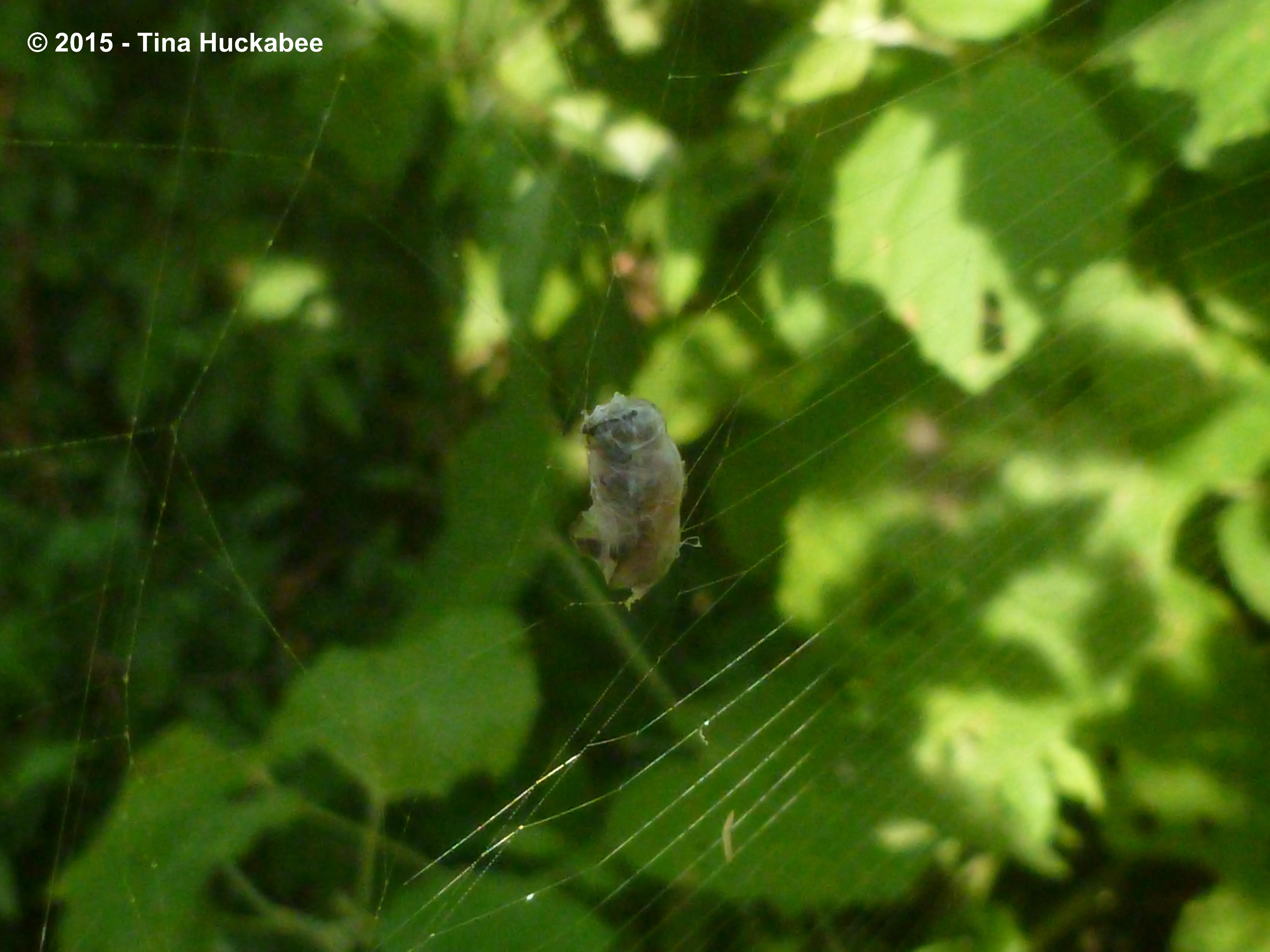
She’s been in the Turk’s Cap since July, ensnaring and devouring some “bad” bugs, but more commonly, my sweet honeybees.

P1070694.new

All wrapped up and no place to go–except into the spider’s digestive system.

Poor bee.

Poor bees. P1070693.new

I saw several caught in the web, everyday.

I think this spider meal is one the native or wild bee species that’s common in my gardens and that I’ve written about before, a Horsefly-like Carpenter Bee, Xylocopa tabaniformis.

P1070838.new

The previous morning, before I’d had my full dose of caffeine, I’d seen a newly trapped Carpenter bee of the same species.  Well, I can tolerate Ms. Giant Spider catching my darling honeybees, after all, I know that the honeybee queens are strong and actively creating the next generation, but I’m not quite so open-minded about this colorful menace wrecking webbed havoc on  the wild bees.  I know the native/wild bees have a welcome home in my garden, but things are dicey for them elsewhere.  Completely ignoring the prime directive (and for those of you who have no clue what that phrase means, please read), I carefully extracted the trussed up and buzzing madly Carpenter bee from the web and gently (VERY gently) pulled away the well-woven webbing and was able to release an angry and no doubt, terrified, Carpenter bee back into the world.

This wildlife gardener interfered with wildlife.

My bad.

In my defense, the spider had two other hapless victims hanging on the web and the bee was still alive; Ms. Spider had other meals waiting and the bee had a chance to live.

I just couldn’t help myself.

I hope the Carpenter bee in this photo wasn’t the same one I rescued, but if it was, maybe it’s best  that the can’t-learn-a-valuable-life-lesson DNA is out of circulation.

P1070838.new

In this photo, the little silver-colored spider is, I think, a spiderling–the tiny offspring of Ms. Giant Spider, enjoying the meal trapped by Mom.

P1070837.new

It’s possible that it’s an unrelated species, but given Ms. Giant Spider’s voracious appetite and penchant for killing anything in her wake, I’m guessing Silver Bells is probably family.

In the last few days, Ms. Giant Spider has disappeared. I thought maybe she’d moved her web, because she’s done that a couple of times, but instead, I located  a smaller version of the same species about a foot away–lying in wait, web at the ready, in a different part of the Turk’s Cap.  I suspect Ms. Giant Spider has gone to her reward and has been replaced by Ms. Junior Spider.

And the cycle begins again.

Lastly, I’m fairly sure this lovely green critter is a Spotted Bird Grasshopper, Schistocerca emarginata (also known as Schistocerca lineata).

P1070799.new

He/she was hanging out in the Turk’s Cap, probably noshing on foliage.  I warned it about the webbing that’s situated just behind.  According to literature, the Argiope spider species are big enough to capture large bird grasshoppers. The grasshopper must have made its way safely, as I never saw it packaged up in the webbing.

And that’s about all for this month.  So long!!

P1070798.new

Kudos to all of you who garden for wildlife, no matter how much or little:  you’re part of the solution.  I hope your gardens received wildlife visitors this month and that you will join in posting for September Wildlife Wednesday. Share the rare or mundane, funny or fascinating, beneficial or harmful critters you encounter. When you comment on my post, please remember to leave a link to your Wildlife Wednesday post so readers can enjoy a variety of garden wildlife observations.

Happy wildlife gardening!