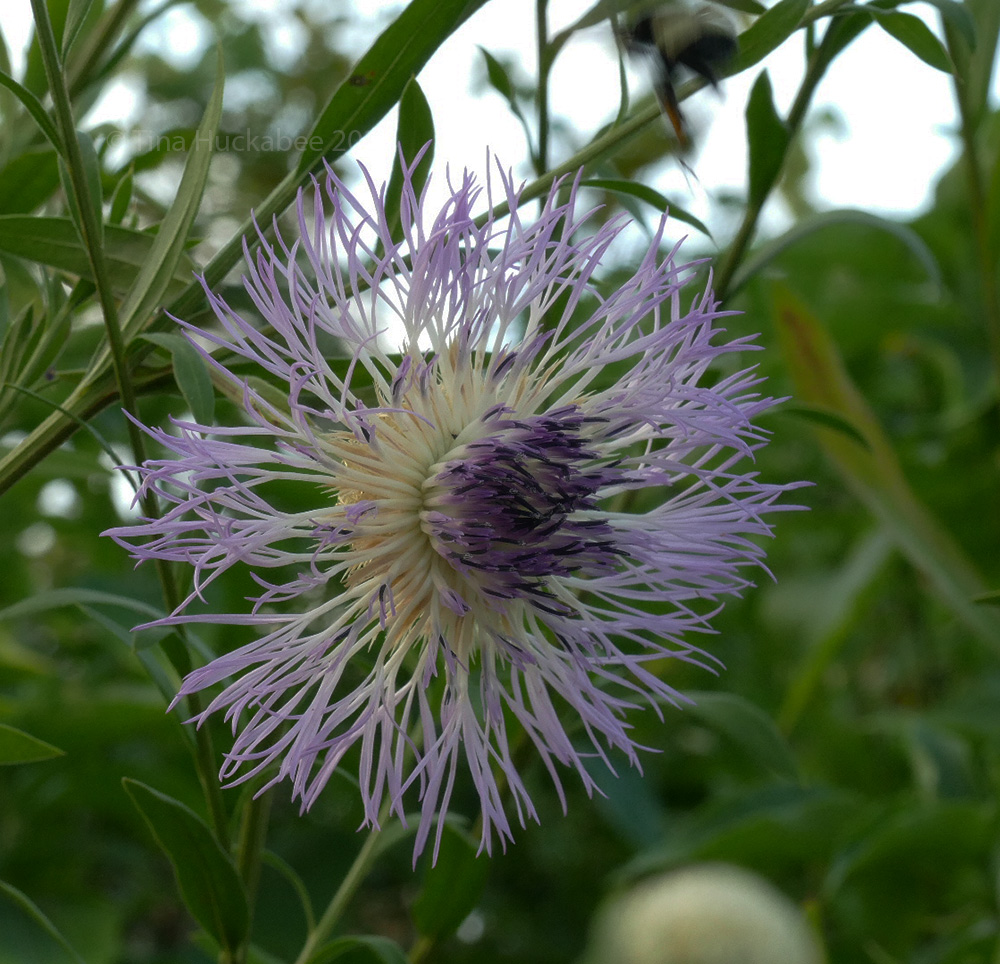
The annual American basket-flowers are nearing the end of their cycle. There are still a few stalwarts blooming, but basket-flower foliage is crispy, most flowers are spent, and seeds are scattered and scattering. Those flowers still flowering are doing what flowers do: opening prettily for the gardener and supplying sustenance for the pollinators.
Pollinators–native bees, honeybees, butterflies and hummingbirds–are active at the baskets in the early morning hours, before searing, oven-like heat sets in and the baskets close for business. Just after daybreak, there are many honeybees and nearly as many American Bumblebees at the baskets, partaking of the flowers’ gifts.
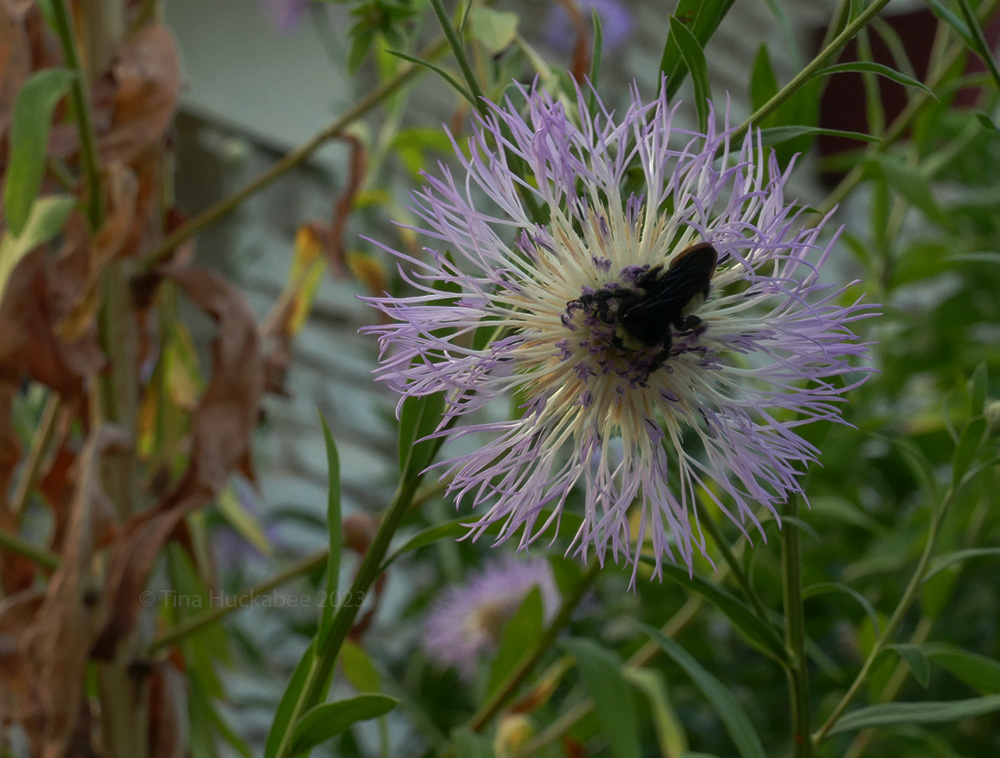
The Bumbles crawl in, around, and through the lavender filaments, adorning themselves with pollen, afterwards moving to the next available bloom. The insects buzz by one another, focused on their next landing, seemingly aware that sharing space is a necessity. Some rules of the road are employed by these critters, as there’s never a crash, nor a disputed landing spot.
Bee butt!
The bumblebees move constantly, with determination, alighting on as many flowers as possible in the few hours that the flowers beckon.
I estimate that in a week’s time, there will only be a few of these stunning wildflowers remaining in the garden. I’ll miss them with their glorious, elegant blooms, dramatic heights, and wildlife they attract, but time moves on, seasons evolve, plants change and die. It’s time. Pollinators will segue to other flowering plants as the garden advances into August.
Thousands of seeds have dropped, a few picked up by birds and maybe squirrels; most lie dormant in the soil for the near future. Winter’s cold and rain, coupled with spring’s dew and longer days will encourage germination and growth of the seeds. Most of the seedlings which appear will be pulled and composted, but those left will continue their path towards beauty and life. Next summers’ bounty is already in play.
I’d originally planned three posts profiling my gardens this spring, one each for early spring, mid-spring, and late spring. My garden changes a good bit between February and June. Life renews and it’s fascinating and affirming to witness the seasonal changes in flower, foliage, and fauna.
Well, early spring scooted right past me and late spring is knocking at the door, insistent to enter, but this is the first “spring garden” post I’ve managed to produce. It’s been a busy few months with plenty of distractions.
The back part-shade garden is filling in after winter’s freezes. Early bloomers are mostly done and beginning their seed processes, summer bloomers are arising from the Earth, growing in stature before their blooms begin.
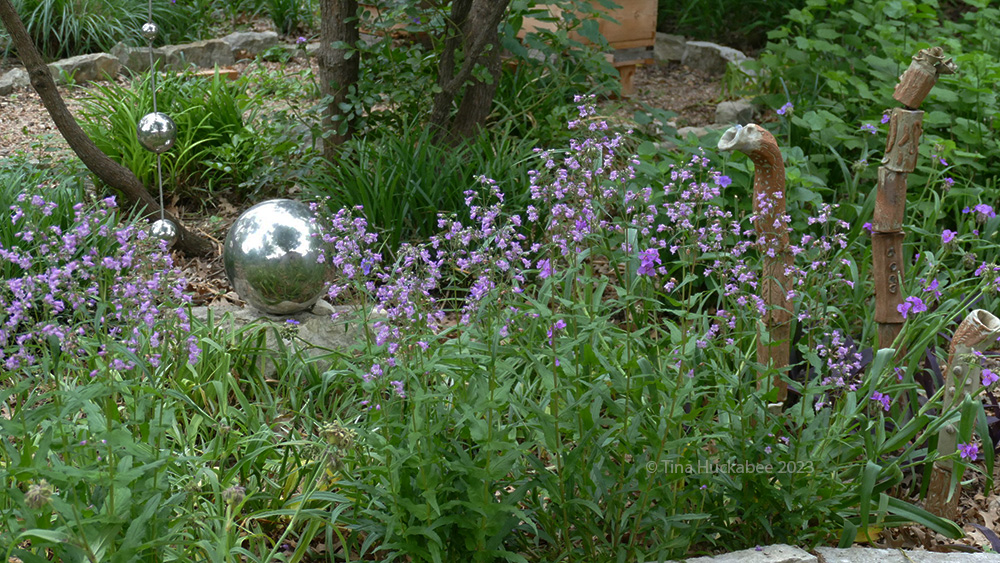
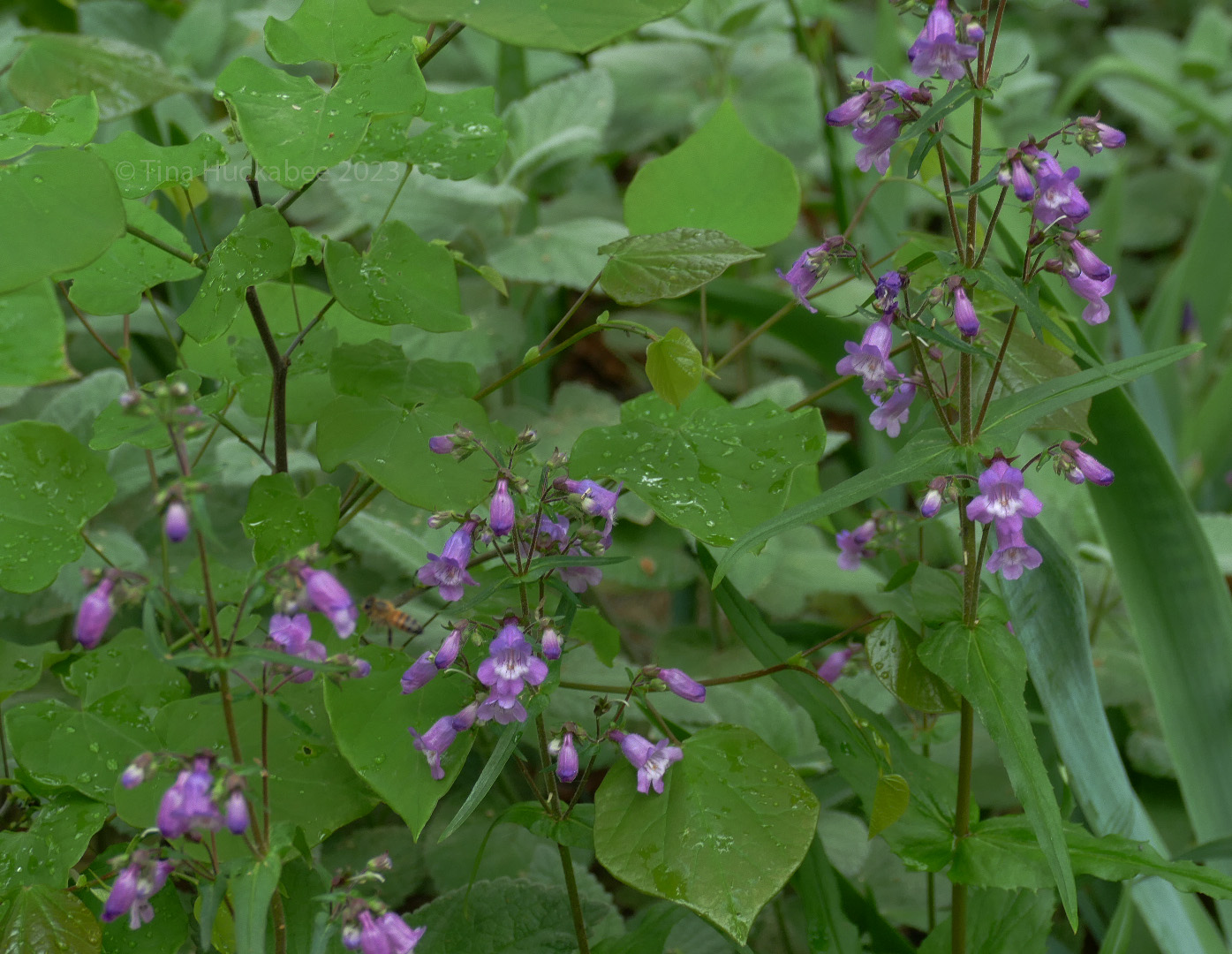
In March and April, there were sweet columbines and iris, scads of spiderwort, and sprinklings of native Gulf Coast Penstemons, Penstemon tenuis.
These pretty, bell-shaped blooms don’t last long, only about 3-4 weeks, but they make a nice impact in the garden and provide for pollinators. Their seeds will feed some birds, some squirrels, and ensure this plant’s future in my garden and probably elsewhere.
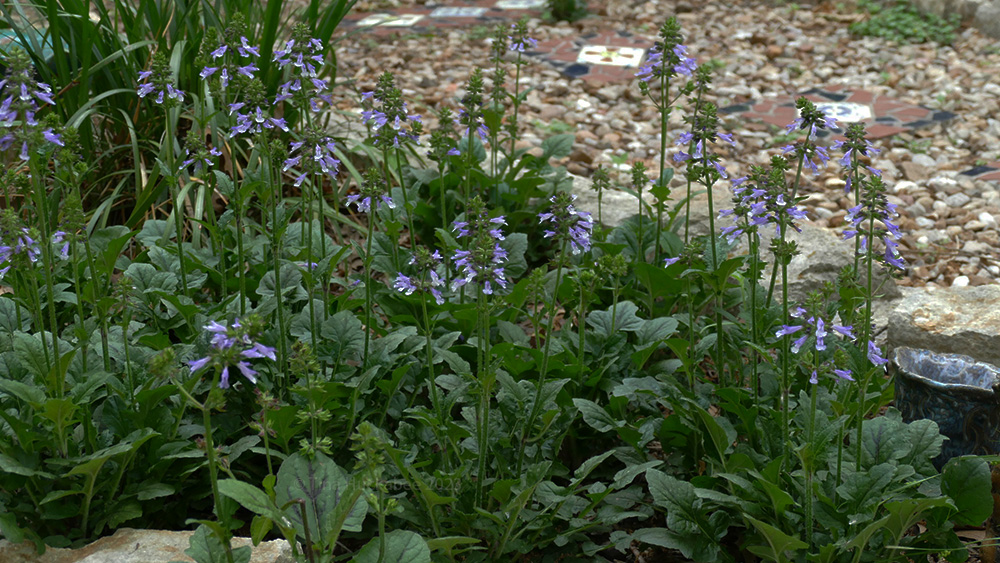
Another native perennial which flowers in mid-spring, more blue than purple, is the native Lyre-leaf Sage, Salvia lyrata; these bloom in concert with the penstemons.
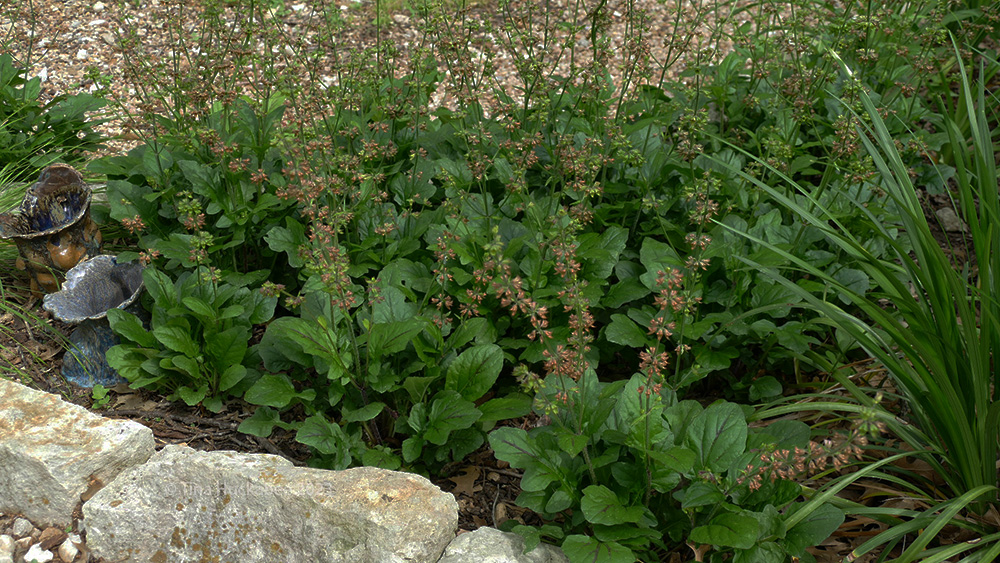
This photo, taken yesterday, shows the former flower stalks, now seed stalks. I’ve seen Painted Buntings, Lincoln’s Sparrows and Clay-colored Sparrows nibble at these seeds.
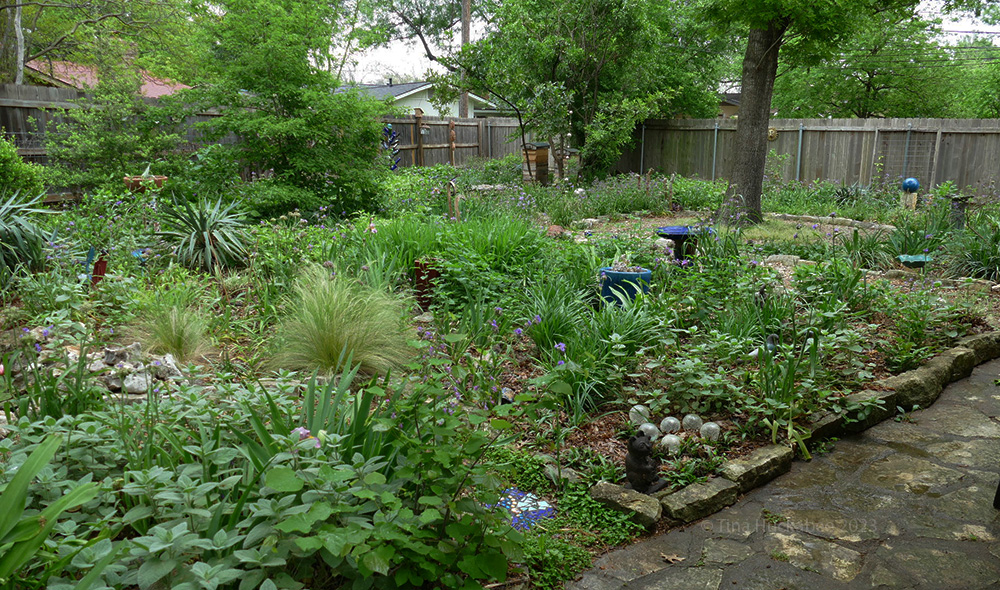
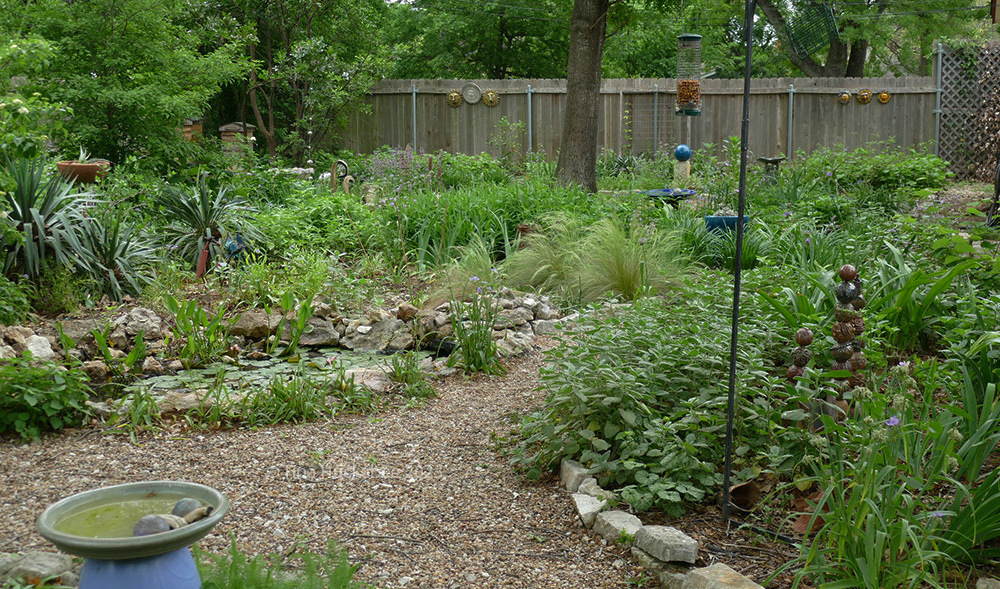
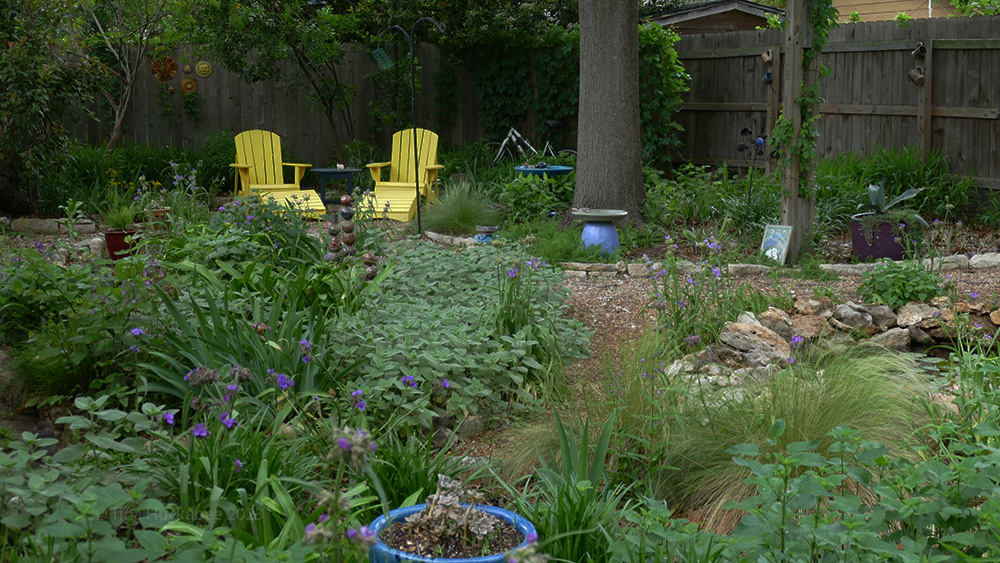
A wider look shows the garden in its “short” form. Come mid-June and going forward, many of the plants that you don’t notice or even see in this photo will be 4-5 feet tall. The early spring bloomers will be gone, or will have resigned themselves to green, ground-hugging rosettes, many offering seeds, at least for a time.
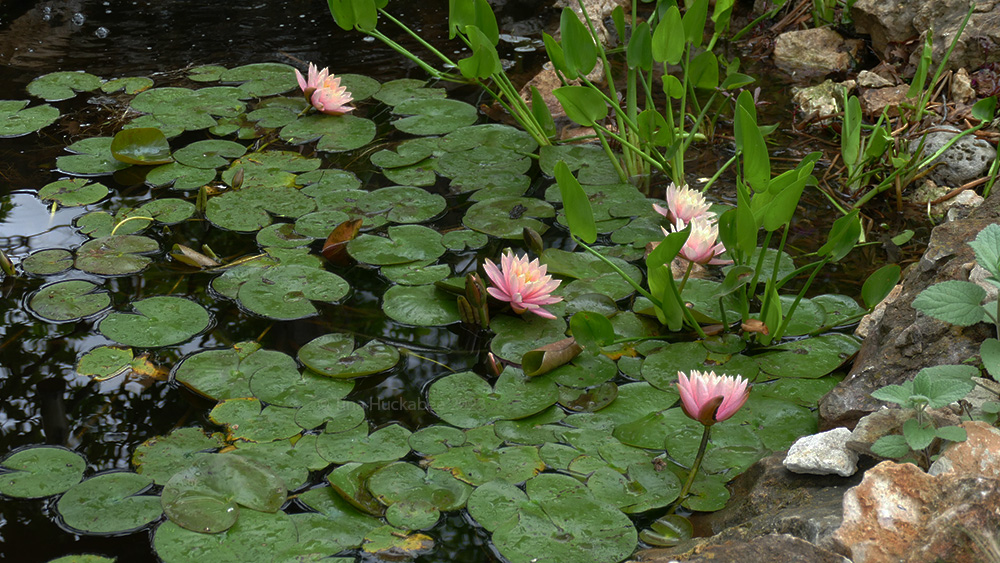
We never got around to cleaning the pond or separating the lilies and the Pickerel Rush.
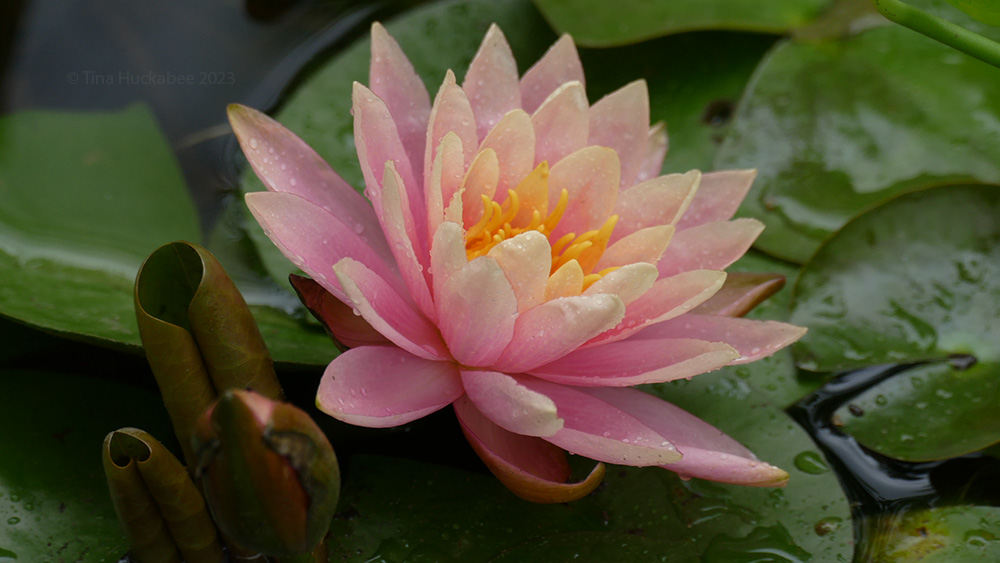
It’ll be interesting watching these plants during summer. They tend to bloom well in spring, then mostly provide foliage protection for the fish during the heat of summer, with occasional blooms flowering up from the base. I wonder if my not having separated them this spring will make much difference in bloom production?
Once the heat sets in, this shady part of the garden provides respite from the relentless Texas sun. But so far, it’s been a cool spring–and wet! I’m not confident that our drought is over, but we’ve received some drenching storms and the plants (and gardener) are happy and appreciative.
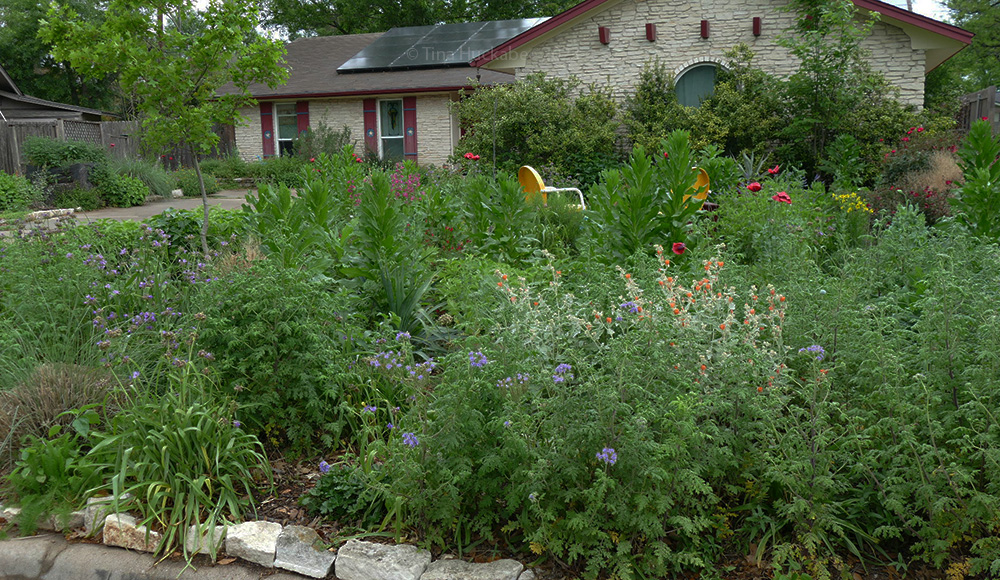
The front–all full sun of it–is bursting with color, form, and life. Migratory Lincoln’s Sparrows, Painted Buntings, Common Yellow-throats flit through the garden, nibbling whatever seeds and insects that come their way, filling up for their trip north to their breeding grounds. I occasionally chase a couple of neighborhood cats out of this wildlife haven.
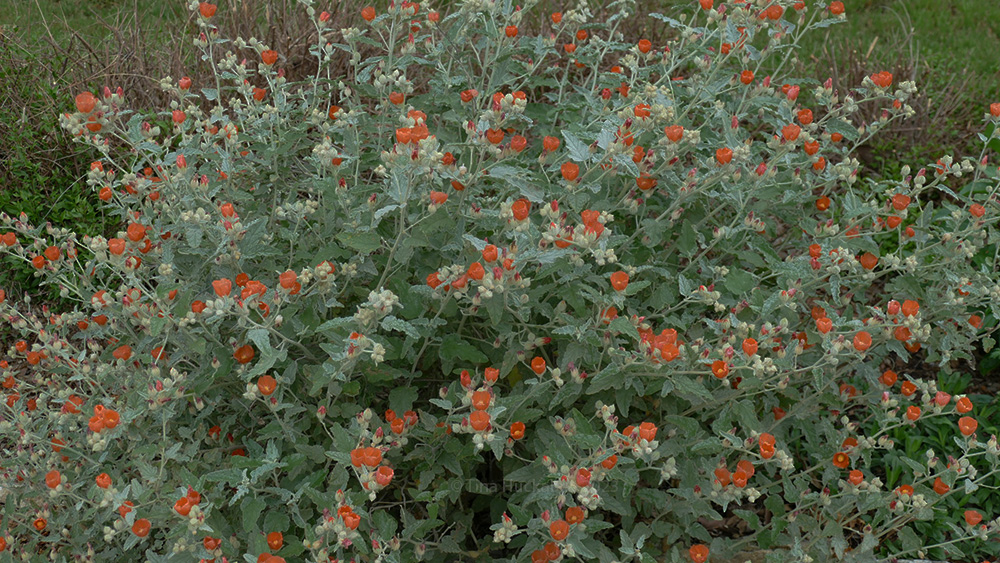
Early blooming perennial spiderworts and annual poppies provided pops of color and good things for the pollinators. They were accompanied by flowering shrubs that like cooler temperatures, like Globe Mallow, Spaeralcea ambigua,which is still in full bloom.
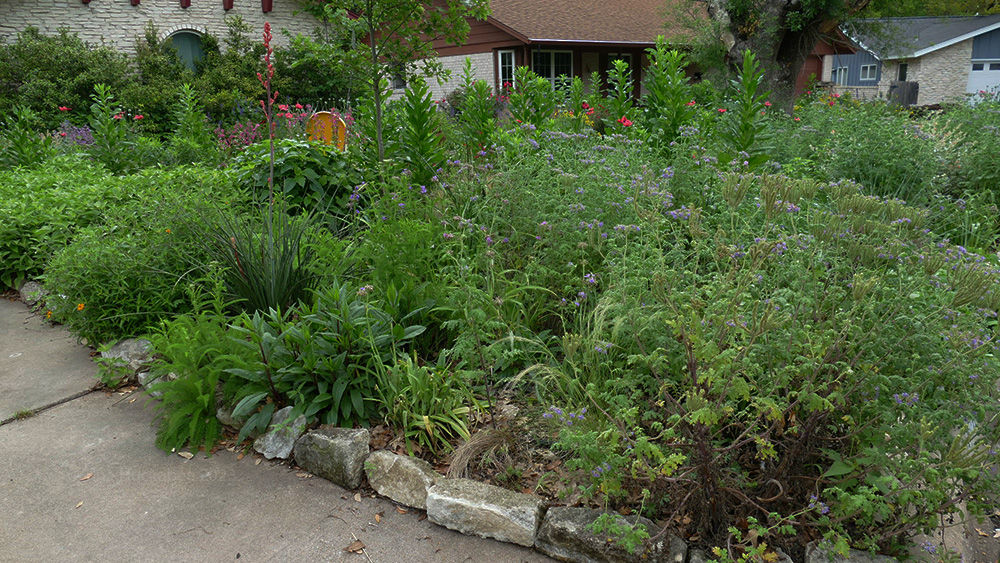
As is typical and planned for, the purples and blues are dominant in the garden in this middle part of the spring season. Red, yellow and orange will get their turn to show off in summer. White flowers also come into their own during summer and fall, and are restful for the eye.
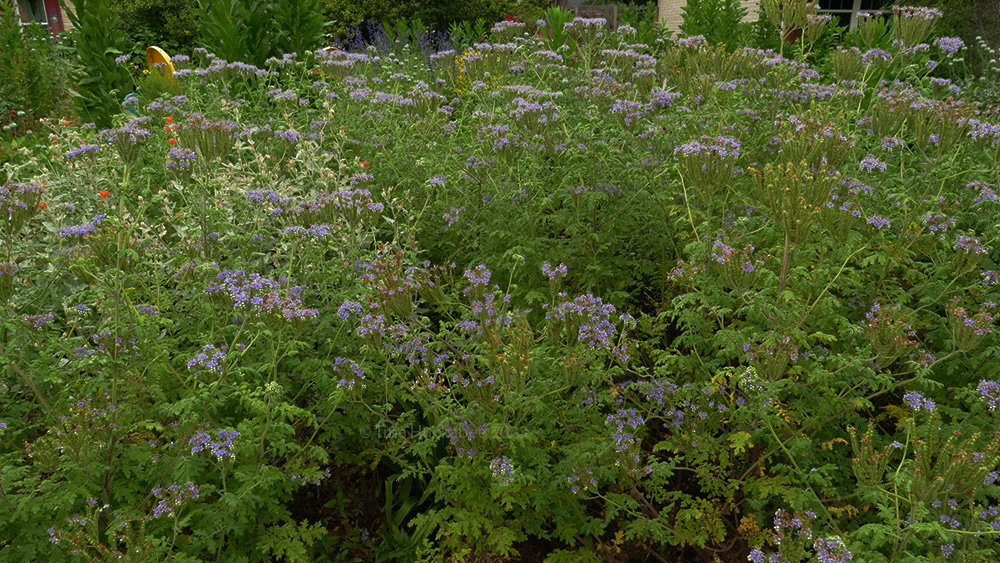
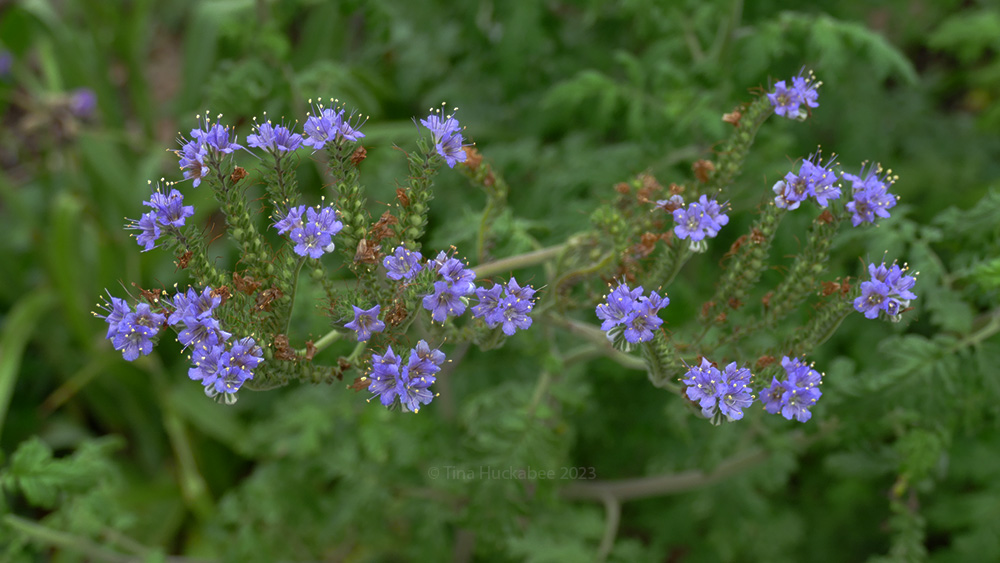
About five years ago, a friend gave me a couple of sprigs with roots of Blue Curls, Phacelia congesta, an annual Texas native spring wildflower. They’ve seeded out–and how! This year’s bumper crop of the unusual caterpillar-looking wildflowers has provided color and lots of movement in the form of visiting pollinators.
There aren’t any pollinators on this Blue Curls cluster, but that’s an anomaly; these diminutive blooms are pollinator powerhouse plants.
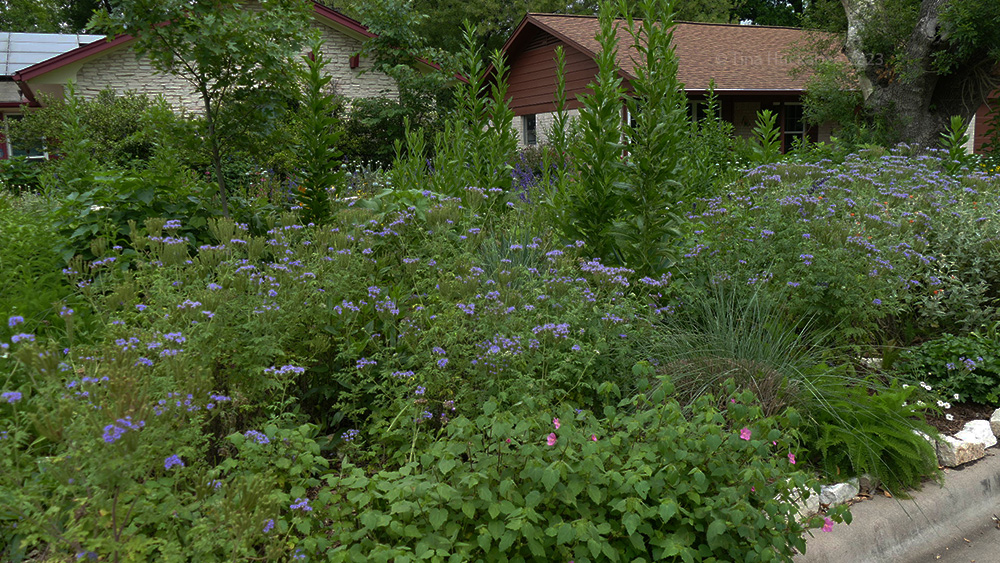
Blue Curls are bunched up at the edge of the garden. The slender, tower-like plants toward the center are the soon-to-bloom American Basket flower, Centaurea americana. This is another pollinator favorite and summer bloomer.
My Basket flowers have grown even taller since this photo, though I have pruned by half some of them. With pruning, the towers grow bushy, multi-branched and more shrub-like. Also, since they’re shorter, I can enjoy viewing the flowers! Those colossal towers are too high for me to see anything but the bottom of the blooms and the pollinators flying above them.
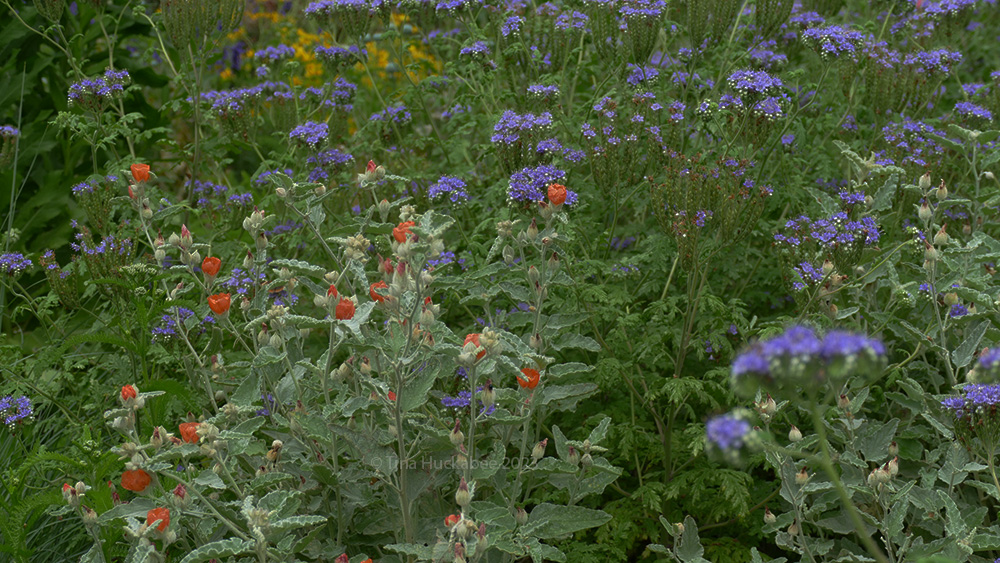
In another spot of the garden, I love the combination of Blue Curls, with their lacy green foliage, paired with the ruffly grey foliaged Globe Mallow.
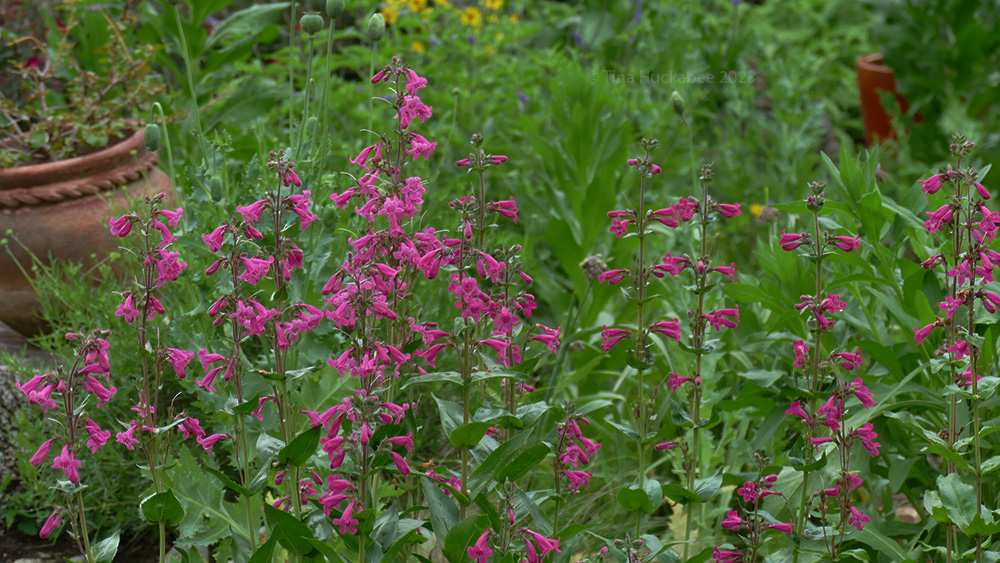
The stand of Hill Country Penstemon, Penstemon triflorus, has been stunning. I see carpenter bees nectar stealing, but the main pollinators of these flowers are the many Hummingbird, or Sphinx moths that visit at dawn and sunset, and sometimes during the day.
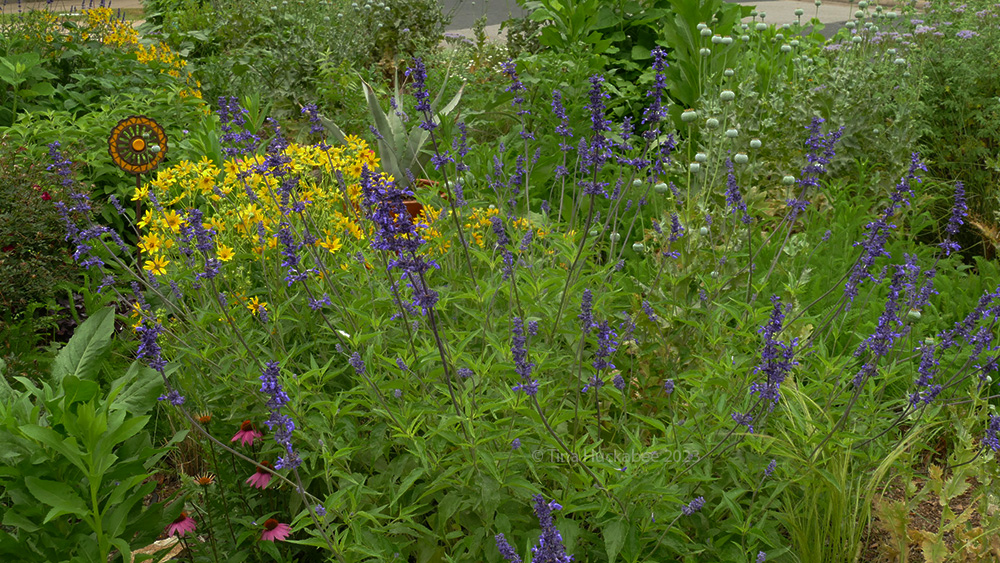
Deep blue Henry Duelberg sage, Salvia farinacea, complements cheery yellow Engelmann’s Daisy, Engelmannia peristenia. These two will bloom well into the summer months and potentially, through fall. Both are excellent wildlife plants: nectar and pollen for pollinators, seeds for birds-n-beasts. Oh, and the gardener really likes them too!
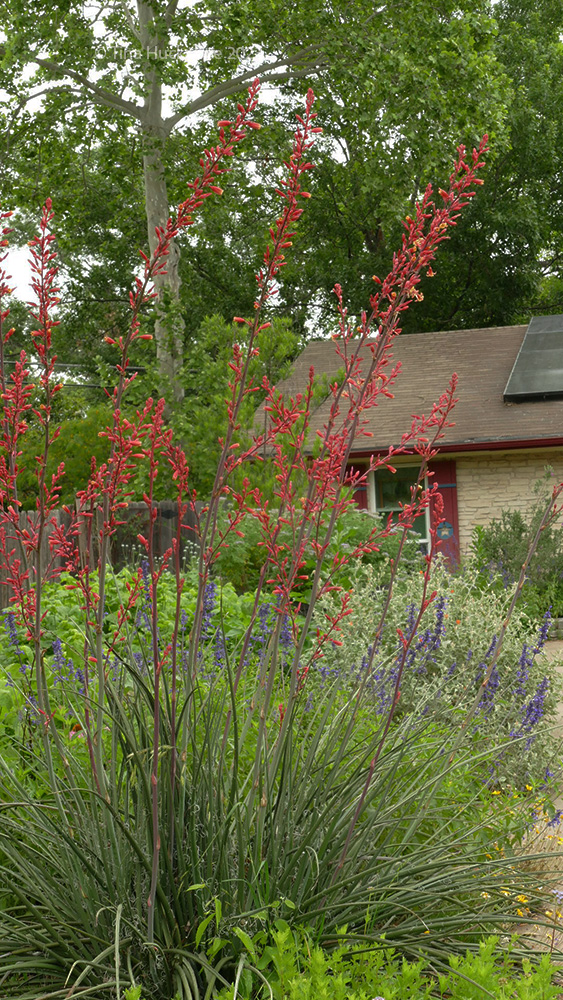
It’s a mixed-bag with the bloom stalks of my Red Yucca, Hesperaloe parviflora: This one produced 10 stalks; some others have none. Usually, my established yuccas each shoot up 3-5 stalks. I’m not sure why some didn’t produce any bloom stalks this spring, but the tough, evergreen foliage is still worthy and welcome in the garden.
Though fleeting, spring is a special time of year in any garden. Gardens are fresh, life is everywhere, and it’s not at all difficult to find color, texture, and wild things active.
Spring has sprung and bees are buzzing. Honeybees forage during winter’s warmer days, but native bees take a break from their duties, being safely tucked away in nests of wood or soil, or waiting to emerge from enclosures of plants. As days lengthen and warm, they make their way into gardens. This early spring, I’ve observed several native bee species that I regularly see during the growing season. The first ones who show up to work are the tiny black carpenter bees (Ceratina), followed by a variety of Green Sweat bees, like this emerald beauty, perhaps an Osmia ribifloris.
This type of metallic green bee belongs to the Halictidae family of bees and are common in gardens with a variety of flowers for nectaring and pollen gathering. Bees who forage from a wide array of plants are polylectic. As they visit flowers, females gather pollen on their legs (which you can see in the photos) for their nests. This one is working the blooms of Giant Spiderwort, Tradescantia, but I’ve seen her kind on other flowers.
Her whole body is curled around the anther of the bloom where the pollen is located, all-in to her goal of gathering pollen. A front on photo, while not crystal clear, allows us to glimpse her face. She looks determined in her work, as she packs her little legs full of golden pollen.
These shiny, metallic bees are fast flyers, but observable and not at all rare. They and their cousin metallic bees love a blooming garden.




 My Gardener Says...