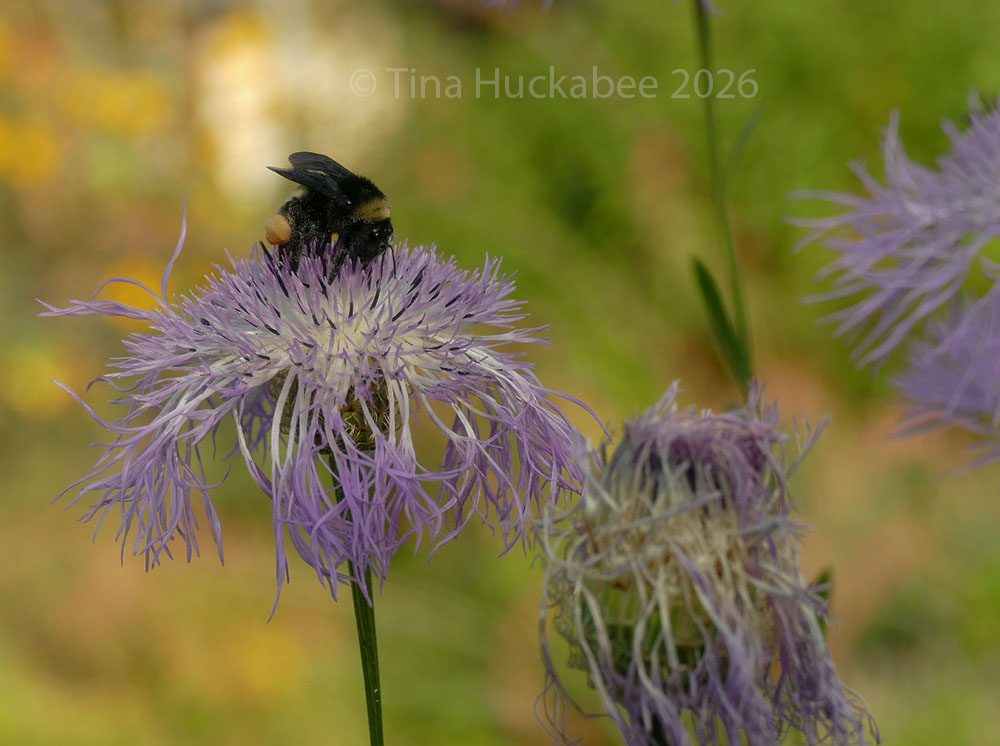
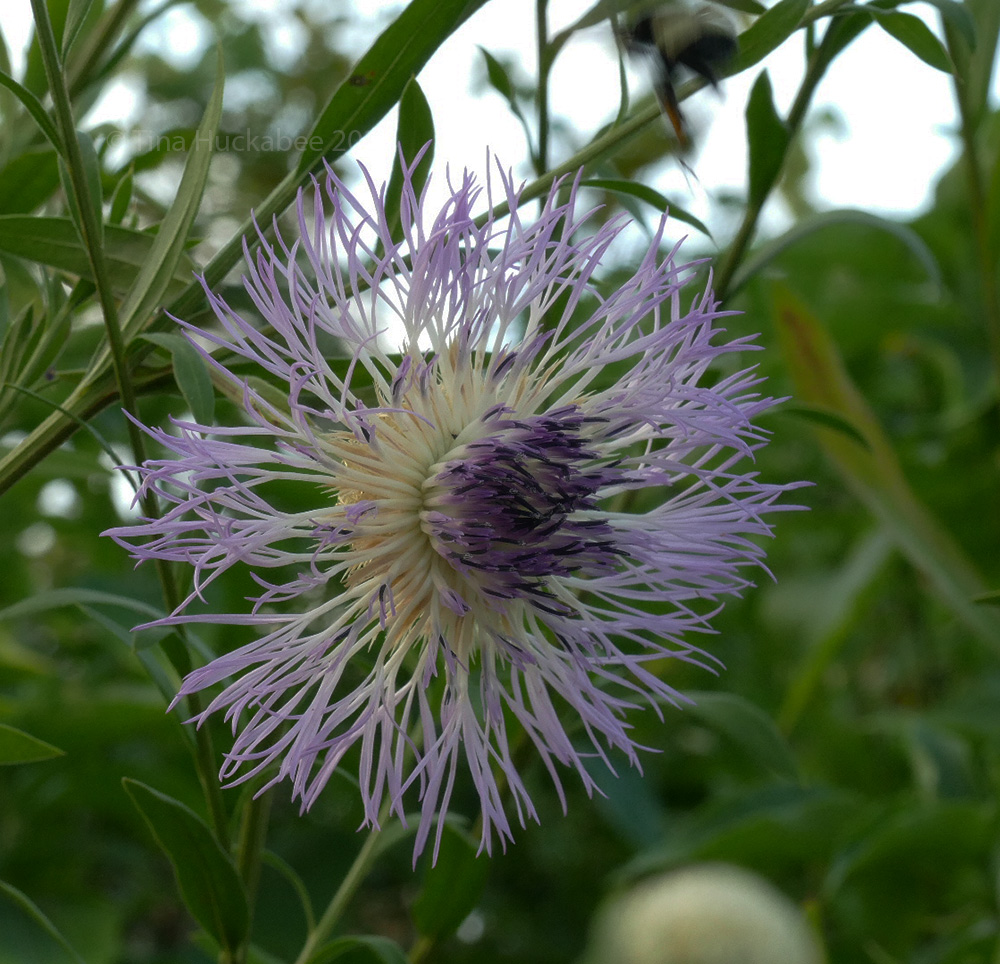
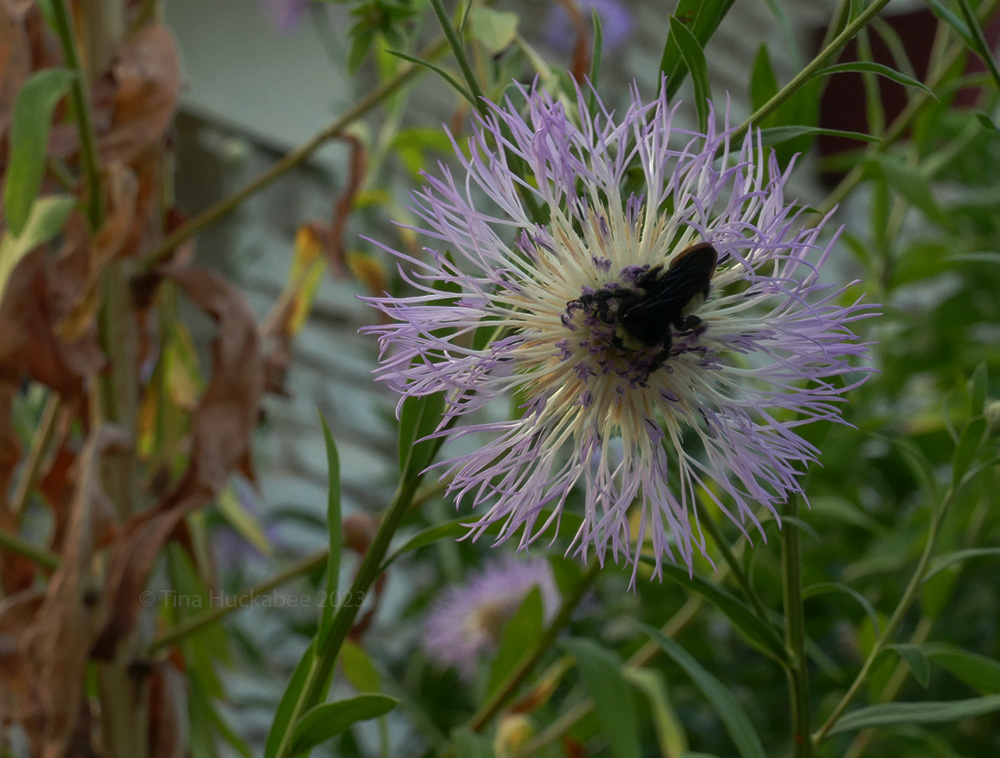
Where there is an American Basket-flower, Plectocephalus americanus, there is at least one American Bumblebee, Bombus pensylvanicus.
In an early morning nectar-gathering flight, this bee, proboscis dug into the bloom, works the bounty provided by the flower. The bee’s corbicula or pollen basket, is loaded with the golden good stuff. I call the corbiculae pollen pantaloons.
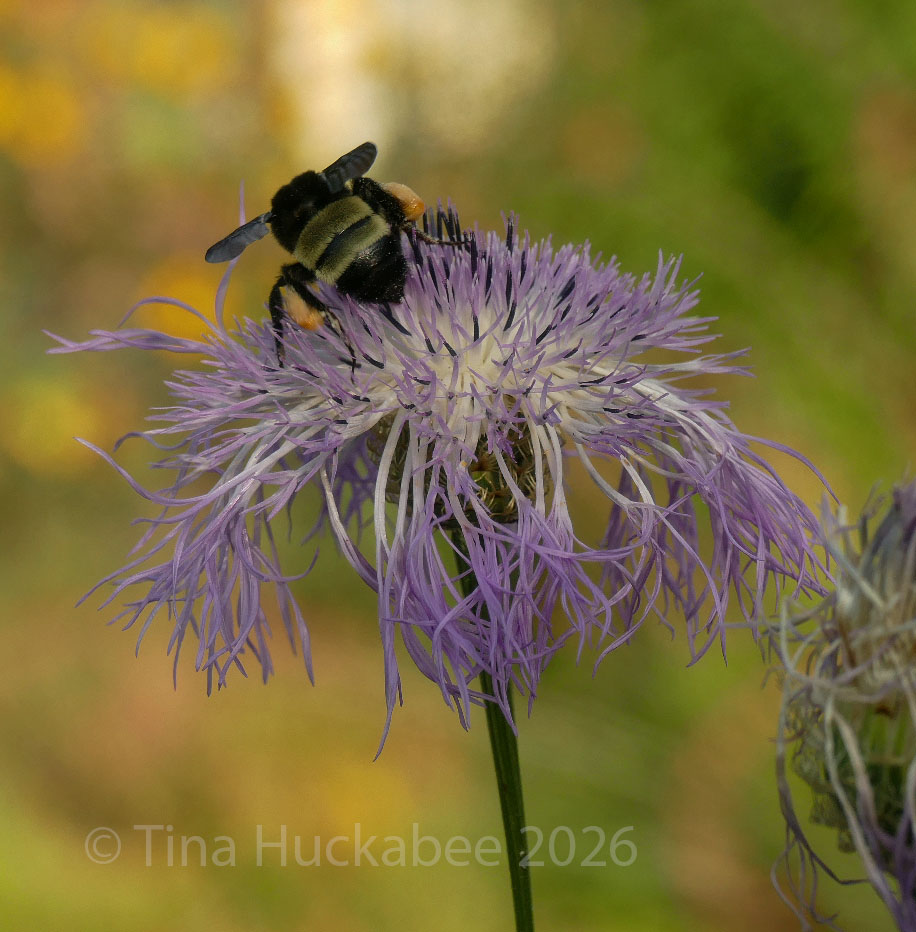
A back view demonstrates both loaded pollen pantaloons and a cute little bee bum!
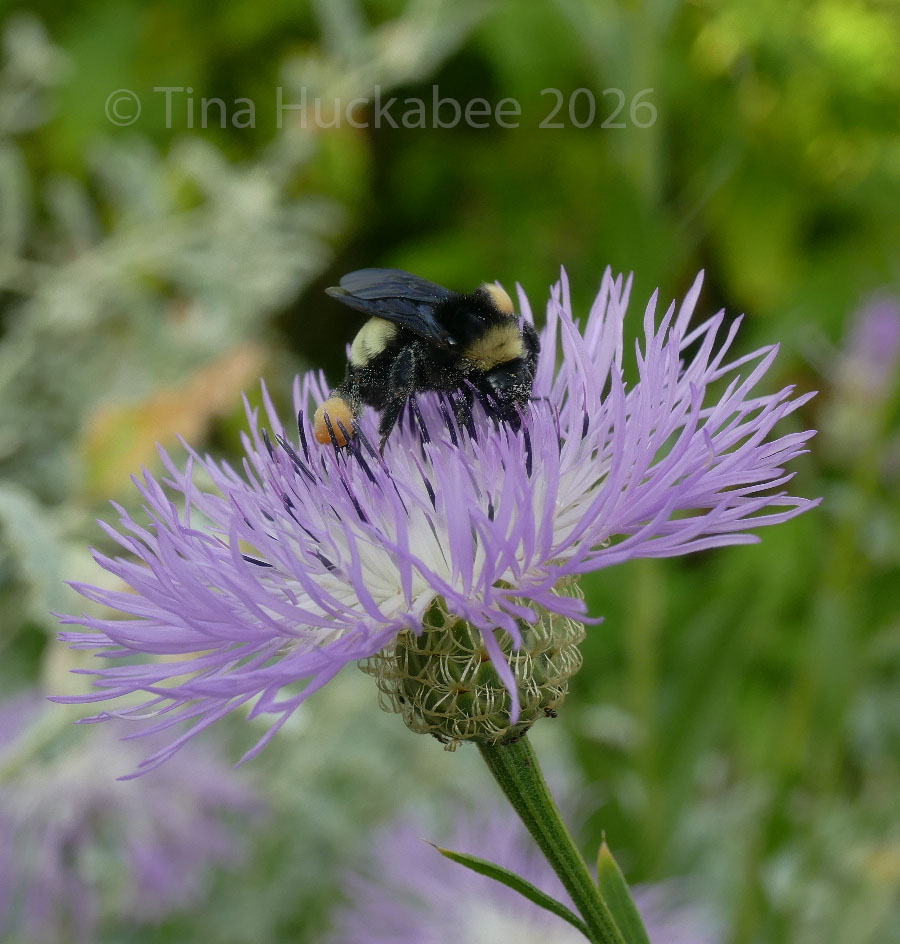
On a different day and on a different flower, the same (or maybe different) bee is at its work.
Summer’s garden production, all healthy flora and fauna, is ongoing and vibrant.
It was a slow start to the carpenter and bumble bee action this year, I assume because of the heavy rains experienced in Central Texas in May and June/early July. But recently the garden is a’buzz with honeybees and a variety of native bees, including the big, noisy carpenter and bumble bees.
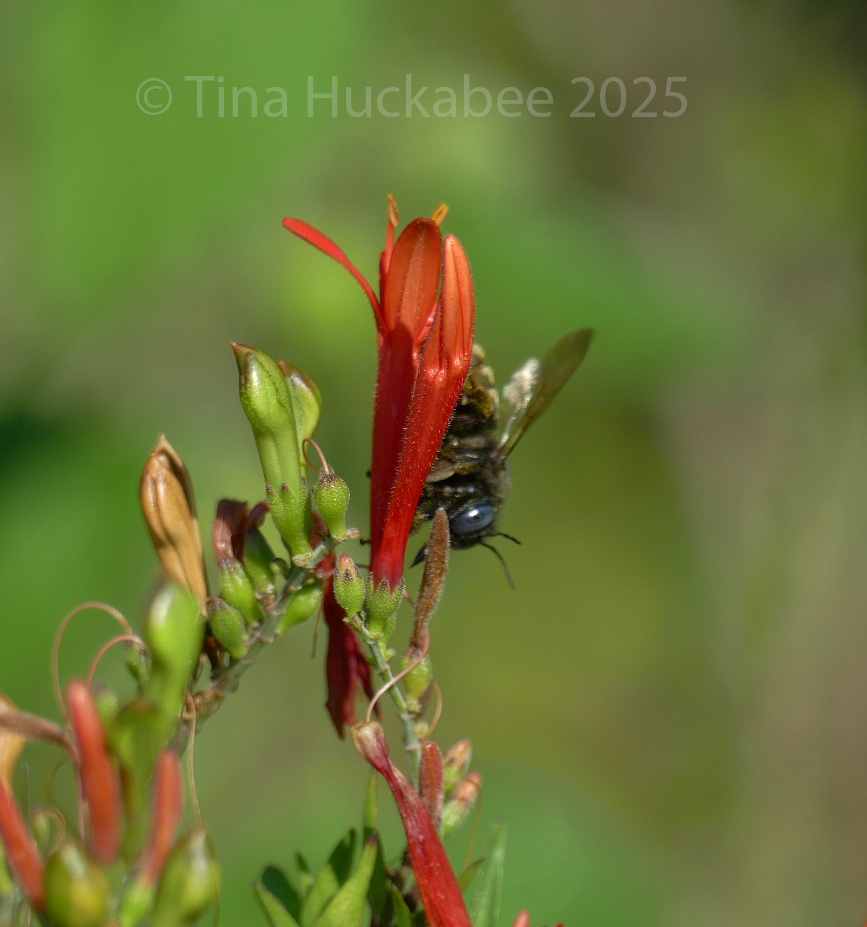
This Horsefly-like Carpenter bee, Xylocopa tabaniformis, worked the prolific blooms of a Flame Acanthus, Anisacanthus quadrifidus, in my front garden.
These charming bees are probably my favorite bees. They’re noisy and buzzy, darling in looks. I love their racing stripes and melt at their dreamy blue eyes.
I like this up-side-down visage: bee-butt up pointed upward, proboscis-leading snout concentrated on the liquid deep in the tubular nectar fonts where the bee’s proboscis is headed.
Nectar stealing or nectar robbing is when an insect pokes or bites a hole in flowers that are too deep or small for the insect to enter from the open bloom. The insect then sips nectar without entering the flower’s innards, bypassing direct pollination.
Ole Blue Eyes here is just about to deliver its pointy proboscis, aiming for the fleshy, thin petal and the sweet stuff inside. The bee sliced the petal with its formidable mandibles to gain entry.
Bum-up view of the nectar-stealing, nectar-sipping bee. While direct pollination isn’t happening, you’ll notice grains of pollen sprinkled on Ole Blue Eyes’ body. It’s likely that some of those grains will play a role in pollination.
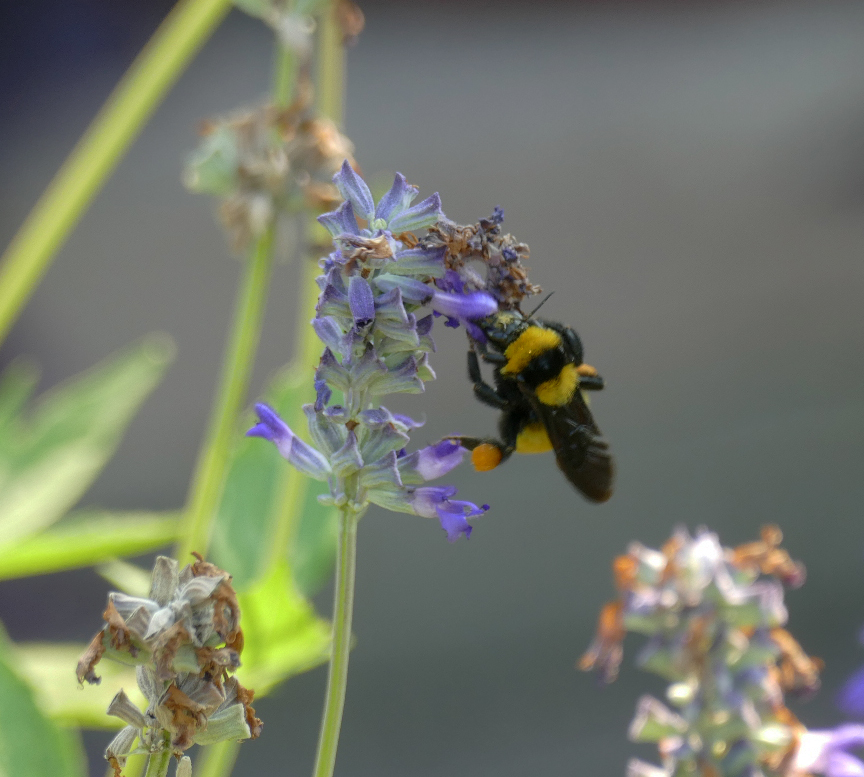
The other bees I’m seeing more of–and a big Huzzah! for that–are American Bumble bees, Bombus pensylvanicus. These graceful, yellow-n-black sweethearts are working many kinds of flowers right now, but a favorite bumble dining spot are the blue blooms of Henry Duelberg Sage, Salvia farinacea, ‘Henry Duelberg’. Notice the pollen booty on this bee’s pollen pantaloon, also known as a corbicula. If you look carefully, you can see a dab of golden on the other side of the bee–no doubt that pantaloon also carries a load of pollen.
My garden always enjoys more insect action, especially of the pollinator kind, as the growing season progresses. Heavy rains in spring and early summer often damage ground and wood nesters, so their procreation is slowed. Those insects rally as summer heats up and stable weather patterns settle in. In a healthy, diverse garden community, the pollinators persevere, the garden flourishes, and the gardener gives thanks.
The annual American basket-flowers are nearing the end of their cycle. There are still a few stalwarts blooming, but basket-flower foliage is crispy, most flowers are spent, and seeds are scattered and scattering. Those flowers still flowering are doing what flowers do: opening prettily for the gardener and supplying sustenance for the pollinators.
Pollinators–native bees, honeybees, butterflies and hummingbirds–are active at the baskets in the early morning hours, before searing, oven-like heat sets in and the baskets close for business. Just after daybreak, there are many honeybees and nearly as many American Bumblebees at the baskets, partaking of the flowers’ gifts.
The Bumbles crawl in, around, and through the lavender filaments, adorning themselves with pollen, afterwards moving to the next available bloom. The insects buzz by one another, focused on their next landing, seemingly aware that sharing space is a necessity. Some rules of the road are employed by these critters, as there’s never a crash, nor a disputed landing spot.
Bee butt!
The bumblebees move constantly, with determination, alighting on as many flowers as possible in the few hours that the flowers beckon.
I estimate that in a week’s time, there will only be a few of these stunning wildflowers remaining in the garden. I’ll miss them with their glorious, elegant blooms, dramatic heights, and wildlife they attract, but time moves on, seasons evolve, plants change and die. It’s time. Pollinators will segue to other flowering plants as the garden advances into August.
Thousands of seeds have dropped, a few picked up by birds and maybe squirrels; most lie dormant in the soil for the near future. Winter’s cold and rain, coupled with spring’s dew and longer days will encourage germination and growth of the seeds. Most of the seedlings which appear will be pulled and composted, but those left will continue their path towards beauty and life. Next summers’ bounty is already in play.