More Spring Things

A lush spring season continues and the garden blooms. I treasure the spring ephemerals for their brief flowering in spring, the seed development which follows, and the stability they lend to the garden palette long after their blooms are gone. Their flowery showtime is short, often only a few weeks, but important to the diversity of the ecosystem. Emerging pollinators from winter’s rest rely on these early bloomers and the gardener delights in renewal of life through these springtime beauties.

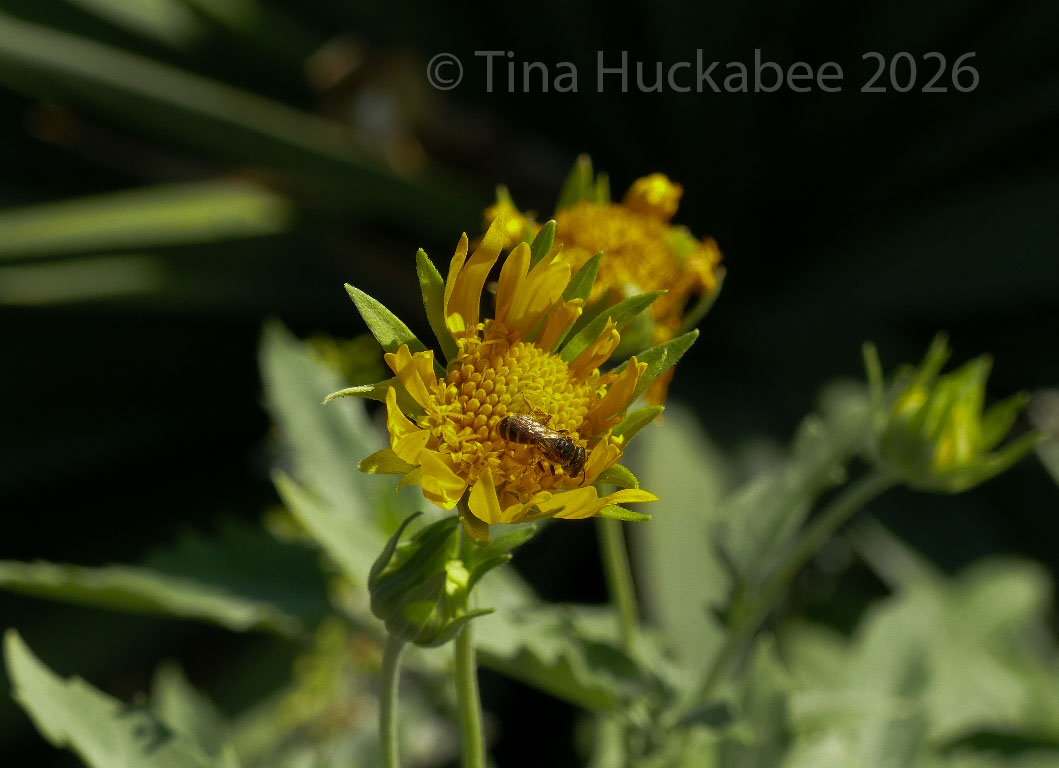
There are always a few Texas Dandelion plants, Pyrrhopappus pauciflorus, who appear in the front garden, though this spring, so far, there is only one. This sweet, butter-pat yellow aster closes up during each afternoon of the several days that it is in bloom. I’ve mostly observed small native bees nectaring here.

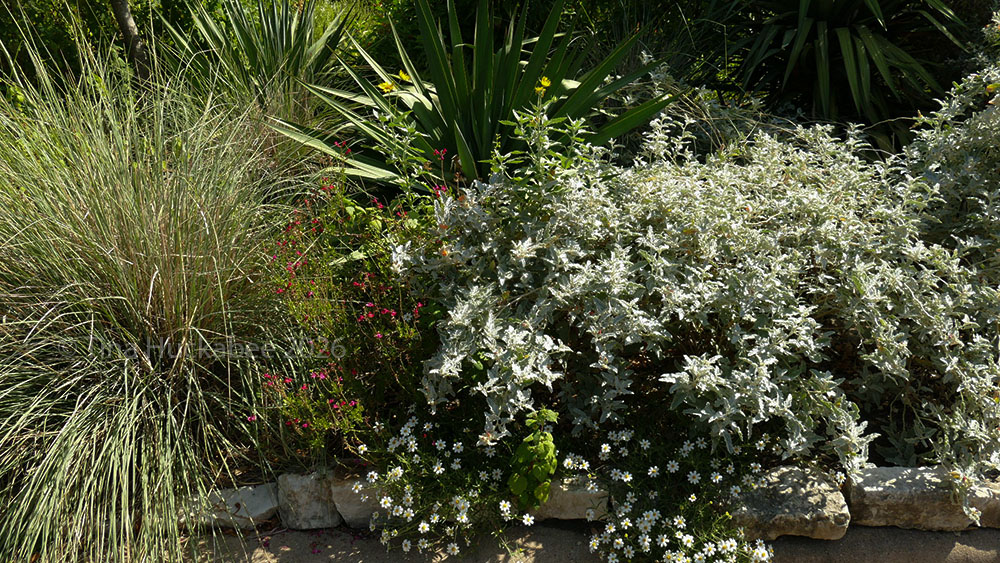
A neighborly stem of Coast Germander, Teucrium cubense, reaches out with a ‘howdy’ to the dandelion.

The germander is a small ground cover/shrub with minty foliage, currently covered in tiny, snowy blooms and visited by busy pollinators. They were so busy that I couldn’t manage any decent photos of the small nectar gatherers–but there were plenty!

I love white flowers in the garden. A particular favorite is the white Tropical Sage, Salvia coccinea. This one keeps company with a rich pink Hill Country Penstemon, a lavender Gulf Coast Penstemon, and a Mexican Feathergrass.

The white sage re-seeds prolifically and I tend to let the plants bloom where they grow. If I need to move one, they’re easy to transplant. In warmer winters with no freezes, they’ll bloom all winter, continuing into spring. This year, all of mine died to the ground, but popped up early, ready for flowering. The salvias’ blooms are more reluctant during our hot summers, but there are usually some available for the wide variety of pollinators who, like this gardener, love this plant.

A different Hill Country Penstemon, Penstemon triflorus, demonstrates the striping common to this flower, showing the pollinators the way to the good stuff!

Crouched and twisted, but with no resulting pulled muscles (this time!), I managed to catch a photo of this native bee as it worked the flowers of the Gulf Penstemon, Penstemon tenuis. Another brief spring bloomer, this lovely native blooms, then sets attractive seeds for the birds and mammals. I’ve seen Painted Buntings nibble at the seed heads when they pass through my garden in early May.

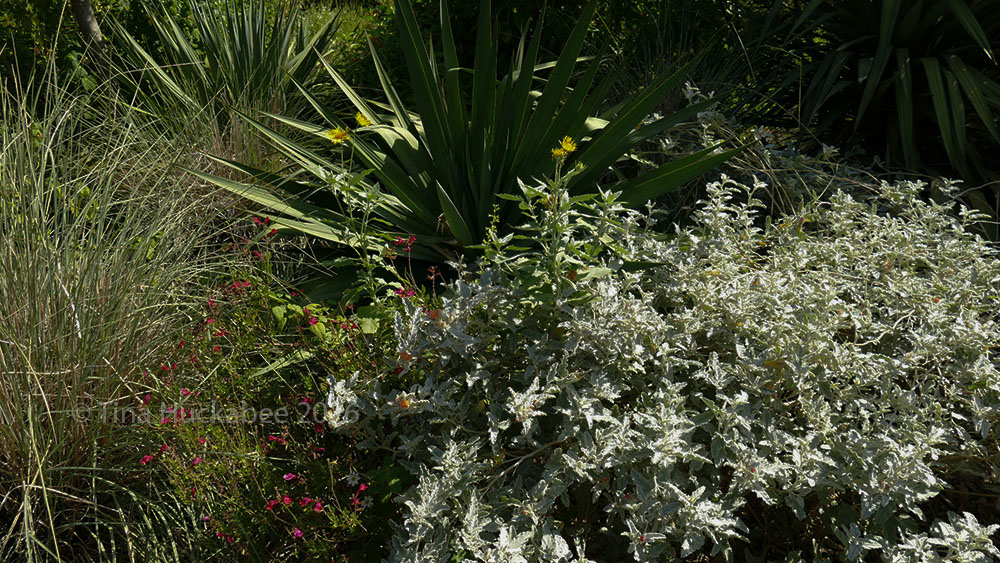
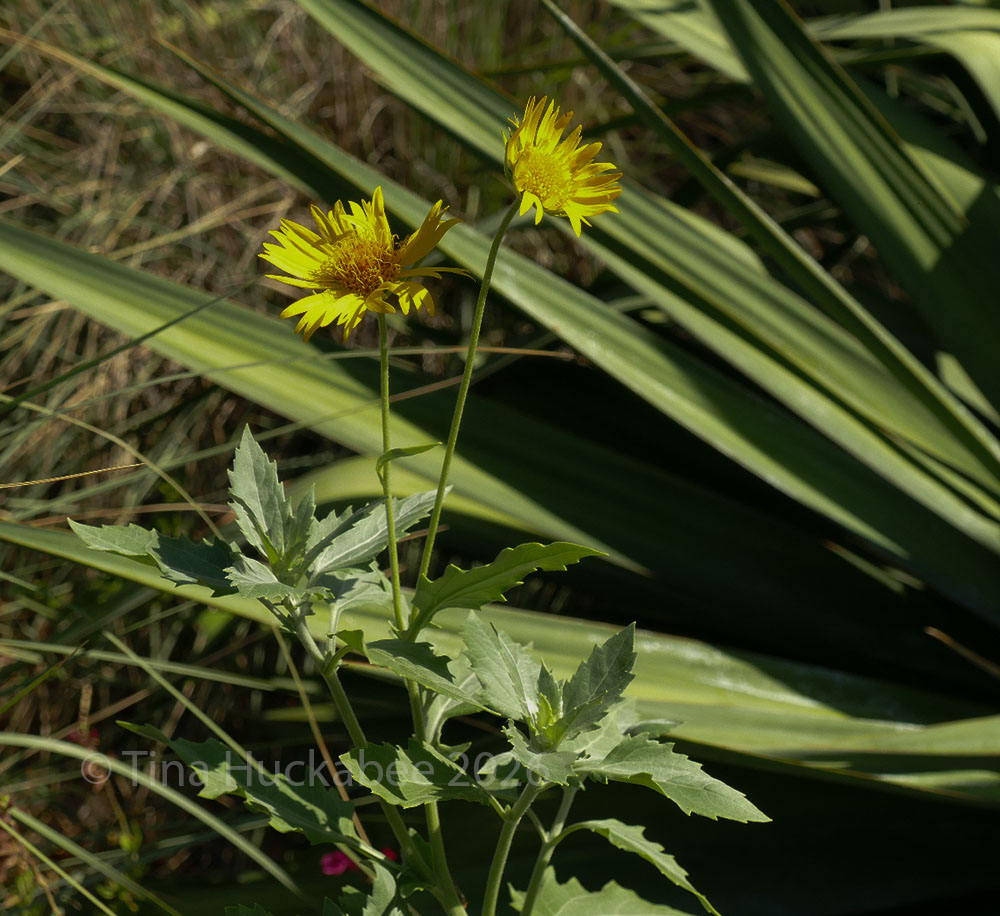
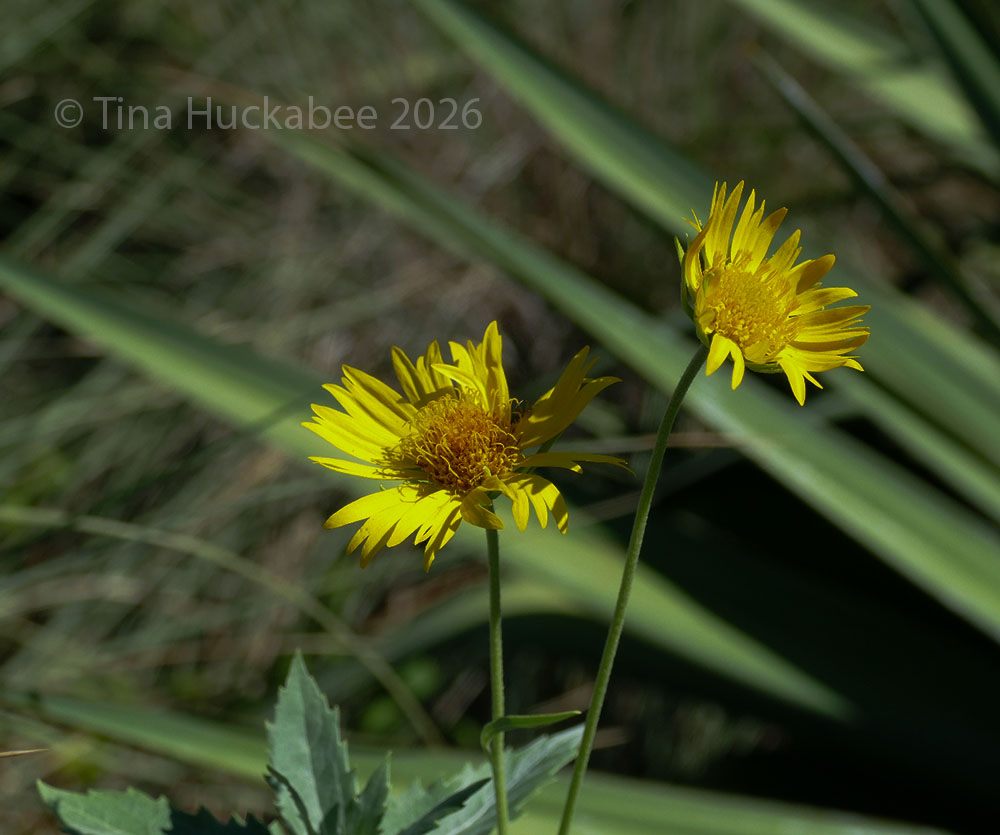
Blue and yellow is a winning color combination and I have plenty of both in my gardens. The yellow is Engelmann’s Daisy, Engelmannia peristenia, the blue is Mealy Blue Sage, Salvia farinacea. The morning of this shot was chilly and cloudy and no pollinators were out and about. Both of these natives are pollinator magnet plants; the sage blooms in summer and autumn, the daisy is primarily a spring bloomer.

My garden is mostly perennial plants, but I certainly make room for a few annuals, especially the spring annuals. Blue Curls, Phacelia congesta, spread far and wide and it’s no wonder, as it’s a plant with multiple flowers and usually a huge variety of pollinators in attendance. This cluster only demonstrates a honeybee at work, but she’s a busy bee with lots of spots to nectar. My garden is awash in this lovely blue/purple plant and I see individuals that have seeded out in the lawns on my street. Of course, those plants are likely to get mowed, as that is the norm in my neighborhood.

I haven’t grown geraniums in pots since I was in my 20s and sported a very brown thumb. However, there’s no need for a green thumb when the native Texas Geranium, Geranium texanum, graces the garden. A small annual herb, this cutey pops up all over the place–and I let it! The foliage is pinnately arranged, the petite flowers a gentle pink, with a yellow center.

This geranium is also called Texas Crane’s-bill, because its fruit resembles a crane’s bill! I’m not sure that I see that myself, but I have no better name for it and I’m charmed by the poetry of old-fashioned common names.

Once the bill is dried, the seeds are launched outwards and upwards, landing in soil to await the right conditions during the following February and March,starting the process again. As it’s not a showy plant, I’m not sure most nurseries would sell it, though I’d imagine seeds might be available from a reputable seller, like Native American Seed.

No stroll through the garden is complete without the skittering of Green Anoles. This one stopped to deliver a side-eyed glare at me, before moving on to its next adventure. It seems a good year for the Anoles, I’ve seen quite a few. I look forward to more lizardy stink-eye as the seasons progress!

Happy spring, y’all!

Count the Spots

A few weeks ago as I strolled through my front garden, I noticed activity in the large group of Burford Holly, Ilex cornuta ‘Burfordii’, shrubs that I planted decades ago along the side of our garage. Not a native to Texas, this plant is nonetheless a tough, xeric evergreen and a good wildlife plant. Mockingbirds and Bluejays have nested in the dense foliage during many a spring breeding season. Other birds, like migratory warblers and native Carolina Wrens busily bop around the tangle limbs hunting insects. Each late winter, hordes of Cedar Waxwings descend upon the shrubs devouring the ripe red berries in an orgy of eating, stripping the shrubs of those fruits within one day and leaving beet red bird poop splatters on the driveway and any car parked nearby. Our honeybees are fond of the tiny flowers that bloom in March.

On the morning of the stroll I noticed flitty movement by quite a few winged things. A group of Eight-spotted Forester Months, Alypia octomaculata, were enjoying the bounty of the Burfords as the tiny flowers were abloom. It was hard to photograph these pretty moths, as they were rarely still for more than a few seconds.

Strikingly beautiful, these moths are mostly black with white and cream spots, blueish-green bands rest on either side at the top of their heads, and dabs of orange bulge on their legs. I first mistook the orange spots as some sort of mothy corbiculae, but no, the orange is decorative, or most likely has some other evolutionary purpose.

You can see four of the spots on this moth’s wing, but can you count all eight?

There we are! Eight spots are visible in this photo, some are creamy yellow, others are white.

The moths’ visit was brief–I didn’t see them again after that morning. They are a common moth, living in most parts of the Continental US and also the southern part of Canada. As well, in the link at the top of this post you’ll see the map of these moths’ homes and that there are Eight-spotted Foresters in Greenland and along the West Coast of Africa.

I grow Virginia Creeper, Parthenocissus quinquefolia, which is the host plant for this moth species, but I don’t recall ever seeing any caterpillars on the foliage. Moths and butterflies (and other insects) evolved alongside plants, and plants where insects lay their eggs are called host plants. When you see foliage munched, it usually means some insect’s offspring are eating and there’s no reason to panic or grab some noxious poison, it’s how a healthy ecosystem works. A vibrant ecosystem requires no chemicals to upset nature’s fine-tuned balance.

I’ve seen Eight-spotted Foresters before, but they’re certainly not regular visitors to my garden. I’m glad they came this March; it’s always good renew an acquaintance.

Early Spring Things

Longer days are bright with sunshine, interrupted occasionally by appreciated rainfall; the spring blooming season is here. With each passing day, sprouts emerge, previously shy blooms unfold, and the landscape’s winter muted tones segue to varieties of green, sparkling with rainbow colors. On a recent cloudy, humid early morning a few spring things caught my eyes.

Crossvine, Bignonia capreolata, is an early blooming vine here in Central Texas. Though the flowers were ready for them, pollinators were scarce; it was too early and too flush with the promise of rain. Orange-yellow flowers are open for pollinators and will bloom, at least for a time. In my garden, native bees are prime visitors to these pretties.

Crossvine doesn’t have a long bloom season. There is the initial, which lasts a few weeks, then usually a second crop later in spring. I see scattered blooms throughout summer.

My very old Texas Mountain Laurel, Dermatophyllum secundiflorum, is on its way out of this life. Most of the top portions are bare, dead wood, but at the base where most of the foliage resides, a flush of blooms have danced their way to opening, purple bliss in color, grape soda in fragrance. The Laurel was one of the first things I planted decades ago and its been in decline for a while.

I’m pleased with my Laurel’s purple clusters this spring and the flowers are in sync with other laurels; all around Austin the Texas Mountain Laurels have been especially gorgeous these past weeks. I guess they really do like drought! I won’t remove the tree until all hope of foliage and flowers is gone as birds like to perch on the branches for safety, squirrels like to nibble their meals up in the tree, and the gardener admires the old tree’s legacy and hardiness.

I love the unwieldy, silver-leafed Wooly Butterflybush, Buddleja marrubiifolia. Throughout the year, it stands as a signature specimen, a welcome change from greens in the garden. Interestingly, the Lady Bird Johnson Wildflower Center’s link mentions that the shrub is deciduous (looses its leaves during winter) and needs protection from hard freezes. Not so, mine! I’ve never protected it from any of our sporadic hard freezes and it stands full and grey/silver in all weather. It’s located facing west and near the street, so may it sit in a warmer micro-climate and is thus protected and ever full of foliage.

The Butterflybush’s darling petite flowers perch on terminal balls and attracts many kinds of butterflies, big and small. I typically see the pollinators for this plant later in the year.

Another rangy plant which is a neighbor to the Butterflybush, are two specimens of Agarita, Mahonia trifoliolata. I’ve always wanted Agarita in my garden and finally planted these two 5 years ago when my front area became full sun. Each has grown apace, producing early yellow blooms for bees, followed by yummy fruits for birds and mammals. Humans also enjoy the berries, which can be made into wine and jelly, though this human is glad to leave the fruits for the critters.

The small flowers are honey-sweet and attract honey and native bees. The only thing I don’t like about the Agarita are its spikey, ouchy, leathery leaves! I’m not a fan of plants that hurt, but I’ve made an exception for the worthy Agarita!

A super early bloomer this spring is one of the annual Blue Curls (or Caterpillars), Phacelia congesta. I have gobs of these annual spring wildflowers that re-seed themselves, but they don’t usually bloom until late March or April. Popular with the pollinators, I’m always amazed at the great variety that show up when these cute things are blooming. If you look carefully, you can see what look like two ants in one of the top blooms. I can’t tell from the photo, but it’s possible that these insects are tiny native bees. Once the blooms set their tiny seeds, migrating birds munch those seeds and help spread these beauties to other places. I see volunteer Blue Curl plants all over my neighborhood in lawns. Sadly, I’m sure most of those plants are mowed down well before growing tall enough to bloom.

Iris blooms are ubiquitous to spring gardens everywhere and mine have begun their frilly floral presentations this week. I don’t know the variety as these bulbs were here in the garden when we moved in. In addition to being lovely and large flowers, they are a fragrant addition to the garden.

Our winters are short and not too difficult, save for a week here, or week there. Even so, when the green-n-color production begins, it’s hard not to be grateful for nature’s cycles and bounty. Spring is all about renewal and life, so go outside and enjoy!