Woo-Hoo!

Or is it hoo-hoo?  Or maybe trilllll and whinny in the early morning hours?

No, it’s relief on my part, so it’s a big yay! 

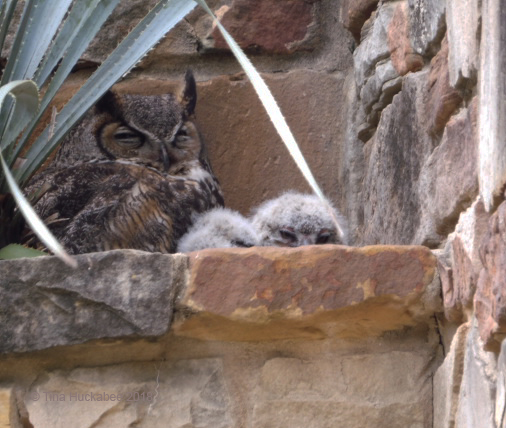
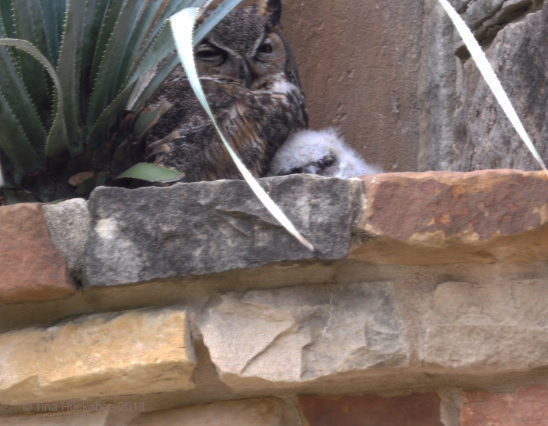
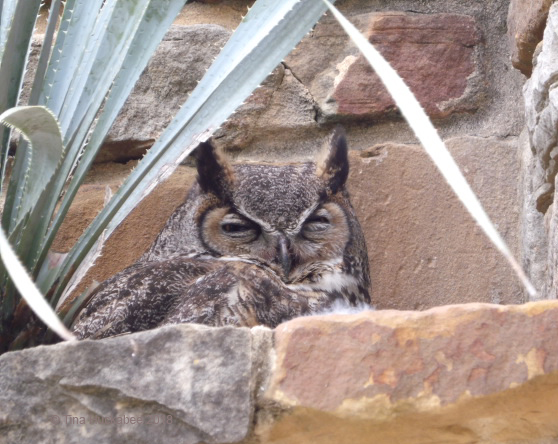
An Eastern Screech-OwlMegascops asio, snoozes in the box early this morning.

This owl watching season has been an odd one, with this enigmatic bird more than discreet than usual.  I’ve only heard screech song three times this winter, and until this morning, hadn’t a single glimpse of the shy little raptors.   But here she is!  Is she exhibiting her nesting behaviors, perhaps?  I certainly hope so!

Update:  the nest box camera position didn’t capture any part of her owl body as she was hanging out this morning and she didn’t snuggle in for her daytime rest until I published, but here she is, boxed in for the day.

Rock rose (Pavonia lasiopetala): A Seasonal Look

If you’re a fan of pink, this is the post for you!

Rock rosePavonia lasiopetala, is a small shrub adorned with blooming Barbie-doll pink flowers through much of the growing season.  In my Austin garden, the first blooms appear in late April, with stragglers showing up as far into the calendar year as early December.  The charming hibiscus-like flowers,

…framed by fuzzy, scalloped foliage, are congenial and reliable garden partners.  A water-wise perennial shrub, Rock rose flowers are visited by many winged things:  butterflies, bees (both native and honey), and hummingbirds.  I guess all that pollination activity explains why they seed out so readily–I always have many seedlings to share.

Honeybees and several varieties of native bees regularly work the blooms. Most of the butterflies who visit Rock rose blossoms are smaller skippers and hairstreaks.

With its mallow blooms ranging from subtle, sweet pink,

…to garish, stopp’em-in-their-tracks pink,

…this shrub is a must-have for anyone gardening in Central Texas and southward into Mexico.

Masses of blooms

A single flower paired with blooms-about-to-happen. Rock rose isn’t a host plant for any insect that I’m aware of, but someone’s been nibbling at these leaves.


In winter, Rock rose retains some of its leaves, but definitely thins out;  I guess I’d label it as semi-evergreen.  I typically wait until late February to prune back  the shrubs to about 10-12 inches in height.  In fact, I just completed this winter chore.

Look closely to see the nearly naked limbs of February just-pruned Rock rose shrubs.  This garden boasts a cluster of Rock rose shrubs which border a walkway.

As with all things winter in my zone 8b garden, now is a good time to prune and clean out garden detritus which has accumulated.

The leaves of my American sycamore, Platanus occidentalis tangle in the web of Rock rose limbs.


Throughout March and April, the foliage will return–vigorous and verdant–ahead of the rosy charmers.

This is an April shot of several Rock rose shrubs bordering a walkway.

The first set of blossoms sprout in spring, blooming prolifically through summer, depending upon rainfall and /or irrigation.

Opening at dawn, the flowers remain available for critter pollinating and gardener viewing until afternoon, when they shutter their petals for the night.  As summer temperatures creep upwards, the blooms close earlier, often by mid-afternoon.  This is especially true of those growing in full sun. Well, why not??  It’s hot out there and closing the flower shop early in the day is how these plants conserve moisture during the dry, toasty summer months.

Because Rock rose produces masses of flowers, with heaps of seeds following, I typically prune a second time, by about one-third, sometime between  May and late June, depending upon rainfall.  I do this for two reasons: one–to limit seed dispersion after blooming (read: a good, old-fashioned “dead-heading”);  two–to shape the shrubs and encourage new growth.  Rock rose blooms on new wood, and if the gardener prunes the shrub 2-3 times in the growing season, the plants look tidier.  That said, I’ve seen many Rock rose shrubs go unpruned during the growing season and the worst result is that they’re leggy and floppy and produce multitudes of seeds, resulting in more Rock rose plants.

That’s not a bad thing.

Flowers open alongside developing and developed seeds.

Rock rose is a stellar summer bloomer, even during drought, but the flower show  declines unless there’s measurable rainfall.  In the driest period of summer, supplemental watering is appreciated, but Rock rose is a water-wise plant and thrives without much irrigation.

I  prune once more in late August, ahead of the autumn rains, shorter days, and the promise of cooler temperatures.  This readies the pink wonders for their autumn show!

As the temperatures cool in autumn, the flowers still open early, but  stay open until sundown.

I like Rock rose planted in groups of three, or more.  This maximizes visual impact in the garden and pollinators have plenty of pink to partake of.   It combines beautifully with other plants:

Rock rose paired with Katie’s Dwarf Ruellia.

One of my favorite combinations is rosy Rock rose planted with sunshine yellow Zexmenia (Wedelia acapulcensis var. hispida).

Rock rose, Zexmenia, and Purple coneflower (Echinacea purpurea) are a winning combo in spring and summer.


Rock rose performs best in full sun, but handles significant shade, with diminished flowering; I wouldn’t recommend it for deep shade. Shrubs growing in shade (and sometimes, those in sun) may develop mildew on the foliage.  Typically, the mildew resolves and other than temporary unsightliness, isn’t an issue, but it’s something the gardener should consider when choosing to plant this perennial.  When it happens, I prune offending shrubs and the foliage rebounds.

Another issue with Rock rose is its proclivity for seed production.  If you grow this shrub, you will have Rock rose babies each year.

A volunteer Rock rose beside the pond.

The Rock rose which border the raised bed are all volunteers. They’ve grown out of the crack between the retaining wall and the driveway.  Even in full, west sun, these Rock rose shrubs never wilt.  Who knew that concrete is such an effective mulch?

You can pull seedlings and compost, transplant them elsewhere in your garden, or give them away.  More than likely, you’ll do all three of those things.  The seed bounty of this native plant–while annoying–is a gift.

From left to right:  two open blooms, a bloom about to open, a newly closed bloom with developing seeds, and in the background, a seedhead with seeds nearly ready to disperse.

When my shrubs develop this many seedheads, I grab my Felco pruners and have at it!  I prune the branches as little as 4-5 inches to as much as 12 inches, all depending upon how big I’ve let my shrubs get (ahem!).  The goal is new stem growth and a new set of blooms.

The seeds in the middle of this photo are ready for dispersal.

Newly formed seeds (green) and mature seeds (brown).

As well as providing for pollinators, I have witnessed various finches nibbling at the seeds, so Rock rose’s worth for wildlife extends beyond the blooms.

For those gardening with deer guests, Rock rose is only mildly deer-resistant.

Rock rose is not a long-lived shrub.  I’ve read that individual plants live approximately 5 years.  I can vouch that some of my plants have died at around 5 years, but most have lived far longer.  If you notice foliage turning yellow and  withering as if needing water (and you’ve irrigated or have had rain), don’t try to save the plant–it’s done.  Your best bet is to yank it out and plant one of the many seedlings which have popped up in your garden.

Rock rose is a lovely, tough, blooming shrub providing plenty for pollinators and birds.  It requires some maintenance during the growing season in the form of regular pruning, but is otherwise an easy-peasy plant to grow, with rewards aplenty.

Spring:


Summer:

Fall:


Winter:

In mild winters, the foliage remains. In colder winters, more of that foliage will disappear.

Coral honeysuckle (Lonicera sempervirens): A Seasonal Look

Coral honeysuckleLonicera sempervirens), loved for its eye-popping clusters of pollinator-delighting blooms and its robust  demeanor in the garden, is a favorite perennial vine for many Texas gardeners.

This vertical loveliness is native to East Texas, Florida, with a northward range up the east coast of the United States, but is also found in many other parts of the continental United States.   Here in Central Texas (Austin, Zone 8b), Coral honeysuckle provides semi-evergreen color, punctuated by spring outbursts of gorgeous red blooms, with yellow interiors.

The bloom clusters remind me of a group of debutants, all in elegant, clingy red evening gowns, with an underneath peek-a-boo of yellow petticoats.


I’ve grown two of these vines in my garden.  This one in full sun,

…and this one in a mostly shade spot.

A May shot of a shady spot with blooming Coral honeysuckle anchoring the garden.  Aside from the bicycle, and (from left to right), grows Frostweed, Inland sea oats, and Turkscap.  Some Spiderwort are still popping with purple blooms.

The bulk of blooming occurs mid-to-late spring.   The flowers on my vines have bloomed as early as February, sometimes with continuous blooming into May.  Peak bloom time occurs during March and April, with a sprinkling of blooms in early summer.

An excellent climber–perfect for a trellis, arbor, or fence–Coral honeysuckle flowers more in full sun.

In woodland areas, it clamors over the ground as well as up trees and rocks.

Pollinators of all stripes, sizes, and colors flock to the tubular founts of pollen and nectar:

Nectar stealing Honeybee at top of bloom, with native Green Metallic bee (Halictidae) on left, toward back of bloom cluster.

Nectaring Metallic Green bee.

Horsefly-like Carpenter bee (Xylocopa tabaniformis).

Honeybee coming in for a meal.

Hummingbirds are attracted to the blooms, though I’ve never seen any at my blooms.   I suspect that there simply aren’t many (if any) hummers around during the peak bloom period in my garden as they don’t typically arrived back in Austin from Mexico and Central/South America.  That said, the tubular red blooms certainly fit the profile of hummingbird attracting flowers.

Additionally, this honeysuckle is the host plant for a butterfly, Spring Azure, (Celastrina ladon), and a moth, Snowberry clearwingHemaris diffinis.

Springtime sees the biggest burst of blooming, but sporadic clusters occur in summer as well, usually after a tropical rain event.

The vine maintains a lush, green presence throughout the summer months, requiring minimal water during the dry and hot of summer.  I irrigate in the hottest of the hot, during those months with nary a drop from the sky.

Coral honeysuckle is a water-wise addition to any garden.


I usually see the fruits of the Coral honeysuckle in summer and early autumn.

They must be yummy, because the fruits don’t last long on the vine.  Various birds enjoy the fruits and foliage protection from honeysuckle; I’ve seen Mockingbirds, Carolina Wrens, and other birds seek refuge–and probably snacks–in both of my vines.

Nascent coral honeysuckle fruits.


As summer segues into autumn, Coral honeysuckle continues its solid green contribution to the garden.


During winter the vine can freeze completely if the freeze is hard and long enough.

There are usually a few token leaves remaining.

More often than not, the foliage simply thins a bit, with some strands lacking foliage and the vine maintaining the majority of its leaves.

As the days grow longer and the temperatures warm, whatever foliage which quit the vine during winter’s freezes, return–lush and full and ready for the new growing season.

New Coral honeysuckle growth is exuberant–to the point that the fresh limbs reach to the sky in unwieldy growth spurts, requiring occaisional tucking in and twining around so as not to clamor over other things in their paths.

Additionally, emerging foliage and stems blush burgundy, augmenting the brilliancy of the blooms.

The crowning glory of this honeysuckle vine are the masses of bloom clusters which follow new spring growth.

Coral honeysuckle prefers well-draining soil and can develop powdery mildew if its feet are damp and the arms and legs of the vine congested.  That said, even in my clay soil and during the heaviest of flooding, I’ve never seen mildew on my leaves.  I mulch new plants, with a refresher of either commercial mulch or shredded leaves, as needed.  I water my vines, along with the gardens they’re a part of, during the dry of summer and prune bare strands when/if necessary.

I leave my vine as it is–a bit wild and wooly–so that birds can perch and hide, if someone scary (hawk, cat, gardener) comes near.  Coral honeysuckle isn’t invasive, it just requires a ‘haircut’ from time-to-time.  The oldest strands of vine are easily snapped off, making the work of pruning an easy task.  If you prefer a very tidy garden vine, Coral honeysuckle might prove a little feral for your taste.  But give it a chance: Coral honeysuckle’s beauty and hardiness make its mild rowdiness well worth the minimal shagginess.

My biggest complaint about Coral honeysuckle (and it’s not a complaint about the plant at all!) is that I don’t have enough room for more of these tough, pretty vines.  Gardeners appreciate the stalwart nature and beautiful blooms and foliage of this vine, wildlife appreciate its contributions to their safety and diet.

Coral honeysuckle:

The vine grows to the left of the Softleaf yucca.


Spring:


Summer and Autumn:


Winter:

Coral honeysuckle flanked by dormant Turkscap (right), Inland Sea Oats (bottom) and in-bloom bottle tree (left).

A water-wise, wildlife-friendly, and gardener-pleasing vine–you’ll be glad it grows in your garden!