Birds and windows don’t mix. When they come into contact with one another, the bird is usually the looser. Glass reflects the outdoors and birds see the glass as a place to fly through. Research now suggests that in the United States, 1 billion birds die each year due to window strikes. Even when a bird flies away after a strike, it’s estimated that upwards of 60% die within a 24 hour period. This information comes from wildlife rescue organizations’ records of birds brought in for treatment after window collisions.
The numbers are daunting and birds are dying. We human types can mitigate some of that problem by using window decals in the forms of lines, dots, or cutesy decorations.
I’ve opted for cutsey in my window situations.

Decals are easy to put on windows, available through many sources, and last quite a long time. In my own experience, my back garden windows are the main source of bird collisions, obviously because of the feeders. For some years now, I’ve placed decals on those particular windows (I’ll talk about other window remedies later). While I love the aesthetic of a clean, large window, dead or dying birds because of those windows is a non-starter for me. I’ll tolerate some interruption of that sheet of beautiful glass for the sake of even more beautiful birds. I’ve grown used to the decals; they don’t hinder my inside enjoyment of the outside and it’s now a rare event that a bird hits my windows.
This window is in in my living room, the photo taken from outside. It’s easy to see how a bird might think it can fly right through. It’s been 4 years since a bird hit this window; sadly, it was a beautiful Cedar Waxwing. In addition to the decals placed at the bottom half of the window placed a few inches apart, there is an indoor blind hanging in the upper half with slats partially open so that the horizontal slats indicate to birds that the window isn’t a flyway.

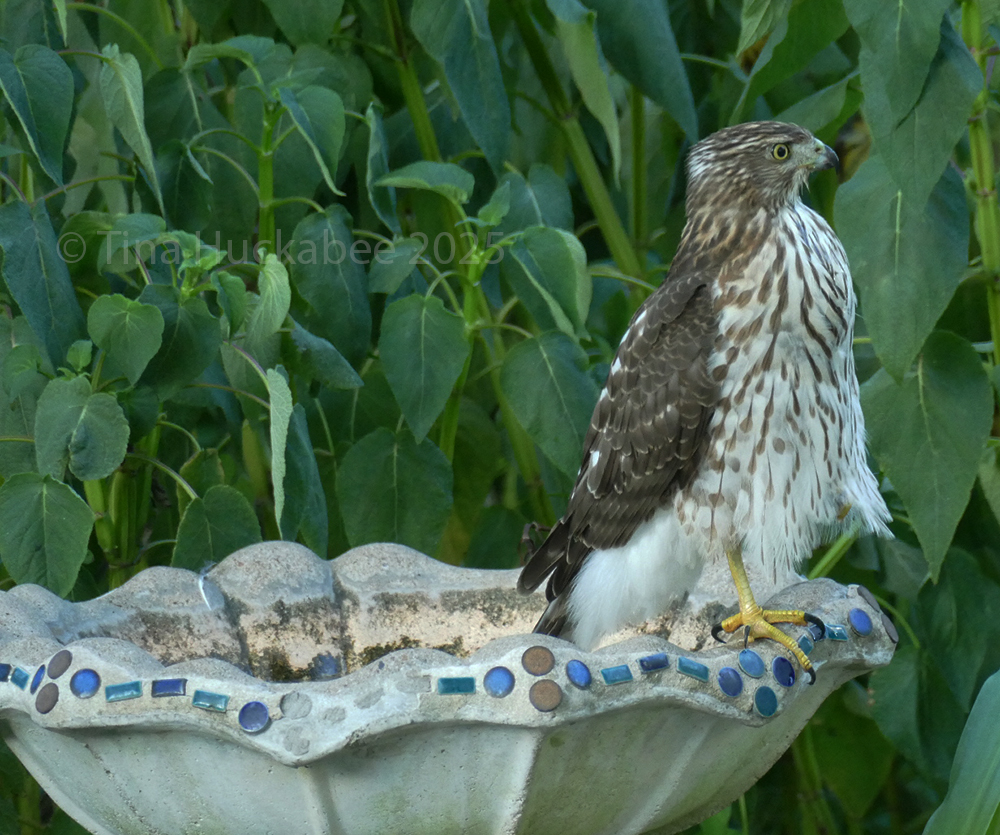
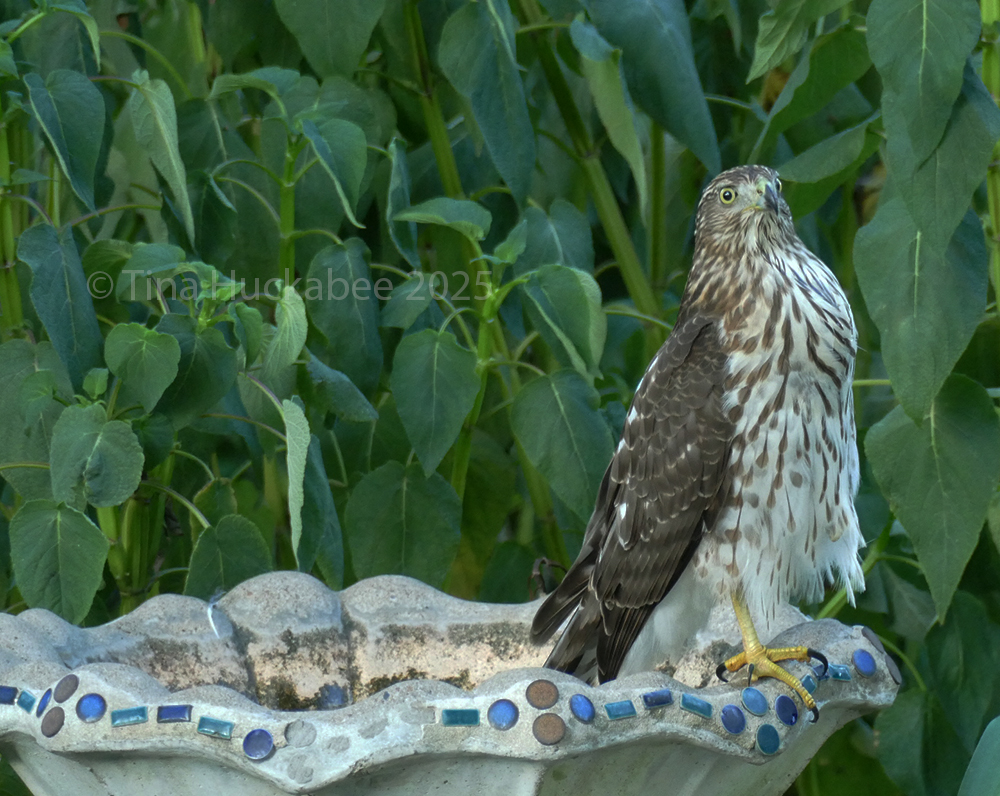
When we were in Costa Rica, a number of the places we visited opted for vertical lines on the windows. Some newer buildings are using glass that has dots or lines formed in the glass. Decals, lines drawn on glass with oil-based paint markers, blinds (vertical or horizontal), patterned draperies–anything that disrupts a reflection of a natural landscape is a cue to birds that the window shouldn’t be part of the bird’s flyway. I’ve witness a hawk, and many migratory and resident birds fly towards my windows, to suddenly bank away as they clearly recognized that the path isn’t safe. What they think the window is at that point I have no idea, but that the birds didn’t head straight into the window is a win for the birds. For me, that alone is worth a few in-the-way-decals.
Most of my windows have blinds on the inside and because there are lines, the birds see that those windows are not through-ways. When I raise the blinds, I’ve placed a few decals on the lower part of the windows so that the birds don’t hit the glass.
If you’d like to read more about this problem, the research to mitigate the problem, and how you can prevent bird strikes, check out these links. The first is from Cornell Lab of Ornithology, the second from Audubon.
Why Birds Collide With Windows
Window Strikes Are Even Deadlier for Birds Thank We Thought
Do it for the birds!