I could have called this post Portrait of a Northern Cardinal as it Hunts-n-Pecks, but that seemed a tad wordy.
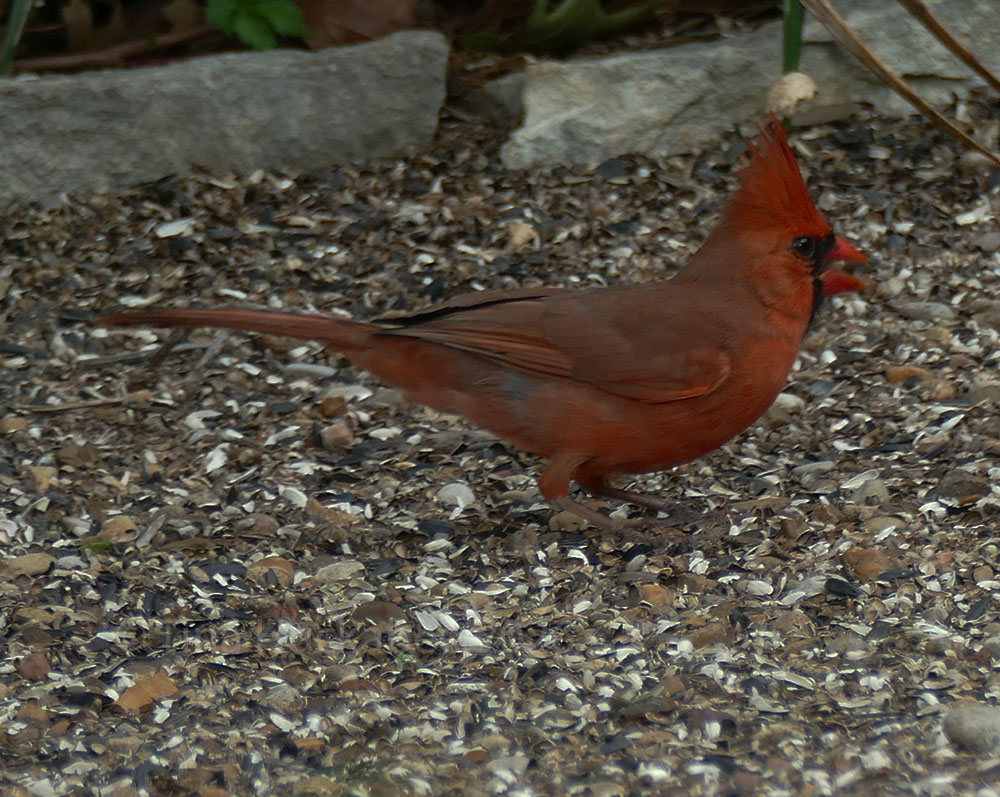
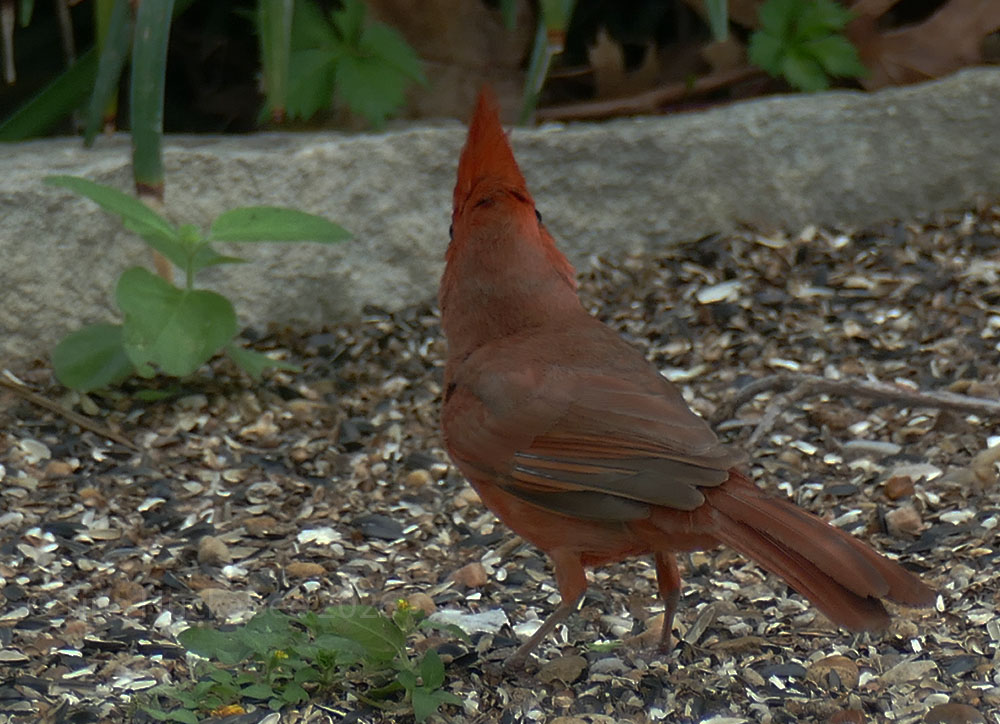
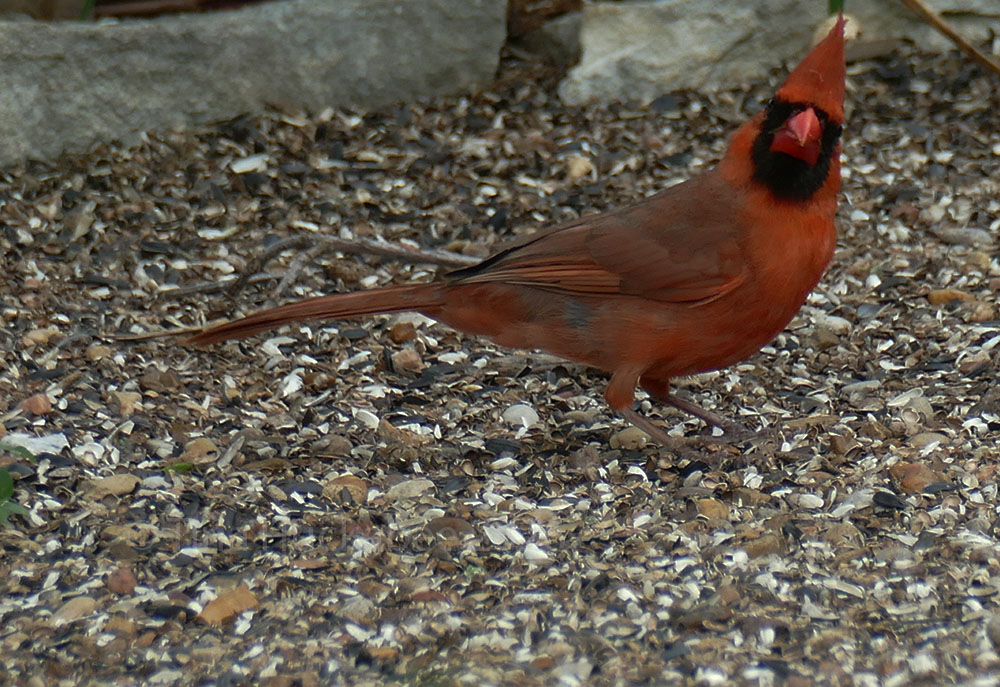
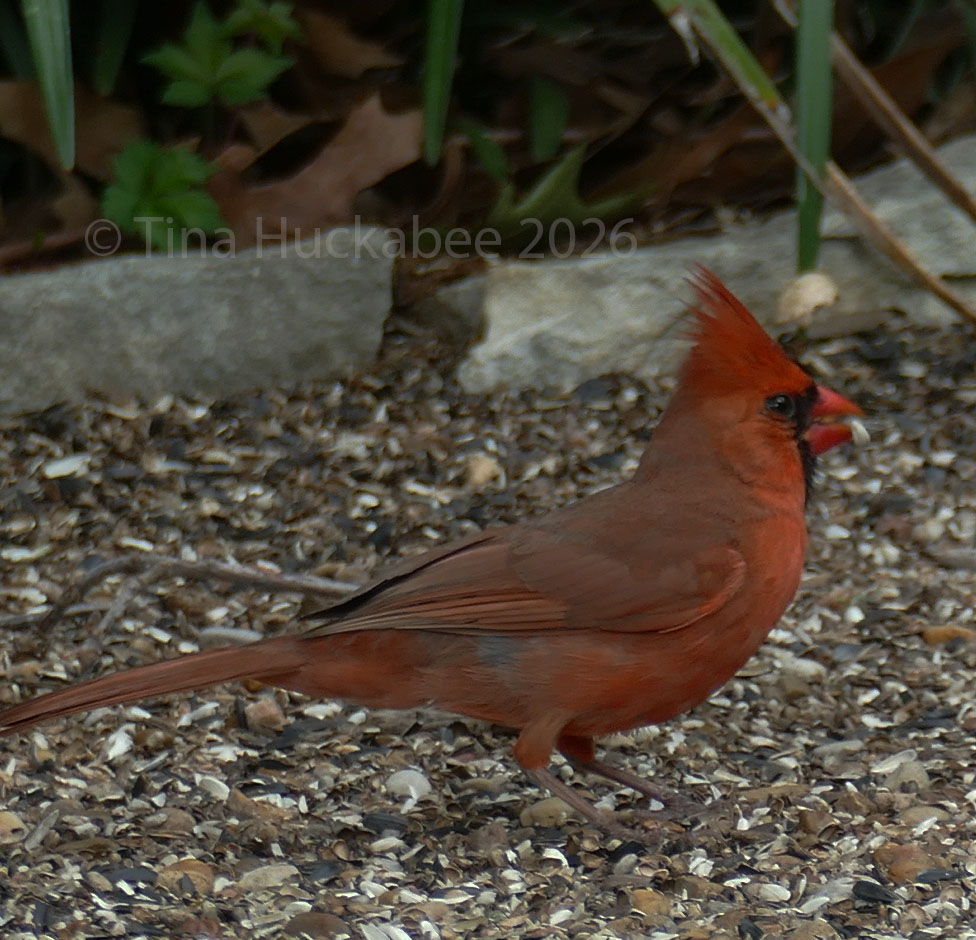
I observed this handsome male and his equally lovely–though less brilliantly colored–mate, as they hunted for fallen sunflower and safflower seeds from overhanging feeders. Ms. Cardinal was flitty and stayed mostly in some nearby greenery, difficult to observe and impossible to photograph.
However, Mr. Gorgeous, no matter which way he turned, was out for all to admire.
Are you looking at me? Here’s my good side!I’m a pretty, pretty bird!
The hunt provided many-a-morsel of safflower!
There are two pairs of Northern Cardinals in this part of my neighborhood. This pair are regulars who dine at Chez Mygardenersays. I don’t see the other two Cardinals often and not at all during this spring breeding season. The male of that pair shows a slightly more ‘cardinal’ color and that’s how I tell the males apart. I’m not sure where the other couple settled for breeding season, but it’s likely somewhere in the neighborhood. I hope both couples are successful in their chick rearing; the world is a better place with more Northern Cardinals.
Hunt-n-peck all you want, beautiful birds–and thanks for adding your grace to my garden.
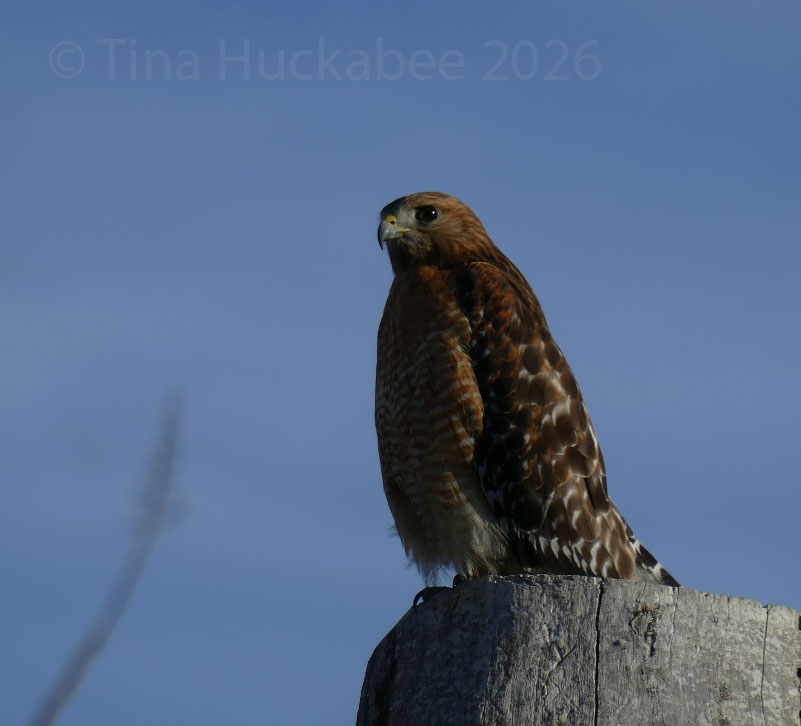
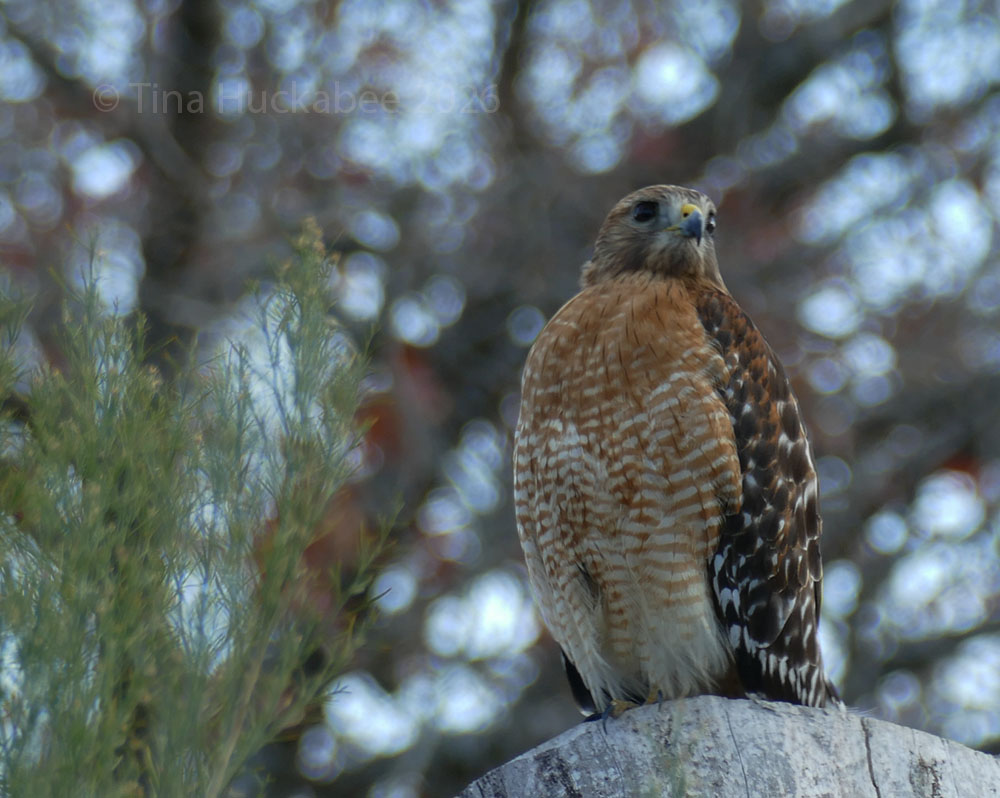
A neighbor alerted me to a Red Shouldered Hawk, Buteo lineatus, perched atop my SIL’s tree stump bordering my front garden. This handsome guy sat royally, observing his realm for at least one hour.
I’m not 100% sure it’s a male. If its mate was perched along side, the gender of each would be obvious: female hawks are bigger than their male partners. That being said, he’s not huge and usually, the girls are quite large birds. I’m sticking with my non-professional assessment that this hawk is a dude hawk.
I suspect it is one of the adult hawks who nested successfully in a tree around the corner from my house last spring, which you can read about here. Unhappily, about six weeks ago, I found some feathers–more than from a preening session–at a house on a street adjacent to my own. I don’t know what might have killed that hawk, as Red Shouldered hawks are apex predators for this neighborhood. I’m guessing that maybe the hawk victim was on the street and was hit by a car (though no blood, mess, or body was seen) or perhaps, the hawk died of rat poison. If that’s the case, whatever attacked and ate the sick hawk was also poisoned.
People, stop hiring companies that use rat bait stations. Despite what the company will tell you, that stuff kills more than rats. Check out this article from Audubon.
Recently, my lone hawk has perched in various spots around the neighborhood with no mate in accompaniment. I hope he finds a new mate; he’s a good-looking chap and I’m certain he has nice hawk manners. He was also a good provider to those two darling hawk chicks last spring.
I took these photos while wearing shorts and a t-shirt. Yes, in January: welcome to Texas winter weather. One day it’s shorts, the next day it’s parkas and boots. I’ll be packing those shorts away–at least for the very near future–as Texas is about to a receive a dose of icy freeze. All my blooming things will be done for the year and winter pruning will ramp up next week. Boo.
One can tell when there’s an ice event crossing the border into Texas, as our junior senator, Ted Cruz, hops a plane for a warmer place. This time it’s apparently that bastion of Blue, California.
Here in Central Texas, resident birds slow down their feeder feeding during August, September, and October. The chicks have fledged and are mostly grown, the next breeding season is far enough away that adult birds are just taking care of themselves. Also, there are plenty of plants with seeds and fruits available during late summer and autumn, so feeders aren’t emptied with the enthusiasm as during other times of the year. Native plants are always the best feeders for birds! Birds are certainly around, but the garden is quieter in these months; I miss the birdie antics and chatter.
In the last few weeks, avian activity has ramped up. There are more birds and a greater variety of species. As well, the mated pairs are hanging out again and feeding together. There are two Northern Cardinals, this female,
…and her mate, that are regular visitors in the garden. For a while, I spotted a second male flitting about, but I’m guessing that this handsome guy chased him off and won her heart.
Red-bellied Woodpeckers are common in this neighborhood and several of her kind regularly stop by for suet (seen here) and peanuts.
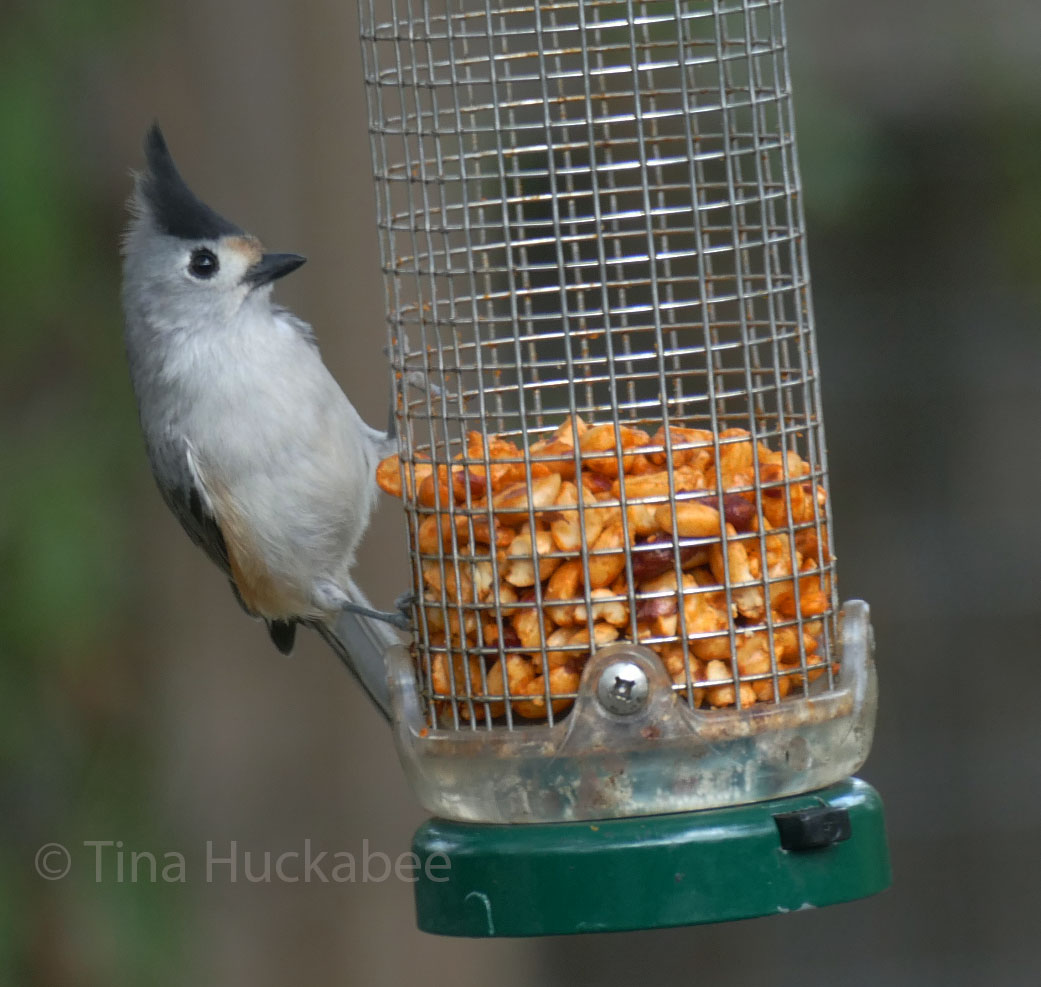
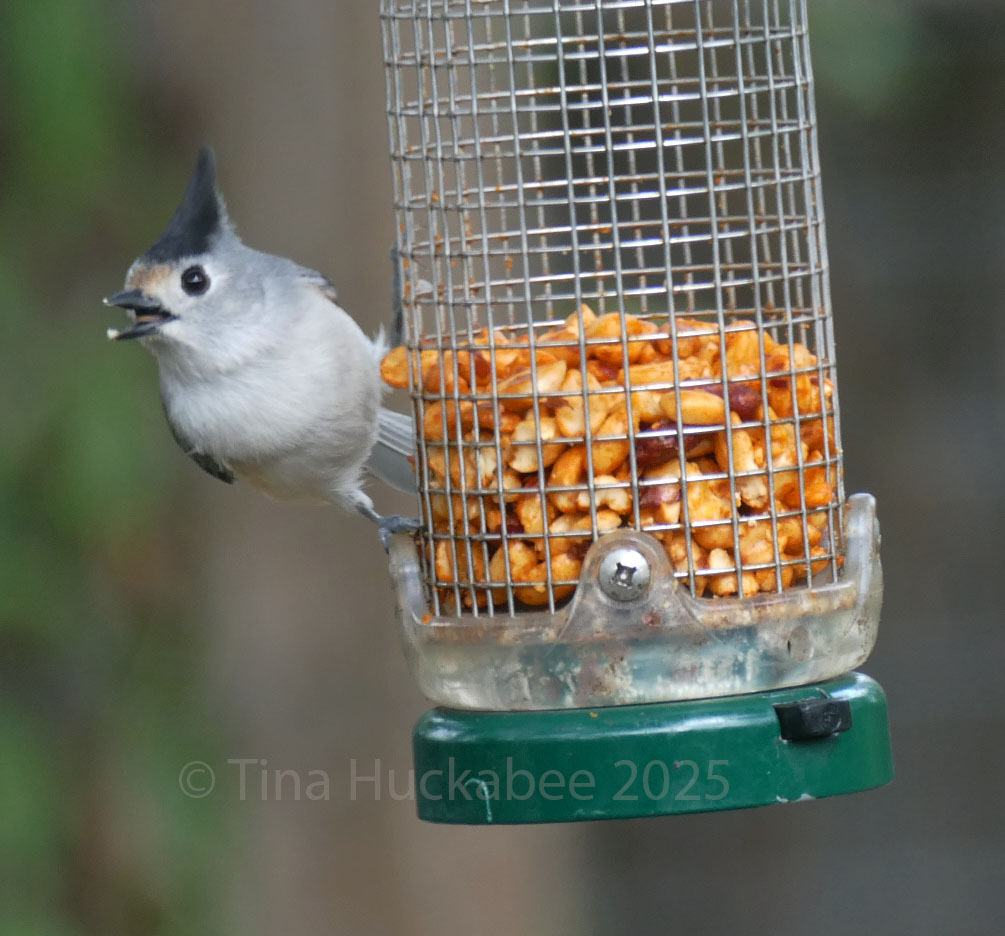
Some of the cutest birds are Black-crested Titmice. Native to Texas and northern Mexico, these adorable birds zip from tree-to-tree, branch-to-branch–and really love peanuts.
What a darling!
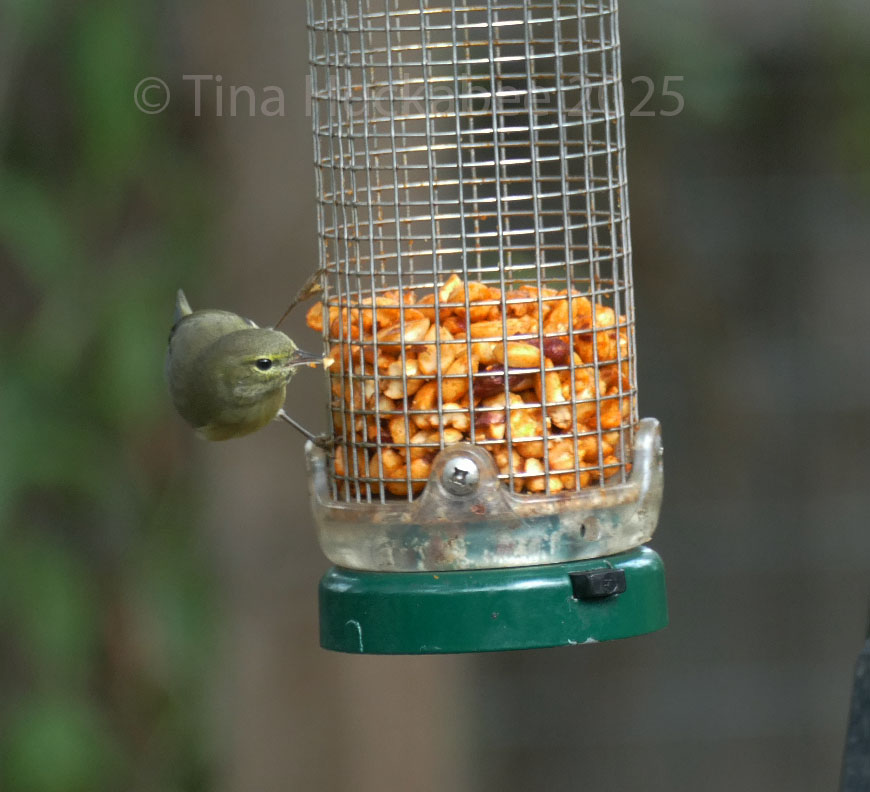
I’m always happy that over-wintering warblers hang out in the garden from November to April. Typically, there are one or more Orange-crowned Warblers, like this little one:
Also, Yellow-rumped Warblers and Ruby-crowned Kinglets are winter residents. So far this autumn I’ve sighted only one of the Butter Butts (Yellow-rumped Warblers) and no Kinglets in my garden. I have heard both kinds of birds nearby, so they may be snatching peanuts when I’m not looking.
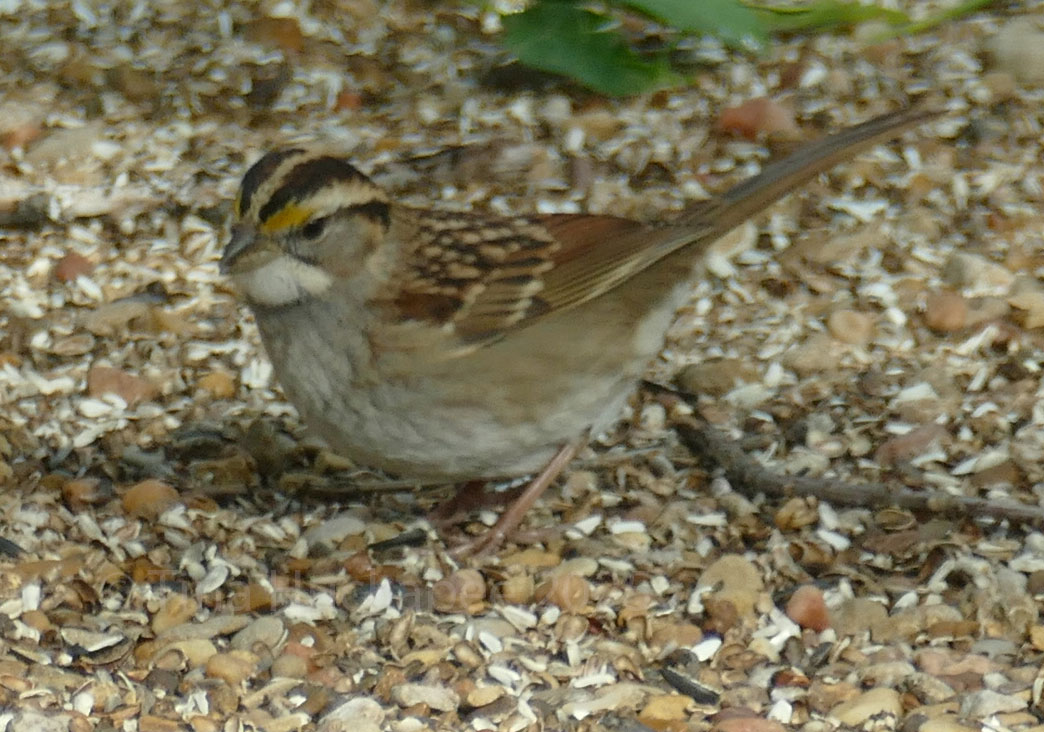
This attractive fella and a buddy spent a couple of days cleaning up sunflower and safflower seeds on the ground. A White-throated Sparrow, this part of Texas is included in its non-breeding territory. I’ve seen this species before, but they’re not common visitors to my garden.
A me-and-my-shadow capture of a local Blue Jay as it snacks on some peanuts. Blue Jays are always fun birds to have around: loud, raucous, and beautiful, they’re obnoxious charmers.
I’m keeping count of my backyard birds for Cornell Lab of Ornithology’s Project Feederwatch, though I don’t really need a reason to watch birds! It’s a great way to learn about resident and visiting birds, their habits, breeding, and food likes, and it’s easy. Birds are boss and always interesting to watch!