This is what became of my lovely Soft-leaf Yucca, Yucca recurvifolia.
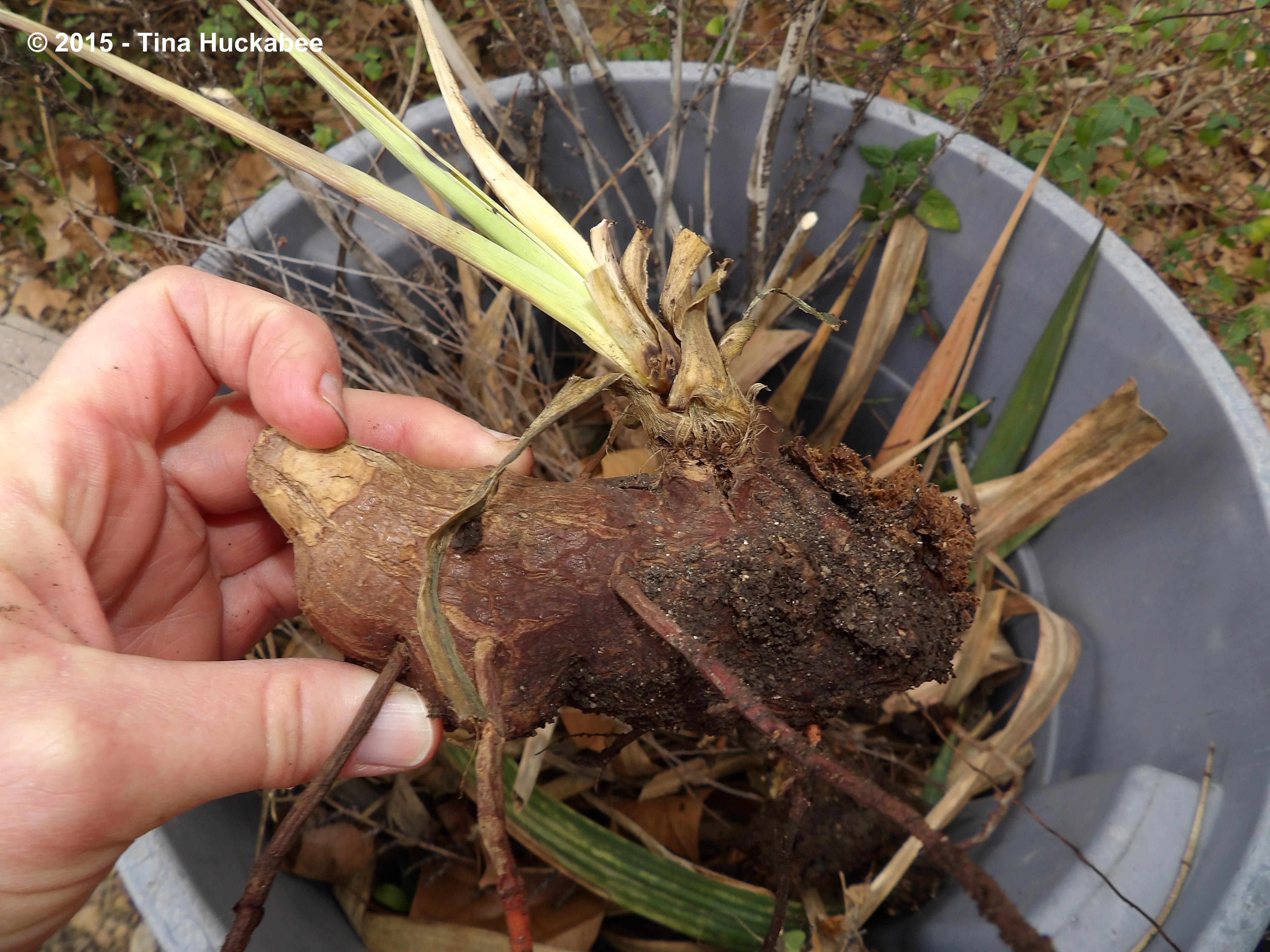 The nascent pup shows the discoloration common with a probable fungal infection from growing in a too-wet soil.
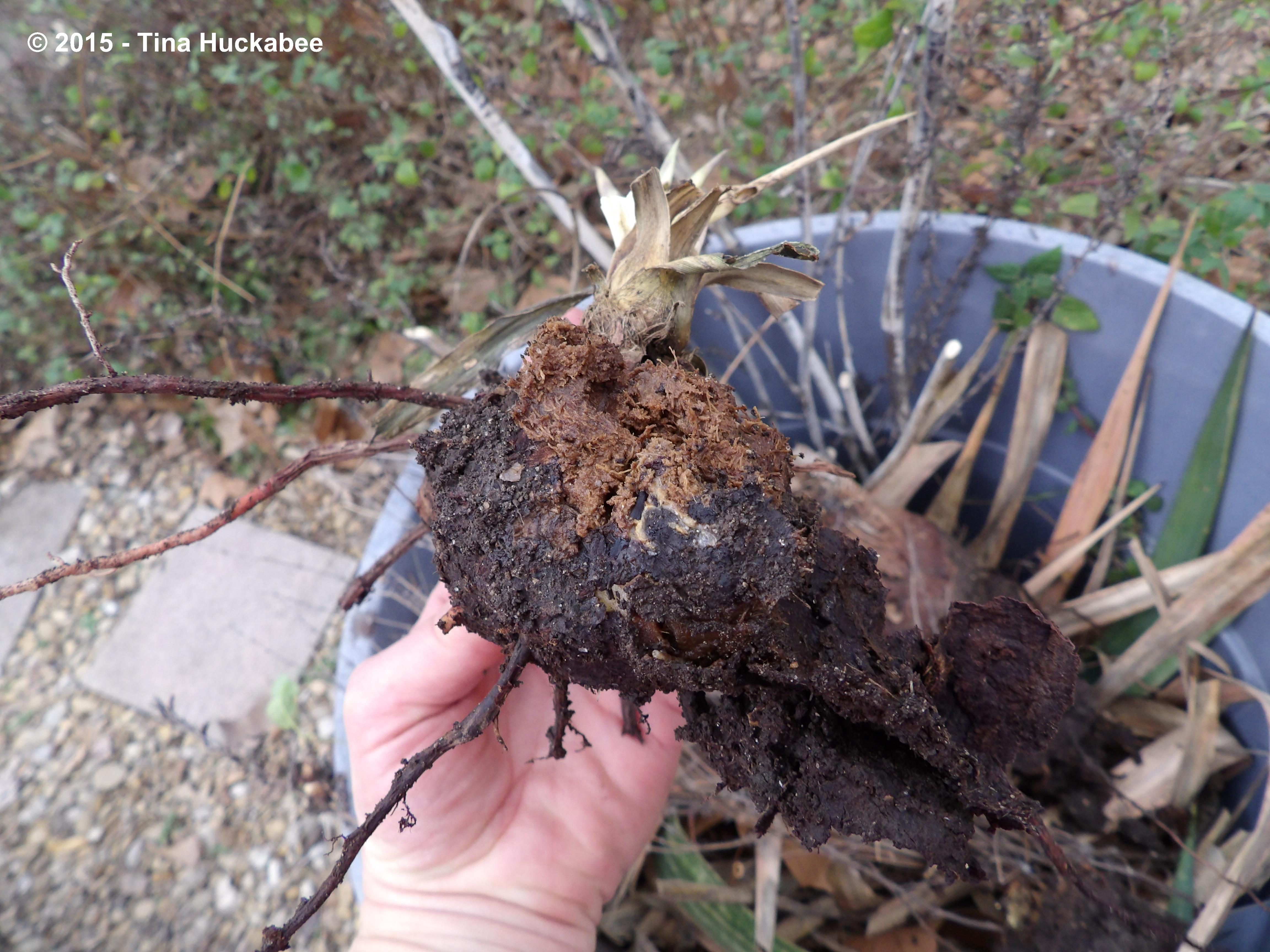 Additionally, the large root came out of the ground without complaint and was rotted, stinky, and mushy–those last two terms aren’t technical, but they are descriptive.

Yuck.
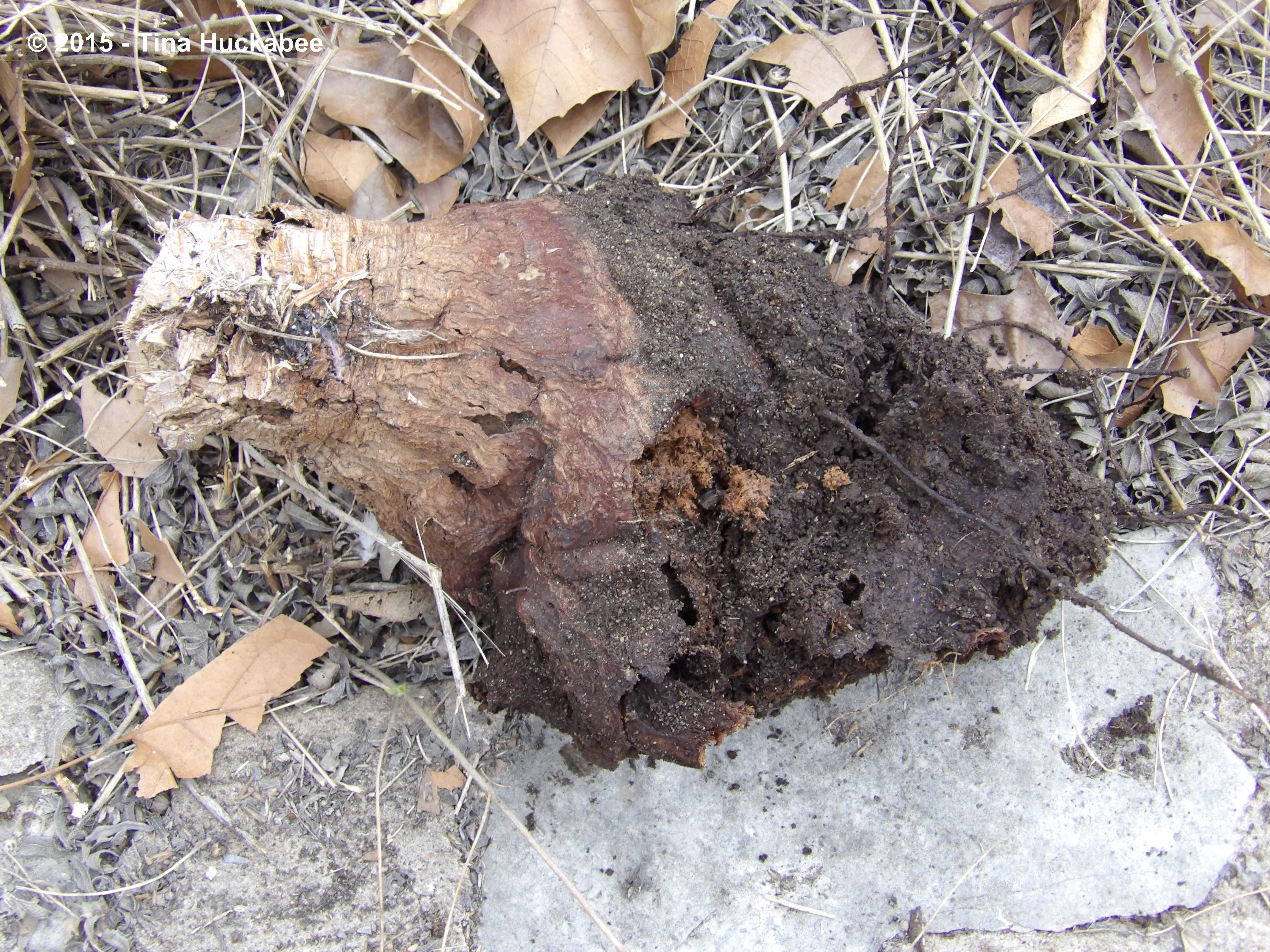
I don’t have a good shot of them, but there were also fat, gross grubs in the mass of squishy, smelly root. The grubs crawled back into their fetid lair before I took these photos and I wasn’t going to stick my hands or even a trowel into the disgusting mess to look for them. You’ll just have to take my word that they exist.
Here’s a head of one, though, in case you’d like to look at it.

I wrote about my concerns for this yucca in December 2014 in this post. Once I removed the mature plant, I hoped that the root with the yucca pup would survive and thrive. At that time, the pup looked healthy and the root was firmly ensconced in the ground, so my positive outlook for the health of the yucca was reasonable. Alas, I believe over watering by the neighboring lawn zealot truly did this yucca in during winter. I think fungal problems were established and the damp of winter took care of the rest.
It’s a bummer, losing this yucca. I’ll miss the evergreen form and gorgeous, twice per year bloom stalks. Oddly, I don’t have a photo of the deceased yucca, but this is another Soft-leaf Yucca in my garden,
 …and it, as well as the other eight specimens, seem healthy. Soft-leaf Yucca is striking in the garden–foliage and blooms add so much in grace and structure.
I’m not going to run out and buy anything to plant in the newly vacated spot. If design was my priority, I would replace the yucca with something else that is evergreen with interesting structure. Instead, I planted these two dormant Plateau Goldeneye, Viguiera dentata.
 They’ll flourish in the western exposure and they can handle much, or little water–whatever is dealt them. I pulled these two out from a work area at the side of my house where they receive no water from me–they established themselves because that’s what Goldeneye do. An excellent wildlife plant, attracting pollinators and birds, Goldeneye are pretty too.
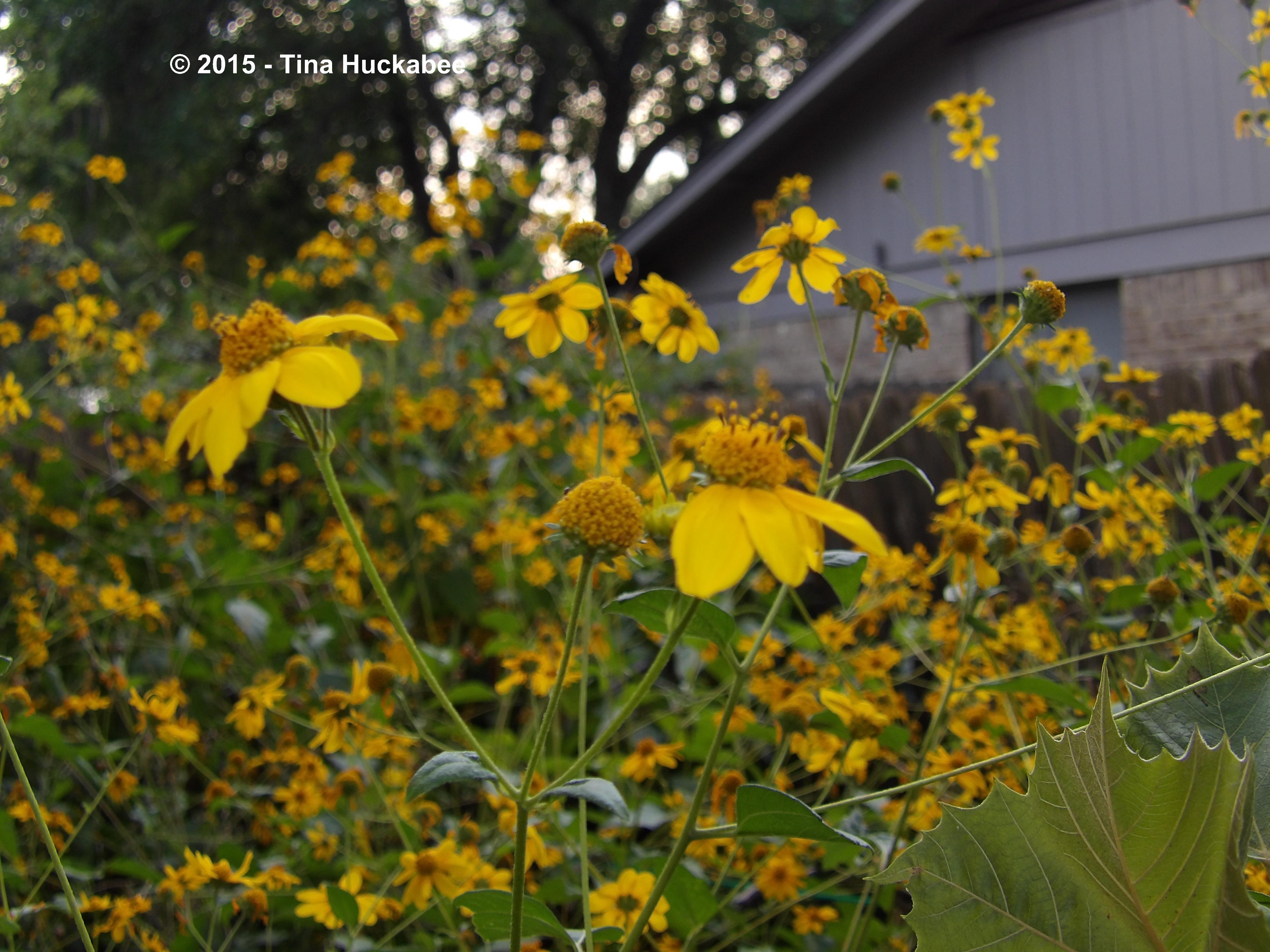

Really, really pretty.
The two perennial Goldeneye, planted together with others in this garden, will make a bold statement along the street and edge of my property and provide sustenance for wildlife throughout the growing season.






 My Gardener Says...