Bee Mama Missive: Honeybee Love

As good beekeepers, we follow advice from those who know more than we do–which includes the vast majority of attendees at the monthly Austin Area Beekeepers Meetup.  The advice this month was to open hives, check out the gals, see if they’re starving or if there’s honey left over after winter, and institute swarm management.

That term sounds like something you’d hear in a leadership management course.  Ugh.

Swarm management.  It’s basically crowd control.  Perhaps more accurately, a kind of birth control. A honeybee hive is a superorganism.  A superorganism is a collective of individual organisms which work together as a whole, where the individuals cannot survive without the collective.  The way a hive procreates is to divide itself by swarming into a new hive.  A new queen is anointed, she leaves the hive, taking workers, maybe as many as half the workers, with her to happily settle in a tree hole or ceramic pot, as happened in the garden of a friend of mine.  Swarming is not something we want for our bees. At some point in the future, probably next spring, we plan to hive our bees into one or two Langstroth hives, eventually ditching our Warre hives. That’s not happening this year–we don’t have time to build new hives.

So as part of our swarm management responsibilities and because it’s simply time to see how the ladies are faring, we opened our hives to check for any leftover honey stores, to see if our queens are laying eggs with resulting larvae, and if there are any queen or drone cells developing.

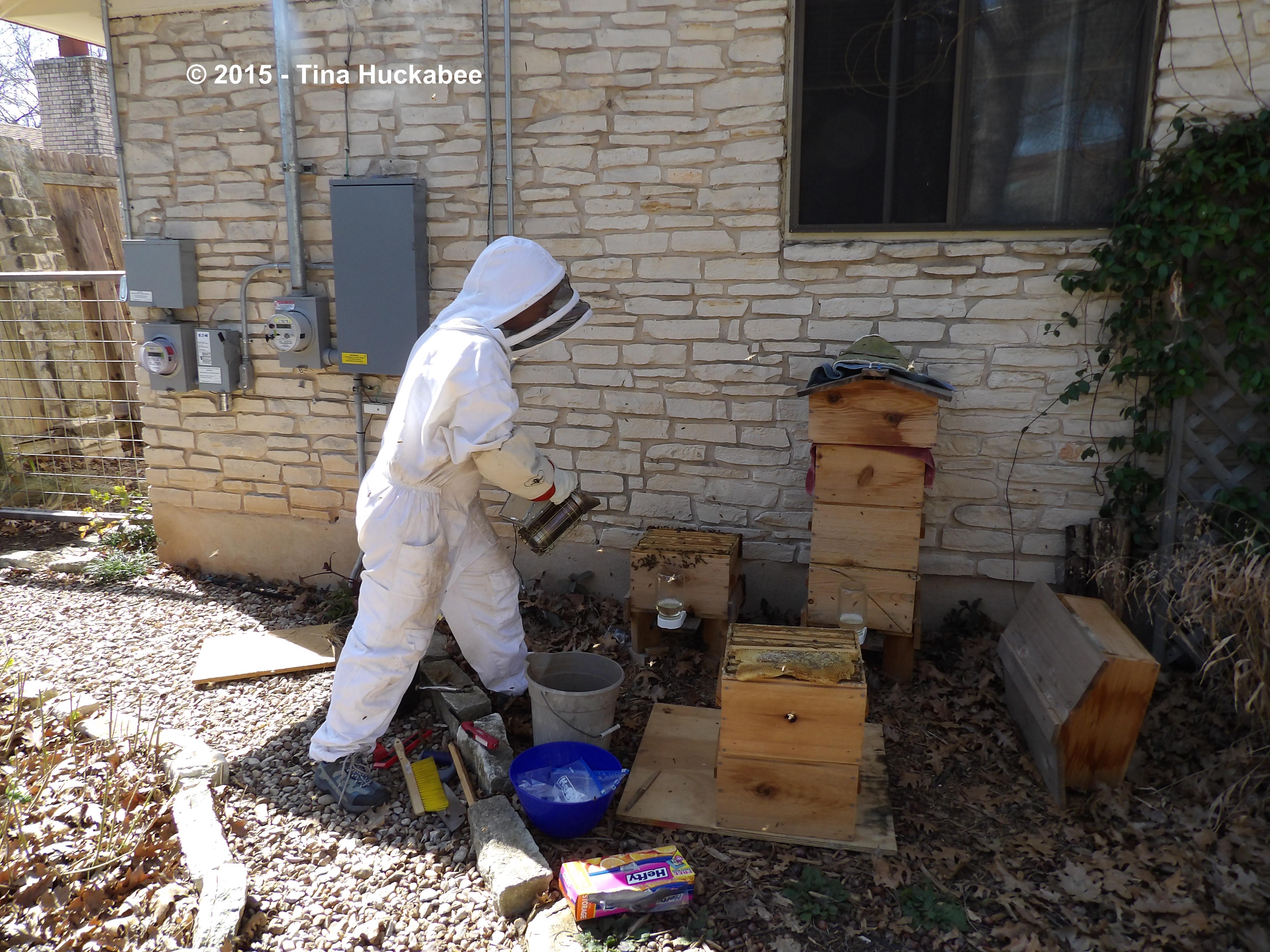
On Valentine’s weekend Bee Daddy and I donned our bee suits,
IMGP5331.new

…fired up the smoker,

IMGP5353.new

…organized our honeybee paraphernalia and got to it.

As a refresher, our hives are Mufasa and Scar.

IMGP5330_cropped_3374x3234..new.new

For those of you who are parents of a certain age, these names will be familiar–from the overplayed Lion King movie which was released in 1994 and by 1995 was on DVD (remember those?) and that a little tiny girl watched while Mommy held the new baby brother.  At least, that’s how it was at our house.

The names were given (in the case of Scar) for obvious reasons–oops that table-saw blade pulled the wood right out of Bee Daddy’s hand, leaving a scar on the wood and a partially numb finger on the Bee Daddy.

Yes, there was lots of blood and a long afternoon visit to our local Emergency Room.

Mufasa is so named because that’s the obvious next choice.

This was the first full hive-check in quite a while as we haven’t opened the entirety of each hive since re-queening last July. This February examination was a complete physical, if you will.  Mufasa was first on our list of hive appointments.  We took off the top box and there was only empty comb.

IMGP5352.new.new

I knew that already because I’d peeked in there occasionally on the warmer days of winter.  Mufasa has always been our smaller, less hardy hive, so I wasn’t surprised or disappointed that the bees hadn’t mustered the numbers to honey-ize the top box.  Off it went, stored for later use in the season. If all goes well–good flower production and pollen/nectar gathering in conjunction, we’ll pop it back on later in the season.

Then we checked the second, or middle box.

IMGP5337.new

A side story:  In September, as we checked our hives, a comb with full, capped honey broke, which I decided to leave in the box as is, knowing that it wouldn’t be easy to extract once the bees reconnected it to the box.  You can read about the dropped-comb incident here. Now after winter, the time of reckoning is at hand–we must carefully cut each top bar with comb, to check honey stores and brood development. And that check includes the cross-comb developed from the dropped comb.

IMGP5334.new

Oh, the stress of it all.

After slowly and carefully cutting away the comb from the sides and the bottom of the box (which directly attached to the bottom brood box), we were very happy with the results.

IMGP5336.new

IMGP5339.new

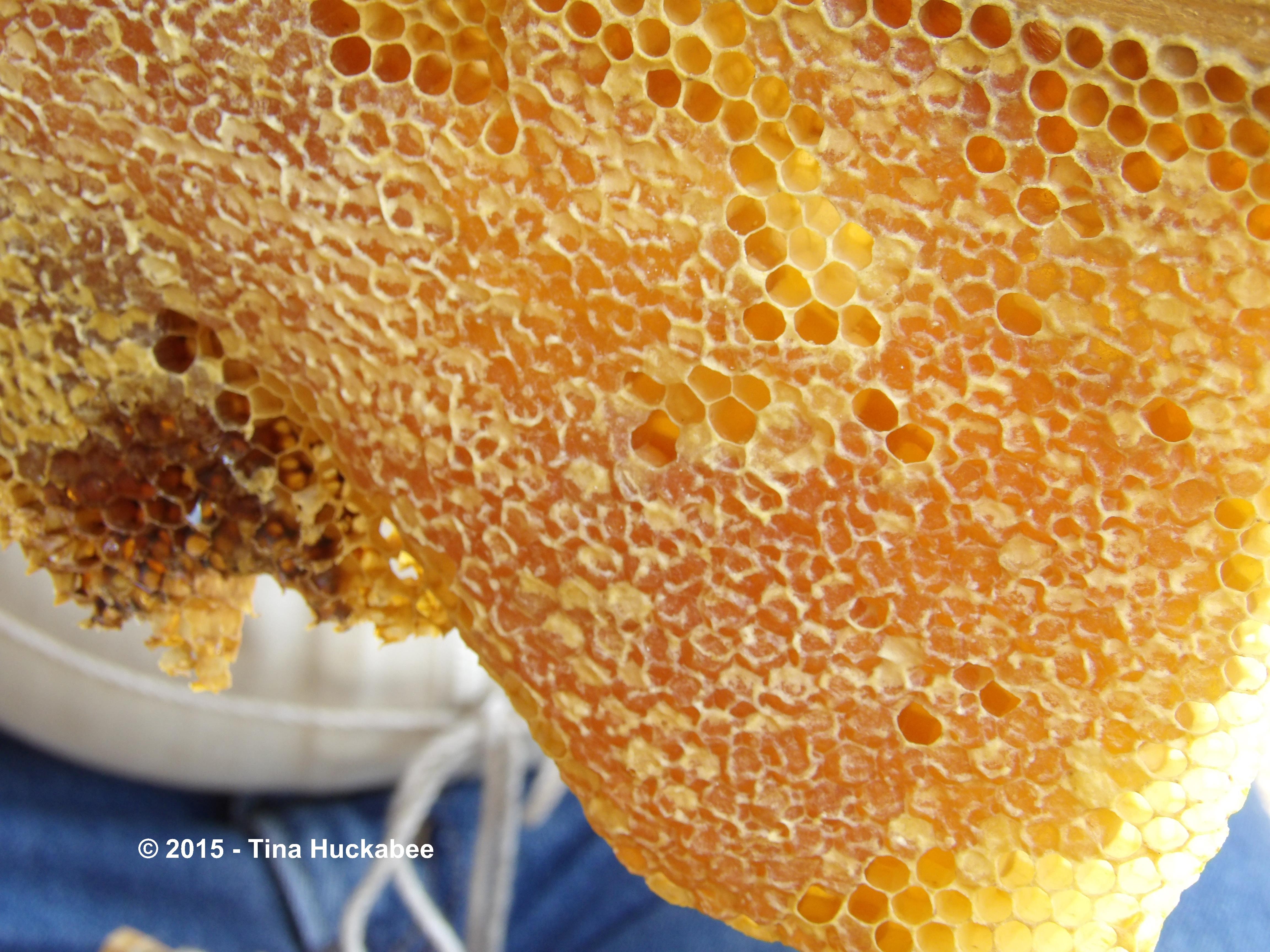
Mufasa’s second/middle box was moderately full of capped honeycomb, with some empty ready-to-be-filled comb.
IMGP5340.new

We removed the cross-comb and cut the comb off a couple of the top-bars.

IMGP5341.new

IMGP5342.new

… and bagged some rich honeycomb for later honey extraction work in the kitchen.

IMGP5349.new

We left some comb with honey and some empty comb so the bees have honey on cold rainy days and room for brood and more honey stores–whatever is their preference. Both of those goals are in keeping with swarm management–give ’em room to grow, so some of the more rebellious members of the hive don’t have an excuse to leave home.

Finally, we checked the bottom, or brood box and what good news for Mufasa and tangentially, for us!!

IMGP5332.new

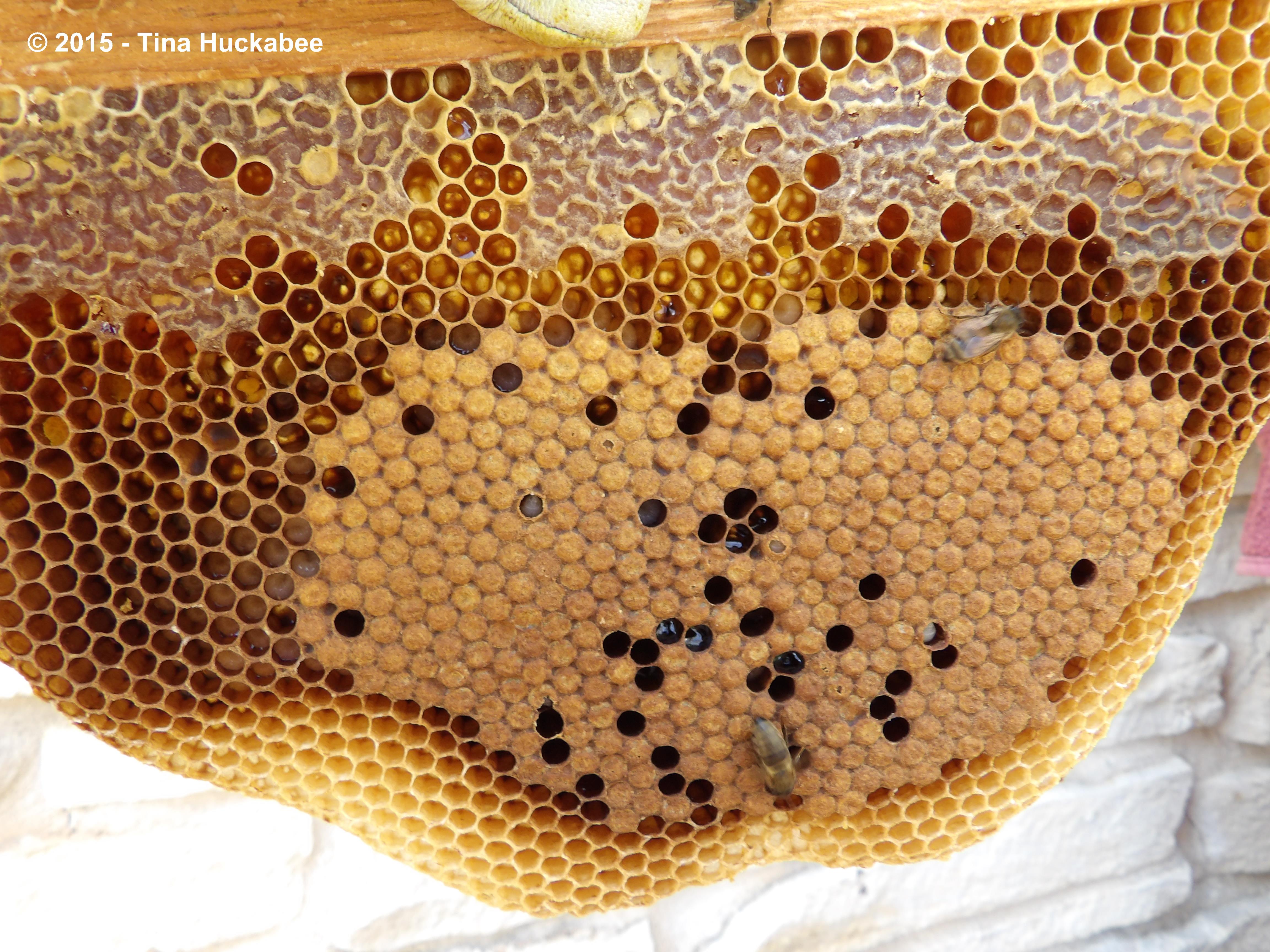
Whoop!! Queen Mufasa (the name suggests a little gender bending there–Mufasa was a dude lion, Queen Mufasa is a queen bee), is ramping up for spring, laying eggs and the larvae are growing and developing. You can clearly see that there are capped and uncapped larvae.

IMGP5343.new

What a great queen she is and how ’bout those workers, eh?
IMGP5344.new

The development of adult bees occurs in stages and is driven by pheromones according to what hives need: workers, drones, or queens.  Capping instigates the final stage in development–what emerges two to three weeks after the egg is laid is an adult bee.  All of these are workers (because of where they’re located and how they’re capped) and the hive will need workers once spring nectar flow begins–in about three weeks.  The timing is perfect!  We didn’t see any queen cells, which is a good sign. Queen cells develop on the sides or bottom of the comb and are larger and oblong–very different from what the photos here show. That no queen cells exist signifies that the bees are content with their queen–she’s healthy and laying eggs and everyone, it appears, is down with that.

We closed Mufasa,

IMGP5354.new

…grinned, did a little dance and high-fived each other, then moved onto Scar’s examination.

IMGP5356.new

IMGP5357.new

IMGP5358.new

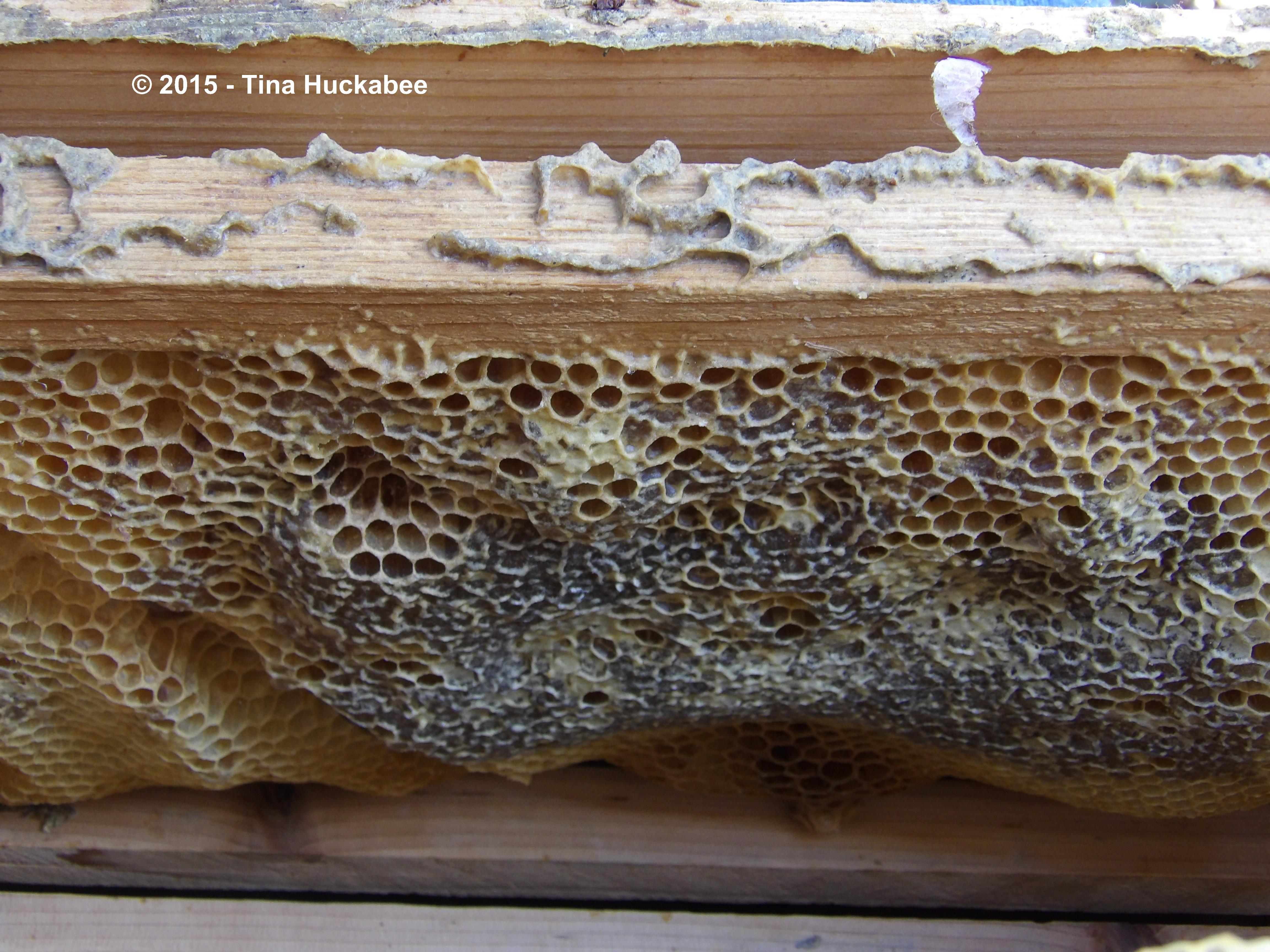
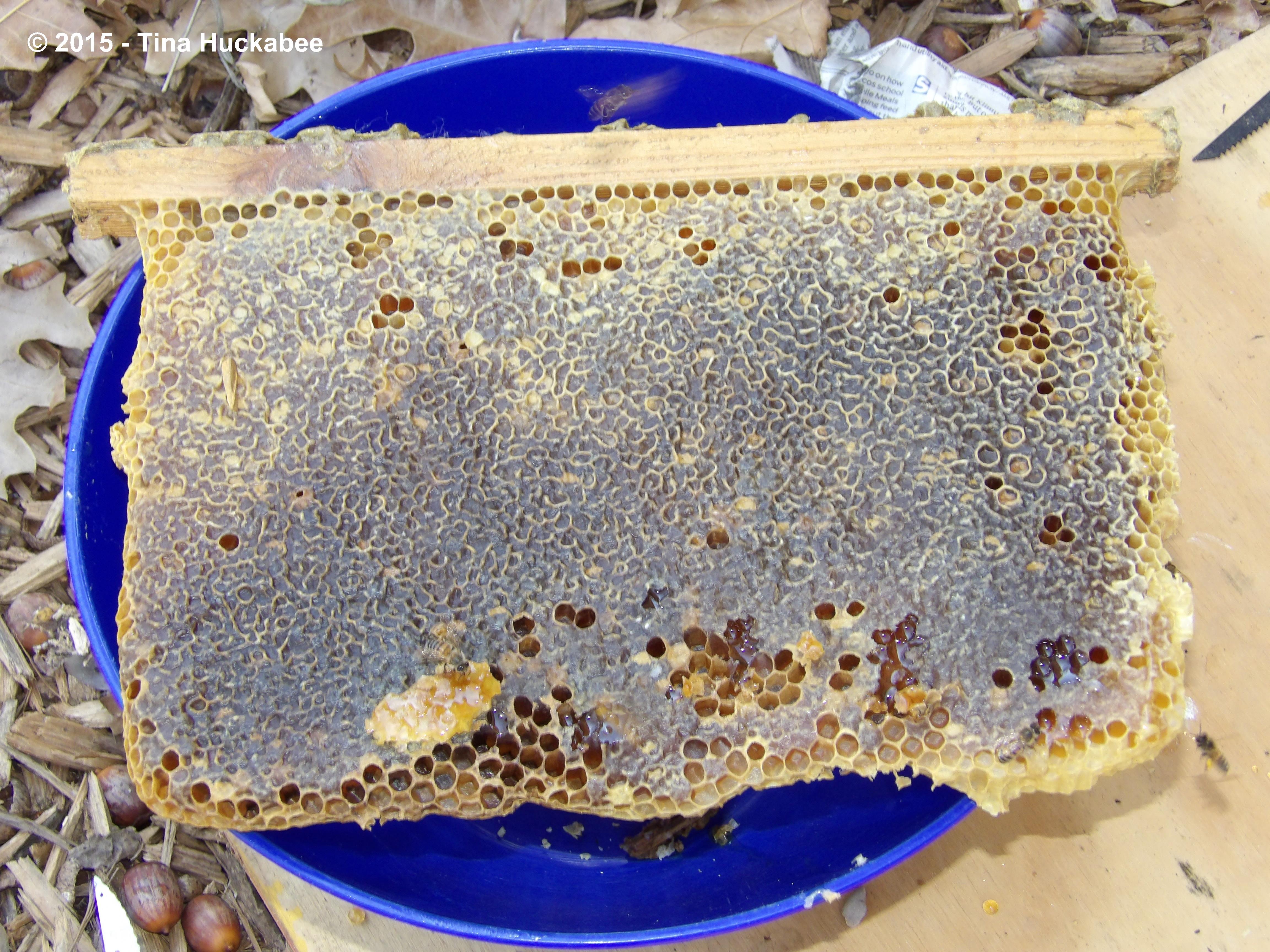
It was, essentially, more of the same.  Lots more.  In Scar’s top box, all eight top bars were full of capped, glorious honey.

IMGP5359.new

Heavy, heavy bars of honey.

IMGP5360.new

We removed all eight, cut the comb, bagged it and stored the box for later use.  The second box was similar, though some comb was empty.  We left some full honeycomb, as we did with Mufasa.  The brood box was also full of good news.  Like Mufasa, Scar contained capped and uncapped brood, no queen cells, and stored honey.

I’d call the examination of both hives a good day at the office.  Both Mufasa and Scar have a brood box and a secondary box for expansion.  If the year goes well, the bees will produce enough brood, honey, and comb that we’ll add another box in late summer or early fall, just like we did last season.  I don’t think that far ahead though–there are too many factors and variables in beekeeping.  For the present, in late winter, the immediate future looks good for both hives.  Fingers crossed that success continues into the new year and growing season.

Time to clean up and,
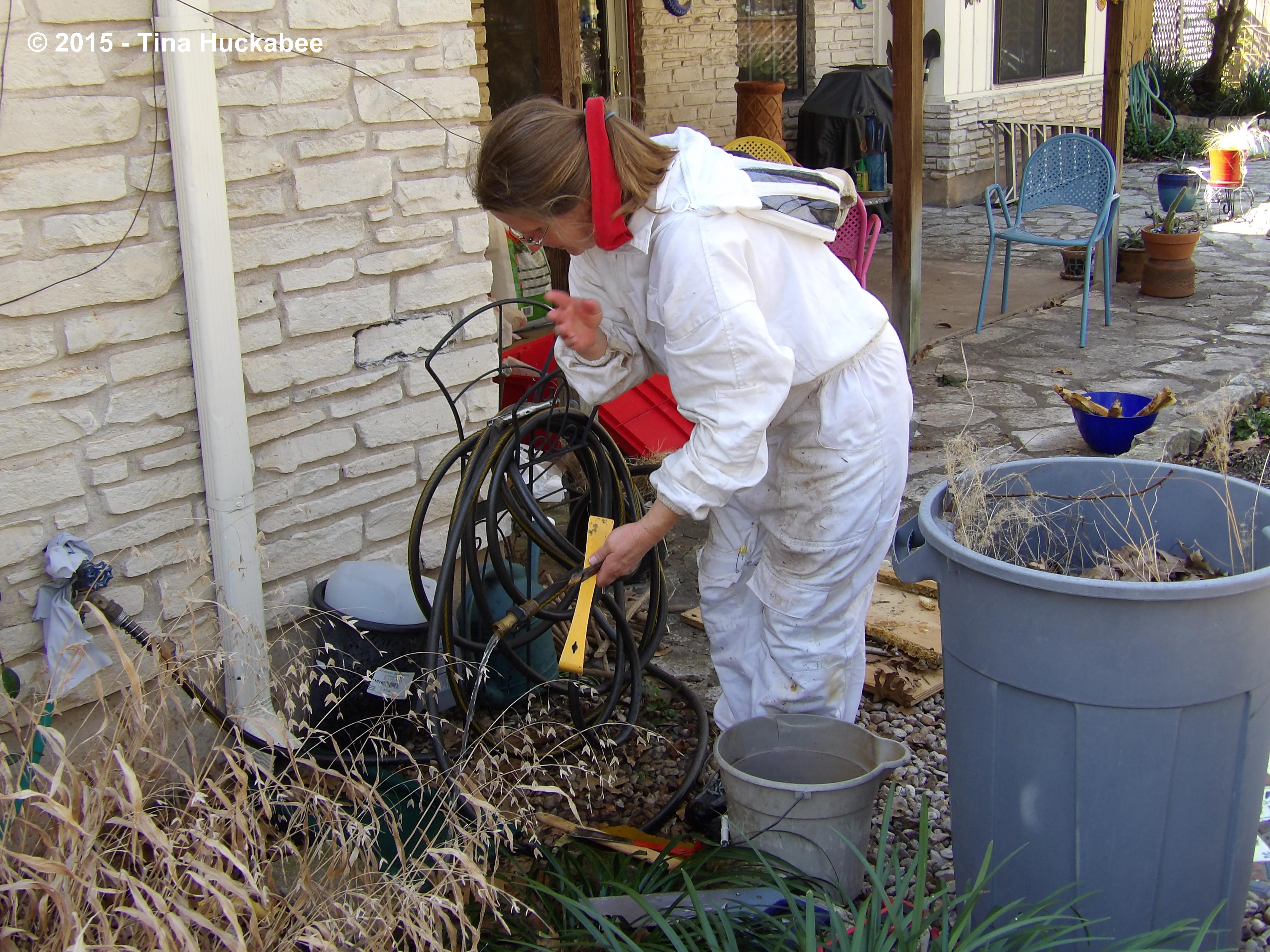
IMGP5362.new

….what do I do with all that honeycomb????IMGP5365.new

Foliage Day, February 2015

Here we are on the cusp of spring–some of us closer to that cusp than others, but we in the Northern Hemisphere are all headed in the same direction and whooping it up as buds are swelling and leaves are greening.  Those in the Southern Hemisphere–happy almost autumn to you! Regardless are where the gardens are planted, thanks to Christina of Creating my own garden of the Hesperides for hosting Garden Bloggers’ Foliage Day set aside for profiling and parading foliage–for this gardener, of the late-ish winter garden.

Blackberries.  Yum.  I can’t wait to make pie and cobbler, but also to pick the berries right off this vine in May. For now though, I simply appreciate the burgundy blush that winter’s chill left on some of the prickly leaves of the Rosborough Blackberry vine (Rubus, sp.), ‘Brazos’.

IMGP5206.new

Opposite in the color and texture spectrum of the deeply colored and thorny foliage of Blackberry is this Heartleaf Skullcap, Scutellaria ovata ssp. bracteata.IMGP5204.new

This winter spreading, spring and summer blooming perennial, sports subtle gray-green leaves which are soft to the touch.

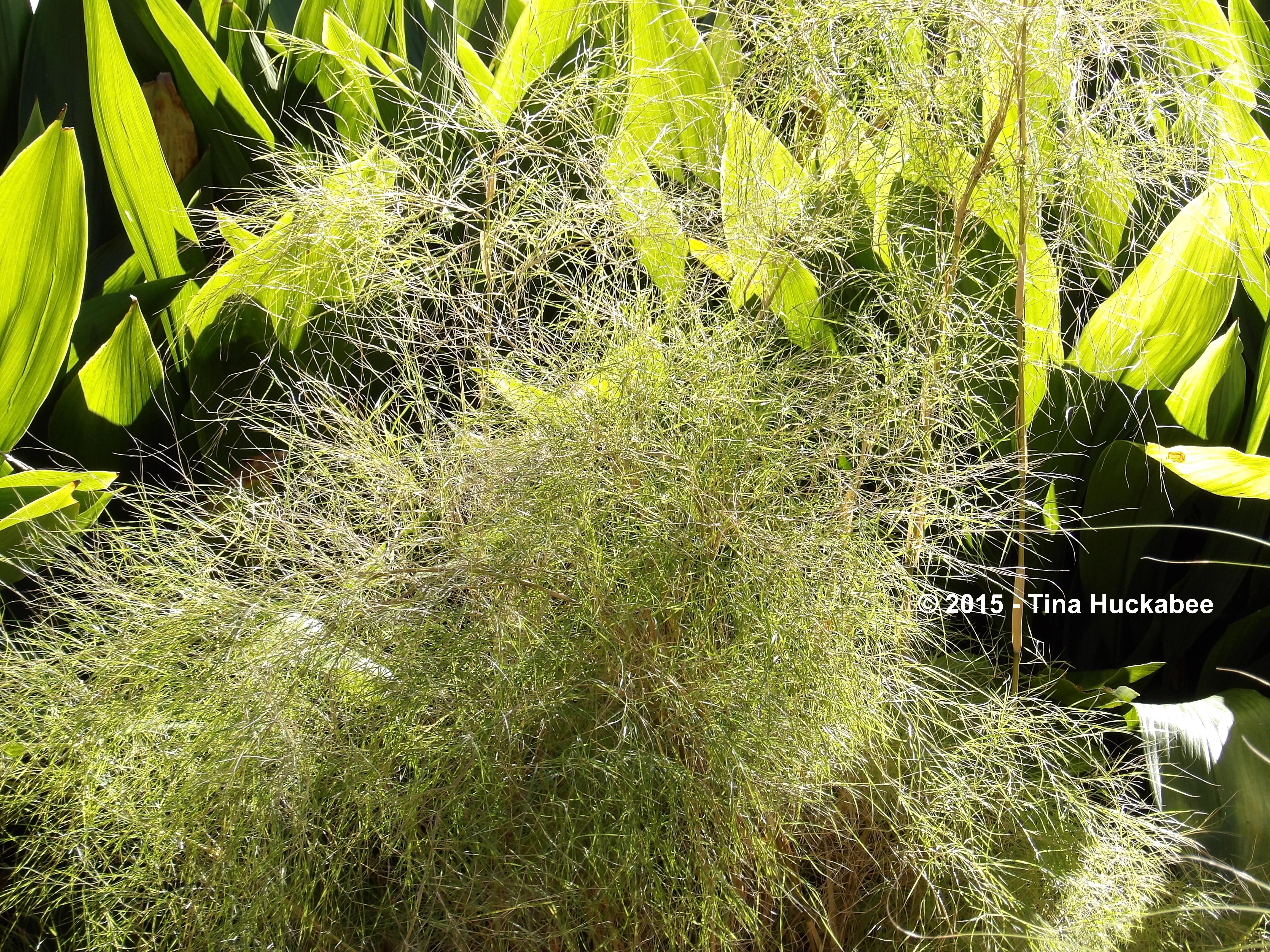
The morning sun backlit this pairing of Bamboo Muhly, Muhlenbergia dumosa  and Cast Iron Plant, Aspidistra elatior.

IMGP5210.new I love the effect.

In the same garden, just down the pathway,  I also really like this combination of Cast Iron Plant (at top), Sparkler Sedge, Carex phyllocephala ‘Sparkler’, and Iris straps (unknown variety).IMGP5304.new

All are evergreen and hardy, water wise, and lovely plants year-round.

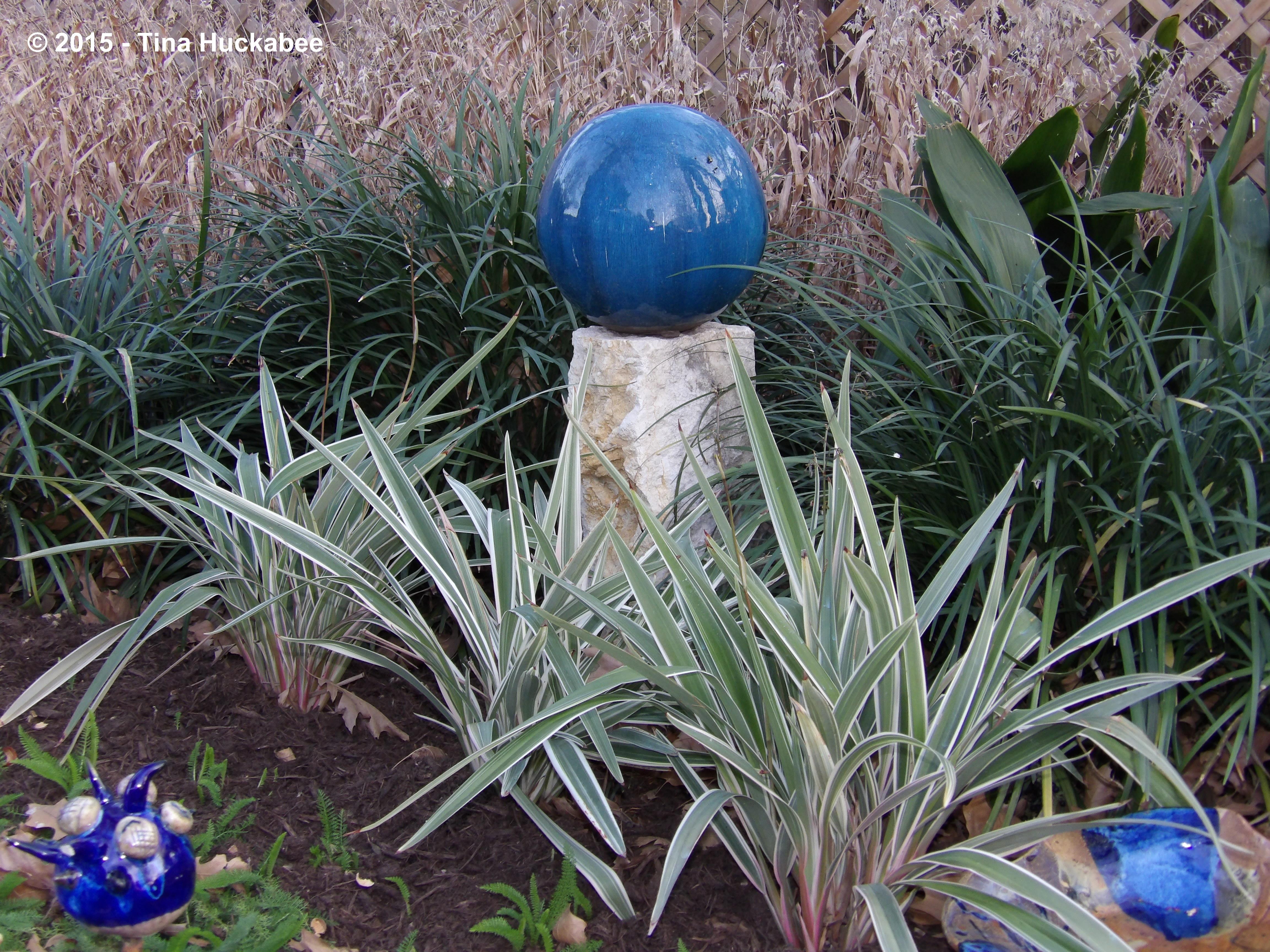
And this fun combo includes tawny, crispy about-to-be-pruned-to-the-ground, Inland Sea Oats, Chasmanthium latifolium, graceful Giant Liriope or LilyturfLiriope muscari, snazzy Variegated Flax LilyDianella tasmanica ‘Variegata’, and lacy and lovely summer-blooming Yarrow, Achillea millefolium.  IMGP5307.new

Oh, and also fallen oak leaves which STILL need raking up.

IMGP5309.new

There’s more foliage gorgeousness to see from beautiful gardens at Creating my own garden of the Hesperides.  Check it out!

IMGP5378.new


A Refurbished Garden

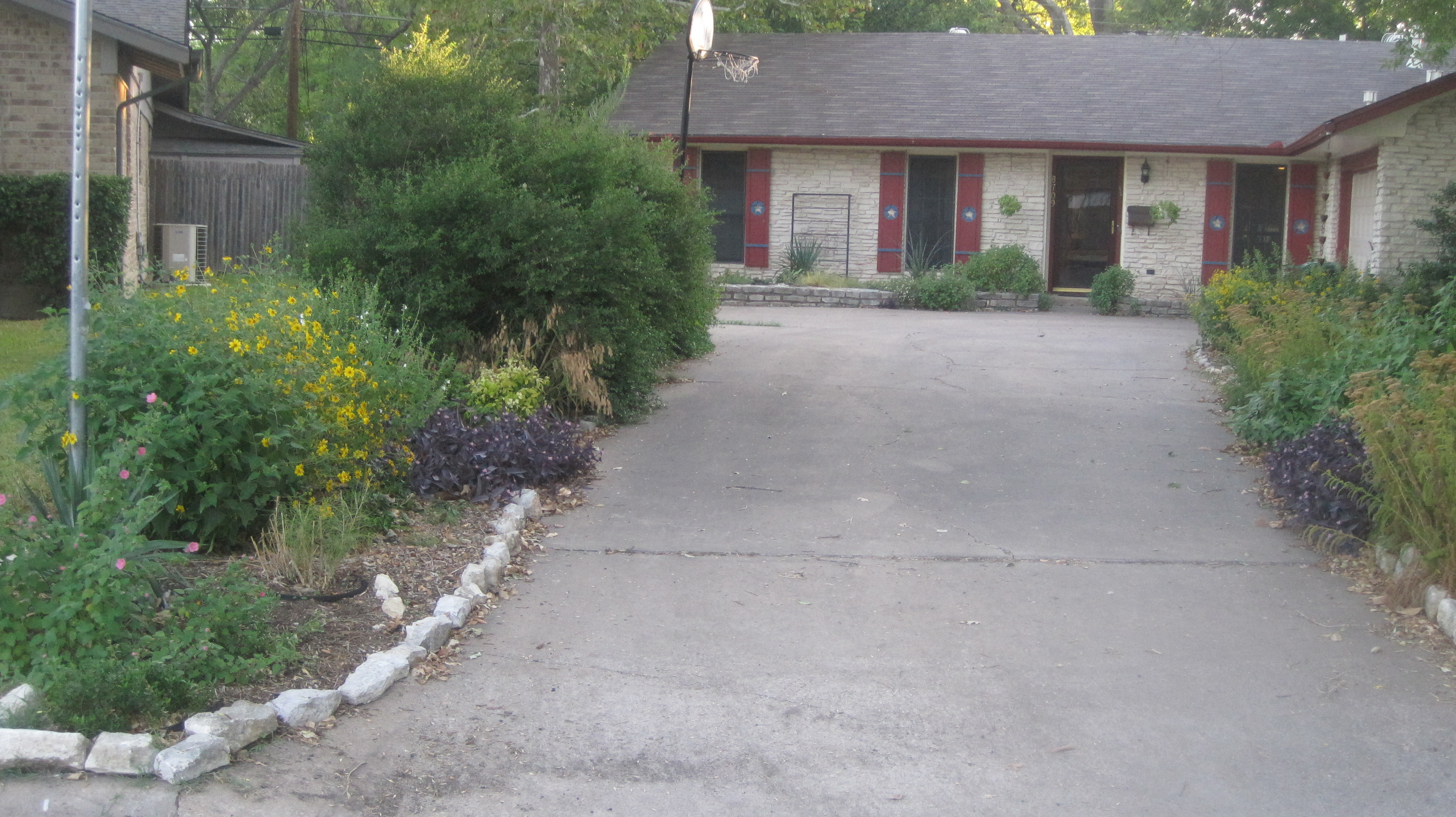
I call it the Driveway Garden.

20111016_27

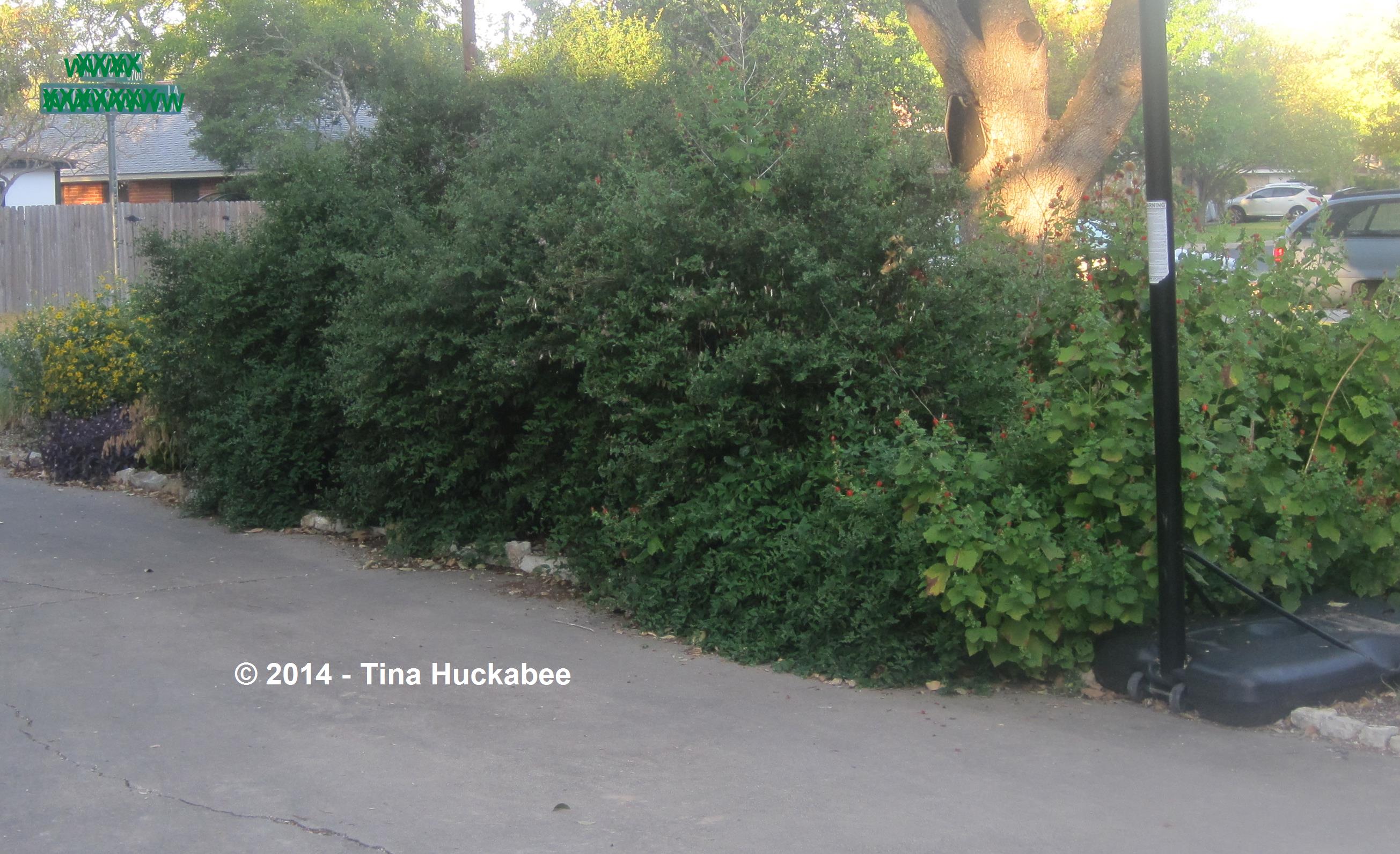
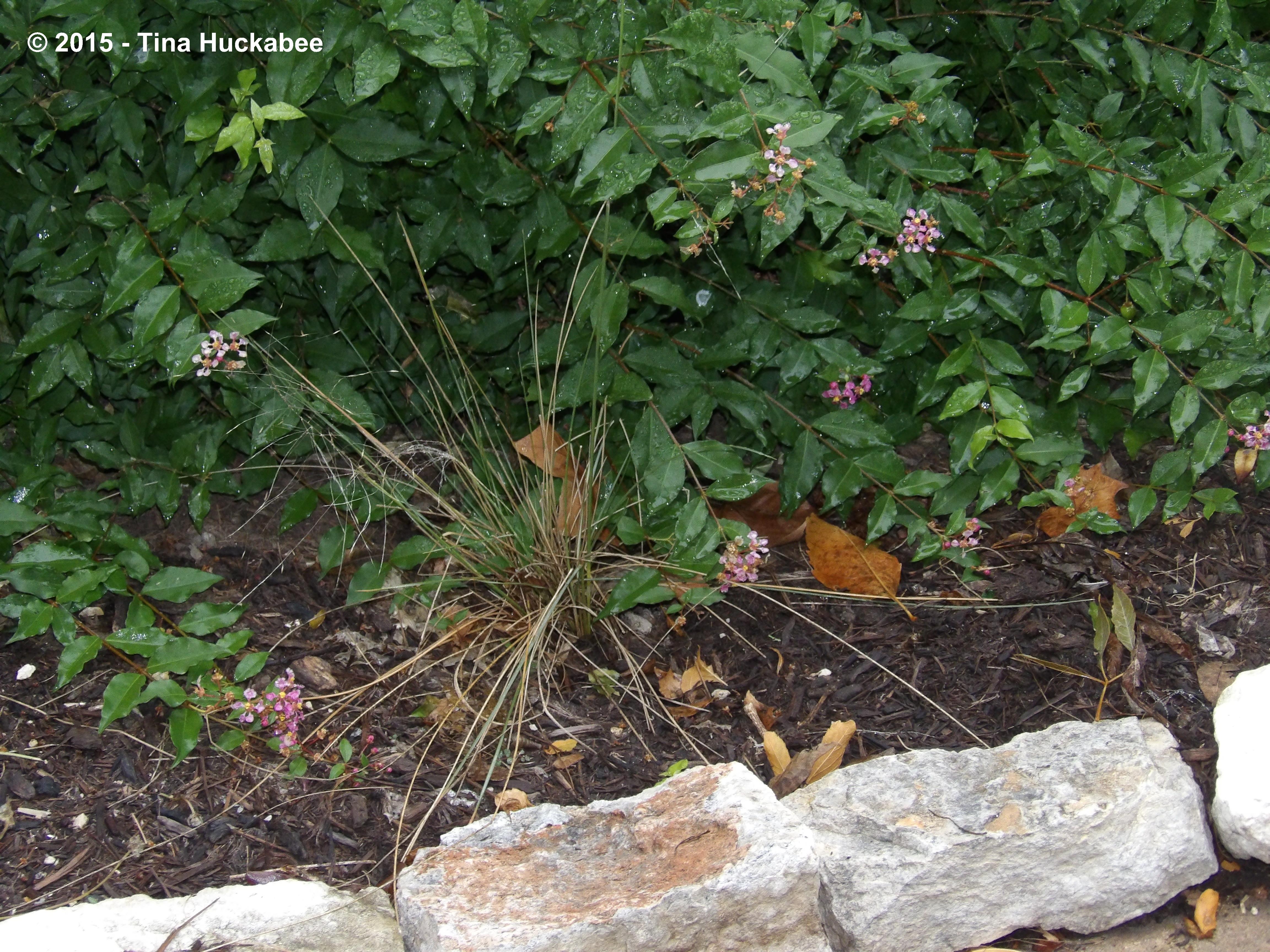
Not a bucolic name, nor was it, for many years, a particularly interesting garden.  For most of the past twenty years, this garden was dominated by a hedge of Barbados CherryMalpighia glabra.

20111016_31_cropped_2609x1591..new

I let the Barbados Cherry grow and expand, tall and wide, because it’s a low maintenance shrub, blooms pretty pink flowers, develops luscious red fruits, provides cover for wildlife, and performs well in shade–a requirement for that spot. Additionally, it served as a privacy hedge and also as a stalwart plant bolstering against balls and bicycles when my children were young and there was roughhousing activity on and around the long driveway.

Aesthetically, it wasn’t ideal, but worked and was easy.

In recent years, the tree which shaded the garden began failing, so there is now more direct sun on the garden.  I allowed myself the luxury of fantasizing about what plants I might add to the space to increase color, diversity, and wildlife interest to this otherwise utilitarian spot.

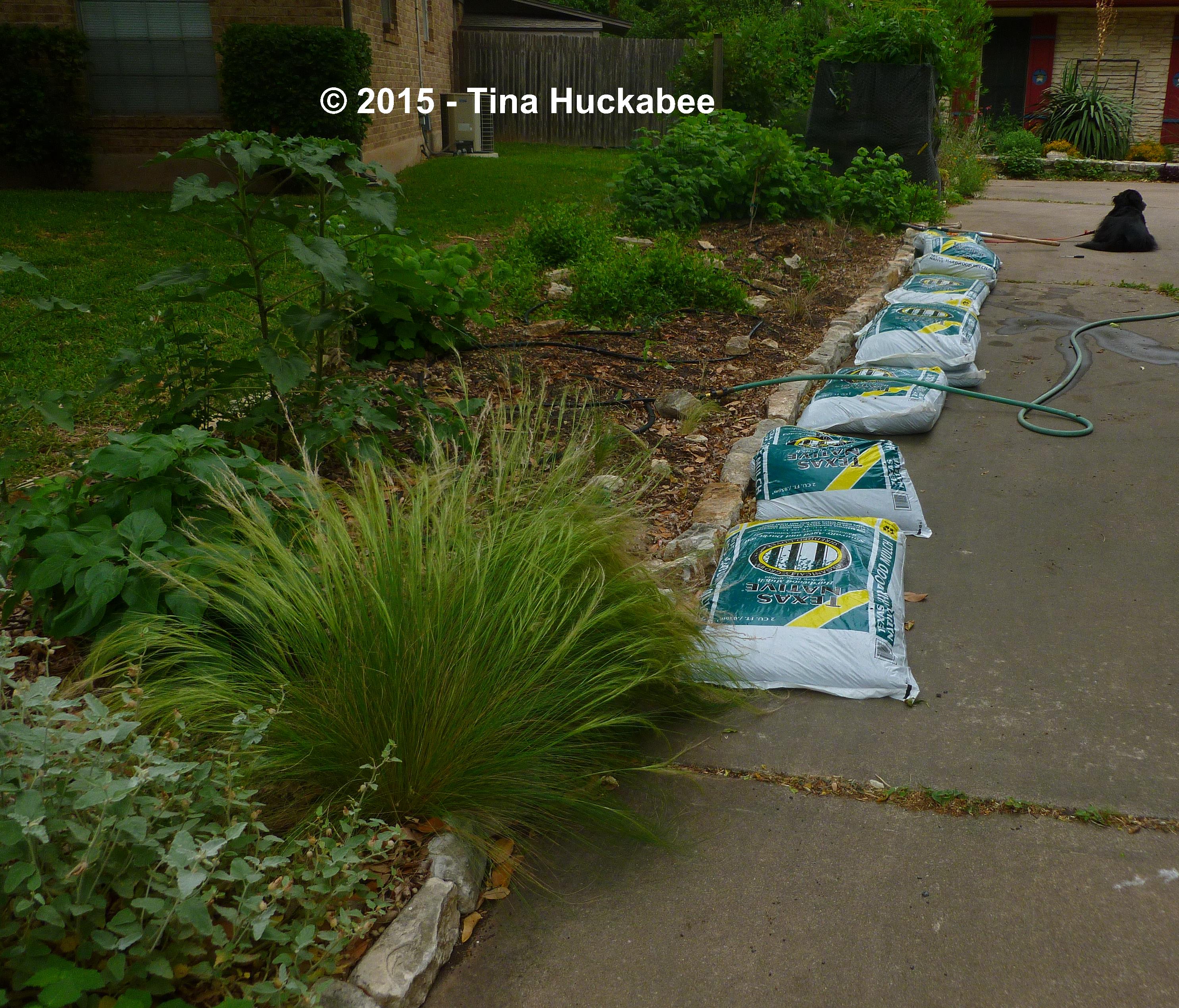
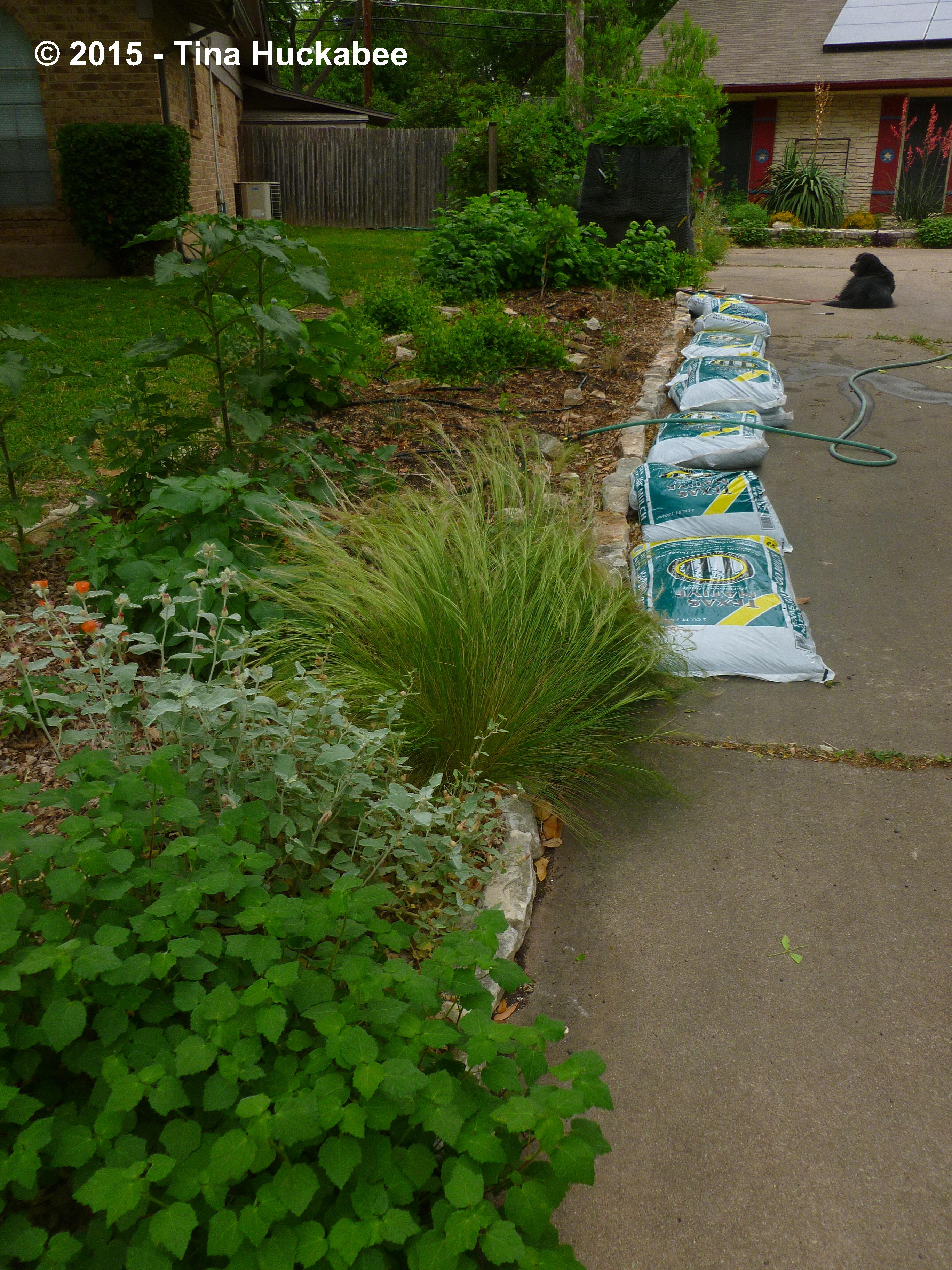
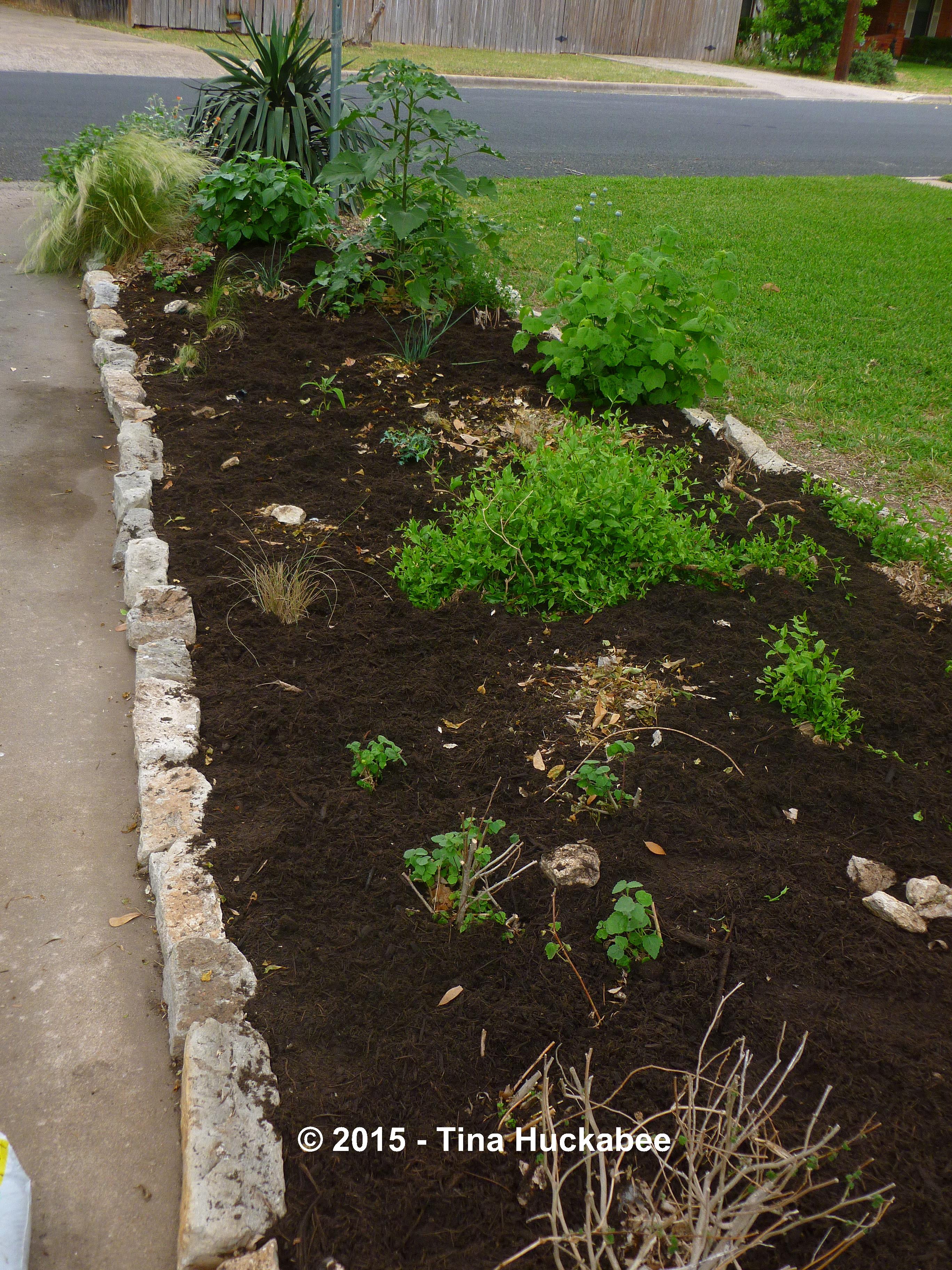
After the 2014-15 winter which was colder than any of the last twenty years, the Barbados Cherry froze to the ground and late last winter and early spring, I seized the opportunity to make changes to this narrow strip of garden. After its first year of remodeling, I’m generally pleased with the results.  For reference, the driveway garden spans most of the length of the front drive, beginning at the street levelP1040016_cropped_3338x2361..new

…and ending at the Green Tower (GT), a vertical structure which I’m experimenting with for vegetable and herb gardening.

P1040017_cropped_2970x2539..new

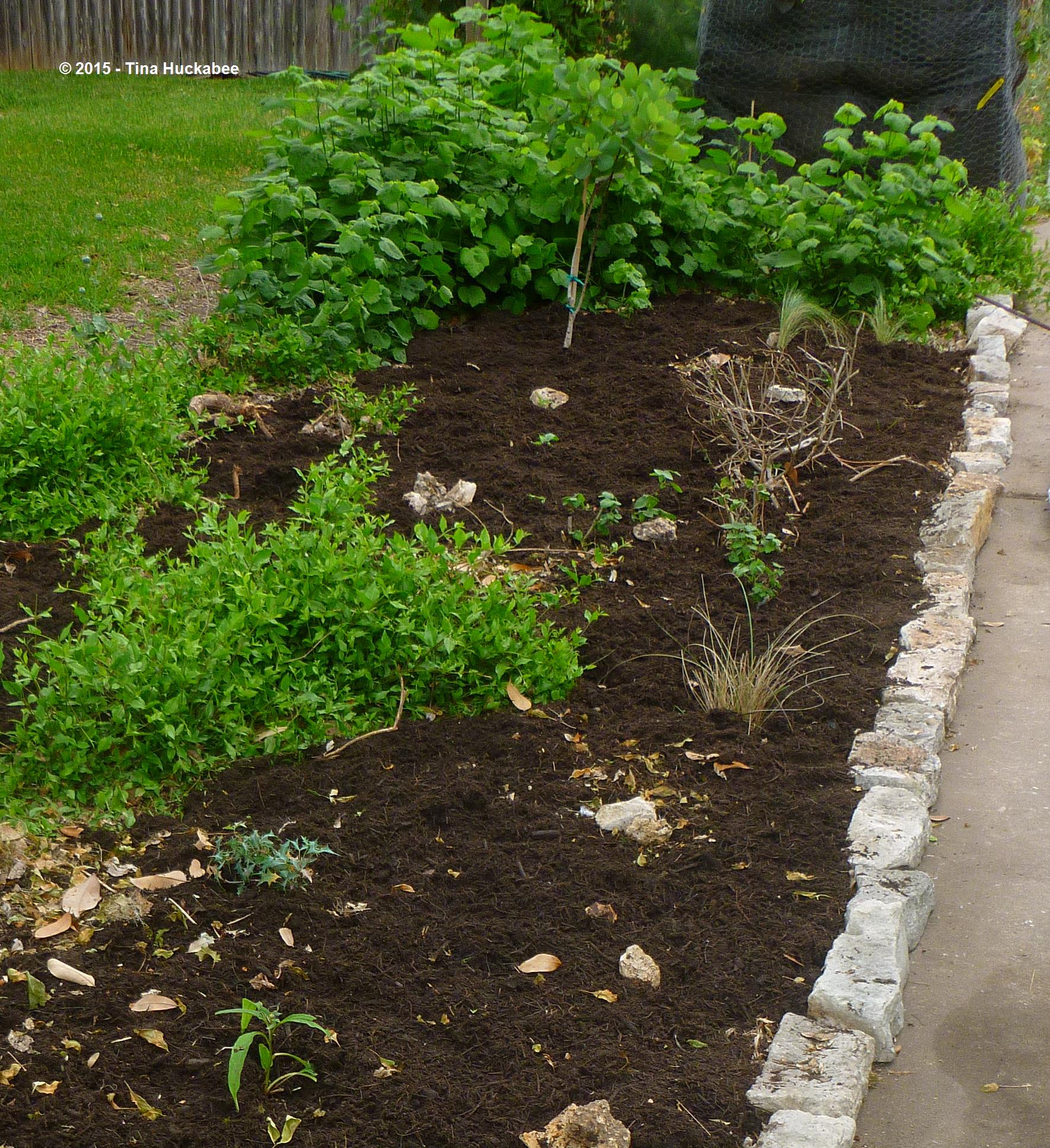
I dug out the bits of Barbados Cherry root, big and small, shallow and deep, which filled in so much of the GT end of the garden.  I left some of the shrubs,

P1040020_cropped_3608x2360..new

…returning from winter freezes, which align alongside my property and the neighbor’s lawn. Vowing to keep those hardy and somewhat insidious limbs and roots in check, the goal is for the Barbados Cherry to act as individual, tidy, sometimes blooming, shrubs.  I must ensure they don’t become the wall-of-plant  they were and can certainly become again, if I’m not vigilant.

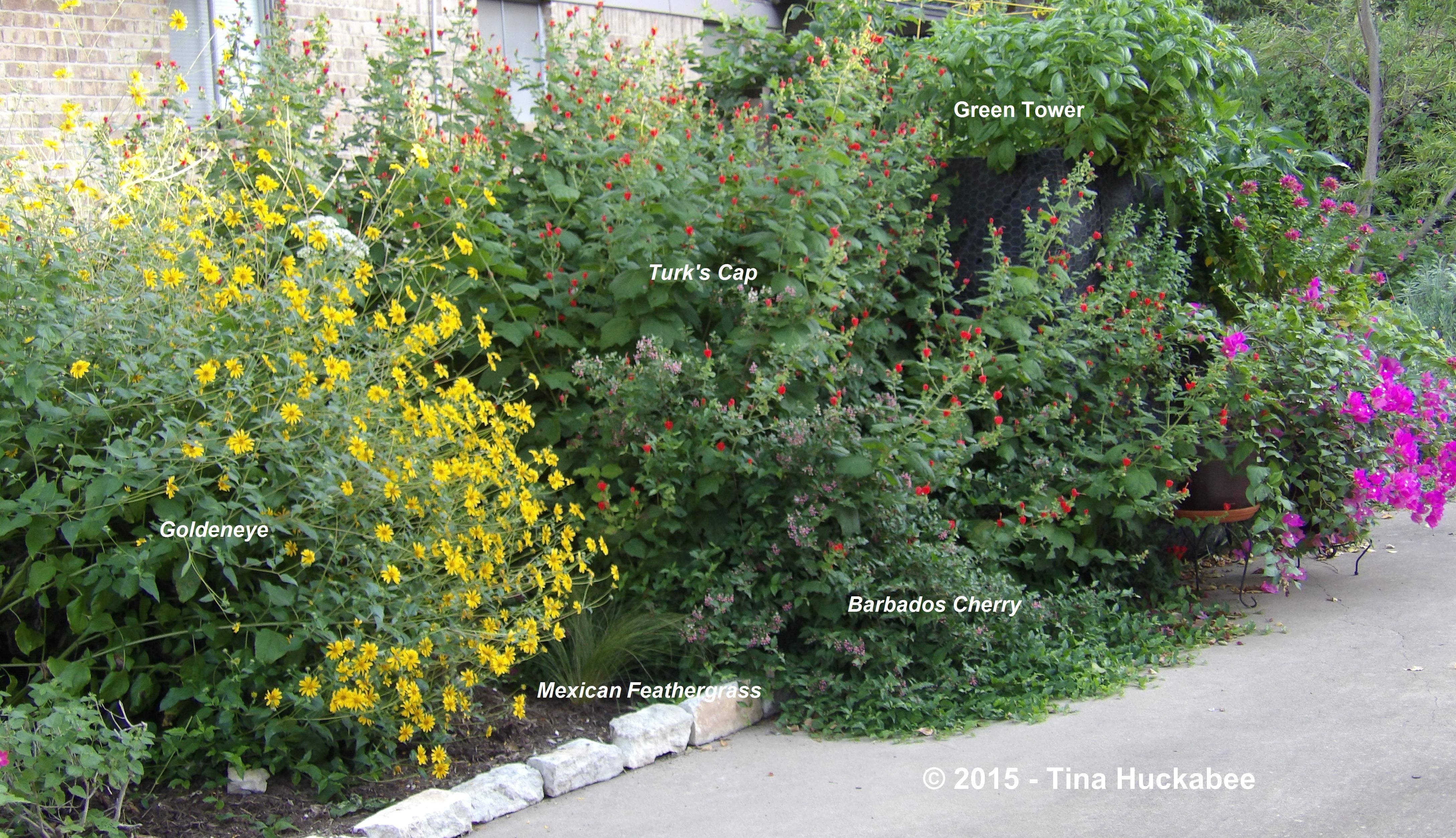
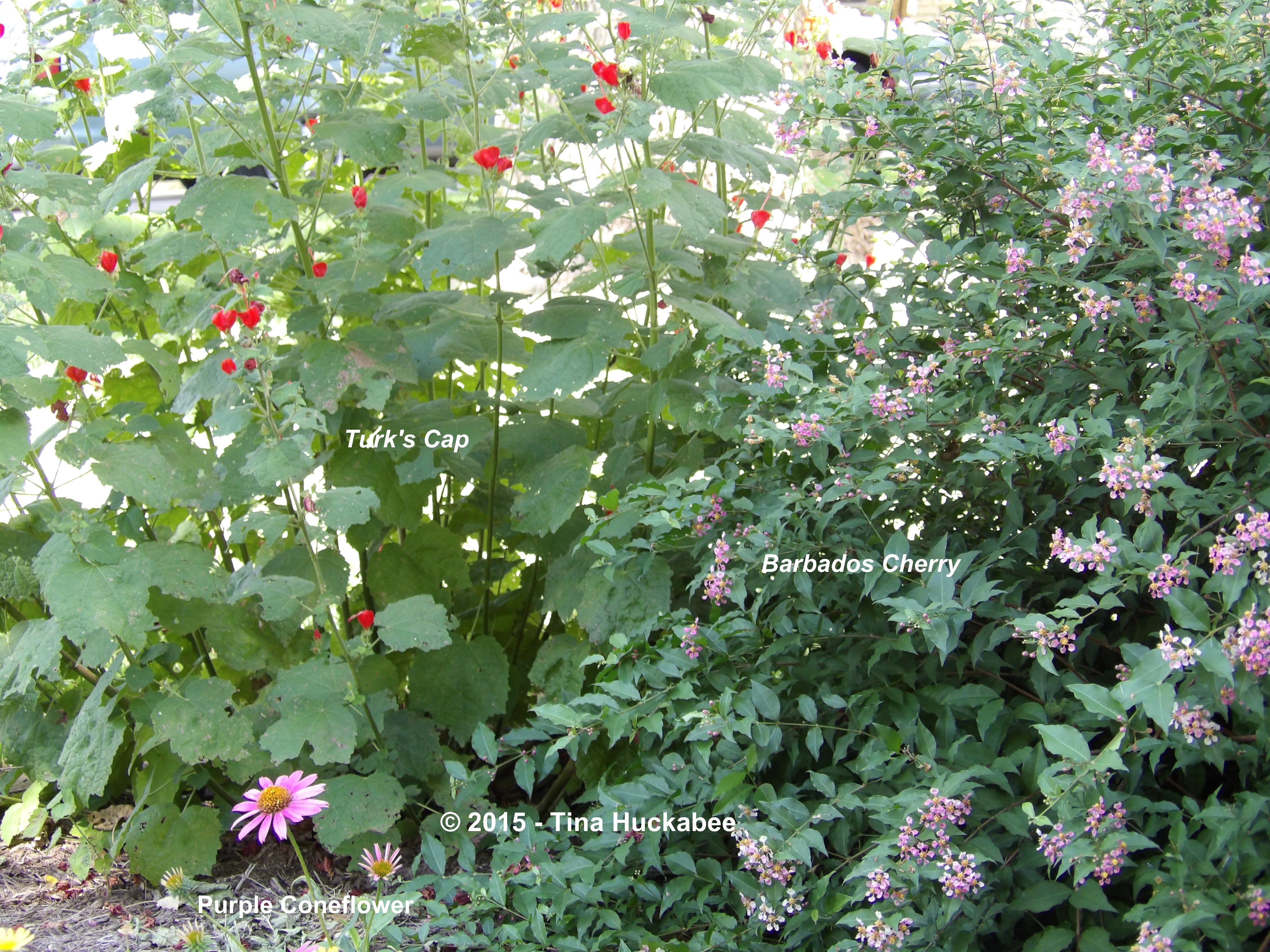
I also left the Turk’s CapMalvaviscus arboreus, which planted itself at the far end of the garden, just beside and around, the Green Tower.

P1040023_cropped_1770x1936..new

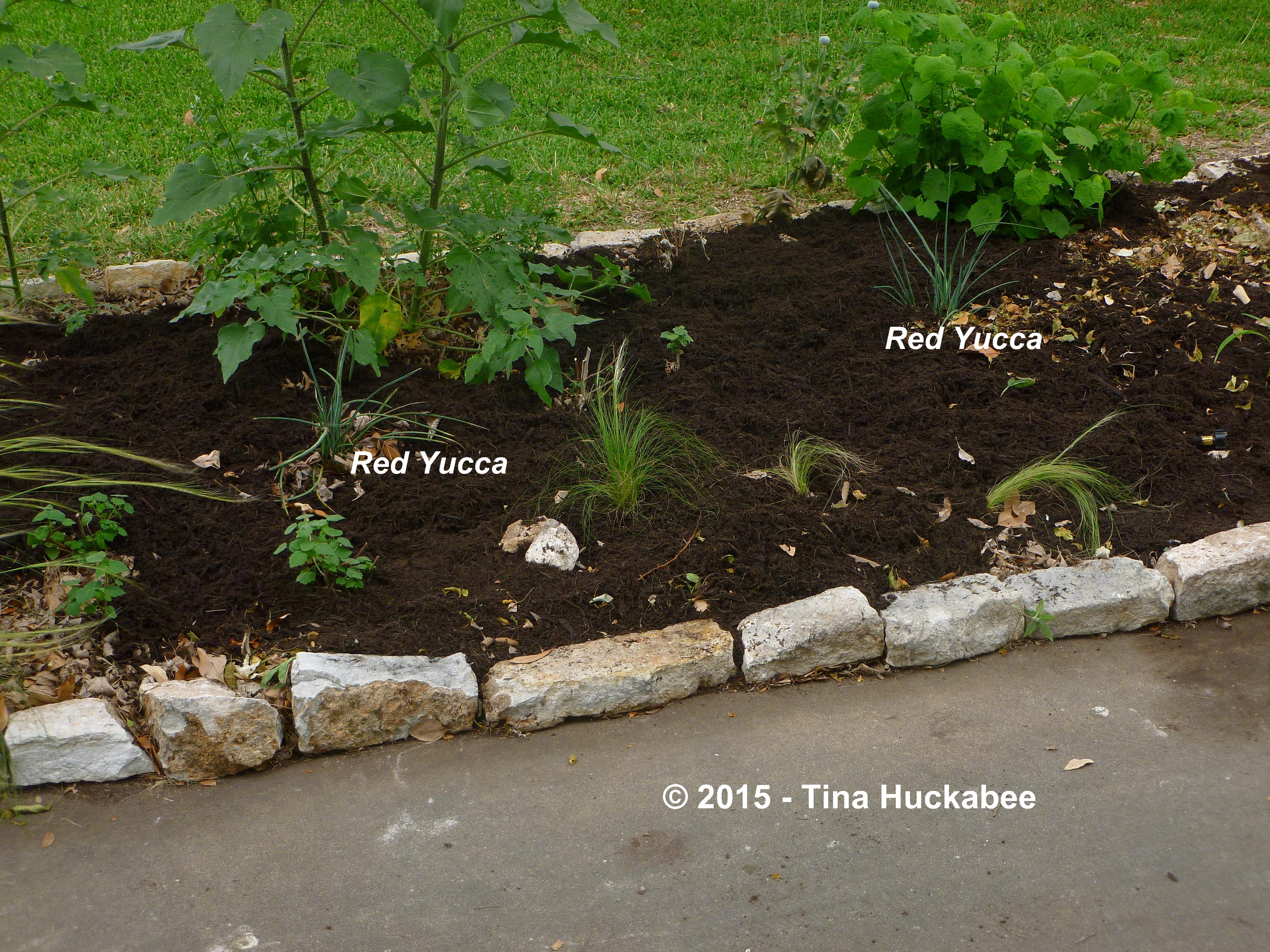
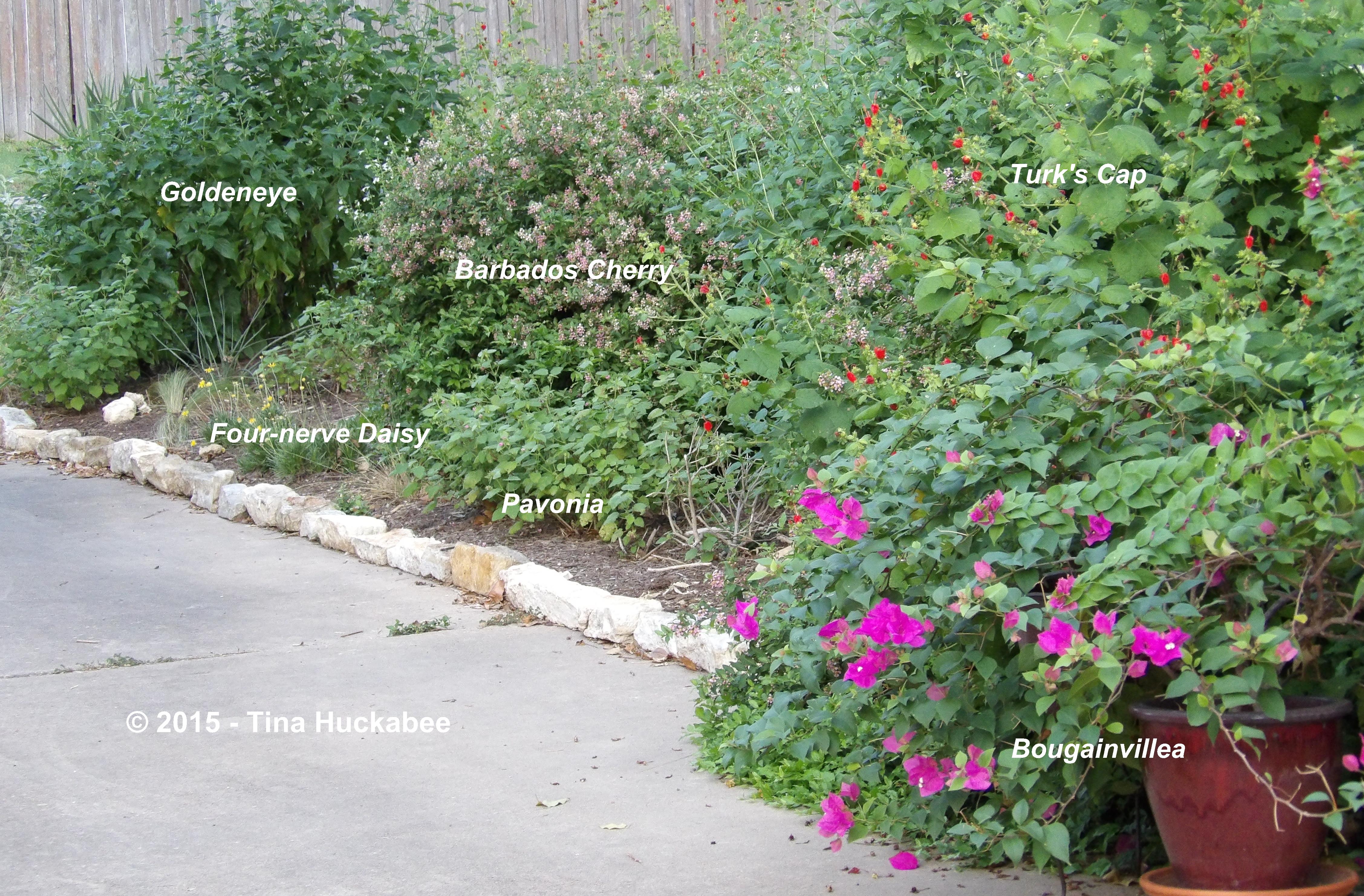
Most of this garden re-do was accomplished with on-hand plants.  When you grow natives, a vast supply of seedlings is at the ready for relocation to yours, or other gardens.  I did buy a few plants though.  In the vertical and horizontal center part of the garden, I added two purchased Red Yucca, Hesperaloe parviflora,

P1040024.new

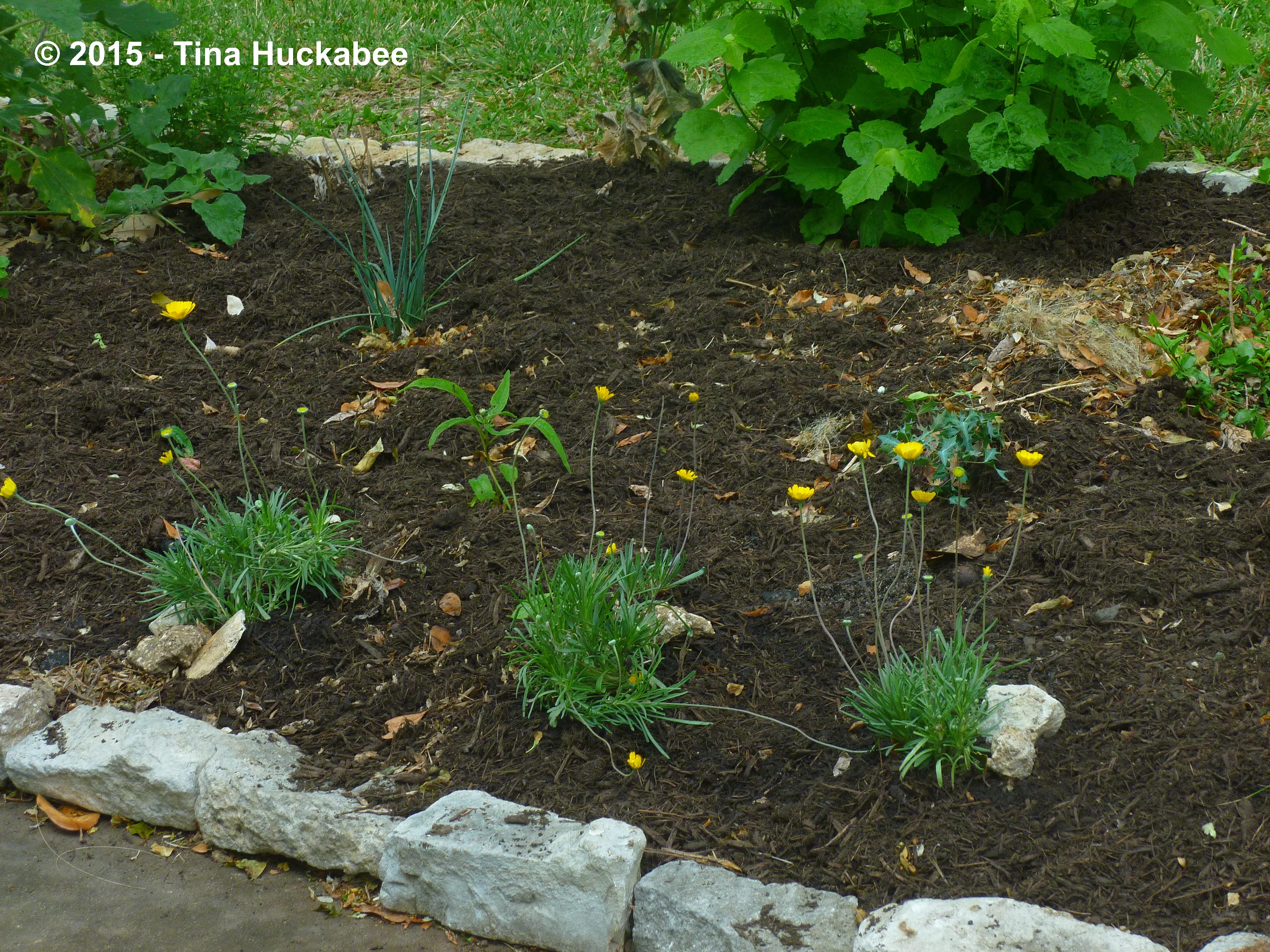
and along the drive, purchased and planted three small pots of Four-nerve Daisy, Tetraneuris scaposa.

P1040090.new

Close to the GT, I planted a Texas Smoke Tree, Cotinus obovatus, a tree I’ve long wanted to add to my garden.

20140508_42_cropped_1612x1467..new

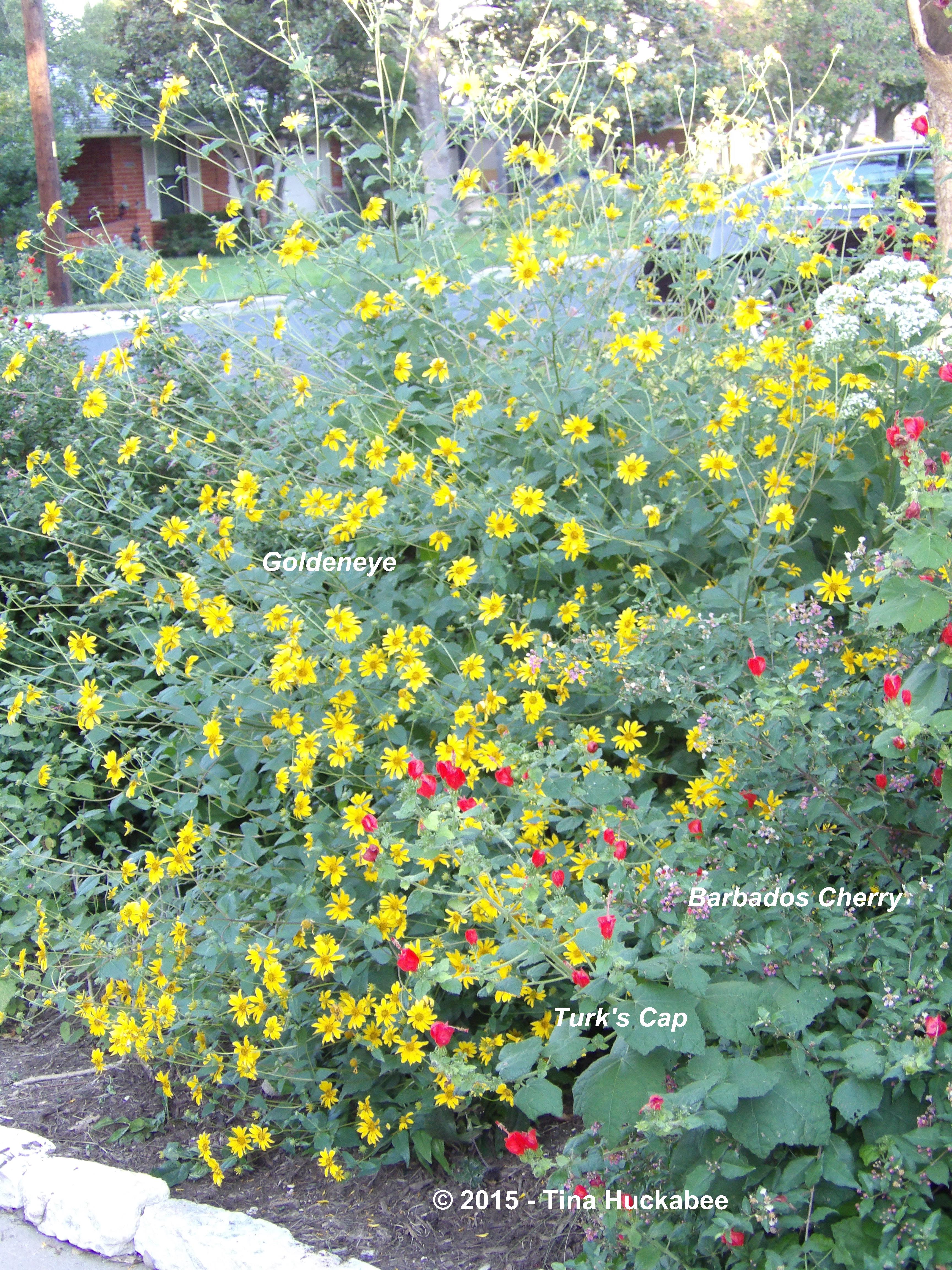
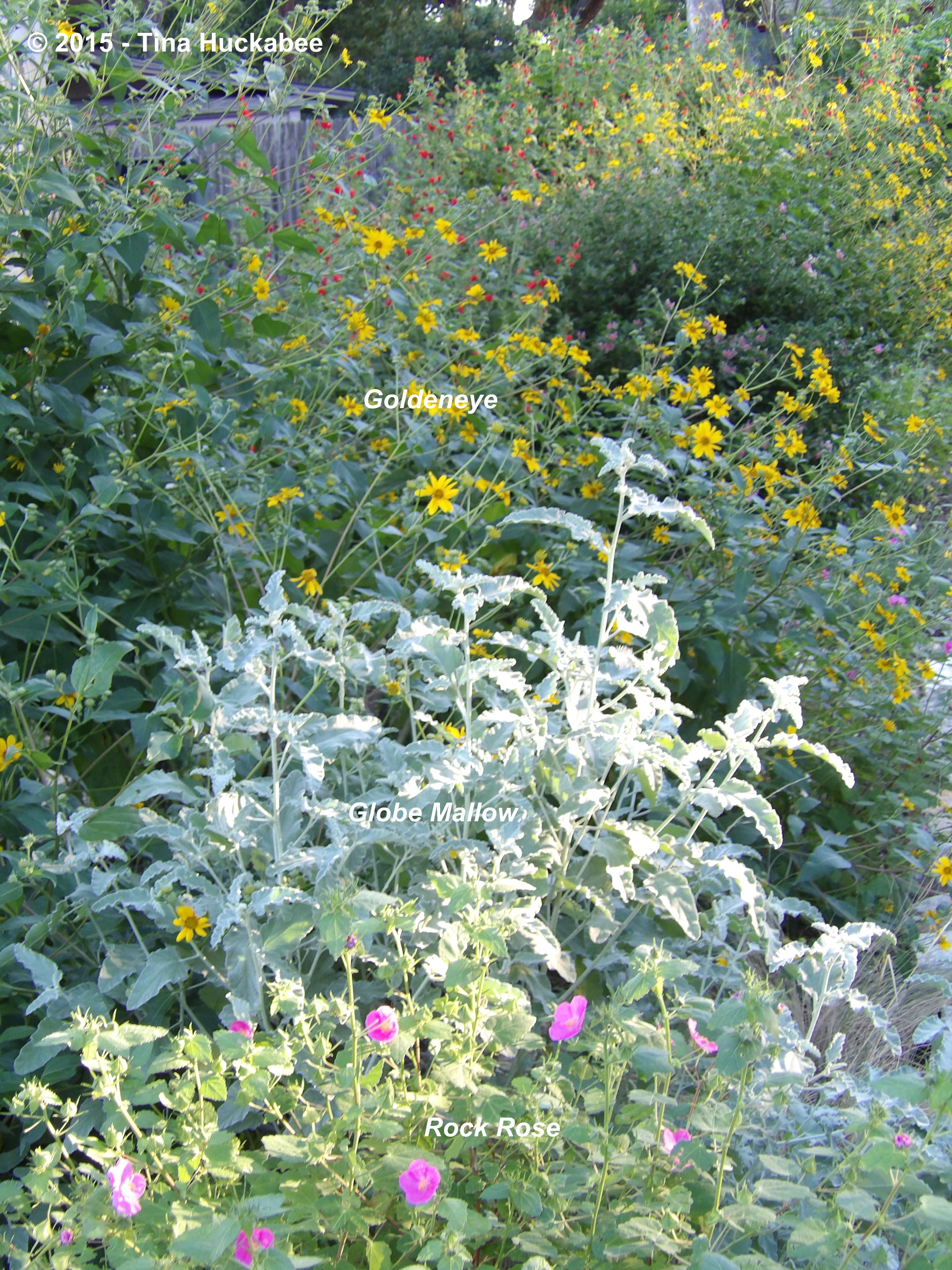
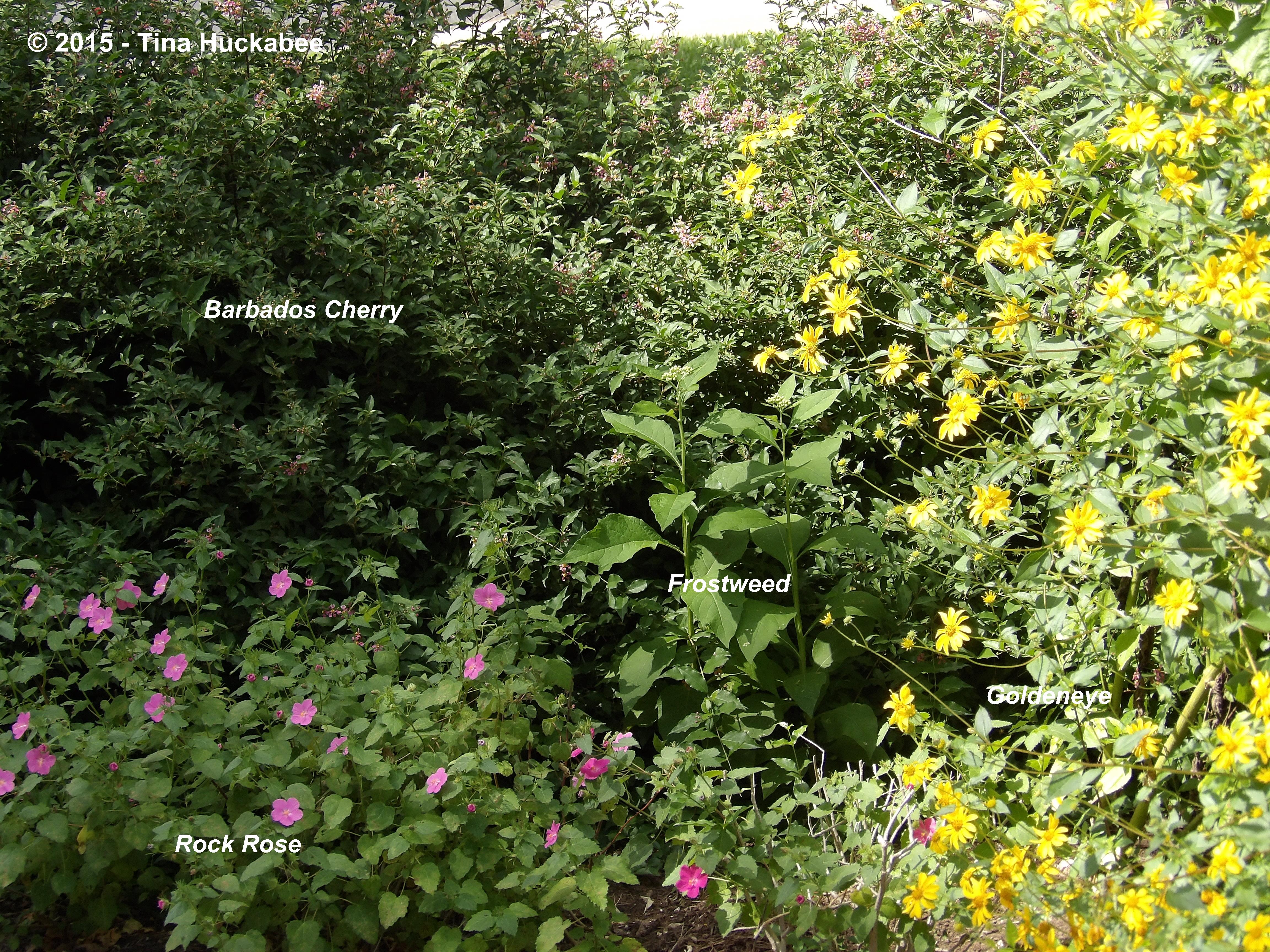
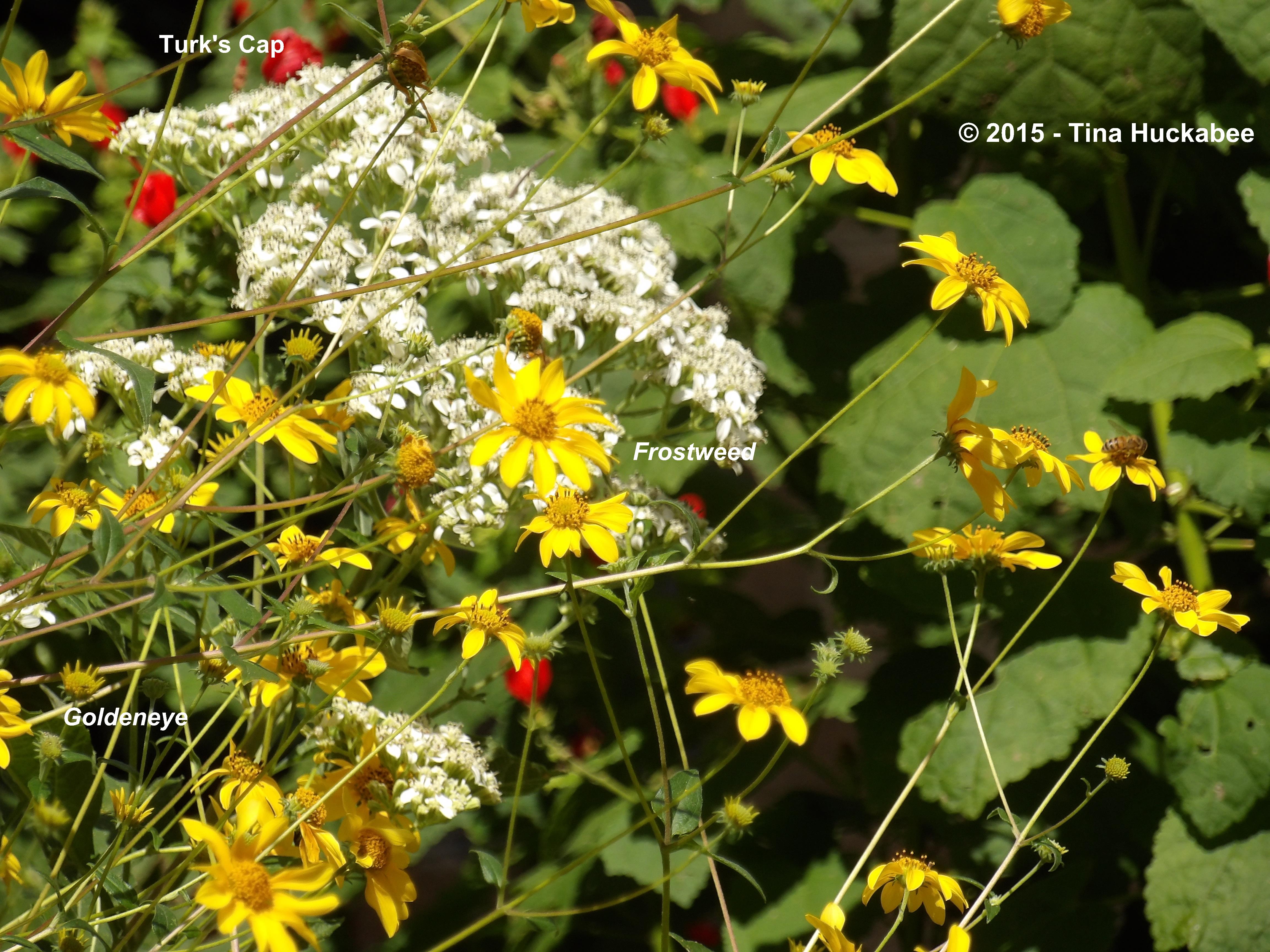
Other plants that came from various parts of my gardens include Rock Rose, Pavonia lasiopetala, Purple Coneflower, Echinacea purpurea, Mexican Feathergrass, Nassella tenuissima, Globe MallowSphaeralcea ambigua, Frostweed, Verbesina virginica, Goldeneye, Viguiera dentata, and a couple of white Tropical Sage, Salvia coccinea, which pop themselves all over my gardens with no assistance from me.  Every spring I also allow some non-native, annual sunflowers (from birdseed, I think) to grow, bloom and seed-out and a few of those tall beauties always find their way into this garden. I transplanted (again!) a Gulf Muhly, Muhlenbergia capillaris,

IMGP2649.new

…in hopes of autumn glory.

In October, a garden buddy gave me some Fall Obedient Plant, Physostegia virginiana, and it fills in a blank spot along the edge of the garden, by the neighbor’s turf.

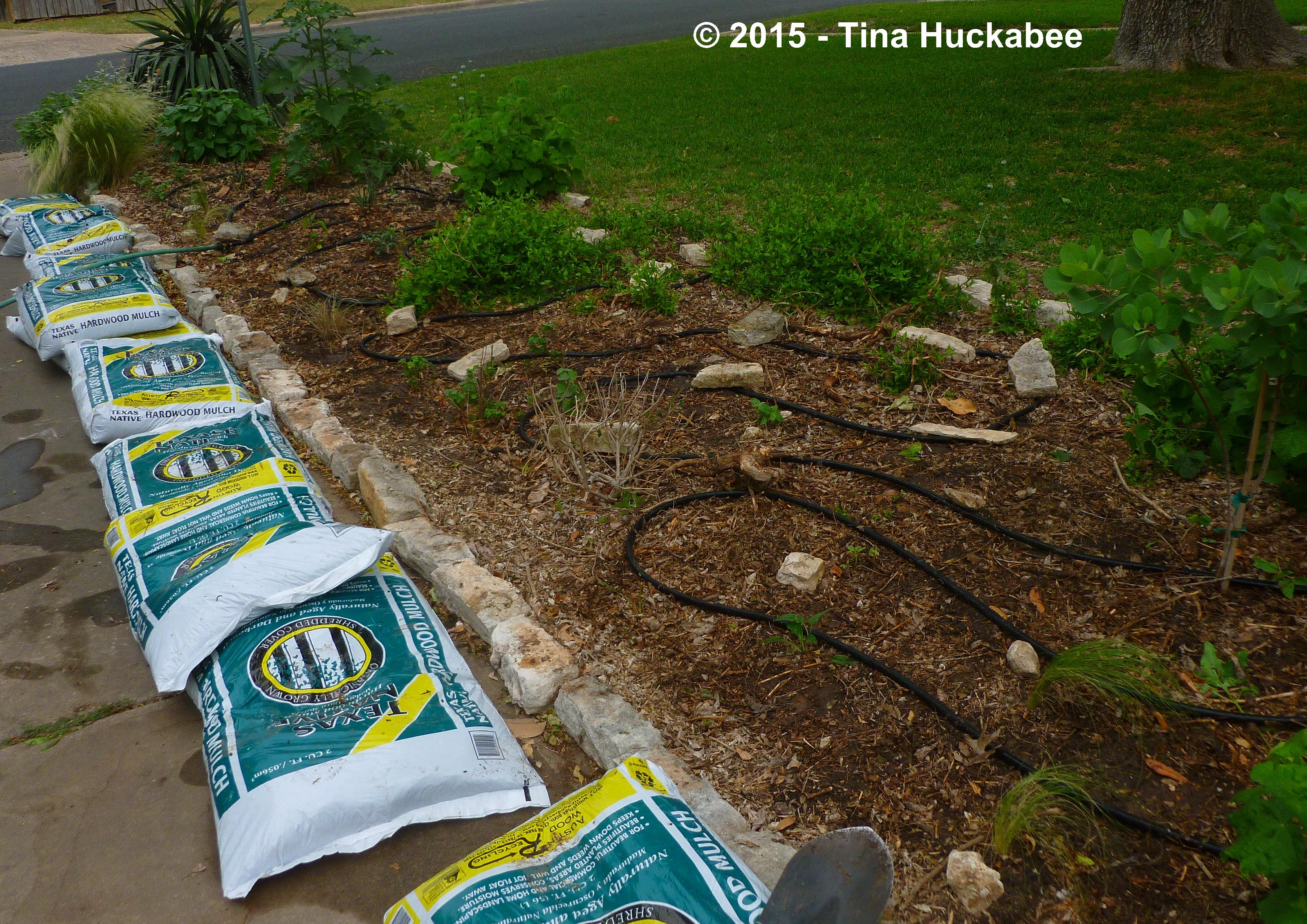
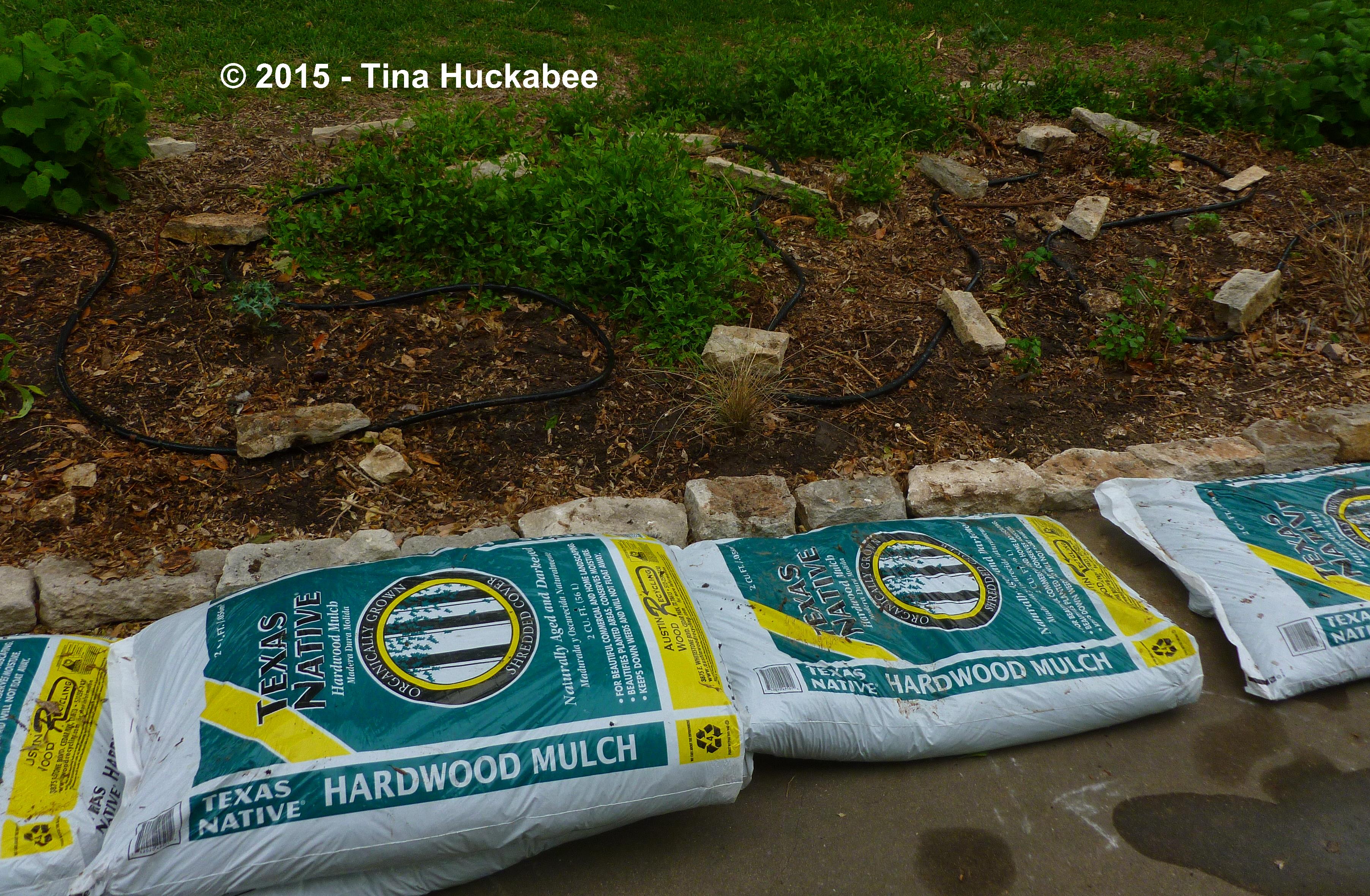
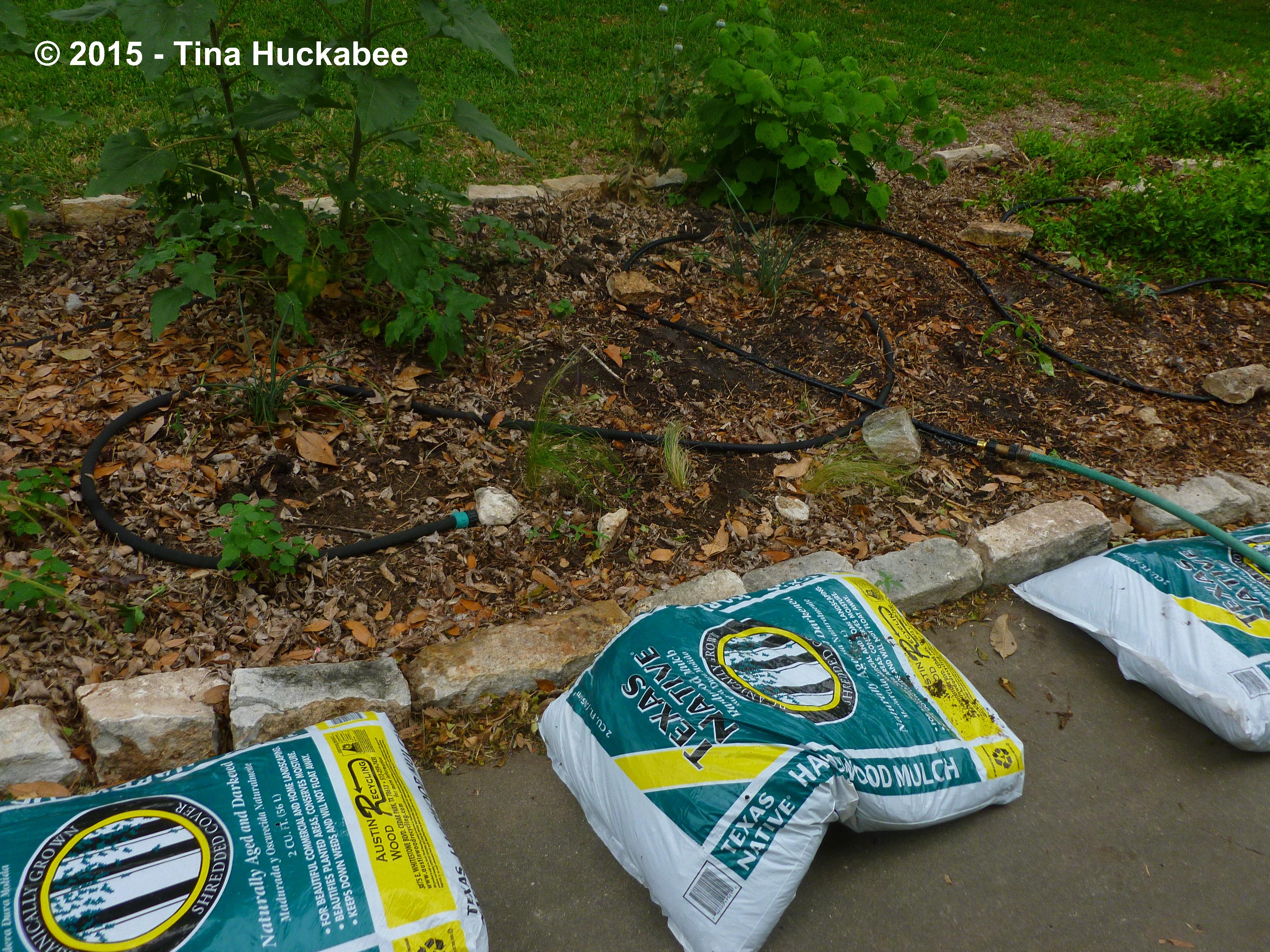
After planting last spring, I added fresh mulch,P1040019.new

…and soaker hoses to the garden, with supervision from Asher the Garden Dog.

P1040018.new

The Soft-leaf Yucca that I wrote about last post, anchored the street end of this garden. It’s snout-nosed weevil rotted and gone now, but the replacement Goldeneye will work beautifully in its stead.

P1040022.new

I chose these particular plants because I’m a sucker for blooming things.  Also, I wanted a variety of pollinator/seed-bearing plants for wildlife, for blooms, but also, for year-round interest with seeds and berries. The height of bloom time for the garden is summer through late fall.

IMGP1023.new IMGP1036_cropped_4354x2507..new

IMGP1043.new

The structural part of the garden resides in shrub form with the Barbados Cherry, Globe Mallow, and Rock Rose, and in a “grass” form by the Red Yucca, Mexican Feathergrass, and the foliage of the Four-nerve Daisy.  The other plants are either dormant in winter or form small winter rosettes.

IMGP1185.new

And though I don’t have many photos to verify, there was always insect and bird action around most of these plants.

IMGP1187.new

The Green Tower was a limited success as a vertical vegetable garden.  The top was lush with tomatoes, basil, cucumbers, and beans, but the sides were a bust–there wasn’t much vegetable growing success there, unfortunately.   I moved three older Bougainvillea container plants from my back patio, where less sun smiles on them than in previous years and placed them on the driveway in front of the GT, which camouflaged the unplanned for bare wall of that structure.

IMGP0510_cropped_4511x2963..new

The three Bougainvilleas were very happy in the new spot–they put on quite the show of blooms from midsummer until I moved them to the garage in November.  I’m trying a different set of plants in the front and sides of the GT this year and that will require some integration with the potted Bougainvilleas.

IMGP2645_cropped_4322x3005..new_cropped_3687x2827..new

Once the height of the growing season was past, the garden retained interest with seeds from the Frostweed, Goldeneye, and Coneflower and berries from the Barbados Cherry.

IMGP1197.new

I’ll continue tweaking this garden–I’ve moved one Frostweed to another garden, lost the Yucca, but added Goldeneye. The Four-nerve Daisy seeded out, so there will be more happy yellow, low-growing daisies to fill in along one side.   I’ve cleared out more of the Barbados Cherry, which will be an ongoing task, and I’m trying different plants (not vegetables) in the sides of the GT this year.

A year in the life of a garden.  Mistakes, re-evaluations, and revelations mark the passage of time in gardening

What garden(s) are you looking at differently?  Or changing in some fundamental way?