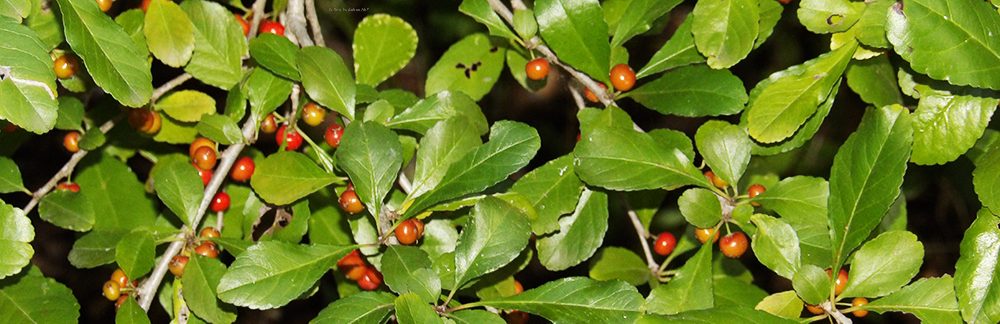
Winged, and Other Things: Wildlife Wednesday, September 2018

Just a quick howdy do!  for September’s Wildlife Wednesday, recapping a few flitting winged things from this past month.  August is typically hot and quiet, but the garden and its inhabitants remain full of energy and life, even when the gardener drags.

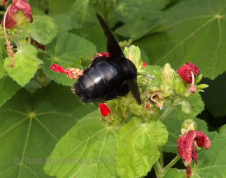
For this whole growing season, I haven’t snagged one good photo of my favorite native bee, the Horsefly-like Carpenter beeXylocopa  tabaniformis.

Bee butt-view on a Turk’s cap bloom.

There are many of these busily buzzing, nectar-stealing carpenter bees in my garden, but this is the best shot I’ve managed this year.  I’m either too slow with the click, or choose a ridiculously windy day to shoot, or am distracted and lose sight of my subject.  The bees keep their cool though, working the garden, laying eggs for the next generation, and taunting the gardener with their charm. There’s still plenty of time to work on attaining some decent photos before the days are significantly shortened and these bees bed down for winter.  Stay tuned!

I’m continuing to enjoy the Turk’s cap visits of several Southern Carpenter beesXylocopa micans.

Like the Horsefly-like carpenter bees, the Southern Carpenter bees nectar-steal and favor Turk’s caps blooms, though I have also seen them at the brilliantly blue, Majestic sage blooms.
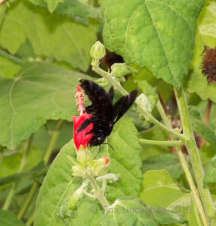
These bees are so large, they are easy to spot in the garden, even from a distance.


The big butterflies are now more common, as is typical for the late summer.  This Eastern Tiger Swallowtail, Papilio glaucus, nectared at the dramatic flowers on one of my Mexican Orchid trees, which is a favorite of a variety of bees and butterflies.


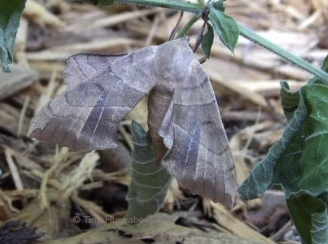
It took me some time perusing Austin area iNaturalist photos to identify this emerging moth as a Virginia creeper SphinxDarapsa myron.

Top-view,

…and the underside.

I love his/her little face and tiny chocolate-drop eyes.  Some bird-delivered Virginia creeper (the host plant for this moth), growing in my back garden, was probably the food source for the moth in larval stage.  This adult emerged in late afternoon from a chrysalis situated on a branch of a Drummond’s ruellia.


The dragons and damsels zoom throughout my garden, but perch near the pond.  I think this is a female Dusky DancerArgia translata.  

The damsel was in nearly constant motion and I took the photo at a distance, so for identification purposes, the photo is not as clear as I’d like.   The Dusky Dancer is a common predator and widespread in Texas.  The purple eyes are a marked feature for this particular species, so I’m reasonably confident I got this right.


This Pipevine SwallowtailBattus philenor, has certainly seen better days.
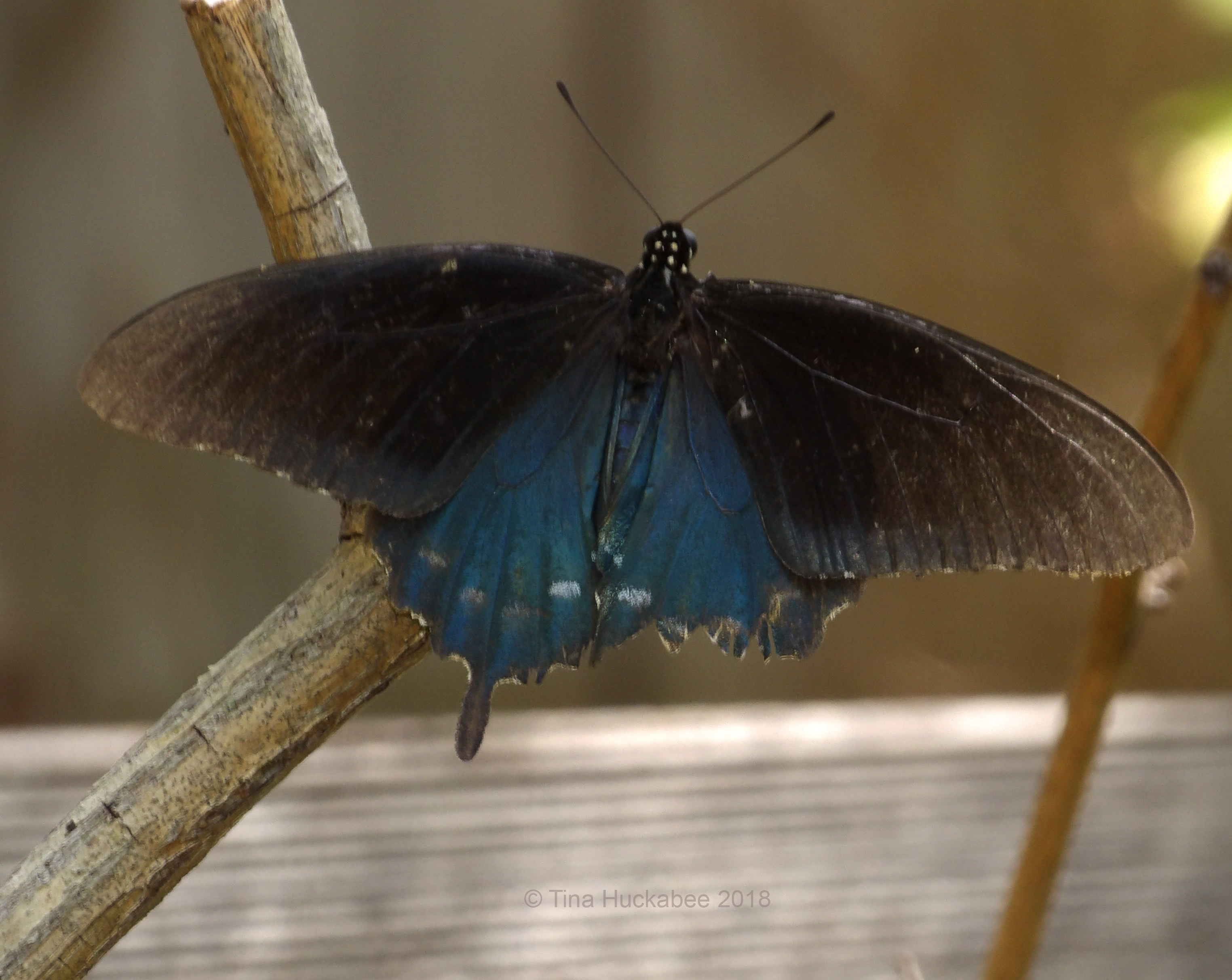
I’m now growing pipevine plant and am enjoying more of these beauties as they float through the garden.


Early one morning I caught this fella nectaring on the salmon blooms of one of my Red Yucca plants.

This Leptoglossus phyllopus is one of the many leaf-footed bugs common in this region and they do fly.


No wings here, but the look on Mr. Green Anole suggests he’s weary of summer and ready for autumn.  Or, maybe I’m just anthropomorphizing.

Yeah, that’s it.
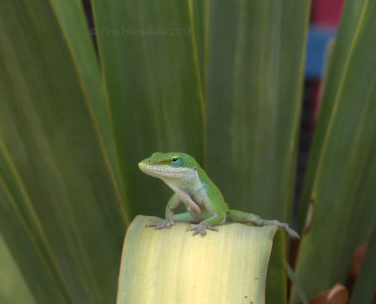
I love these little guys and gals and they’ll be around until our chill arrives, which is months away.

What’s in your garden as we wrap up summer?  Please share your critter happenings and don’t forget to leave a link to your post.  Happy wildlife gardening!
The Purpling

Days are noticeably shorter now in late August.  Darkness greets my morning alarm and birds are quiet until well after I’m up and about.  Nightfall appears earlier, much more than a mere few weeks ago.  Autumn is palpable, though certainly not with cooler temperatures, at least not here in Central Texas.  Our daily (today marked number 43) century-plus numbers are still in play, but seasonal change is afoot.

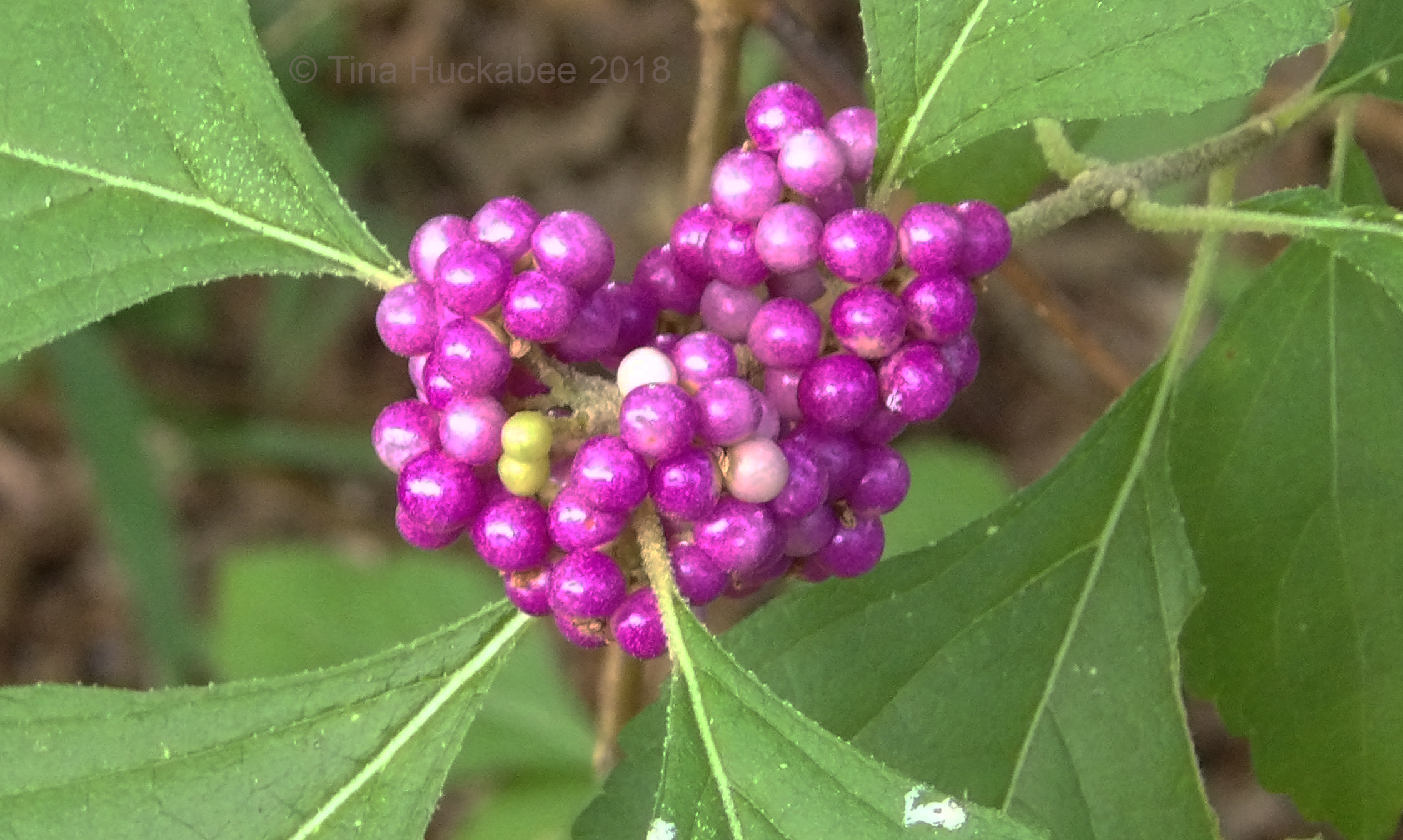
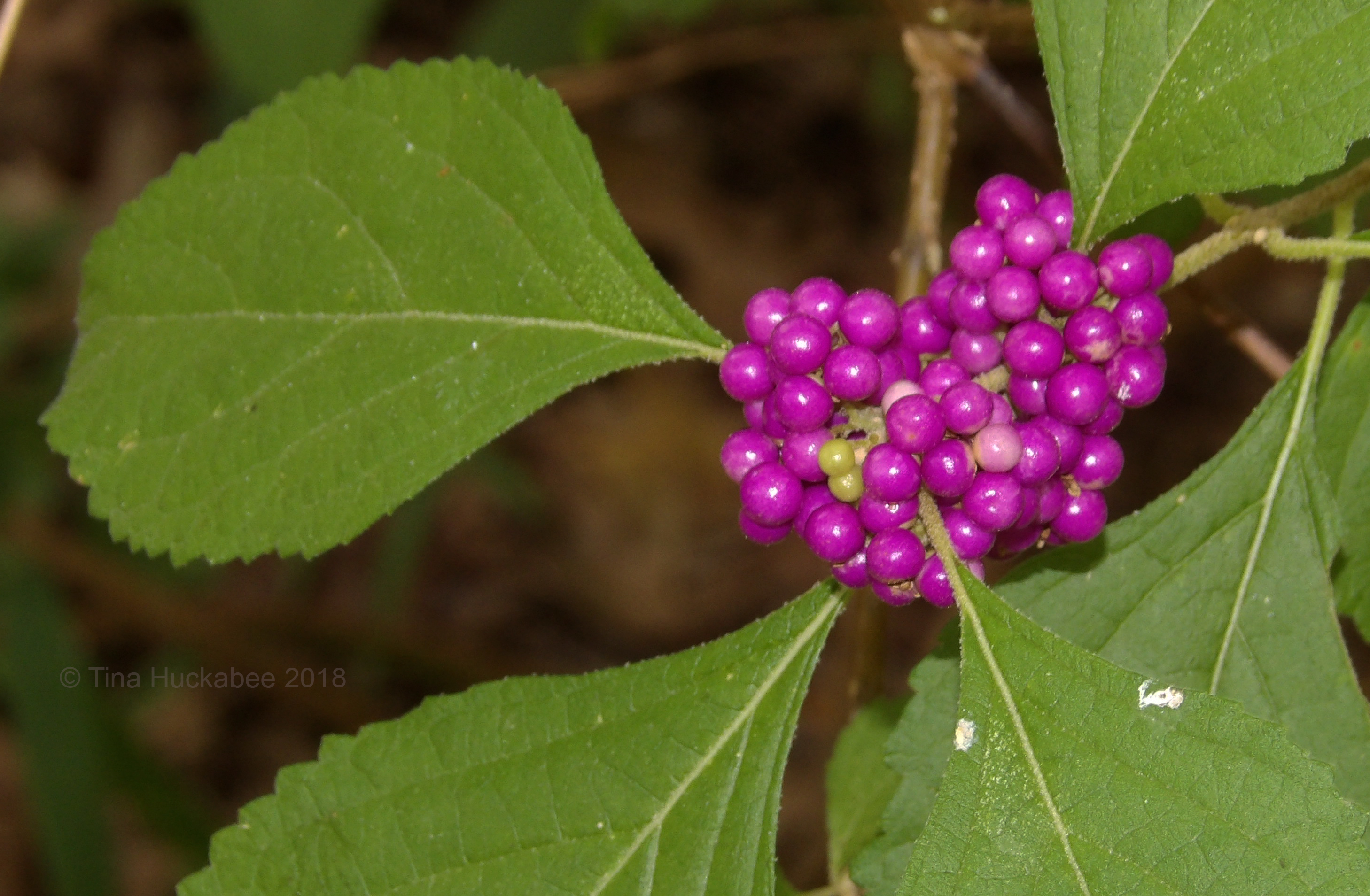
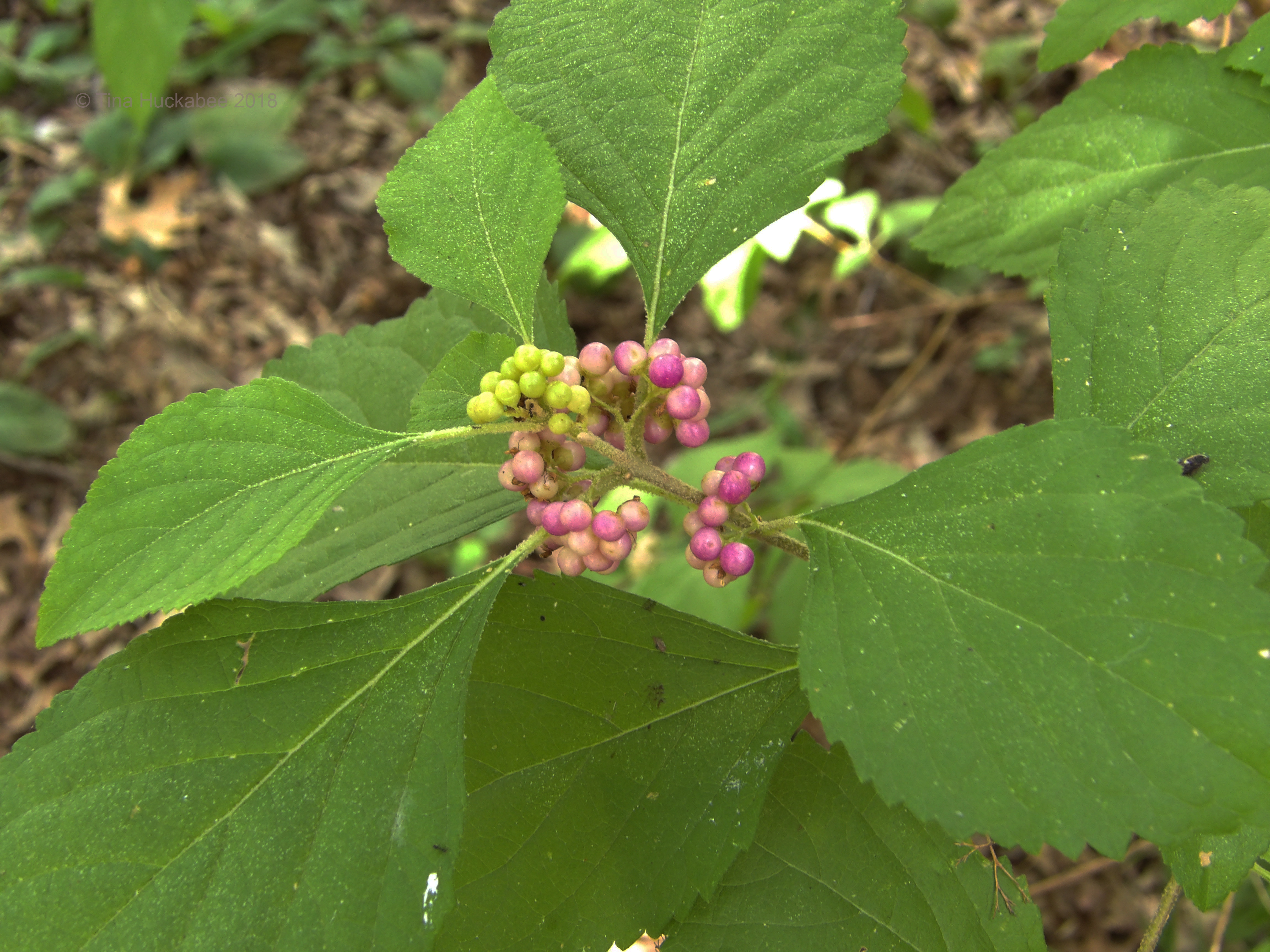
This cluster of beauty berries showcases the transformation from green to purple.  The bird poop on the leaves is extra decoration.

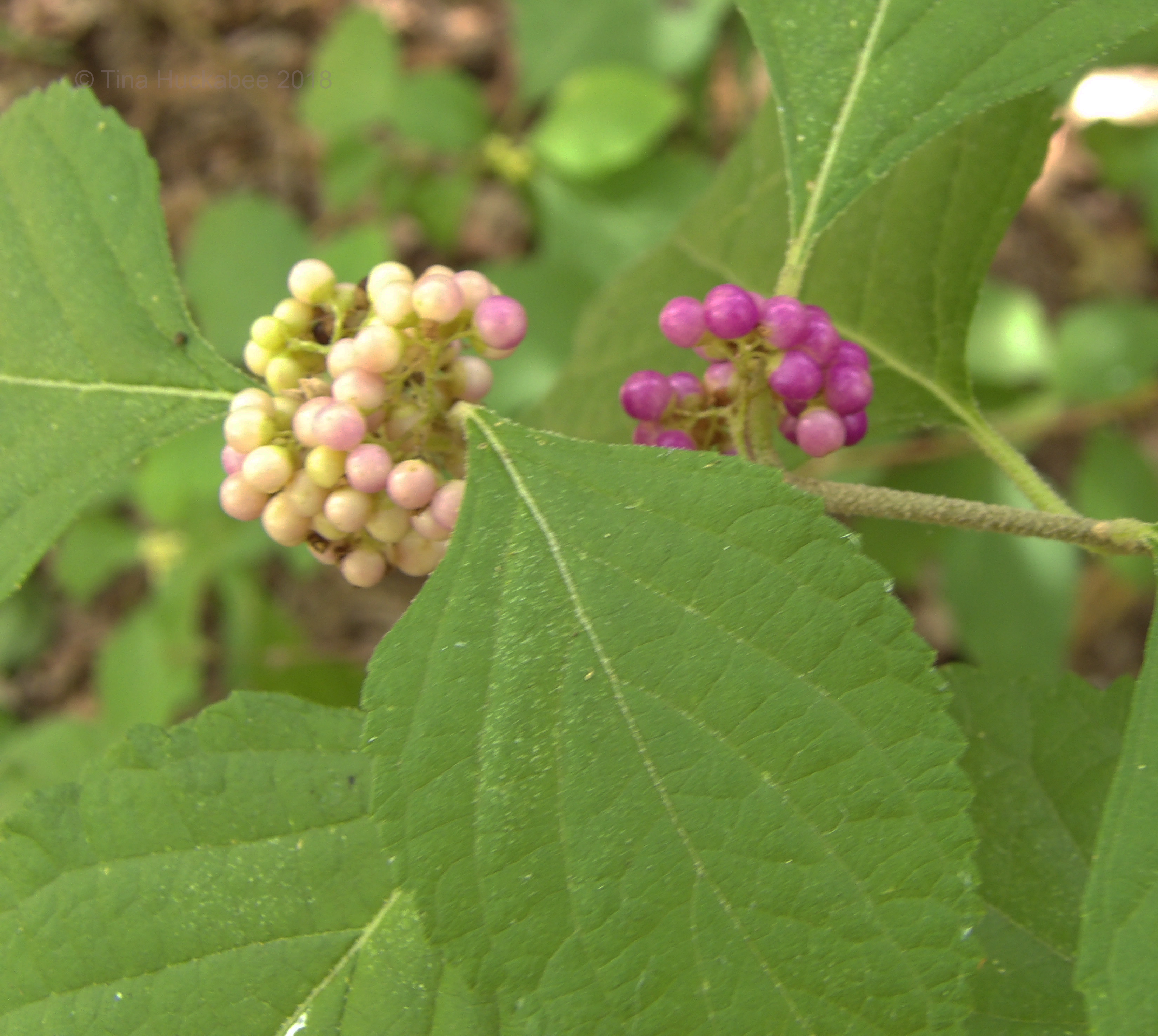
In the last couple of weeks, the American beautyberryCallicarpa americana, has slipped out of its summer wardrobe and donned its hooray for autumn swag.  Eye-candy for the gardener and nutritious fruits for birds, the green, clustered drupes, grown since June from the remains of dainty pink blooms, have morphed to brilliant, metallic purple berries.

Green fruits,

…to purple.

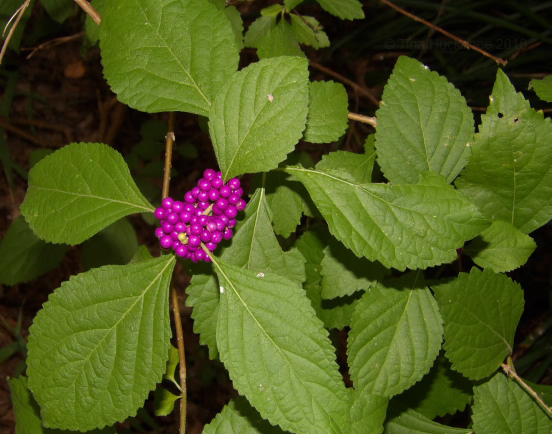
This particular shrub in my back garden is about 3 years old and finally exhibiting its graceful arching form.

Berries are cream-to-green, but purple-up over 7-10 days .  Triggered by the maturity of the drupe (and maybe light?), it’s a seasonal change I look forward to each hot August.

It gives me hope for the autumn to come.

Berries gather like bunches of party balloons along the branches of the shrub, the purple overwhelming the green, ready to pop in some lucky bird’s beak.


This beautyberry will grow larger, eventually filling the area of this small garden.


This beautyberry is the same age as the one above, but I transplanted it to a different spot in my front garden exactly one year ago.

Beautyberry is a good shade plant, though this one receives more sun than the back garden beautyberry. I’ve noticed that it’s grown more quickly, but has also required more water.  In fact, the slight droop of the leaves in this photo indicates a thirsty plant.  Since June, I’ve watered this shrub once per week, significantly more than the back garden beautyberry, which grows in shade.

In my garden, Blue Jays and Mockingbirds are the main consumers of these berries.  Some years, the beautyberry greedy birds descend and devour the berries just as they turn color; other years, the berries remain on the shrub well into winter, the birds obviously getting sustenance somewhere else.

And that’s fine with me.

I prefer those years when the birds let me enjoy the beauty of the berries, at least for a time.

Some Like it Hot: Wildlife Wednesday, August 2018

With apologies to Billy Wilder and his silly romcom, Some Like It Hot,  I can’t think of a more appropriate title for this edition of Wildlife Wednesday.  Here in Austin, Texas we’ve sweltered through 15 consecutive days of over 100°F (37.7°C) temperatures, with 20 some-odd days over 100º in total for the summer.  On one of those days, the temperature reached 110ºF (43ºC).  Sadly, that’s not a record breaker, (it’s 112F in 2011) but it was oven-like nonetheless.  And, August is just beginning.

UGH!

These days in Austin, it’s not unusual to experience many days reaching over 100ºF and while that’s concerning, so far this summer the wild critters in my garden are weathering the blistering heat just fine–they thrive with available water sources, cover in the guise of trees and shrubs, foods in the form of seeds on perennials (and some in a bird feeder), and places to nest.

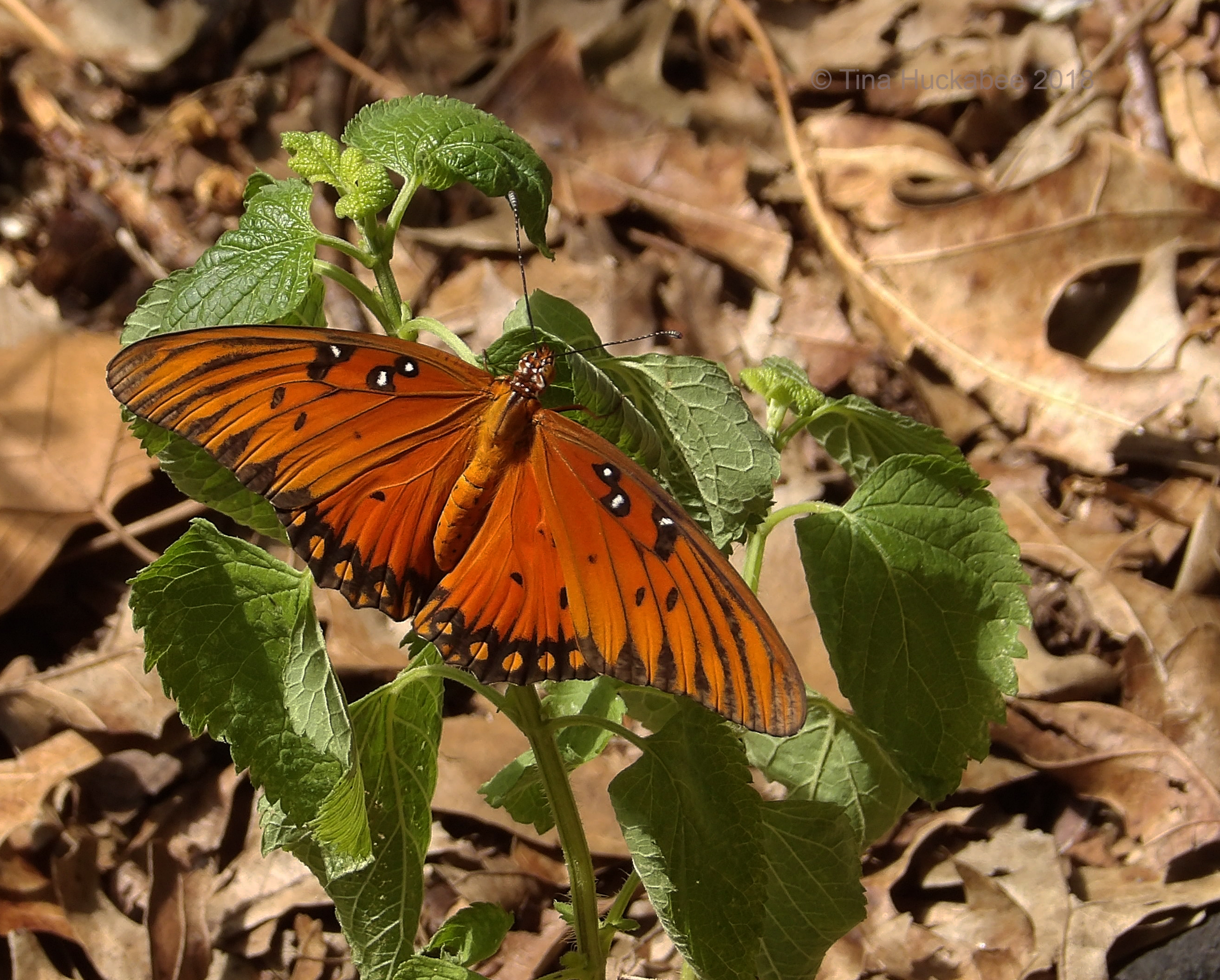
I lost my main passion vine (Passiflora caerulea) during some hard freezes this past winter, so I haven’t enjoyed viewing as many Gulf Fritillary butterfliesAgraulis vanillae,  as I usually see. Passion vines are the host plant for these orange beauties. Recently though, one or two Fritillaries have appeared and are laying eggs on a few sprigs of a second, and different, passion vine which volunteers in an open area of my back garden.  This Purple passion-flower, Passiflora incarnata, doesn’t bloom in my garden, but boasts enough foliage for the caterpillars to partake of on their way to adulthood.

This Gulf Fritillary rested on a plant near to where the passion vine grows. Had it just emerged from its chrysalis?


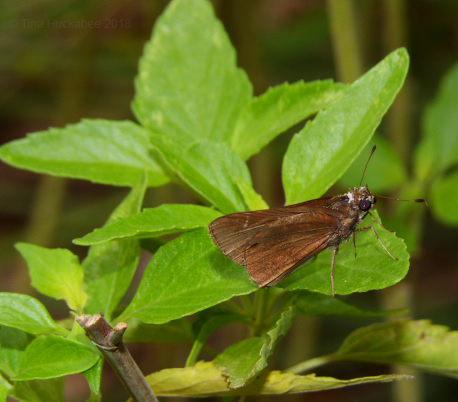
I’m fairly sure this plain little thing is a Dun skipperEuphyes vestris, but I’m not positive.

It worked the blooms of a salvia and stopped just long enough for me to snap a shot.

I don’t see American Snout butterflies, Libytheana carinenta, very often, so it was a treat to see this one on the foliage of one of my Softleaf yuccas.

I kept my distance and never successfully captured the butterfly with wings spread because it flitted away warily from the weird woman stalking it through the garden.  Snouts’ host plant is the Common hackberry, Celtis occidentalis, which is a tree that many modern Texans hate. Hackberry trees seed out everywhere and often in less-than-desirable spots, but they’re an important wildlife food source.  Along with the Snout, Hackberry trees also feed the Question Mark and Mourning Cloak butterflies, as well as providing fruit and shelter for birds.  Native Americans didn’t hate the Hackberry and used it for medicine and food.

This Funereal duskywingErynnis baptisiae, looks like it might have had a close-call  with a predator.

The bits of missing wing didn’t slow down its nectaring and pollinating mission.   It favored the sunflowers which are still in bloom.

I’ve had a difficult time identifying this petite pollinator, but I think it’s a Eufala skipper, Lerodea euflala.

Eufala skippers are considered “grass” skippers, as their host plants are grasses like Johnson grass, Bermuda grass, and sugarcane.  Both Johnson and Bermuda are common in Central Texas, but I don’t grow either in my garden.

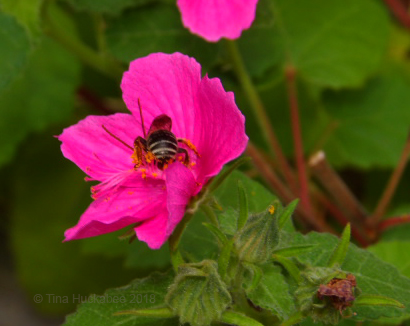
Here’s yet another I dunno what this is, but firmly in the native bee category.  I thought she was one of my ubiquitous Horsefly-like carpenter bees, but she’s not quite that big.  She buzzed around the very pink Rock rose flowers, snuggling in to the reproductive parts of the flowers and covering herself with pollen,

…and showing me her backside.

I think she’s in the Melittidae family which collect pollen on the hairs of their bodies and nest in the ground.  She was fast flyer and a busy, busy bee.

This diminutive, metallic-green sweat bee sported loaded pollen baskets, full-to-bursting with creamy white pollen.  As I watched her, I think she was resting and not collecting pollen, on the end of the Mexican Orchid bloom stamen.

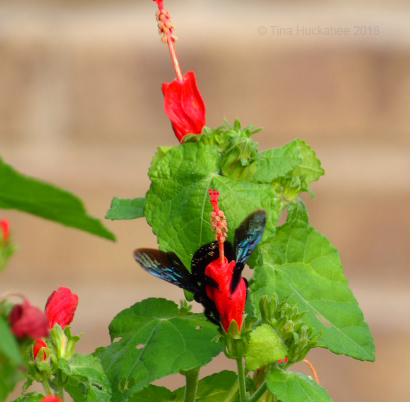
I’ve been privileged to observe a couple of big, beautiful Southern Carpenter bees, Sylocopa micans,  in the last couple of weeks.

Stunning black with a blue sheen on their wings and bodies, these bees have moved with intention through the Turk’s cap shrub, from red bloom to red bloom.  At least in my garden, the Turk’s is the clear favorite of these bees.  This bee species utilizes buzz pollination–a particularly efficient form of pollination–and as I observed the two visiting, I could see and hear that buzzing on the flower.

Hummingbirds are not bees (duh!), but they sure are buzzy as they zoom through the garden, and this summer, they’ve been in abundance.  This female, probably Black-chinned hummingbird, also worked Turk’s cap blooms.

Have I mentioned that Turk’s cap is a fabulous wildlife plant?

I don’t typically hang a sugar water feeder out for the hummers.  I have nothing against hummer feeders and they’re great for attracting and supplementing the tiny birds’ diet, but I’ve found that hummers prefer what I’ve planted in my gardens and don’t visit the feeders when I’ve placed them.  That said, the sugar water is important for hummingbirds, especially as they ramp up for their fall migration southward.

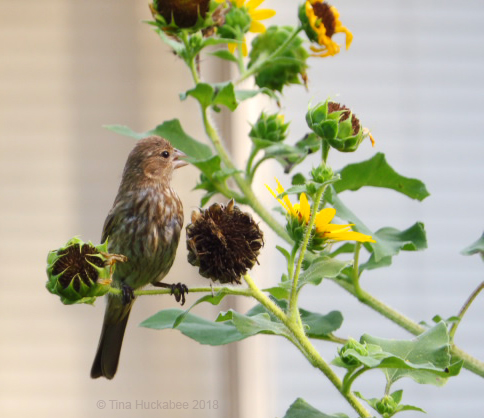
Volunteer sunflowers are still blooming, but the spent blooms are also setting seed.  A variety of birds feed on these seeds including ones like this female House FinchHaemorhous mexicanus,

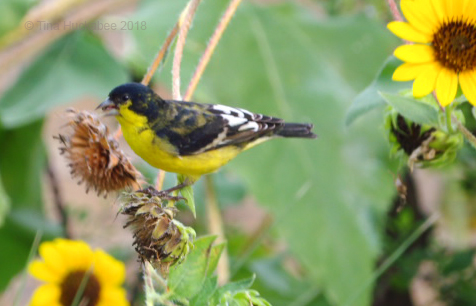
…and this handsome male Lesser GoldfinchSpinus psaltria.

I’ll leave the stalks up until all the blooms are done and the seeds eaten.  Then I’ll cut back the stalks to about 2-3 feet tall and leave some on the ground, so that insects (native bees, primarily) can utilize the hollow stems for nesting through fall, winter, and next year’s growing season.

A pair of Carolina wrensThryothorus ludovicianus, nested nearby and are teaching their 2(?) chicks how to manuever through the neighborhood.

I’m confident this cutey is junior, baring his belly in birdly pride as mom and dad wren perched close by, chchchhching at me, while I snapped this shot.

This Green anole lizardAnolis carolinensis, can’t decide whether to dress for the heat in green or brown.

I didn’t hang around long enough to observe, but I’ll bet it chose the green outfit to fit in with the surroundings.

No matter if your garden is deep in the dog days of summer or chilling in the depths of winter, what wildlife happenings did you share in or observe this past month?  Please post about your wild happenings and leave a link when you comment here–and happy wildlife gardening!