Bees A’buzz

It was a slow start to the carpenter and bumble bee action this year, I assume because of the heavy rains experienced in Central Texas in May and June/early July. But recently the garden is a’buzz with honeybees and a variety of native bees, including the big, noisy carpenter and bumble bees.

This Horsefly-like Carpenter bee, Xylocopa tabaniformis, worked the prolific blooms of a Flame Acanthus, Anisacanthus quadrifidus, in my front garden.

These charming bees are probably my favorite bees. They’re noisy and buzzy, darling in looks. I love their racing stripes and melt at their dreamy blue eyes.

I like this up-side-down visage: bee-butt up pointed upward, proboscis-leading snout concentrated on the liquid deep in the tubular nectar fonts where the bee’s proboscis is headed.

Nectar stealing or nectar robbing is when an insect pokes or bites a hole in flowers that are too deep or small for the insect to enter from the open bloom. The insect then sips nectar without entering the flower’s innards, bypassing direct pollination.

Ole Blue Eyes here is just about to deliver its pointy proboscis, aiming for the fleshy, thin petal and the sweet stuff inside. The bee sliced the petal with its formidable mandibles to gain entry.
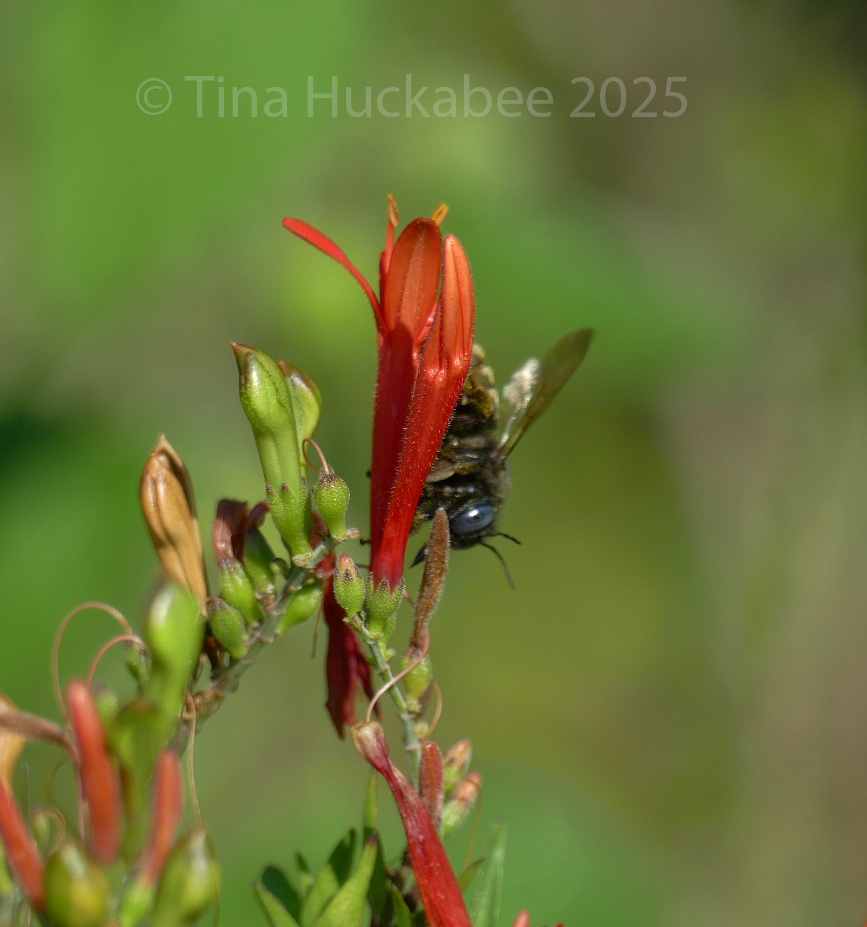
Bum-up view of the nectar-stealing, nectar-sipping bee. While direct pollination isn’t happening, you’ll notice grains of pollen sprinkled on Ole Blue Eyes’ body. It’s likely that some of those grains will play a role in pollination.

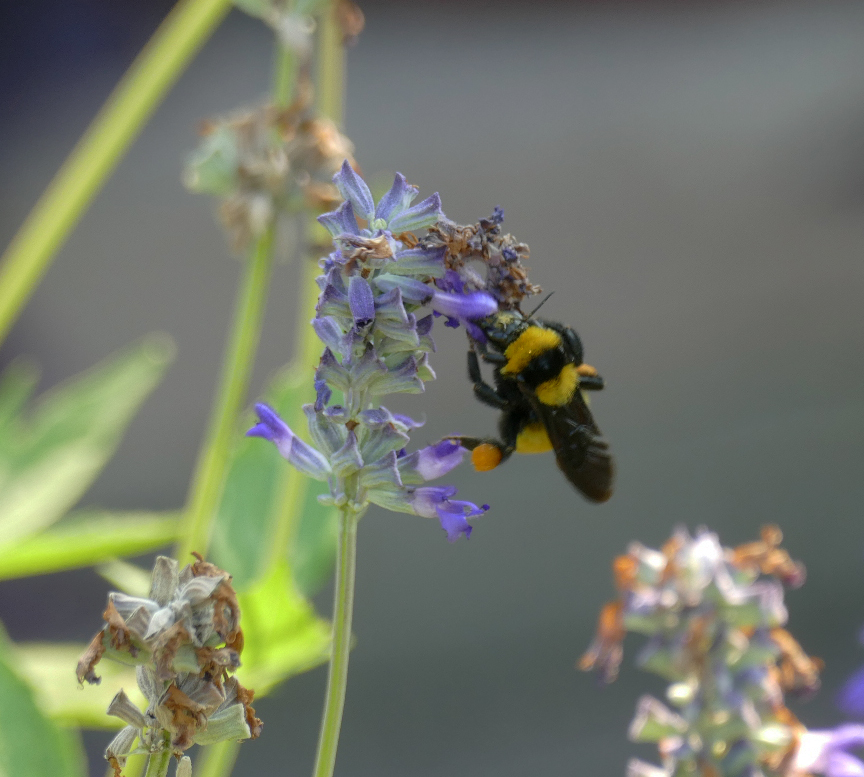
The other bees I’m seeing more of–and a big Huzzah! for that–are American Bumble bees, Bombus pensylvanicus. These graceful, yellow-n-black sweethearts are working many kinds of flowers right now, but a favorite bumble dining spot are the blue blooms of Henry Duelberg Sage, Salvia farinacea, ‘Henry Duelberg’. Notice the pollen booty on this bee’s pollen pantaloon, also known as a corbicula. If you look carefully, you can see a dab of golden on the other side of the bee–no doubt that pantaloon also carries a load of pollen.
My garden always enjoys more insect action, especially of the pollinator kind, as the growing season progresses. Heavy rains in spring and early summer often damage ground and wood nesters, so their procreation is slowed. Those insects rally as summer heats up and stable weather patterns settle in. In a healthy, diverse garden community, the pollinators persevere, the garden flourishes, and the gardener gives thanks.

Resting and Robbing

Bees are busy pollinating the summer garden, but like the rest of us, they need rest. Foraging is hard work! This Horsefly-like Carpenter bee, Xylocopa tabaniformis, chose a pretty pink bougainvillea bract as its preferred napping spot.

I watched it for some time as I puttered in the garden and it didn’t move. I’ve seen bees “sleep” on flowers in the past, usually on petals or atop leaves. I’m sure they rest in other places too, but it’s likely that those spots are more private, less noticed by the perspiring gardener. I checked the plant after puttering and the bee had moved on.

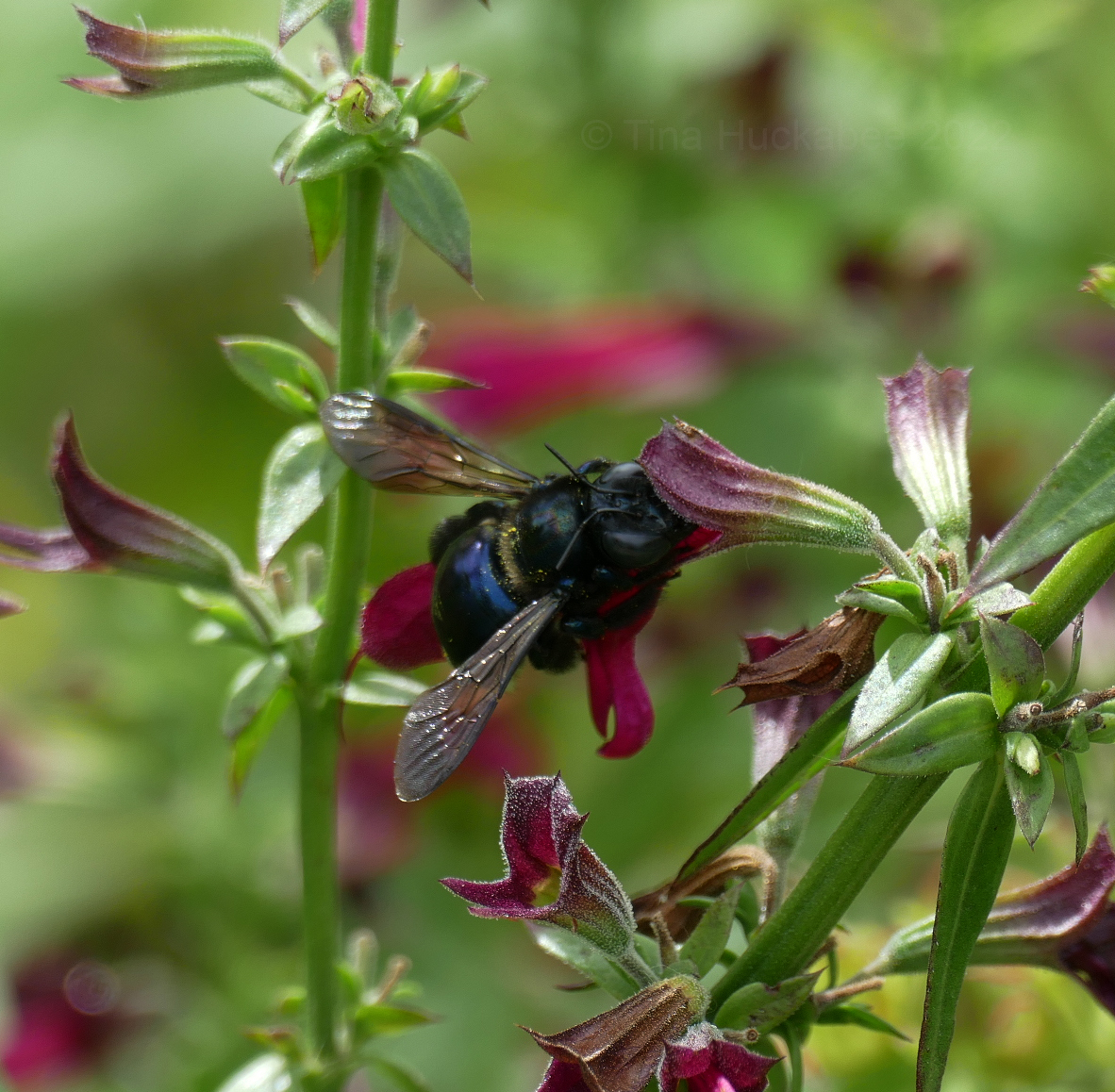
This Southern Carpenter bee, Xylocopa micans, participating in nectar robbing, is poised to poke its proboscis into the bloom of a Big Red Sage, Salvia penstemonoides.

Nectar robbing or nectar stealing is a way that various insects, bats, birds, and mammals consume nectar without the benefit to the plant of pollination. In the case of bees, they typically bite or poke a hole in the petal tissue, then sip the nectar, bypassing the parts of the flower where pollination happens. Flowers can be damaged by the robbing, thus preventing further visits from pollinators. As well, some pollinators also recognize when a bloom has been robbed of its nectar, so they move on to other nectar-filled flowers, the robbed flower missing out on pollination. For for various reasons, nectar robbing isn’t generally considered harmful for plants or an ecosystem as a whole, but is simply part of the functional tapestry of a diverse natural space.

Carpenter bees nectar rob because they’re such big bees they can’t fit into certain blooms. Generally, the blooms that bigger bees rob have slender, tubular corollas. This same Southern Carpenter bee is head-and-proboscis-deep into the base of the Big Red sage bloom, sipping the sweet stuff available. There’s no way that big body could nestle in the bloom.

Sometimes, a robber is sprinkled with pollen, perhaps due to buzz pollination. Buzz pollination happens when certain bees vibrate their strong thoracic muscles, vibrating, or sonicating, the pollen grains from flowers’ anthers. During foraging, this Horsefly-like Carpenter bee might have buzzed pollinated on a different flower, its back carrying sprinkles from the loosened pollen onward through the garden. The bee is too big to crawl into this bloom, a Henry Duelberg sage, Salvia farinacea, so stealing is the way to go.

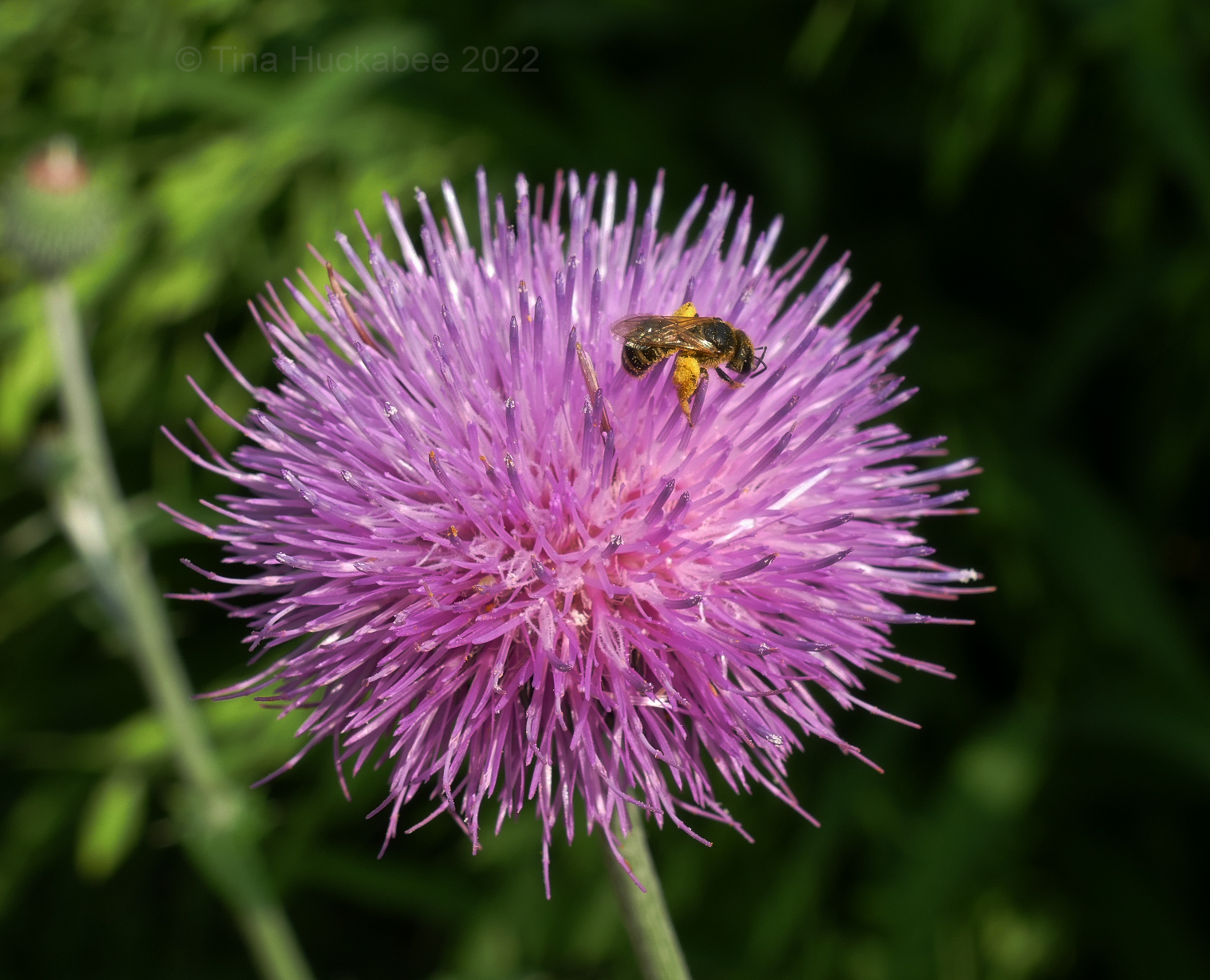
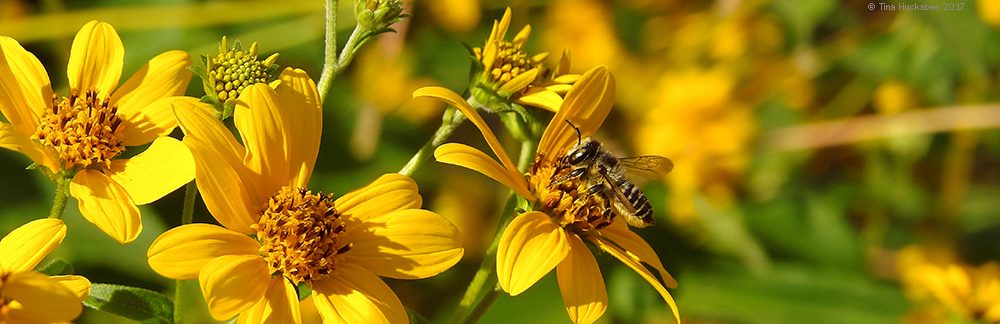
Of course, there are those who pollinate the old-fashioned way, crawling all over a bloom, collecting pollen as they go! This native bee, perhaps a Mining bee, Andrenidae, or a Plasterer bee, Colletidae, enthusiastically worked the flower of a Texas thistle, Cirsium texanum.

Pollinating or robbing, it’s a busy time in the summer garden, especially for those who live in and rely on its bounty. After a hard day in the garden, sleep is bliss.

Winged, and Other Things: Wildlife Wednesday, September 2018

Just a quick howdy do!  for September’s Wildlife Wednesday, recapping a few flitting winged things from this past month.  August is typically hot and quiet, but the garden and its inhabitants remain full of energy and life, even when the gardener drags.

For this whole growing season, I haven’t snagged one good photo of my favorite native bee, the Horsefly-like Carpenter beeXylocopa  tabaniformis.

Bee butt-view on a Turk’s cap bloom.

There are many of these busily buzzing, nectar-stealing carpenter bees in my garden, but this is the best shot I’ve managed this year.  I’m either too slow with the click, or choose a ridiculously windy day to shoot, or am distracted and lose sight of my subject.  The bees keep their cool though, working the garden, laying eggs for the next generation, and taunting the gardener with their charm. There’s still plenty of time to work on attaining some decent photos before the days are significantly shortened and these bees bed down for winter.  Stay tuned!

I’m continuing to enjoy the Turk’s cap visits of several Southern Carpenter beesXylocopa micans.

Like the Horsefly-like carpenter bees, the Southern Carpenter bees nectar-steal and favor Turk’s caps blooms, though I have also seen them at the brilliantly blue, Majestic sage blooms.

These bees are so large, they are easy to spot in the garden, even from a distance.


The big butterflies are now more common, as is typical for the late summer.  This Eastern Tiger Swallowtail, Papilio glaucus, nectared at the dramatic flowers on one of my Mexican Orchid trees, which is a favorite of a variety of bees and butterflies.


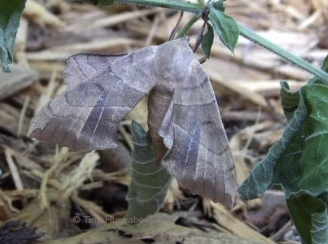
It took me some time perusing Austin area iNaturalist photos to identify this emerging moth as a Virginia creeper SphinxDarapsa myron.

Top-view,

…and the underside.

I love his/her little face and tiny chocolate-drop eyes.  Some bird-delivered Virginia creeper (the host plant for this moth), growing in my back garden, was probably the food source for the moth in larval stage.  This adult emerged in late afternoon from a chrysalis situated on a branch of a Drummond’s ruellia.


The dragons and damsels zoom throughout my garden, but perch near the pond.  I think this is a female Dusky DancerArgia translata.  

The damsel was in nearly constant motion and I took the photo at a distance, so for identification purposes, the photo is not as clear as I’d like.   The Dusky Dancer is a common predator and widespread in Texas.  The purple eyes are a marked feature for this particular species, so I’m reasonably confident I got this right.


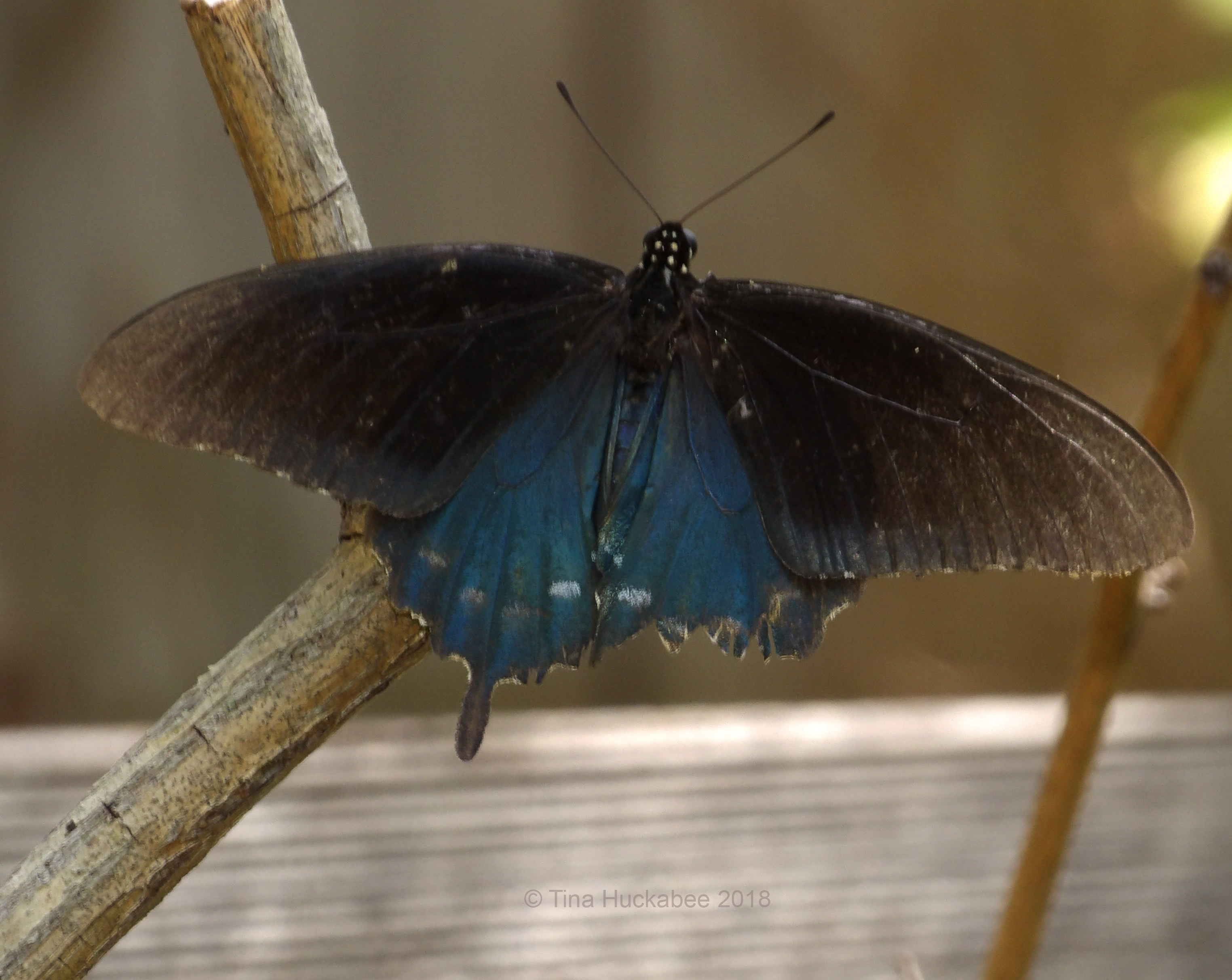
This Pipevine SwallowtailBattus philenor, has certainly seen better days.

I’m now growing pipevine plant and am enjoying more of these beauties as they float through the garden.


Early one morning I caught this fella nectaring on the salmon blooms of one of my Red Yucca plants.

This Leptoglossus phyllopus is one of the many leaf-footed bugs common in this region and they do fly.


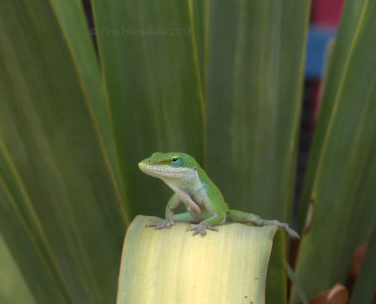
No wings here, but the look on Mr. Green Anole suggests he’s weary of summer and ready for autumn.  Or, maybe I’m just anthropomorphizing.

Yeah, that’s it.

I love these little guys and gals and they’ll be around until our chill arrives, which is months away.

What’s in your garden as we wrap up summer?  Please share your critter happenings and don’t forget to leave a link to your post.  Happy wildlife gardening!