It’s not been a particularly sunny summer here in normally sun-blasted Central Texas. If it’s not vomiting rain, it’s cloudy and threatening to open up. A break from the Texas sun is okay with me, though having grown up in the Sun Belt, I must admit I’ve grown weary of the dreary.
The volunteer sunflowers haven’t though.

For days on end this summer, these fun annuals have invited sunshine into my garden.

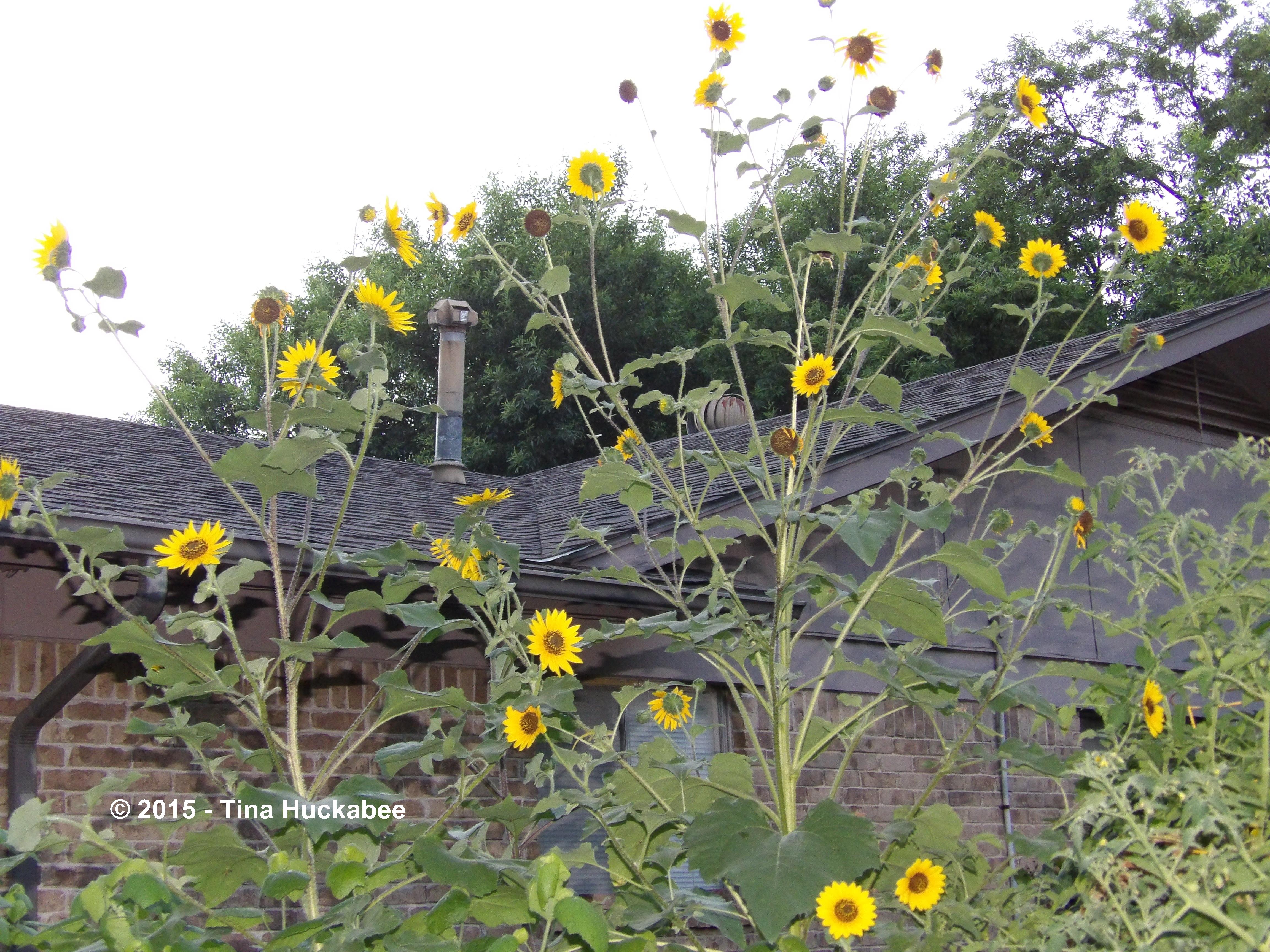
These four–Moe, Larry, Curly–and Shemp–planted themselves on the edge of my front garden.

Acting as Guardians of the Gardens, they’ve grown to height and bloomed, rain or shine, and they will do so until they seed out for the birds–and next summer’s bounty.
The sunflowers along the driveway are growing in hopscotch fashion, spreading their happy flower ways,

…reaching to the sky,
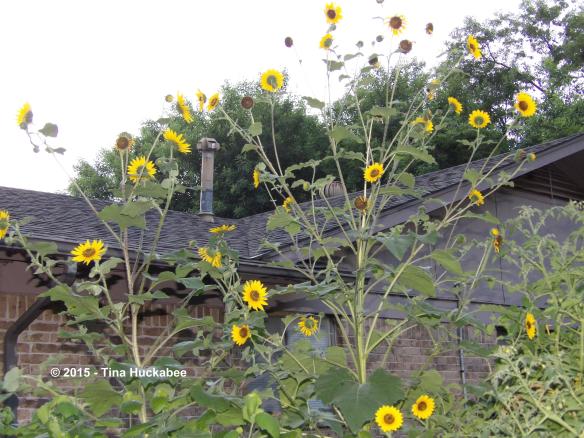
…and leaning into the drive to wave a friendly welcome home to me.

These sunflowers are planted by birds who visit my black-oil sunflower-filled bird feeders. Early each spring, MANY germinate in my gardens and pathways. Actually, only a few seedlings germinate in the gardens proper because I mulch thoroughly, but in the rock walkways, scads of nascent sunflowers develop, most of which end up in the compost. One of the first chores after winter perennial pruning is weeding the dozens of sunflower wannabes. I leave a few, sometimes transplanting one or two to more desirable spots. Then I enjoy the show in late spring and summer.
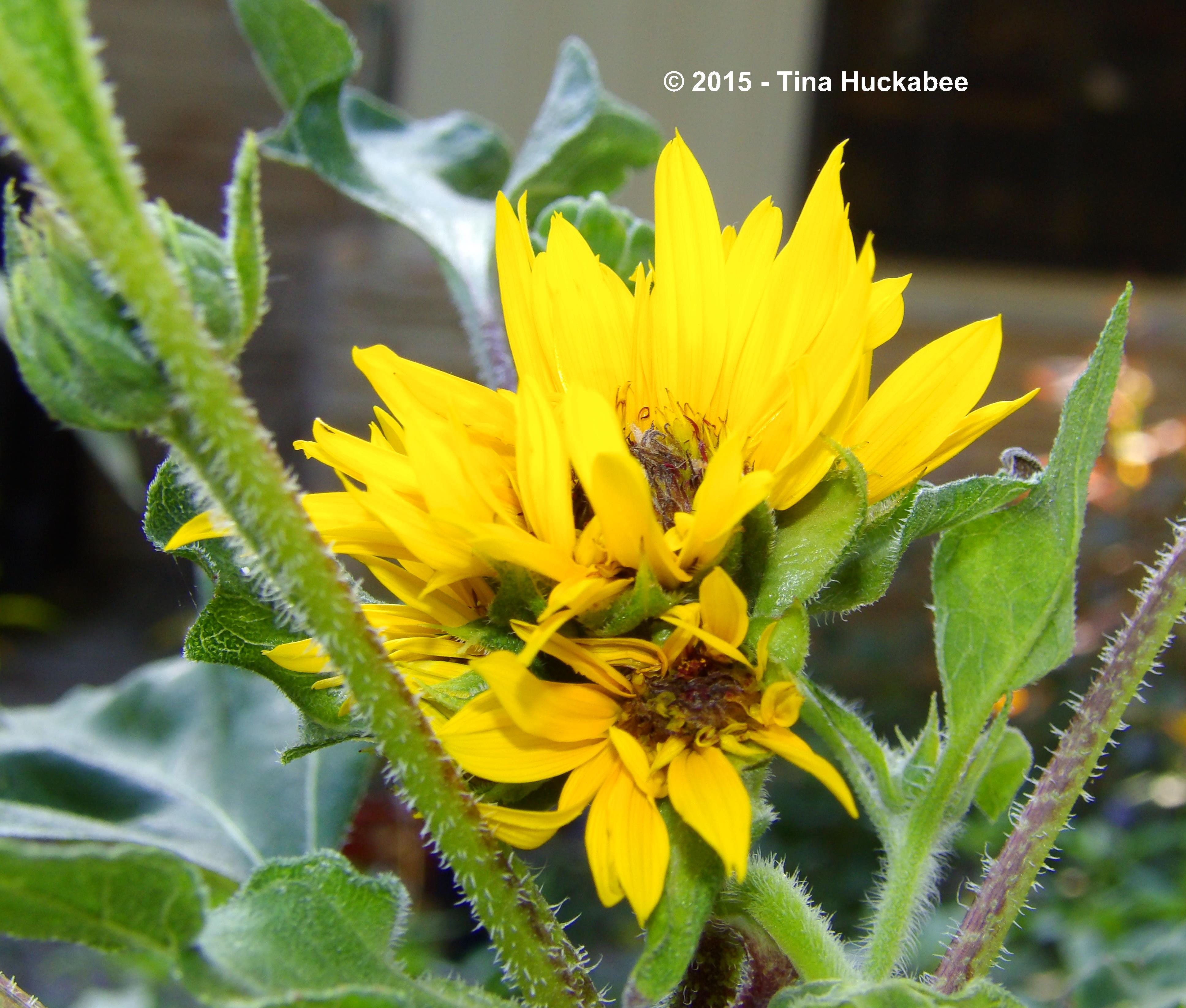
This year, there’s some variety in flower form, like this giant bloom, caught toward its end,

…or a few that are channeling zinnias,


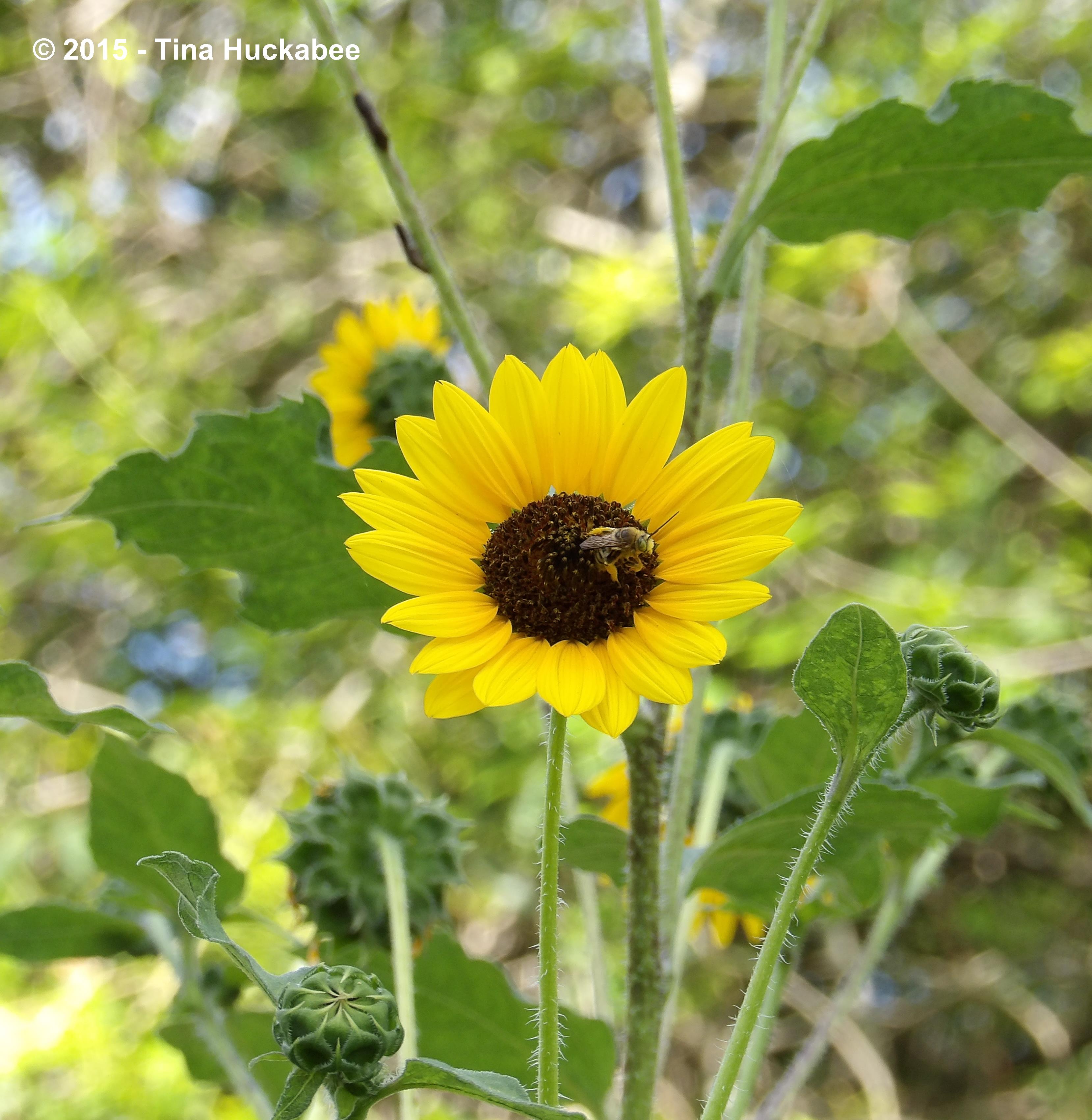
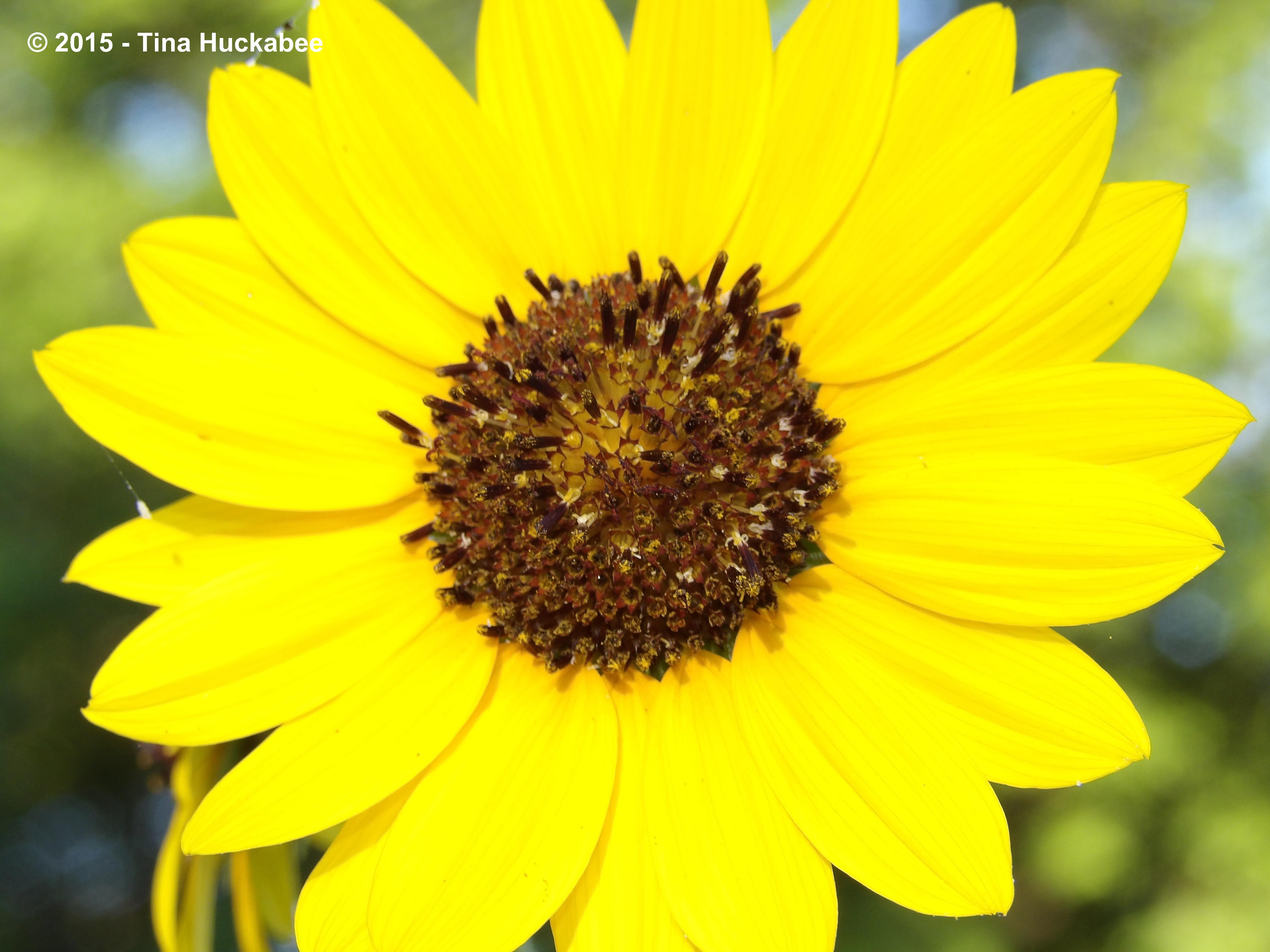
…and finally, the well-known and loved ray form of this summer staple.
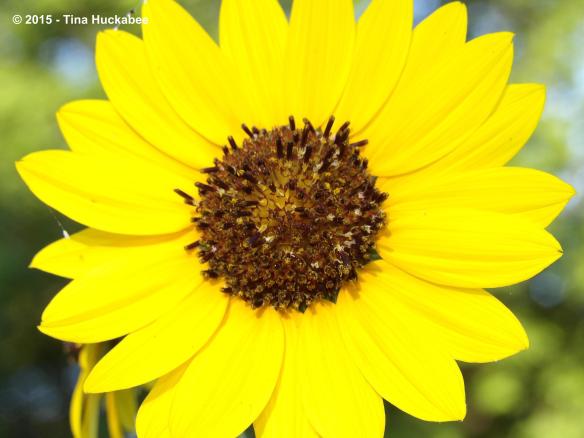
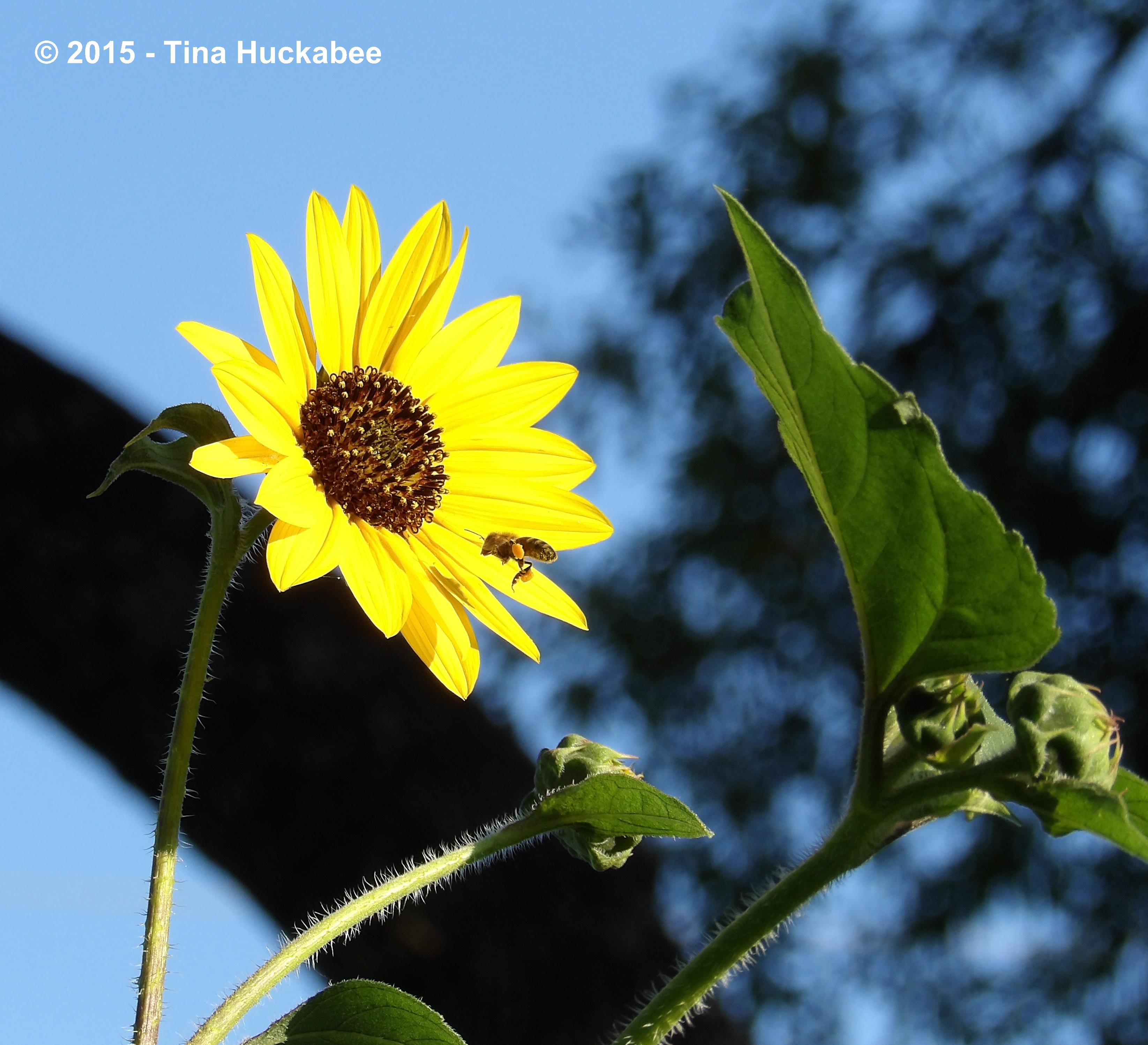
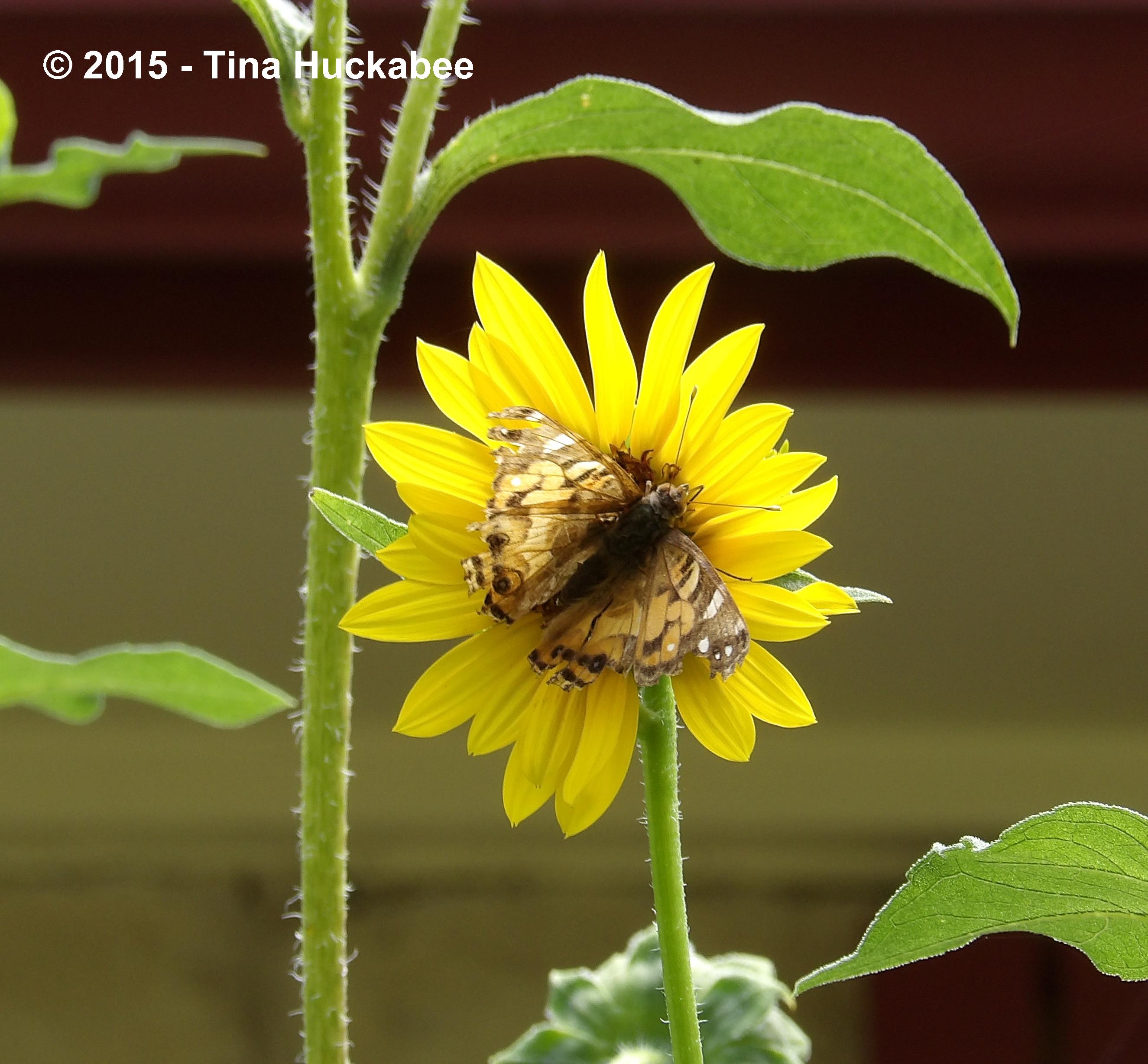
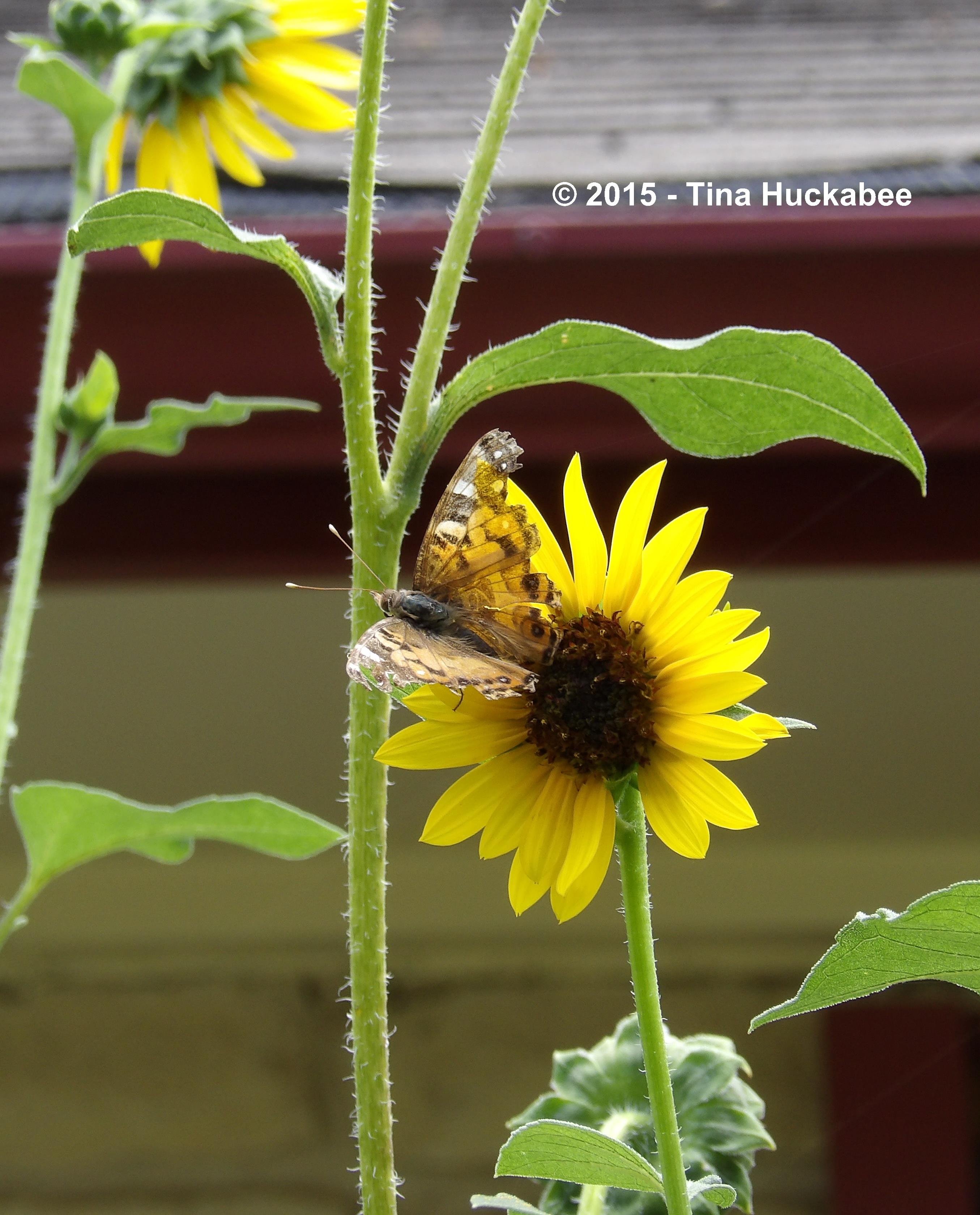
And do they feed anything, you ask? Why, yes they do, as a matter of fact! My honeybees are especially fond of these flowers.
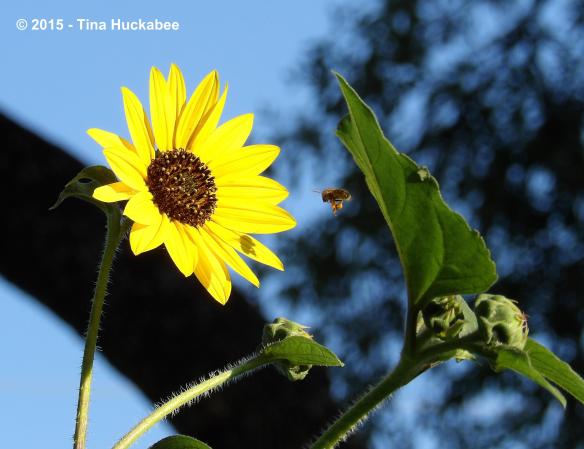
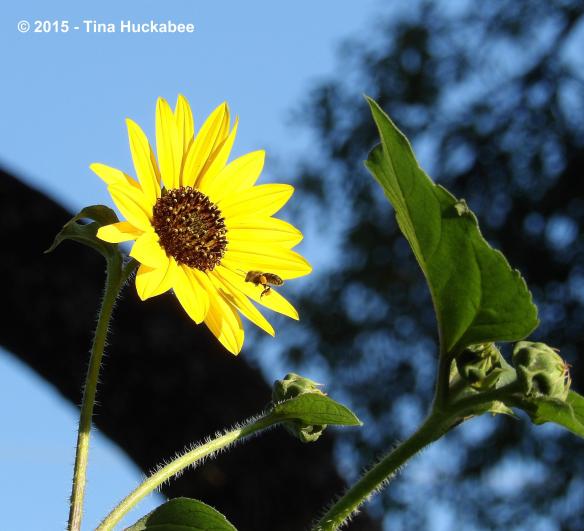
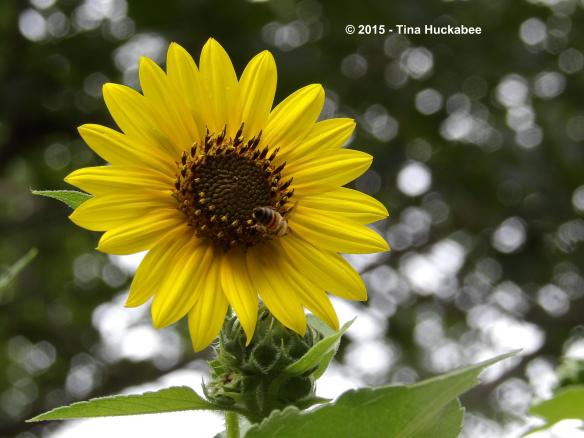

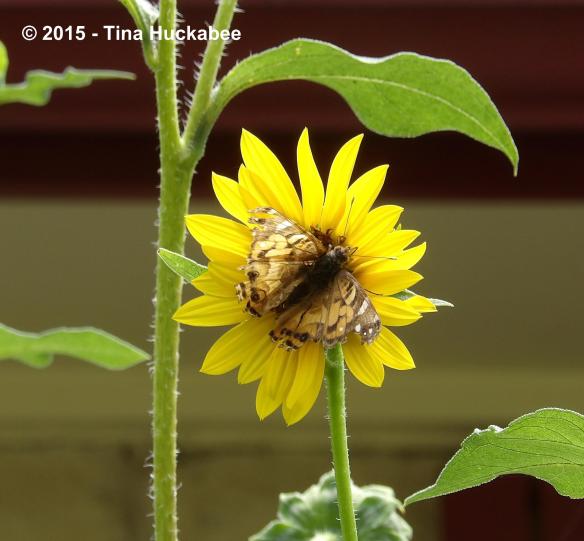
Honeys buzz around the sunflowers all day/everyday, but native bees and flies nectar too, as well as butterflies of all stripes and dots.

Once the flowers are finished, the local finch gangs will come a callin’ to gather their share of nutritious seed, assuring a future sunflower crop for my garden and surrounding areas.
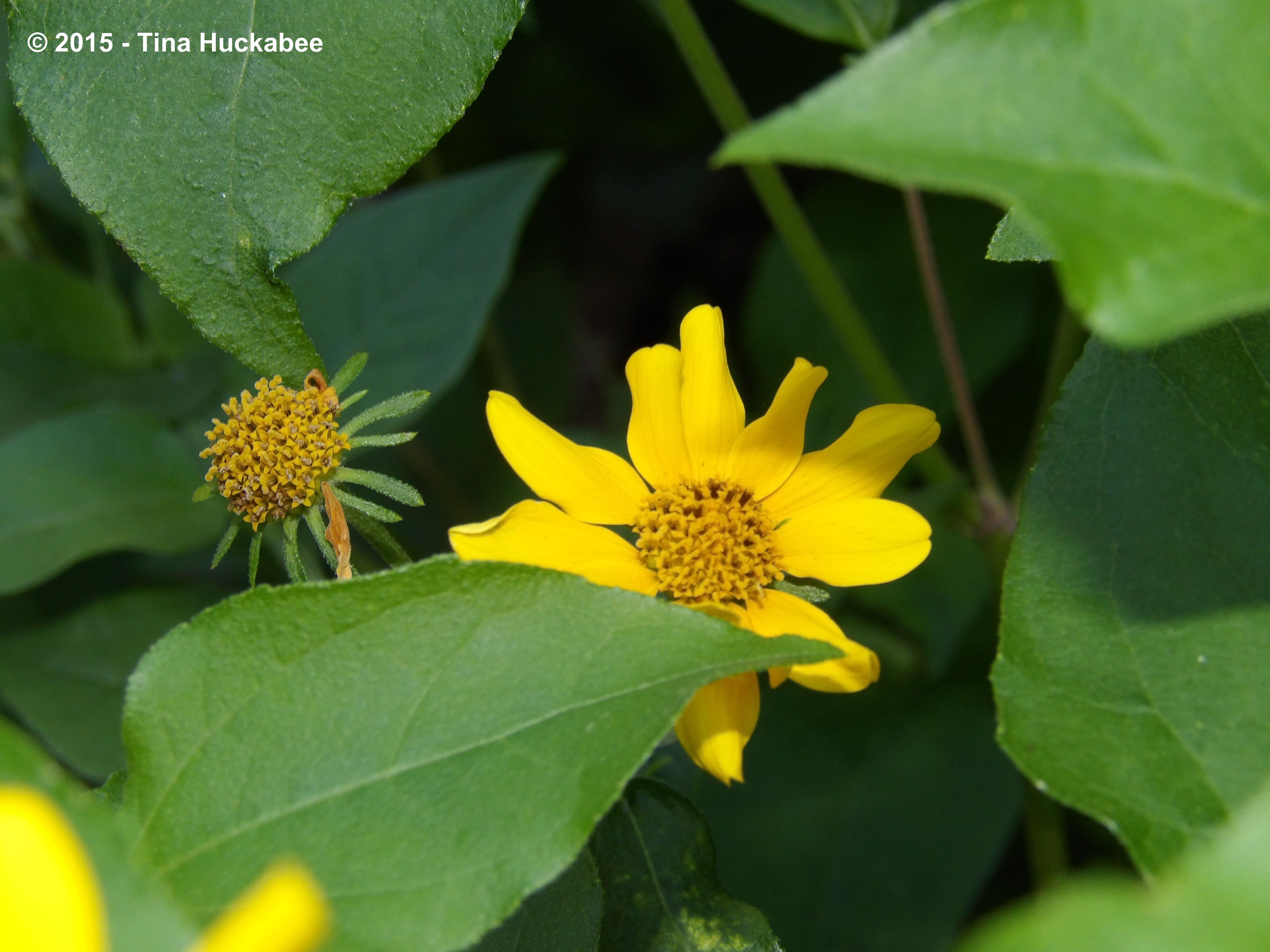
In addition to the non-native, who-knows-where-they-came-from sunflowers, my beloved Goldeneye, Viguiera dentata, have made their floral debut for the year.

Their bloom time is toward the end of summer and gloriously, early fall, but there are June and July previews of the autumn show. Goldeneye feed the same critters as the larger sunflowers with both pollinators and seed spreaders.
Once the birds have eaten their fill of the annual sunflowers and have moved on, I’ll cut down the huge stalks, relegating the remains to my compost bin or yard waste for pick-up to produce Dillo Dirt, a City of Austin soil conditioner.
Summer sunshine.

Even when it’s rainy.

Sunny sunflowers!



















 My Gardener Says...