The Lily and the Crag

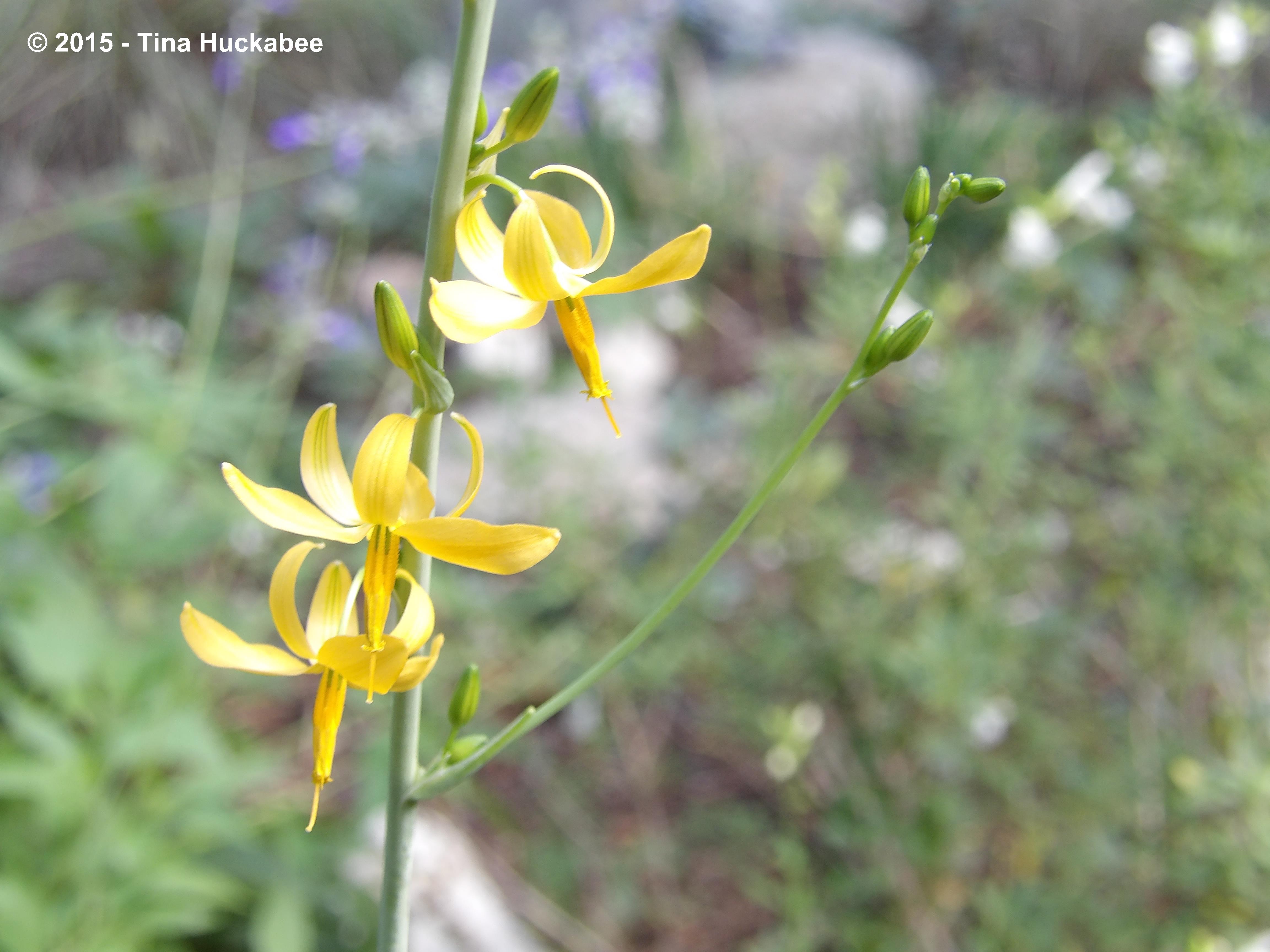
The Merriam-Webster Dictionary defines crag as a steep, rugged rock or cliff.  As for lily, well, I think this is visually self-explanatory:
IMGP1506.new

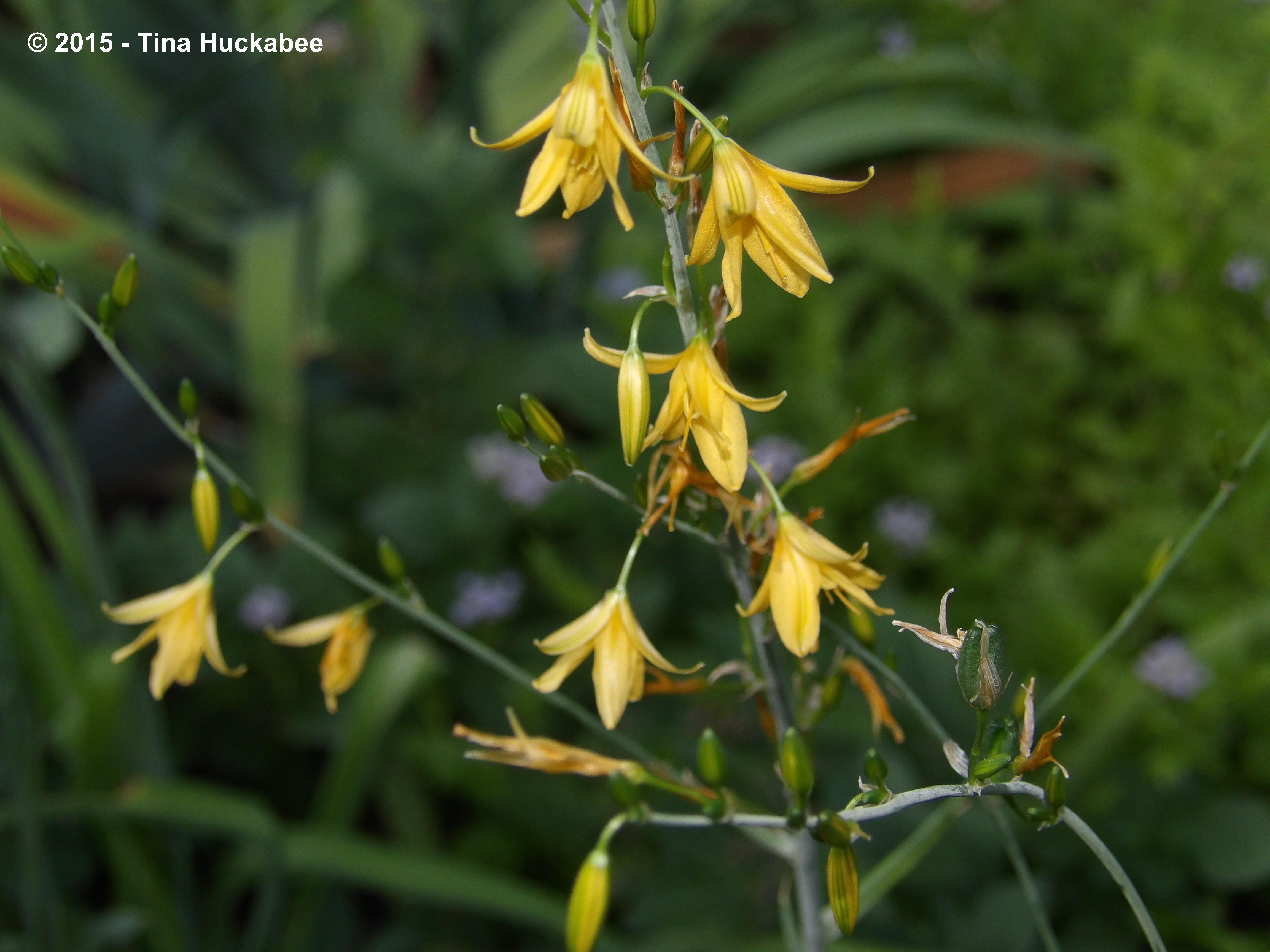
Pretty, isn’t it?   And hardy too, just like the first part of its name–enduring like a rock, that is.
IMGP1984.new

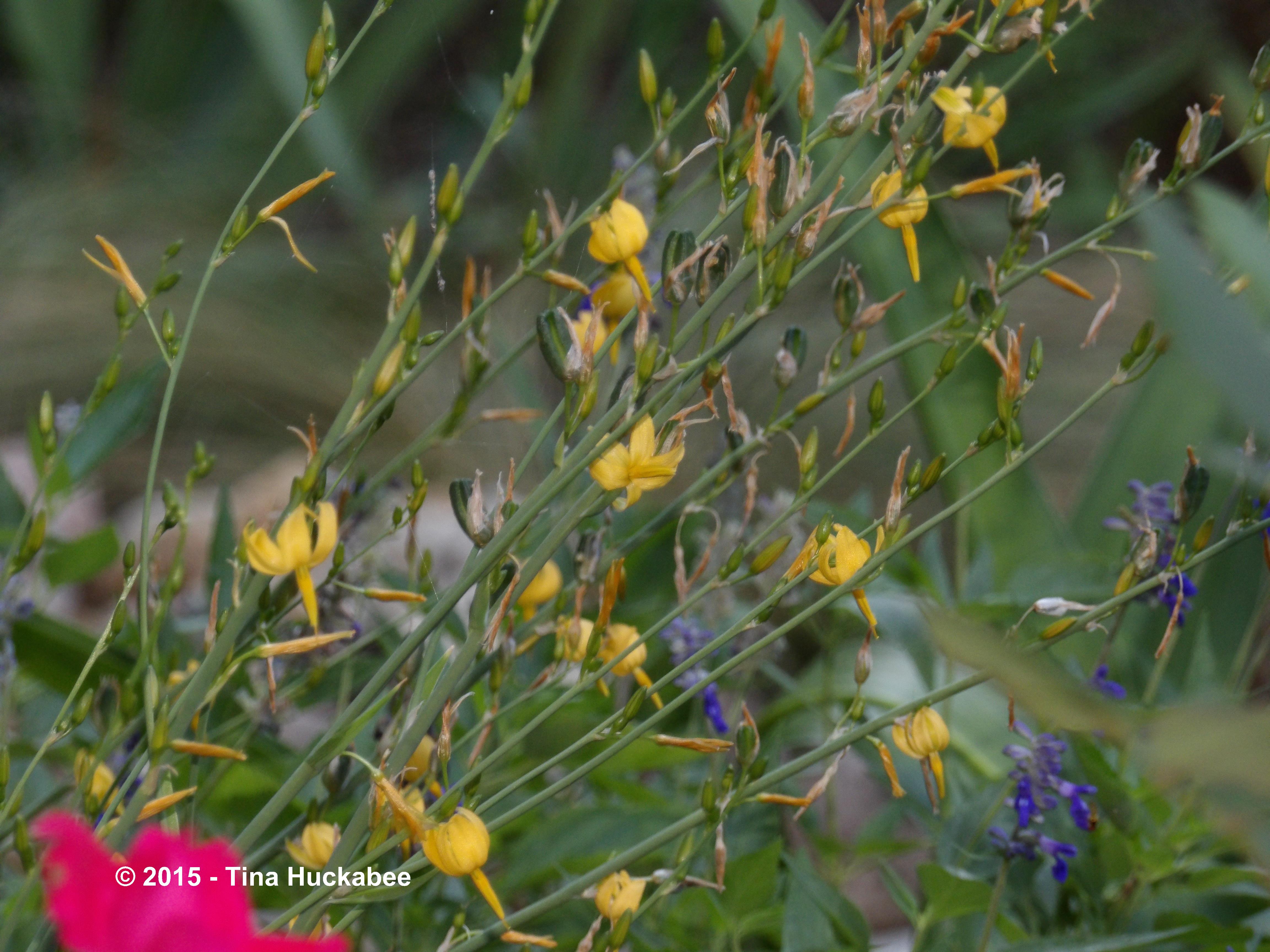
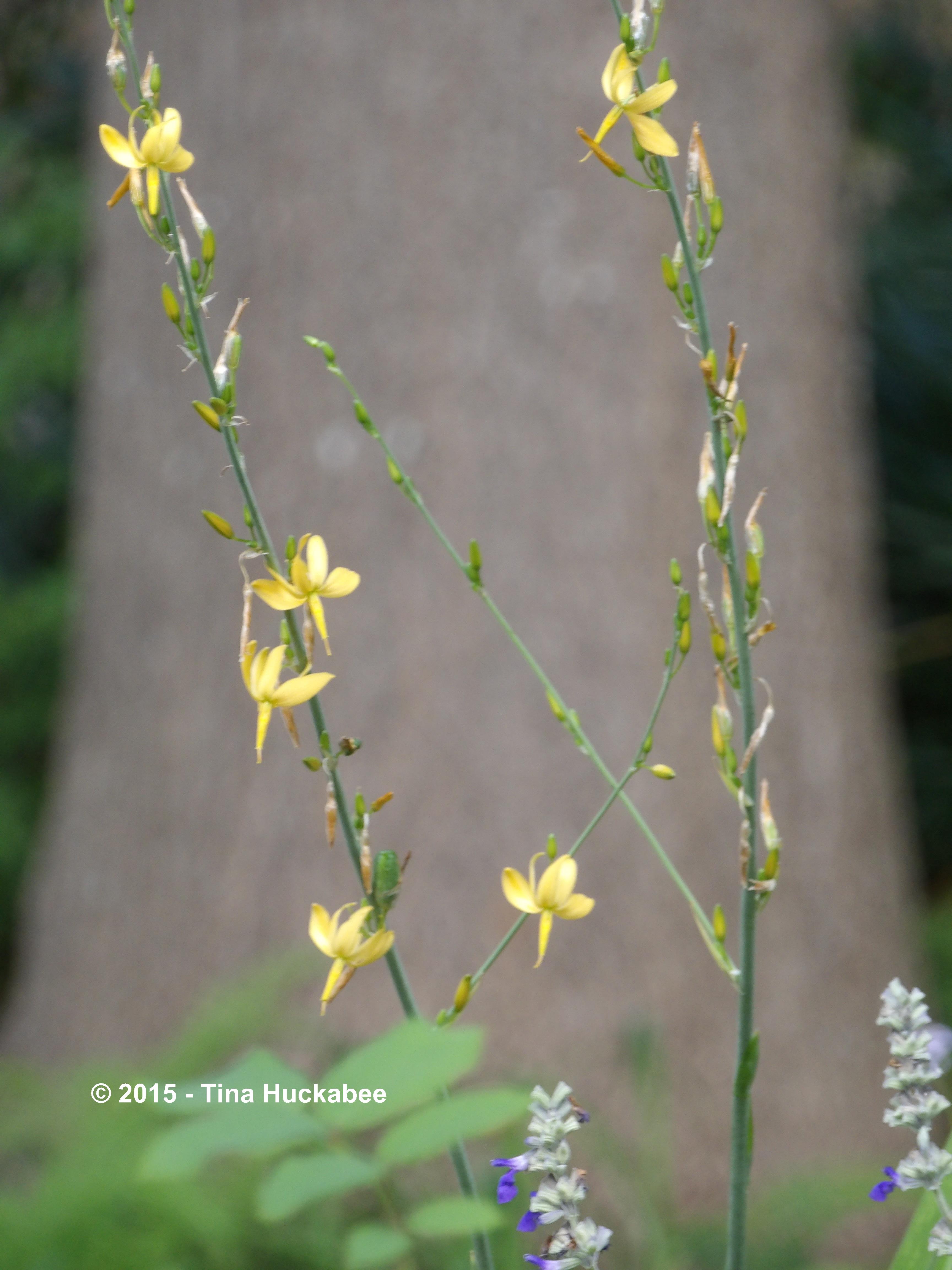
Texas CraglilyEcheandia texensis,  blooms beautifully in my gardens from September into November, sometimes well into December.

Tough-n-lovely, this excellent Texas member of the Liliaceae family is sorely underutilized by gardeners from Central Texas southward to the Valley.  Here in Austin, I’ve only seen it sold at one nursery, Barton Springs Nursery (BSN).  BSN labels this plant as “Copper Spiders” but as I researched this plant, I’ve never seen that term used anywhere else.  A long-time BSN employee recently shared with me the story that BSN originally purchased “Copper Spiders” from Yucca Do Nursery and that’s the name the online nursery dubbed it. A quick look at the Yucca Do’s website led me to the the Echeandia texensis page and it’s confirmed that “Copper Spiders” is definitively identified as E. texensis.

No matter what the folks in the nursery trade call it, this gardener calls it fabulous!
IMGP2162.new

IMGP2275.new

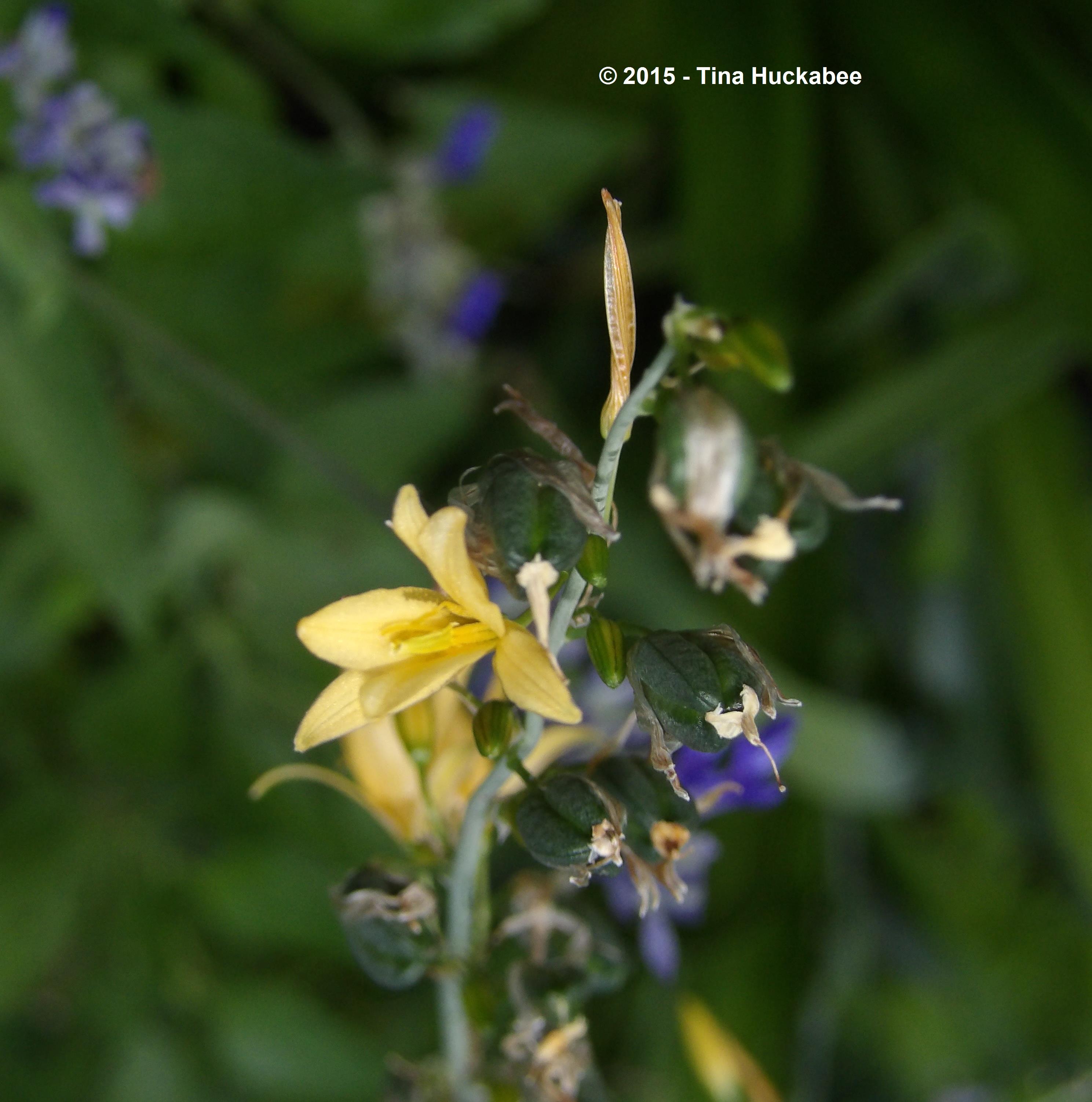
There are two other Echeandia species in Texas, E. chandleri and E. flavescensbut I’ve been fairly sure for several years now that what I’ve purchased at BSN and have been happily enjoying in my gardens is  E. texensis.  All three Echeandia are commonly called “Texas Craglily”  or “Craglily”;  the E. flavescens is also called Torrey’s Craglily, and E. chandleri is known by the poetic Lila de los llanos.

When I first saw the Texas Craglily at BSN  (four? five?) years ago on a hot July afternoon (yeah, I garden in the summer), I remember thinking that I’d seen a photo of it in the seminal Texas gardening book, Native Texas Plants: Landscaping Region by Region,  by Sally and Andy Wasowski, which was my gardening guide and muse for many years. In fact, the Wasowski’s wrote about the E. chandleri, (page 177!).  but the bloom and foliage are very similar to the E. texensis.  
IMGP2274_cropped_2977x3004..new

IMGP2161.new

I’m no botanist, but it wouldn’t surprise me if there’s been some hybridization in nature and cultivation through the nursery trade.  But whatever this plant is, I’m glad to make room for it in my gardens–and you should too if you live in Central and South Texas.

IMGP2229.new

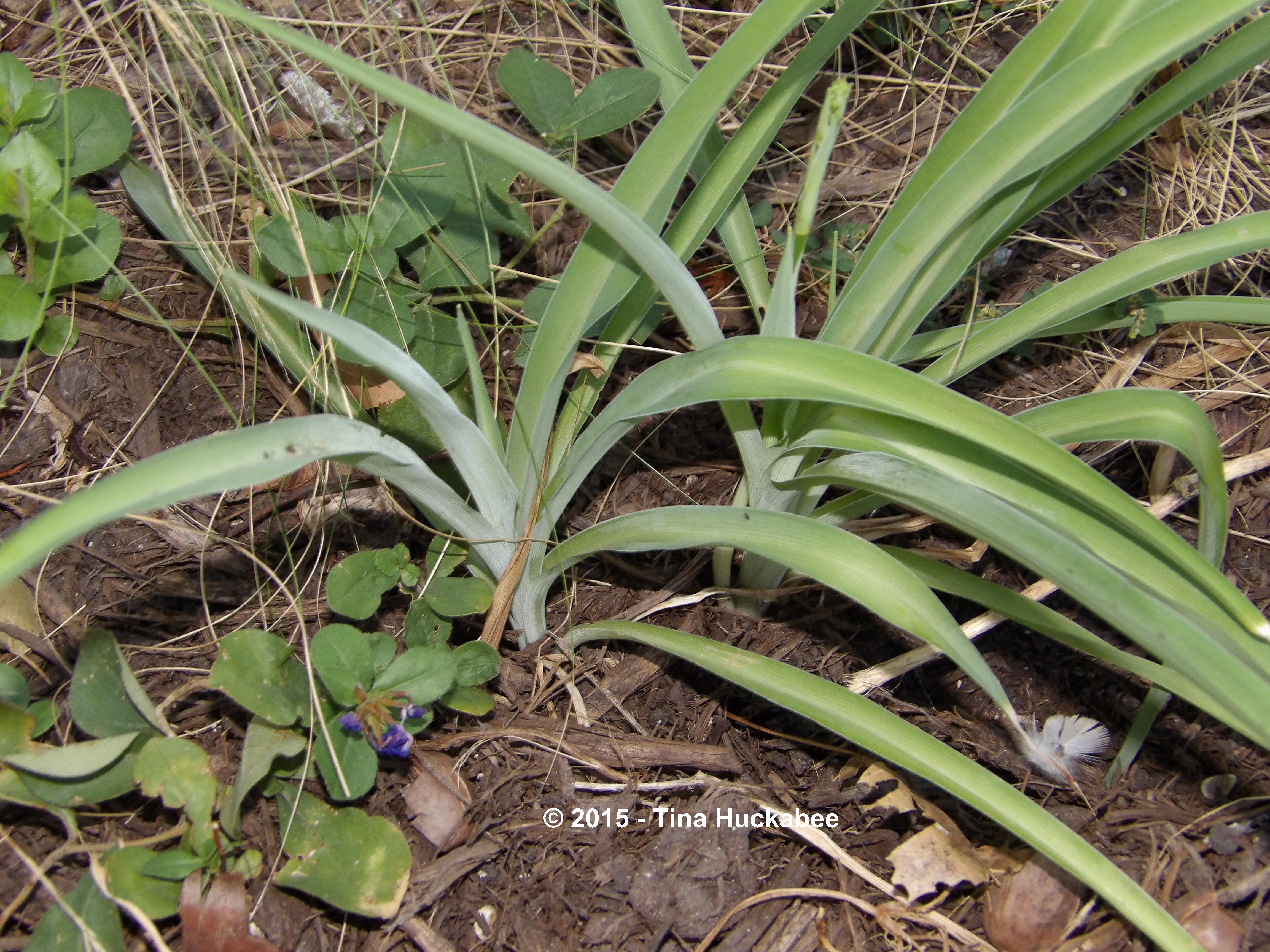
Dying back at the first hard freeze, it disappears until late spring–sometimes not returning in full until May or June.

20100911_8.new

IMGP2165.new

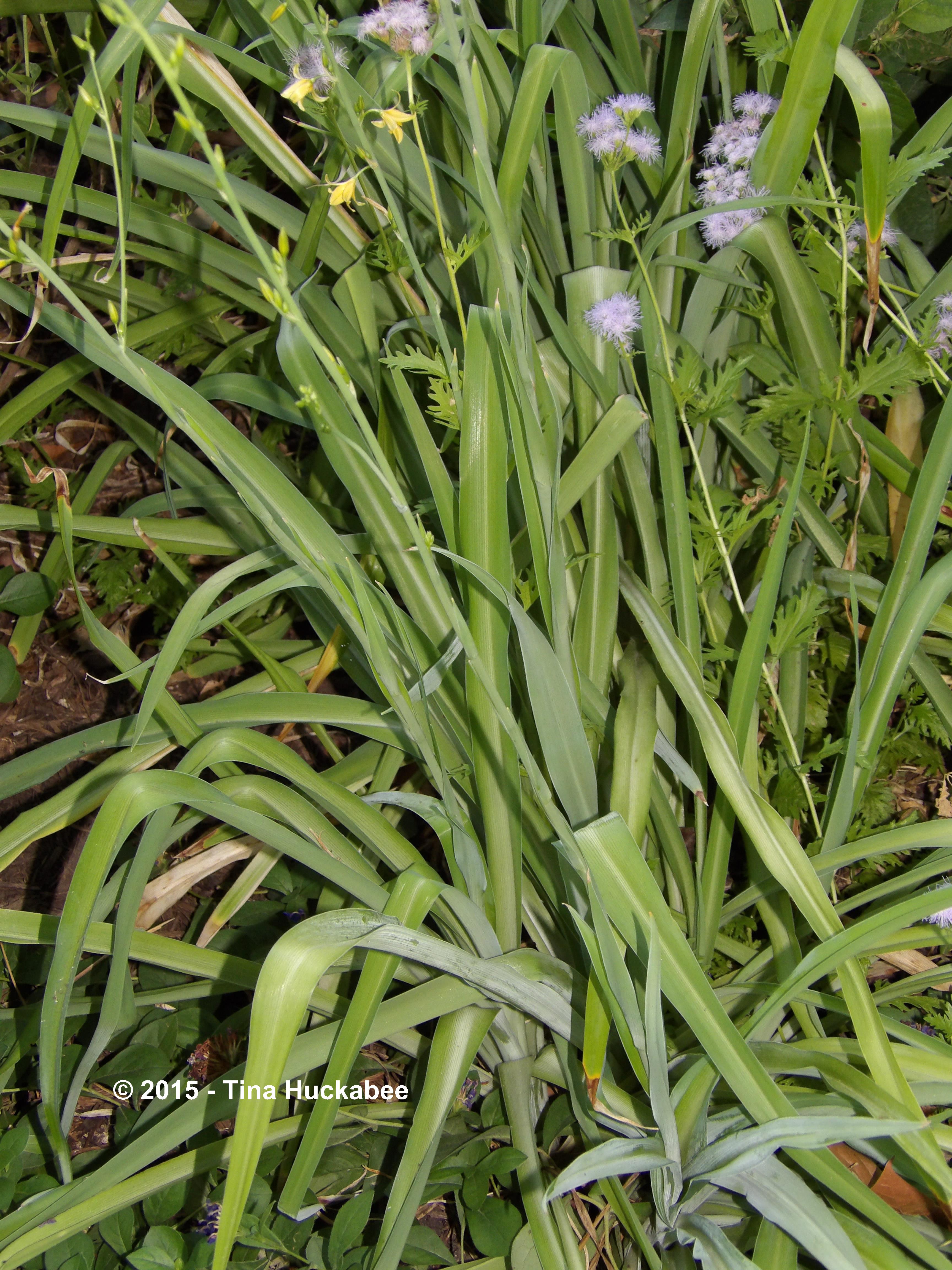
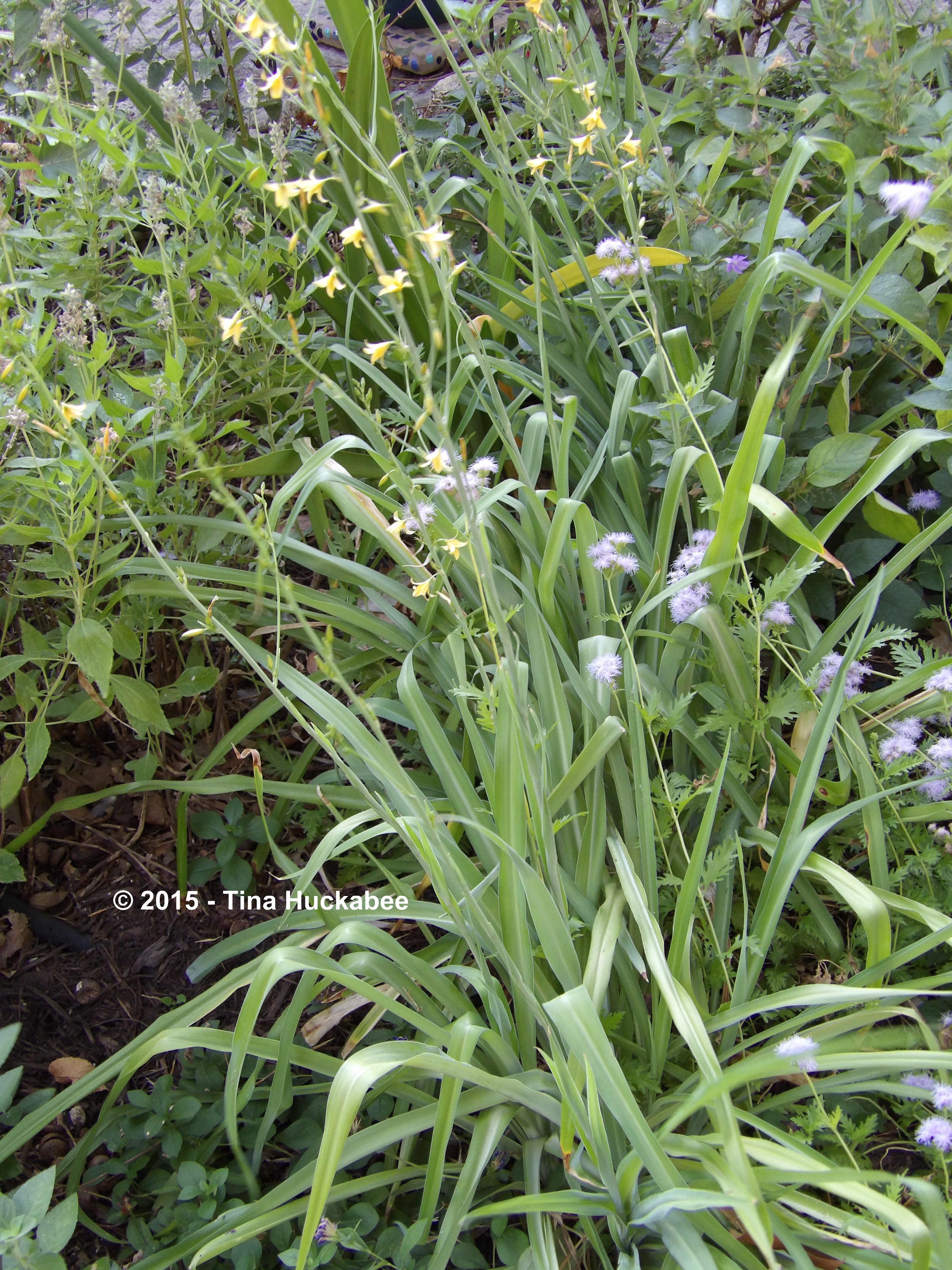
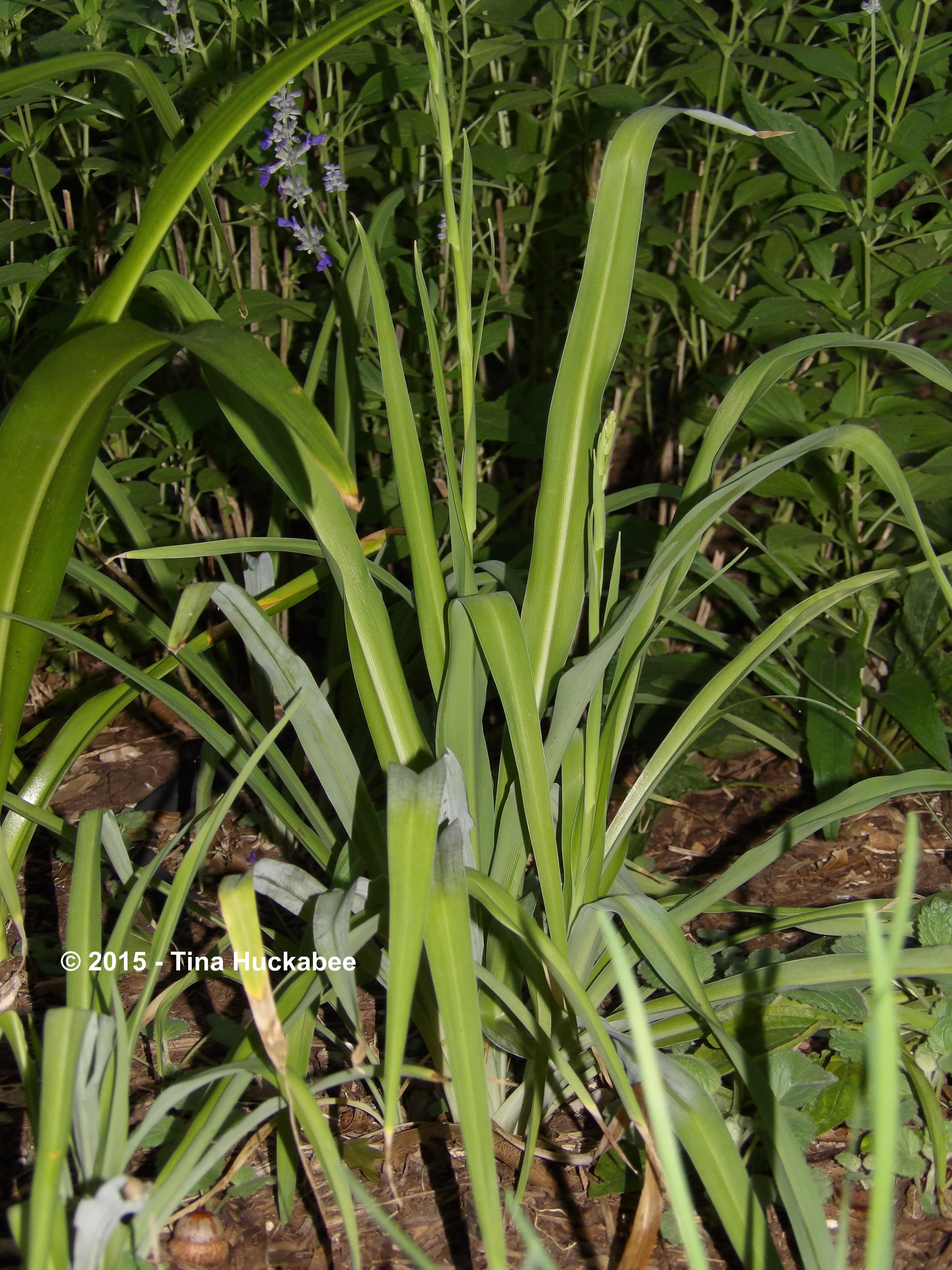
During summer the foliage returns quickly and is attractive and well-behaved.
IMGP0924.new

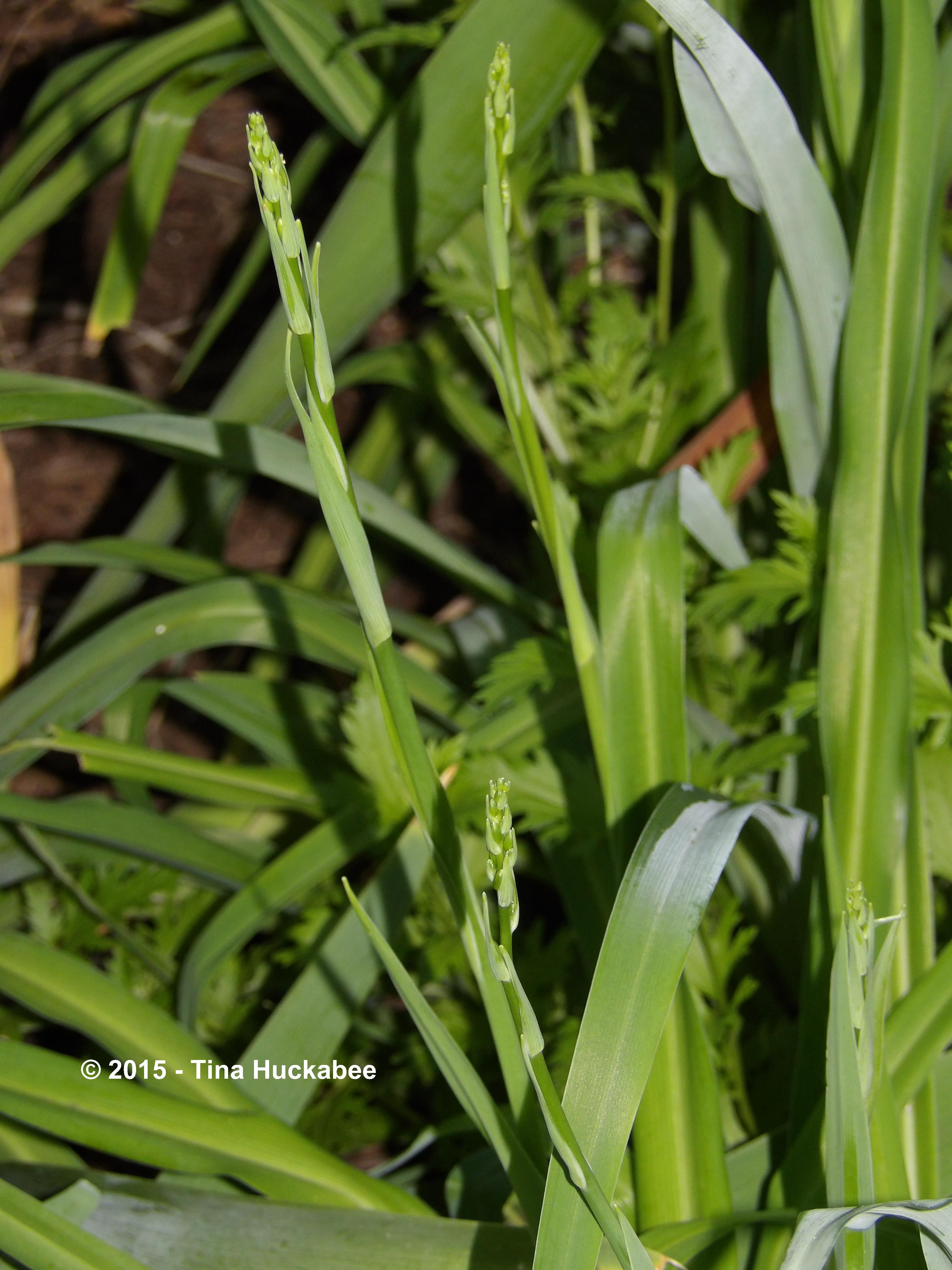
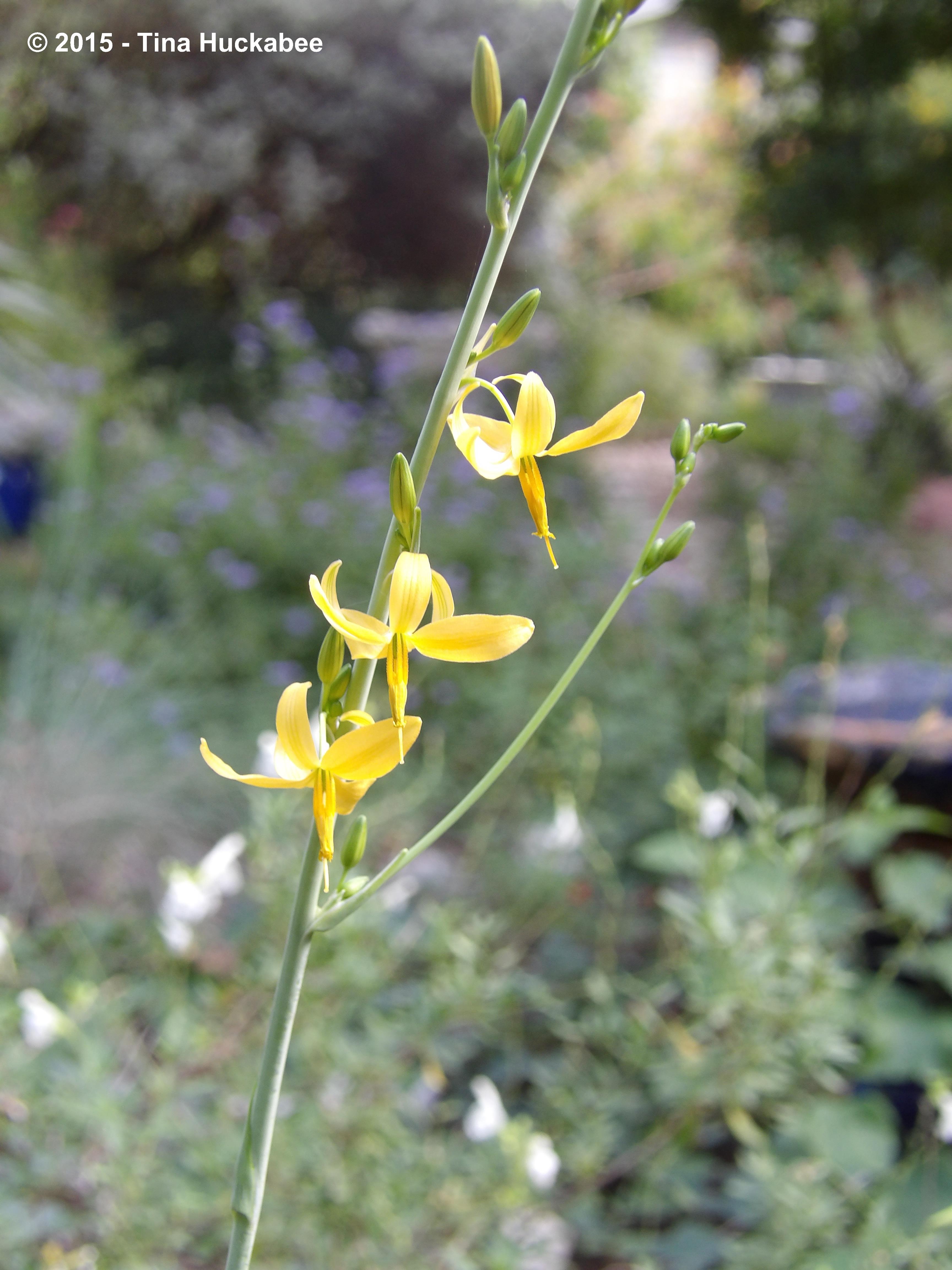
It’s always a bonus in the garden to host plants with elegant grassy structure, especially when it’s lush and easy-care.  In my heavy soil, the foliage only grows to about a foot in height and width. Sometime in late August or early September, the stalks begin shooting upwards and bloom development begins, mostly toward the top of the panicles.

IMGP0890_cropped_4000x3268..new

IMGP0891.new

IMGP0931.new

A glorious autumnal yellow-orange, the sweet little blooms are pollinator magnets.

IMGP2217.new

IMGP2223.new

Most of my Texas Craglily plants grow in part-sun, but it’s a perennial that likes lots of bright sunshine. Some of mine leeeaaan over to catch the rays.

IMGP2218.new

IMGP2228.new

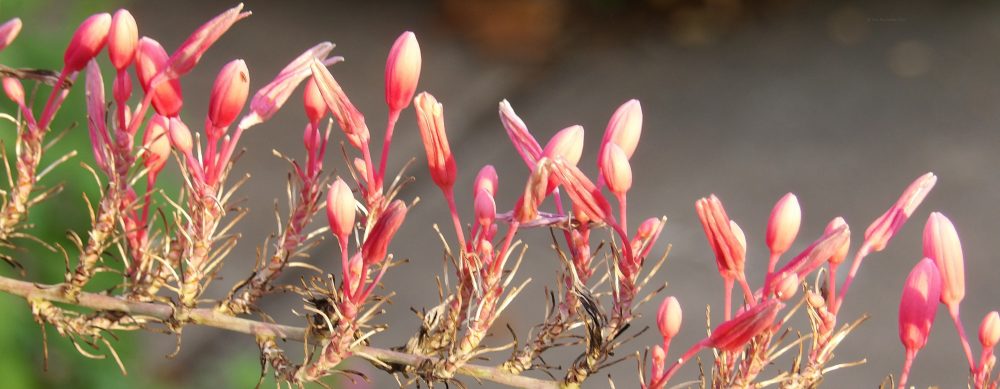
Others are tall and stand at full floral attention.  The more “balloon” look to the petals indicates early morning before they’ve stretched and opened.  Or maybe they just need their morning coffee.

IMGP1985.new

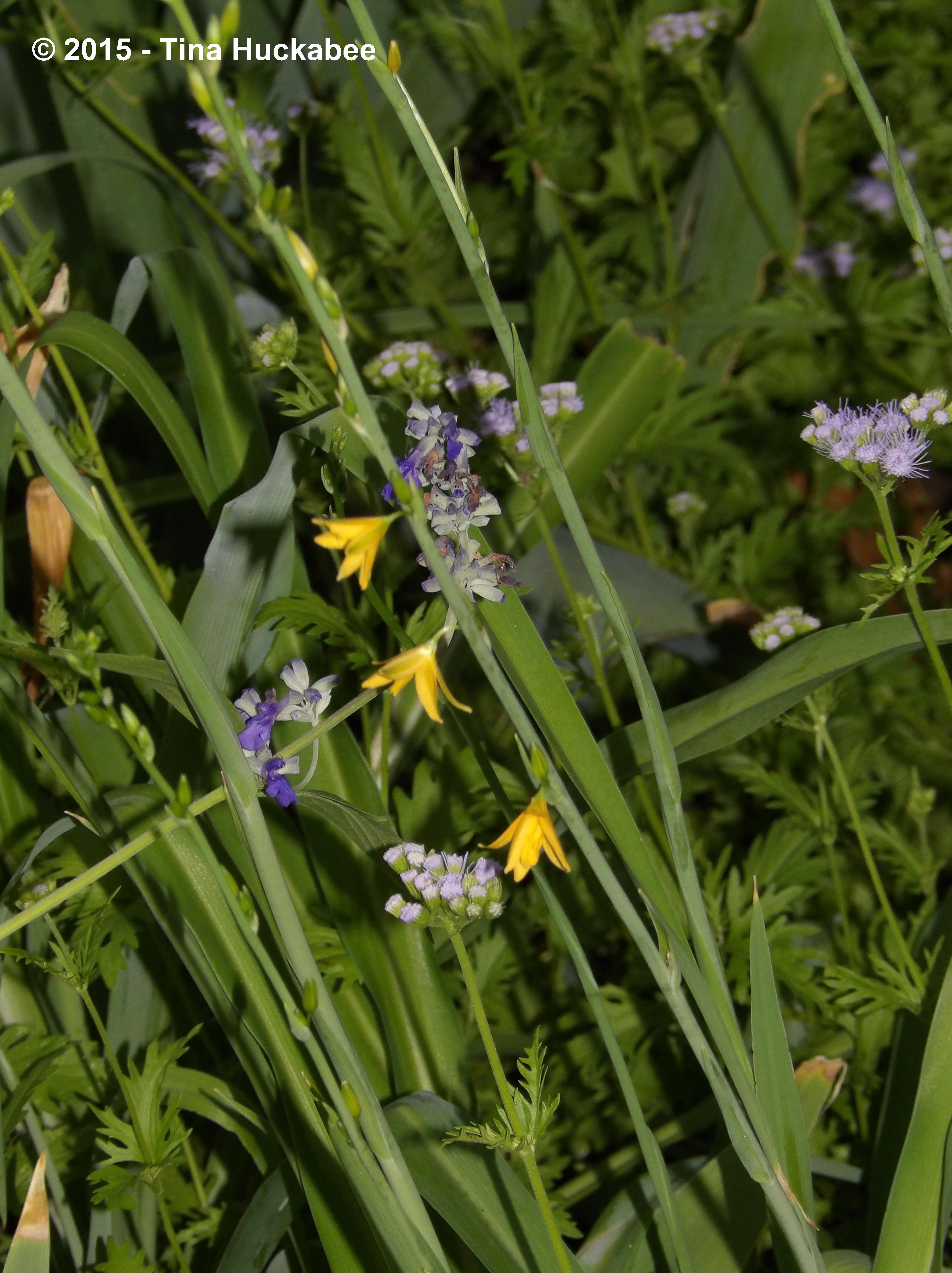
I have a number of Texas Craglily specimens planted alongside Henry Duelberg SageSalvia farinacea ‘Henry Duelberg’ and Gregg’s Mistflower, Conoclinium greggii:  it’s a winning combination.

IMGP1677.new

IMGP1455_cropped_2968x3967..new

IMGP1979.new

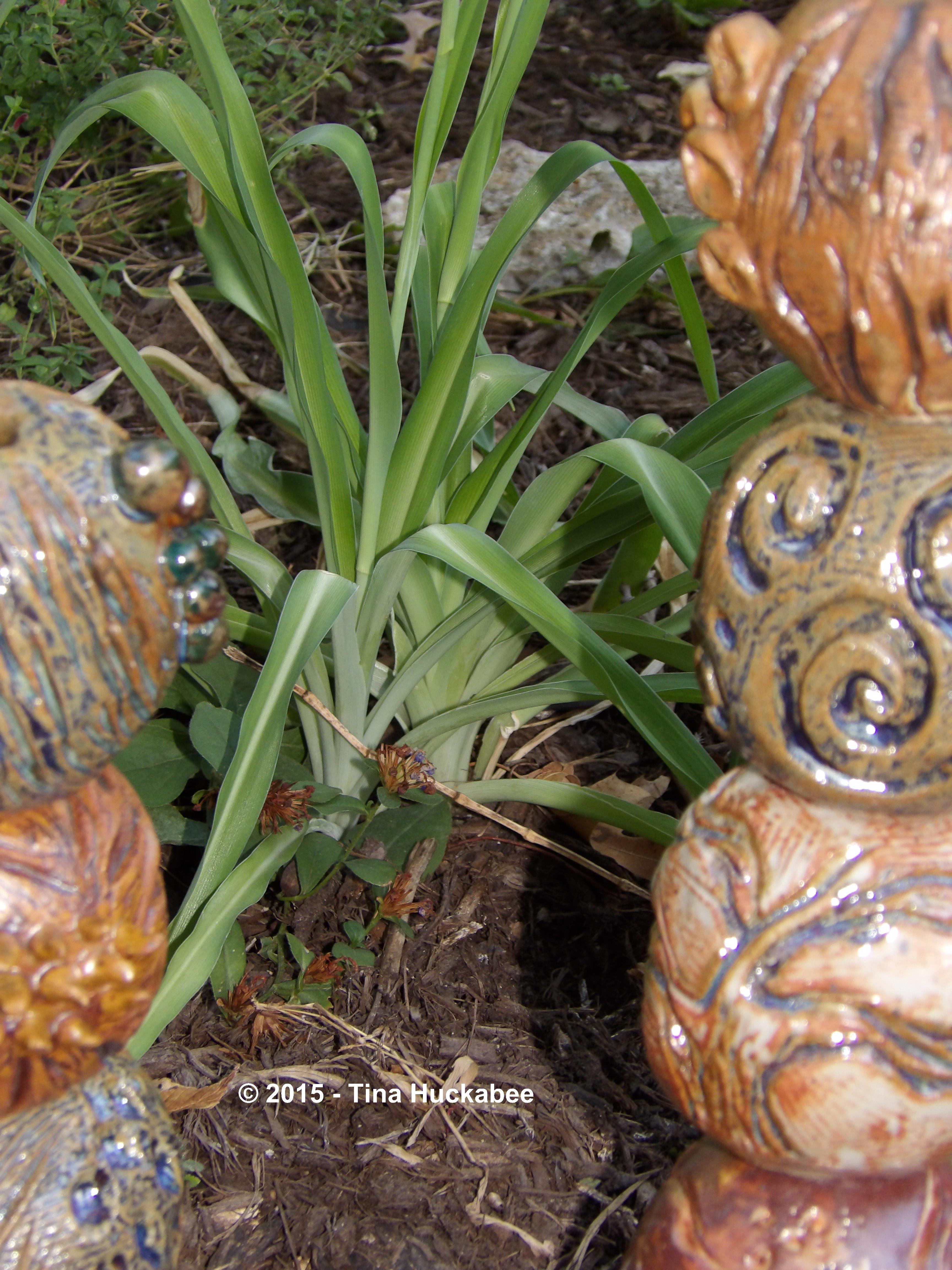
Peeking between some garden art, the graceful foliage holds its own.
IMGP2164.new

I see bees and butterflies feeding at the blooms throughout Texas Craglily’s bloom period, though funnily enough, I don’t have a single photo to prove that.  Additionally, none of my Craglily plants have ever produced seedlings–that could happen, but it hasn’t thus far.
IMGP1502.new

So I’m off to BSN to purchase just one more because I’ve figured out another spot where one is absolutely REQUIRED and will be perfectly situated.  And just in case there’s a run on these beauties, I asked a kind employee to hold two for me!  Ha!

I have no information about its attractiveness to deer, but if you live in or near Austin, try this lily in your garden–in full or part sun and either thin or heavy soil. Texas Craglily is hardy enough to handle the cracks, crags, rocks and clay, yet dainty enough to decorate the Texas autumn garden.

IMGP1696.new

IMGP1504.new

IMGP2342.new

Happy planting!!

Texas Craglily is a native plant and Gail at clay and limestone promotes natives  and wildflowers for the home garden through her Wildflower Wednesday gardening meme. Thanks to Gail for hosting and teaching others about the importance and beauty of wildflowers.
 

Texas Native Plant Week: What’s Next?

Congratulations!  You’ve decided that you’ve had enough of your boring, sterile, wasteful, water-hogging, hydrocarbon-spewing, chemically dependent lawn. You’re going to remove some or all of it and plant a native plants garden!

IMGP2254.new

Woohoo!!

Now what?  Where do you go for information?

The thing about gardening that most folks don’t realize is that it is a region-specific endeavor.  The way I garden here in Central Texas, and specifically in my part of Austin,  is very different from how someone in Dallas, Texas, Oshkosh, Wisconsin, or Eugene, Oregon gardens. Gardening practices common in  the Northeastern part of the U.S.do not work at all in Arizona.  From temperature variations to soil considerations, appropriate plant choices and gardening practices are significantly more complicated than most people realize and require some level of knowledge and planning.

IMGP2405.new

Our horticultural industry is partly (okay, largely) to blame for confusion in new gardeners:  they want to sell me the same plant that they sell to a gardener in Maine, or northern California, or Florida, and it just doesn’t work.  Or, probably it won’t work.  Sure, there are some plants that transcend region, but  few.

That’s one reason why using native plants  is important.  Native plants impart a sense of place–born and bred where they grow in nature, they belong to particular areas.  Native plants thrive with regional temperature variations and soil complexities without help. Additionally, wildlife like insects, birds, and mammals of all sorts evolved in concert with their native plant hosts and food sources, and flock, buzz, and crawl  to native plants for their sustenance and survival. Plants from “other places” cannot provide for wildlife like those  that are biologically and evolutionary attuned to the nutritional and life requirements of endemic and migrating wildlife.

IMGP2215.new

IMGP1971.new

Gardens are more complex than a swath of green lawn and a few foundation plantings.

Where do you go to learn?  Your locally owned nurseries and growers are often leaders in promoting the use of native plants.  Visit and purchase from them in lieu of the big box nurseries which usually don’t sell native-to-region plants.

IMGP2185.new

Most communities host a variety of garden organizations, including native plant societies, wildlife gardening groups, Master Naturalist and Master Gardener groups.  Attend some meetings and ask questions; visit their plant sales and neighborhood plant swaps.  For example, here in Austin we’re fortunate to enjoy an active Urban Habitat Steward program. One of those dedicated volunteers, Carleen Edgar, is hosting the Hancock Native Plant Swap, this coming Saturday, October 24th, from 8-9:30 am. The swap will be held at Mother’s Cafe & Garden, 4215 Duval Street, 78751.  Carleen states:

At this swap, we will give away native (Antelope Horn) and Tropical milkweed seeds to all participants.

Here’s how it works:

  • Pot up and label some transplants, cuttings, or bring seeds
  • Set them in the appropriate area: Sun, Shade, Part Sun/Shade, or Water
  • Look around for plants that you would like or ask one of the experts (they will wear badges)
  • Take as many home as you brought

Many people just hang out talking about plants, helping others id mystery plants, and generally enjoying their coffee, free doughnut holes, and all things gardening. Master Gardeners and NWF Habitat Stewards will also be there to assist with plant identification.

Our mission is to make all yards in our neighborhoods more beautiful and easier to maintain, while consuming less water…for free!

Isn’t that cool?  Free plants and conversation about plants with knowledgeable volunteers AND coffee and doughnut holes!

Goodness, it doesn’t get much better than that!!

IMGP2173.new

Another resource that newby (and experienced!)  gardeners should utilize are the local County Extension Service offices and websites.  Every county has one, or access to one. Look’em up on your friendly neighborhood computer and call with questions or log onto their websites for plant and gardening information.  The agricultural extension offices are reasonable stops for information on appropriate native plants for specific areas.

IMGP1832.new

One of the absolute best places to learn about the native plants of North America is  the Lady Bird Johnson Wildlife Center website at www.wildflower.org.   I’m fortunate to live in Austin, where this national treasure is located and I’ve been a member since the mid-1980’s.  The LBJWC is a beautiful and inspiring set of gardens and a tremendously valuable resource about North American native plants.   The plant database and Ask Mr. Smarty Plants are worthwhile sections on the website to bookmark and peruse as you undertake your native education.

IMGP2210.new

The National Wildlife Federation’s website, www.nwf.org is another superb  resource on plant, gardening and wildlife-related information. This organization provides directives for creating wildlife and/or pollinator gardens–most of which focus on using native plants.  Like the Austin Urban Habitat Stewards mentioned previously, many communities have enthusiastic volunteers, ready, able and willing to teach those wanting to learn.

IMGP2196.new

Finally, there are many active and experienced garden bloggers available, at the click of your mouse or the touch of your fingertips, just itching to teach you what to do and how to do it.

Ahem.

Whether you’re interested in native plants (hopefully!), or garden design, or want to learn about another’s path of transforming a landscape from lawn to living garden, complete with native plants and accompanying wildlife, there are many good garden bloggers writing on a regular basis in the gardening blogosphere.   Obviously, it’s better if you read about gardening from your specific area of the gardening world, but there’s an incredible amount of valuable information available.  Great gardening ideas, solutions to gardening problems, reviews of gardening literature–it’s out there, with free and easy access from experienced gardeners and with myriad interesting perspectives.

IMGP2191.new

Finally, join with like-minded neighbors and friends, as that’s often the best way to learn and gardeners love to share advice—and plants!

IMGP2219.new

Then grab your trowel or shovel and plant some natives in your garden!

Retama (Parkinsonia aculeata): A Seasonal Look

As I close out the year of learning about the Retama, Parkinsonia aculeata, for Tree Following at  Loose and Leafy, join me for year-round look-see at this fascinating native tree to parts of North and South America. Indigenous to Texas and westward to California, as well as to large areas of Central and South America, this beautiful small tree is a boon for wildlife and native plant/wildlife gardeners alike.

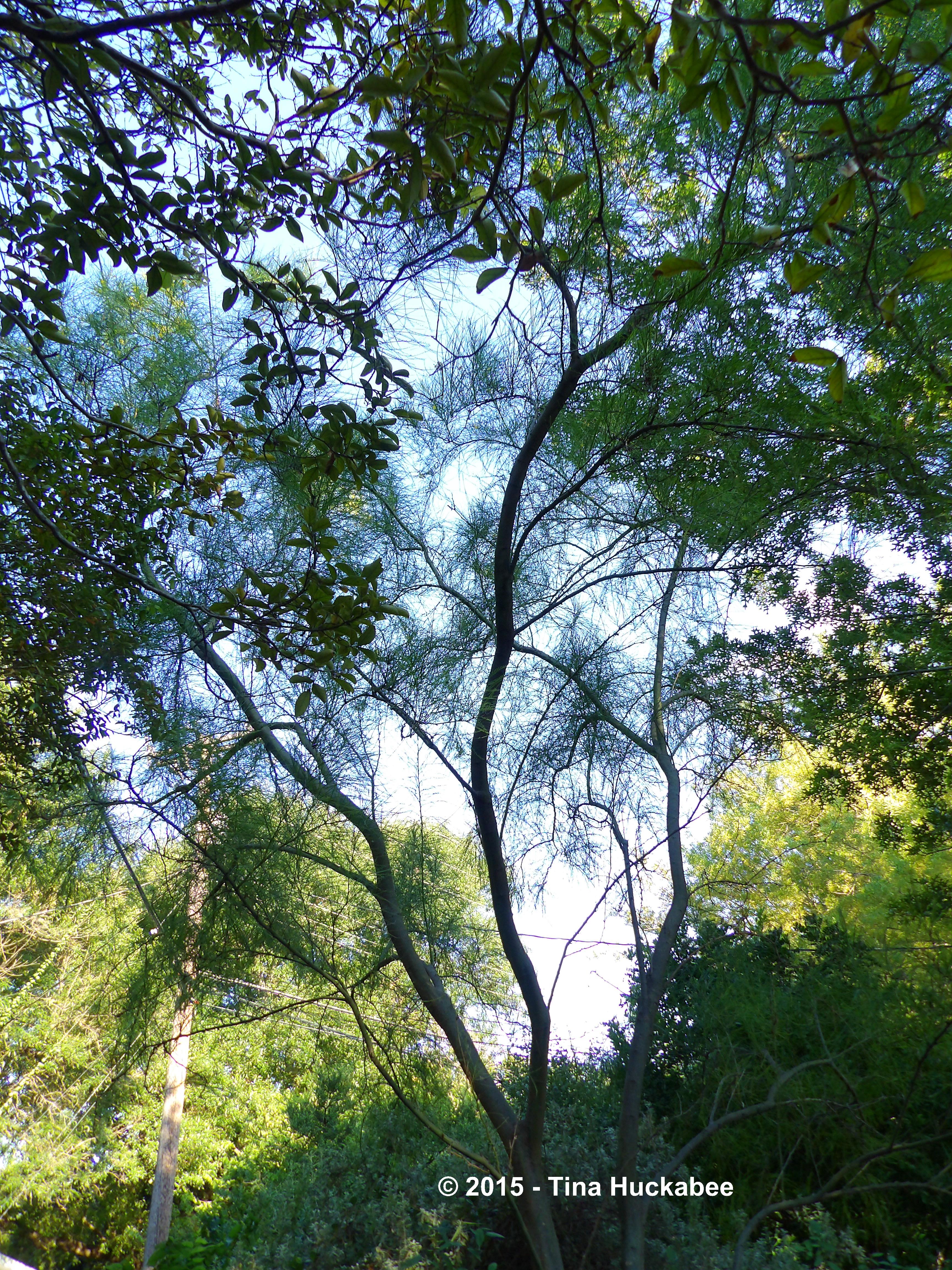
This October of 2015, my Retama tree is green, leafy, and full of life.

IMGP1939_cropped_2217x2816..new

There is little change from my September and August Tree Following posts, except that there are few flowers left to complement the feathery foliage.

IMGP0325.new

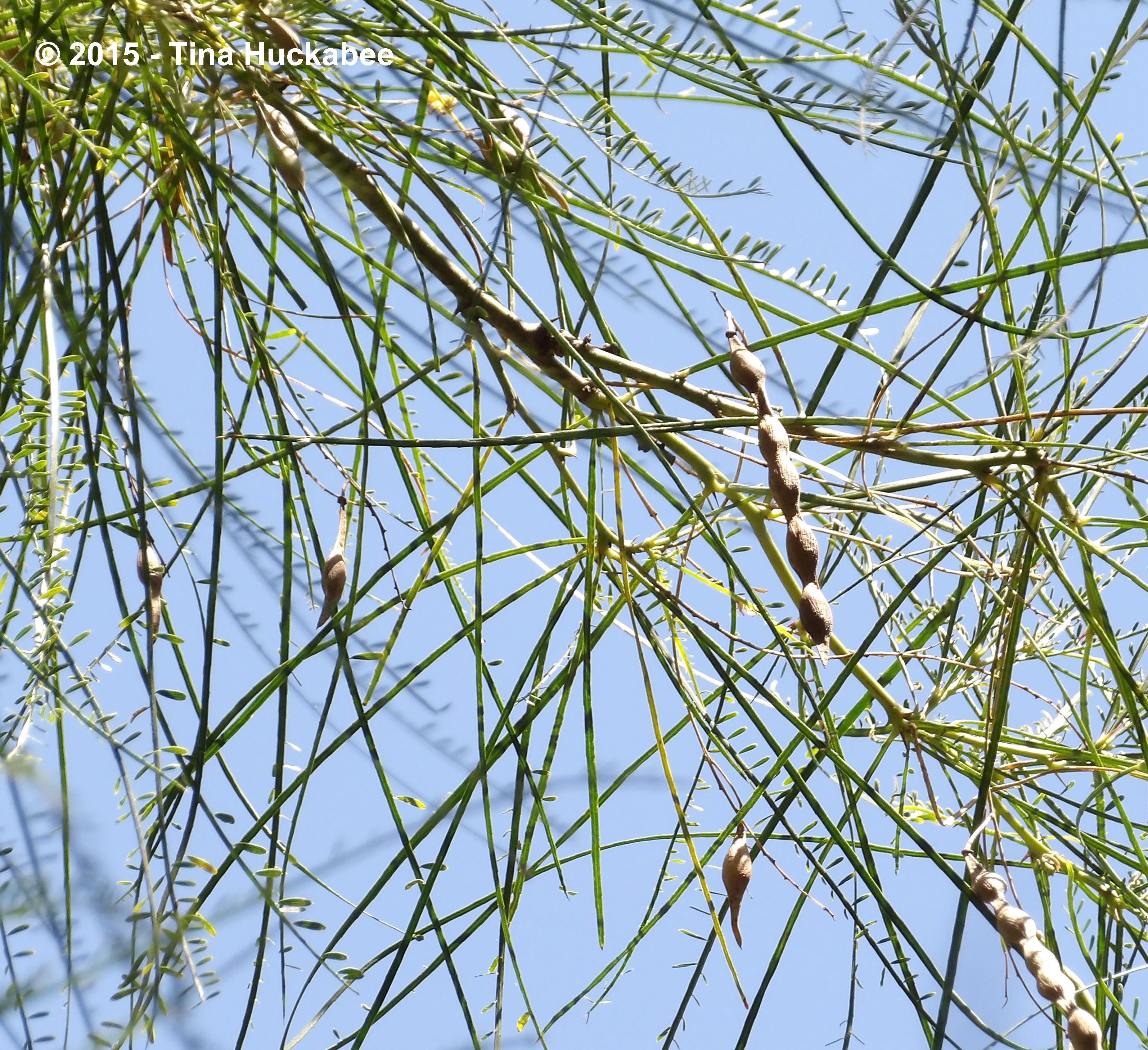
Interestingly, there aren’t many seed pods on my tree this year, either.  Seed development varies from year to year and I’m betting that there are fewer because the mass of late spring blooms were knocked of during our heavy May/June rains: fewer flowers, fewer seeds.

In October, with summer continuing its hold of warm (not hot!) afternoons, arid breezes, and no rain, the Retama presides, lush-n-lacy, over my back garden.

IMGP0326.new

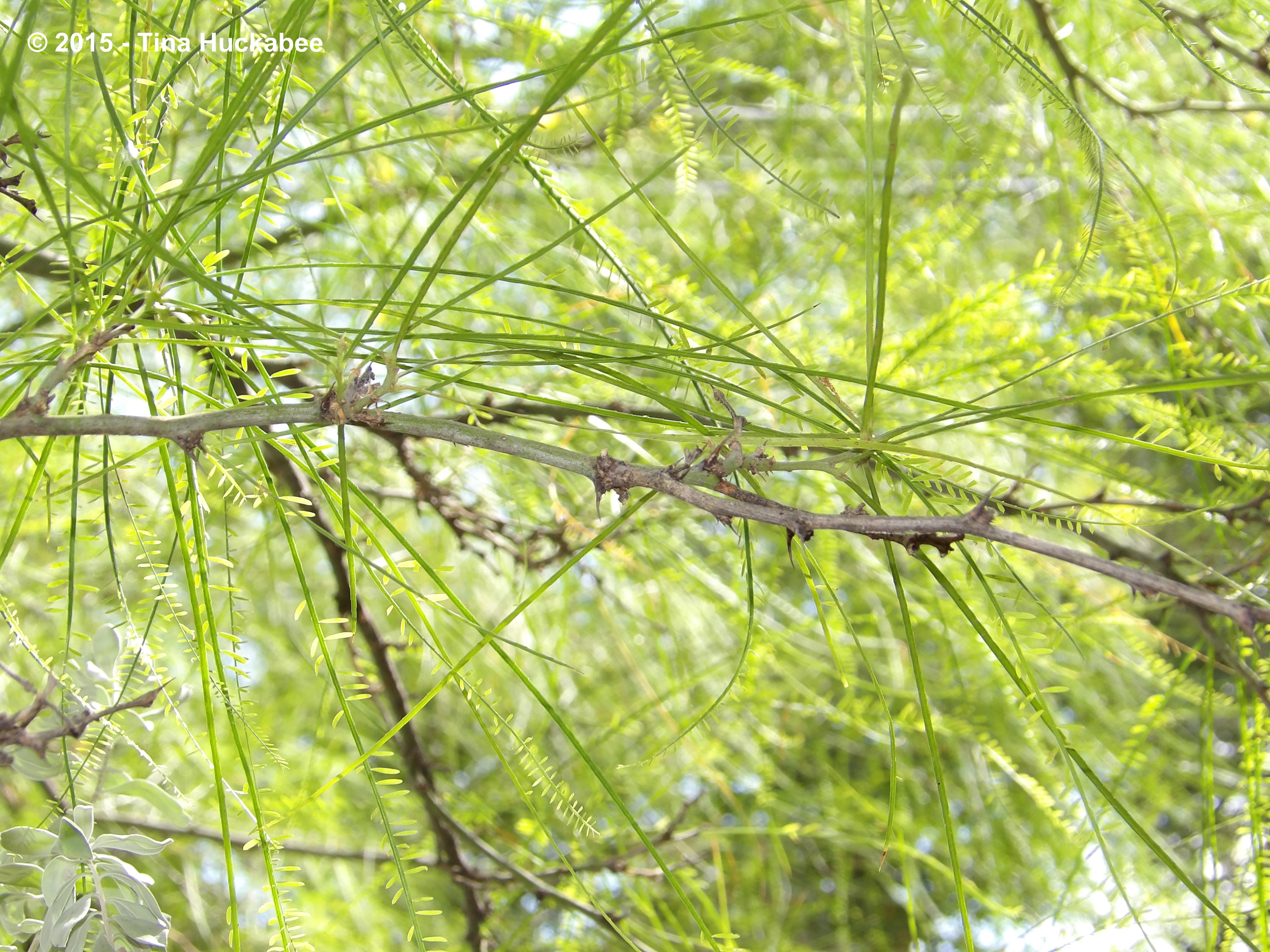
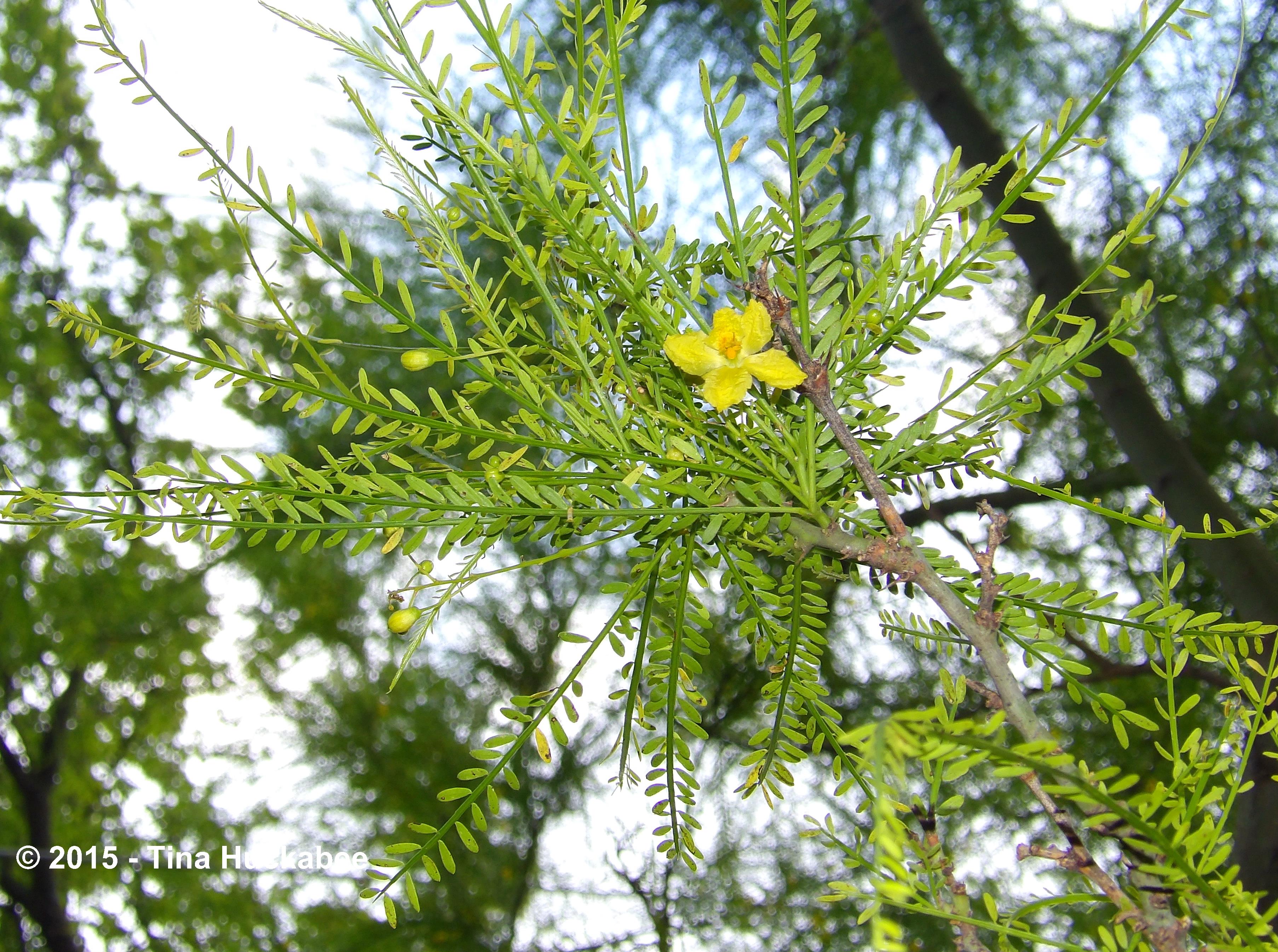
Retama foliage is a series of leaflets aligned opposite one another along paired leaf stalks.

As the days shorten and the temperatures cool significantly, the leaflets adorning the paired stalks begin dropping off.

IMGP2309_cropped_3147x3304..new

The stalks will be left, for a time, as a spidery remembrance of the elegant and unusual foliage.IMGP2883.new

If or when there is a hard freeze (after all, Retama flourishes in tropical and semi-tropical climates), all manner of Retama foliage–leaflets and stalks–vacate the tree, joining with other deciduous leaves–either on the ground as mulch, or in the compost bin for future soil nourishment.  Here in Austin, that will typically occur in late December and January.

IMGP2885.new

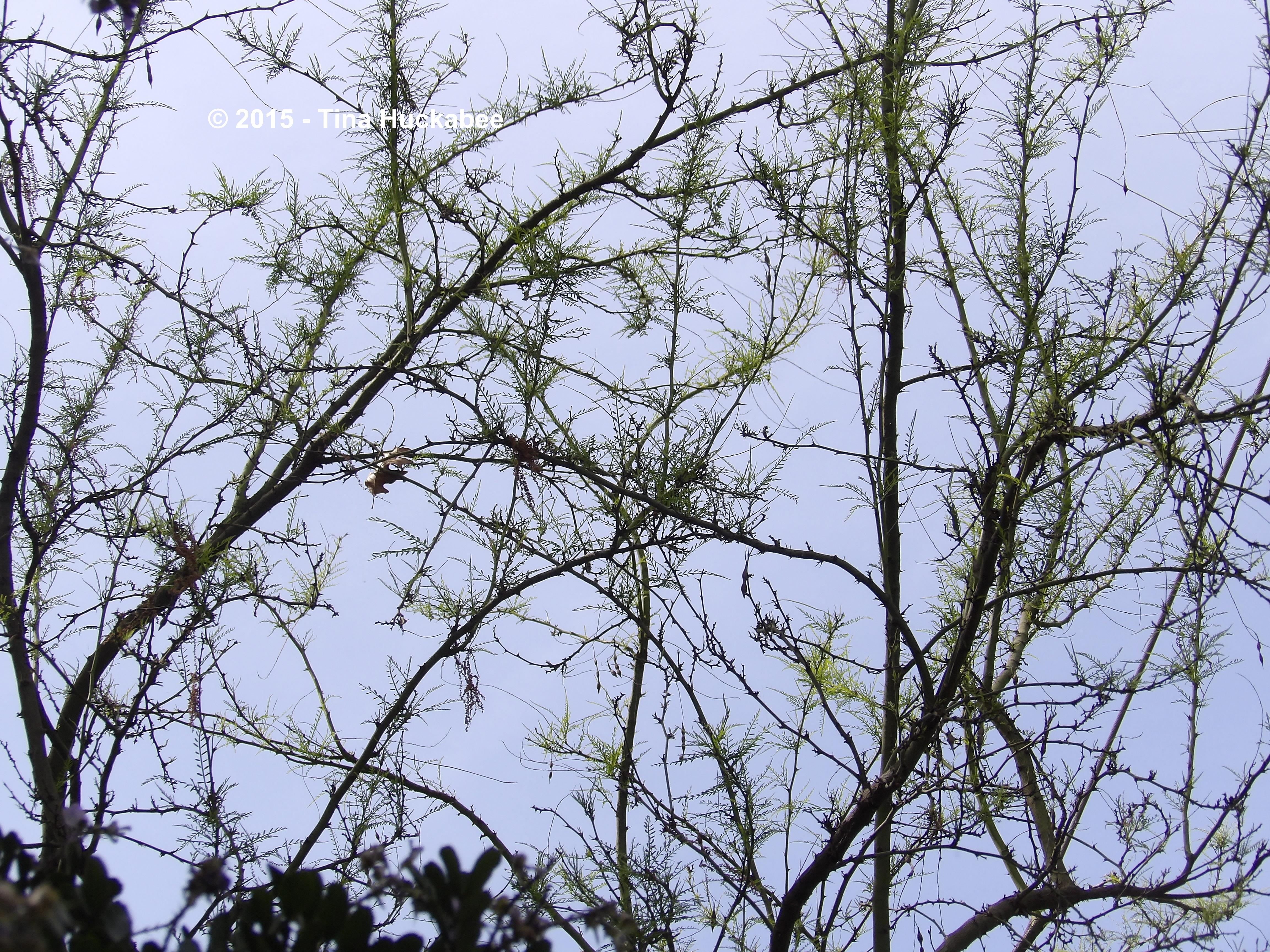
The limbs and trunk of the tree remain green throughout winter. This adaptation is valuable for survival  and stunning to observe.  The transfer of the photosynthesis process from foliage to limb allows Retama to continue feeding during times of drought, and to maintain vigor during the relatively short, but temperature variable, winter months.

IMGP2305.new

In the deep of winter (such that it is in the Southwest U. S. and other regions where Retama is native), the green of the limbs and trunk provide life-affirming color and are an attractive feature in the winter landscape.

IMGP5161.new

IMGP5156_cropped_3386x3723..new

IMGP4308.new

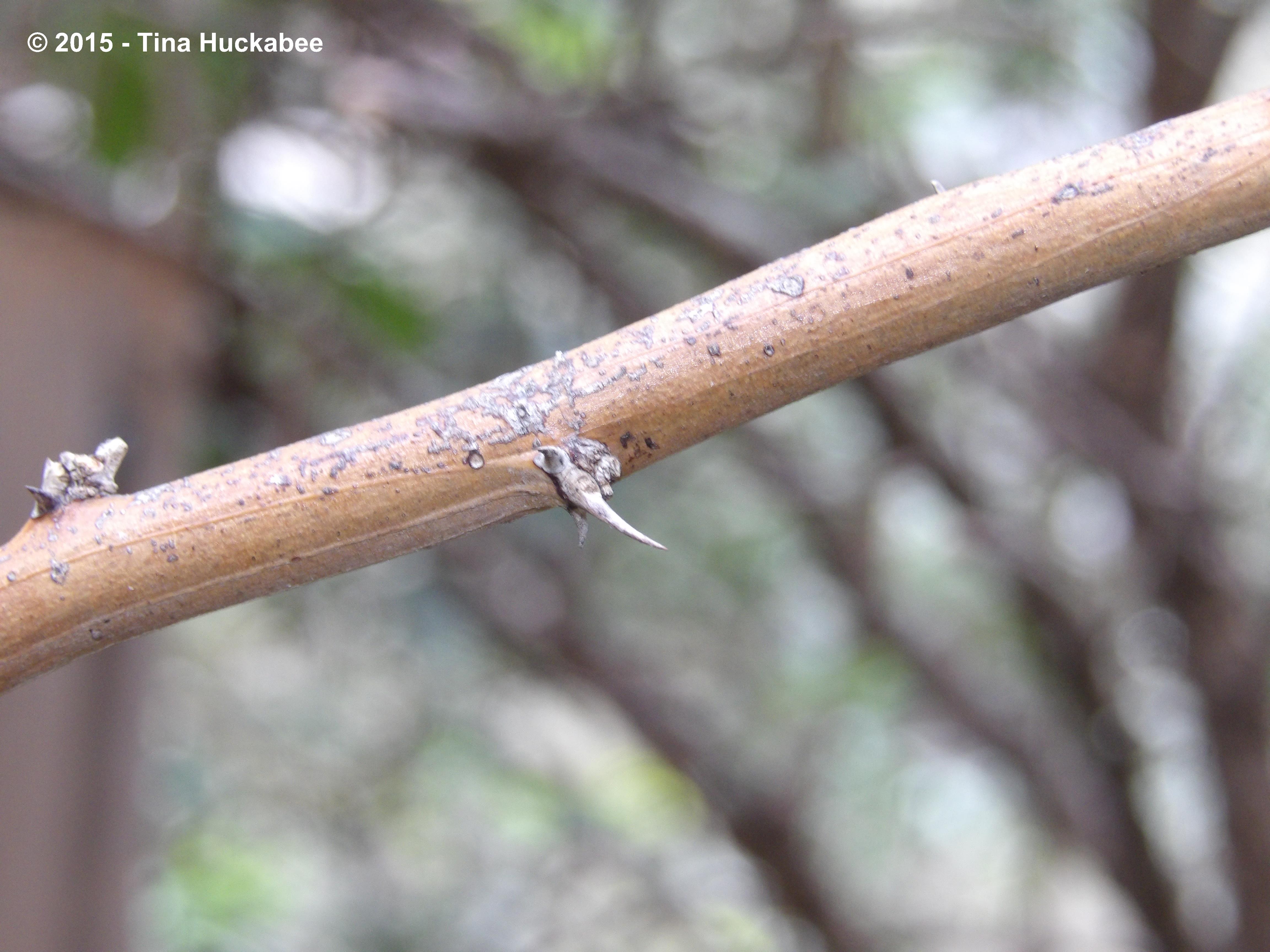
Without foliage, the thorns on the branches are more noticeable. Be careful, they bite!

IMGP2310.new

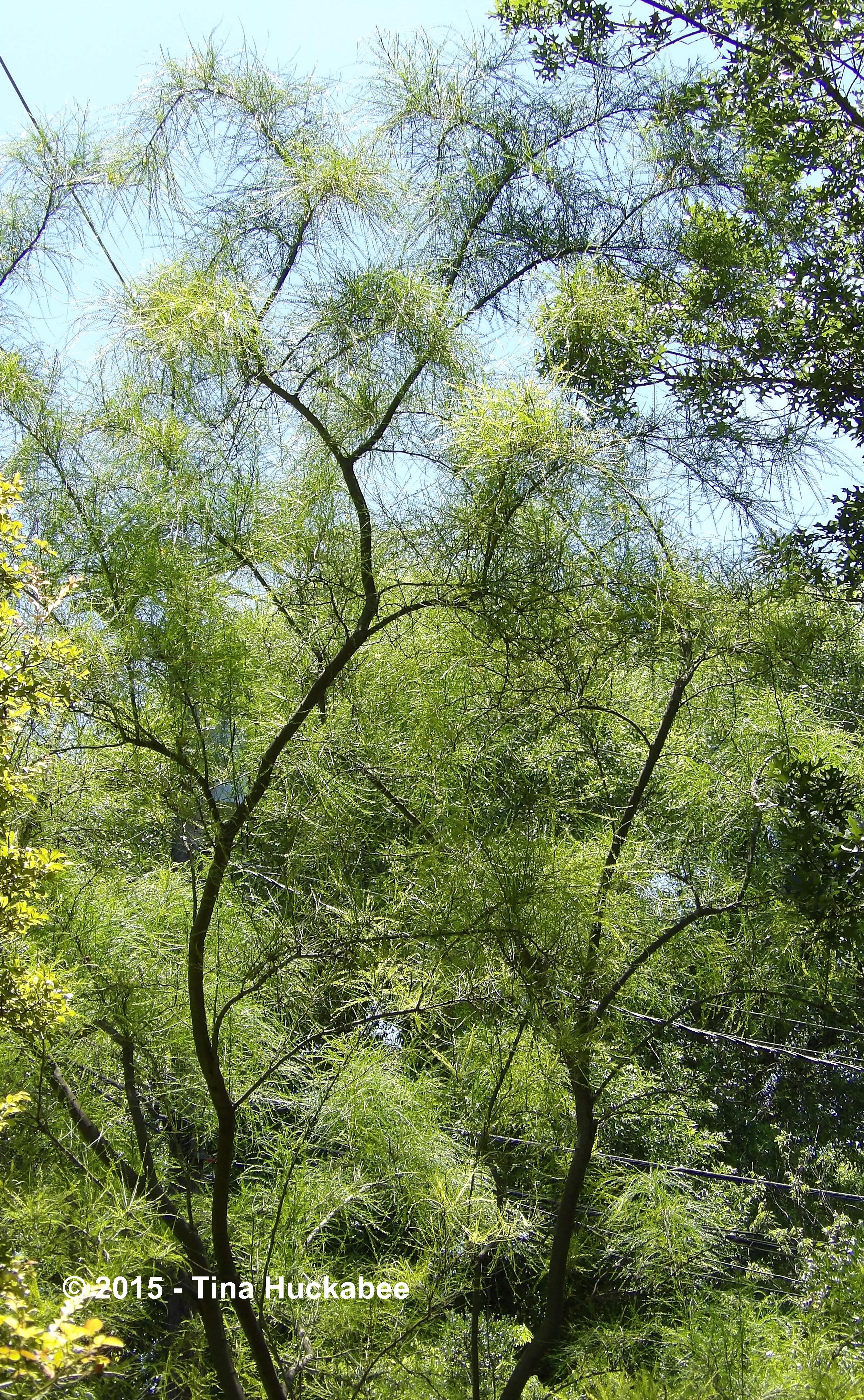
As spring approaches in March, the Retama responds with green,

IMGP6341.new

…green,

IMGP6757.new

…green foliage.

IMGP7555.new

Retama is a member of the Fabaceae, or legume family.  Other Fabaceae plants are nicknamed “broom”, if they sport slender stems with tiny leaflets.  The unusual leaf or “broom” arrangement of Retama lends a soft, verdant look to the tree throughout its growing season.

IMGP7353.new

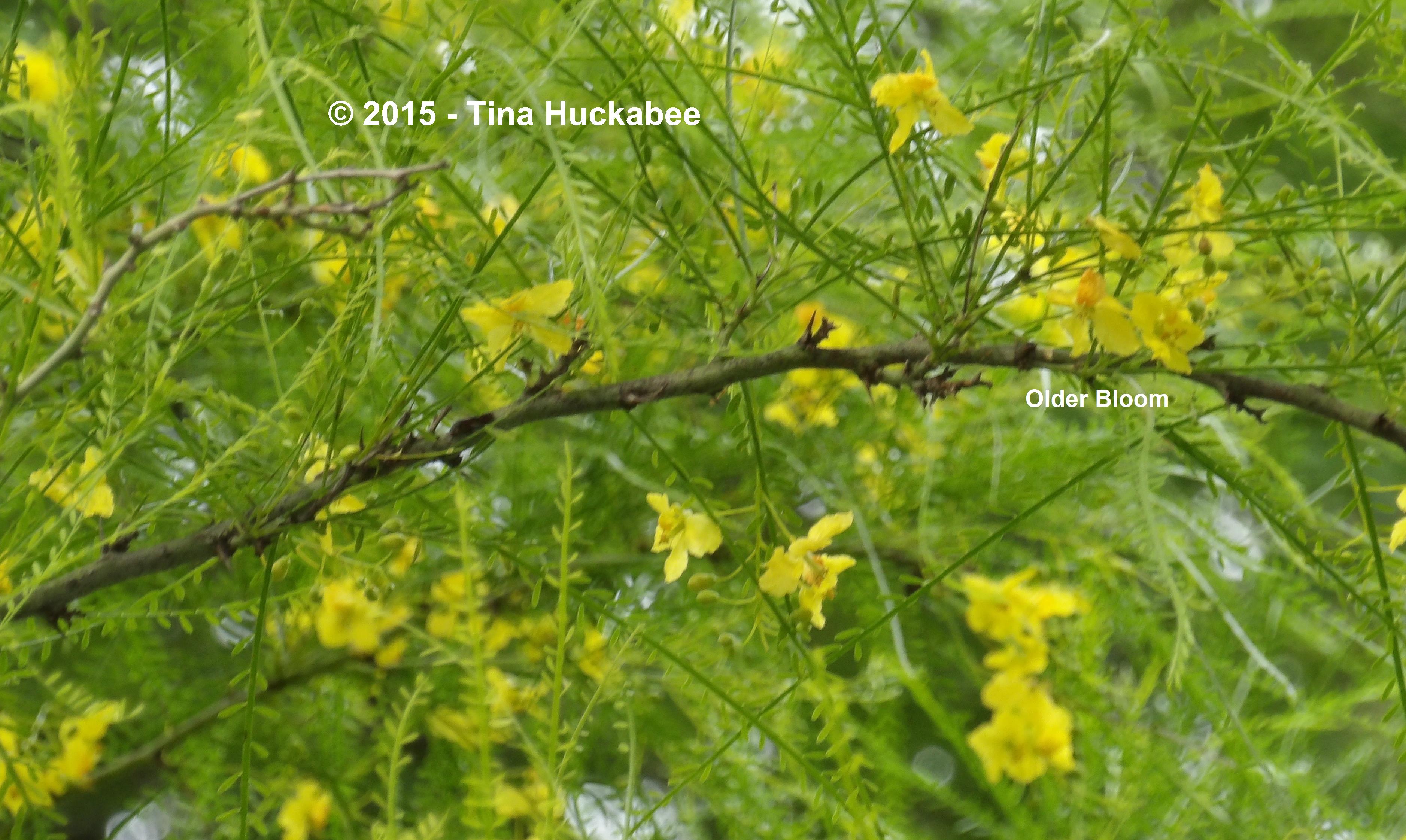
By May or June, clusters of bright yellow flowers form and  will flower continuously, causing pollinators  to visit regularly and, no doubt, eagerly.

IMGP7615_cropped_3612x2691..new

IMGP8088_cropped_3755x2244..new

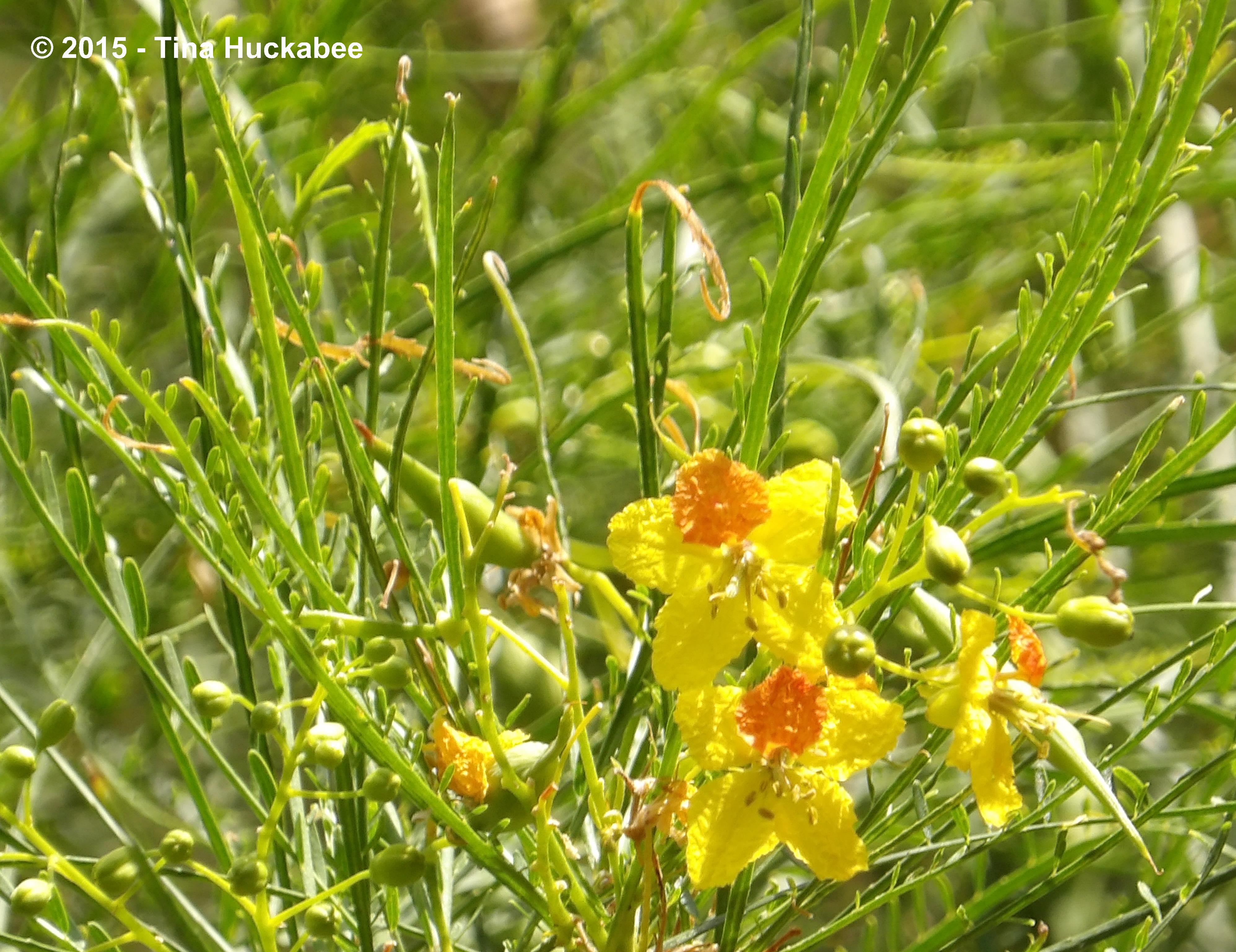
The Retama flower is an interesting one, because the petals are bright yellow, except for one which is called the “honey” petal. The honey petal is pale to deeper orange.

IMGP8491_cropped_2479x2041..new

IMGP0332_cropped_3991x3074..new

Once pollinated, the colored petal deepens and  remains on the tree longer than the other petals. The flowers adorn the plant in response to rainfall and can bloom for a long period of time–late spring, all through summer, and into the fall.  My particular Retama does not grow in full sun, so it’s never achieved the mass blooming that a Retama in blasting sun would produce.

In this year (2014-2015) that I’ve Tree Followed the Retama and profiled it for A Seasonal Look, the tree experienced a range of extremes–not that unusual here in Texas, as this is a land of extremes–but noteworthy.  We enjoyed a “normal” spring with mild temperatures and average rainfall.  However, in May and early June, we received nearly 20 inches of rain, temporarily halting an 8 year drought. Known as a “rain bomb,” that type of flooding has always occurred in Central Texas and is often, though not always, a drought-buster.   The Retama’s response to the heavy rains was to drop its first flush of glorious flowers that had opened in May.

IMGP8230_cropped_3623x2171..new

For the latter part of June and into July, my Retama was flower-less, but it did produce more clusters as the summer months progressed.   Once the rain stopped in early June and the Texas summer temperatures and dry conditions settled in for the duration (and duration and duration…), it took a little time for the tree to set out its signature bloom sprays. I didn’t water my gardens until mid-July and have only watered four times as of this post. After the flowers were pummeled by the May rains, the tree bloomed up again, much to the delight of the bees, butterflies and hummingbirds.

Oh, and the gardener too.

In more typical years,  the Retama is a solid bloomer during the toughest months of our growing season and with minimal rain or irrigation. After the wet spring and then with no rainfall until late August/early September (and not much then), many plants succumbed.  Even some native plants that are evolved to withstand the capriciousness of the Texas climate, struggled this summer.  The Retama? It flowered and foliaged along just fine, thank you very much:

In July,

IMGP9275.new

….August,

IMGP9887.new

IMGP9884.new

…and September.

IMGP0336.new

It was green, blooming and gorgeous. What’s not to love about that?

IMGP9898.new

Birds are constant companions of this tree.IMGP8518.new

IMGP9258_cropped_3442x3028..new

As the flowers fade and  the seed pods form, first green,

IMGP9820.new

…then brown,

IMGP1942_cropped_3189x2917..new

…the tree adds other delectables to the landscape besides pollen and nectar:  small mammals and birds (in particular) enjoy feeding on the seeds.  In areas of the world where Retama is invasive (parts of Africa, India and Australia), it is most likely birds who’ve spread Retama to problematic levels.  I don’t want to blame birds for Retama’s invasiveness–that’s squarely on people and lack proper management for introducing non-native and potentially harmful species to new areas without first experimenting with natural controls.  Where Retama is native, it’s an excellent plant:  water wise, wildlife friendly, and beautiful. Where it’s an introduced aggressor in the landscape, it’s proven a serious problem for indigenous flora and fauna, requiring great efforts to remove.  For example, Australia has banned the sale and planting of Retama.

Have I mentioned that it’s always best to plant native?

Here in Central Texas, the Retama is a plant which needs little, if any, supplemental watering.  It grows remarkably fast, reaching to “tree” height in a matter of a few years. I mulched it when it was a baby tree (I think I purchased it as in a one gallon pot), but I don’t mulch established trees.  Retama is commonly available at locally owned nurseries, especially in late summer and fall, which are good times of the year to plant perennials and trees here in Texas.  Retama has a graceful natural form and doesn’t require pruning, except if a branch dies–or perhaps if the gardener is weary of getting dinged on the head by a formidable Retama thorn.

Retama trees aren’t particular about soil types, so no amendments are necessary. If much irrigation or rainfall is the norm, Retama will seed out, but in its 12 or 13 years in my garden, I’ve only found a half-dozen seedlings from my tree.

If you live in Retama’s native range, you’d be hard-pressed to grow an easier or lovelier tree to accent  the southwestern garden.

In Spring,

IMGP6940.new

…Summer,

IMGP8088_cropped_3755x2244..new

IMGP8604_cropped_2672x4329..new

…Autumn,

IMGP0322_cropped_3109x3109..new

IMGP1603_cropped_3037x2903..new

…Winter,

IMGP4310.new

IMGP4156.new

…Retama is a stunning tree: hardy and reliable, wildlife friendly, and darned pretty to look at.  Who doesn’t want plants with those descriptors?