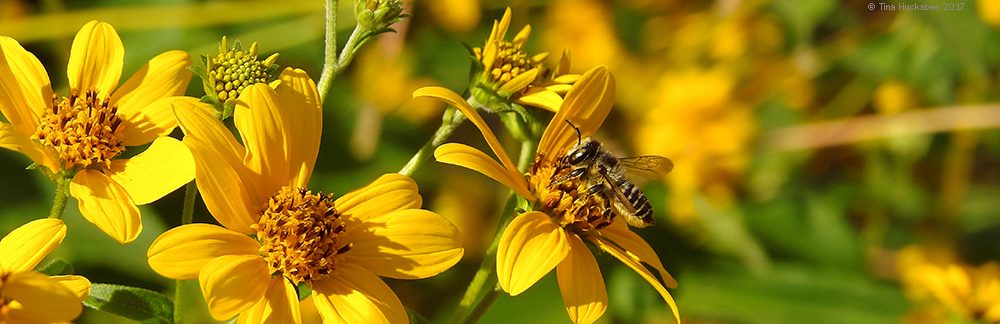
Another month is past with another round of watching wildlife do their thing in my garden.
Or, is it their garden?
It’s a lot about the birds for May, especially those who migrated through Central Texas as they vacated their winter quarters in Mexico and South America and are traveling to their summer breeding grounds–which is pretty much anywhere north of my garden.
I saw this darling ray of sunshine (or perhaps there was more than one??) on a number of occasions, flitting in the shrubbery and bathing in the bog.
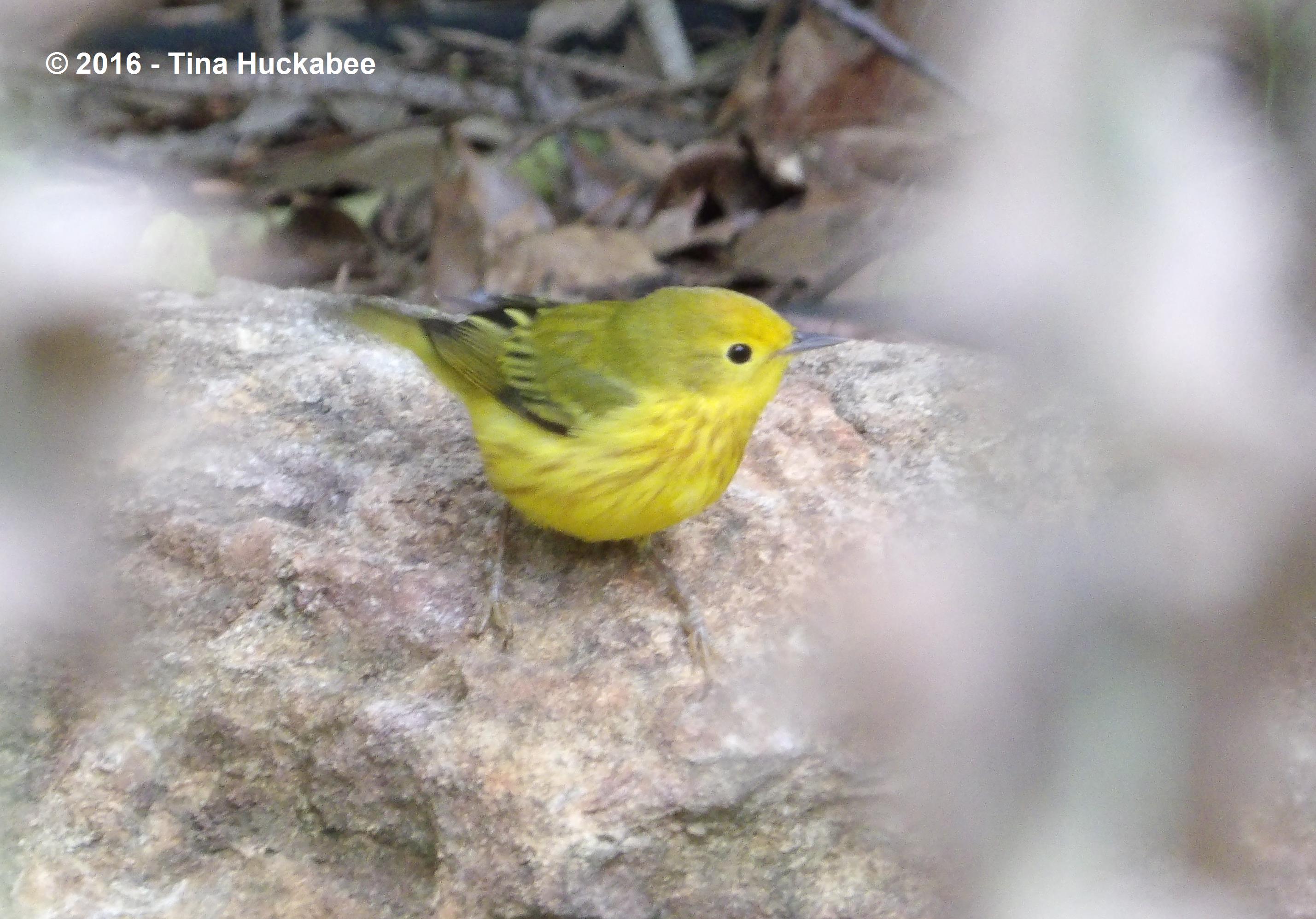

This pretty fella is a male Yellow Warbler, Setophaga petechia. What else could he possibly be called?
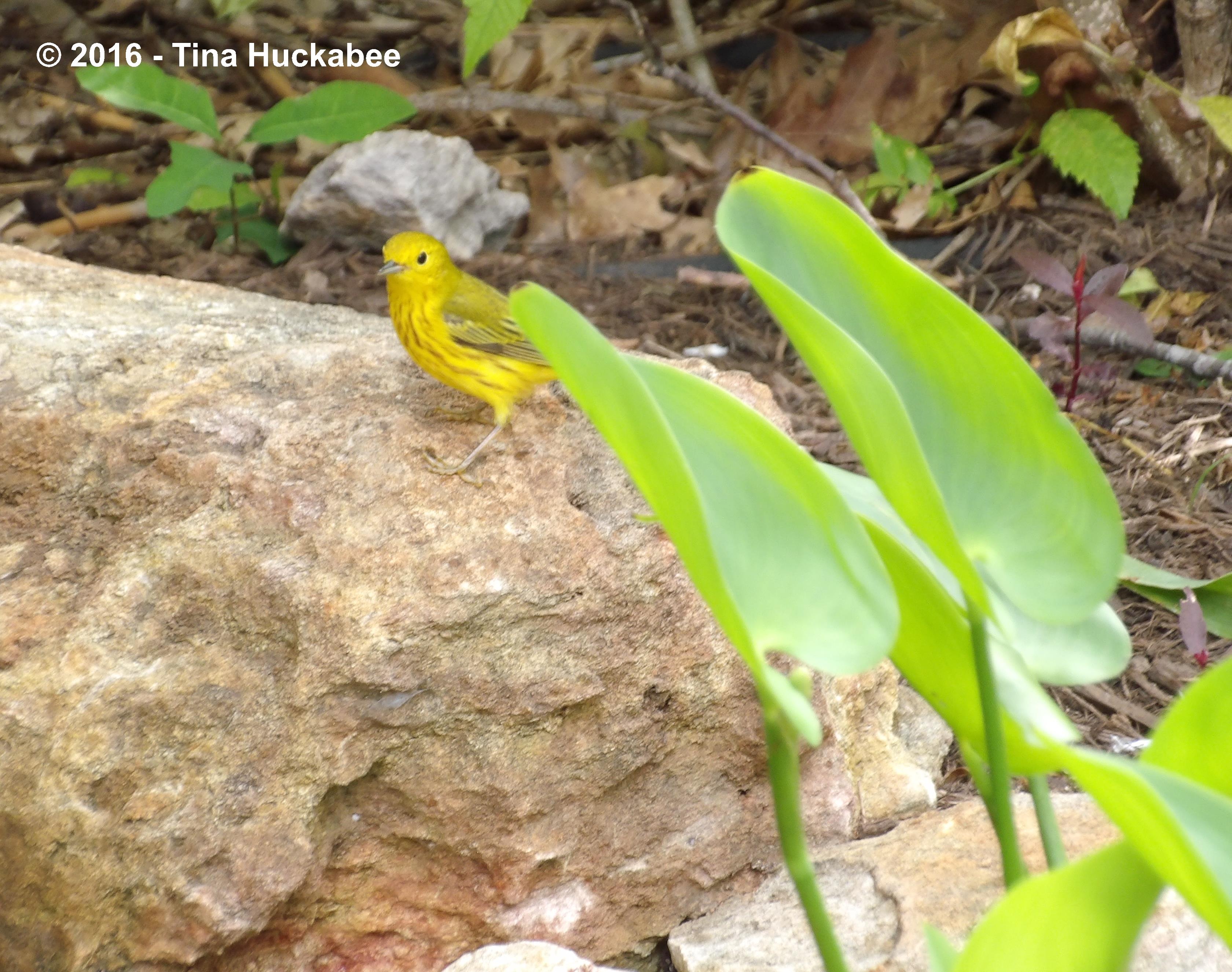
Texas is on the migratory path of this dazzling fellow and the rest of his kind, but his summer breeding area ranges throughout most of the remainder of North America.


I’m fairly sure I spotted a female Yellow, but never got a good shot of her. Along with bathing alone, he shared a splash with another warbler–both had a good time and were drippy and squeaky clean at the end.

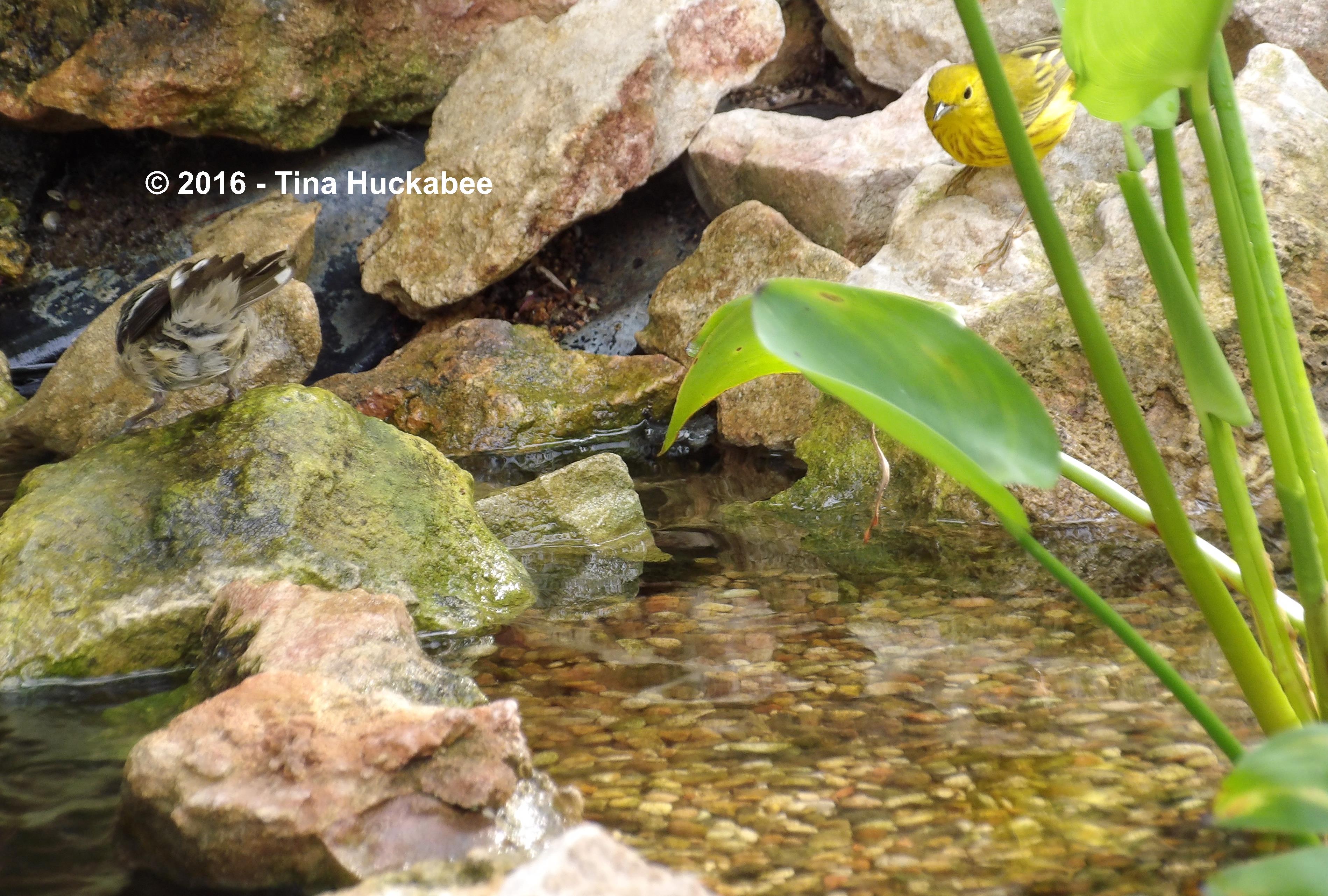
The not Yellow Warbler is either a female or immature male Chestnut-sided Warbler, Setophaga pensylvanica.
I had the hardest time identifying this bird because most bird photos are of males–and why not? The males are typically stunning in color and form and therefore make the most interesting subjects. It was only when perusing the Birds of Texas Facebook group–which I joined not long ago–that someone posted a photo that looked just like my little gal or guy. Yay–a match!


I’m not generally a fan of FB, but it has its uses, that’s for sure.

Actually, I’ve learned quite a bit following these crazy, nutty, obsessive Texas birders–and don’t even get me started on the photos that are submitted–WOW, nothing short of amazing!
Another eye-catching yellow bird that I’ve seen many times before (not this particular bird, mind you, but members of its species) and that I finally captured in photo form, is the Common Yellowthroat, Geothlypis trichas.

I don’t think he’s the least bit common–especially in looks. I love his bandit’s mask, white headband, and bright yellow feathers–he’s a real head-turner. I’ve seen females of this species too, though they’re quick, quick, quick through the greenery as they’re searching for bugs. The females tend to olive-green/with a little pale yellow, but are of the same shape. Another migratory species through Texas, I’m sure this guy and his gal are on their way to northern territories to make more of the same common warblers–good luck to them and their offspring.

In spring 2015, ONE day, I spotted a male Rose-breasted Grosbeak, Pheucticus ludovicianus, visiting my garden. This spring, for several days, a lone female snacked at my sunflower seed feeder.

She’s not as showy as her male counterpart with his brilliant rosy chest, plus she was skittish and good captures were hard to achieve. I hope she has a mate and that she’s on the nest by now–or preparing her nest.
Another bird that I spied last year but didn’t get photos of is the American Redstart, Setophaga ruticilla.

Such a pretty bird! I think this is a female–the males are black, orange, and yellow–but she’s just gorgeous.

She flashed butter-yellow patches on her wings and tail feathers as she darted through the shrubs, on her way to the bog. Later, I saw her again dashing through my Shumard Oak tree which is where I saw others like her last year.
During dinner one evening and while gazing out the big window, I saw this tiny bird angling toward the pond. (That seems a destination of choice for many of the warblers. Good move, putting a pond with a shallow bog in the garden.)
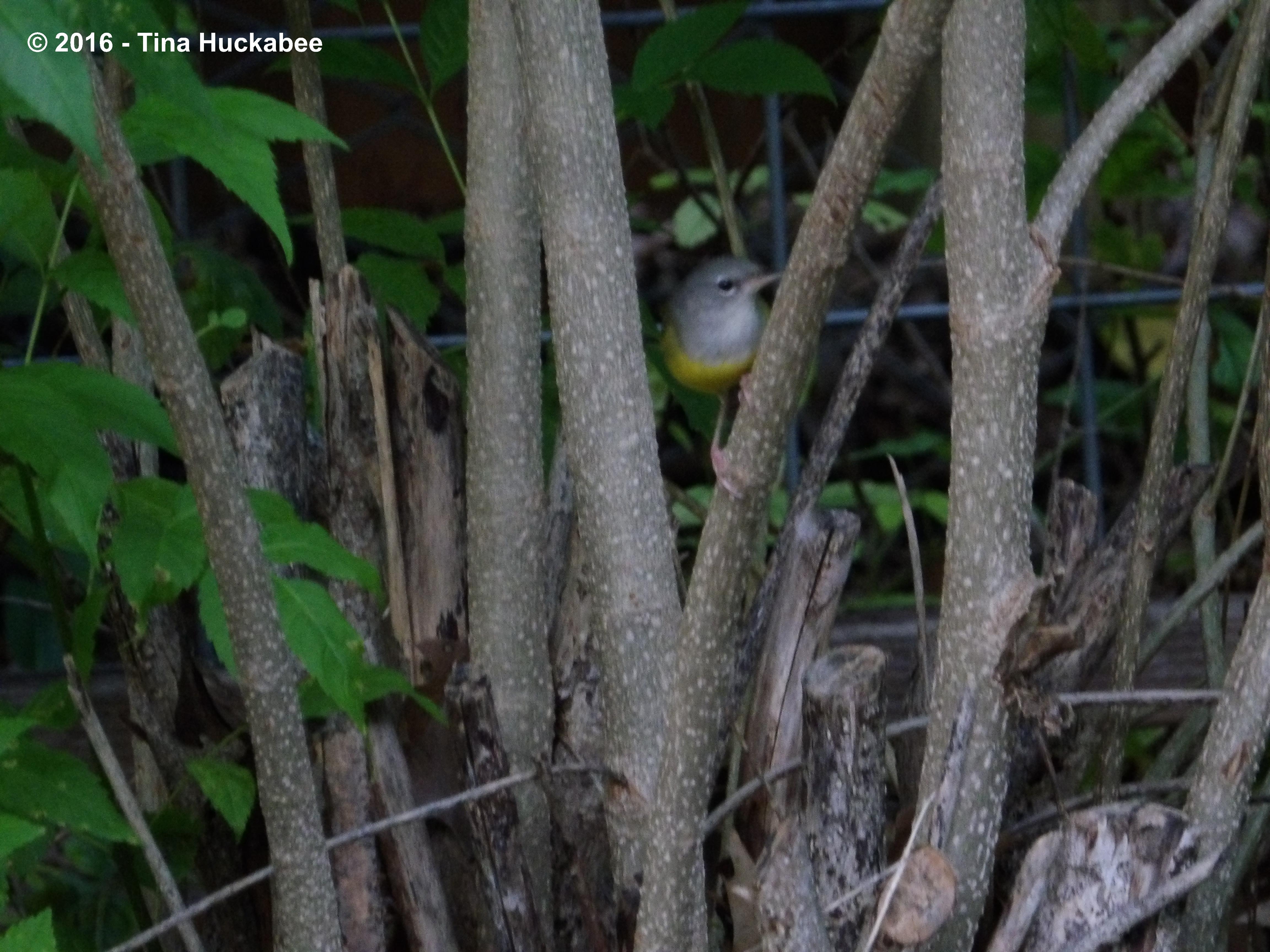
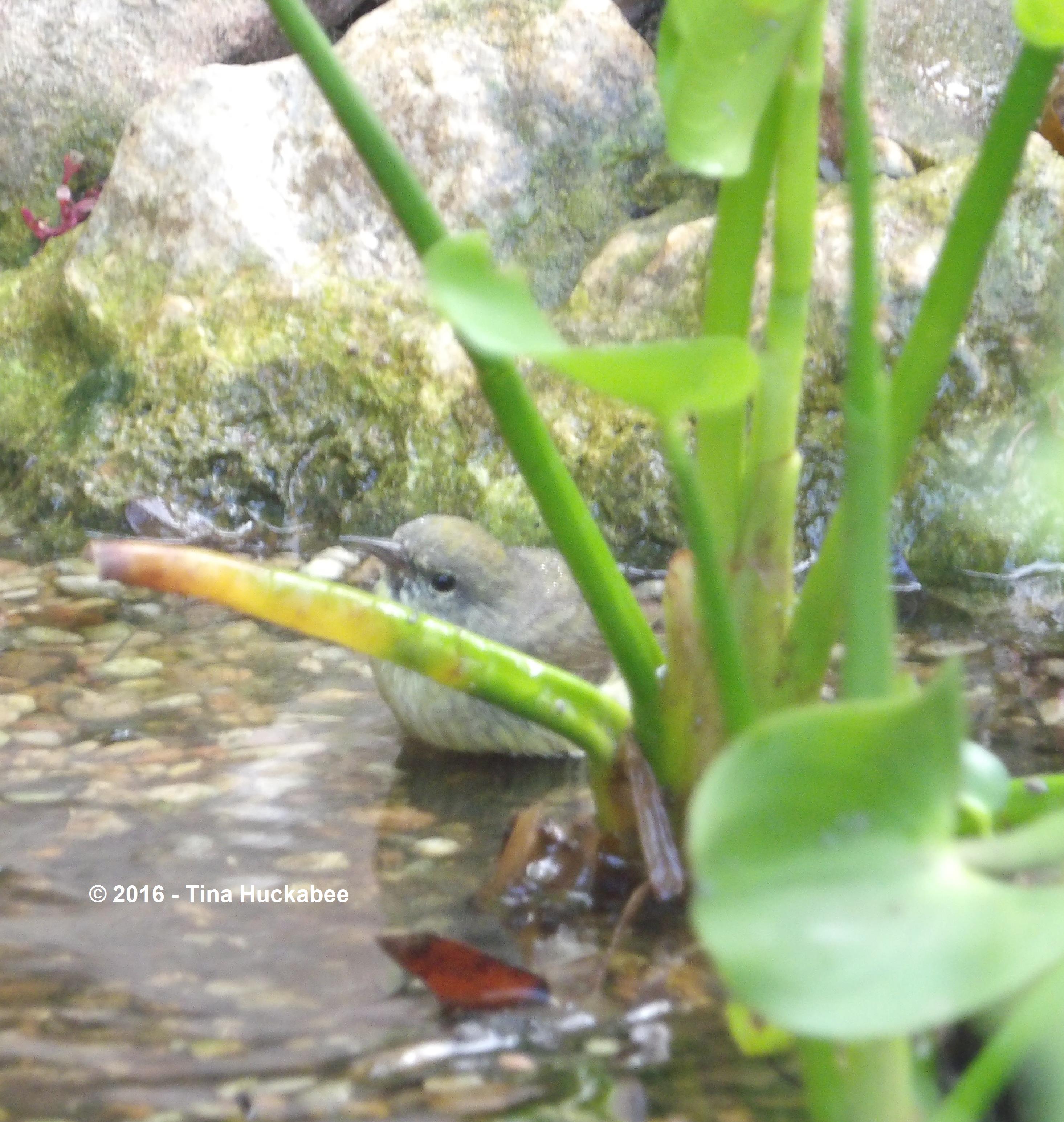
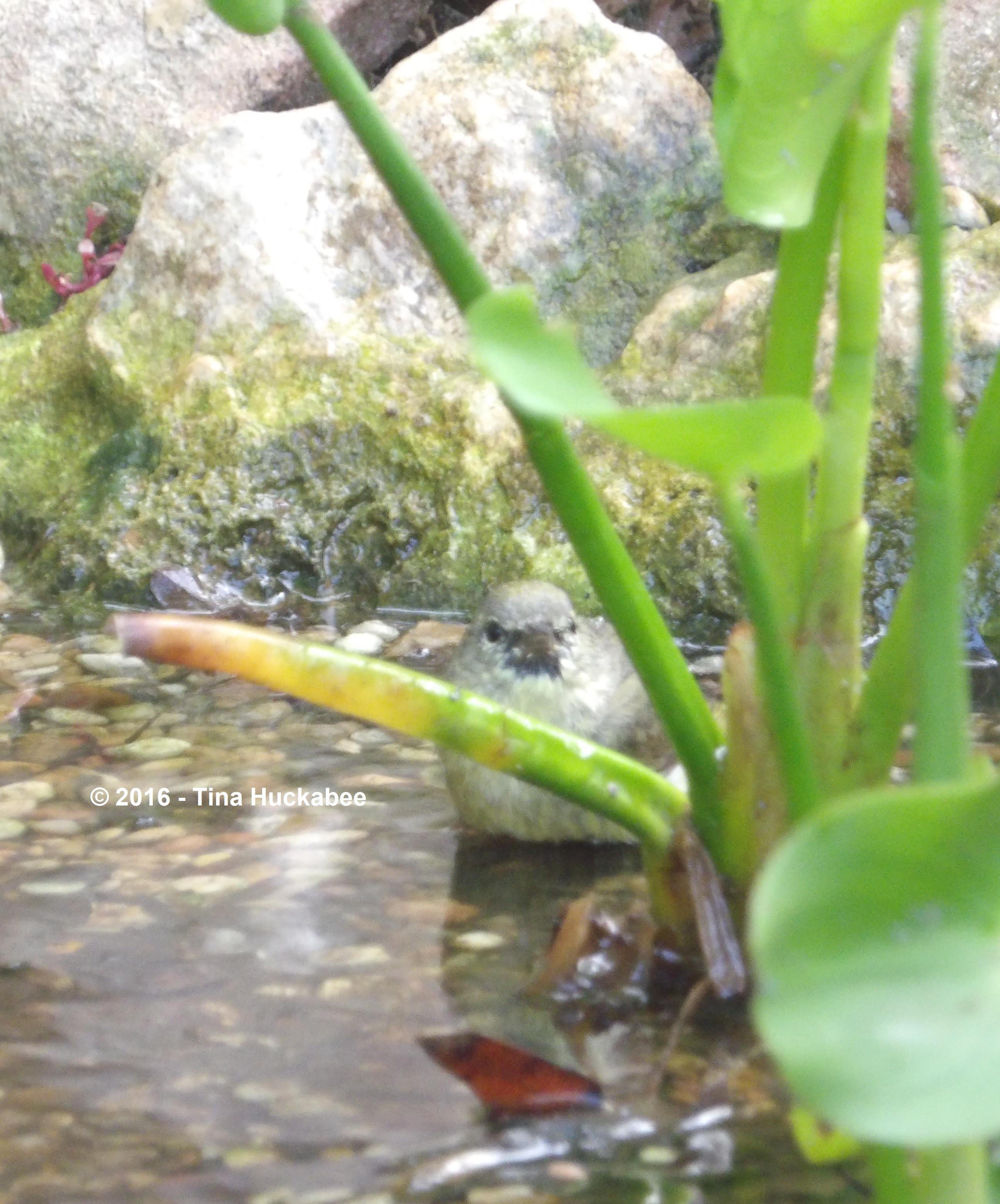
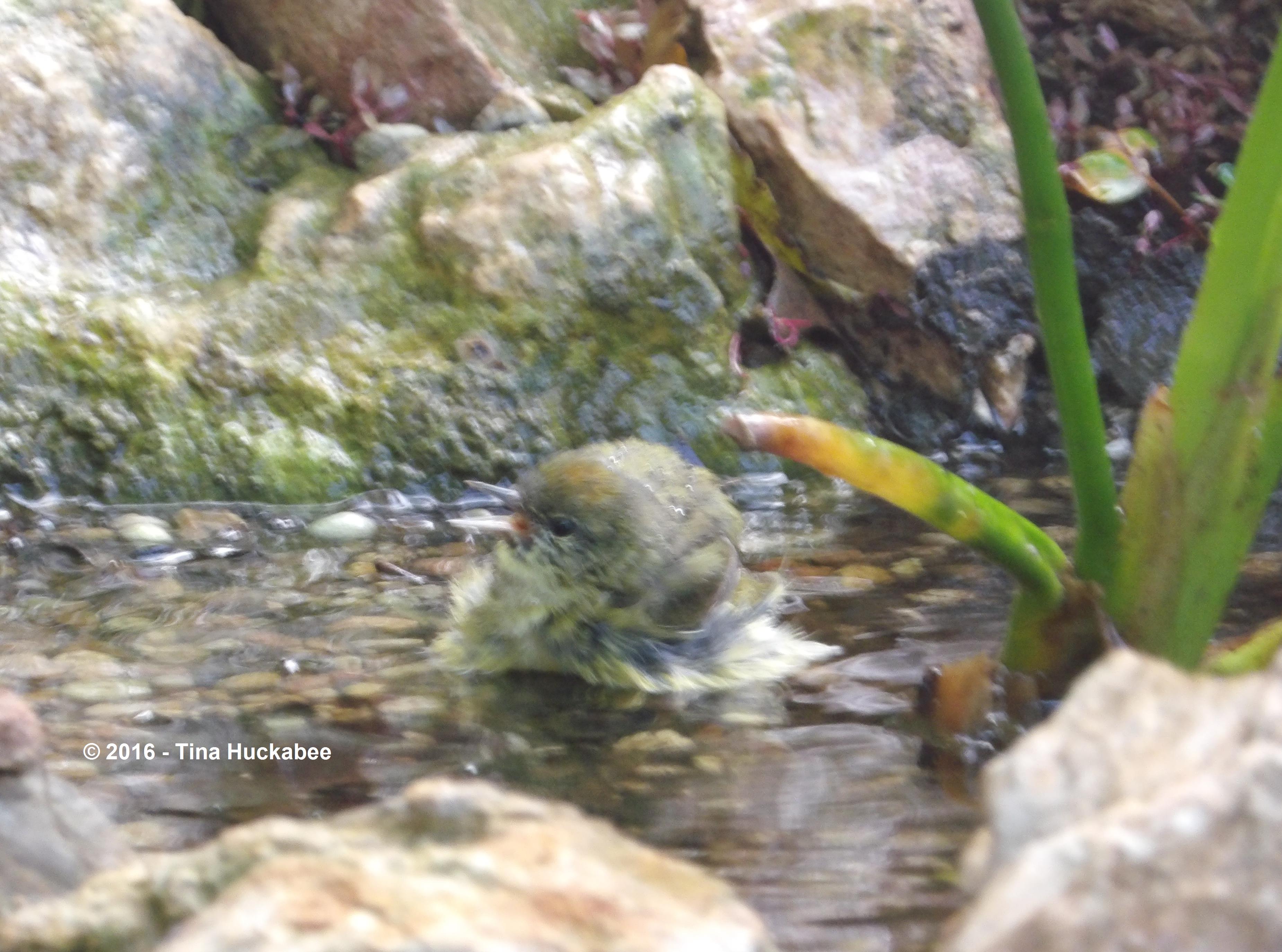
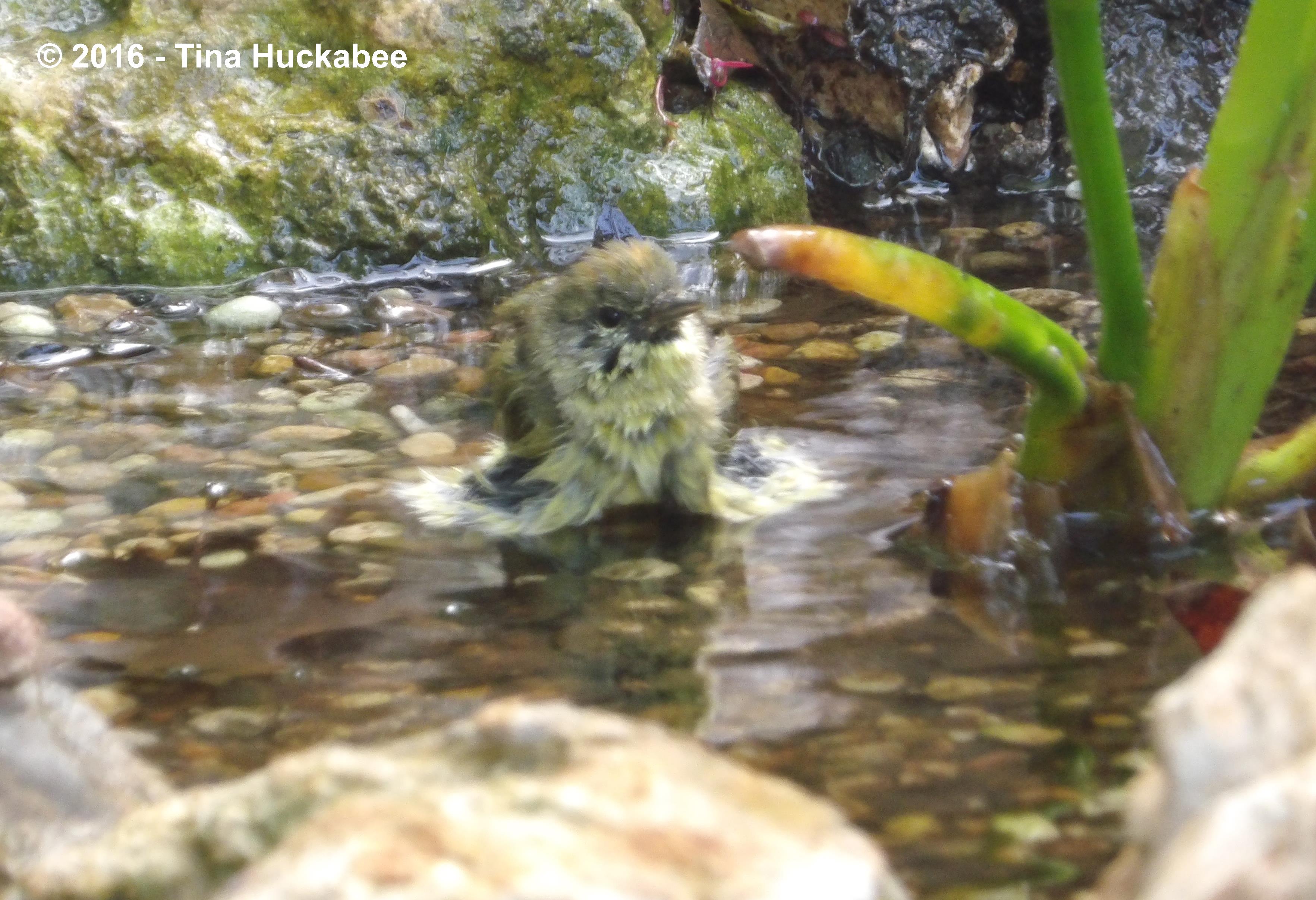
I believe this is a MacGillivray’s Warbler, Geothlypis tolmiei, probably a female.

The light wasn’t optimal and these are the best captures of this bird I could manage. According to Cornell Lab of Ornithology, this bird doesn’t migrate through Central Texas, but in fact, migrates through West Texas, breeding during summer along the West Coast of North America. But none of the other grey/yellow warblers have the exact white eye arcs, nor the hood of gray that extends toward the chest that this cutey displays. The Cornell site on MacGillivray’s (above) mentions that some individual Mourning Warblers can show traits of MacGillivray’s, but I’m going to stick with this ID–unless a reader steers me in another direction.
There were other migrants I saw and heard: an Eastern Wood Peewee one evening at sundown chirping and dancing from a wire to catch insects, and on another day, a Wilson’s Warbler–heading to the pond. Alas, no photos of either. In most cases during migration, the visitors were only here a day or so, then they were gone.
I’m already looking forward to fall migration!
As for the neighborhood birds, there was plenty of action from them as well. My Brazos blackberries were ready for harvesting this past month and certain birds got into the berry-picking action, like this Northern Mockingbird, Mimus polyglottos.

Yeah, I’m lookin’ at you, Mr. Mock!!

I hope you enjoyed those berries, because they’ll never make it into cobbler with you having eaten them!
The resident Black-crested Titmouse, Baeolophus astricristatus, couple are around and singing while raising a small brood.
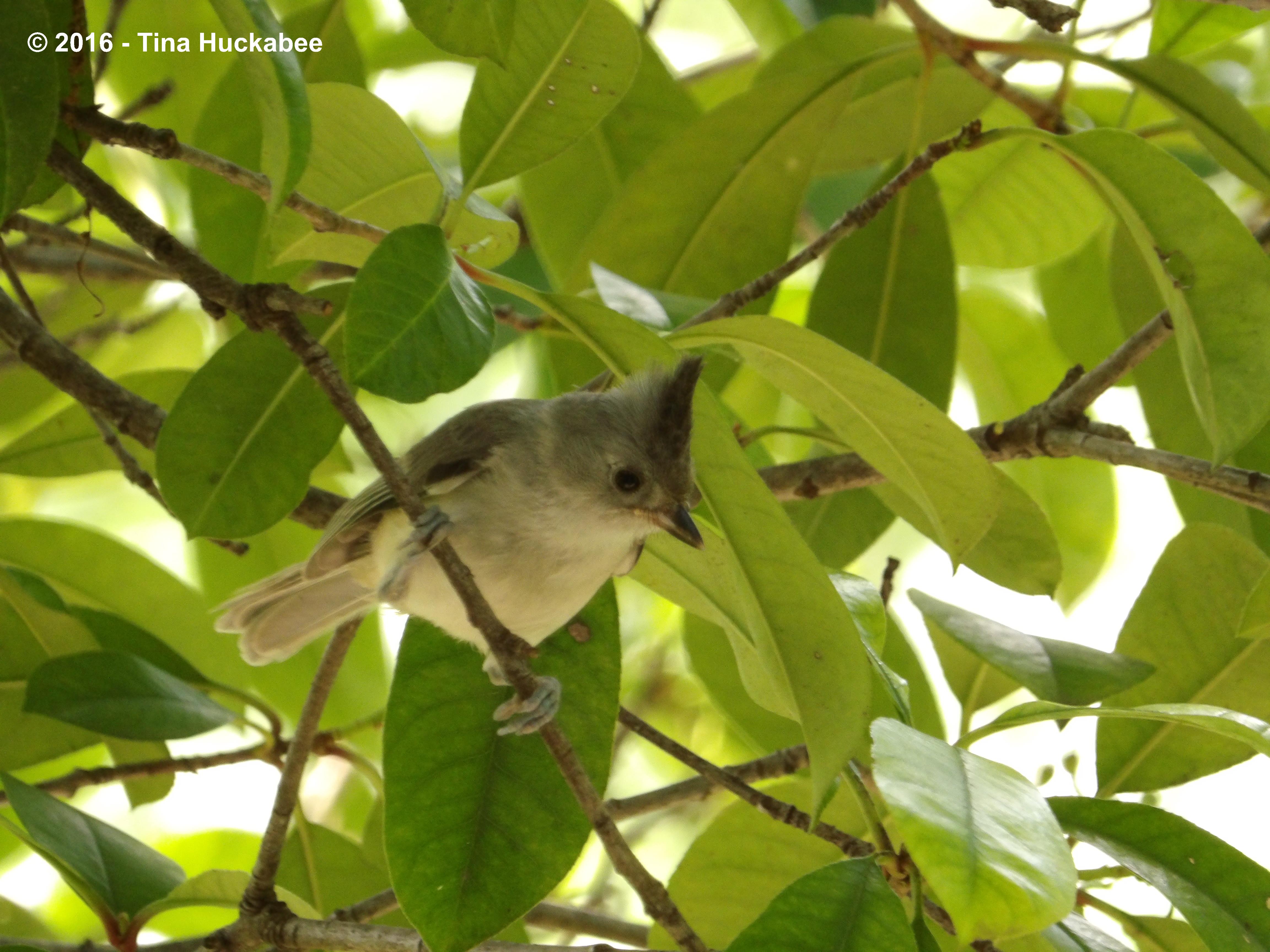
There was definitely one youngin’ (who flew too close to me one day, surprising both of us, and who probably received a talking-to from mom or dad). Maybe there were more of those titmouse kids?
As well, the Carolina Chickadee, Poecile carolinensis, couple took turns at the feeder and preened in the trees.

I haven’t seen them with offspring, but I hope they raised a family. The world, not to mention my garden, could use more of that cuteness.
And this gangly, awkward teen,

…will someday be as handsome as his dad.
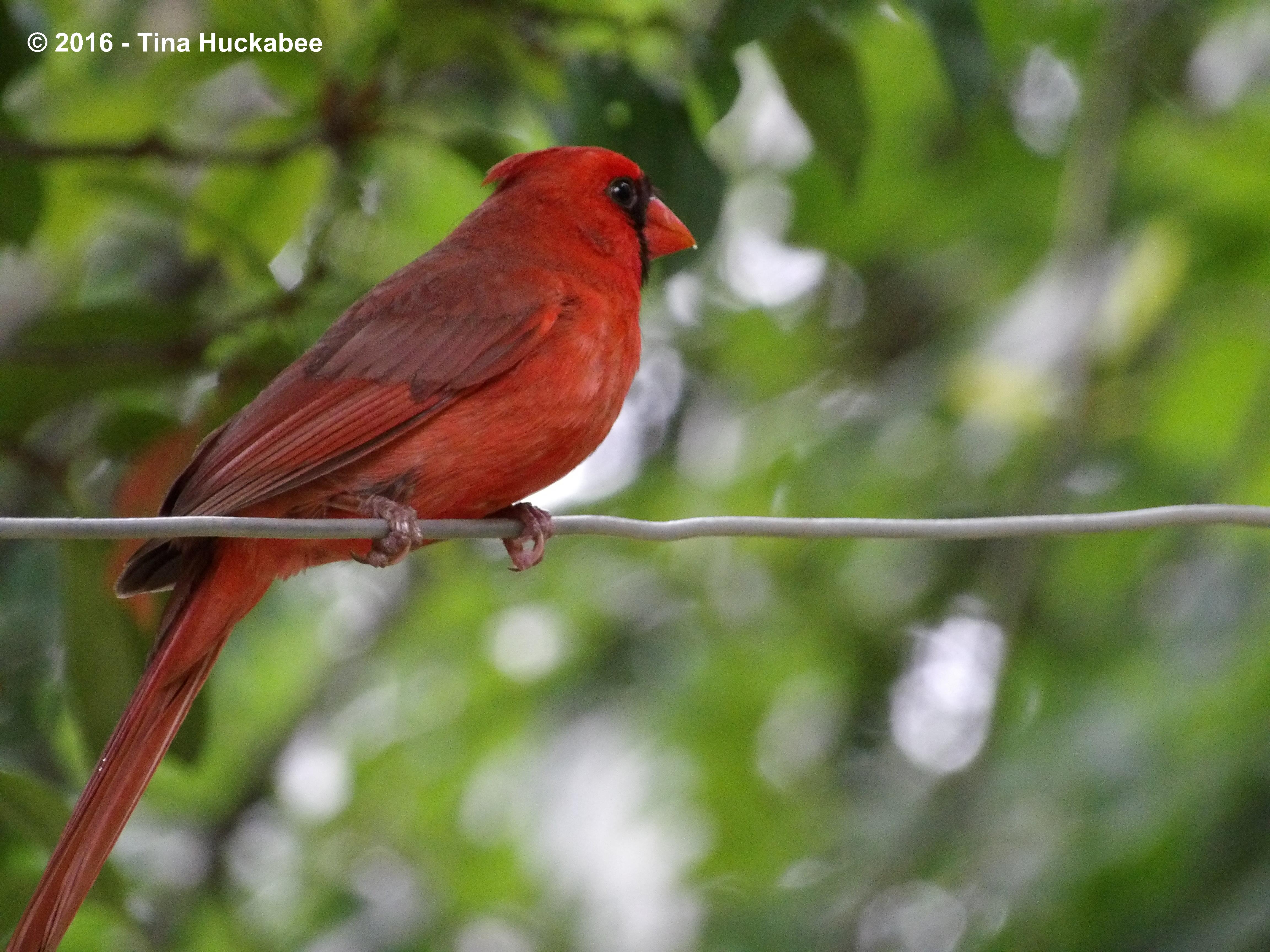
Northern Cardinal (Cardinalis cardinalis)
As for the bugs part of this post, Black Swallowtail, Papilio polyxenes, have laid eggs on the fennel,

…and a few caterpillars have eaten their fill.

I haven’t found any chrysalises, but I’ll keep a keen eye out for one; it’s always a treat to observe an adult butterfly as it emerges.
Also nestled in fennel, was this attractive bug, a Spittlebug, Prosapia bicincta.

I didn’t see any of its spittle–which looks like you’d imagine–but I’m certain there was some, somewhere. The spittle covers the nymph stage to provide protection from cold, heat, and predators. These bugs are not friends in the garden as they pierce plants and suck the sap. In most home gardens they don’t cause much damage, but you want to keep tabs on these critters. If I see more than a few, out comes the bucket of soapy water and into the bucket goes the insects–if I can catch them. If I’m feeling especially murderous, squishing said bugs is the modus operandi.
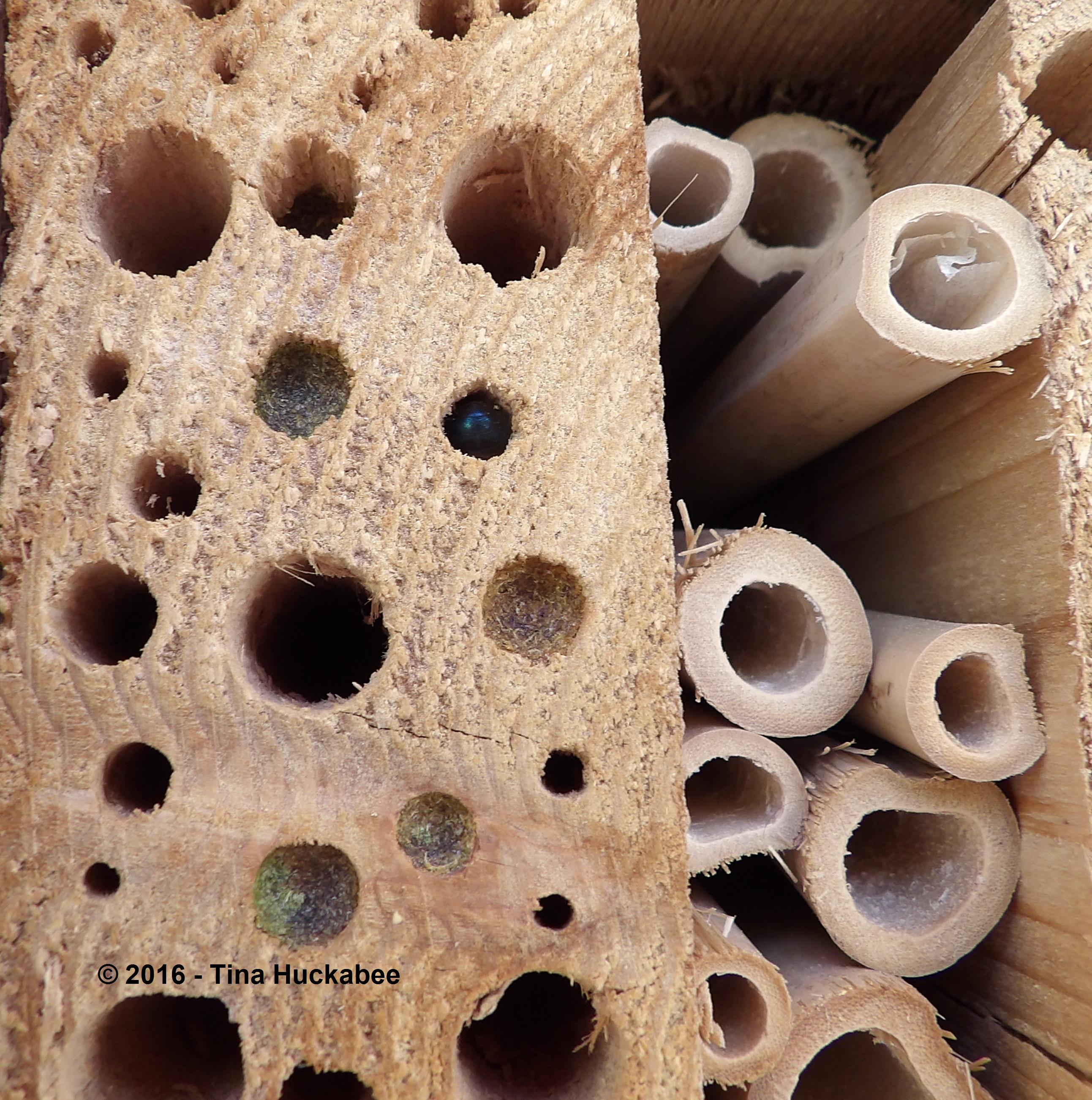
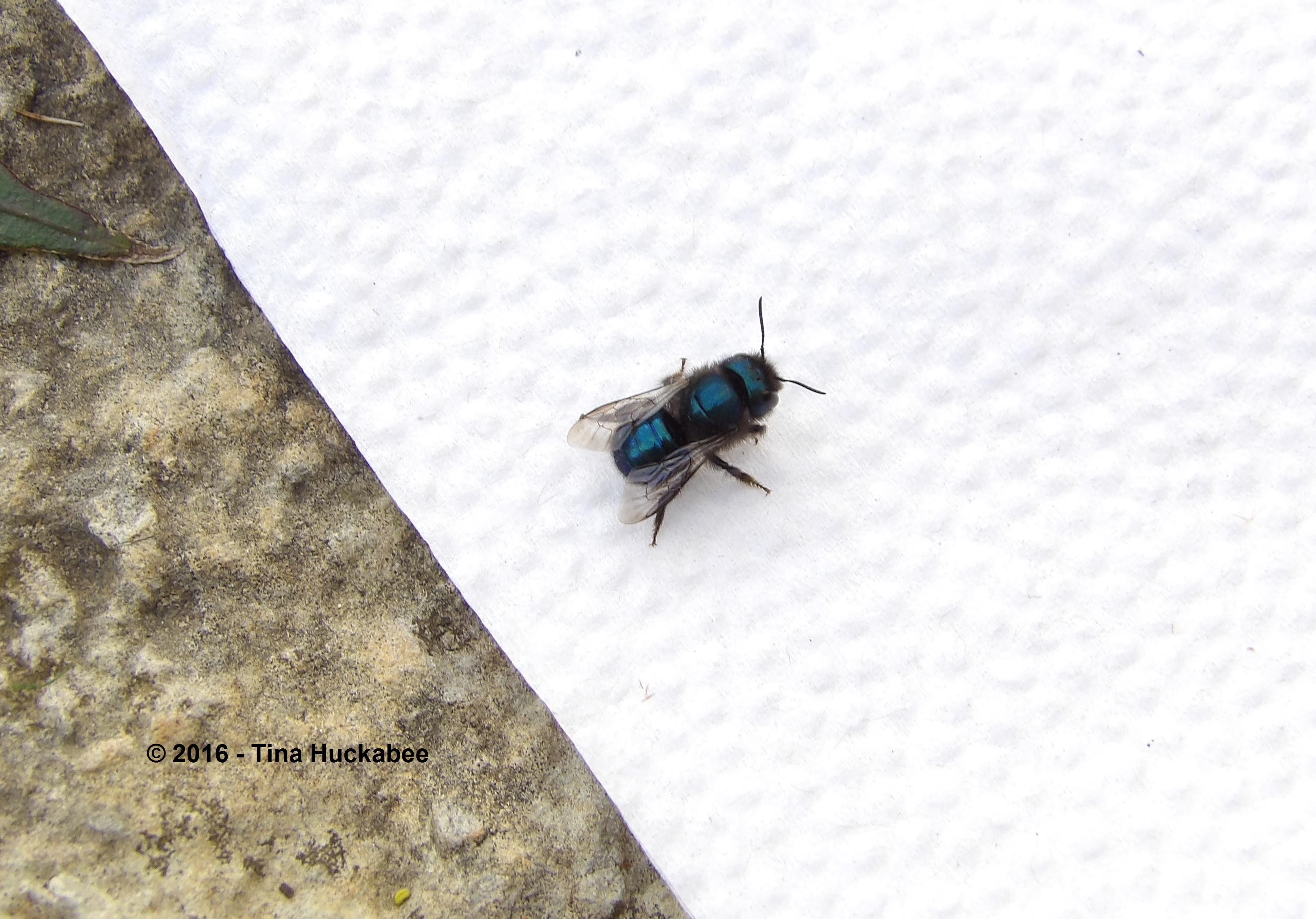
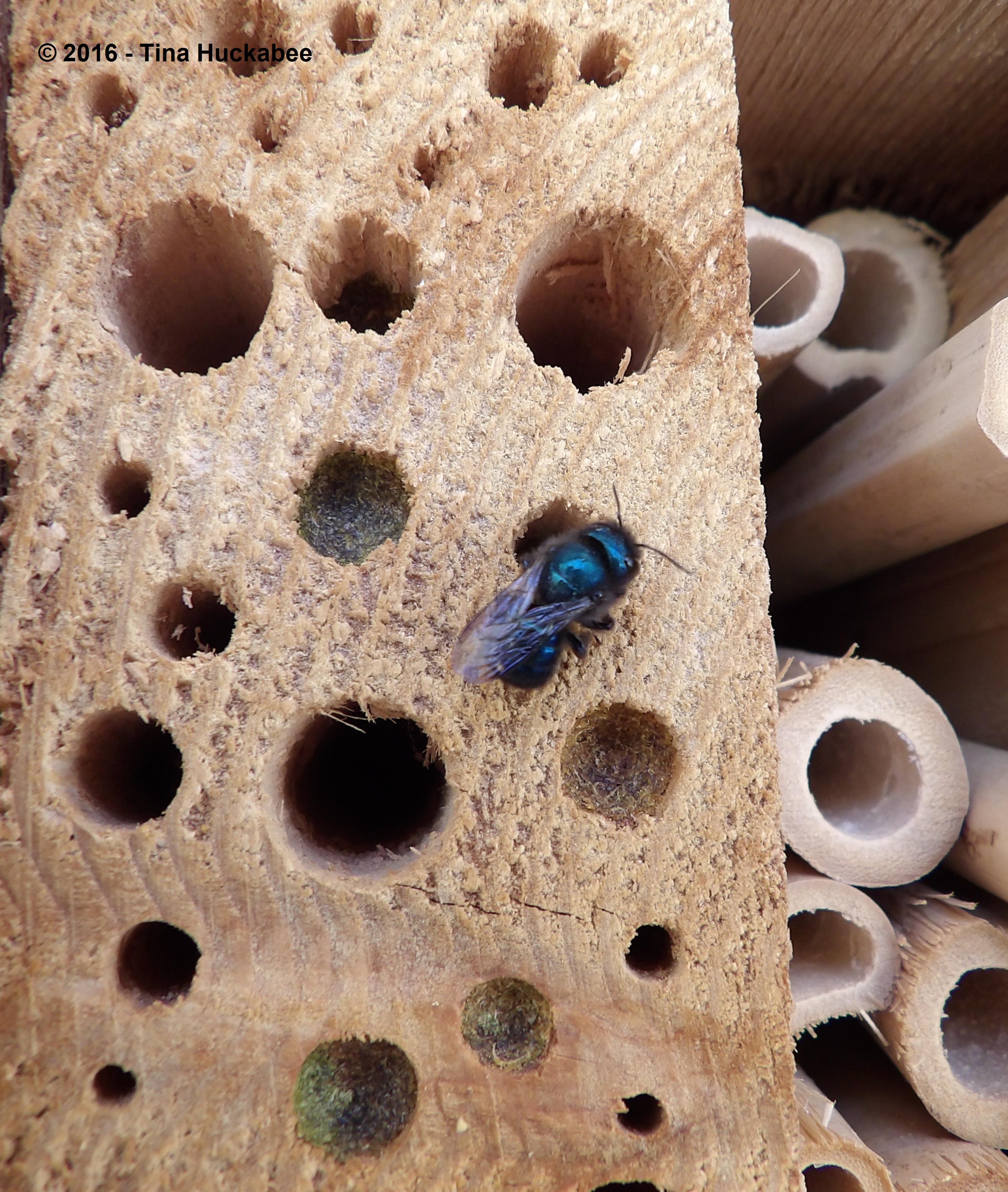
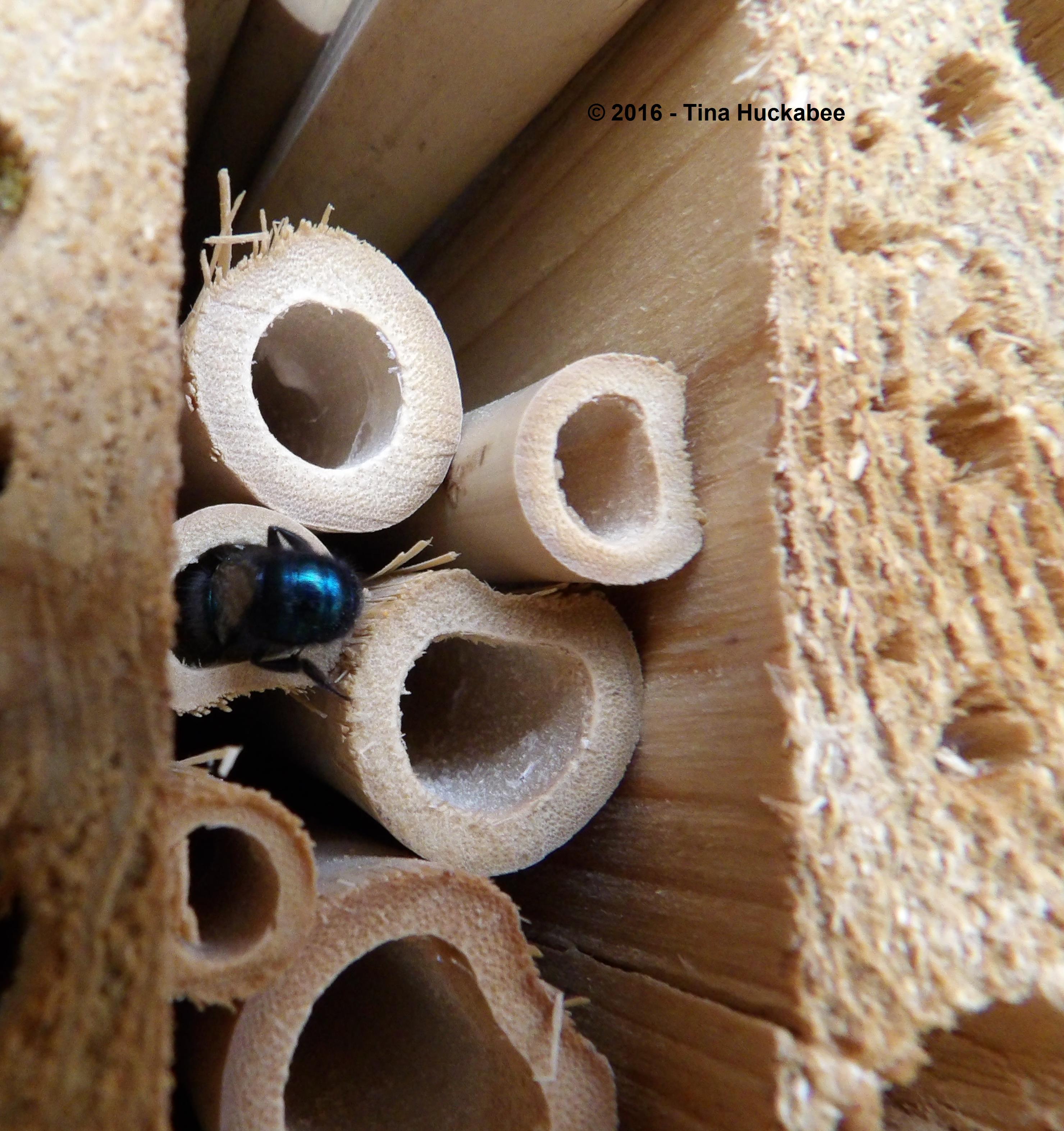
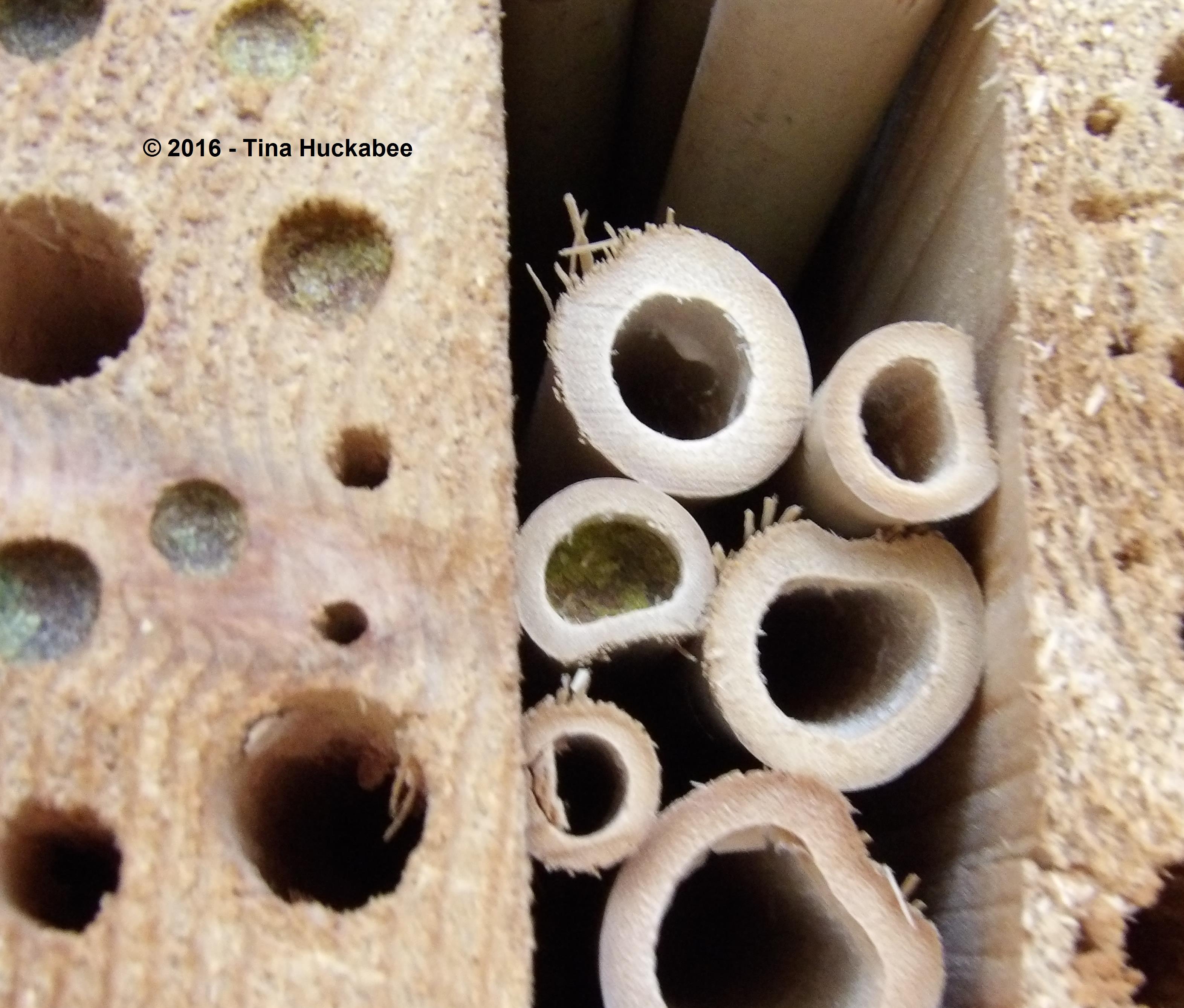
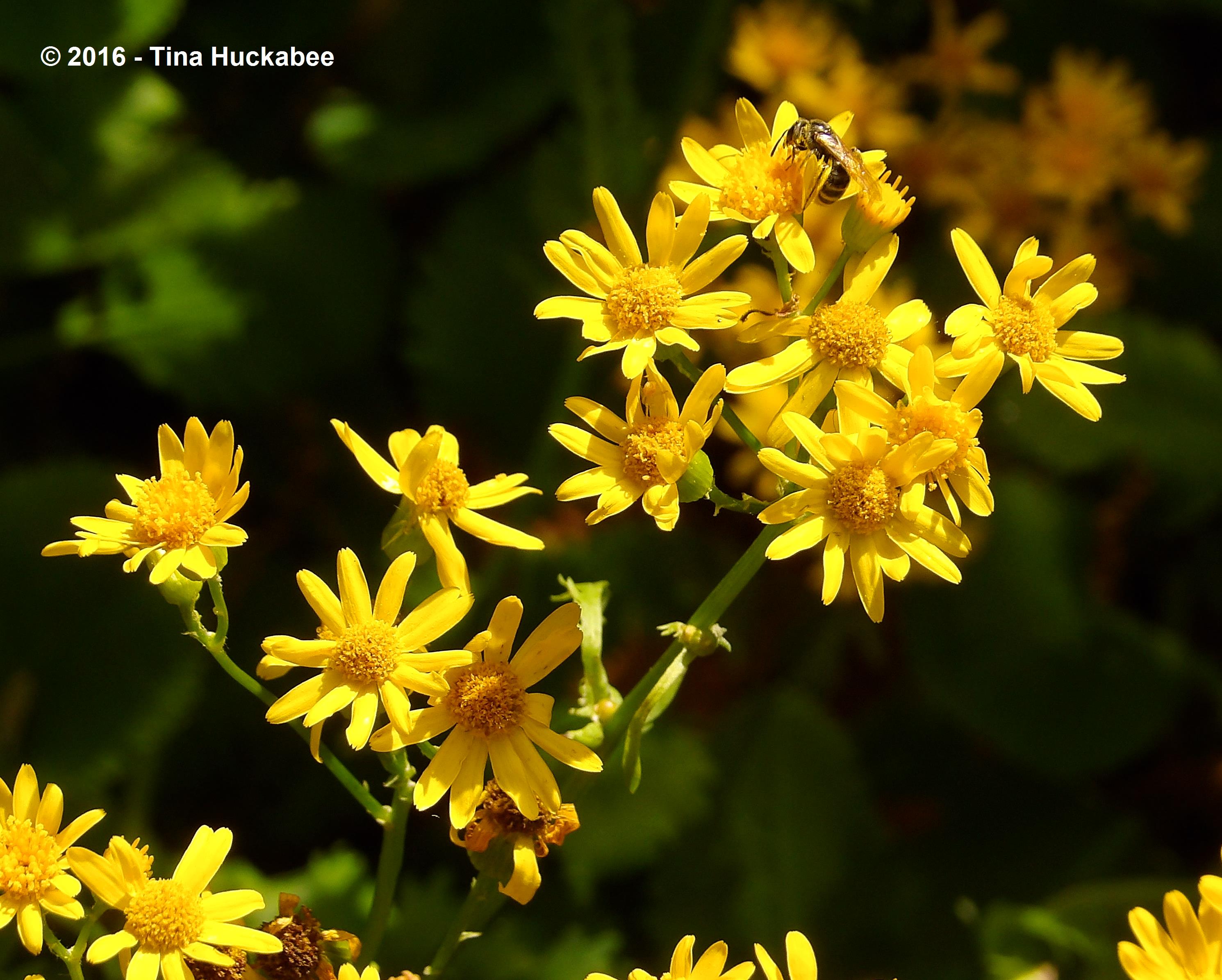
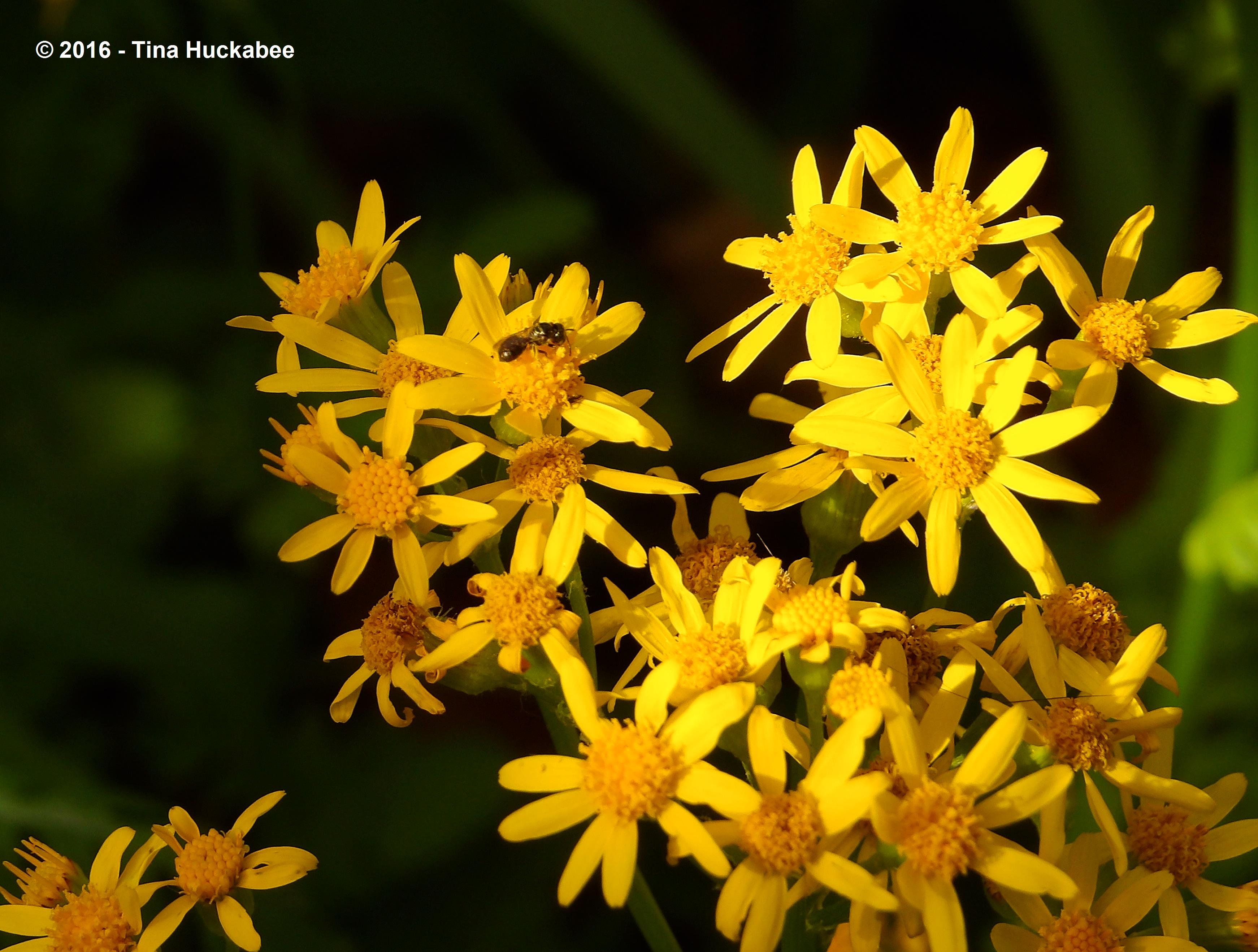
Native and honey bees worked flowers when it wasn’t raining, but I didn’t catch any photos of their activity this month. However, some native bees moved into the second native bee house that Bee Daddy built.

Clear photos of these two bees eluded, but both–and others– were intent on nesting.
I never figured what species one of belonged to, whose little face and antennae were constantly at an opening for a week or so. Several others, head first in the bee holes (presumably tending to their eggs/larvae), striped abdomens sticking out, are most likely some type of carpenter bee–but I won’t hazard a guess.
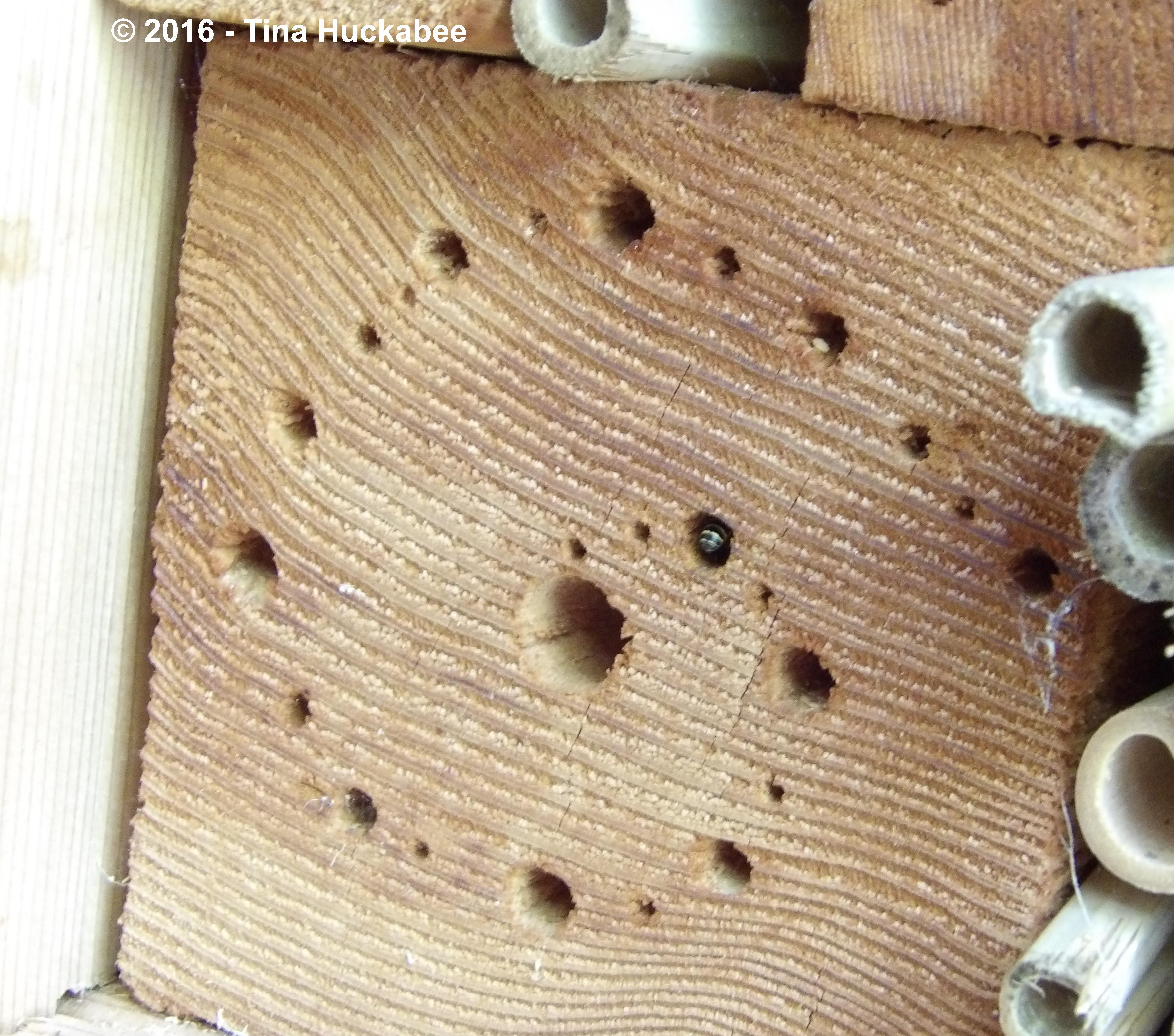
I’m just pleased they’re making use of the homes.
Not an insect, this spider has also moved into one of the bamboo pieces of the house.

It might be one of the many kinds of Bold Jumpers, Phidippus, spp. She peeks out often, but if I get too close for a look, she skedaddles back into the bamboo tube.
Finally, The Beast:

Eastern fox squirrel (Sciurus niger)
There’re more than one of these beasts in my garden (gardener shakes fist at squirrels), but this one charmed as I puttered one afternoon. Pesky and annoying, they’re also smart and adaptable. And funny.
An update about my Eastern Screech Owl family: for the last two evenings, just at sundown, I’ve seen all 5 juveniles and both parents. The family roosts during the day in a large Bur Oak tree, two neighbors away, but fly to my immediate neighbor’s Ash tree at sundown, then follow their parents as the nightly hunting, teaching, and learning begins. The next-door neighbor reported last week that two of the babies bathed in a bird bath outside her bedroom window one morning at about 6:15 am. Apparently, the two little owlets put on quite a show!
Did wildlife visit your garden this past month? Please post for June Wildlife Wednesday Share the rare or mundane, funny or fascinating, beneficial or harmful critters you encounter. When you comment on my post, please remember to leave a link to your Wildlife Wednesday post so readers can enjoy a variety of garden wildlife observations.














 My Gardener Says...