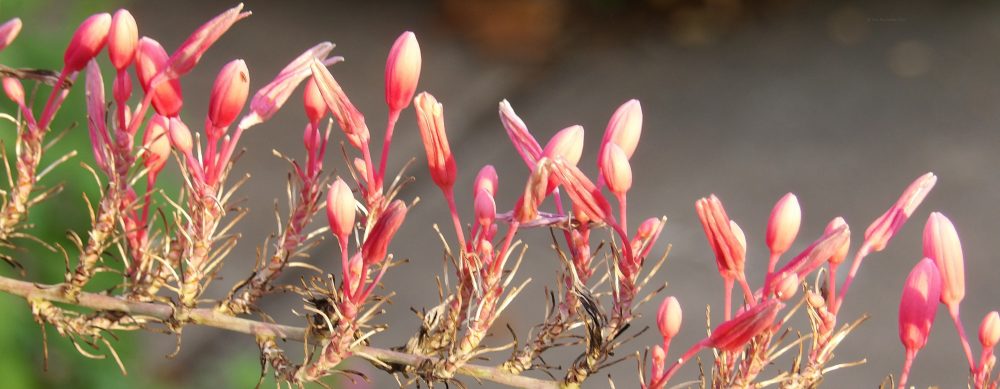
My July garden is humming and buzzing along. With regular rain, and hot–but not yet scorching–typical Texas temperatures, pollinators, birds, and other assorted critters are rejoicing in the bounty of blooms and seeds. The garden is doing what it’s supposed to do: feed wildlife.
Summer is also a good time to reflect (ahem, gnash teeth and fret) about mistakes in the garden. I excel at gnashing and fretting, it’s one of my best things: Why did I plant that there–what was I thinking?? How have l let that beloved, beautiful plant become such a garden bully? That being said, this summer I haven’t spent much time in the garden until recently. Six to eight weeks before our toasty summer moves aside for…less toasty late summer /early autumn, light pruning and dead heading chores a good idea, and as I go, I plan for changes to the garden. While I’m noting problems and tidying messes, I appreciate the garden, where it is and what’s in it, at this moment in time.
American Bumblebees, Bombus pensylvanicus, abound! They’re favoring the remaining American Basket Flowers, Centaurea americana, but also visit the Mexican Orchid tree blooms and other flowers in the Aster family.

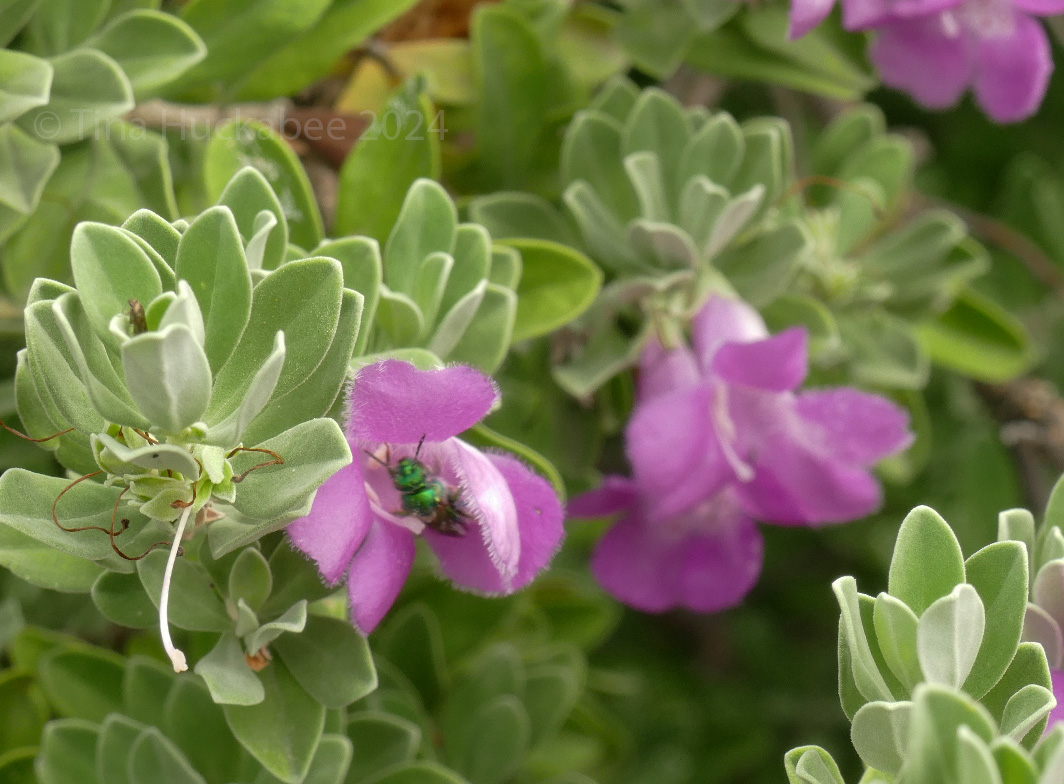
I caught this small, green metallic Sweat bee, Halictidae, as it rapidly zipped from flower to flower of the Cenizo shrub, Leucophyllum frutescens. Often called ‘Barometer Bush’ the lavender flowers appear when there is rain possibility. My shrub has bloomed fairly consistently this summer, to the delight of many winged things–and this gardener!
I was observing one of my favorite kinds of bees, the Horsefly-like Carpenter Bee, when I spied this curious character.
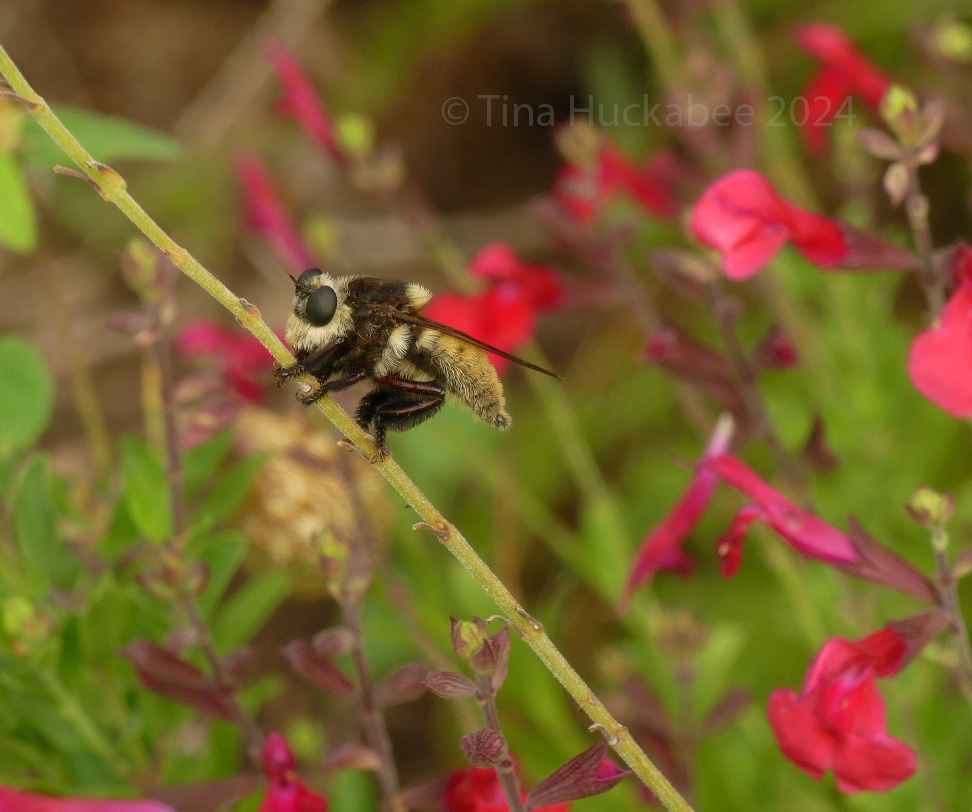
I knew it was a fly of some sort, rather than a bee, owing to its one pair of wings and its short antennae, and those impressive eyes. But what kind? I don’t think I’ve ever seen this insect before. Within a couple of clicks, I came across BugGuide’s page on the Southern Bee Killer, Mallophora fautrix. I love the way my bee killer clutches the stem, the rosy flowers of Autumn Sage, Salvia greggii, as colorful companions in the background. And that face, it’s adorable! The fuzzy legs look like they’re ready to spring into action–and they probably did, though I didn’t see it happen. According to information about bee killers, they perch on stems, awaiting a chance at hapless prey, ready to pounce on mostly honeybees and wasps. Well, my garden certainly has plenty of both kinds of meals for this dude. Good eating, bud!
The honeybee population in my garden is somewhat diminished as one of our hives, Woody, absconded earlier in June. If you’d like to read about absconding, this article is a good resource. At Woody’s previous hive check, all seemed well: there was capped and uncapped larvae, indicating a healthy, active queen, and some honey was being made. At the next hive check, shortly before we traveled in mid-June, there was no activity. Nothing. The bees were gone; they ate all the honey before they left, they didn’t say why they left, nor did they leave a forwarding address! I suspect they left because of some heavy rain, but only the bees know why they took off for different digs. I hope they landed in a safe place. Bees abscond sometimes (rain, or heat, or…whatever), but it’s a bummer for a beekeeper. Still, having one hive (which is thriving) to check on every two weeks makes hive checks quicker and I don’t mind that during the hot summer.
There are butterflies in my garden, but only this Large Orange Sulphur, Phoebis agarithe, deigned to stay relatively immobile for long enough to snap a pic. These yellows, and their smaller yellow cousins, are common in the late summer and autumn garden.

This coming week is a week of rain. Rain in July, what a concept! I’ve pruned some plants, now they’ll flush out with renewed glory. I’ve even transplanted some plants–a rarity in mid-summer–and those might just survive. The garden continues its production for summer and is preparing for a new season in just a few short months.






 My Gardener Says...