I first became acquainted with the Small Coastal Germander, Teucrium cubense, when one magically emerged underneath a Brazos blackberry vine in my garden about 10 years ago. Diminutive snowy blooms sparkled along the stems, the foliage suggesting a member of the mint family (it is a Lamiaceae). It took me a while to figure out who this stranger was, but I was delighted to learn that it’s native to Texas, other southern states, plus areas a bit westward. The germander grew and bloomed in that spot for a couple of years, then left my garden as mysteriously as it originally appeared.

Fast-forward a few years, add a devastating February freeze, followed by an old, severely damaged Arizona Ash tree removed, and the minty germander planted itself in my newly minted full-sun garden. This tidy little ground cover, evergreen in winter and decorated with delicate white pops throughout our long growing season, is not only cute, but a pollinator magnate as well.

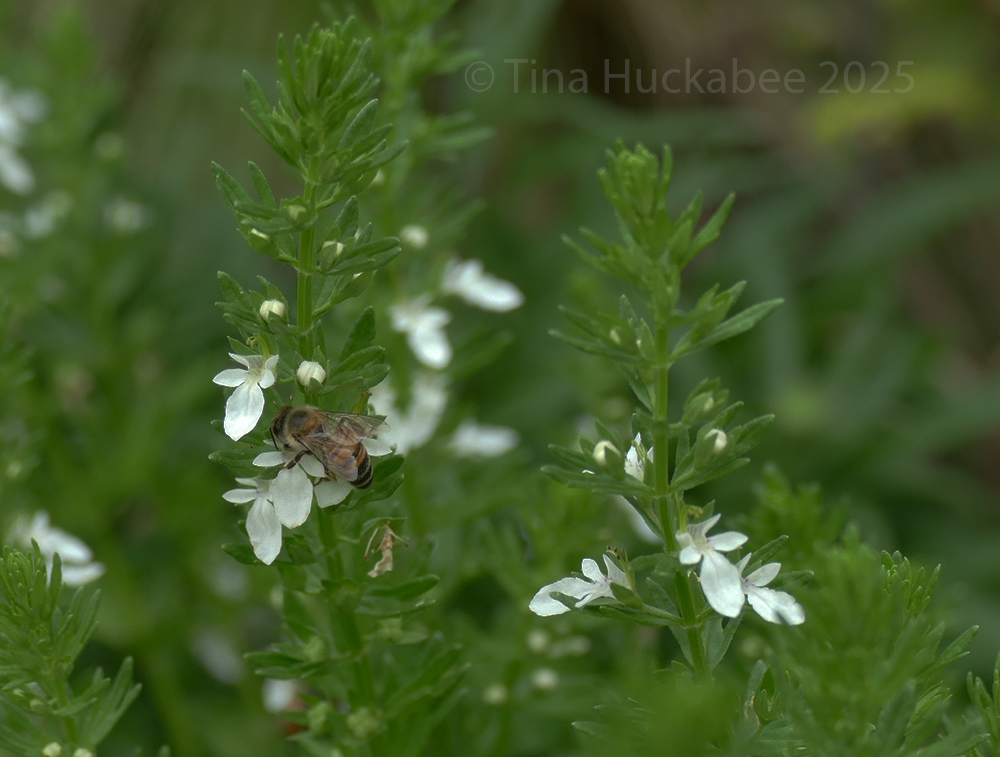
One afternoon a few weeks back, I sat in the garden and observed the activity surrounding this rewarding plant. This germander has quite a following! There were dozens of flitty, crawly things, all honing in on the bounty offered by the blooms. The air surrounding the germander teemed with life, gentle buzzing the song of insect labor. Honeybees were the largest of the pollinators, sometimes muscling the smaller insects off of a bloom, stingy for their share of the flowers’ goods.
There were at least two species of wasps attending the pollinator party. A number of Mexican Honey Wasps, Brachygastra mellifica, Euodynerus, Potter wasps, dressed up in their yellow-n-brown stripes, added their particular beauty to the germander as they sipped and flit.

This one concentrates on its meal, wings closed.

A different wasp, Pitted Mason Wasps, Euodynerus foraminatus, also fed from the germander. Smaller and less stripey than the honey wasp, they made their presence known, gracefully moving from stem to stem, bloom to bloom.

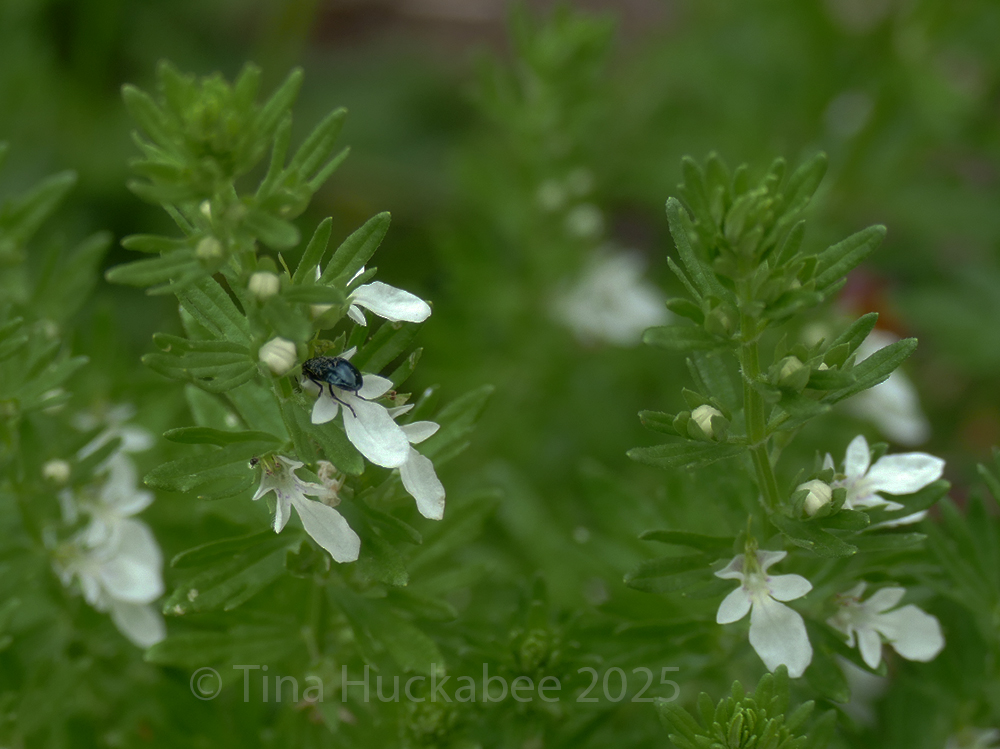
Beetles are also in the pollination business, especially so with this germander. In looking through various sites and gobs of beetle photos, I’m still unsure what beetle this is, but several of its kind worked the blooms. Their shiny blue-black coloring contrasts with the pure white flowers.
Another kind of beetle, brown and nondescript and much smaller, is unfamiliar to me, but all-in with these blooms. This bit of brown that isn’t in a clear photo, worked blooms along with plenty of its buddies, all proboscis-focused on the flowers.
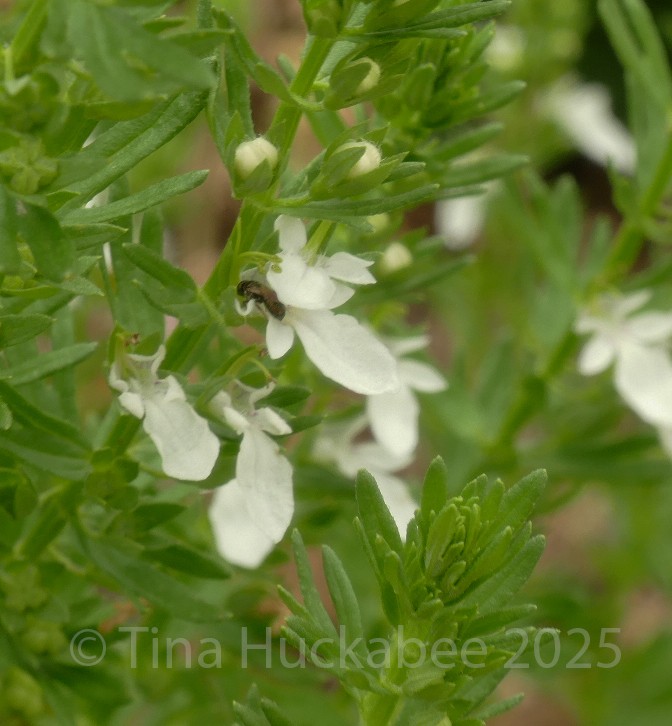
I didn’t manage any good captures of native bees who also liked the germander, but saw plenty tiny Lasioglossum, or Sweat bees flying, landing, and pollinating.
Coastal Germander holds its own in the hot-colored, full-sun garden, its cool white flowers and rich green foliage a balm in the mid-spring flower-power show. It visually pleases humans and softens the louder colors of the garden.

Coastal Germander’s most important role is as sustenance for many insects, the true calling of plants and their reason for existing. Plants and insects evolved together and are partners in the diverse quality of life for all ecosystems.