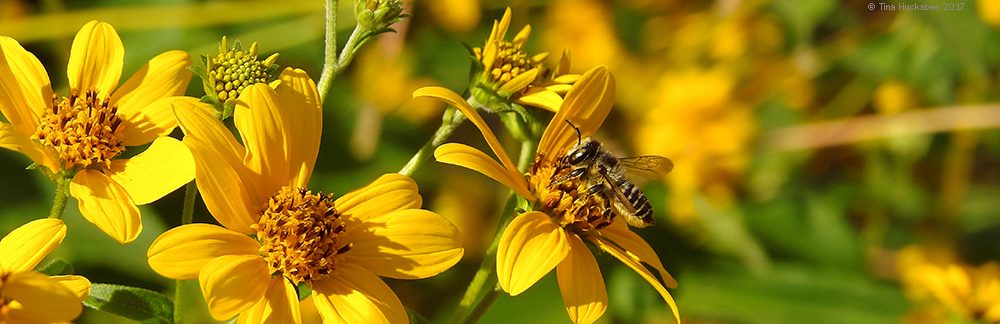
While it still feels like summer (101F on Sunday!), autumn is here. The garden is lush with blooms, marking the second spring that Central Texas enjoys, the welcome blooming bonanza which is the payoff for our long, hot summers. It’s also very dry here; there’s been little rain since sometime in July. I don’t water the garden all that often, but I’m doing so this week.
The pollinators don’t mind either the heat or the drought as long as pollen and nectar are in good supply. I’m witnessing a huge variety of pollinators, all zipping (some crawling!) from bloom to bloom, filling the garden air with whiffs of wings and buzzes galore.
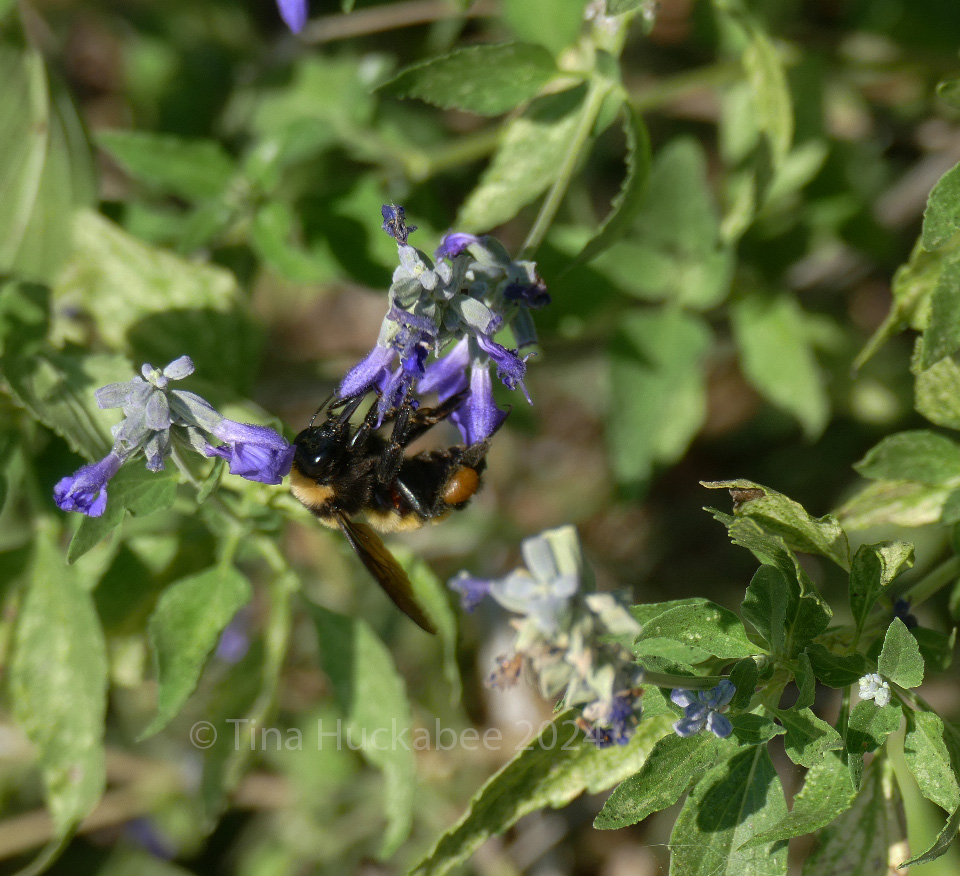
Plenty of American Bumblebees are gathering up pollen for overwintering nests. This one works the rich blue flowers of Henry Duelberg Sage, Salvia farinacea, ‘Henry Duelberg’.

Take a look at her pollen pantaloons! (Correctly known as corbiculae.)
The big showy butterflies are also active. This Giant Swallowtail, Papilio cresphontes nectars on luscious flowers of a Mexican Orchid tree, Bauhinia mexicana, the expansive, graceful wings carrying the insect from flower to flower.

Clusters of diminutive white blooms on Evergreen Sumac, Rhus virens, hosts scads of beetles, native bees, skippers, bigger butterflies, and honeybees.

This sumac is now two years old, just over 5 feet tall, and producing its first set of blooms. I’m loving it, as are the pollinators.
I’m not absolutely sure what this handsome critter is, but my best guess is that it’s a Blue-winged Wasp, Scolia dubia. Autumn flowering Frostweed, Verbesina virginica, lures the most interesting and varied pollinators; everyone seems to love these snowy blooms. Many of the pollinators who make their pilgrimage to frostweed in fall are nowhere in the garden at other times of the year. There’s always something that I’ve never seen before.
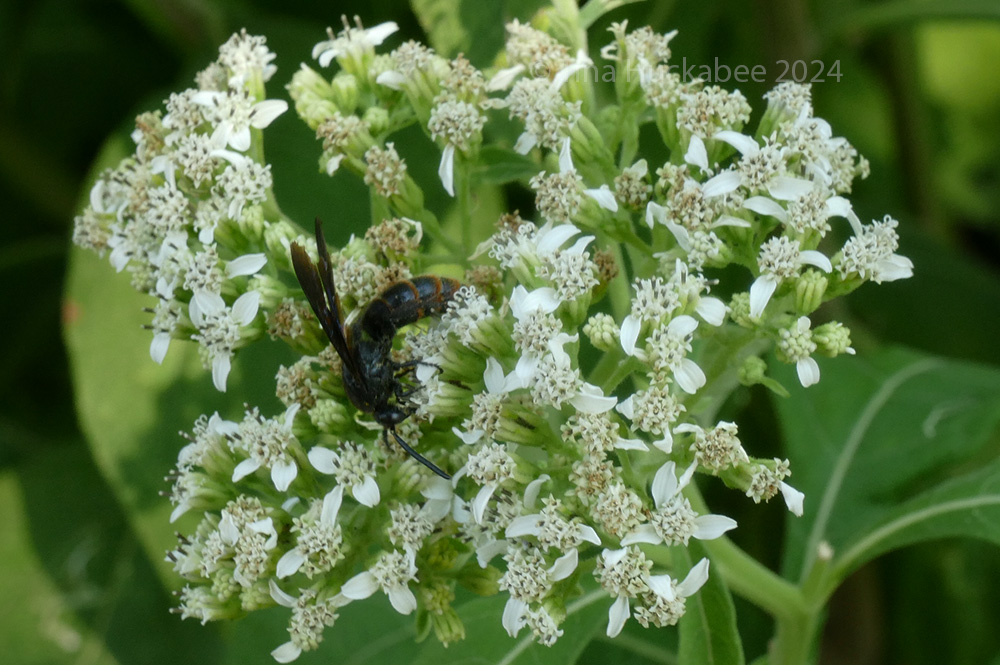
It’s nice when pollinators share mealtime!

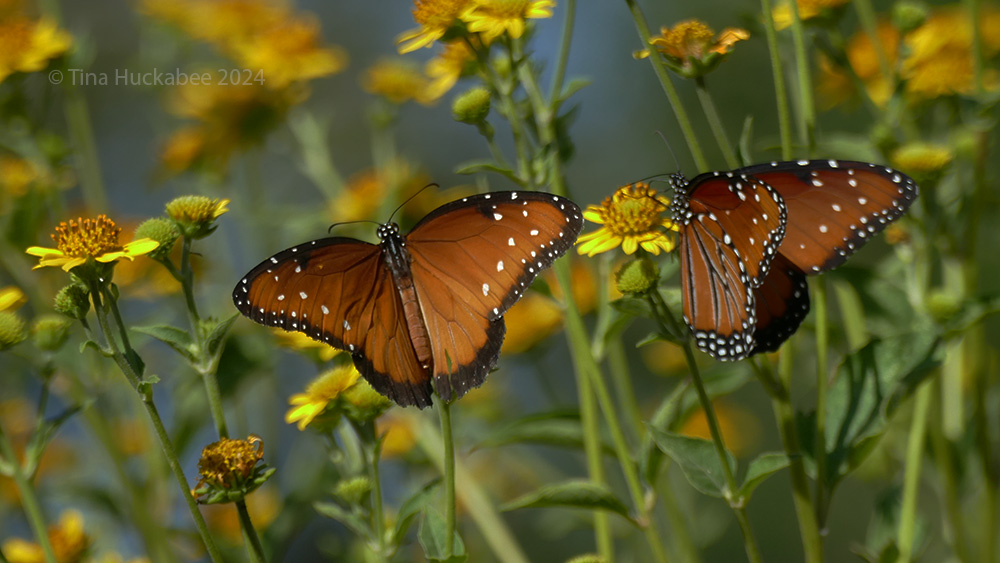
Few Monarch butterflies have come through my garden as they make their way to Mexico and those that have visited were unwilling to participate in photo sessions, wings swooshing away from me in annoyance. Their cousins, Queen butterflies, Danaus gilippus, are common and active and don’t mind a photo–as long as their sipping of the sweet stuff isn’t interrupted. This two-fer spent time on the Plateau goldeneye, Viguiera dentata.
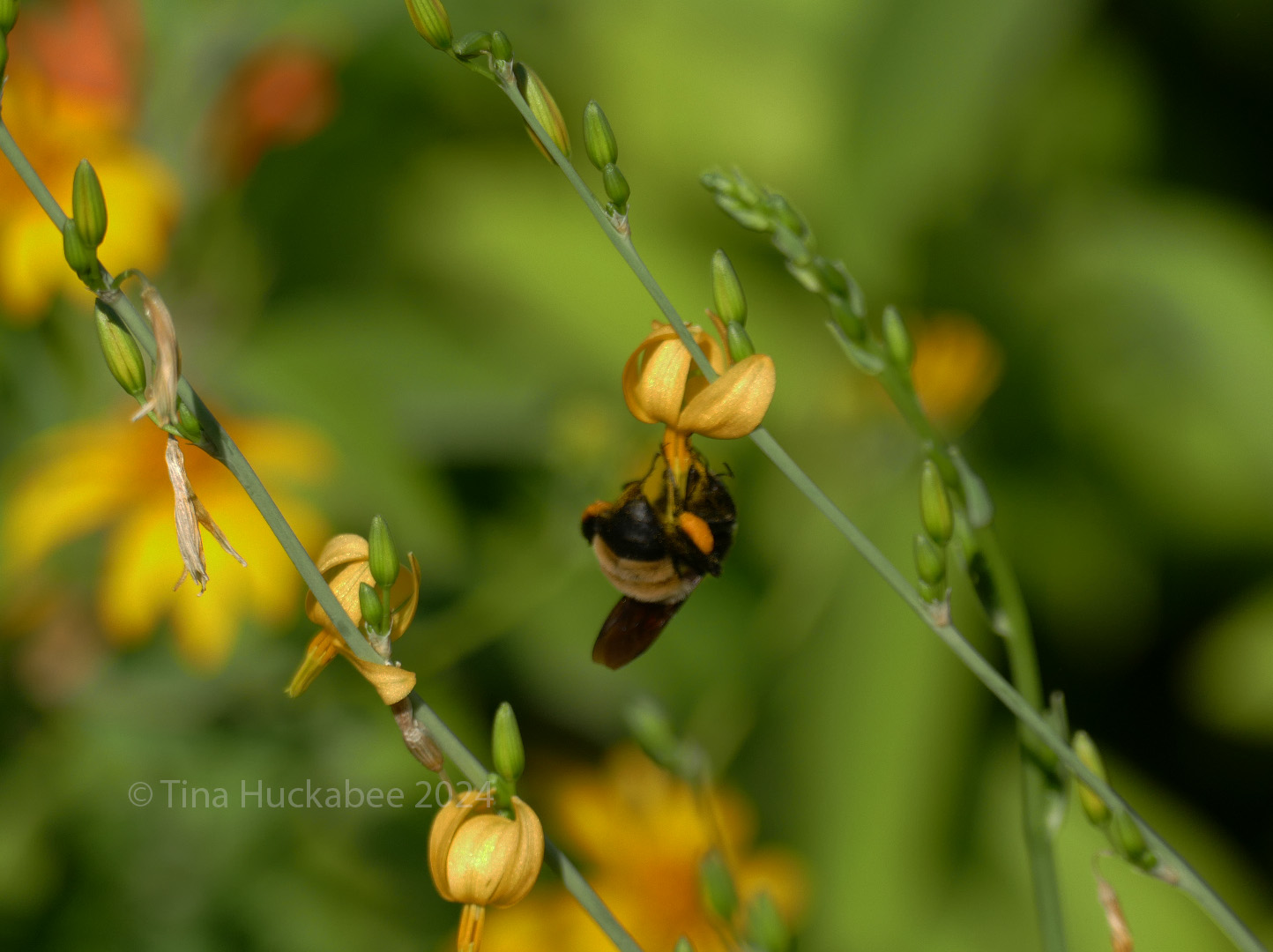
Texas Craglily, Echeandia texensis, attracts bees to its yellow-orange lilies. In particular, bumblebees excel at the hanging-upside-down trick.
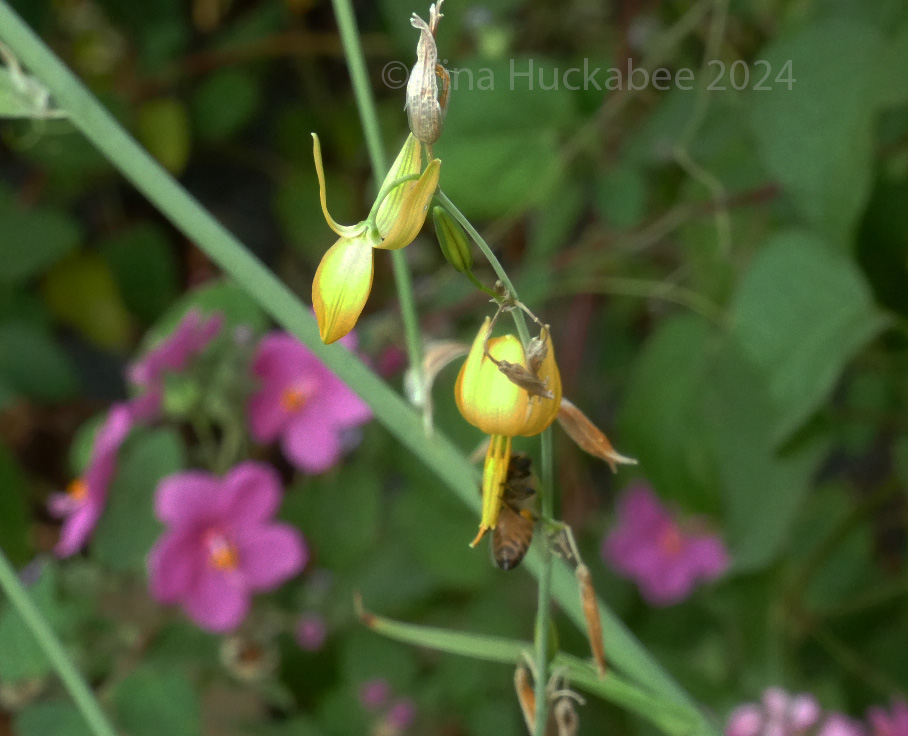
Honeybees also grab onto the the stamens of craglilies for their share of pollen and nectar.
A significant cool front is headed our way, tomorrow and the rest of the week thankfully cooler. No rain is in the foreseeable future. I’m glad my garden is drought-tolerant, packed with native and well-adapted plants, and I’m pleased that it is a respite for wildlife. All wildlife–pollinators included–and this gardener, appreciate the bounty and beauty that these plants offer, especially in stressful times.
 My Gardener Says...