Wannabee

Last week a cold front barreled into Austin, dropping temperatures 56 degrees, from 88F to 32F within a 24 hour span. As the wind picked up in late afternoon and I was covering a few of my container plants, I ambled to our lone beehive, Bo-Peep, noticing that the ladies were heading inside, having finished foraging on that warm day, soon to be cold night. I don’t know if they knew that it would be freezing for the next few days, but it would make some sense that they were snuggling in for the duration of the chill.

On the entry board of the hive, this stunning moth was also ambling about; the bees ignored the moth, the moth ignored the bees.

I’ve seen this species of moth before, mostly in flight, but it was always too quick for me to identify. A Grapevine Epimenis, Psychomorpha epimenis, this moth species uses grape plants as its host plant, meaning that it lays eggs on the plants, the larvae eat the plant as they mature to adulthood. In one local source that I found, the author mentions that the adults typically fly in February, laying their eggs on the still dormant vine. My Mustang Grape vine, Vitis mustangensis, has grown along a trellis for a number of years and is courtesy of a passing bird, raccoon–or something. I’ve never noticed caterpillars on the vine, but will keep a keen eye out for them in the next couple of months.

This moth sports red spots on its wings, indicating that it’s a male; females’ spots are orange. I was able to catch a glimpse of the underside of the wing, too. I like the mottled grey/black pattern, black dots on charcoal grey background. What a handsome fella!

During my winter pruning frenzy, I recently pulled some of the grape vine, which I’m now regretting. Though there’s still plenty of vine left and probably eggs on the vine, I wish I’d been aware that the vine is a host plant. Next year, I’ll leave the vine alone until later in spring, giving the larvae time to hatch, eat, grow, and become lovely little moths to grace my garden.

As it became colder, I wondered if the moth found refuge inside the hive, or if the bees would have tolerated a cold weather interloper. Maybe they became sisters and brother during inclement weather. Or did the moth fly off, finding warmth and protection under leaf or branch elsewhere in the garden?
Not Only Butterflies

Along with other contemporary perils, a remarkable habitat in South Texas is threatened by the irrational and incorrect belief that America is being invaded.  It’s not only that a uniquely diverse environment will be demolished, but that ecotourism, which is a huge economic driver of this region, will be seriously impacted.  The National Butterfly Center, as well as Native American gravesites, a historic church, the La Lomita Chapel, and a state park are in the direct pathway of the proposed–and funded–border wall along the Rio Grand River between the United States and Mexico. Sure, cute ‘lil butterflies and birds will lose their habitat and die, and yeah, the endangered Ocelot and Jaguarundi will have difficulty finding their former water source and die, but also private property will be seized and land benefitting many will be fragmented and obliterated for the foreseeable future.

Check out this sweet video of  a Rio Grande River tour with an accompanying explanation of this beautiful and rare area:


Our section of heaven on the banks of the Rio Grande River is on the line, threatened by the Border Wall. This once thriving, recreational area has become the center of a battle for a fully militarized zone between Texas and Mexico.  Please enjoy this tranquil and beautiful sunset cruise, as filmed just downriver from the National Butterfly Center, from aboard Captain Johnny’s Riverside Dreamer in Mission, Texas.

To join us in fighting the border wall, which will place the region’s only source of fresh water behind 30 feet of concrete and steel, please go to our GoFundMe page where you can make a donation to our cause. Here is the link: https://www.gofundme.com/protect-the-national-butterfly-cen…

Help us preserve the Lower Rio Grande Wildlife Conservation Corridor and the incredibly rich biodiversity of threatened plants and animals that live here!

Did you know nearly 150 species of North American butterflies can be seen only in the Lower Rio Grande Valley (LRGV) of Texas, or by traveling to Mexico?In fact, more than 300 species of butterflies may be found in the LRGV, and more than 200 species have been seen at the National Butterfly Center, including a number of rarities and U.S. Records! Incredibly, almost 40% of the 700+ butterflies that can be found in the United States can be seen in this three-county area at the southernmost tip of Texas, where the subtropical climate makes it possible to enjoy the outdoors year ’round.

Even if you choose not to donate to the GoFundMe campaign, click and read, as it explains well the travesty of this border wall nonsense.  If nothing else, the list of federal laws being waived for this horror is illuminating– and horrifying.

For more information about how the wall will affect the the environment, the residents, and the immigrants, please read these articles from San Antonio Express-News  , The Washington Post,  another from The Washington Post, penned by the videographer of the above video and an employee of The National Butterfly Center, and The Guardian.

The Purpling

Days are noticeably shorter now in late August.  Darkness greets my morning alarm and birds are quiet until well after I’m up and about.  Nightfall appears earlier, much more than a mere few weeks ago.  Autumn is palpable, though certainly not with cooler temperatures, at least not here in Central Texas.  Our daily (today marked number 43) century-plus numbers are still in play, but seasonal change is afoot.

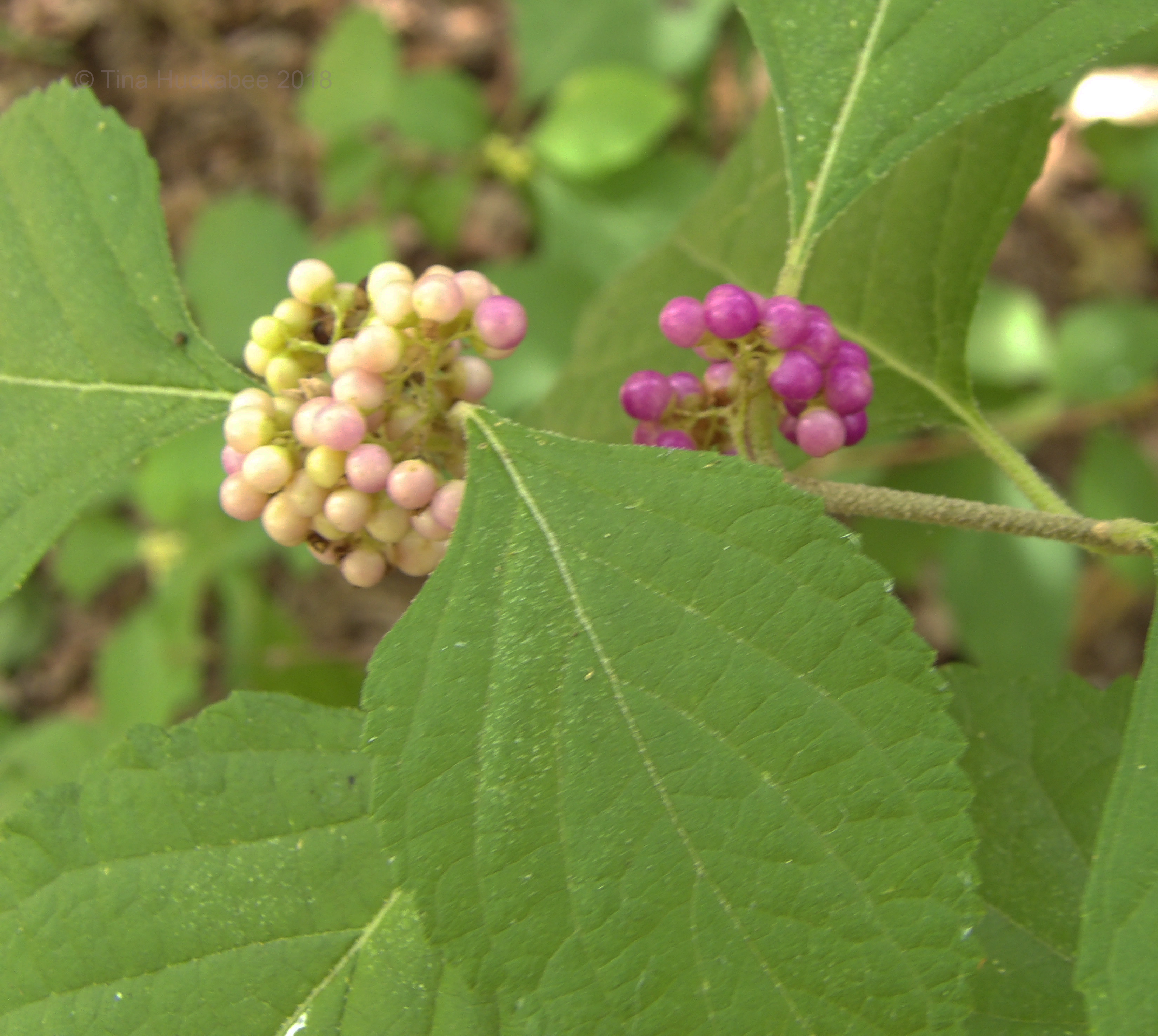
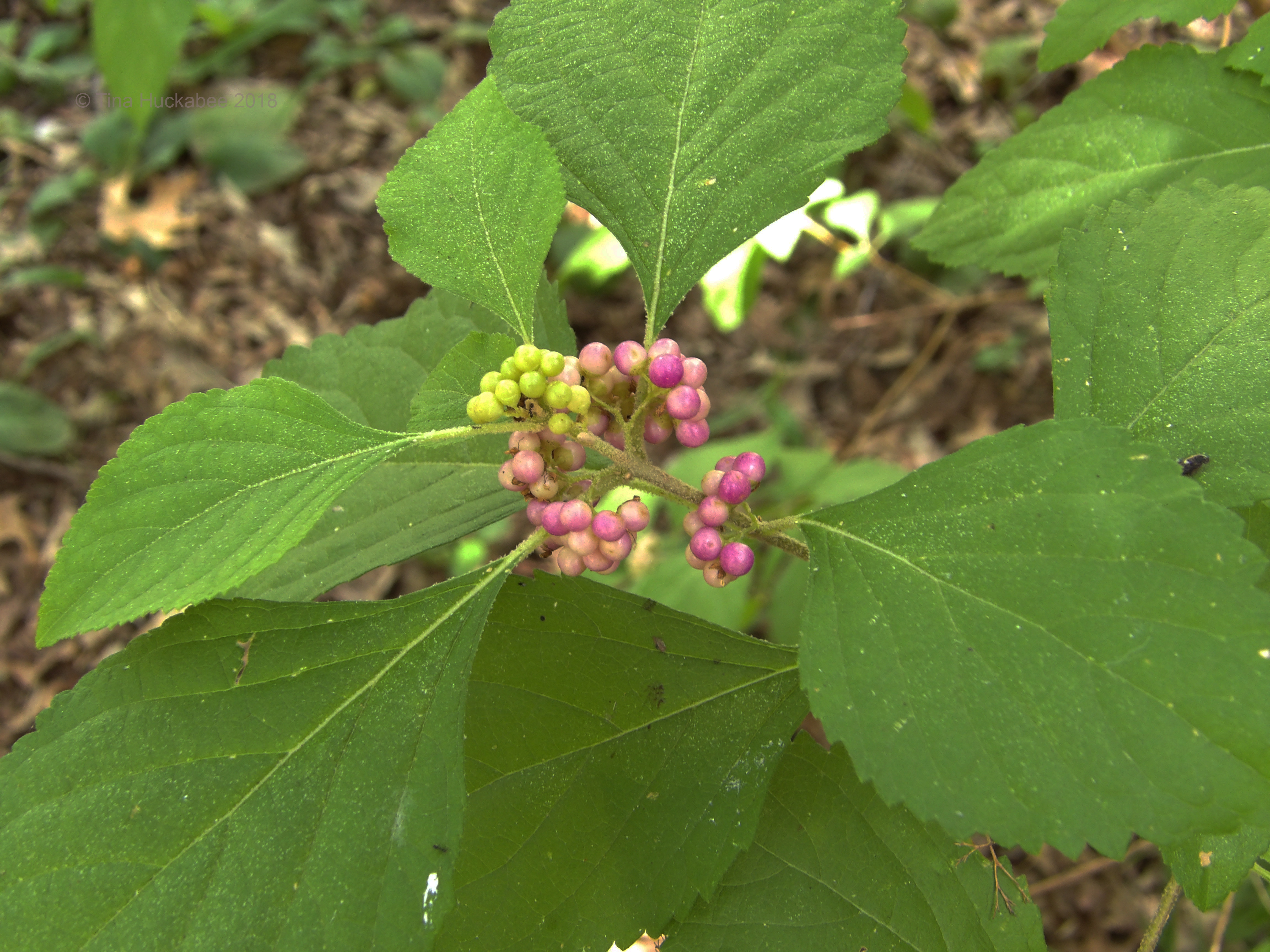
This cluster of beauty berries showcases the transformation from green to purple.  The bird poop on the leaves is extra decoration.

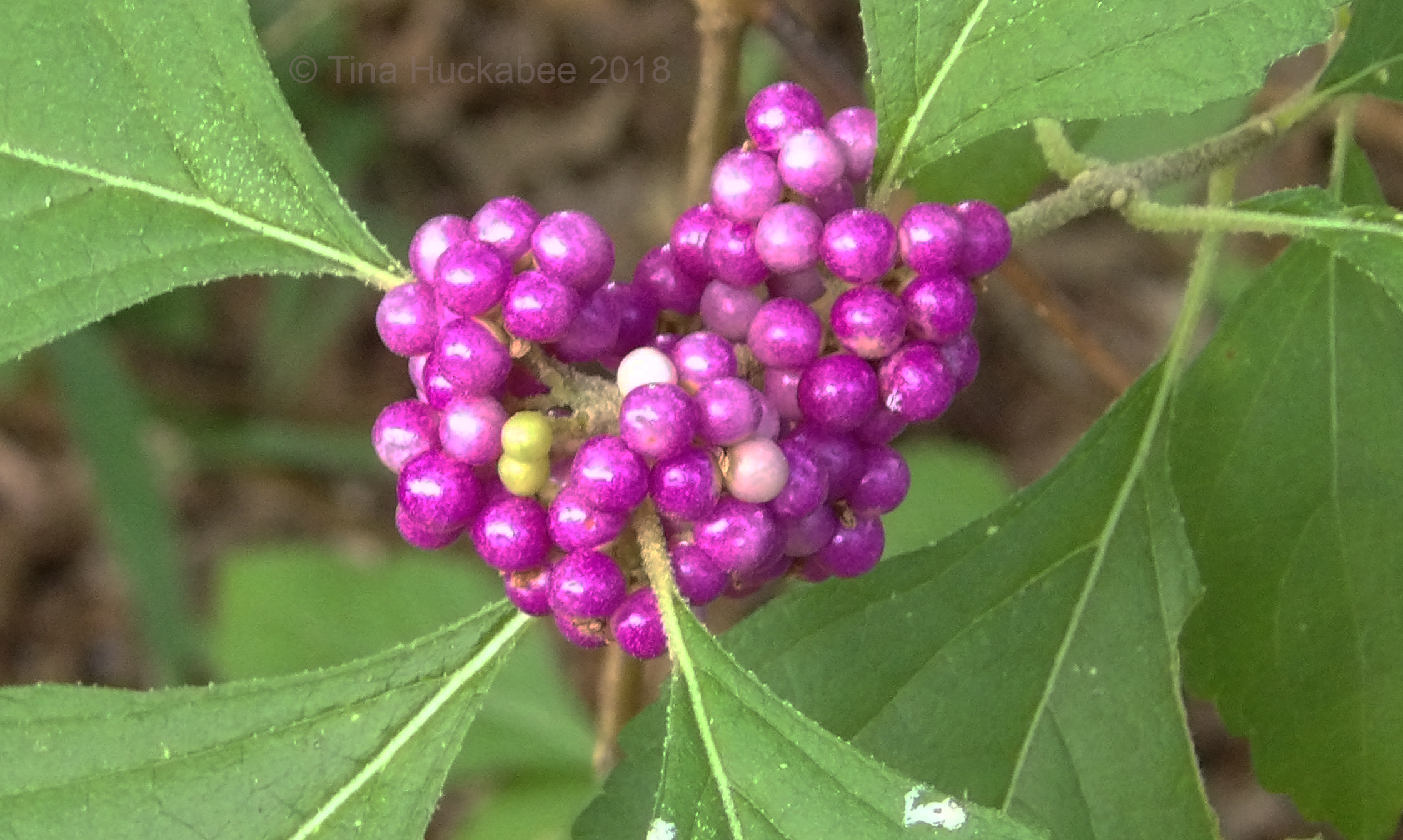
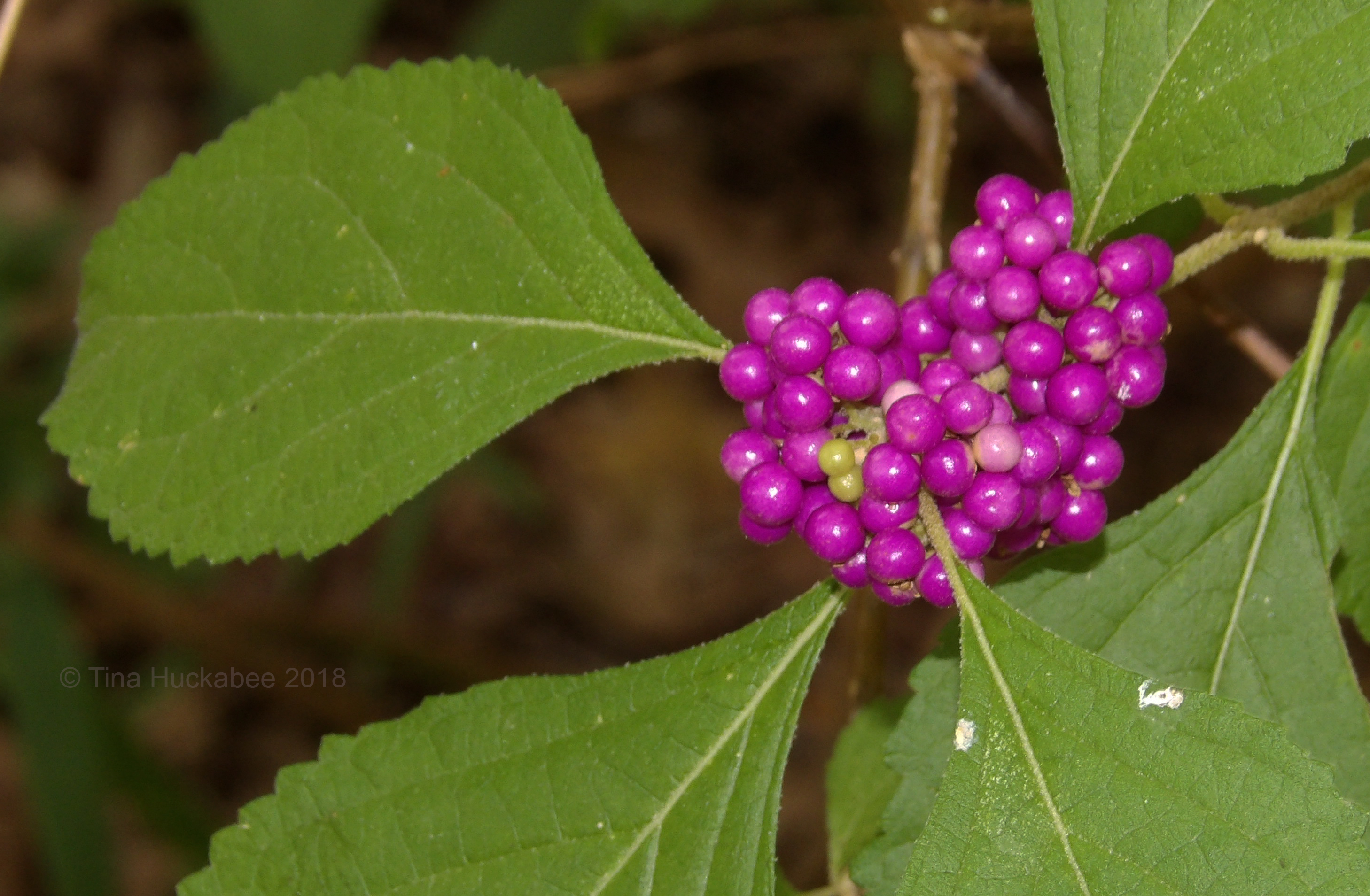
In the last couple of weeks, the American beautyberry, Callicarpa americana, has slipped out of its summer wardrobe and donned its hooray for autumn swag.  Eye-candy for the gardener and nutritious fruits for birds, the green, clustered drupes, grown since June from the remains of dainty pink blooms, have morphed to brilliant, metallic purple berries.

Green fruits,

…to purple.

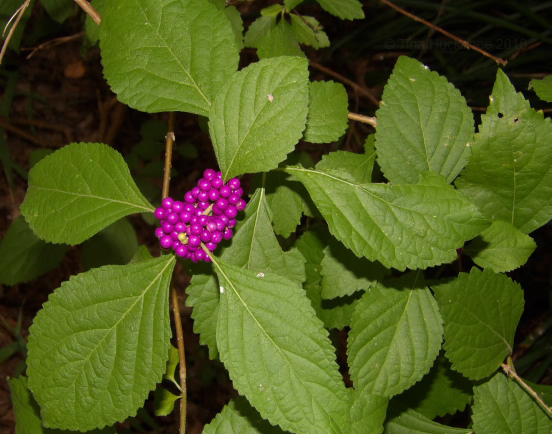
This particular shrub in my back garden is about 3 years old and finally exhibiting its graceful arching form.

Berries are cream-to-green, but purple-up over 7-10 days .  Triggered by the maturity of the drupe (and maybe light?), it’s a seasonal change I look forward to each hot August.

It gives me hope for the autumn to come.

Berries gather like bunches of party balloons along the branches of the shrub, the purple overwhelming the green, ready to pop in some lucky bird’s beak.


This beautyberry will grow larger, eventually filling the area of this small garden.


This beautyberry is the same age as the one above, but I transplanted it to a different spot in my front garden exactly one year ago.

Beautyberry is a good shade plant, though this one receives more sun than the back garden beautyberry. I’ve noticed that it’s grown more quickly, but has also required more water.  In fact, the slight droop of the leaves in this photo indicates a thirsty plant.  Since June, I’ve watered this shrub once per week, significantly more than the back garden beautyberry, which grows in shade.

In my garden, Blue Jays and Mockingbirds are the main consumers of these berries.  Some years, the beautyberry greedy birds descend and devour the berries just as they turn color; other years, the berries remain on the shrub well into winter, the birds obviously getting sustenance somewhere else.

And that’s fine with me.

I prefer those years when the birds let me enjoy the beauty of the berries, at least for a time.