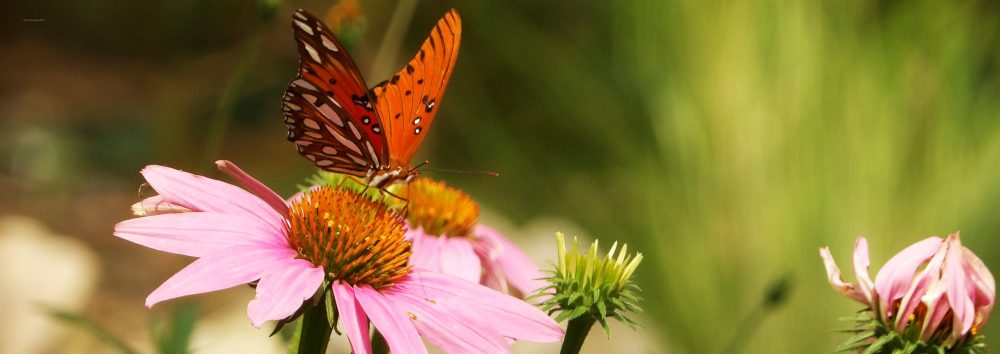
Days are noticeably shorter now in late August. Darkness greets my morning alarm and birds are quiet until well after I’m up and about. Nightfall appears earlier, much more than a mere few weeks ago. Autumn is palpable, though certainly not with cooler temperatures, at least not here in Central Texas. Our daily (today marked number 43) century-plus numbers are still in play, but seasonal change is afoot.
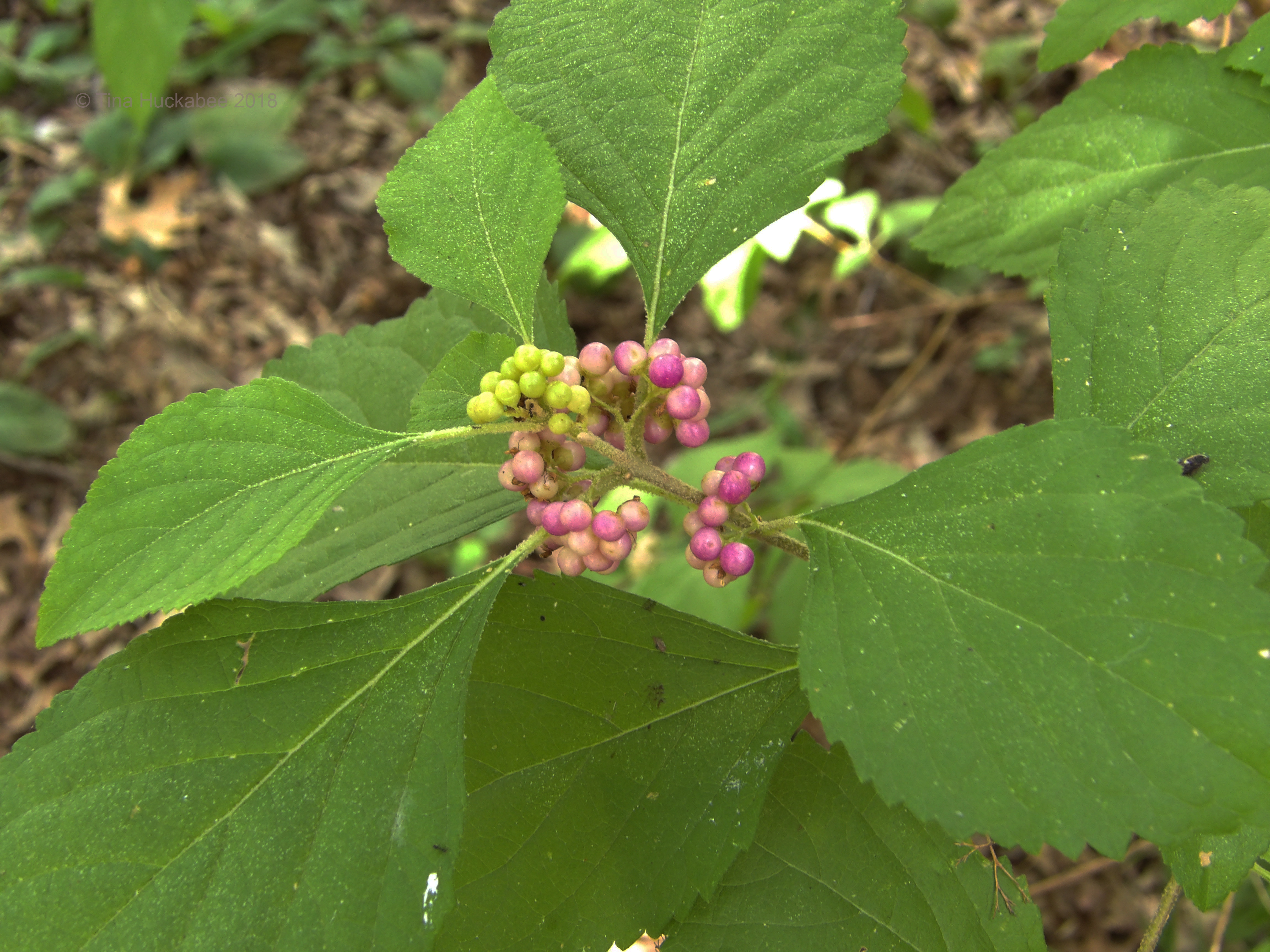
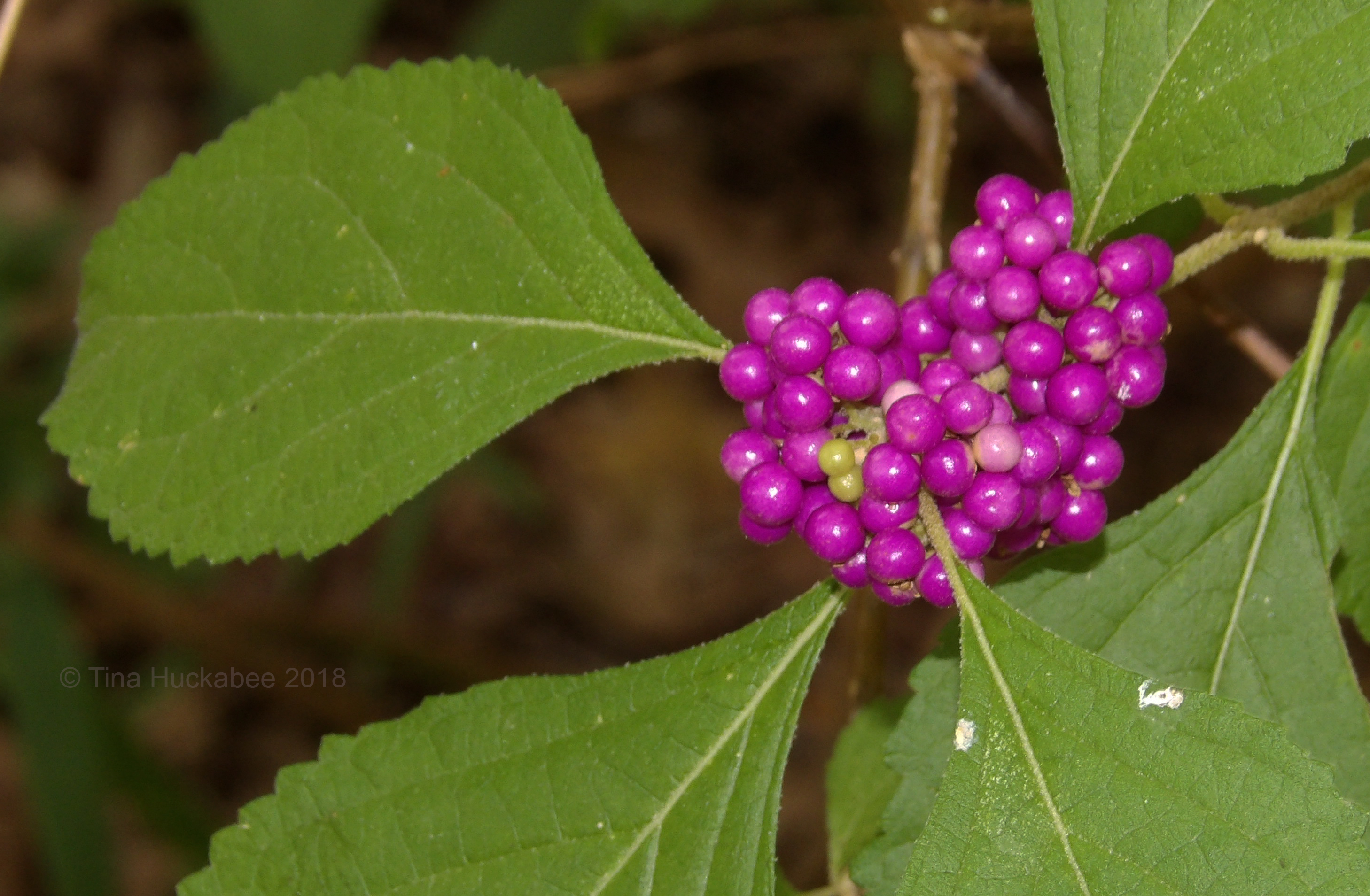
This cluster of beauty berries showcases the transformation from green to purple. The bird poop on the leaves is extra decoration.
In the last couple of weeks, the American beautyberry, Callicarpa americana, has slipped out of its summer wardrobe and donned its hooray for autumn swag. Eye-candy for the gardener and nutritious fruits for birds, the green, clustered drupes, grown since June from the remains of dainty pink blooms, have morphed to brilliant, metallic purple berries.

Green fruits,

…to purple.
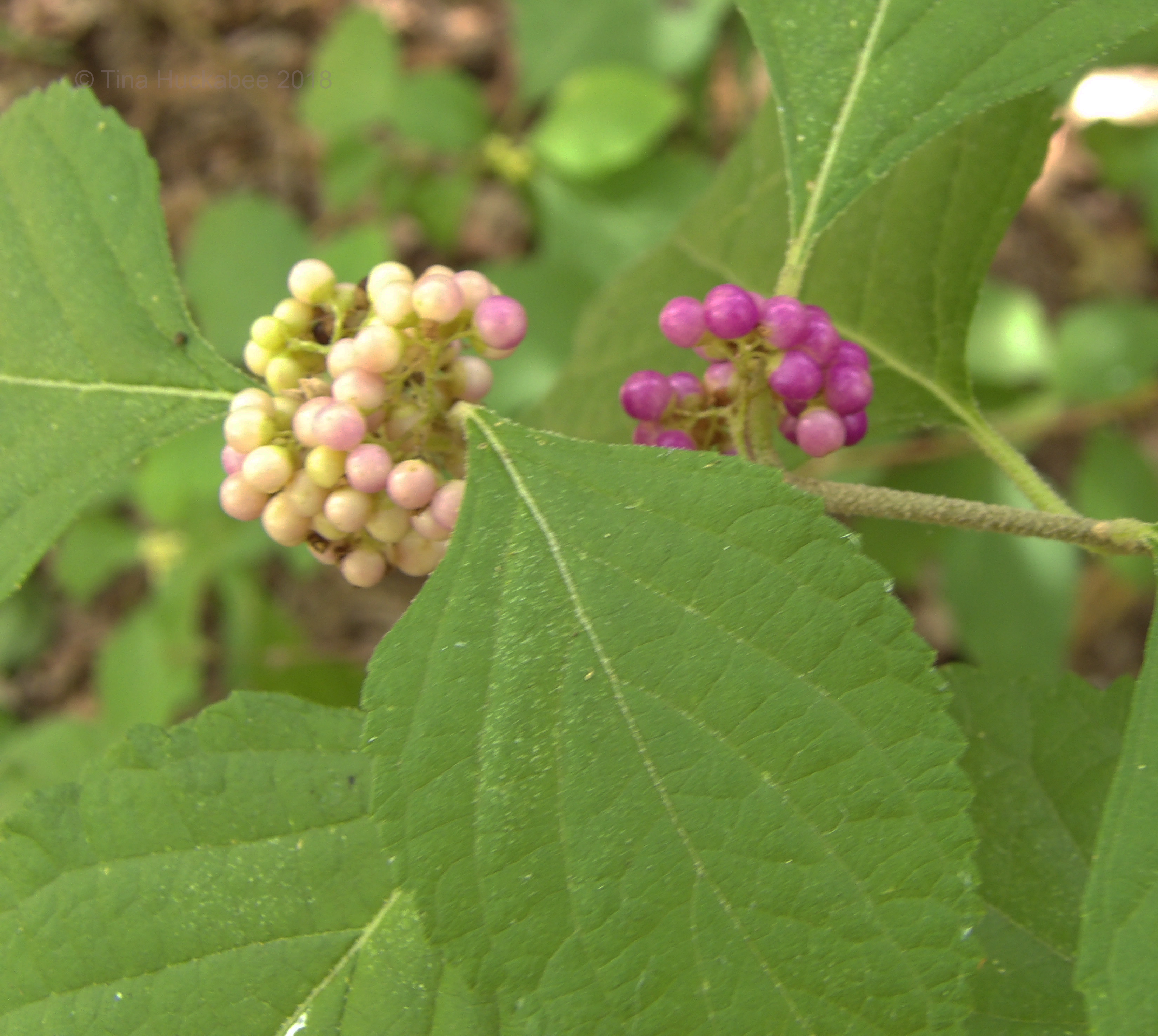
This particular shrub in my back garden is about 3 years old and finally exhibiting its graceful arching form.

Berries are cream-to-green, but purple-up over 7-10 days . Triggered by the maturity of the drupe (and maybe light?), it’s a seasonal change I look forward to each hot August.
It gives me hope for the autumn to come.
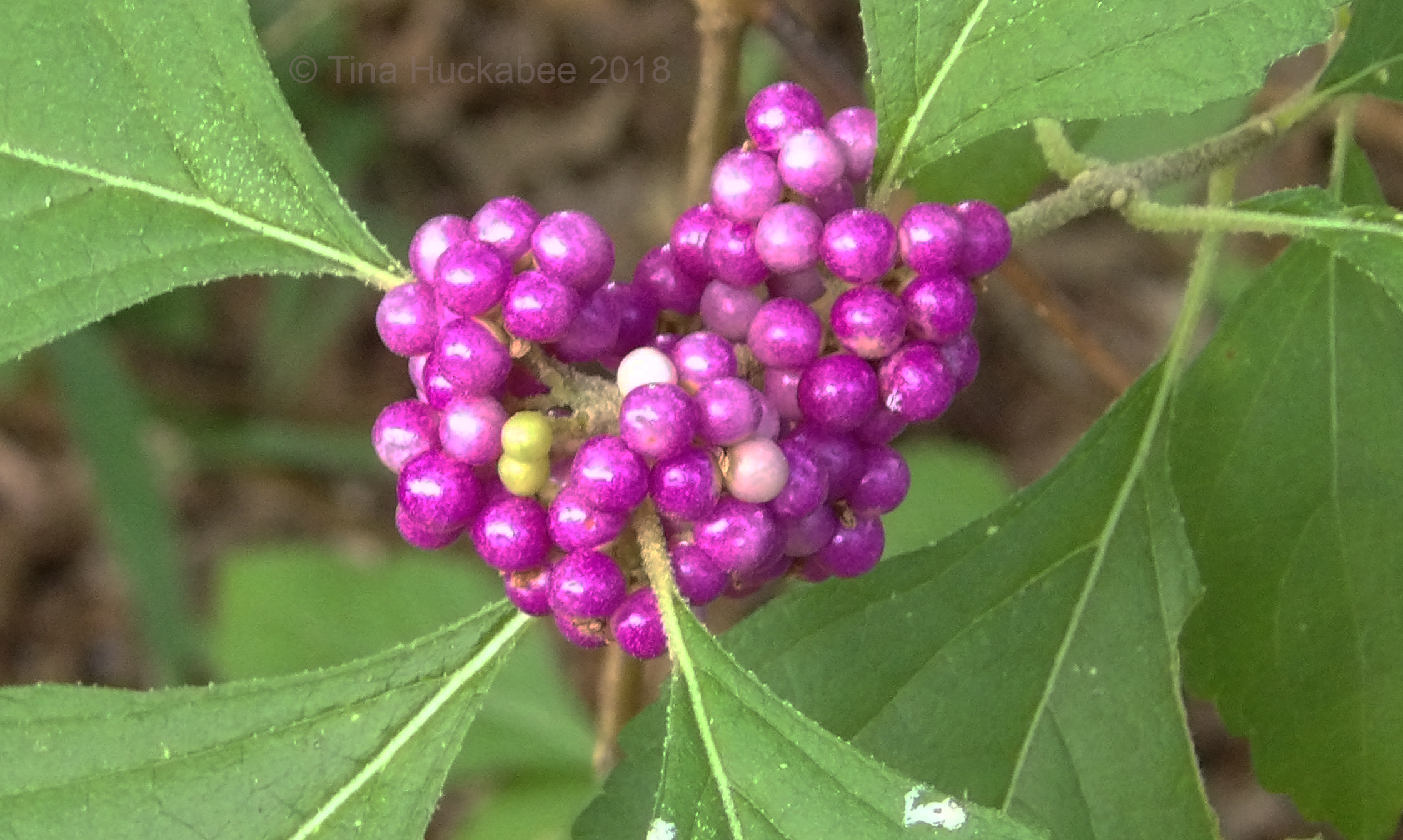
Berries gather like bunches of party balloons along the branches of the shrub, the purple overwhelming the green, ready to pop in some lucky bird’s beak.

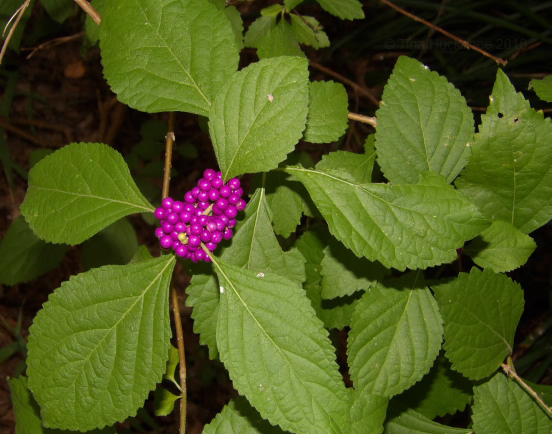
This beautyberry will grow larger, eventually filling the area of this small garden.

This beautyberry is the same age as the one above, but I transplanted it to a different spot in my front garden exactly one year ago.

Beautyberry is a good shade plant, though this one receives more sun than the back garden beautyberry. I’ve noticed that it’s grown more quickly, but has also required more water. In fact, the slight droop of the leaves in this photo indicates a thirsty plant. Since June, I’ve watered this shrub once per week, significantly more than the back garden beautyberry, which grows in shade.
In my garden, Blue Jays and Mockingbirds are the main consumers of these berries. Some years, the beautyberry greedy birds descend and devour the berries just as they turn color; other years, the berries remain on the shrub well into winter, the birds obviously getting sustenance somewhere else.
And that’s fine with me.
I prefer those years when the birds let me enjoy the beauty of the berries, at least for a time.







 My Gardener Says...