Texas Mountain Laurel (Sophora secundiflora): A Seasonal Look

What’s that fragrance wafting on the spring breeze? It reminds me of, hmmm, let me think…grape soda! Where could it be coming from??

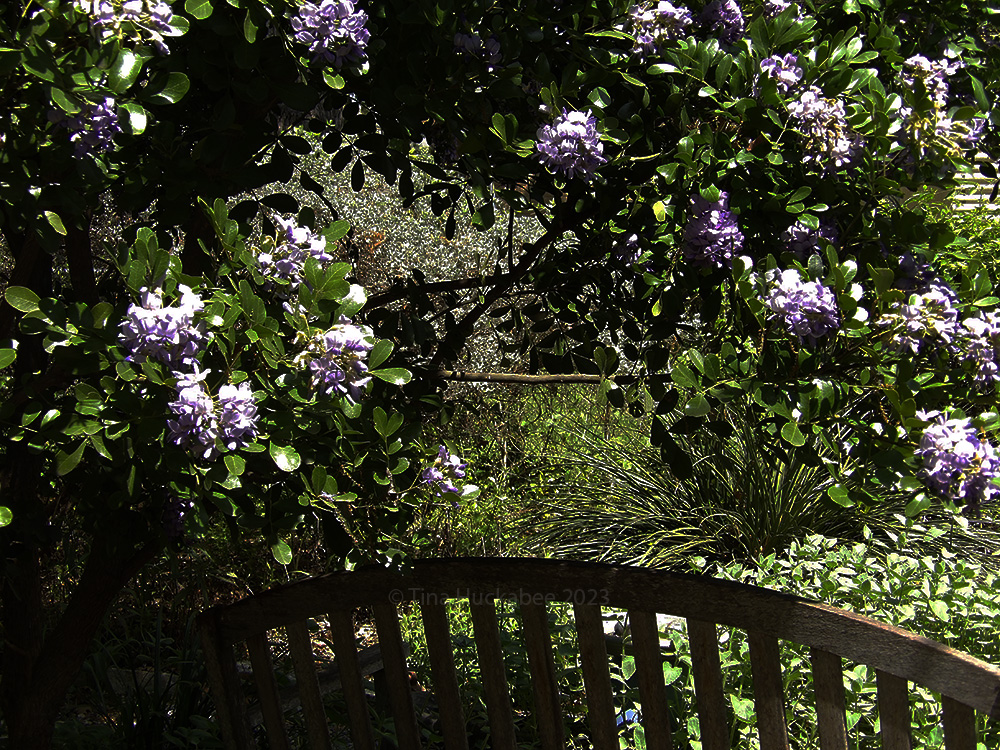
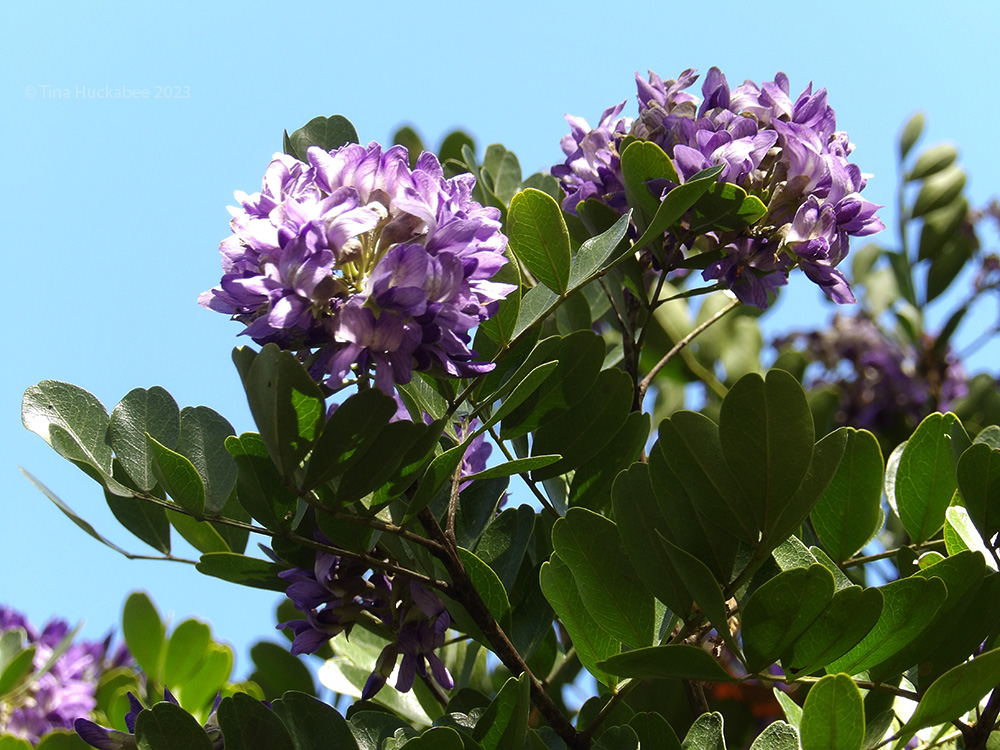
Truly one of the most beautiful of Texas native plants, this is the gorgeously blooming Texas Mountain Laurel, Sophora secundiflora. A slow-growing, small tree, the Mountain Laurel produces luscious purple, sweet-fragranced flower clusters for a few weeks in February/March and has rich, abundant foliage for the entire year. I’ve grown two in my small urban lot: one is about 28 years old, the other a few years younger. Neither are in full sun–where the laurels are at their best–but they’ve both flowered each spring, some years more than others, and both have provided dense foliage that birds appreciate and humans admire.

A drought tolerant, tough tree, Texas Mountain Laurels are native to the Texas Hill Country, west to New Mexico, and south to parts of Northern Mexico. They’re not picky about soil, but want good drainage. I’ve never experienced any insect damage on my trees and laurels are deer resistant plants.
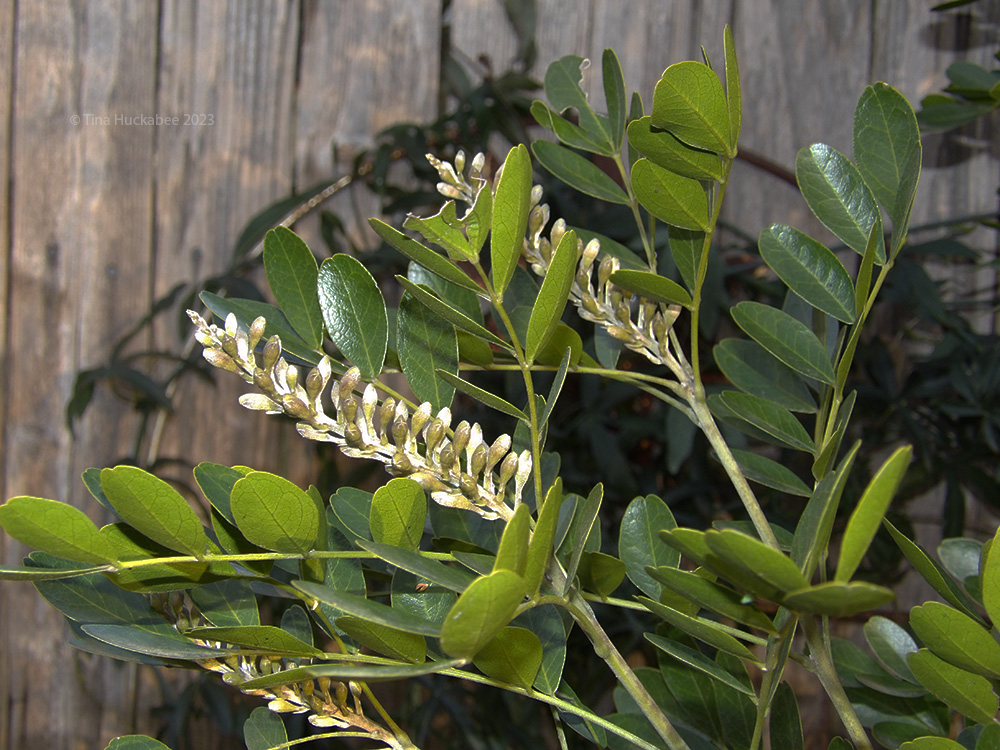
Early bud development
Buds near bloom time

Texas Mountain Laurels grow and bloom best in full sun, but they are also great plants for shade and part shade, they grow slowly with fewer blooms. My older tree has grown up in the shadow of a good-sized Red Oak tree, but it always dresses up in its spring flowers and most years the purple-cluster blooming is excellent.

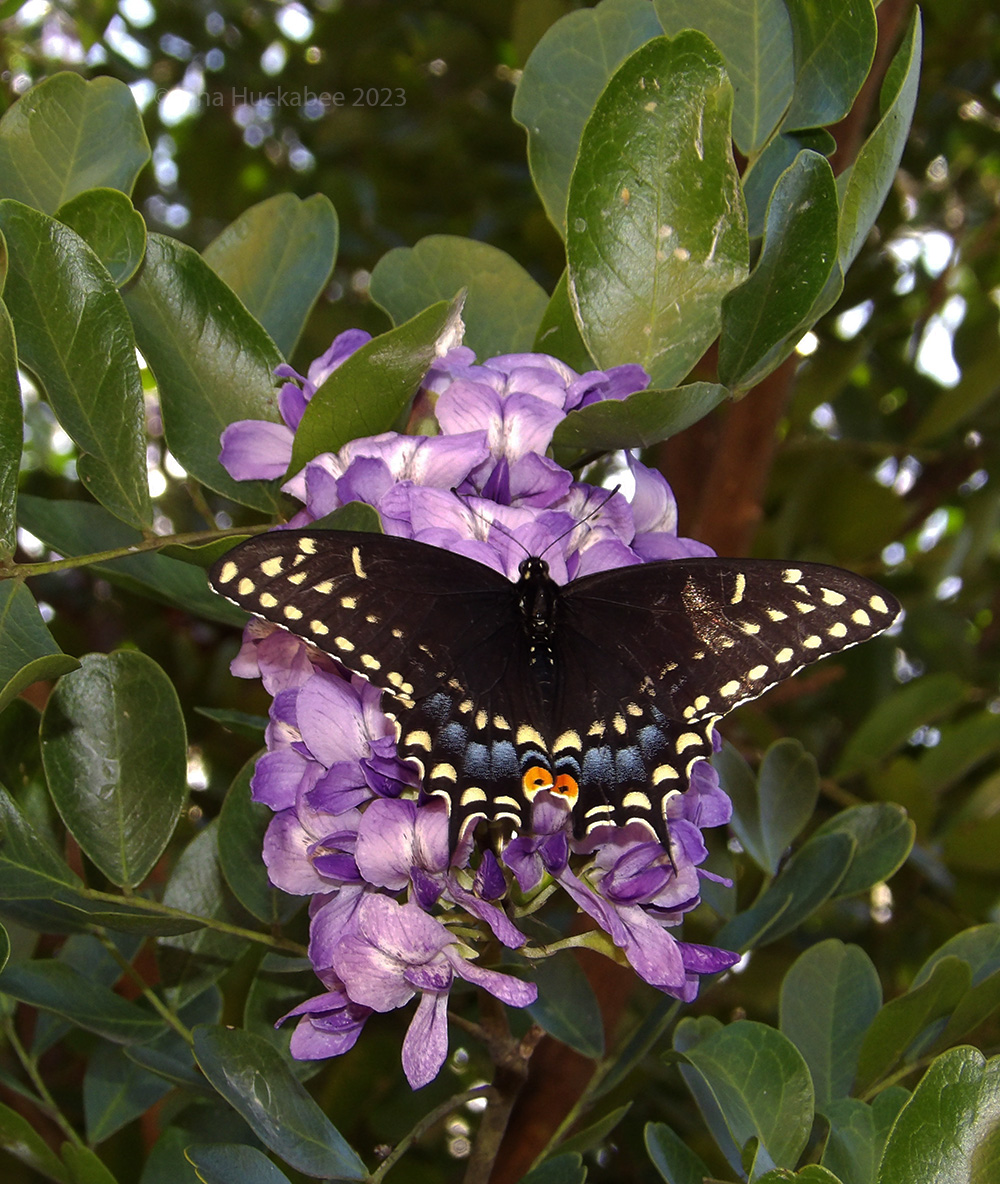
As the Texas Mountain Laurel is one of the early spring bloomers, it’s an especially important nectar source for pollinators. My honeybees always partake of the rich blooms, but butterflies, native bees, and a variety of flies buzz around the tree constantly during its flowering.

Blue Orchard Bee, Osmia lignaria
Eastern Black Swallowtail, Papilio polyxenes
Monarch Butterfly, Danaus plexippus

The migration of North American Monarch Butterflies doesn’t always coincide with the flowering of the laurels, but often the two events are sync-up and it’s wonderful to observe the fluttering Monarchs.

Texas Mountain Laurels are known for their intense, grape soda-like fragrance. Some people love it, others find it cloying. I like the fragrance, but interestingly, I can only detect it at night or when my nose is snug-up in a bloom cluster. I have a fairly good sense of smell, but this particular fragrance eludes me, with those couple of exceptions.

Unfortunately, the Texas Mountain Laurel doesn’t have a long bloom time. That’s the flaw in a nearly perfect plant! Blooming occurs over a 3-4 week period, faded blossom parts falling to the ground, creating lovely lavender sprinkles around the tree.

After the blooms, come green legume-like pods. Texas Mountain Laurels are in in the Pea or Fabaceae family and their pods and seeds are definitely bean-like.
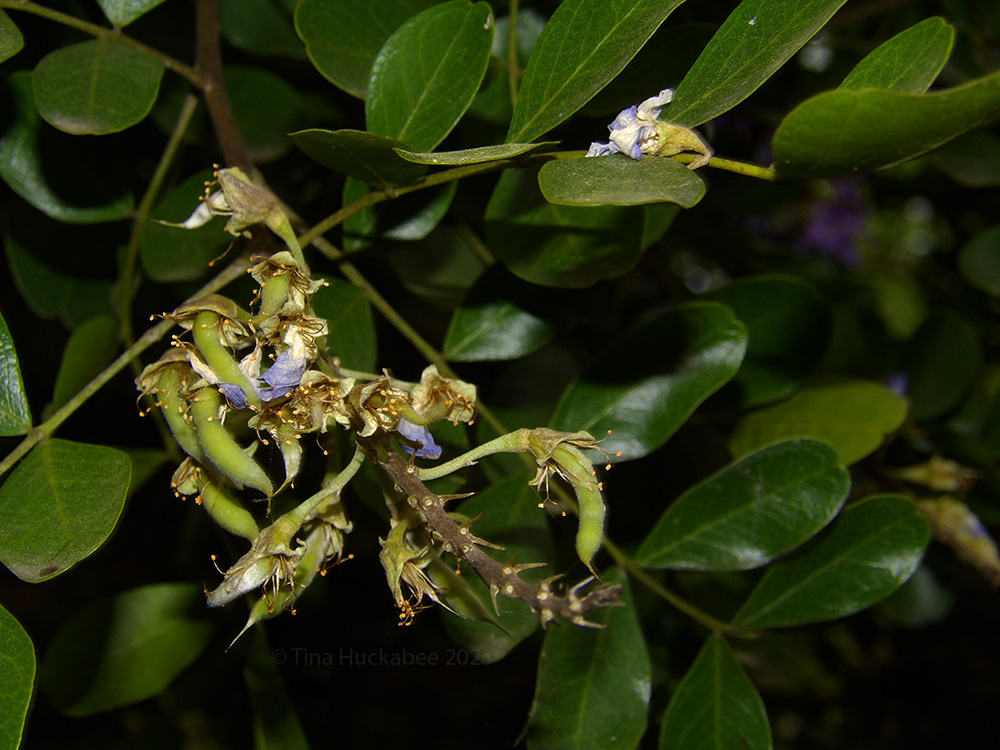
In years when the blooms are prolific, the seed pods follow the same pattern.

By autumn, the pod clusters hang from limbs like dangling earrings, rattling like mini maracas when shaken. They are attractive in their own right.

Eventually, the pods break open and reveal hard, scarlet beans which fall to the ground, ready to usher in the next generation of tree.

Over time, tiny seedlings grow from the fallen seeds.

These seedlings are easily transplanted, or you can leave them where they landed. Mountain Laurels are tricky to transplant when the seedling is taller than about 12 inches because these laurels have deep tap roots, and unless you get the whole root, the transplant will die. Over the years, I moved a few baby laurels around in my garden and given away even more. Because of its slow growth, the gardener will require patience to see tiny seedlings to adulthood. The good news is that this plant is readily available in most nurseries. I personally wouldn’t by anything smaller than a one-gallon container; it will take a decade or more to reach shrub or small-tree size. The wait is worth it, though!

This post is part of a series I call A Seasonal Look. Most plants change their looks over the course of a year: they bloom, set seed, maybe change foliage color, drop foliage, and become bare-limb when dormant. Or perhaps they’re evergreen, blooming on-and-off throughout the year, according to seasonal variations. Certainly Texas Mountain Laurel is no different in that it demonstrates changes. In late winter the plant begins its ramp-up to flowering, bub spikes grow with spring blooms to follow; seedpod development occurs during late spring, continuing their maturity through summer. By fall, the toasty seedpods are ready to drop, allowing the tree to rest before spring flowering beckons.

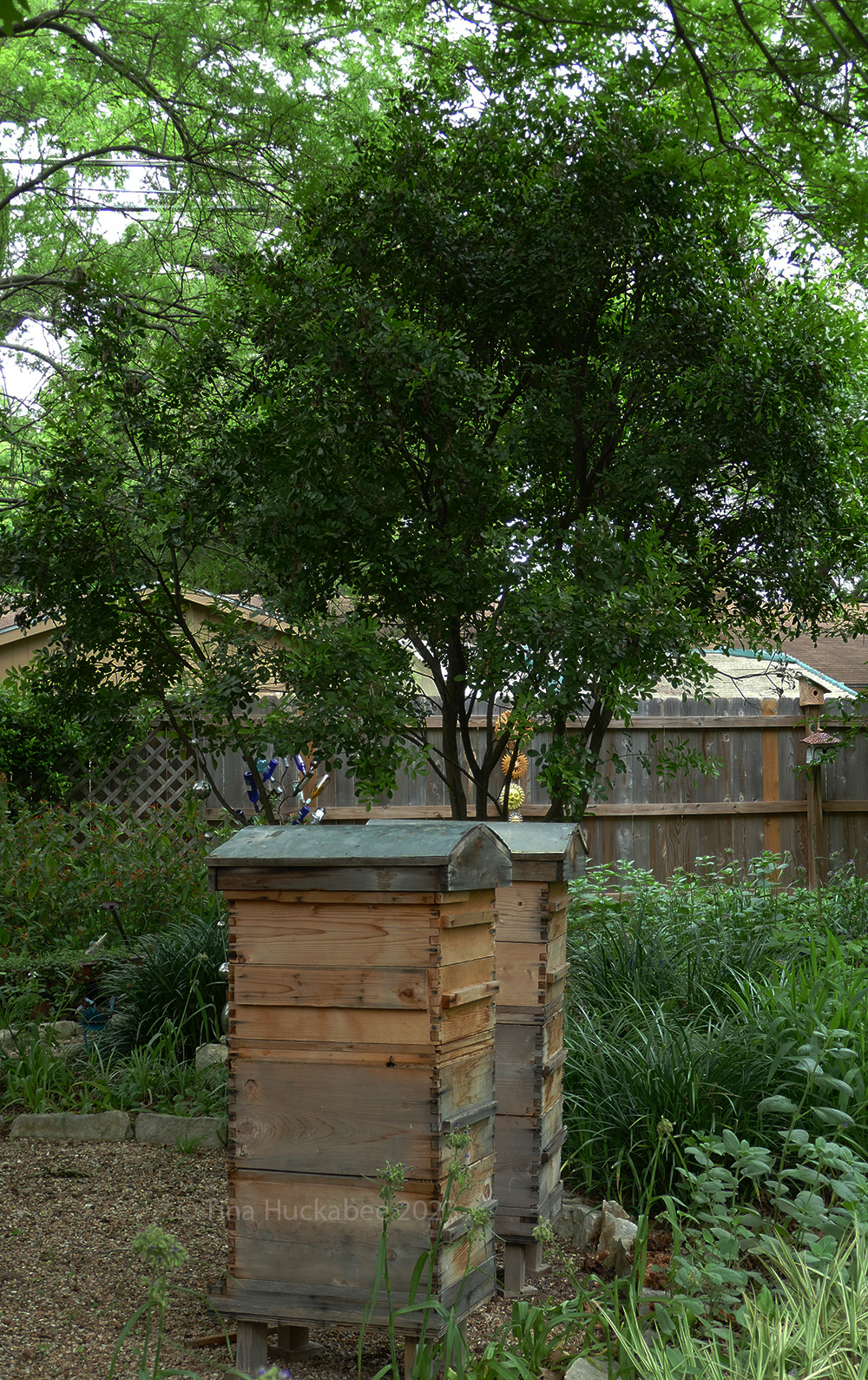
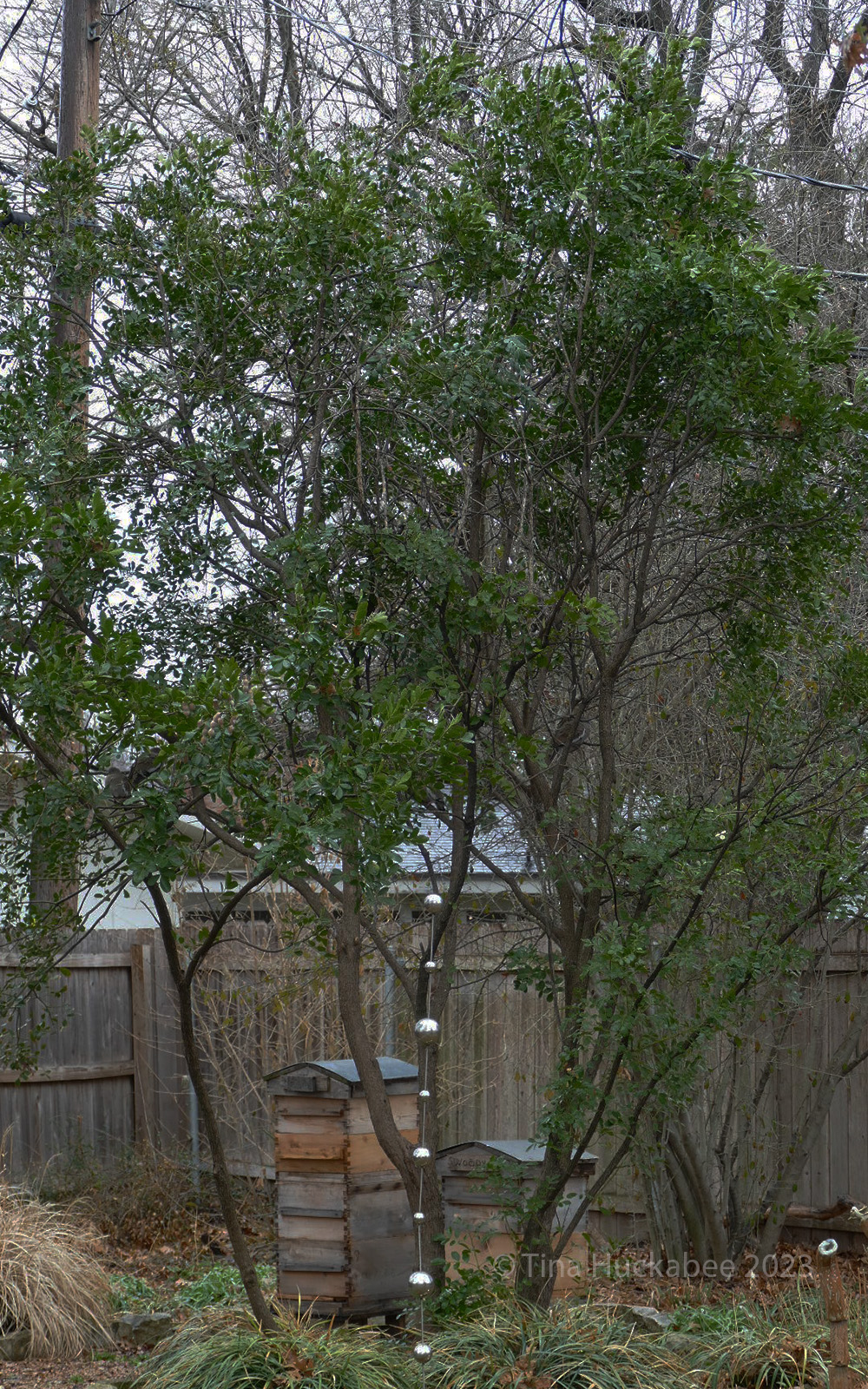
After the purple flower power show, Texas Mountain Laurels are a steady presence in the landscape: the luxuriant, rich green foliage surrounds warm, textured bark, creating a lovely shaped tree. Some gardeners prune to a single trunk, but if you do that, you’ll always have to prune, because the plant wants to grow and sprout new limbs. I’m on team multi-trunk: I love the natural shape of these trees and see no need to prune to a formal shape. Nature has done a fine job of fashioning something exceptional–why mess with it?

From late spring, going forward, the Texas Mountain Laurels look like this:

And in summer and autumn:
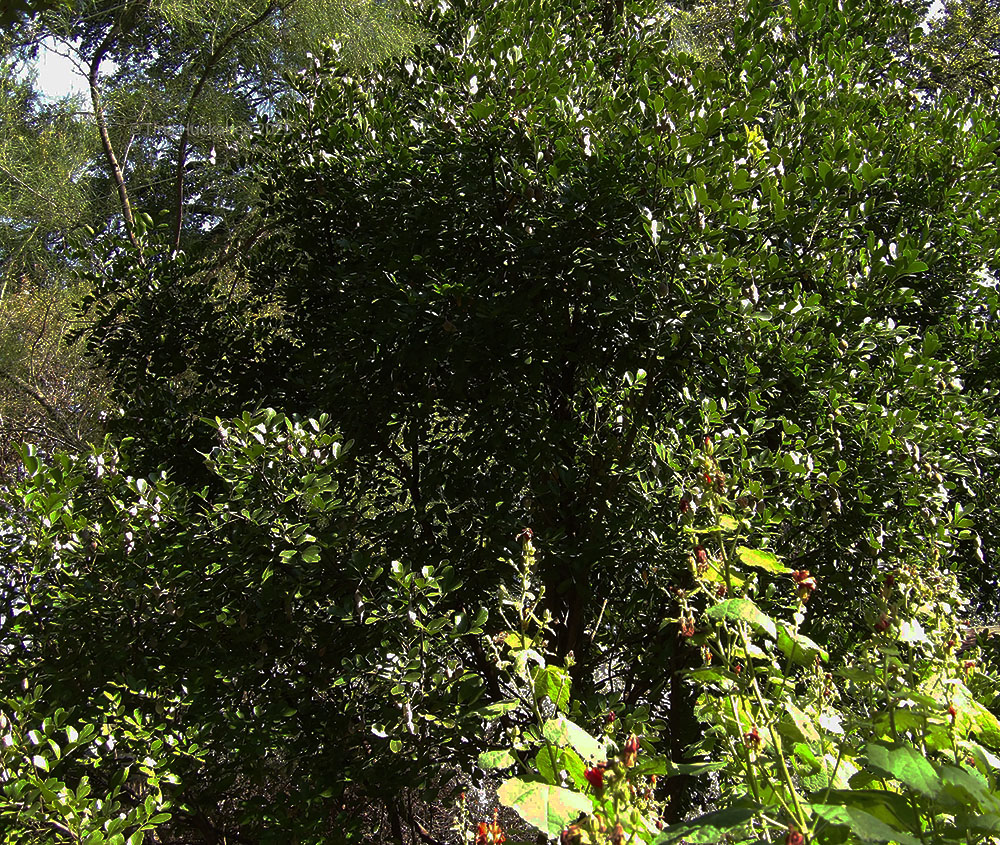
During the the winter months, the laurels are a green oasis in the dormant garden. Even after ice encases the foliage,

…the verdure of the leaves prevail, a harbinger of new growth and life in the garden.

Texas Mountain Laurel is a stunning, hardy and resilient large shrub or small tree, beautiful during Spring:
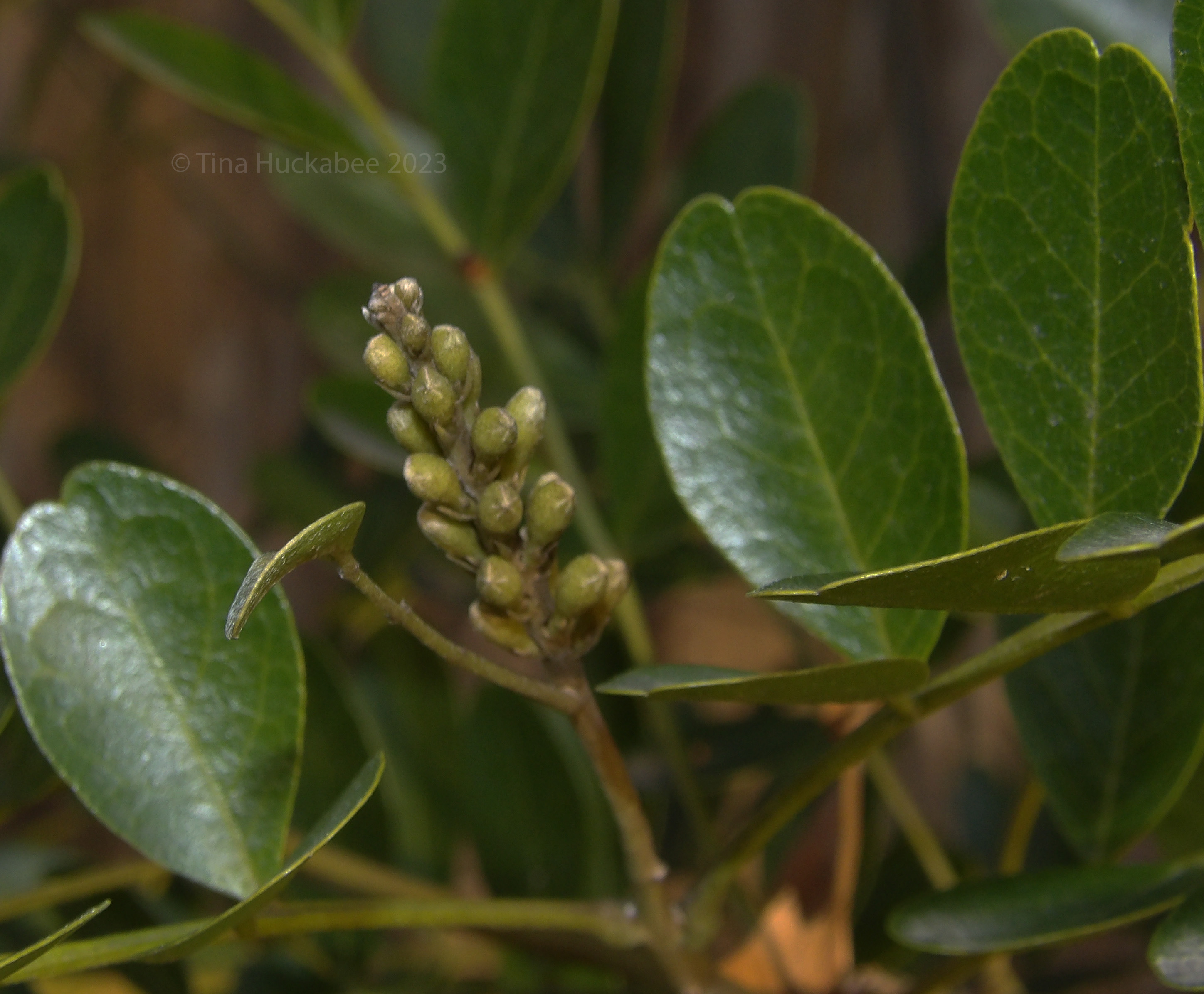
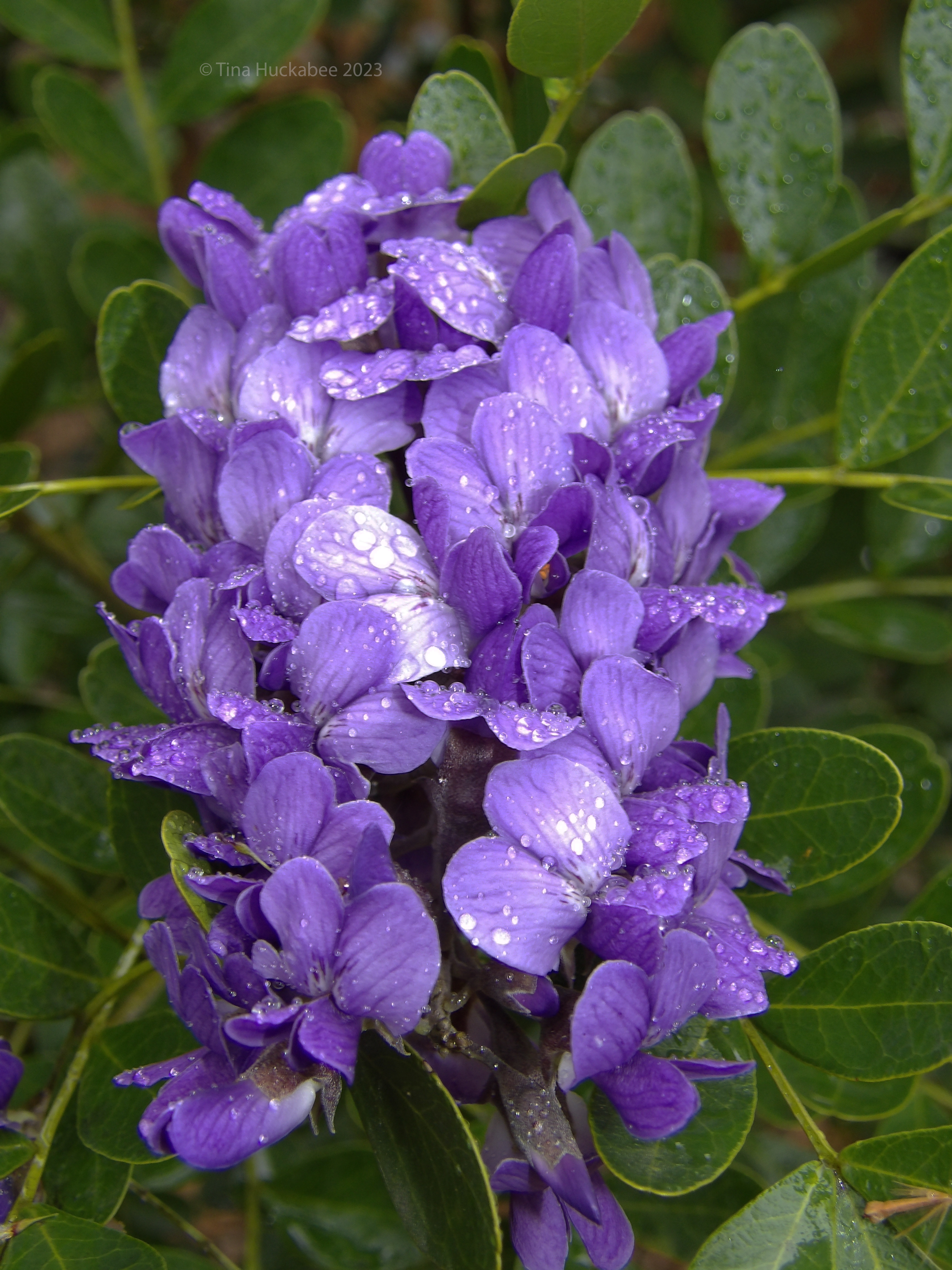
Summer:

Fall:

Winter:
Autumn Grasses

Along with a bevy of flowery blooms, late summer and autumn showcases the graceful good looks of native grasses. Native grasses are attractive year-round but really strut their stuff in autumn. I’ve grown the shade-loving Inland Sea Oats, Chasmanthium latifolium for years and love them, but grasses requiring the intense Texas sun I could only admire in other gardens. Now that my front garden is sun-drenched, native grasses have a place and they have shined.

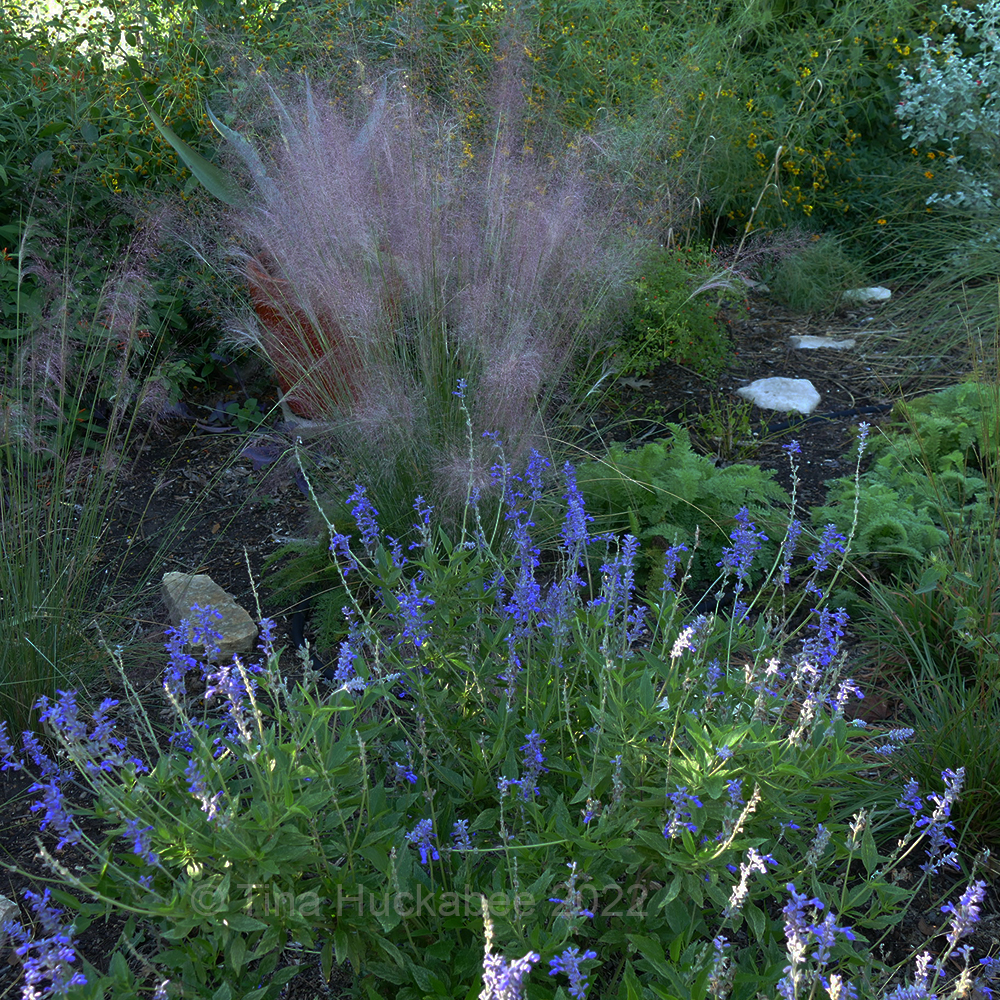
I’m besotted with Gulf Muhly, Muhlenbergia capillaris. I was never successful in growing these pink, frothy pretties, until appropriate, sunny conditions developed. I now have plenty of sun-baked spots and four new Gulf Muhly have nestled in nicely.

Two older Gulf Muhlies have grown well in another spot for a couple of years, but in my re-vamped sunshiny space, there are an additional four individuals. These muhlies are slender, shapely green throughout spring and summer, but in October, their pink-purple plumes add gauzy elegance and a swath of color in the last days of the growing season.

A closer view of this purple-pink magic.

I planted an arc of four muhlies, though only one has powered up the color in full. These have been in the ground less than a year and since this photo was taken, the other three, while still behind in the fluff, have filled out well. Gorgeous whether in sunny or cloudy conditions, they add softness and movement in the garden.

I have successfully grown a couple of Lindheimer’s or Big Muhly, Muhlenbergia lindheimeri, for a few years. Another beautiful plant year round, the lacelike plumes develop in autumn, catching the sun’s rays and swaying with the wind.

These three fit well together in the garden!

The halo of bright green behind the middle Big Muhly is a Bamboo Muhly, Muhlenbergia dumosa. Native to Arizona, it’s a large grass that grows well in sun and shade. The even-taller yellow flowers belong to Plateau Goldeneye

This is my oldest Big Muhly and it’s always a stunner.

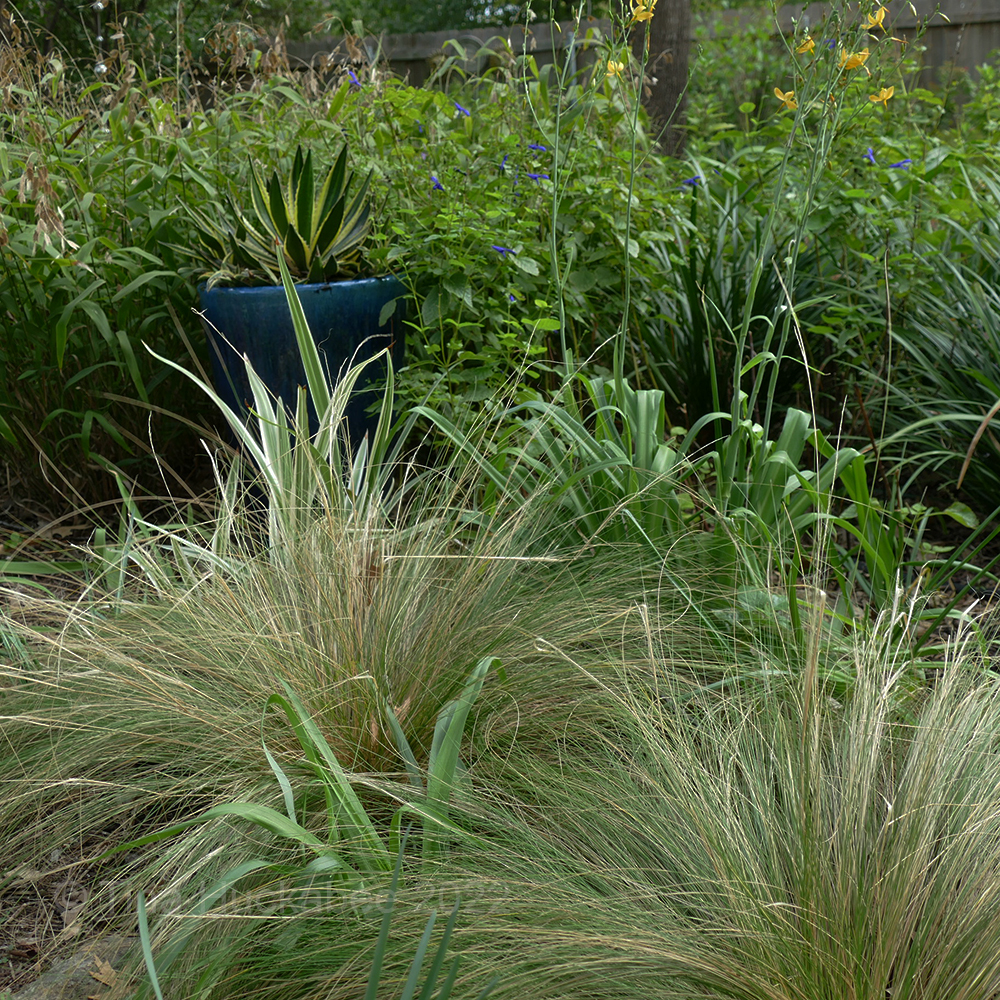
Spring and summer silvery Mexican Feather Grass, Nassella tenuissima, have switched their colors to autumn toasty, with a hint of sage. These small grasses fit well in a variety of settings and like all the native grasses, are tough, hardy plants. I’ve had more luck with this grass in part-shade, but am pleased with how they’ve fared in full sun.

In the new sun garden I’ve added three Little Bluestem, Schizachyrium scoparium. I like this little grass, tidy and dainty, though confess some disappointment that its autumn color hasn’t yet materialized as advertised.

The photo is busy. The two Bluestems are overtaken by some pushy Rock Rose, Pavonia lasiopetala.

You can see the green clumps and the stems that shoot upwards in fall. There are even some cottony seed heads already formed on one of the plants.

This spot actually gets a little bit of fall shade as the angle of the sun is lower, so I’m in the process of moving the trio to a nearby spot which I think will get full sun in summer and fall. In fact, the third of the trio I’ve already moved:

This one has some nice burgundy/rusty foliage action, not fully in fall garb, but more in line with the typical autumn colors of Little Bluestem. This individual never developed its vertical stems because when I allow my younger cat, Lena, in the garden (supervised and only for a few minutes!) she loves to munch this particular grass.

Maybe Little Bluestem needs something eating it to get fall color??

This post completes a short series highlighting the autumn Texas garden delights of birds, blooms, pollinators, and grasses. Our summers are hot, but the payoff in utilizing native plants in our wonderfully long growing season is an autumn filled with color, movement, texture, and life. And isn’t that what’s a garden should be?

Autumn Pollinators

Autumn weather has finally arrived. Clouds and rain, with chilly temperatures (upper 30s and 40s), it’s unseasonably cool. I’m not minding it though, as we have more than our share of balmy days. Just before the wet and cool set in, the pollinators were everywhere, all day long: flitting, flying, nectaring and gifting their unique grace to the garden.

The Monarch butterfly migration didn’t nearly match last autumn’s magnificence, but these seasonal visitors drifted through, and for about 6 weeks, there was always some Monarch action in the garden. Once we warm up again, it’s likely I’ll still see a few lingerers, but it’ll be next March before they make their way back through Central Texas from Mexico.

Monarch butterflies are heading to their winter digs in Mexico. Here’s hoping the weather cooperates, whisking them south safely and protecting them in their roosts.

Late summer and autumn bring a number of yellow butterflies in the garden. One of the more common of the numerous yellows are the Southern Dogface, Zerene cesonia. This one enjoys what Mexican Honeysuckle offers.

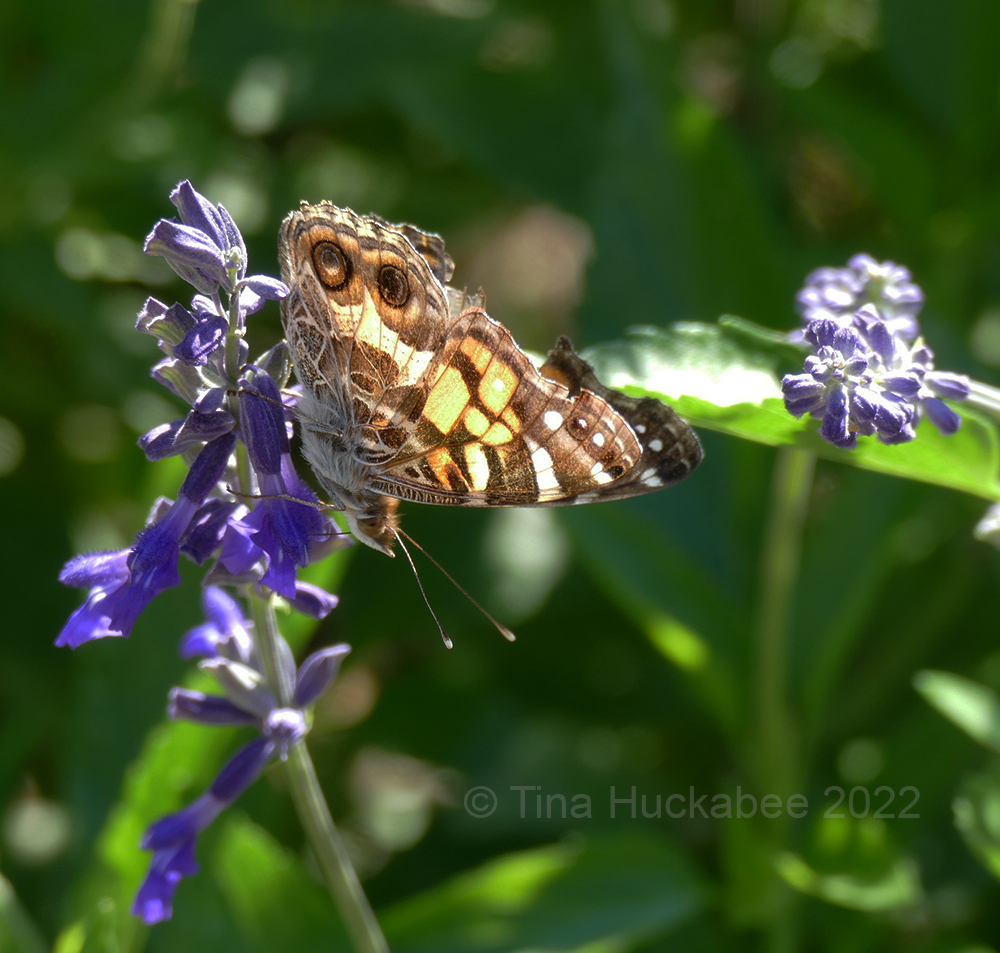
American Lady, Vanessa virginiensis, are also regulars in Central Texas. This one nectared on the prolific blooms of a Henry Duelberg, Salvia farinacea.

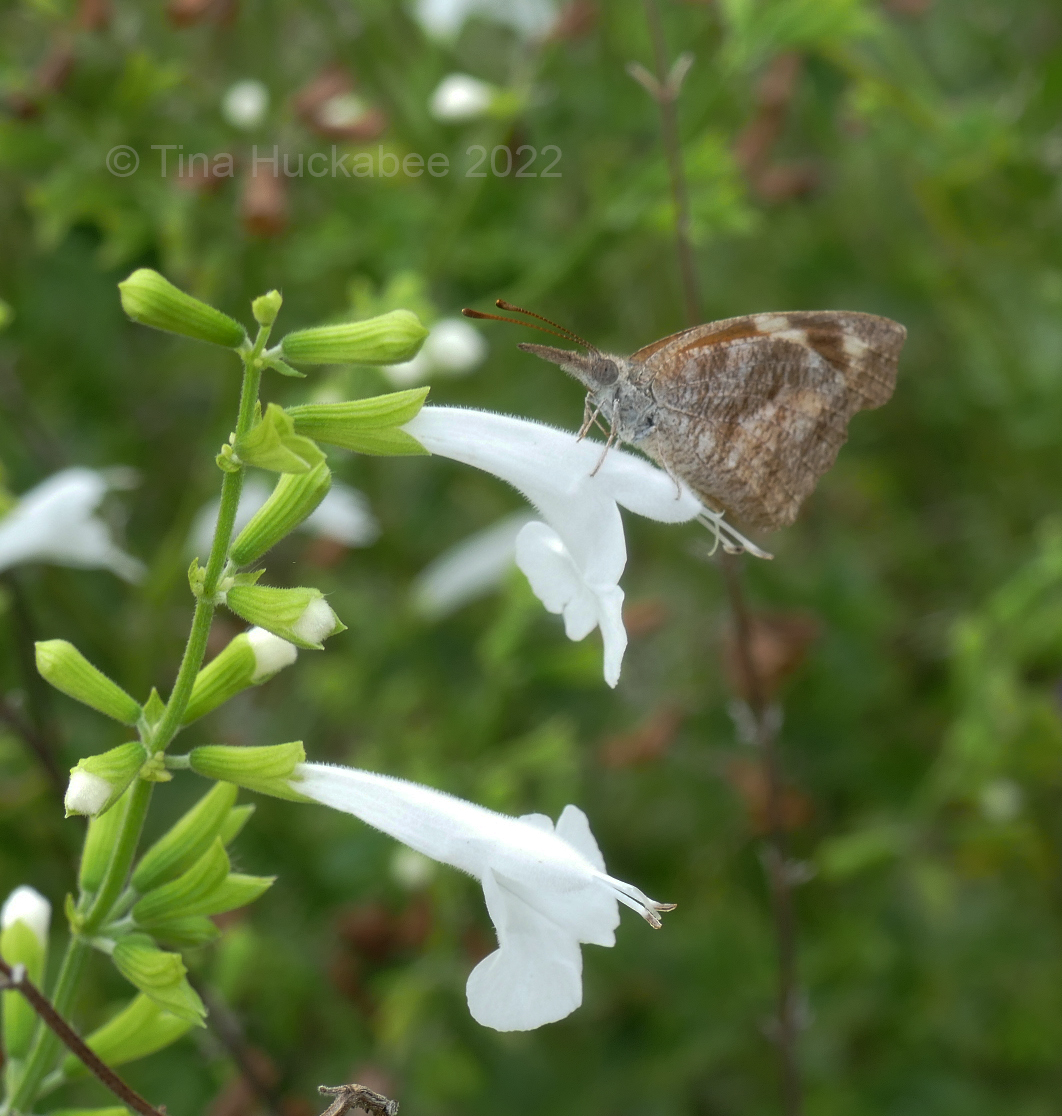
Another familiar autumn butterfly is the American Snout, Libytheana carinenta. These are perhaps not the most beautiful of butterflies, but they’re charming with that extended “snout” as well as their petite form. In some years, they migrate in large numbers, but this autumn, only a few fluttered.

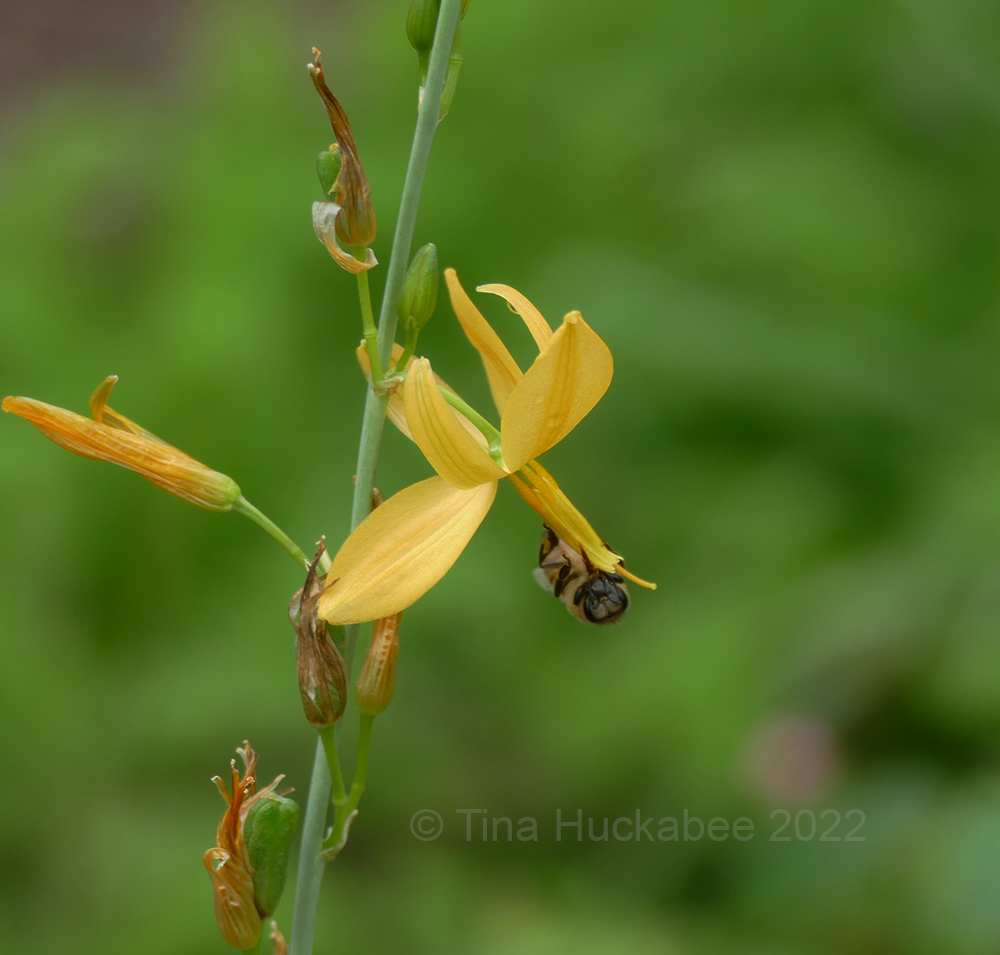
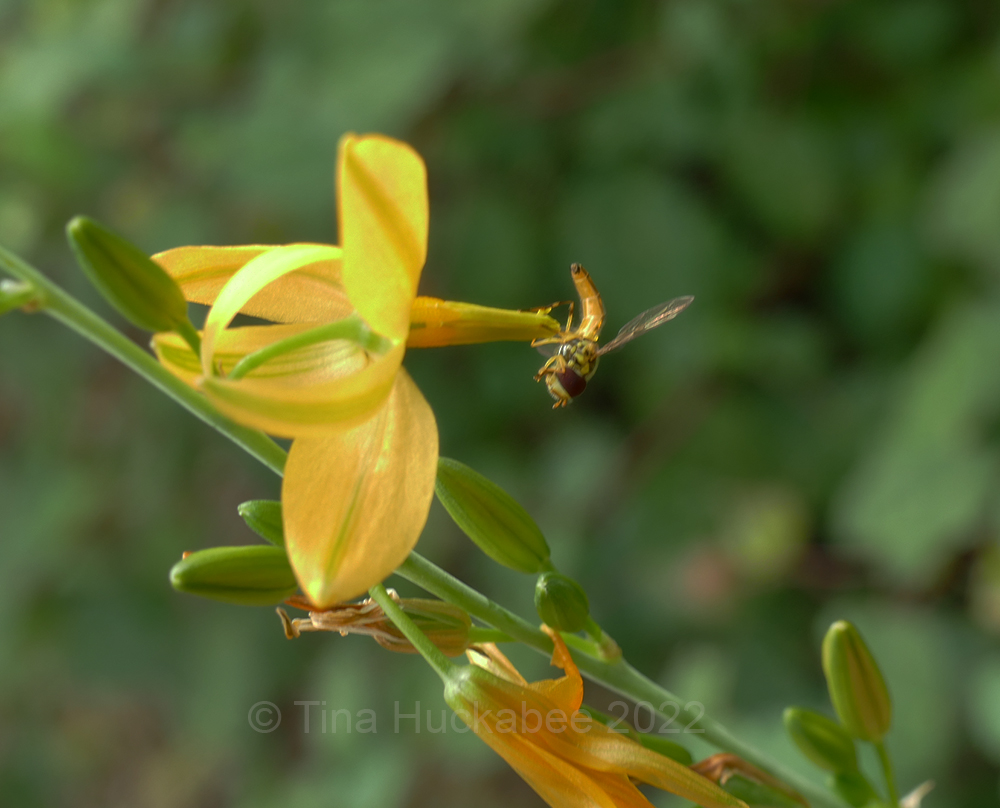
Not outdone by the butterflies, bees are still active, too. One of my favorite native perennials is the Texas Craglily, Echeandia texensis. It’s also favored by a variety of pollinator types, including honeybees.

This isn’t a particularly good photo, but I like how it captured the full-to-bursting corbicula or pollen basket. I like to call honeybees’ corbiculae pollinator pantaloons.

Also buzzing through the garden are a variety of syrphid, or flower flies. This little one is working on its pollinating skills! In fact, there were all kinds of flies around the flowers and they’re excellent pollinators.

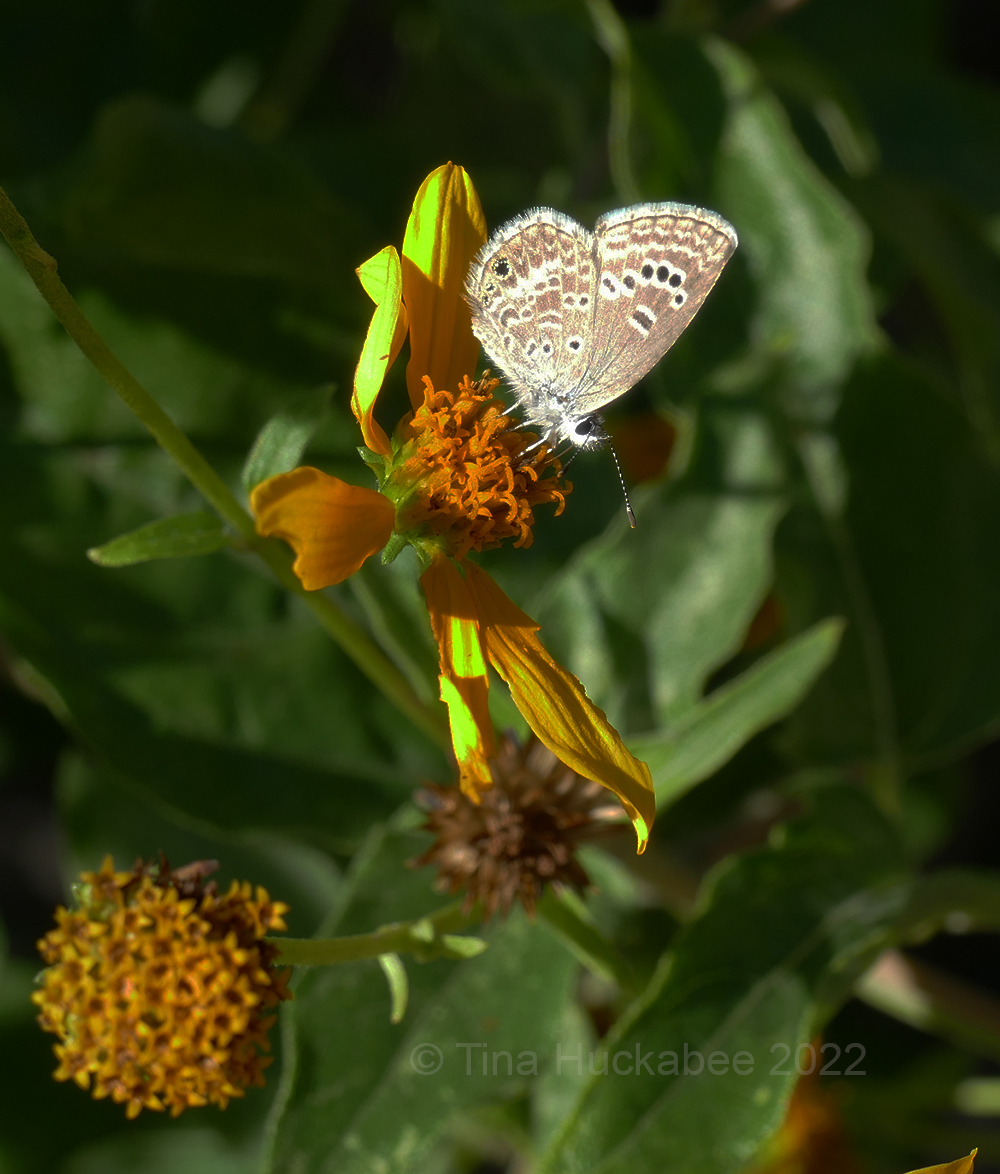
A diminutive butterfly that I’m sure I’ve seen in my garden in past seasons, but I know I’ve seen when perusing through insect resources, is this Reakirt’s Blue, Echinargus isola. I enjoyed the flitty antics of several individuals before the rainy period set in.

While attractive enough to the human eye when their wings are up, when open wide, a whole new look emerges. I love the blue in the wings.

One interesting fact about Reakirt’s butterflies is that females lay a single egg on a flower bud and the caterpillar eats the flower, seed pods, and only sometimes, the foliage. Additionally, the caterpillars are accompanied by ants, who slurp up the cats’ “sugary secretions” left behind.

This little cutey was a super fast flyer, but I did nab one or two shots. Called a Dainty Sulpher, Nathalis iole, I’ve seen this specie before in the garden, though had never taken a decent photograph. This dainty lives in a wide range of places, but doesn’t survive cold winters. Host plants include those in the aster family and I grow plenty of them. I didn’t see any obvious eggs or caterpillars, but I plan to keep a keen eye out for them next fall.

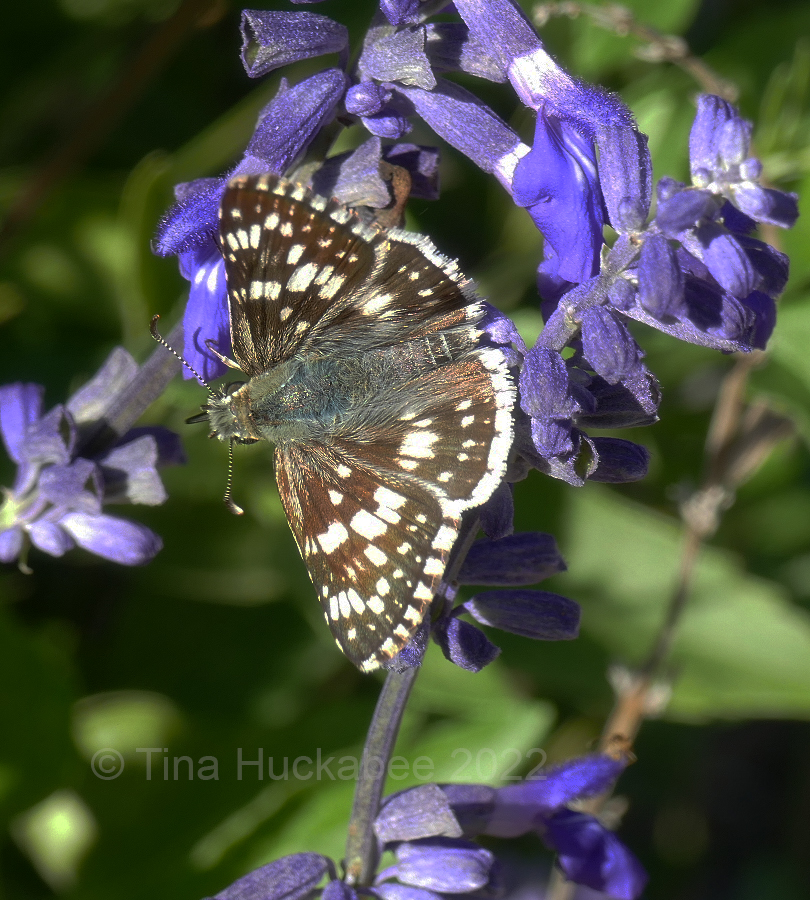
Common Checkered-Skipper, Burnsius communis, is a butterfly that lives in most of the continental United States. A large skipper, it’s also a skipper that cooperates with its human admirers–look at that lovely wingspan. These skippers use plants in the mallow family as their hosts and I grow several: Turk’s Caps, Globe Mallow, and Rock Rose. It’s no wonder that these butterflies are in my garden for late summer and fall.

A cousin to the Monarchs, the Queen Butterfly, Danaus gilippus, rivals in beauty! This handsome male nectars on the bloom of a Gregg’s Mistflower, Conoclinium greggii

And this one? It’s all about the almost-spent-blooms of a Plateau Goldeneye, Viguiera dentata. Queens don’t migrate like the Monarchs, so I’m likely to see them in summer.

It really has been a glorious October and November and I fully expect that once the chill passes and before our first freeze, some of that glory will return. Central Texas enjoys a long growing season and therefore, a long pollinator season. Some pollinators have gone to rest, like many of the native bees, but others will over-winter and be active during our sunny days. They’re welcome anytime!