Wildlife Wednesday, July 2015

Cut the cake!!  We’re celebrating a birthday today, or maybe it’s an anniversary? Whatever it is, it should involve cake (as everything should), and more importantly, a hats-off to you garden bloggers who made Wildlife Wednesday so much fun this past year.   Each first Wednesday, notwithstanding my own angst at readying my post for publication, I eagerly awaited the fascinating stories and stunning photos that graced my screen at the click of the  mouse.  Thanks to all of you for what you taught and shared, and for your enthusiasm and participation–Wildlife Wednesday wouldn’t exist if it wasn’t for you! And if you’ve read, but never submitted a post, please do–I know I’m not the only one who enjoys reading about wildlife in our back yards.

IMGP8794.new

What has this year of hosting Wildlife Wednesday meant to me?  Aside from the knowledge I’ve gained by observing and identifying wildlife and also with photographing that wildlife, I’ve come to better appreciate what lives in and contributes to my gardens. I’m awed at the complicated and remarkable interactions of that garden life.   I’m more committed to welcoming and nurturing the dynamism of the natural world, even if, or perhaps especially because, it’s in the microcosm of my own little urban garden.

So on to the wild visitors who graced my space this past month!

When the pond pump gurgles and croaks, it’s time to clean out the filters.  It’s not a chore I particularly care for, but one that yields yummy food for the resident roses and often, a sleeping toad.

IMGP8476.new

I think the toads in my pond are Gulf Coast ToadsIncilius valliceps.   They’re in the pond at night, and in the various quiet and dark places during the day, including the pond pump and intake container.

IMGP8479_cropped_3097x2926..new

And these little ones,

IMGP8719_cropped_2810x2489..new

…are everywhere in the garden at the moment.  Baby toads!!  All that adult croaking and posturing netted some action for the toads guys and toads gals and tiny, hopping toads are the result. This is an “average” sized baby,

IMGP8720_cropped_3520x2746..new

IMGP8722.new

…but I’ve seen a few that were smaller.

The croaking of the adult toads ebbs and flows in my back garden during spring and summer.  I’ll hear them at night for a week or two and then there is blessed silence for a few weeks.  I once read that toads are favorites of Eastern Screech Owls, Megascops asio, and  my assumption is that the owls hunt the toads to the point where there aren’t many adults left.  A few weeks elapse for the new generation of toads to reach sexual maturity and then they’re back at it again–letting other toads, and the owls, know where they are.

The Screech Owl couple is still around!  Though they suffered a squirrel-induced end to their brood this past spring, there is apparently enough for them to hunt (see above paragraph) and they hang out now in the back neighbor’s trees.  If I’m out at sundown, I’ll see one, rarely both, swooping silently through the trees as they begin their forays into the night.  One afternoon, I heard noisy Blue Jays and witnessed Mamma Owl harassed by a group of Blue Jays.

IMGP8725_cropped_2820x2797..new

She turned this way and that, as the Jays flew near to her and squawked, registering their protest at her roosting in the tree.

IMGP8732_cropped_3254x3231..new

IMGP8731_cropped_3262x3323..new

IMGP8728.new

IMGP8734.new

Eventually, the Jays gave up their bullying and moved along and, as if obnoxious Jays aren’t enough, she spotted garden paparazzi gawking and snapping photos.

IMGP8737_cropped_3230x3323..new

I’m pleased that the owls are still in the vicinity and if this year is representative of past years, they’ll remain through mid-summer and then, scarcely, if at all, be seen.  But sometime in December or early January, the trill of the male will once again be a fixture after sundown and the owls will take their place in the thread in the garden’s fabric.

One lazy, relaxing weekend afternoon, I was treated to the posing of this Neon SkimmerLibellula croceipennis. 

IMGP8600.new

IMGP8617.new

A handsome male,  he rested, keeping company with me for quite a long time, him on the foliage of the Softleaf Yucca, me in the swing.

IMGP8612_cropped_3304x3221..new

IMGP8601.new

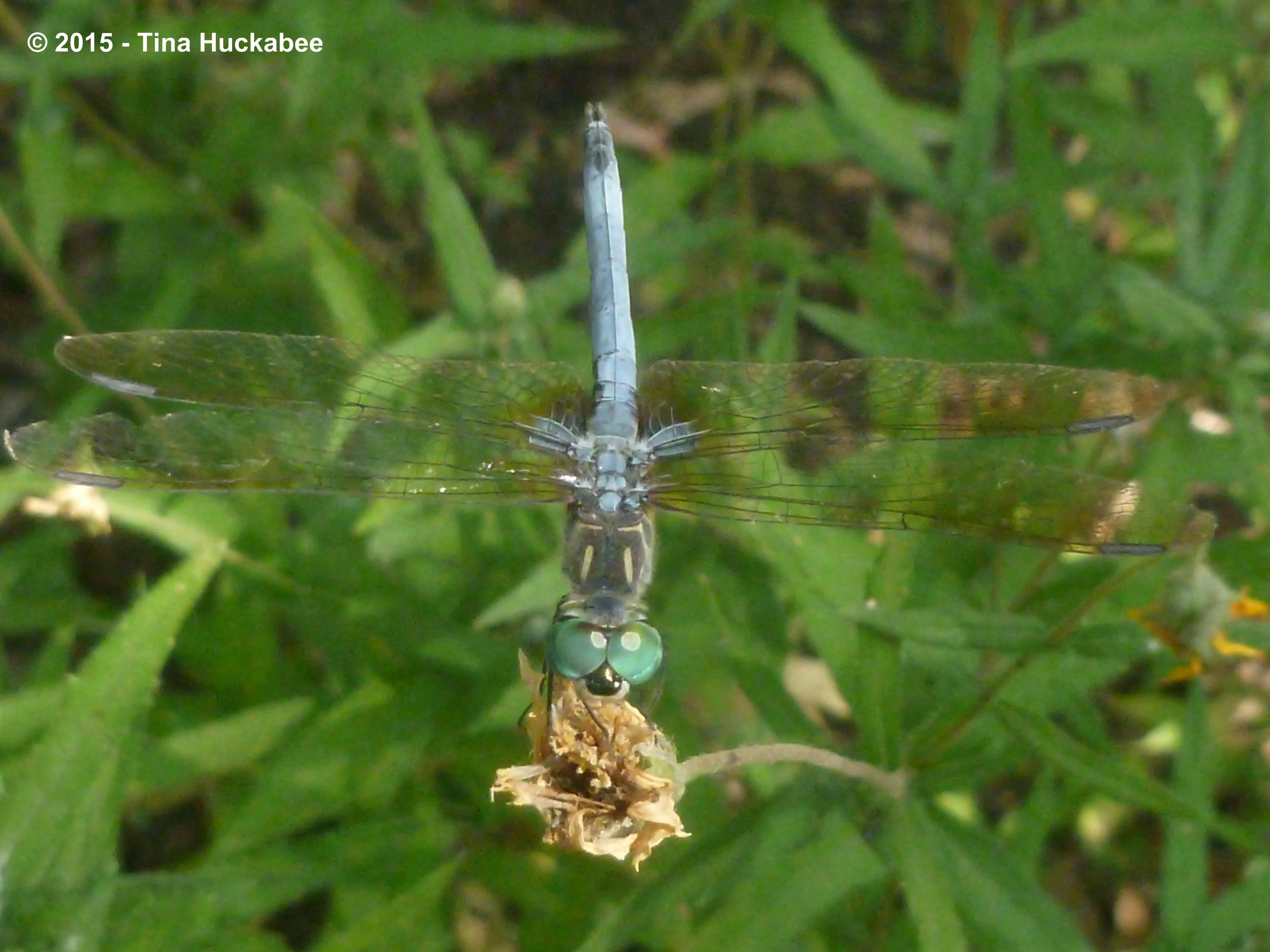
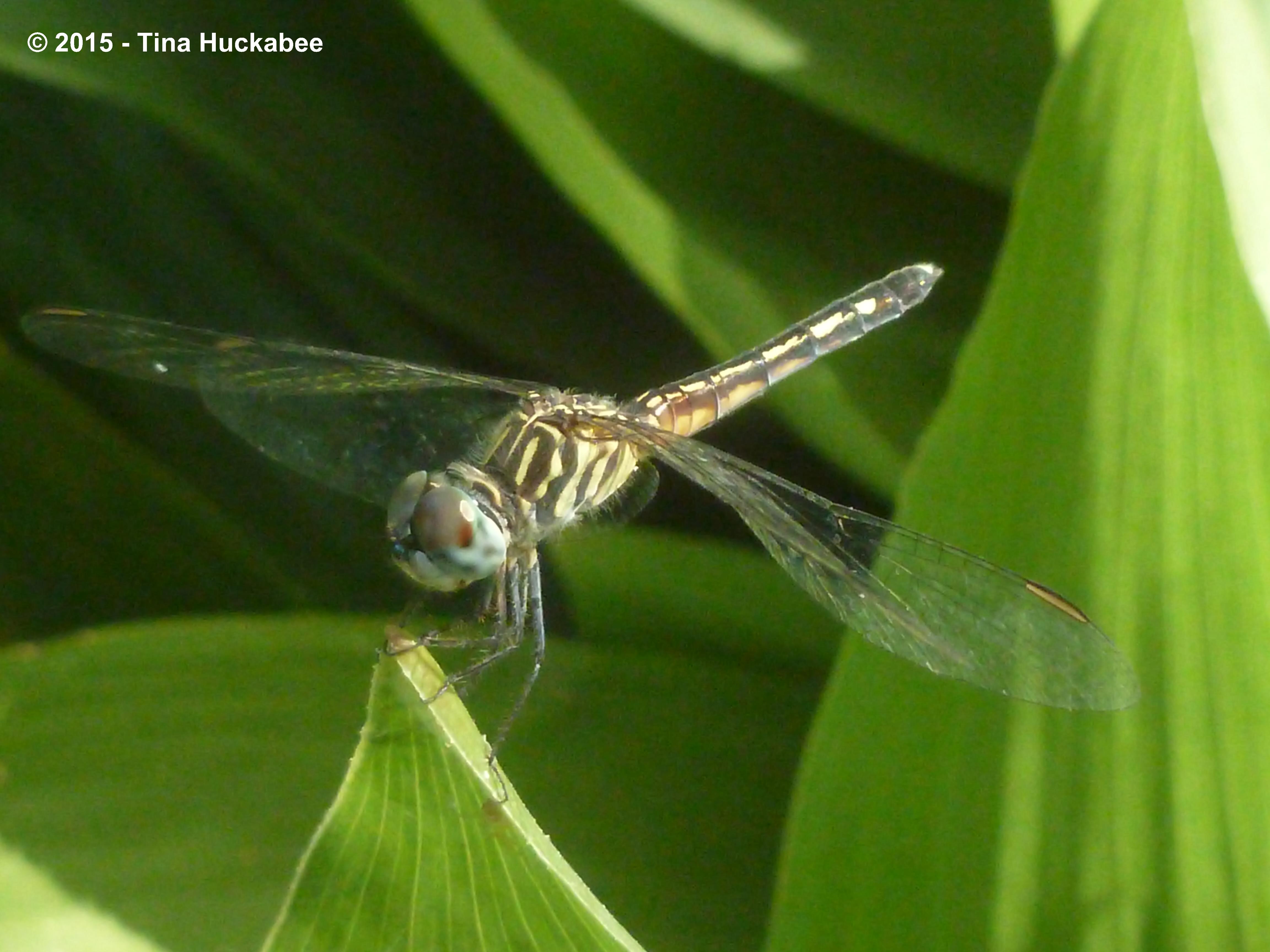
There are lots of dragons and damsels this year, owing to our inordinate spring rainfall, but they’re always welcome in my garden.  This male Blue DasherPachydiplax longipennis looks like he’s staring me down, just daring me to take his photo.

IMGP8477.new

The butterflies and their offspring are active, as well.  Fennel is a popular hangout for Eastern Black Swallowtail caterpillarsPapilio polyxenes, like this one.

IMGP8276.new

I like photographing the caterpillars; they don’t move as rapidly as the adults.

An unwelcome guest, or I should say guests, enjoyed some of the Purple Coneflower blooms.

IMGP8790_cropped_3161x3300..new

IMGP8579.new

I never narrowed down the identification of this caterpillar.  Normally, the Purple Coneflowers have no insect problems, but given our tropical-like conditions this year, it’s not shocking that there are more “bad” bugs. There are in fact, very few bad bugs-in my gardens or anywhere else for that matter. Most insects are beneficial, some are neutral, and only a very few are harmful to plants. Even these Coneflower fiends didn’t do much damage.  A petal or two went missing, but that’s about it.

IMGP8581.new

I left them where I found them on the flowers.  There are a few insects that I’ll get rid of like aphids and some of the sucking insects that attack my veggies, but other than that, I take a benign view and limited actions toward insects in the gardens.

Except for cockroaches.  I detest cockroaches.

I’m tickled that my gardens are hosting Common Buckeye, Junonia coenia, this summer.

IMGP8935_cropped_3623x3314..new

Despite the name and that they’re regularly found in this region, I rarely spot adults feeding in my gardens.  I am growing native ruellia (Ruellia drummondiana) that have matured and that plant is a host for this species of butterfly.  I wonder if the ruellia is the reason for the Buckeye visits?

IMGP8944.new

I think this Purple Coneflower lover is a Southern Broken-DashWallengrenia otho,

IMGP8633.new

…but I would have done well to get side and overhead photos to better view the wings.

There are plenty of big, showy butterflies too.  This Tiger Swallowtail,  Papilio glaucus,

IMGP8872.new

…like so many others, enjoys the bounty of the Purple Coneflower. I’m glad that I grow Purple Coneflowers in my gardens.  Apparently, so are the pollinators.

Another butterfly visiting on a regular basis is the Question MarkPolygonia interrogationis.

IMGP9022.new

IMGP9027.new

 Latin species name notwithstanding, I never quite understood the “question mark” part of the name.  Here’s a good shot of why it’s called a Question Mark.

IMGP9024.new

See the little white curved mark and the dot on the underside of the wing?  To me it looks more like the musical notation, fermata.  I suppose Question Mark butterfly rolls off the tongue more easily  than Fermata butterfly, but I would have named it differently. These butterflies prefer rotting fruit, dung, and tree sap and only if those are not available will they sip from flowers.  I often see these butterflies in my compost bin. I guess that’s one good thing that comes from not regularly turning the compost pile.

Ahem.

On the pollinator favorite, Zexmenia, Wedelia acapulcensis, is a  native Mason BeeOsmia subfasciata.

IMGP8948_cropped_3359x2861..new

 Zexmenia is an unassuming little perennial which blooms throughout the growing season and there is almost always something feeding on its flowers or foliage.  It’s a must-have plant for the wildlife gardener in Texas.

I confess that I’ve always felt a tinge of guilt about making a place for this passalong daylily.

IMGP8799.new

My decisions concerning plant choices rests with several questions, a chief one of which is: What does it feed?  I’ve never noticed anything eating from this flower and therefore couldn’t really give a good reason to host this plant in my not-so-big urban lot–except that it’s pretty.   I’ve  rationalized it as one of the junk-food plants that I occasionally indulge in.  Well as it happens, this non-native, but Southern garden summer bloomer, is a favorite of native, metallic sweat bees in the Halictidae family.

IMGP8926.new

Woot!!IMGP8913.new

IMGP8899.new

I won’t hazard a guess as to the exact identification of these bees, but several of them liked the daylilies well enough to regularly visit the blooming lilies.

The Horsefly-like Carpenter Bees, Xylocopa tabaniformis, are still dominating the landscape.

IMGP8575_cropped_3221x3308..new

IMGP8574_cropped_3271x3032..new

They vie with the honeybees for the Best Bees of the Garden award.

IMGP8791.new

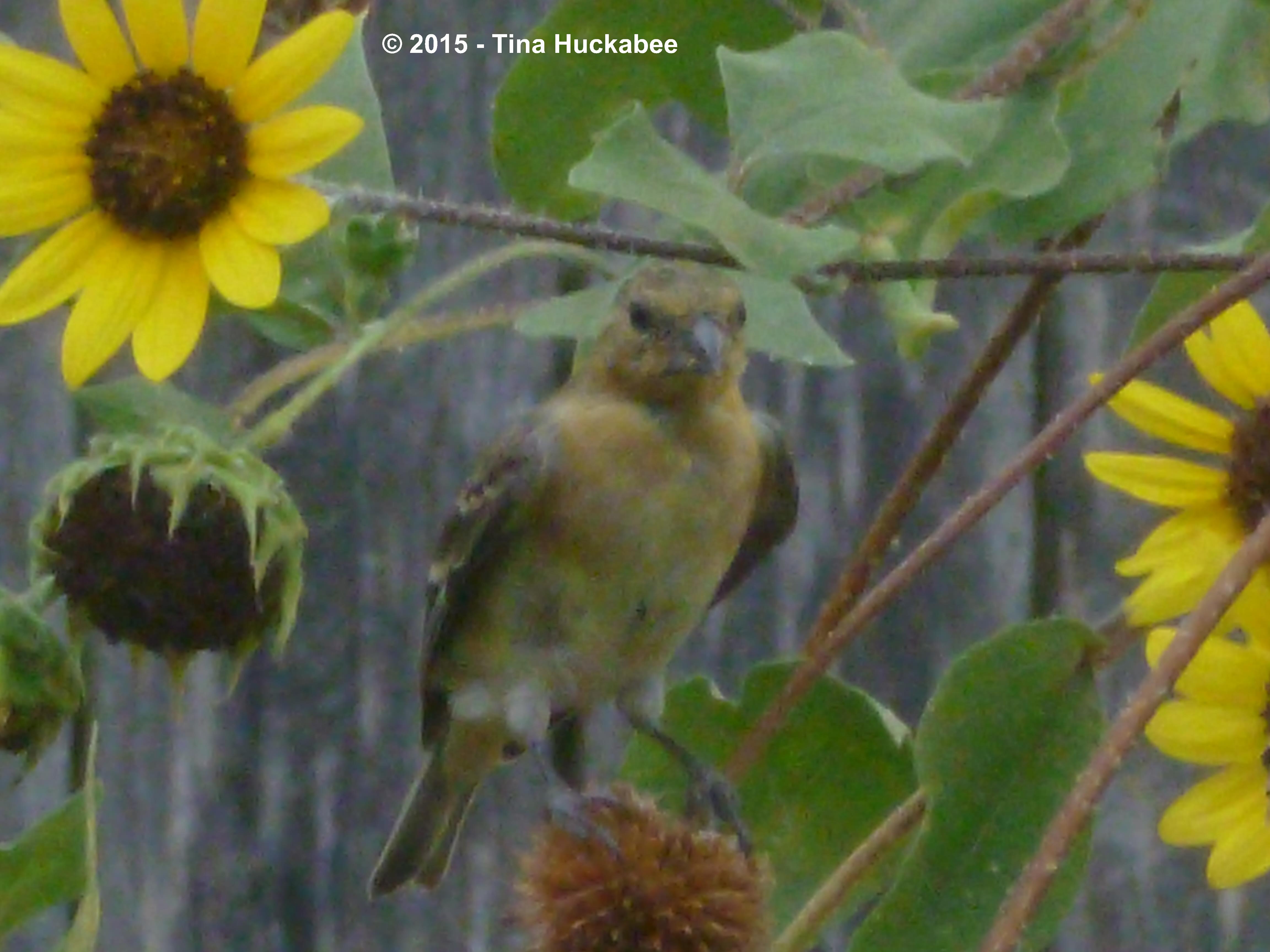
As June winds down, the rogue sunflowers are seeding out.  Members of the  Lesser Goldfinch, Spinus psaltria, crowd are visiting daily.   This male worked the spent blooms,

IMGP9179_cropped_3549x3273..new

…as did this female.

IMGP9180_cropped_3508x2558..new

IMGP9181_cropped_3810x2226..new

Lessers, like most finches, love seeds, and I thought that she was munching seeds, until these shots!

IMGP9186_cropped_3097x2405..new

IMGP9187_cropped_2825x2120..new

Yummy petals!    The Cornell Lab of Ornithology site that I’ve linked to mentions that Lessers will “…occasionally supplement its diet with insects such as plant lice.”  Maybe she was eating lice, but it looks to me like she just needed her leafy…yellows.

Lastly, I couldn’t resist this shot of an Eastern Fox SquirrelSciurus niger, taken early one morning, as he was draped along the edge of the roof solar panels.  He looks like he’s hanging out, deciding what to do for the day. Do I raid the bird feeder?  Or scold the cat?  Or chase other squirrels around the tree?  Dig holes in some potted plants? So many things to do!

IMGP8761.new

I know squirrels are pests, and that they chatter and annoy dogs and cats, and I haven’t quite forgiven one of its kind for ruining the family of my Eastern Screech Owls, but it doesn’t get cuter than that.

Maybe that’s why I wildlife garden.  For the cute.

Many thanks to all of you who garden for wildlife, no matter how much or little:  you’re part of the solution.  I hope your gardens received wildlife visitors this month and that you will join in posting for July Wildlife Wednesday. Share the rare or mundane, funny or fascinating, beneficial or harmful critters you encounter. When you comment on my post, please remember to leave a link to your Wildlife Wednesday post so readers can enjoy a variety of garden wildlife observations.

Happy wildlife gardening!


Are You Coming To The Party?

It’s been a year since Wildlife Wednesday debuted as a regular garden blogging meme and we’re celebrating this Wednesday, July 1 with another installment of wild things in the garden. The anoles are ready to party and check out what might be available for noshing.

IMGP8684.new

As they make their way to the event, please get your camera and stories ready to wow wildlife gardeners everywhere with sightings, identifications, and musings about the importance of biodiversity and the living garden!

IMGP9174.new

We are wild bunch!IMGP9175.new

Wildlife Wednesday.  July 1.  Hope you can make it!!

IMGP9177.new

Our Pals The Pollinators

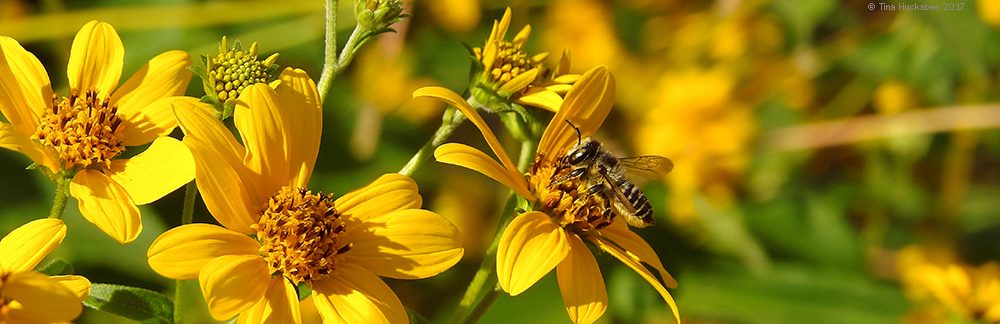
Pollinators aren’t just pretty things fluttering around our gardens and buzzing past as we hike on trails, they are critical to the health and survival of ecosystems throughout the world.  Bees of a variety of species pollinate the plants that supply a large percentage of the world’s food supply and about 1,000 plants used by humans for food and other supplies are pollinated by bees and other pollinating animals. Additionally, 90% of wild plants are pollinated by wild bees of many species.  Bats and birds contribute greatly to the pollination of wild plants and agricultural crops, while butterflies and moths pollinate flowering native plants in every ecosystem.

IMGP8875_cropped_3156x2733..new

Habitat loss, over-reliance and misuse of pesticides and herbicides, invasive species, as well as disease and parasite infections are leading causes of the startling decline of all pollinator animals worldwide.

In the United States, over 40% of honeybee hives were lost last year.

IMGP8768.new

Though wild bees haven’t been studied to the extent that honeybees have, nor do they suffer from the disease/parasite issues common to the honeybee, we know they are declining.

IMGP8367_cropped_3190x3258..new

The beloved North American Monarch butterfly has declined by 90% in the past 20 years.  The process to list the Monarch as an endangered species has started, with plans formulating for the expansion of its migration habitat, though unfortunately, no limits were placed on the use of the herbicide Roundup, which is the primary culprit in the decimated Monarch populations.

IMGP1707.new

I could go on (and on) lamenting the problems that wildlife, and nature in general, are experiencing, but what the average gardener, homeowner, and citizen should know is that nothing in this world exists without balance. In all parts of the world, preservation of wild space is vital to all life.

Fortunately, understanding about the threats posed to pollinators is beginning to find way into the mainstream consciousness of people and their governments and perhaps it’s not too late to prevent a catastrophic decline in the pollinator partners whose work is requisite for human existence.

IMGP6463_cropped_3281x3364..new

Pollinators should be appreciated for their contribution to a healthy and vibrant  ecosystem, their role in plant preservation and evolution, and their beauty.

IMGP8957_cropped_2806x2378..new

They deserve to exist.

IMGP8947_cropped_3046x2543..new

As I was thinking about Pollinator Week and what I wanted to say, this lovely, simple, but profound post from Forest Garden  popped up in my email.

I can’t add anything to this, in either text or visuals.

What to do?

Well, there are the usual things: walk, bike, carpool and take public transportation when you can–make that a lifestyle change to lessen your carbon impact. Recycle and reuse when possible–there’s enough junk in the world.  Avoid the use of home chemicals and support companies/products that are cognizant of the dire consequences resulting from unfettered and irresponsible industrialization.  Through volunteerism and/or donations, support the many organizations that are educating and lobbying for those who cannot speak for themselves.

IMGP8939.new

Vote for public servants who are friendly to the idea that our society must set aside more public space for pollinators–and other wildlife. Whether it’s supporting the dedication of a swath of land bordering I-35 from Minnesota south to Mexico thus enabling the Monarchs to continue their remarkable migration, or setting aside more land as green space in cities and towns, or recovering and protecting natural habitats–of all sorts–support leaders who promote these endeavors with your time, money, and votes.

IMGP8897.new

Also, if you own or rent a single family home, commit to removing that stretch of boring, wasteful, high-maintenance lawn and instead, prepare and install a wildlife friendly garden or pollinator garden. You won’t be sorry you did.

IMGP8892.new

The American love affair of the lawn is baffling to me.  Most people don’t even do anything with their lawn, except to walk on it when they mow. The traditional expanse of lawn feeds almost nothing, except for some grubs and other problematic insects. The lawn requires much watering, fertilizing and mowing and that is unsustainable. I guess one positive aspect to lawns is that the maintenance employs people.

To paraphrase: Love the mower, hate the mowing.

A more efficient, environmentally appropriate, and attractive use of outdoor space is to plant for pollinators and other wildlife.  Nature isn’t over there, but indeed, should be welcomed and nurtured in your own backyard–and front yard. Additionally, a well-planned, established pollinator garden is not only more beautiful than a lawn, but also less work in the long run.

IMGP8635.new

IMGP8632.new

A wildlife or pollinator garden requires some planning and thought and like a good paint job, preparation is key.  Dig out the existing grass and/or solarize, so that you begin your soon-to-be-stunning garden with a blank slate.  If you have poor soil, some soil amendments are recommended; home-grown compost is probably the best thing you can add to a garden.  If you’re gardening on thin soil with rock, you might build raised beds, either with rock, wood, or steel edging.

IMGP8571.new

IMGP8569.new

Some general design elements are practical to remember:  addition of trees, large and small, are important, and larger plants are best placed toward the back, medium and smaller plants, toward the front of a garden.

Planting for blooms throughout the year means choosing a variety of different plants.   Mix reseeding annuals with perennials, if you like.   Many plants can be purchased in four-inch pots and as seeds and that lessens the cost of a yard transformation. Share plants with friends and neighbors.  If possible, choose plants that are native to your region.  Native plants require less water and effort because they belong where you live and will attract the wild bees and other pollinators that you’re aiming to support.  There is a direct link between native plants and their pollinators. Locally owned nurseries are usually at the front line of providing invaluable information for what to plant for your particular area.  Also, check out the “Resources” tab on this blog to link to organizations such as the Lady Bird Johnson Wildflower Center and Wildseed Farms.  Beloved plants such as roses, daylilies and the like can certainly be in the palette of the well-designed pollinator garden, so you don’t have to give up the plant that your grandparents grew and that you would love to add to your garden.

IMGP1725.new

Finally, start small.  You don’t have convert the entire landscape THIS YEAR.  Add a bit of garden each year and before you know it, your space with be a living garden–full of life, color, pollinators, and all manner of beauty.  Your outdoor space will be more enjoyable and less onerous to maintain than the grass that you removed.

IMGP8565.new

If you live in an apartment, townhouse or condominium, encourage the owners and /or managers  to do all of the above instead of having the mowing crew show up, once-per-week, spewing hydrocarbons and noise.

Most of us are granted only a small part in helping to heal the world.  But if many step up, speak up, and change the “yard” maintenance paradigm from wasteful lawn to wildlife/pollinator habitat and garden, what a difference that could make.

IMGP0470_cropped_3498x2779..new

Start small.

P1060201_cropped_3201x3816..new

Spread the word.

P1040755.new

Change the world, one garden at a time.

IMGP8795.new