Lesser Goldfinch Feeding Frenzy

After the massive autumn flowering of Plateau Goldeneye, Viguiera dentata, and pollinators, especially honeybees, have taken their cut of the action, flowers segue to seeds, and birds replace bees.

In the last few weeks, each time I walk outside or come home from elsewhere, there’s a whoosh of wings upwards–with accompanying chirps–to the relative safety of nearby taller trees and shrubs. Tiny Lesser Goldfinches, Spinus psaltria, are come-and-go visitors in my garden throughout the year. In October and November, their numbers increase, along with their appetites, as they favor the seeds of the Plateau Goldeneye shrubs.

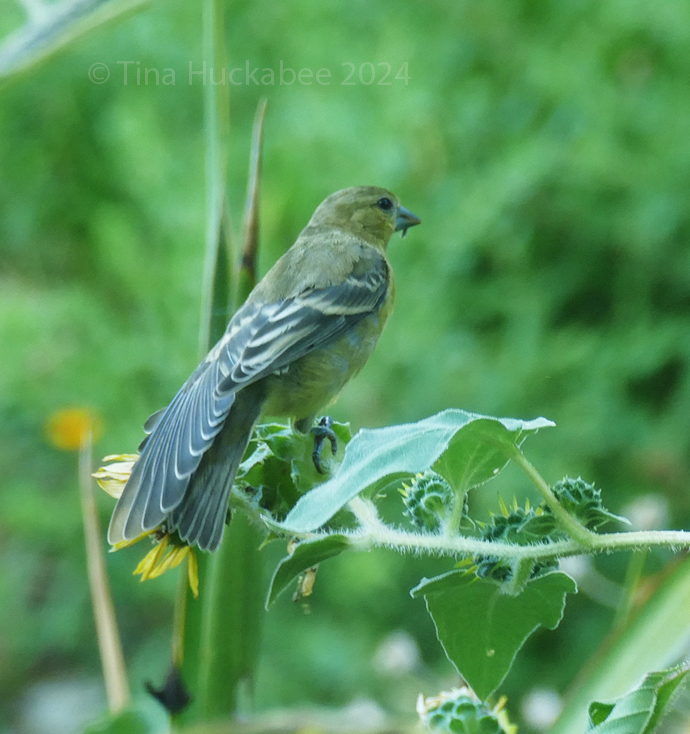
This little male doesn’t look frenzied, but he and his crew energetically work the shrubs, nibbling delectable goldeneye seeds as they bop along slender limbs, stopping only to munch. .

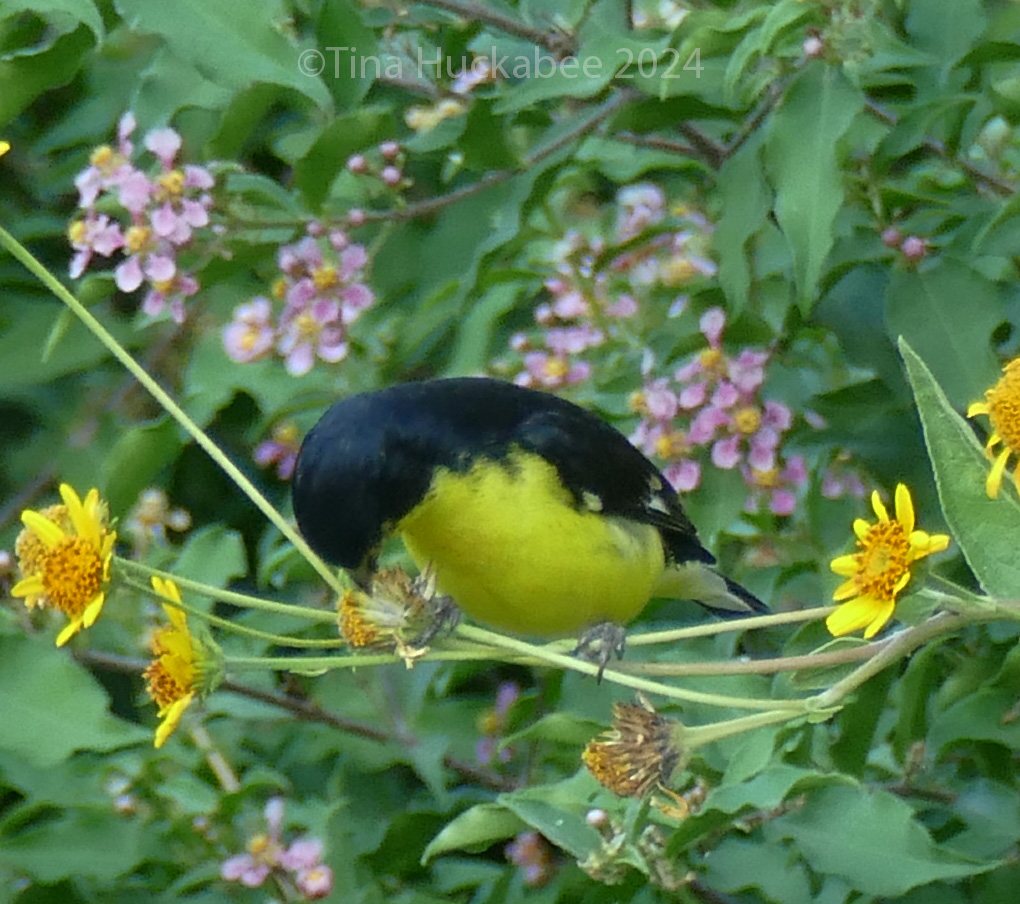
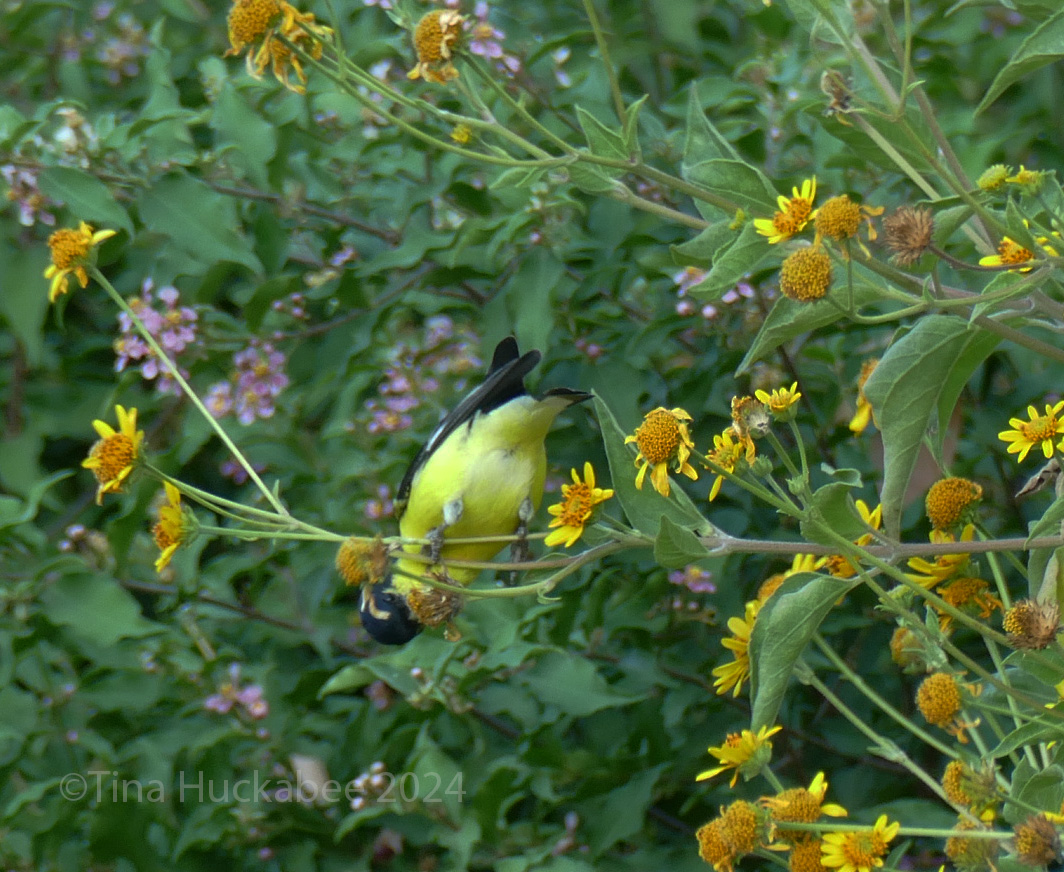
These little cuties are also contortionists, noshing right-side up, up-side down, and sideways. Their determination to pluck available seeds is hampered only by limitations of wings, claws, and beaks.

Bum’s-up, little fella!
While it’s impossible to count how many goldfinches are feeding during the frenzy, the flock(s) are made up of both male and female, and there are a also plenty of juveniles in the mix as well.
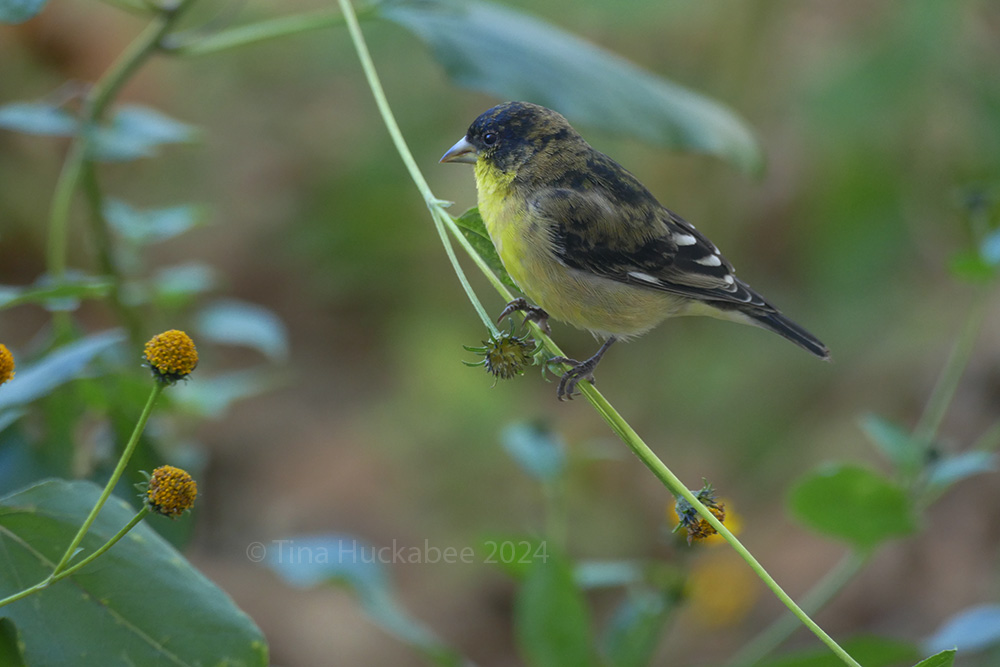
I never got a good photo of a pretty, but sedately colored, female, but they are just as active and hungry as their male counterparts. Here’s a shot of one, in early summer of 2021, enjoying the bounty of a different sunflower plant.
Often, a goldfinch couple feeds together, either on the same branch or near one another. As winter approaches and the seed sources disappear, I’ll see Lesser Goldfinches visit my feeders.

Until they’ve vanquished this year’s goldeneye seed crop, I’ll hear their song and enjoy their frenzied antics!

A Flutter of Butterflies

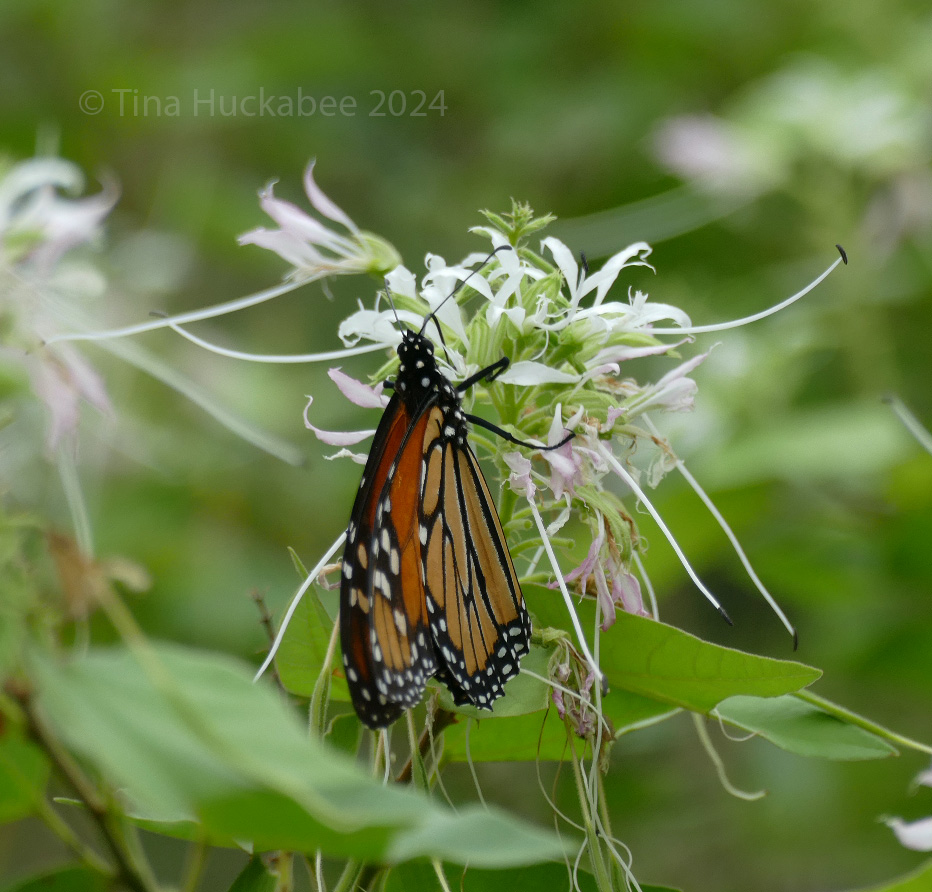
Sightings of migrating Monarch butterflies, Danaus plexippus, have been few and far between this autumn. I’ve observed one or two, here and there, the burnished beauties’ wafting through my garden, wings wide open, brightened honey-colored by the sun’s rays. By late September and early October, despite ongoing drought and heat, some of the Monarchs’ favorite blooms were in full, flowering mode, ready and waiting for brief visits from the passing butterflies.

Frostweed, Verbesina virginica is always a favorite.

Gregg’s Mistflower, Conoclinium greggii, is another autumn blooming Monarch magnet.

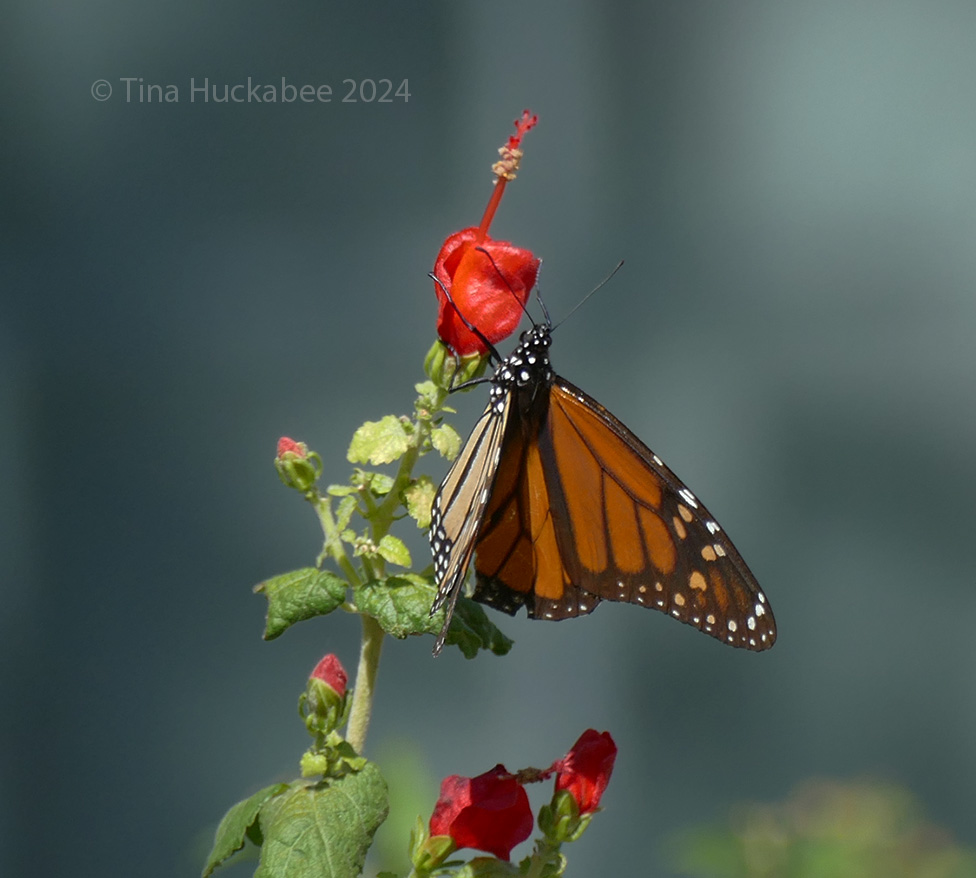
Pollinators, including Monarchs, love Turk’s Cap, Malvaviscus arboreus var. drummondii.

Though it was heartening to see the Monarchs, a few passing through doesn’t suggest a migrating group.

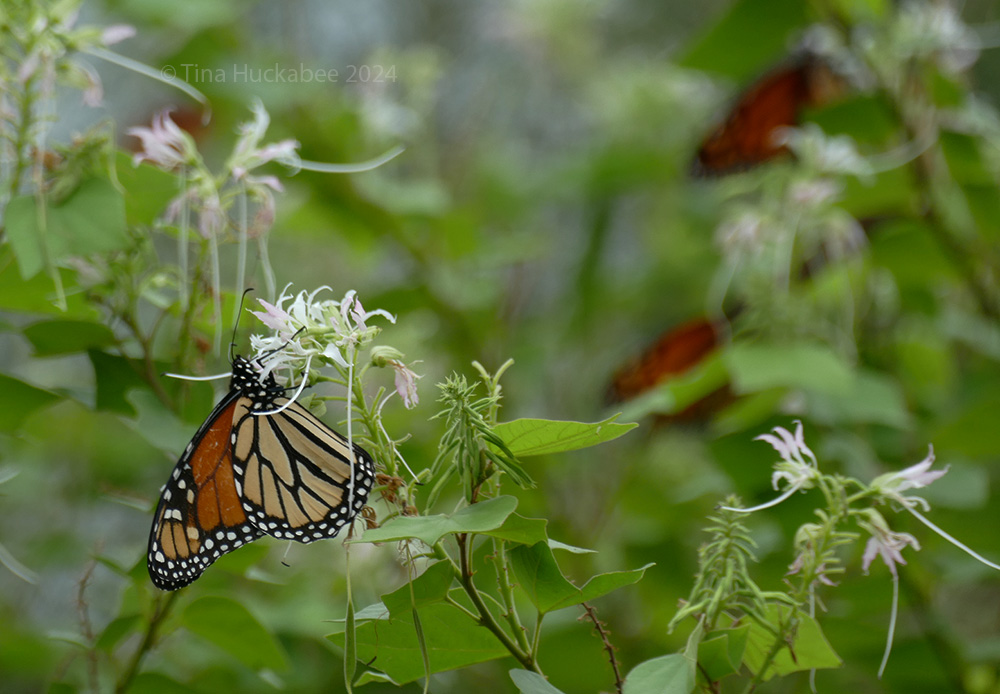
That changed a wee bit this past last week. For a couple of days, I counted 14-15 Monarchs working the graceful flowers of my Mexican Orchid Tree, Bauhinia mexicana.

Here, there’s one in the foreground and two in the background; there’s also a little dab of umber in the left background. That brown beauty is a Queen, Danaus gilippus, a cousin to the Monarch.

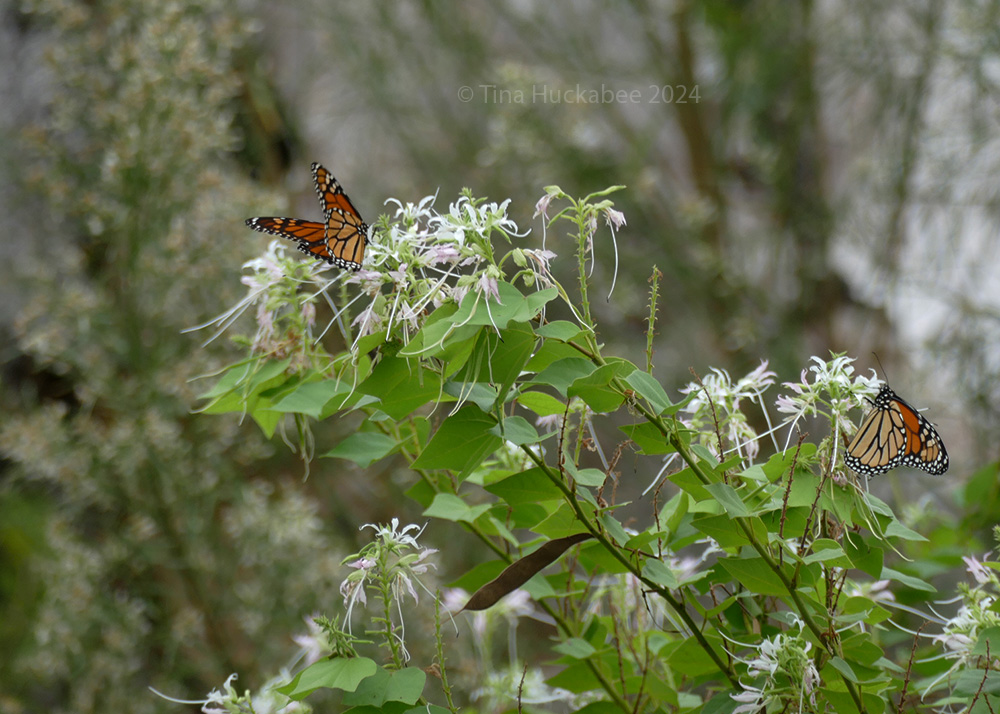
These two Monarchs worked the orchid tree flowers, while in the blurry background, False Willow or Poverty Weed, Baccharis neglecta, hosts its own party of pollinators. The willow attracts many native bees, honeybees, and some of the small skippers. It’s alive with movement.

I probably should have shot a video of the fluttering butters rather than trying to capture photos. The darned things continually moved from bloom to bloom and when they were bored with that, played hide-n-seek behind the ungulate-shaped foliage. I’d focus on one or two, then whoosh, they wing out of the camera’s sight. It was nigh impossible for this picture-taker to capture the glorious activity around the flowers.

This small group, welcome though it was, doesn’t come close to the numbers of Monarchs that have graced my garden in the past. But given the survival challenges that Monarchs face, I am pleased that there were so many for a day or two, and that I had ready for them nectar-rich food sources. Recent research has suggested that the migrating Monarchs are losing the will to migrate, due to a host of factors. For more information about this sad, but perhaps evolutionary trend, check out this article from Texas Butterfly Ranch.

I’m not sure if the group I observed constitutes a flutter of butterflies–a term that refers to a mass of butterflies, but I do love the use of the term flutter, along with the other words used for butterfly gangs, like the following: a flight of butterflies, a kaleidoscope of butterflies, a rainbow of butterflies, a shimmer of butterflies, a swarm of butterflies, and a wing of butterflies.

Many or one, Monarchs are a joy to witness, a balm for the soul.

Mockingbird in the Back Garden

For the past few weeks, a handsome Northern Mockingbird, Mimus polyglottos, has spent a good portion of his days singing loudly and beautifully, serenading to inform the neighbors that this is his territory. Flitting from the Roughleaf Dogwood, Cornus drummondii, to other points of interest in the garden, he returns repeatedly to the dogwood to perch and sing.

Not only does the dogwood provide nice cover with its shade-producing foliage, but the luscious creamy fruits are a draw for many birds, especially this avian crooner.

I observed Mr. Vocalist for several days, attempting to get at least one decent photo of a berry in the beak. Finally–success! If you look at the above photo, you’ll notice a group of 4 berries. Now check out the photo below, you’ll see that 3 of the berries are still attached to the tree, and one berry has landed firmly in the bird’s beak.

He looks jaunty and a little cocky, as he’s nibbling another nosh.

The bird has gone quiet in the last couple of days and I haven’t spotted much mockingbird activity in the back garden. I still hear melodious mockingbird song, but no longer are avian arias performed, but only short stanzas in songbird voice. The dogwood berries have also mostly disappeared, with just a few hanging on near the ground.

The small tree provided for pollinators in the spring, shade and cover all summer, and berries in autumn. Roughleaf dogwoods are a good example of if you plant them, they will come.