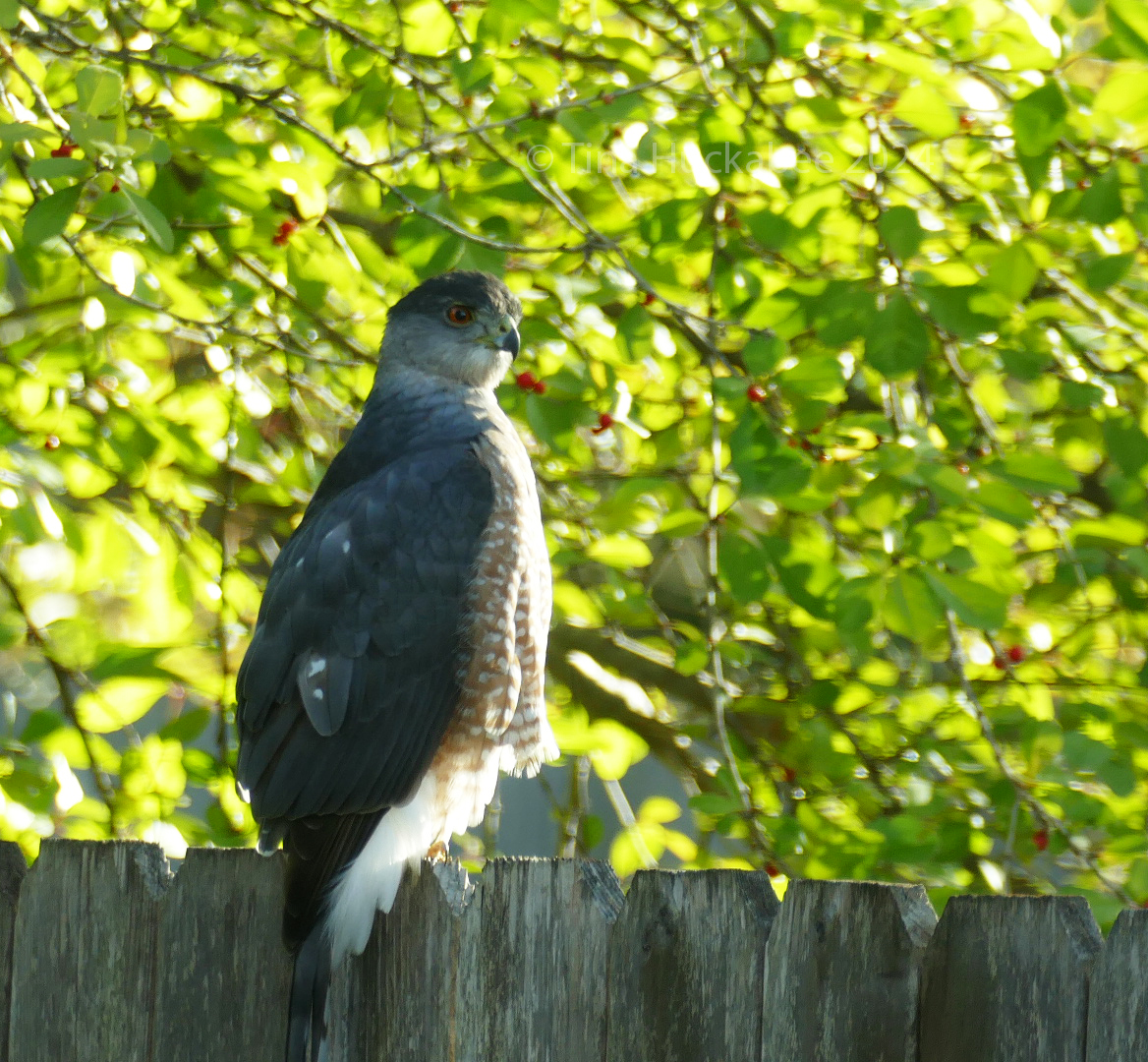
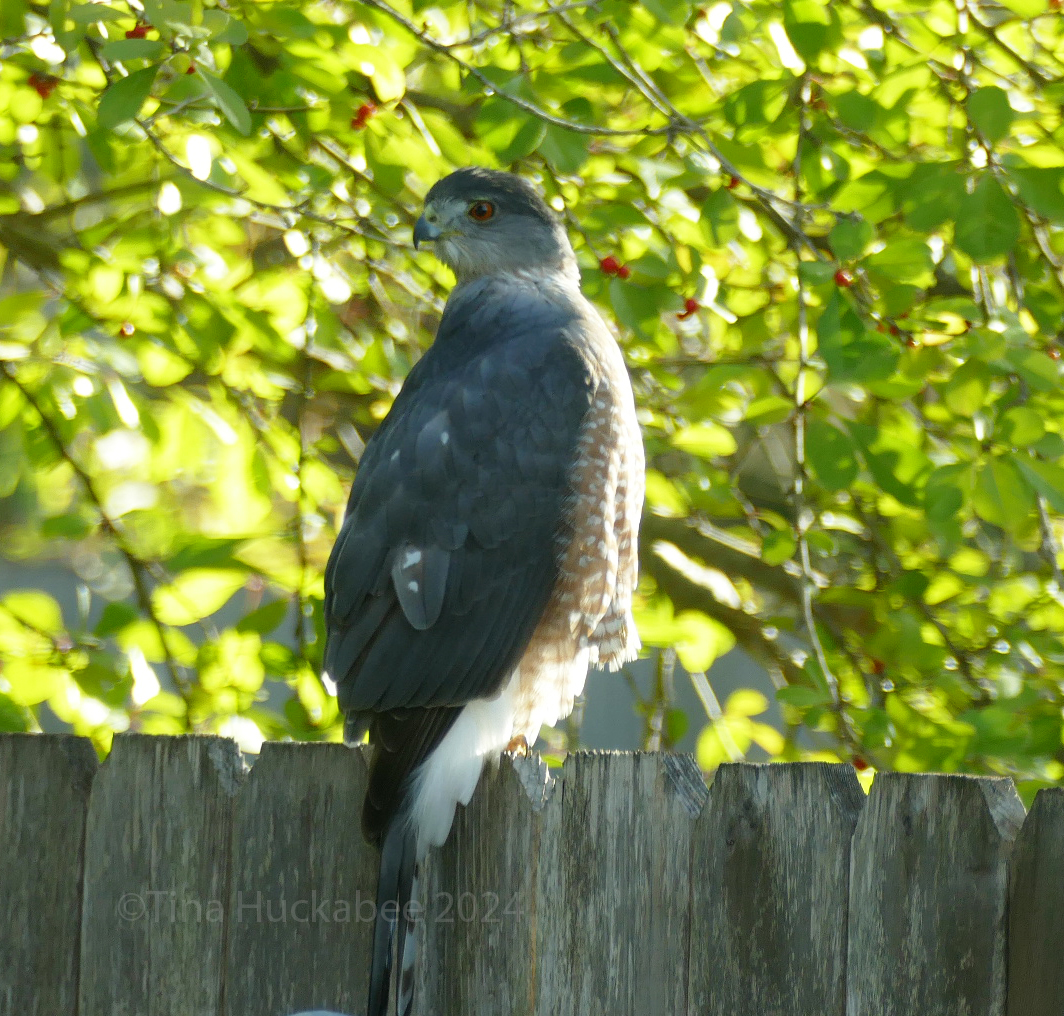
Seemingly relaxed, I can only guess that this adult Cooper’s Hawk, Astur cooperii, was content after a morning breakfast. Its presence rendered the other birds quiet for a time.
The hawk perched for some time on the fence, occasionally preening, mostly observing. A few times, its gaze focused just below where it sat, and I hoped that some curious Carolina Wren wasn’t in the hawk’s field of vision.
Eventually the Cooper’s hawk flew off, rested and ready for its next round of hunting. So it is for wildlife: survival is paramount, relaxation a rare gift.
As summer wrapped up and autumn commenced, the neighborhood birds quieted their activities. They’re around–nibbling here, noshing there–yet have been infrequent visitors to the sunflower and safflower feeders that hang in the garden. I do see plenty of bird activity midst the seed and berry producing perennials–that’s why I planted them! As I stroll through, rustling in the underbrush produces a flight of feathers to higher perches, but it’s difficult to catch good glimpses or clear photos of these winged wild things.
Autumn’s migratory season is a memory. I observe fewer birds in both number and variety during autumn migration compared with during spring migration. This autumn there was a quick look-see of a Baltimore Oriole, Icterus galbula, and brief barely-there view of a Yellow-breasted Chat, Icteria virens. Smaller, muted-colored birds are always a challenge to watch, but they were here, in limited numbers: Nashville Warblers, Lincoln Sparrows, Common Yellowthroats, and the like. Some moved on to winter homes south of Central Texas, but others remain, settling in for winter, before spring beckons to recreate their families. There’s at least one Orange-crowned Warbler, Leiothlypis celata, and one Ruby-crowned Kinglet, Corthylio calendula, in my back garden on a regular basis. Whether these two are males or females, I have yet to discern.
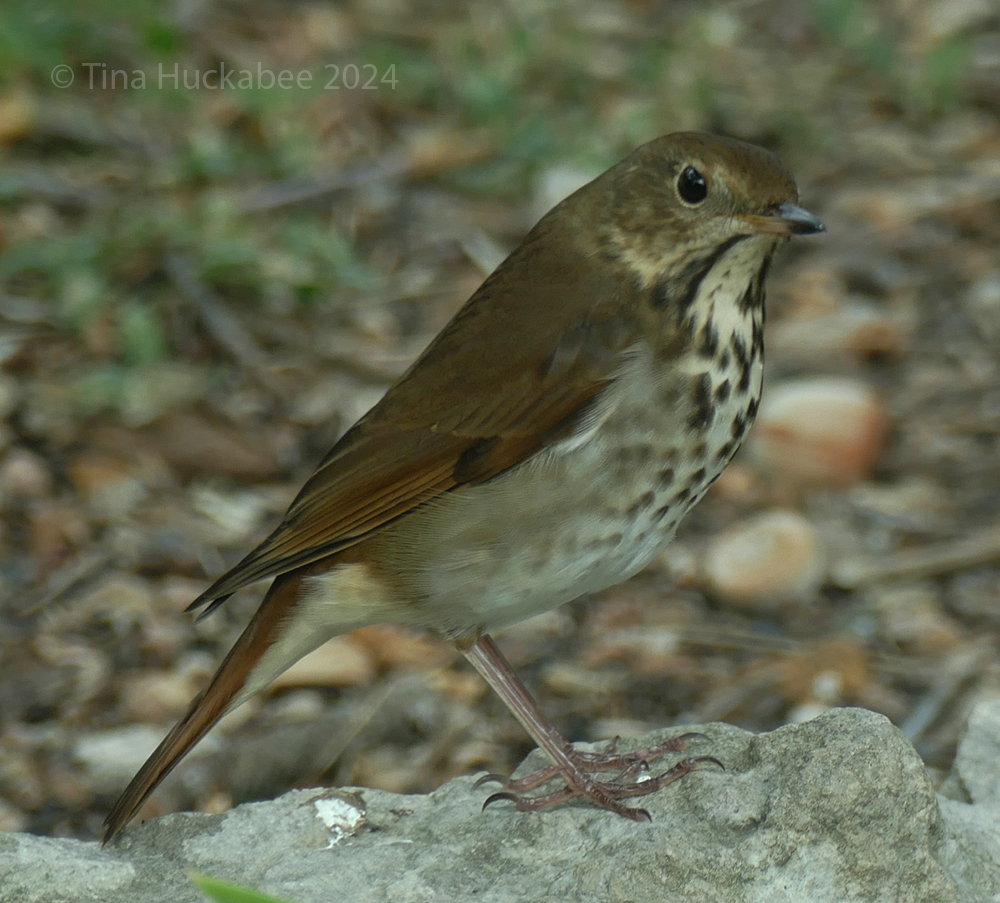
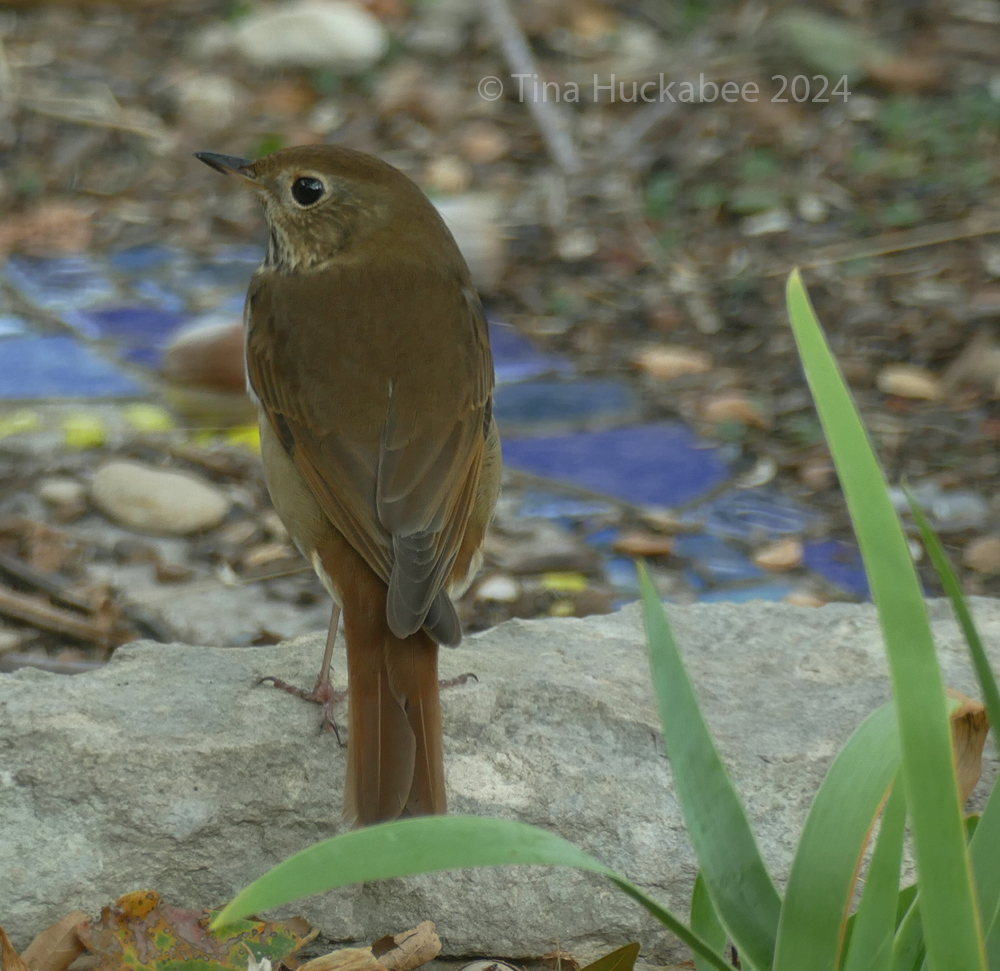
The migrant who stayed long enough for the watcher to watch was this handsome Hermit Thrush, Catharus guttatus. What a sweet little face it has and how about those breast/tummy spots?
It mostly hunted and pecked along the ground, looking for seeds and small insects as its busy beak swept back and forth along the ground and through mulched areas. After a while, it took a break from its meal-finding to splash in a bath. Here, resting, it shows off its rufous backside. Hermit Thrush’s tails show a redder hue than other thrush tails.
September through November is a quiet time, an empty nest time, for the resident birds and I miss their feathery antics and calls. During this time, they rest, their adult bird needs minimal. As the days grow shorter, then lengthen, the birds become more active, preparing for the territorial-defending and calorie-consuming seasonal mating and chick rearing responsibilities revisited on an annual basis in spring and summer. The increased attentiveness in the garden, coupled with winter-visiting migratory birds, will make for interesting bird watching in the coming months.
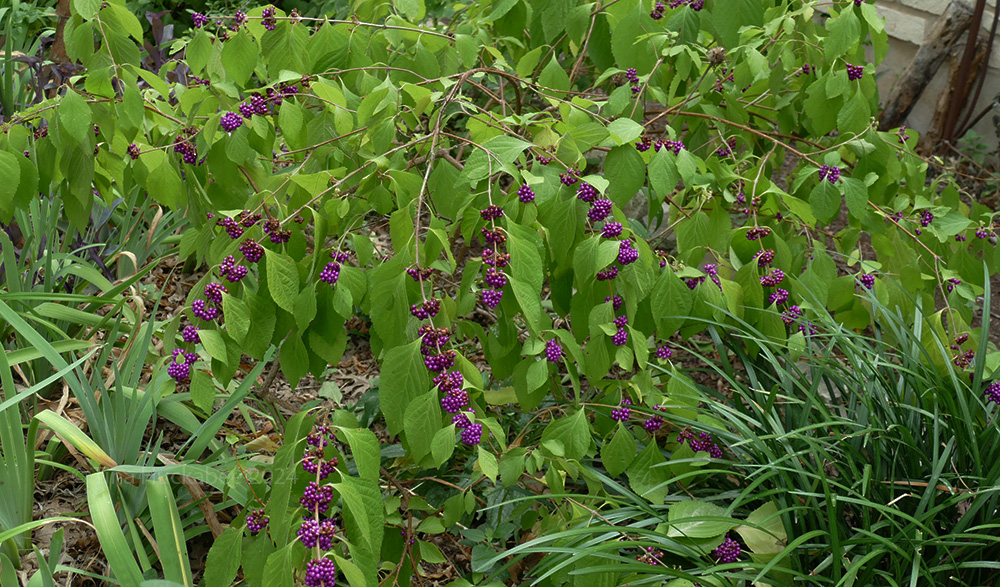
This arching, medium-sized shrub, an American Beautyberry, Calicarpa americana, is laden with luscious purple berries, though the berries won’t be on their stems for long.
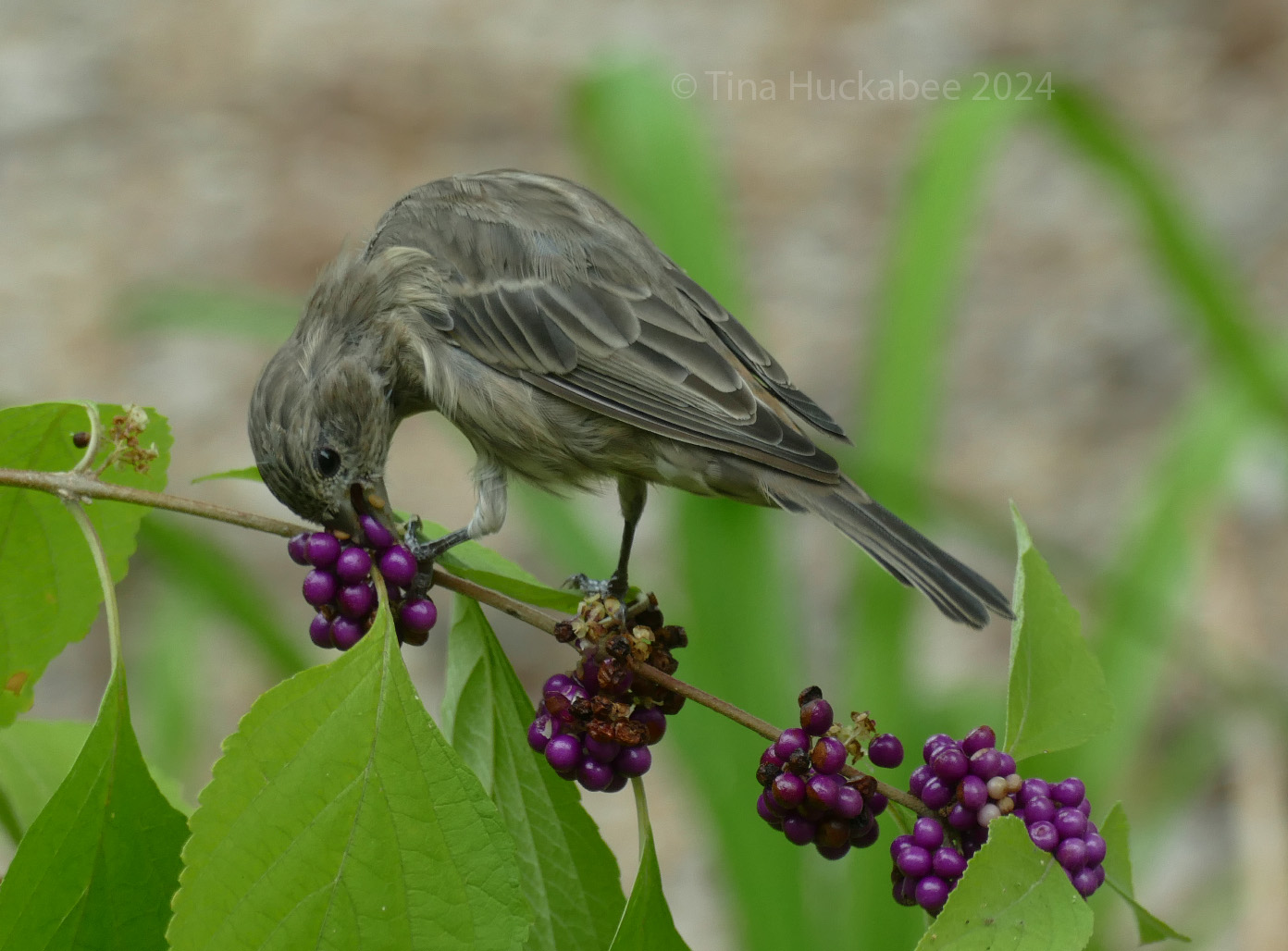
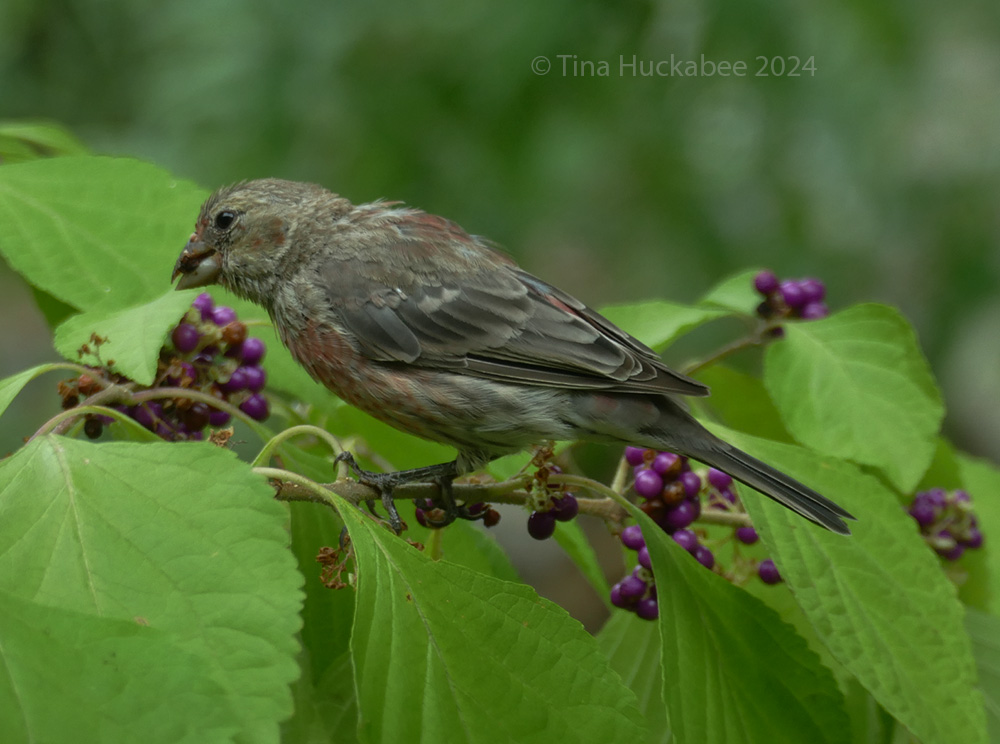
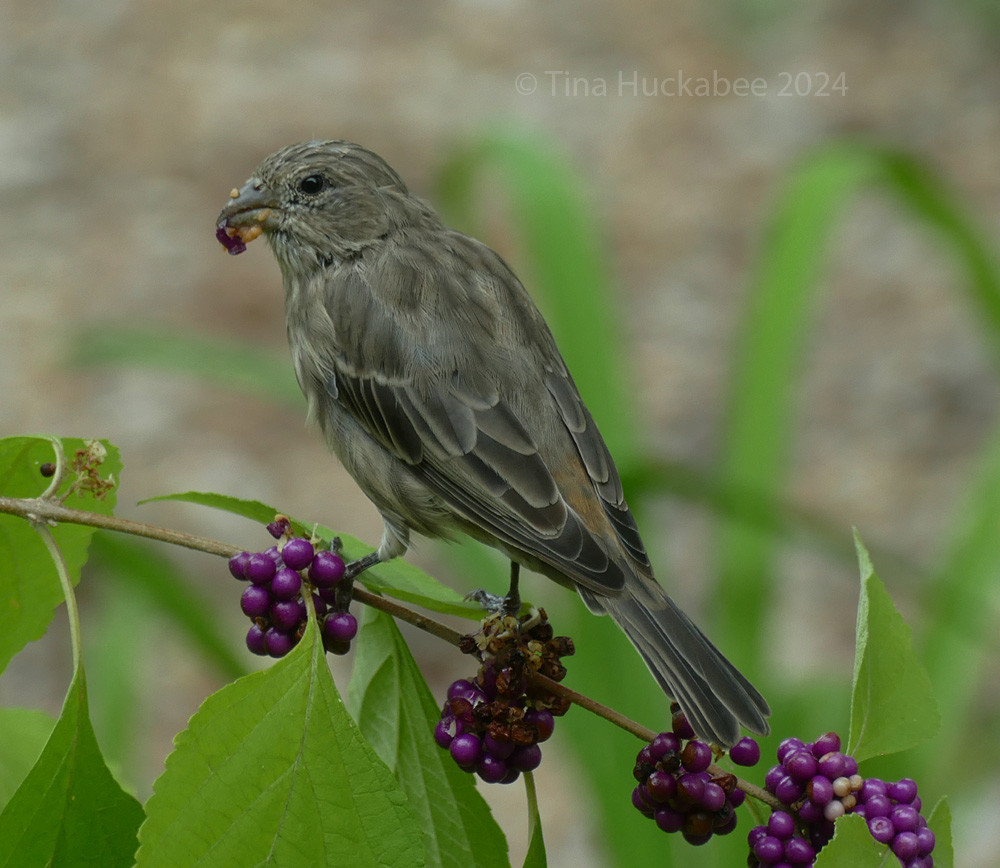
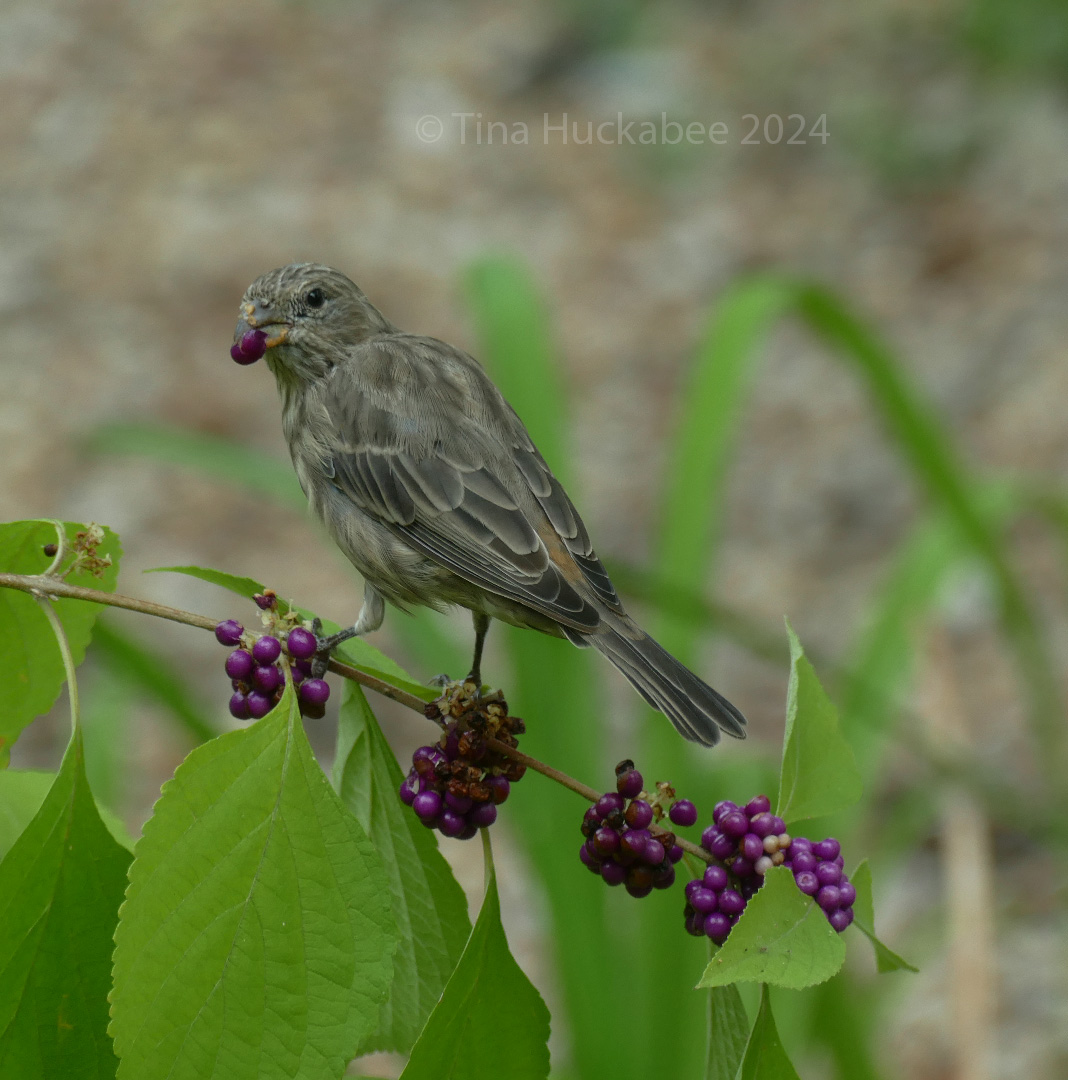
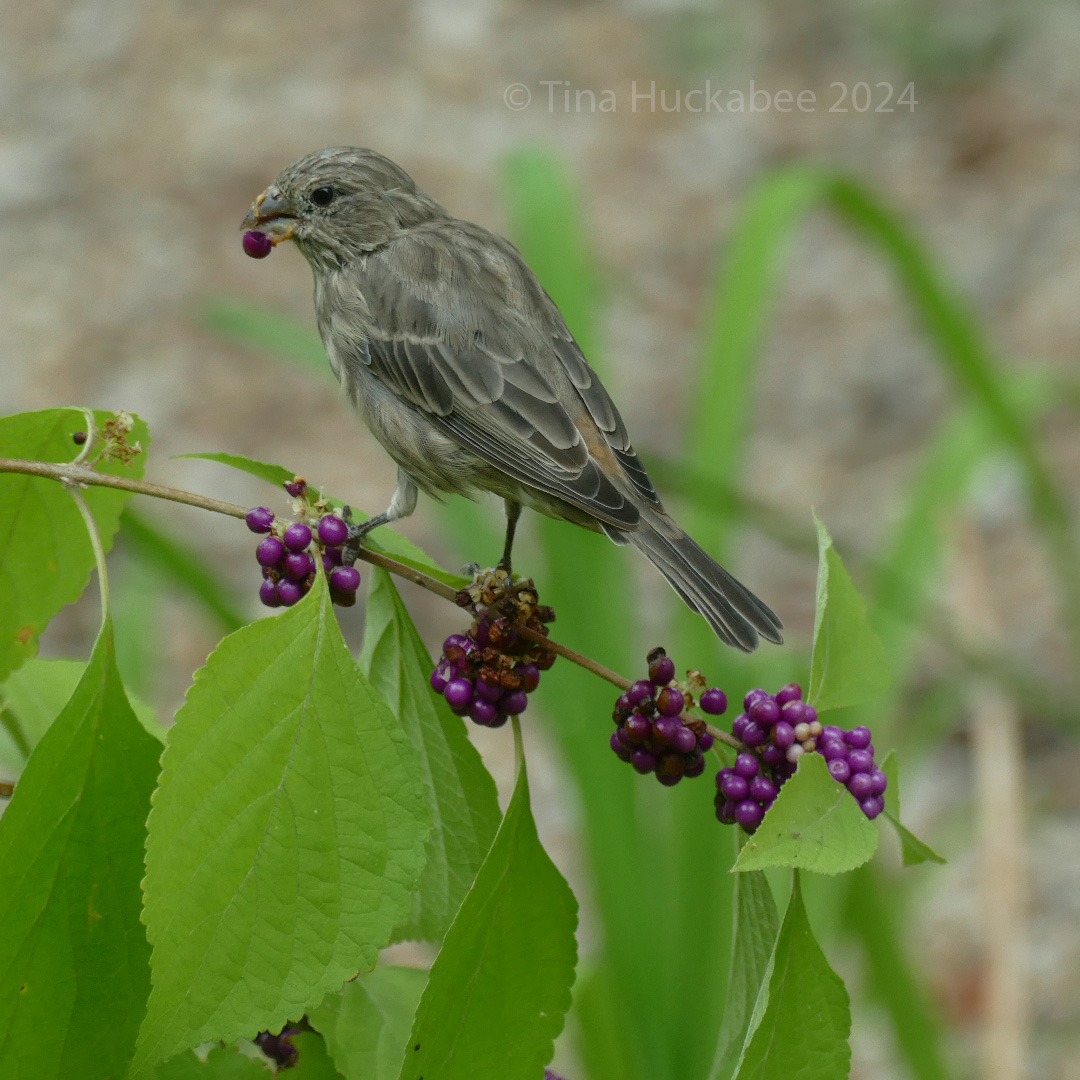
Beautyberries are food for a host of critters, but in my garden, it’s mostly mammals and birds who love these ridiculously purple fruits. Recently I watched as a couple of young, peckish male House Finches spent time enjoying the fruits of the shrub’s labors.
As I observed their brunch munching, I didn’t think they were particularly messy eaters, but I guess berry parts and juice will get stuck on beaks.
I like this shot. It looks like the berry is speared onto the bottom of the bird’s beak. Well, who hasn’t had that problem?
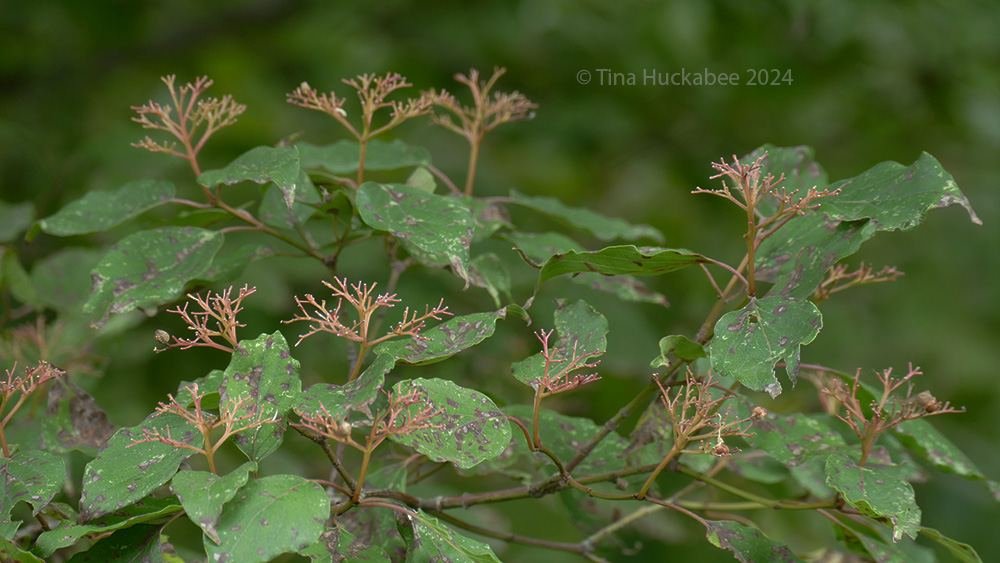
Late summer, moving toward autumn, many berrying native plants here in Central Texas reach their zenith in food production and beauty. I grow only one beautyberry shrub, but two Roughleaf Dogwood trees, Cornus drummondii, have their homes in my garden. The older, larger tree’s berries ripened in August and were quickly made into meals, stems now reaching out as if they miss their spherical hats.
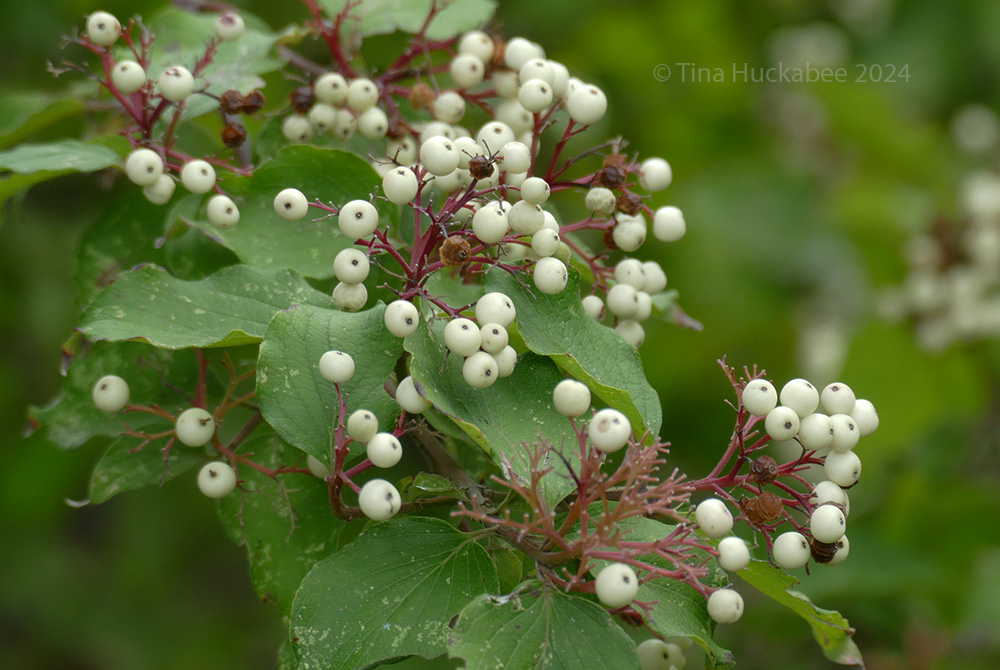
The younger, smaller tree still offers a few clusters of creamy fruits.
I find it challenging to get clear photos of birds as they dine at the dogwoods. Birds tend to stay in the center of the trees, reaching up or out to snatch the fruits. Plenty of foliage for hiding and nervous bird movements mean that the trees have their fruits stripped, while birds are relatively safe from prying eyes (and cameras) as they eat. This year, Blue Jays, Northern Cardinals, and European Starlings were the most frequent diners of the dogwoods’ treats
While it’s a win to catch decent photos of nibbling birds, I’m content to observe wildlife eating healthy, native berries from my garden. After all, feeding the wild things is why I plant what I plant!
 My Gardener Says...