De-bugging Buzz

At the end of 2017, I wrote about the death of Buzz the beehive due to a wax moth infestation.    We have plans to re-hive Buzz in April, but winter projects on my to-do list include moving both Buzz and Woody about 10 feet from where each originally stood, and to finish cleaning and disinfecting Buzz from the yucky remains of the wax moth infestation.  I’m pleased to say that I’ve achieved both goals, well ahead of the April re-hiving date!

When we discovered the invasion of wax moths, we removed the offending invaders and most of their accoutrements, therefore the ick of infestation remaining in Buzz consisted primarily of webbing, some frass (okay, lots of frass), and a few possible larvae cocoons.
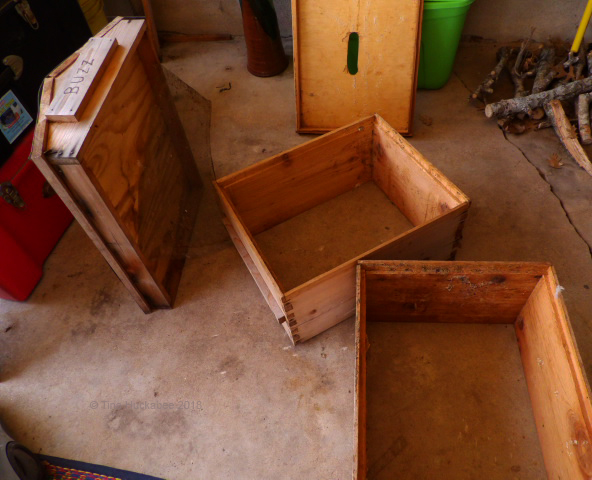
All laid out on the back patio, ready for the cleaning.
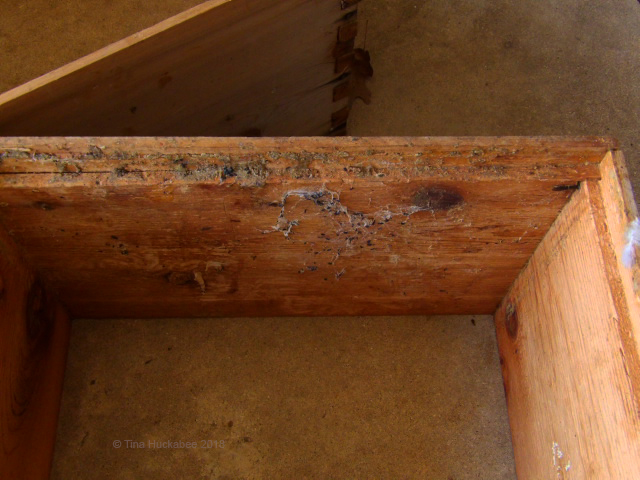
Webbing from the moth larvae, with frass in the mix. The dark spots are frass.

One sneaky cocoon left over from the initial elimination of the insects and their remains.
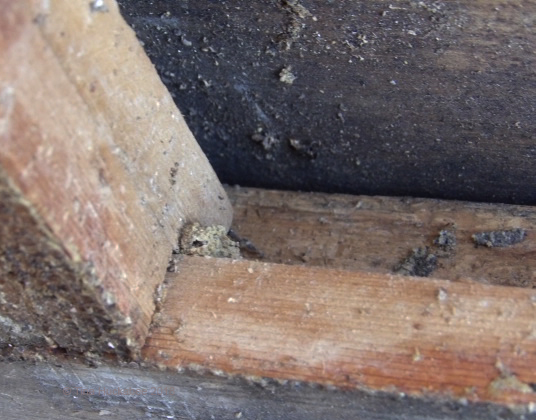
Another hiding cocoon.

I thoroughly vacuumed each box and all section pieces of Buzz, and then with brush, gloves, and bleach water in hand, proceeded to scrub-a-dub-dub the inside parts of the hive.  In some spots, I used a utility knife to clean out narrow gaps and remove the remains of cocoons.  I certainly don’t want any cocoon hanging around, awaiting release from dormancy for the purpose of reinfection.  If the new hive is strong–which it will most likely be–a re-infestation is unlikely, but just to be on the safe side….

After rinsing the entirety of Buzz with fresh water, I left the dismantled hive out for a few days in the cold to dry out.

The parts shown, left to right: brood box, top lid, another brood box, mesh, base, bottom board.

There are no frames because we destroyed and trashed them–the frames were too infected with wax moth nastiness and not salvageable.


Meanwhile, we moved Woody to her new spot in the garden, and placed a marker right next door for Buzz–for when she’s ready.

You’ll notice a bottle of sugar-water on Woody’s bottom board.  The bees are foraging on warmer days, but during this time of winter honeybees are at their greatest risk of starvation.  There’s not much blooming and it’s possible that the girls have used up their honey stores.  It’s too cold for me to check the hives, so the easiest thing to do is to mix up some “nectar” and see if they go for it–and they have!  Honeybees like their sugar!  Well, I can’t criticize, I’m well-known for my sweet tooth, too.

All situated, Woody is buzzing and Buzz is awaiting.
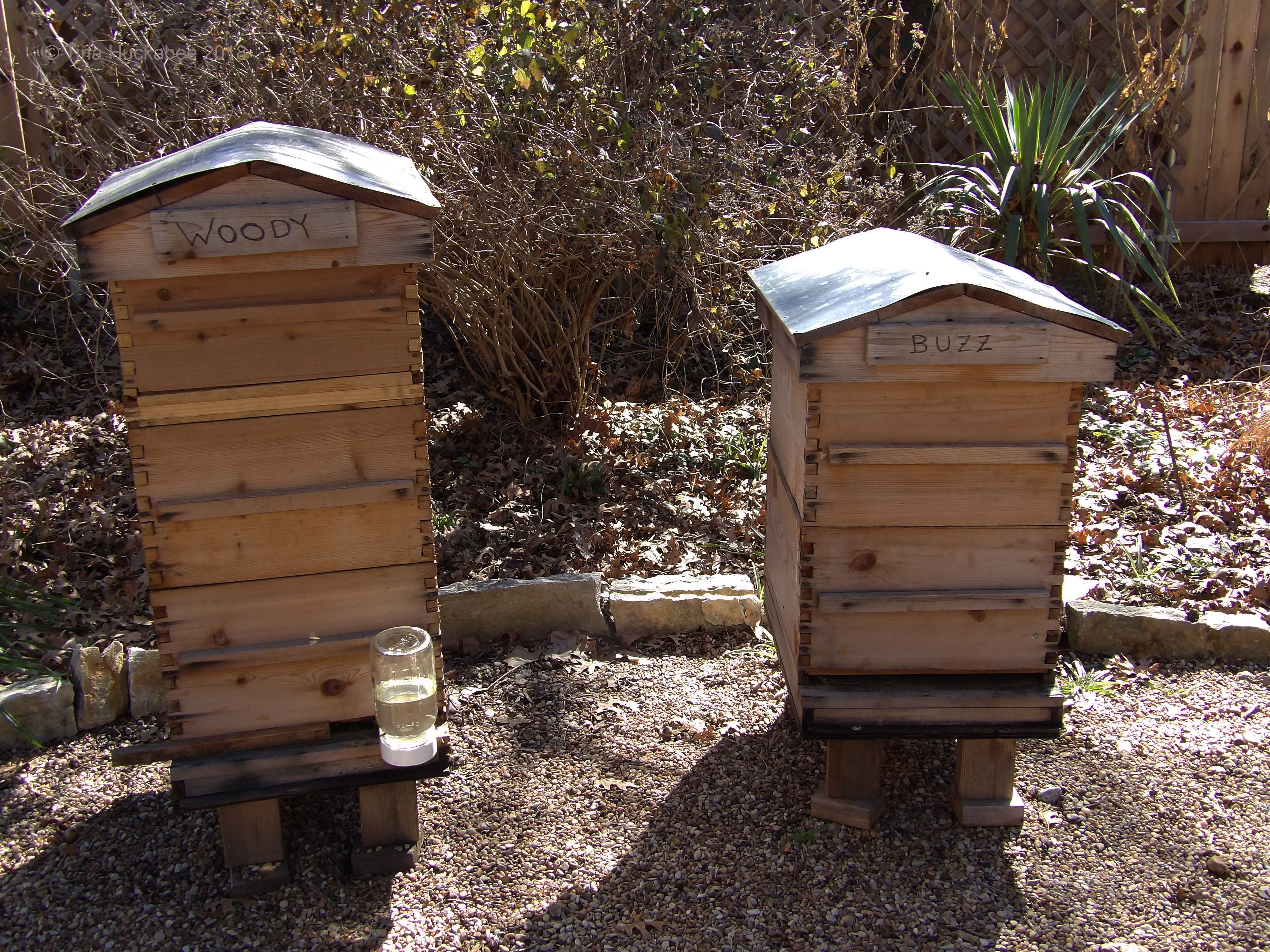
Of course, Buzz has no buzzy bees, so she sits, in decorative mode for now: no bees, no sugar-water, but all nice and clean and ready for spring!

Scar, our Warre hive, is also being fed.


In my garden, there’s currently little flowering, thanks to the cold, dry winter boasting of several hard freezes.  However, my three  Leatherleaf mahoniaMahonia bealei, are reliable winter bloomers and the bees are all over the cheery blooms as they open.

How many bees can you count?

Of course the bees also fly 3-4 miles for other nectar and pollen providers.  The honeybees aren’t exactly bereft of blooms, but neither are there bunches of blooms for them to choose from.

I’ve recently planted this green shrub in hopes of providing more winter sustenance for my honeys.
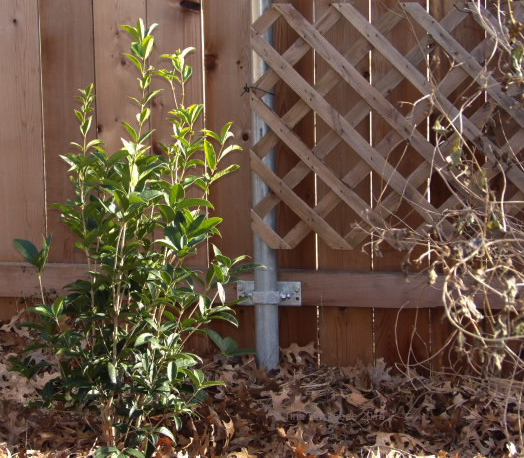
It’s a Sweet Olive Tea tree, or Fragrant Tea OliveOsmanthus fragrans.  I’ve been angling for a winter blooming, non-invasive, and evergreen plant, and happened upon this specimen during a nursery sojourn.  A non-native plant, the Sweet olive tree is primarily known and grown for its fragrant white blooms.  It’s drought tolerant once established and also deer resistant, though (thankfully!) that’s not an issue for me.  The Sweet olive tree is also something that isn’t particular about soil and will tolerate my clay and supposedly will bloom in sun, part-shade, and shade.  The spot I chose in my garden for this large shrub/small tree receives winter sunshine, but is somewhat shady for the remainder of the growing season.  I’m  confident that it will prove a good source of nectar and pollen for my honeybees during winter.  I also plan to add more mahonia to my garden, though I’ll probably choose other varieties than the Leatherleaf for the sake of diversity in plant material.

Honeybee season is nigh, as is the season for native bees.  The first native bees in my garden will be the Blue Orchard bees, who will emerge, buzzing and beautiful blue, from their pollen-packed holes (in bee hotels and masonry) sometime in the next few weeks.

Bees are starting to happen!


A Bracket of Beehives

A few years back, I visited the Oregon State University (OSU) Oak Creek Center for Urban Horticulture which is a 6.5 acres space dedicated to research involving sustainable agricultural practices.  OSU is well-know for its horticultural programs.

On a partly cloudy, cool and breezy autumn day, I wandered the fields of experimental and heirloom vegetables, lined with perennial gardens abloom with pollinator plants.  During the walk, I happened upon a charming apiary hosting an array of beehives.  Tucked in a shady grove, the apiary was adjacent to a lab located in an older home renovated appropriately for the work of horticulturists and entomologists.  The delightful OSU apiary showcases different types of bee homes and augments research about and demonstrations of commercial and home horticulture.

At the time, I wasn’t yet a backyard Bee Mama, but was definitely interested and learning about the buzzy beauties.  I took photos of the apiary, dutifully downloading them to my computer upon my return to Texas, fully intending a post about the apiary.  I focused on writing about other gardening subjects near and dear to me, though I certainly recall the apiary adventure and planned a post about the apiary.  Recently, with year-end/beginning-of-year photo file tidying, I was reminded that the ‘OSU apiary’ folder was awaiting its turn for a blog post with a round of accompanying photos.

On that lovely afternoon in Corvallis I meandered along a mulched pathway and viewed a variety of beehives which sat, perky and productive, in service to honeybees buzzing in and out and all around,  going about their important business.


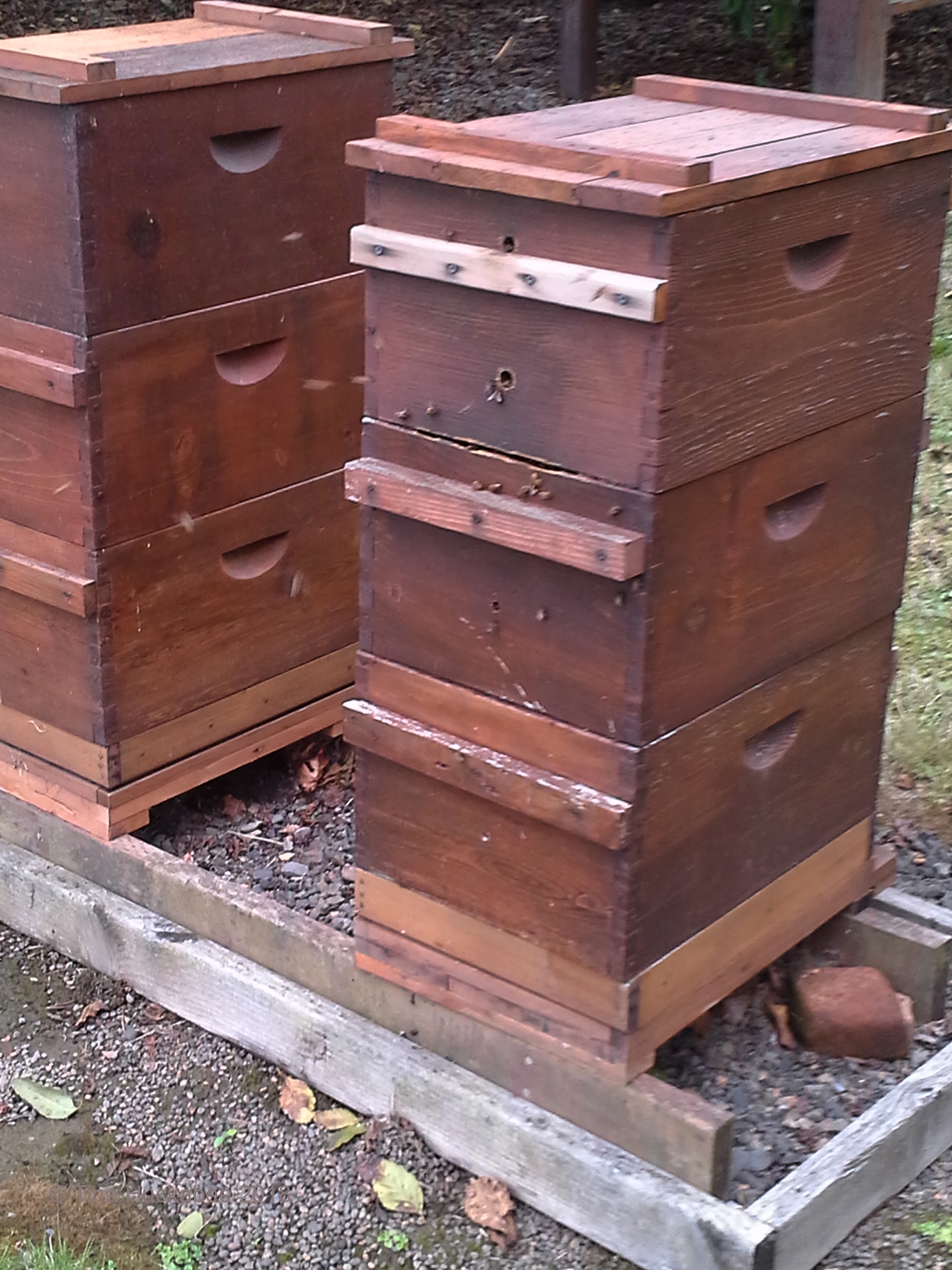
The classic Langstroth hive is a staple of any honeybee hive demonstration.  These two hives are each stacked with three brood boxes, or deeps.  This is where the queen hangs out, laying eggs and being taken care of by the worker bees and where the workers tend to the other tasks for hive integrity–making comb and honey and cleaning the hive.

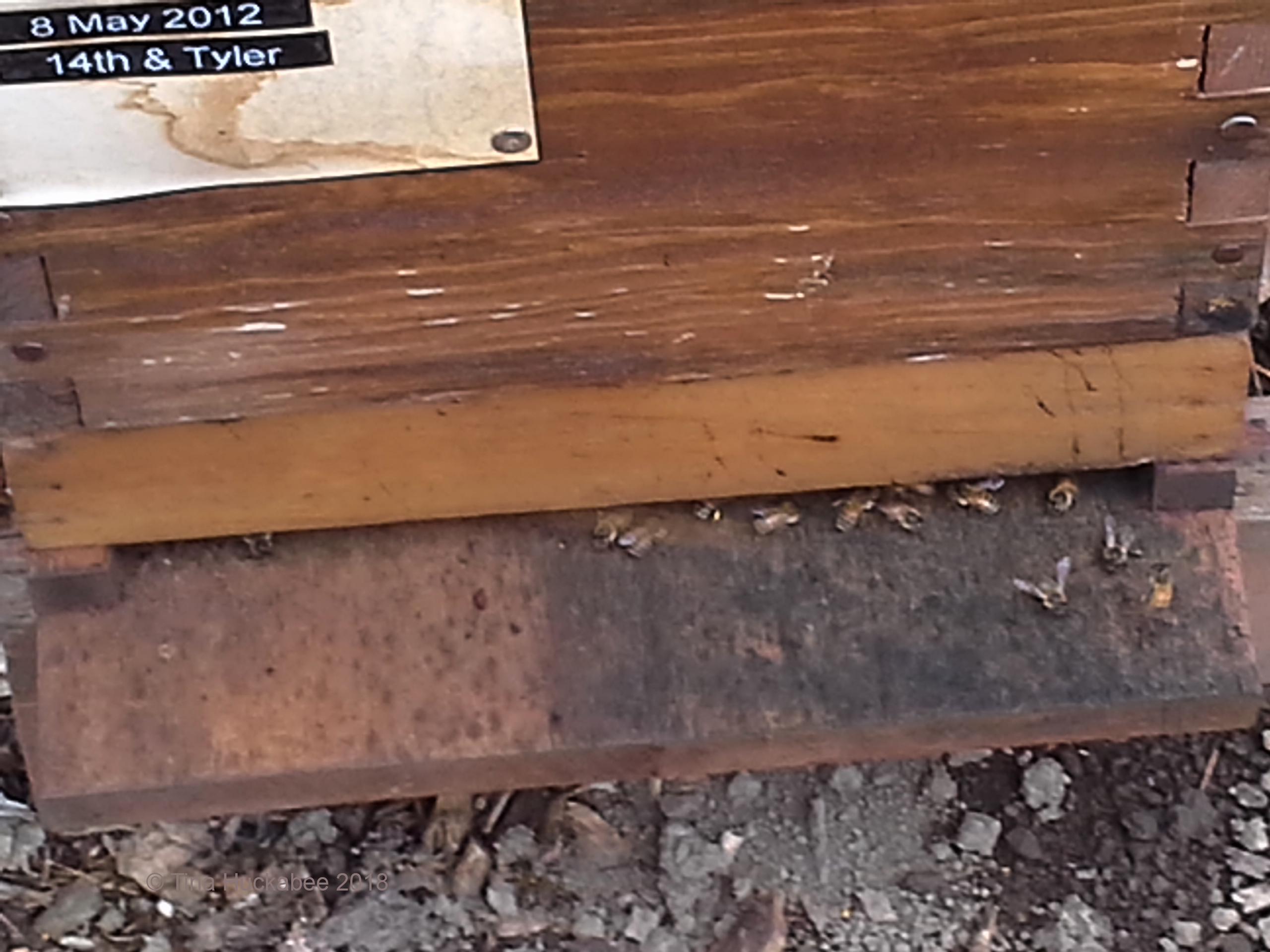
At the bottom of these hives, the entire length of the box is open about a half-inch tall for the bees’ entrances and exits.  This is called the bottom board.

I typically reduce the bottom board opening to my hives so that my bees don’t have to defend a large area;  I leave about 2-3 inches for their comings and goings, but I think the standard practice is demonstrated above–leaving the entire width open.


I like this hive!  Just in case you’ve just landed from outer space and you have no idea what these stacked boxes are for, there’s a  bee door ‘knocker’ of sorts which may give you a clue!  I’ve often seen honeybee hives painted white, but I prefer boxes of natural wood, or boxes painted in brighter colors, as well as bee boxes with painted decorations or decals.
You’ll notice that each of these boxes differ slightly in height.  The taller box is the brood box which houses the queen, larvae, workers, and lots of honeycomb.  The shorter boxes are called supers and contain honeycomb (and worker bees of course!), but no larvae.  Once a hive is robust, a beekeeper may place a super at the top of the hive so that the honey is more easily extracted without damaging the queen and larvae. For those supers where the keeper only wants honey for extraction, the queen is prevented from crawling into the shorter boxes by a mesh called a queen excluder.  The mesh is too small for the big-thoraxed queen to squeeze through, but worker bees are svelte enough to easily manuever as they go about their daily routines.  In the white Langstroth above, the strip of unpainted wood between the top and second-to-top box is probably the queen excluder. In some hive management techniques, beekeepers will rotate boxes, placing a super at the bottom of the hive; you can see that demonstrated in the above photo.

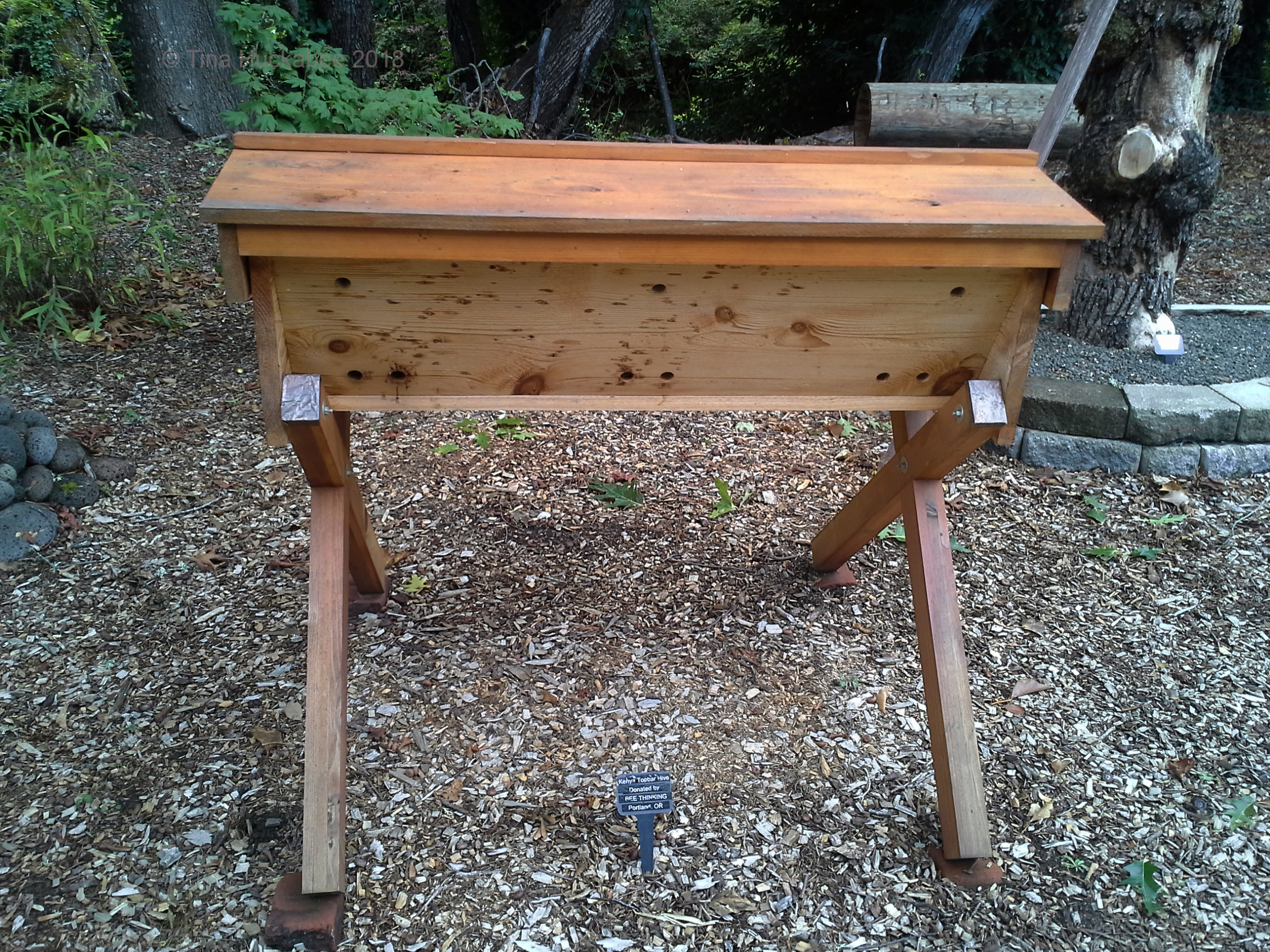
This hive is a Kenyan top bar hive.  It has only one chamber and no frames. Bees build the honeycomb downward from bars, top bars, which hang horizontally across the width of the box.  The bees enter and exit through holes drilled in the box,

..like so.


With honeybee hive displays, it’s always fun to see the innards of a hive. This one demonstrates the workings of a top bar hive.


I liked this one!  It was a replica of an ancient Greek hive, discovered in an archeological dig.  This pot was thrown by a local Corvallis potter; she threw the pot, carving an opening at the bottom for the bees. I think this would make a very hot hive in the Texas summer, but perhaps Oregon is cool enough for a ceramic hive to function.


Have an old commercial plant pot sitting around and don’t know what to do with it?  As I recall, this makeshift hive was just such a pot.  The beekeeper drilled holes for the bees and placed cut wood atop the pot.

It’s a bit slap-dash for my taste, but there were bees living in it, so I guess it works just fine for a hive.

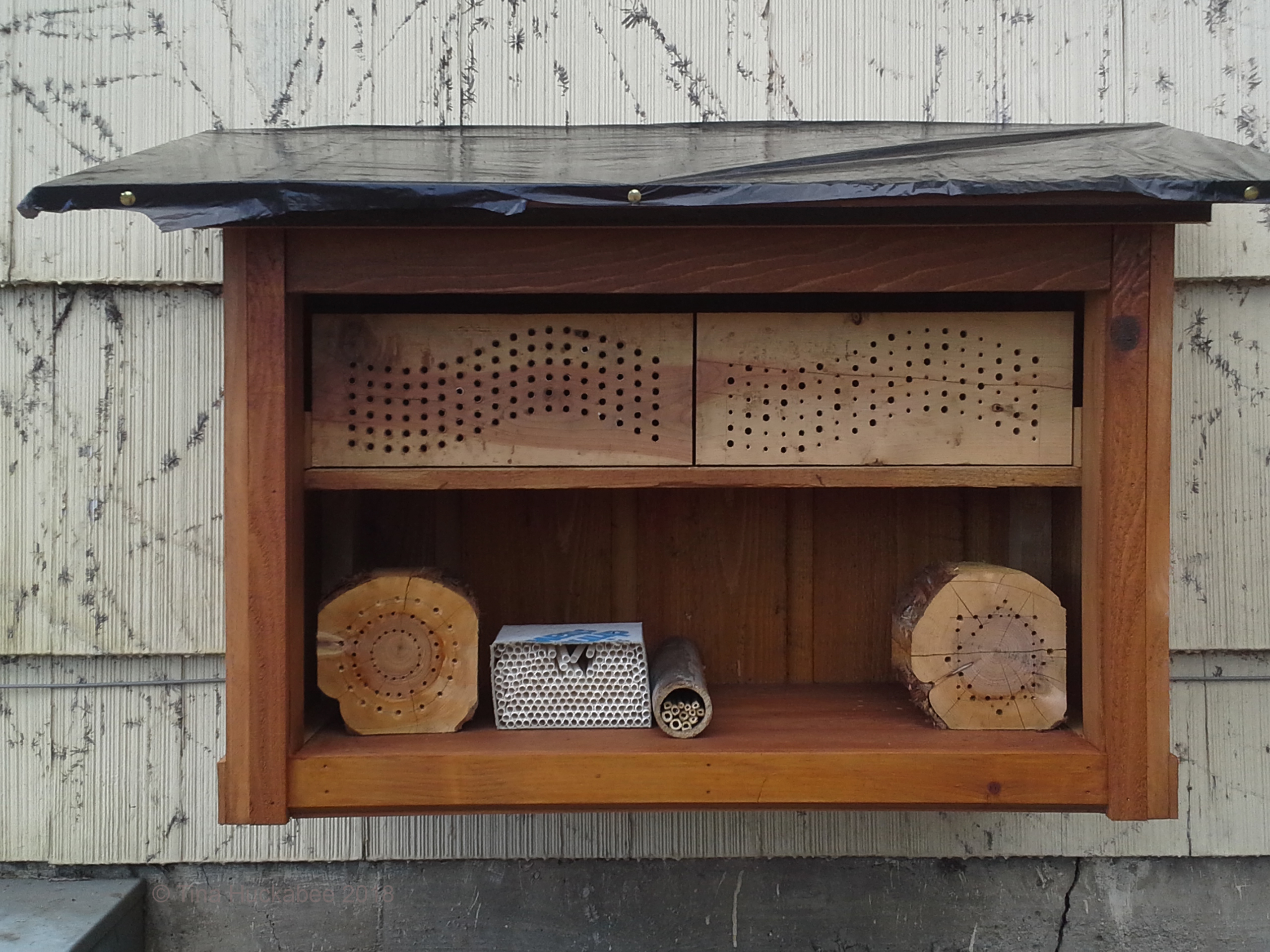
The apiary wasn’t just about honeybee hives, but also hosted examples of native bee/insect hotels.

Bee Daddy constructed our honeybee hives first, but we’ve since added Bee Daddy built bee/insect hotels for our native bees, which you can read about here.  If you want bees, but don’t have the time or interest in honeybee hives, check out the many designs for native insect hotels on the internet.  They’re easy to make, and it’s fascinating to observe and learn about native bees.  Native bees are even more threatened–and arguably more important for our ecosystems–than honeybees.  Leaving bare ground somewhere on your property, placing bee/insect hotels and cut limbs in the garden, refraining from pesticide use, and planting native and pollinating plants will help both the wild/native bees and the honeybees.

For an informative story about native/wild bees and their importance, check out this story from National Public Radio’s Weekend Edition Saturday: Honeybees Help Farmers, But They Don’t Help The Environment

I’ve been to Corvallis several times since the apiary visit, including for the complete solar eclipse in August 2016.  Unfortunately, I haven’t returned to the OSU apiary, but I imagine that it’s still there, housing happy honey and native bees, and serving as a fun and interesting educational exhibition for people.

Coral honeysuckle (Lonicera sempervirens): A Seasonal Look

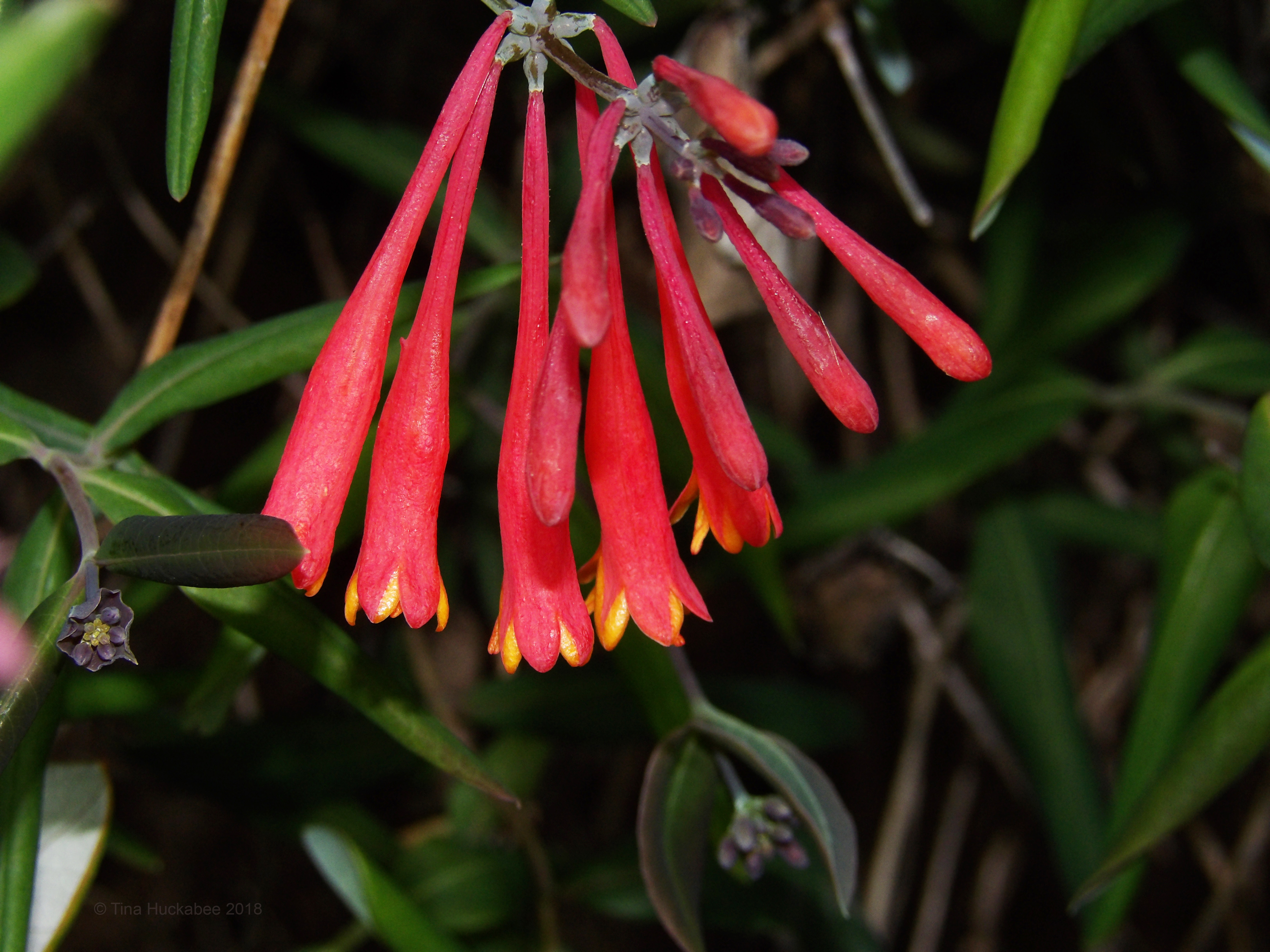
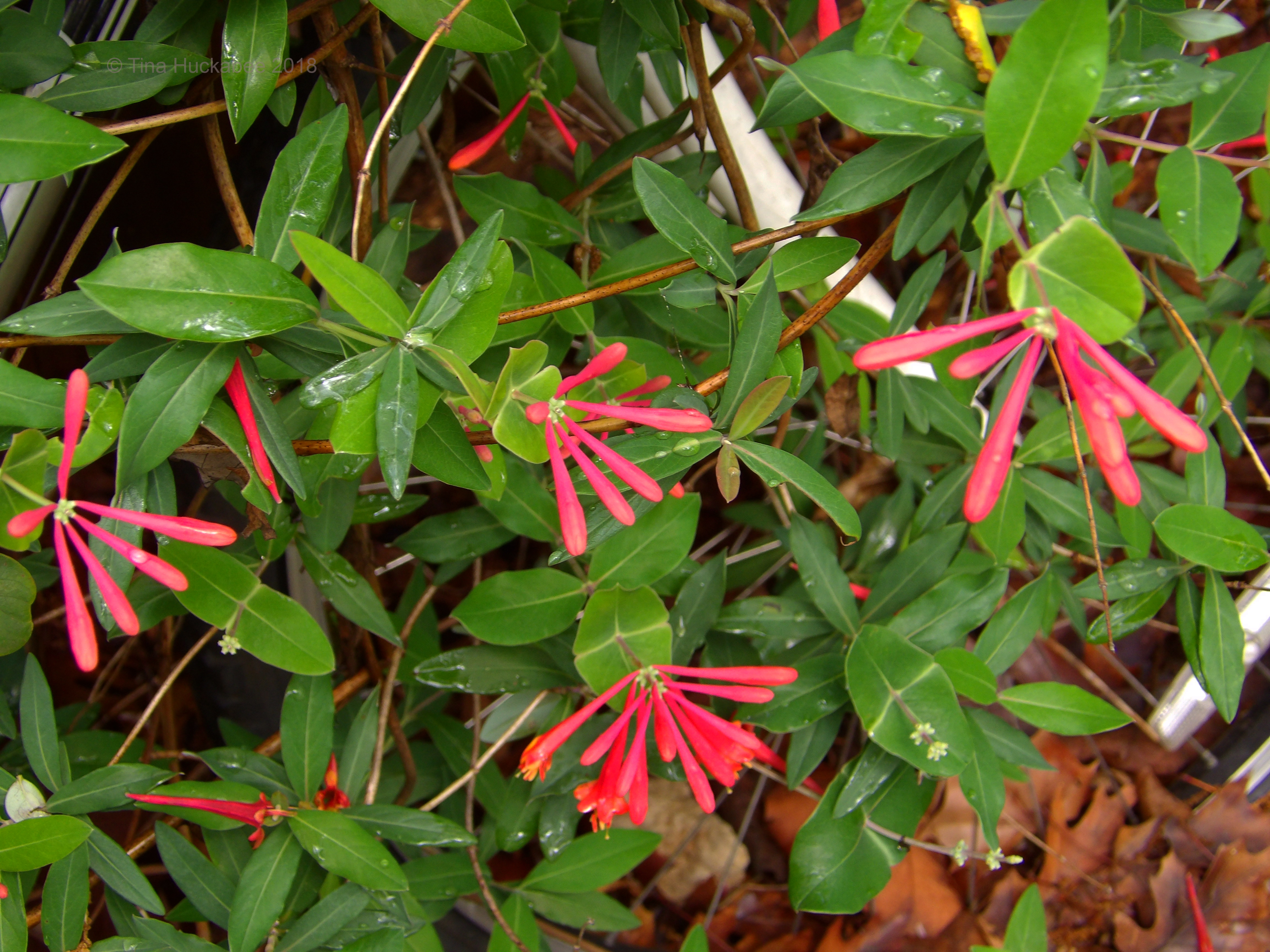
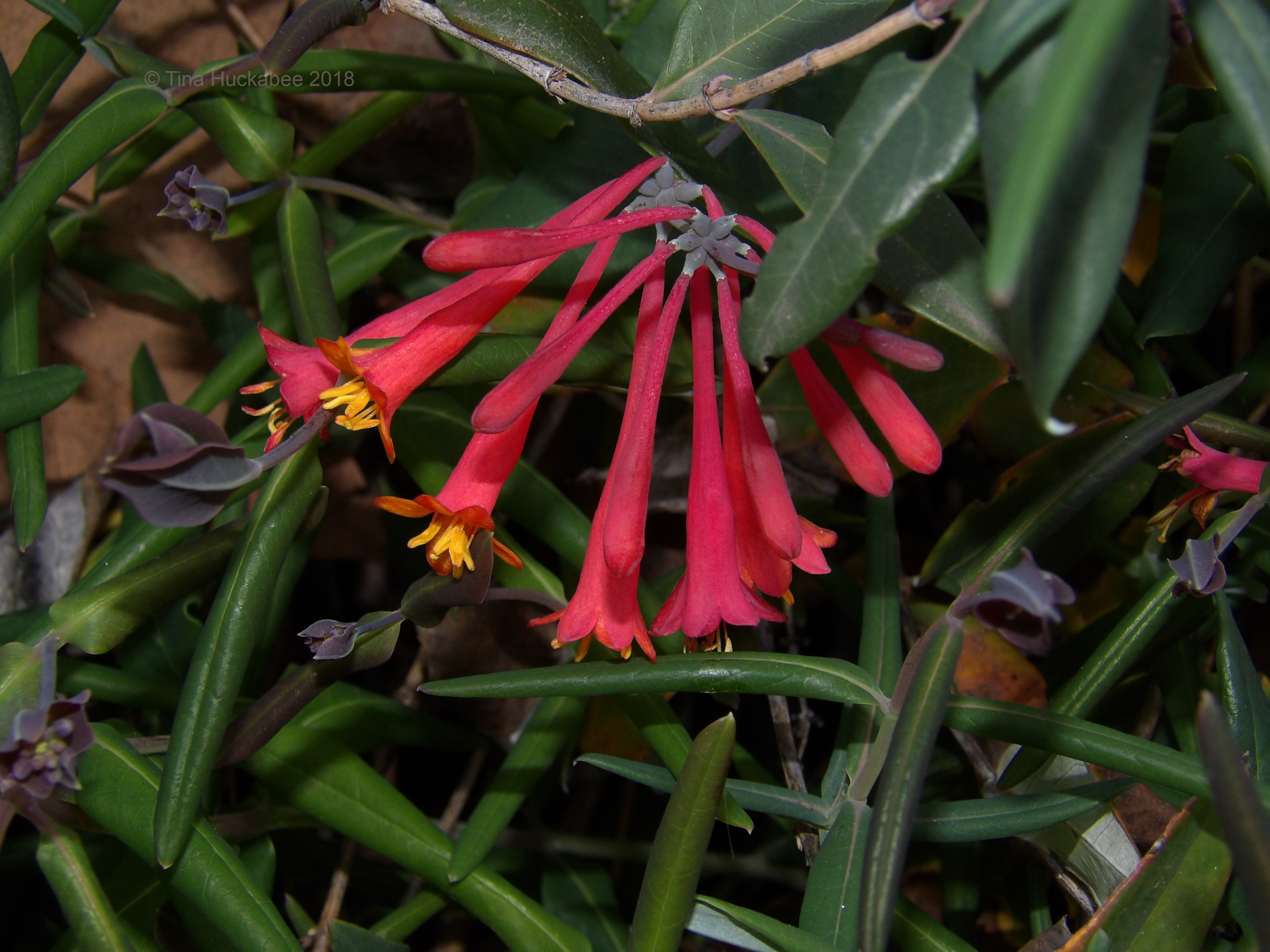
Coral honeysuckleLonicera sempervirens), loved for its eye-popping clusters of pollinator-delighting blooms and its robust  demeanor in the garden, is a favorite perennial vine for many Texas gardeners.

This vertical loveliness is native to East Texas, Florida, with a northward range up the east coast of the United States, but is also found in many other parts of the continental United States.   Here in Central Texas (Austin, Zone 8b), Coral honeysuckle provides semi-evergreen color, punctuated by spring outbursts of gorgeous red blooms, with yellow interiors.

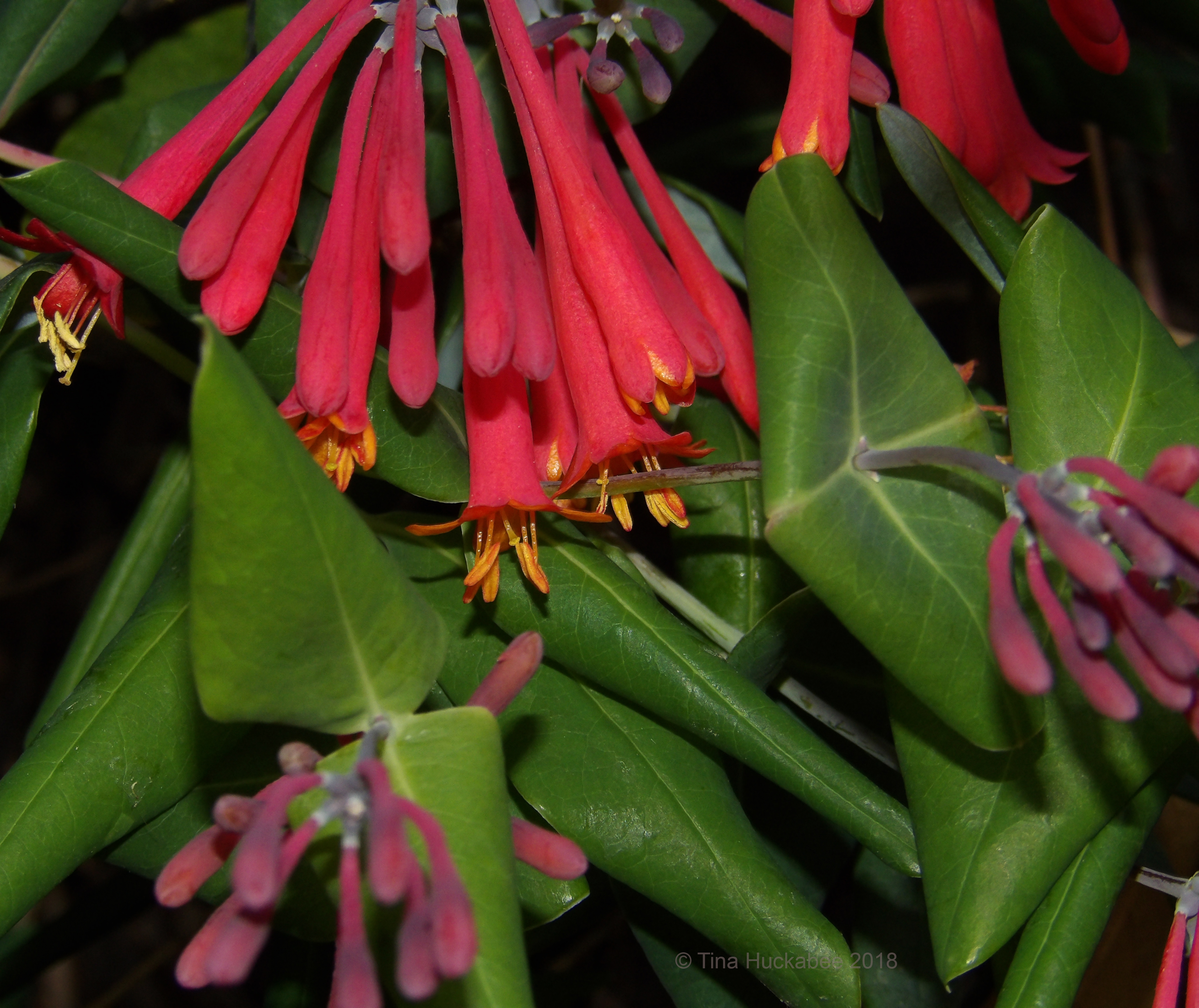
The bloom clusters remind me of a group of debutants, all in elegant, clingy red evening gowns, with an underneath peek-a-boo of yellow petticoats.


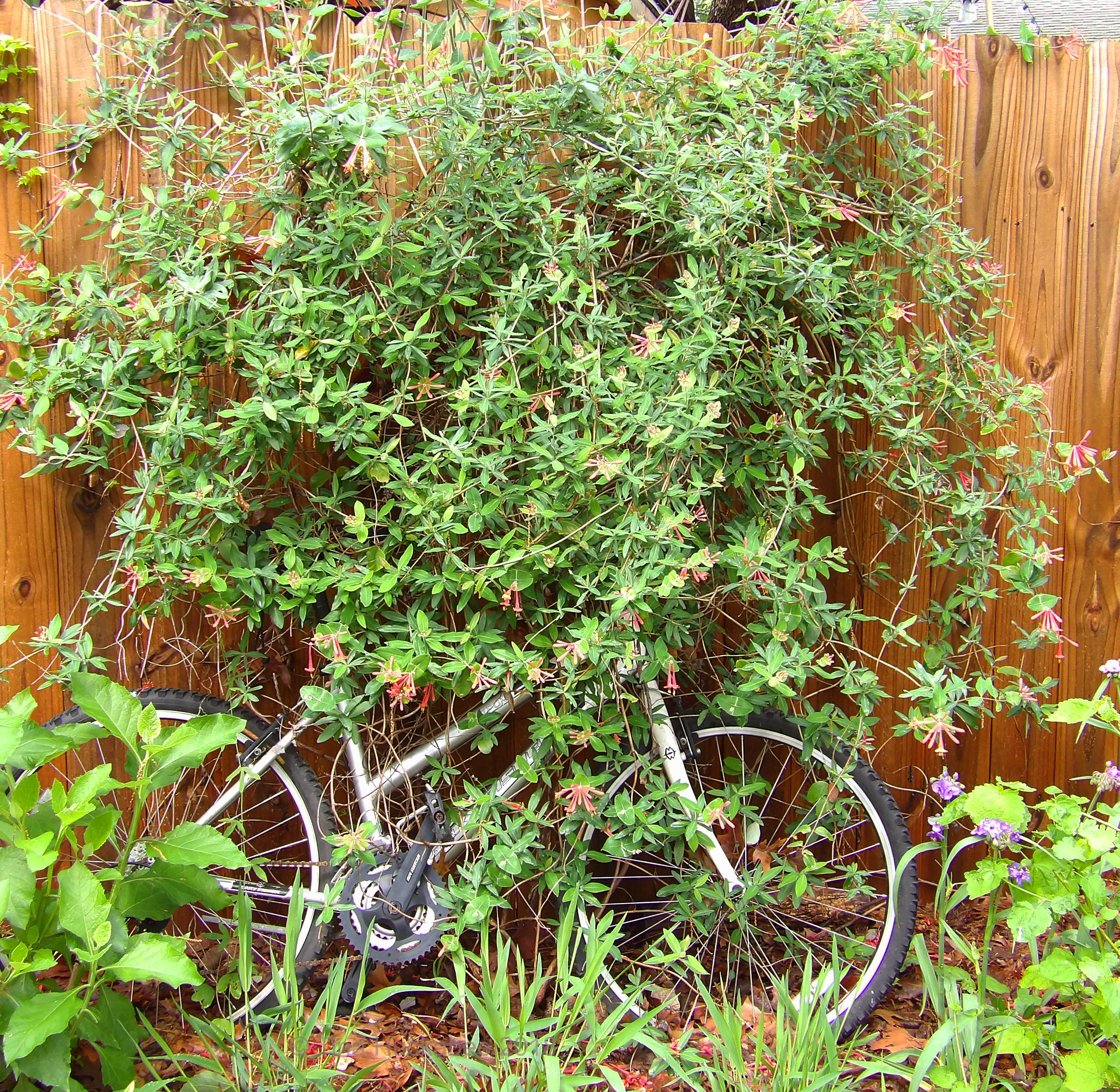
I’ve grown two of these vines in my garden.  This one in full sun,

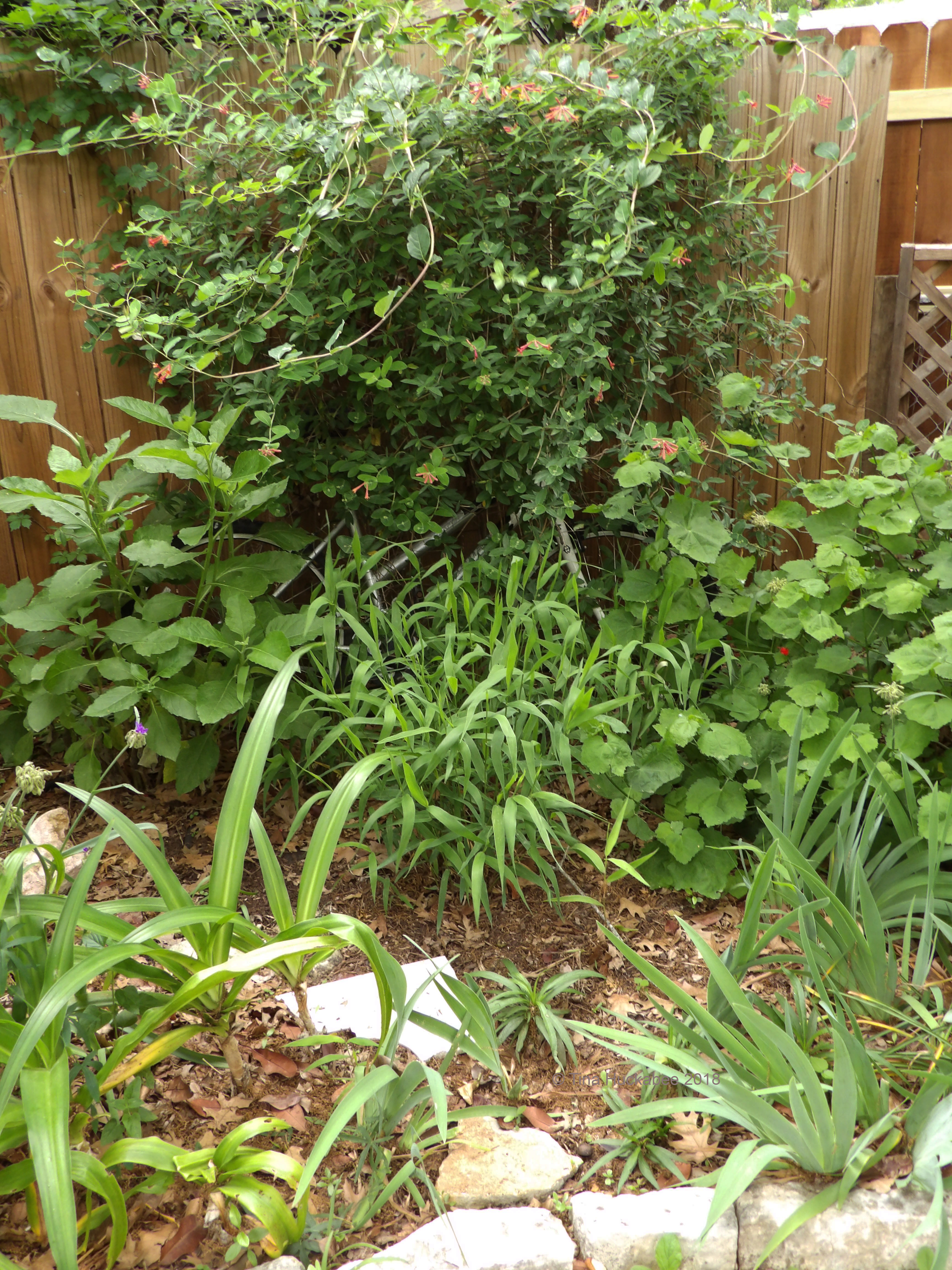
…and this one in a mostly shade spot.

A May shot of a shady spot with blooming Coral honeysuckle anchoring the garden.  Aside from the bicycle, and (from left to right), grows Frostweed, Inland sea oats, and Turkscap.  Some Spiderwort are still popping with purple blooms.

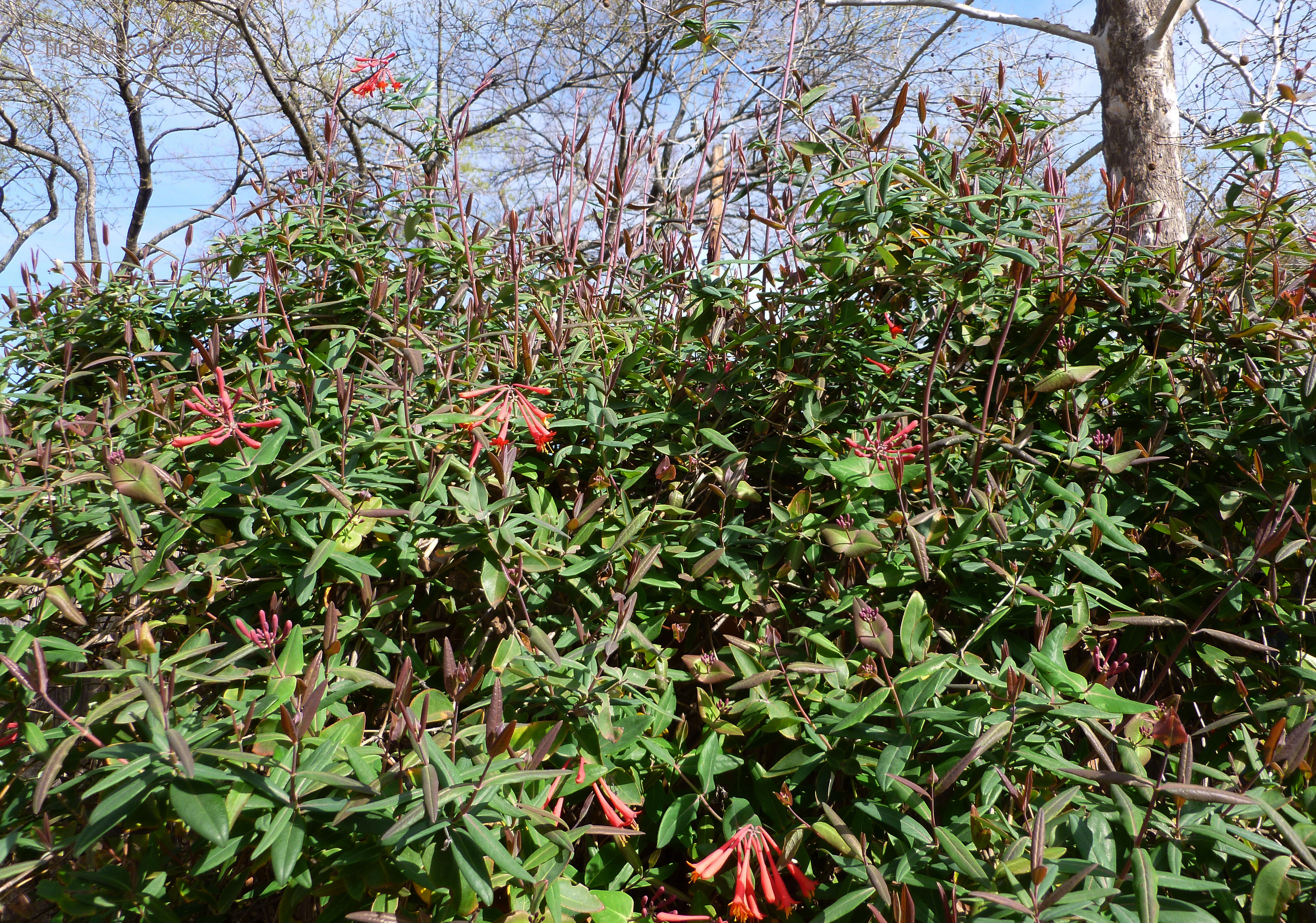
The bulk of blooming occurs mid-to-late spring.   The flowers on my vines have bloomed as early as February, sometimes with continuous blooming into May.  Peak bloom time occurs during March and April, with a sprinkling of blooms in early summer.

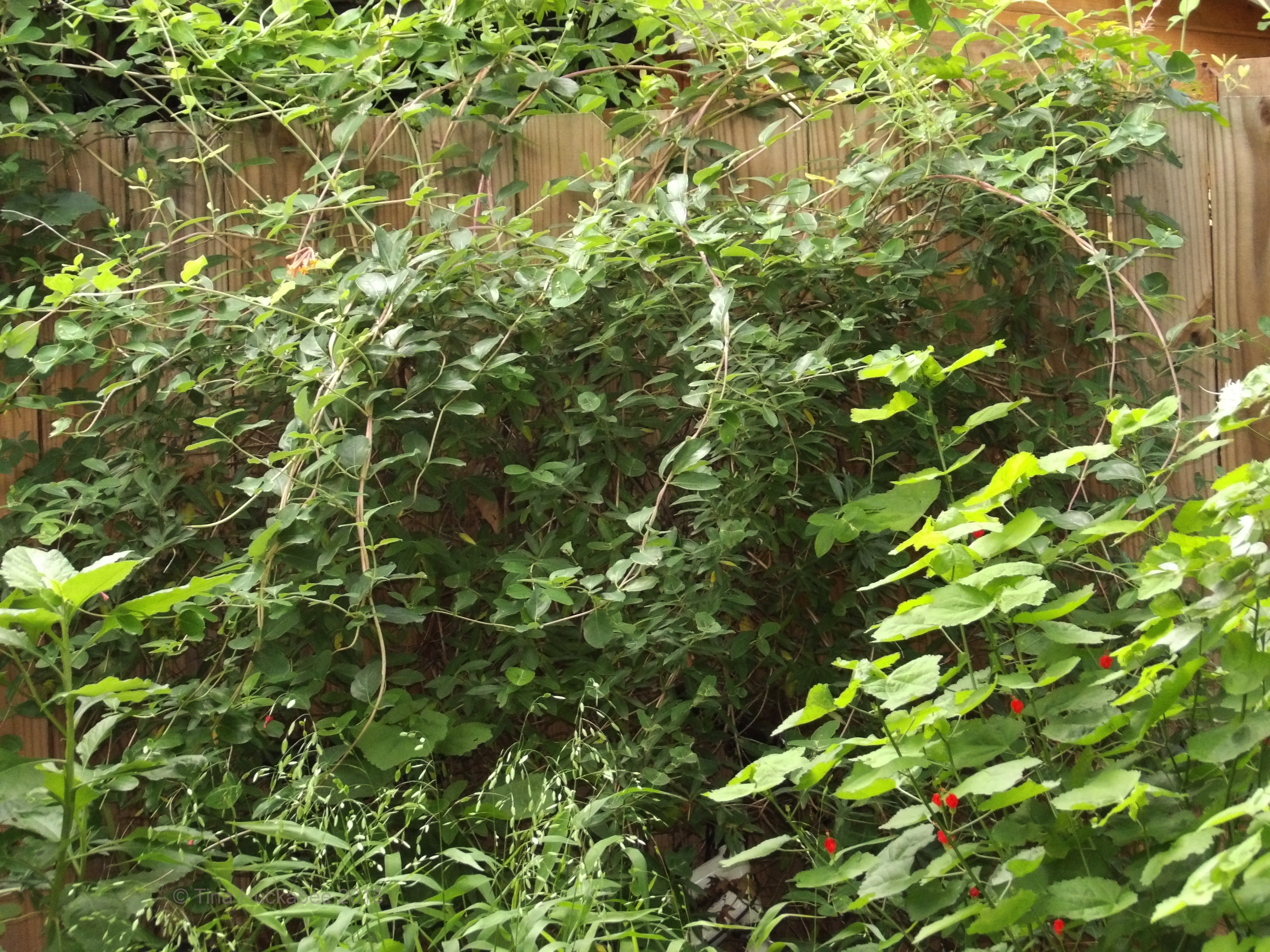
An excellent climber–perfect for a trellis, arbor, or fence–Coral honeysuckle flowers more in full sun.

In woodland areas, it clamors over the ground as well as up trees and rocks.

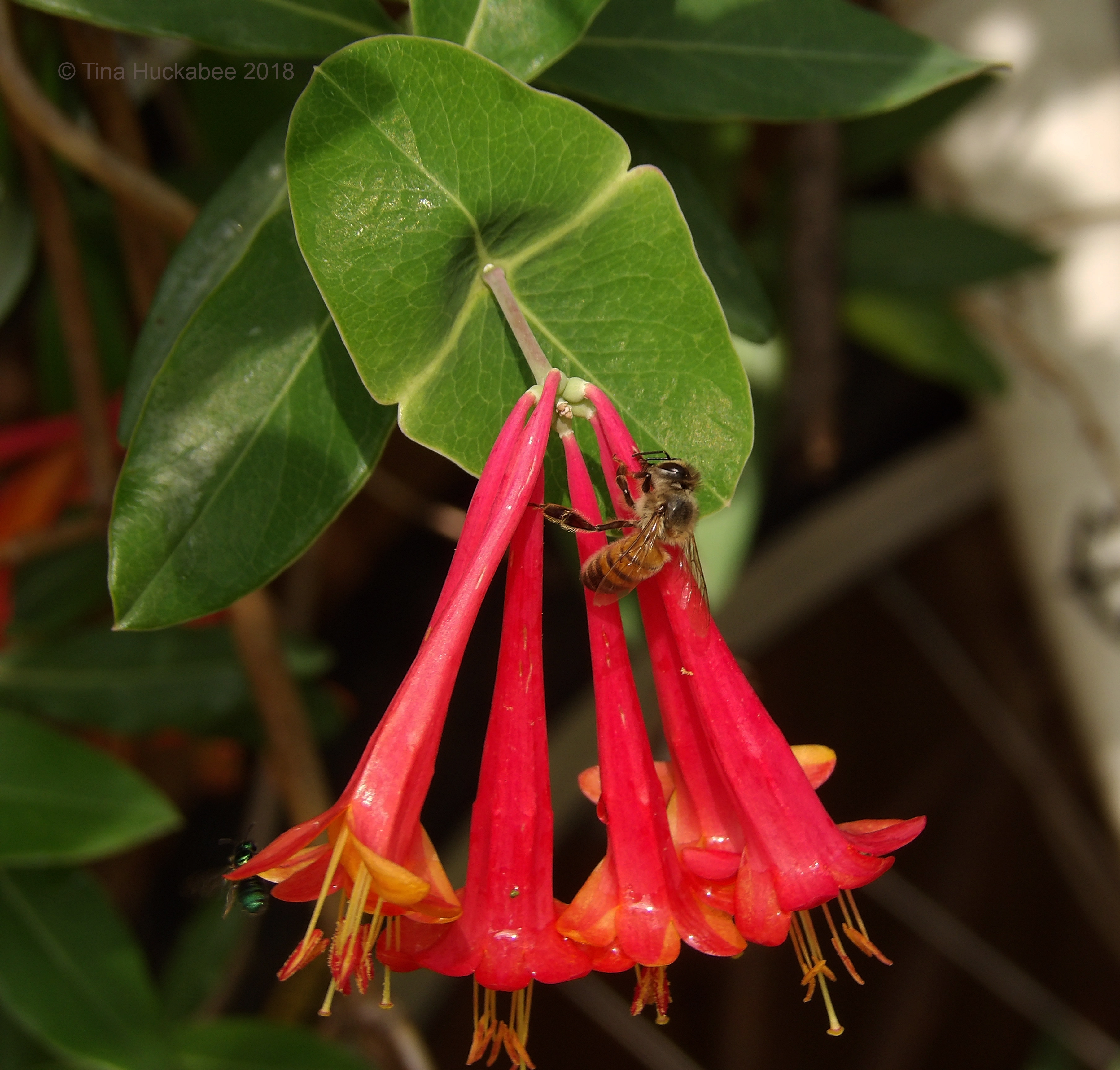
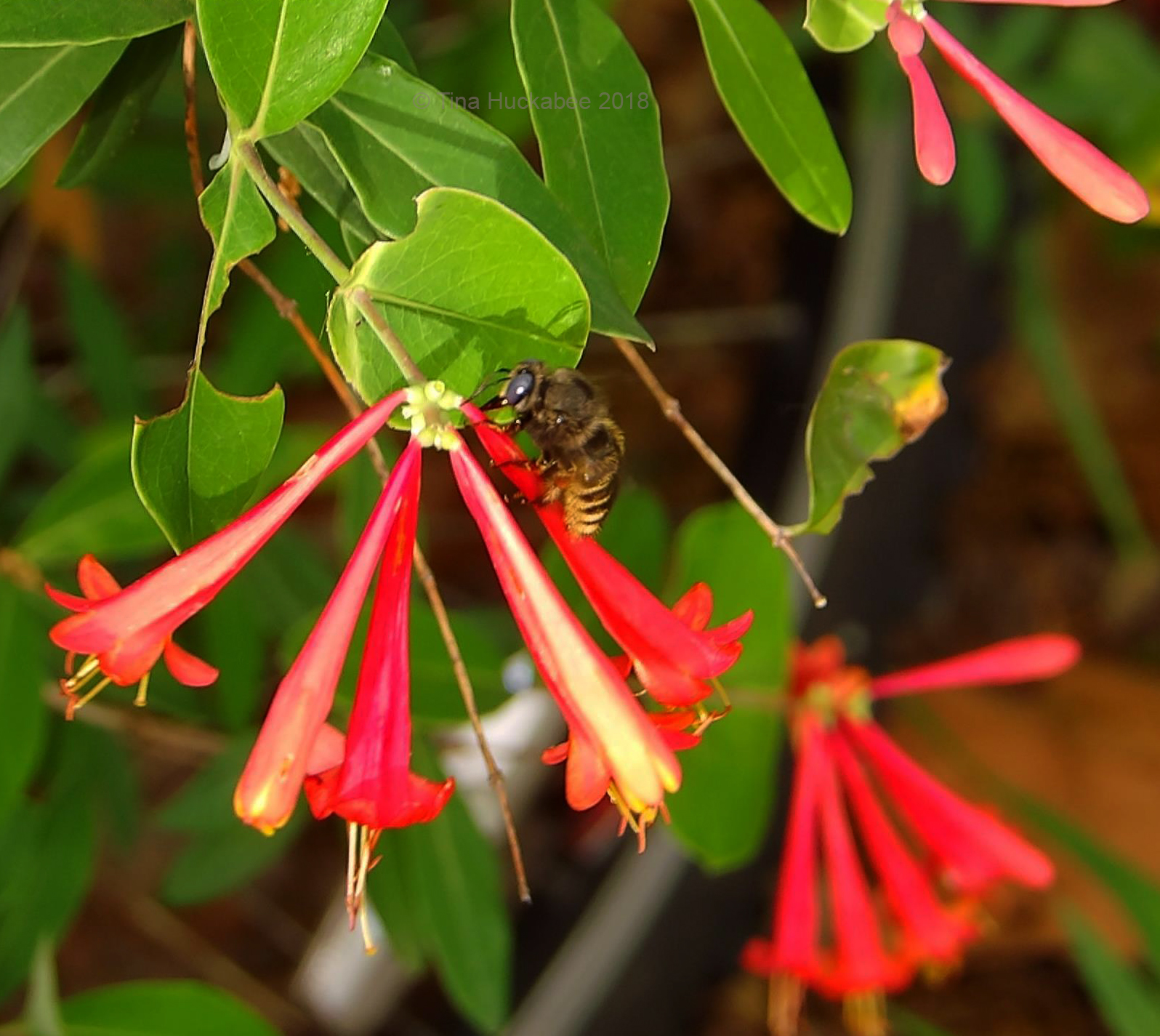
Pollinators of all stripes, sizes, and colors flock to the tubular founts of pollen and nectar:

Nectar stealing Honeybee at top of bloom, with native Green Metallic bee (Halictidae) on left, toward back of bloom cluster.

Nectaring Metallic Green bee.

Horsefly-like Carpenter bee (Xylocopa tabaniformis).

Honeybee coming in for a meal.

Hummingbirds are attracted to the blooms, though I’ve never seen any at my blooms.   I suspect that there simply aren’t many (if any) hummers around during the peak bloom period in my garden as they don’t typically arrived back in Austin from Mexico and Central/South America.  That said, the tubular red blooms certainly fit the profile of hummingbird attracting flowers.

Additionally, this honeysuckle is the host plant for a butterfly, Spring Azure, (Celastrina ladon), and a moth, Snowberry clearwingHemaris diffinis.

Springtime sees the biggest burst of blooming, but sporadic clusters occur in summer as well, usually after a tropical rain event.

The vine maintains a lush, green presence throughout the summer months, requiring minimal water during the dry and hot of summer.  I irrigate in the hottest of the hot, during those months with nary a drop from the sky.

Coral honeysuckle is a water-wise addition to any garden.


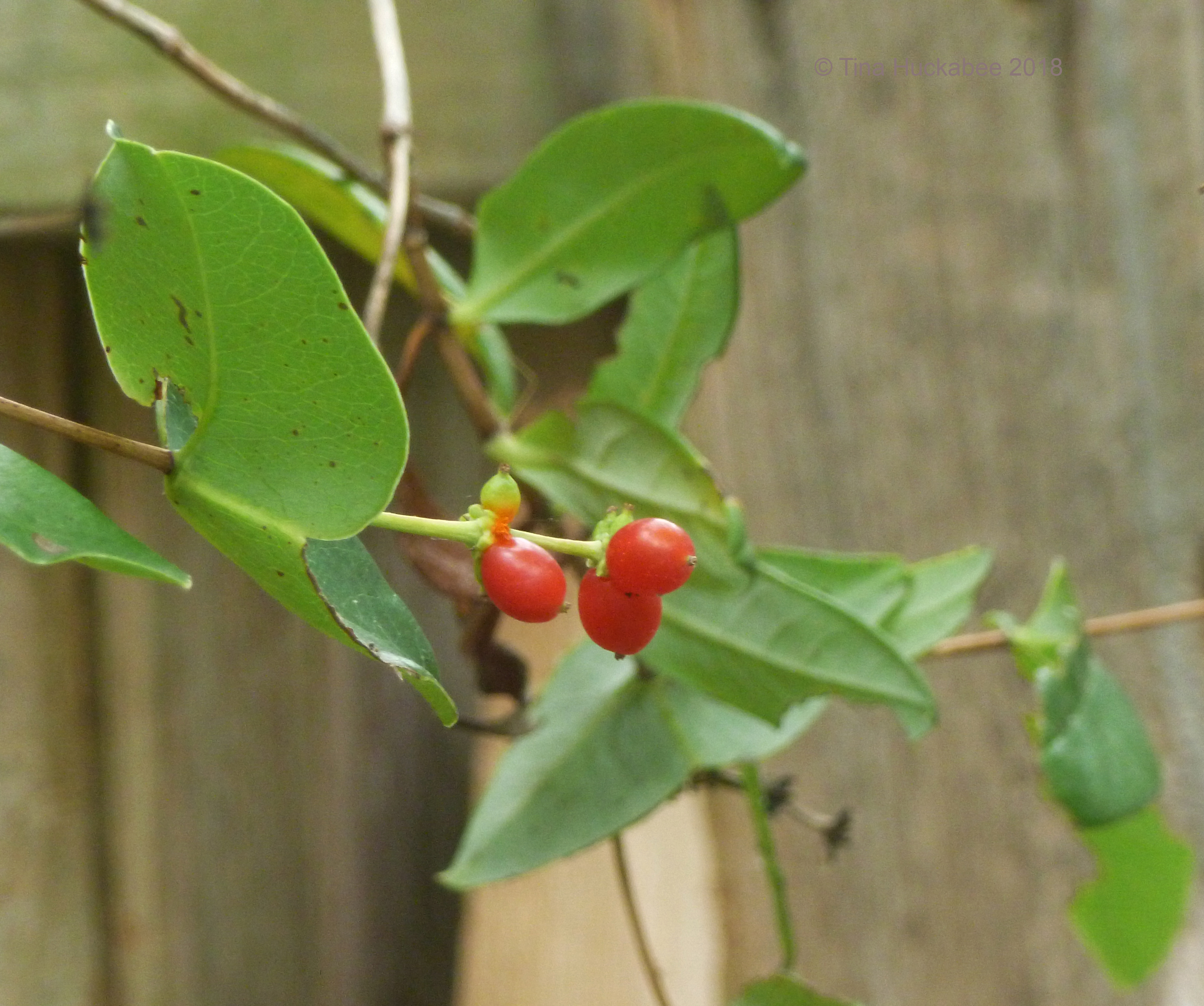
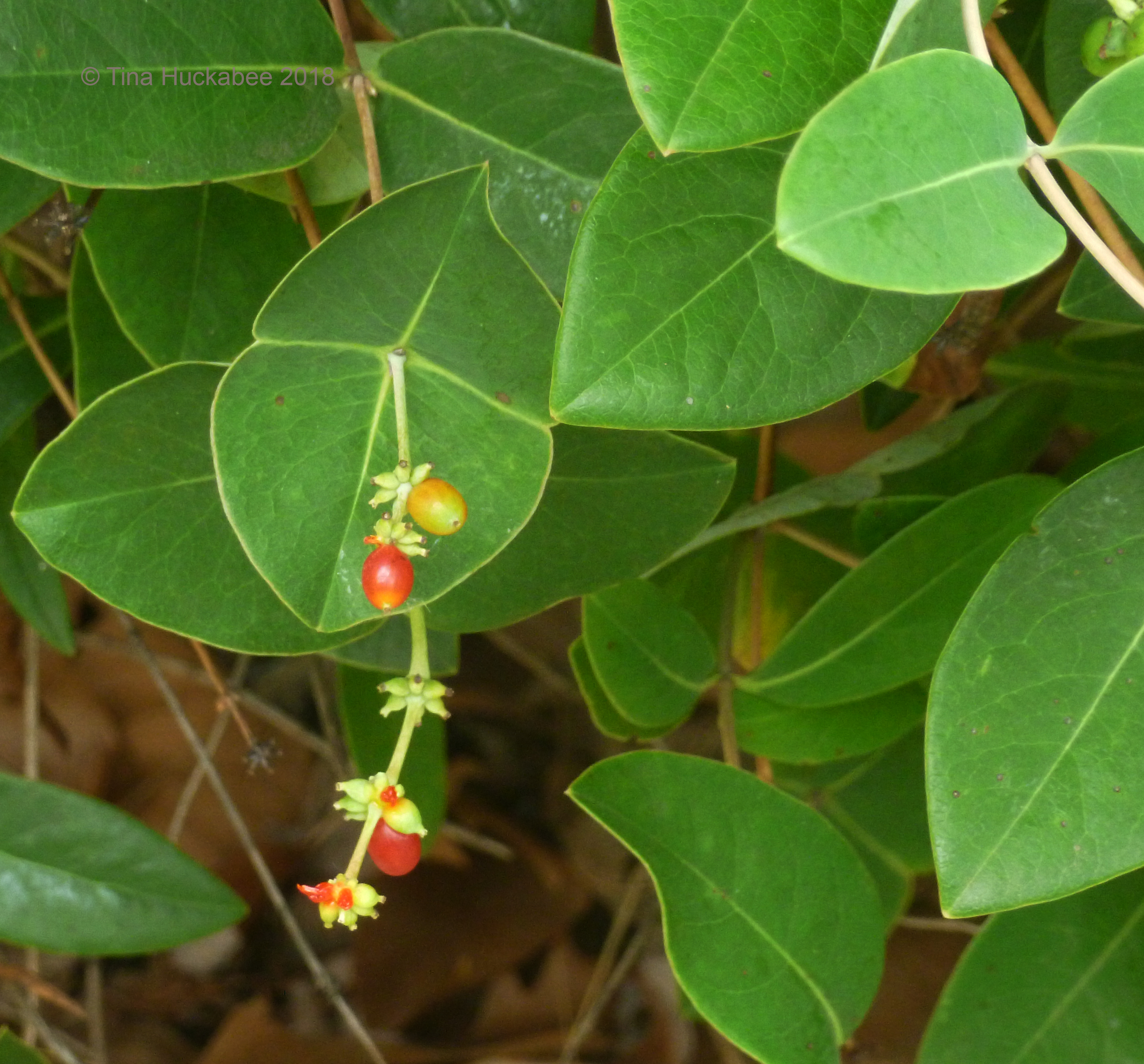
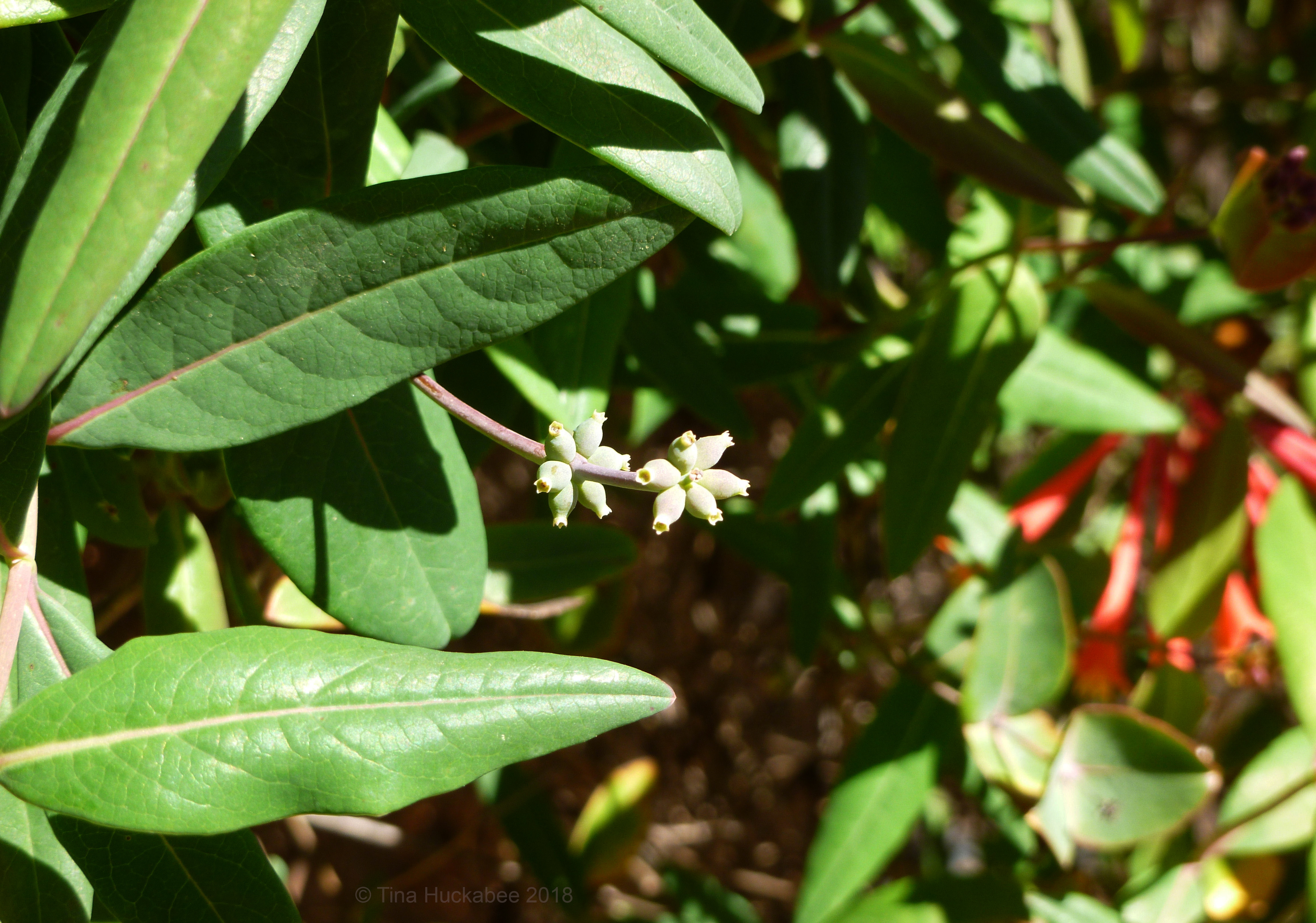
I usually see the fruits of the Coral honeysuckle in summer and early autumn.

They must be yummy, because the fruits don’t last long on the vine.  Various birds enjoy the fruits and foliage protection from honeysuckle; I’ve seen Mockingbirds, Carolina Wrens, and other birds seek refuge–and probably snacks–in both of my vines.

Nascent coral honeysuckle fruits.


As summer segues into autumn, Coral honeysuckle continues its solid green contribution to the garden.


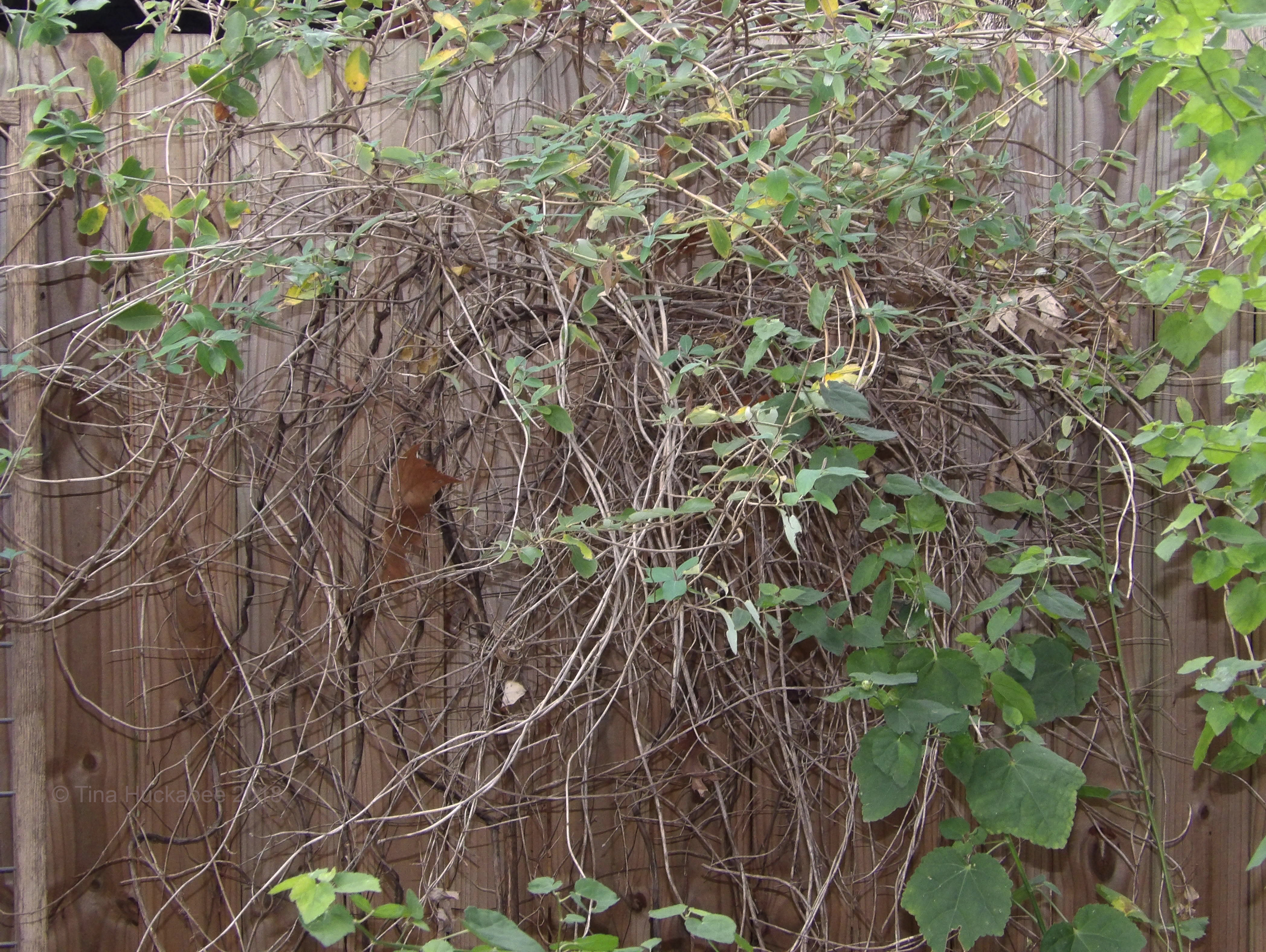
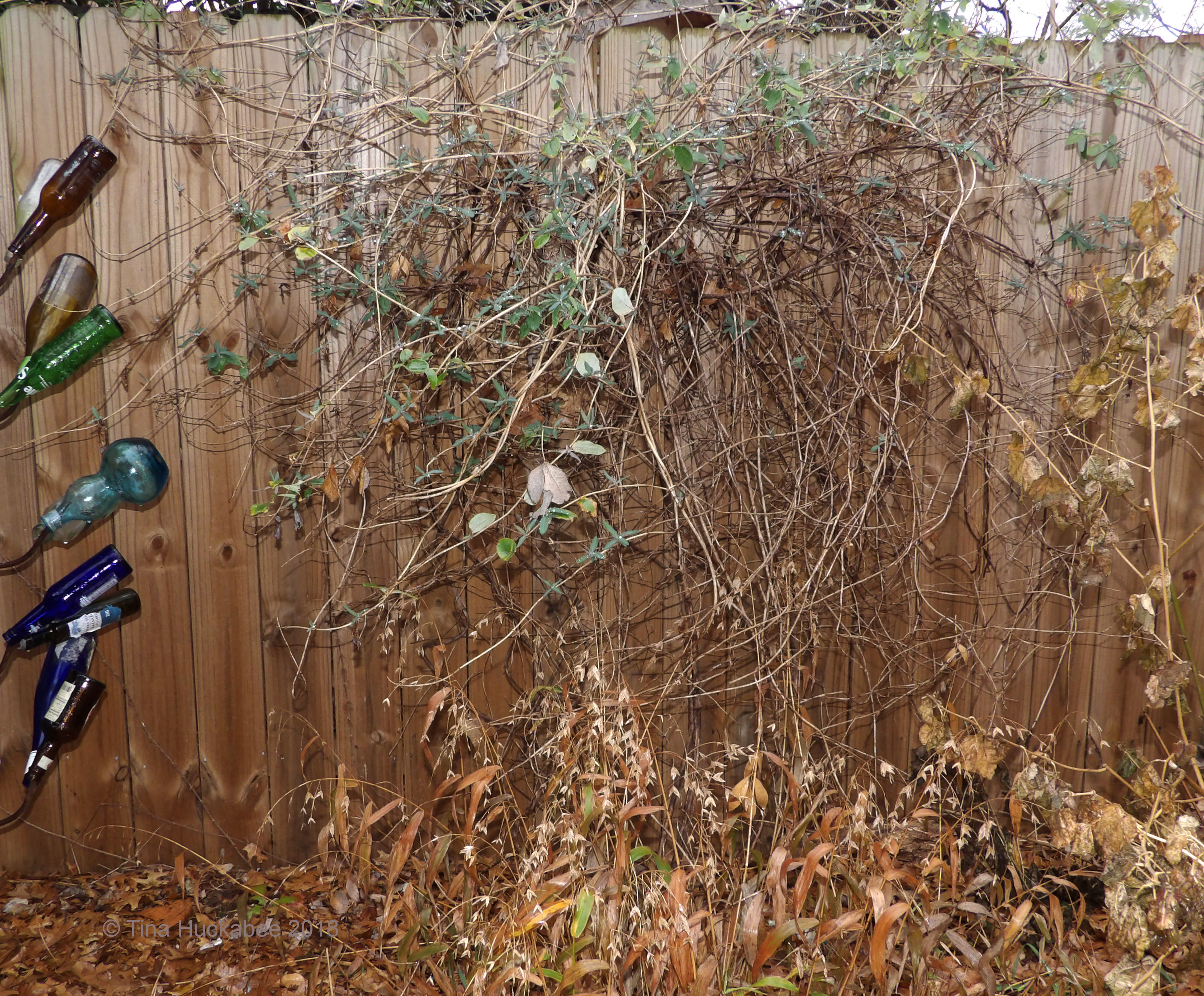
During winter the vine can freeze completely if the freeze is hard and long enough.

There are usually a few token leaves remaining.

More often than not, the foliage simply thins a bit, with some strands lacking foliage and the vine maintaining the majority of its leaves.

As the days grow longer and the temperatures warm, whatever foliage which quit the vine during winter’s freezes, return–lush and full and ready for the new growing season.

New Coral honeysuckle growth is exuberant–to the point that the fresh limbs reach to the sky in unwieldy growth spurts, requiring occaisional tucking in and twining around so as not to clamor over other things in their paths.

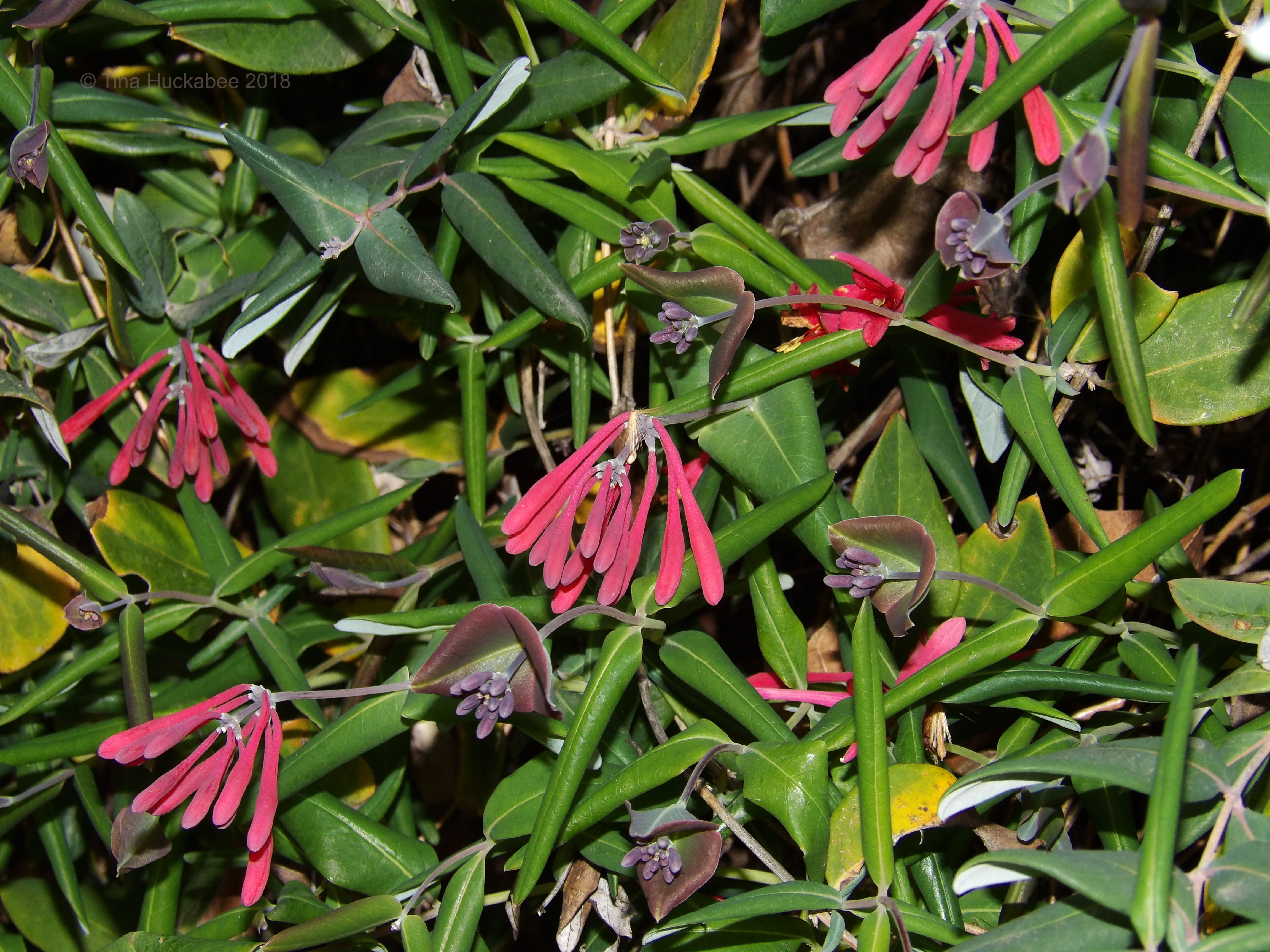
Additionally, emerging foliage and stems blush burgundy, augmenting the brilliancy of the blooms.

The crowning glory of this honeysuckle vine are the masses of bloom clusters which follow new spring growth.

Coral honeysuckle prefers well-draining soil and can develop powdery mildew if its feet are damp and the arms and legs of the vine congested.  That said, even in my clay soil and during the heaviest of flooding, I’ve never seen mildew on my leaves.  I mulch new plants, with a refresher of either commercial mulch or shredded leaves, as needed.  I water my vines, along with the gardens they’re a part of, during the dry of summer and prune bare strands when/if necessary.

I leave my vine as it is–a bit wild and wooly–so that birds can perch and hide, if someone scary (hawk, cat, gardener) comes near.  Coral honeysuckle isn’t invasive, it just requires a ‘haircut’ from time-to-time.  The oldest strands of vine are easily snapped off, making the work of pruning an easy task.  If you prefer a very tidy garden vine, Coral honeysuckle might prove a little feral for your taste.  But give it a chance: Coral honeysuckle’s beauty and hardiness make its mild rowdiness well worth the minimal shagginess.

My biggest complaint about Coral honeysuckle (and it’s not a complaint about the plant at all!) is that I don’t have enough room for more of these tough, pretty vines.  Gardeners appreciate the stalwart nature and beautiful blooms and foliage of this vine, wildlife appreciate its contributions to their safety and diet.

Coral honeysuckle:

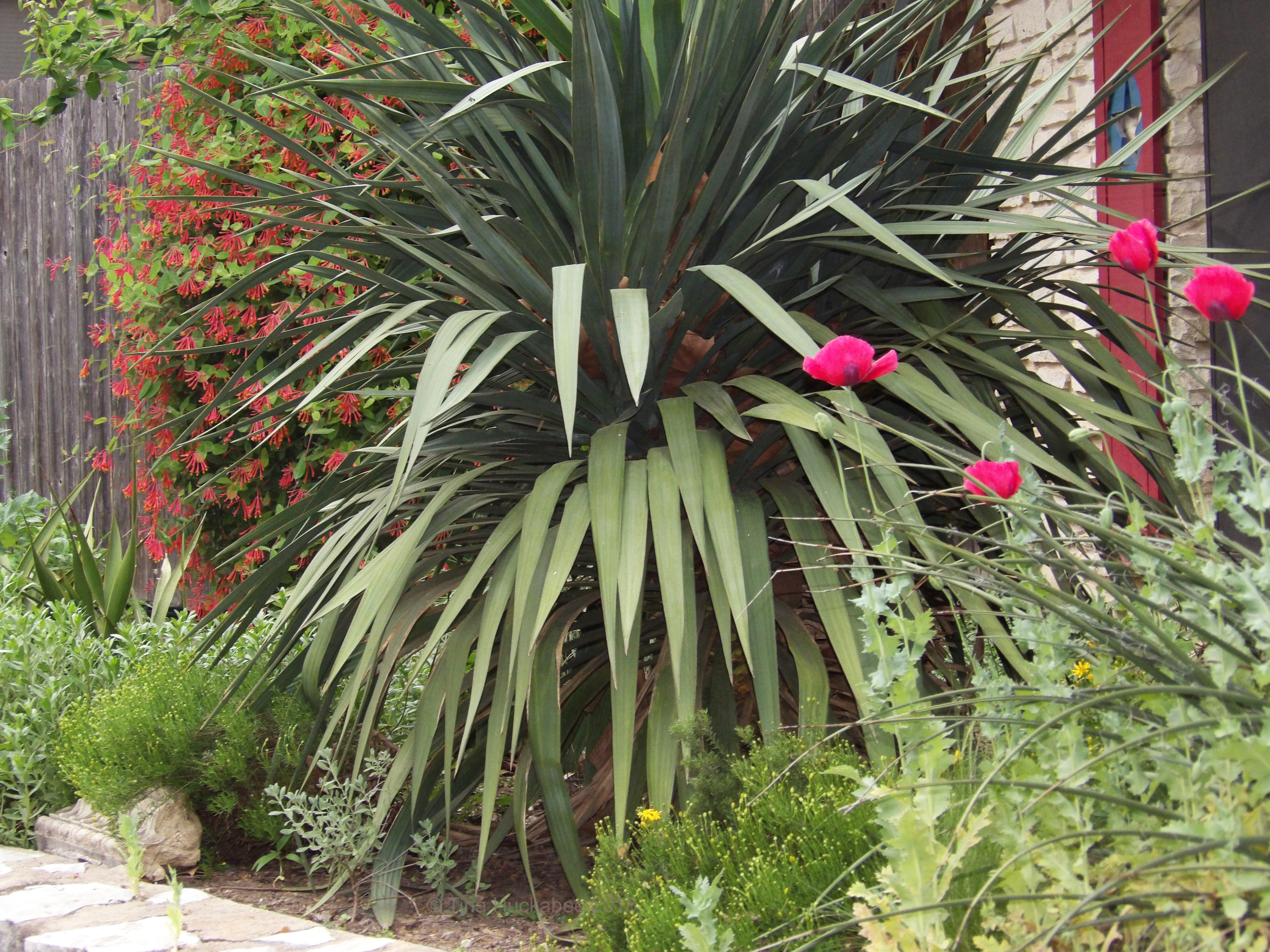
The vine grows to the left of the Softleaf yucca.


Spring:


Summer and Autumn:


Winter:

Coral honeysuckle flanked by dormant Turkscap (right), Inland Sea Oats (bottom) and in-bloom bottle tree (left).

A water-wise, wildlife-friendly, and gardener-pleasing vine–you’ll be glad it grows in your garden!