Lesser Goldfinch Feeding Frenzy

After the massive autumn flowering of Plateau Goldeneye, Viguiera dentata, and pollinators, especially honeybees, have taken their cut of the action, flowers segue to seeds, and birds replace bees.

In the last few weeks, each time I walk outside or come home from elsewhere, there’s a whoosh of wings upwards–with accompanying chirps–to the relative safety of nearby taller trees and shrubs. Tiny Lesser Goldfinches, Spinus psaltria, are come-and-go visitors in my garden throughout the year. In October and November, their numbers increase, along with their appetites, as they favor the seeds of the Plateau Goldeneye shrubs.

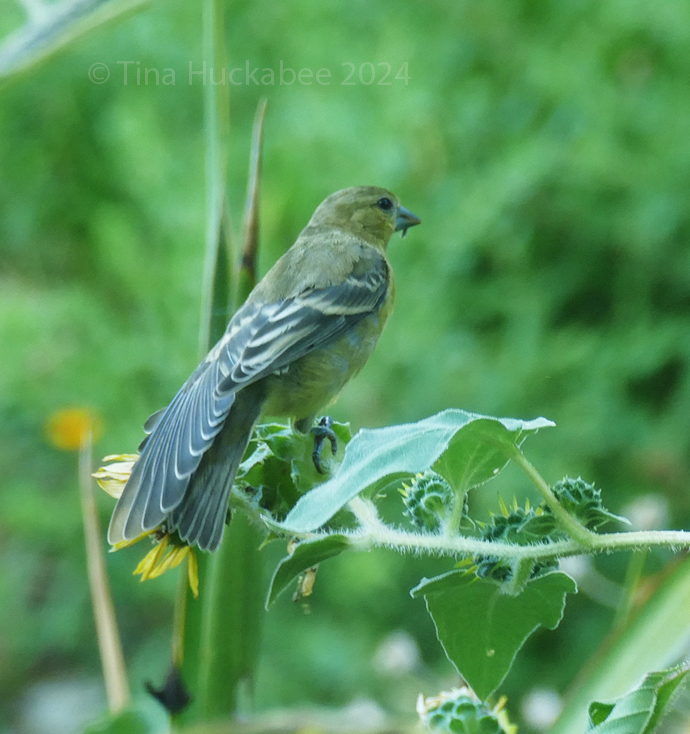
This little male doesn’t look frenzied, but he and his crew energetically work the shrubs, nibbling delectable goldeneye seeds as they bop along slender limbs, stopping only to munch. .

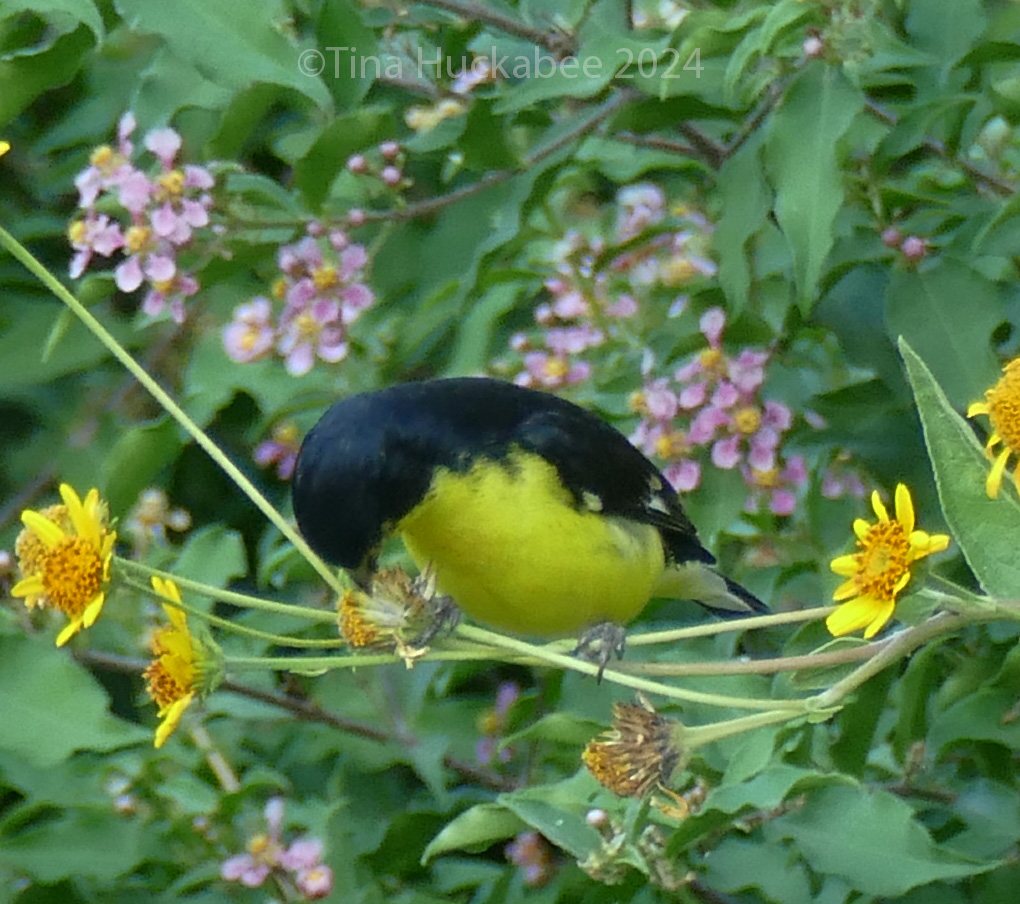
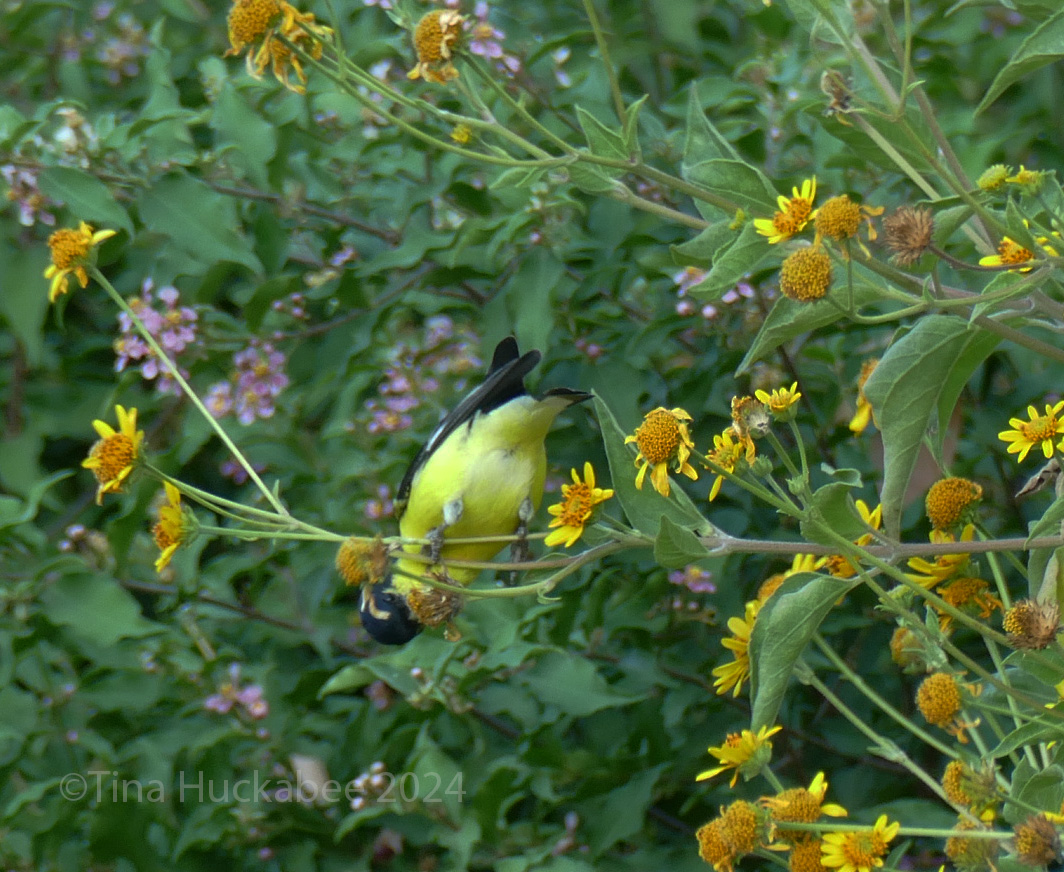
These little cuties are also contortionists, noshing right-side up, up-side down, and sideways. Their determination to pluck available seeds is hampered only by limitations of wings, claws, and beaks.

Bum’s-up, little fella!
While it’s impossible to count how many goldfinches are feeding during the frenzy, the flock(s) are made up of both male and female, and there are a also plenty of juveniles in the mix as well.
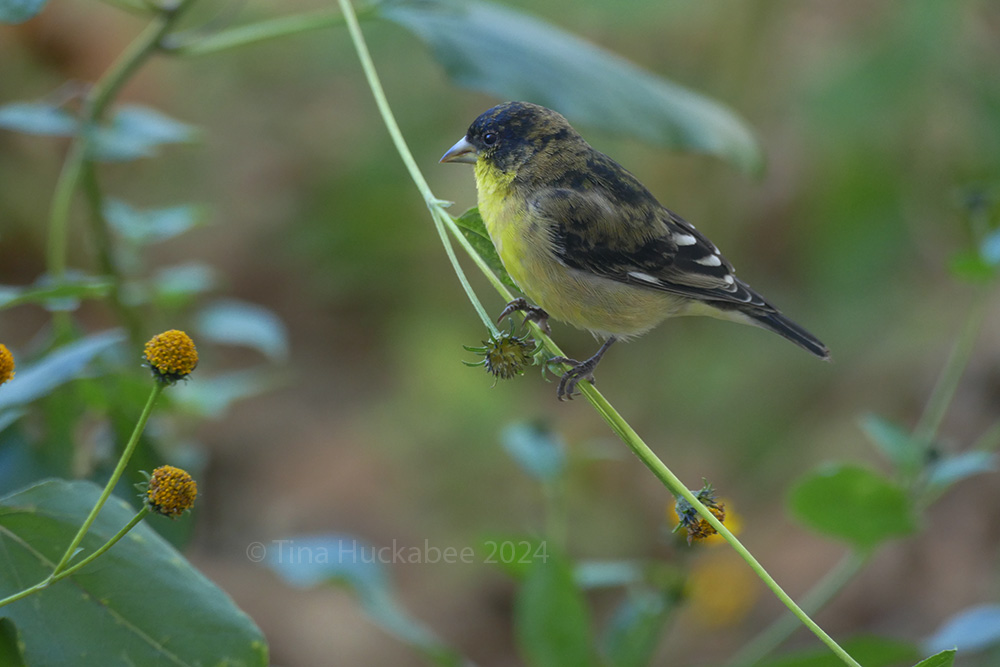
I never got a good photo of a pretty, but sedately colored, female, but they are just as active and hungry as their male counterparts. Here’s a shot of one, in early summer of 2021, enjoying the bounty of a different sunflower plant.
Often, a goldfinch couple feeds together, either on the same branch or near one another. As winter approaches and the seed sources disappear, I’ll see Lesser Goldfinches visit my feeders.

Until they’ve vanquished this year’s goldeneye seed crop, I’ll hear their song and enjoy their frenzied antics!
Berry Good!

Autumn in Central Texas brings an appreciated dramatic flush of blooms (after the heat and drought of a long summer) but also a generous offering of fruits and seeds from many spring-blooming plants.

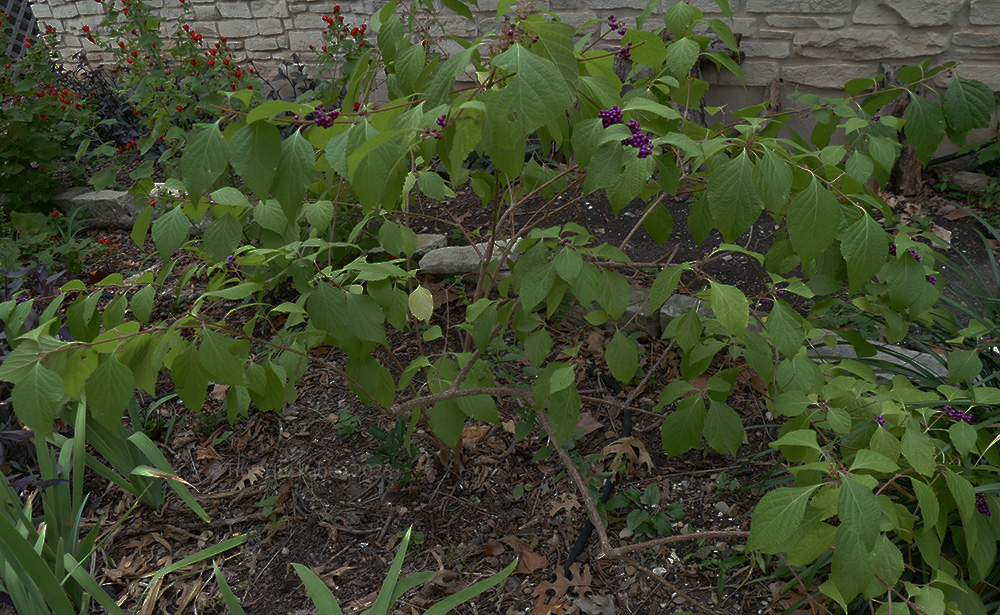
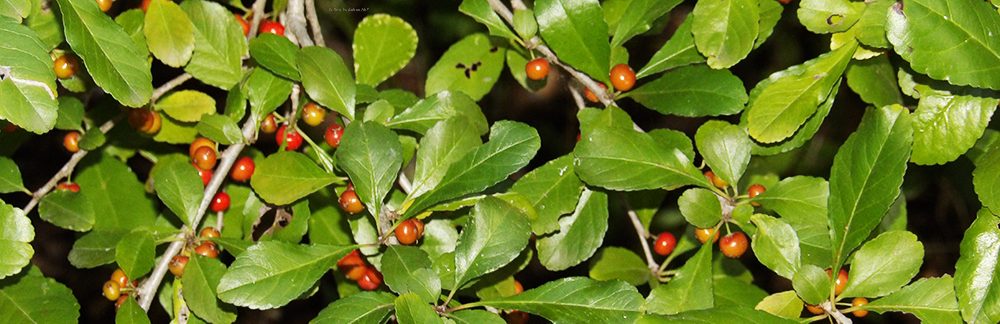
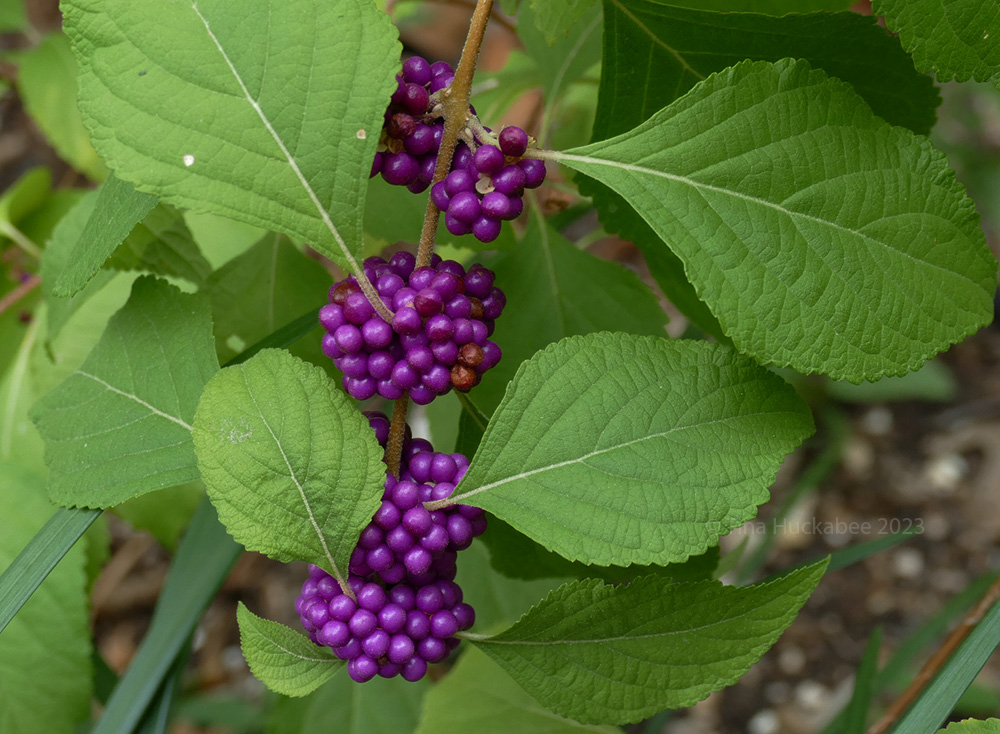
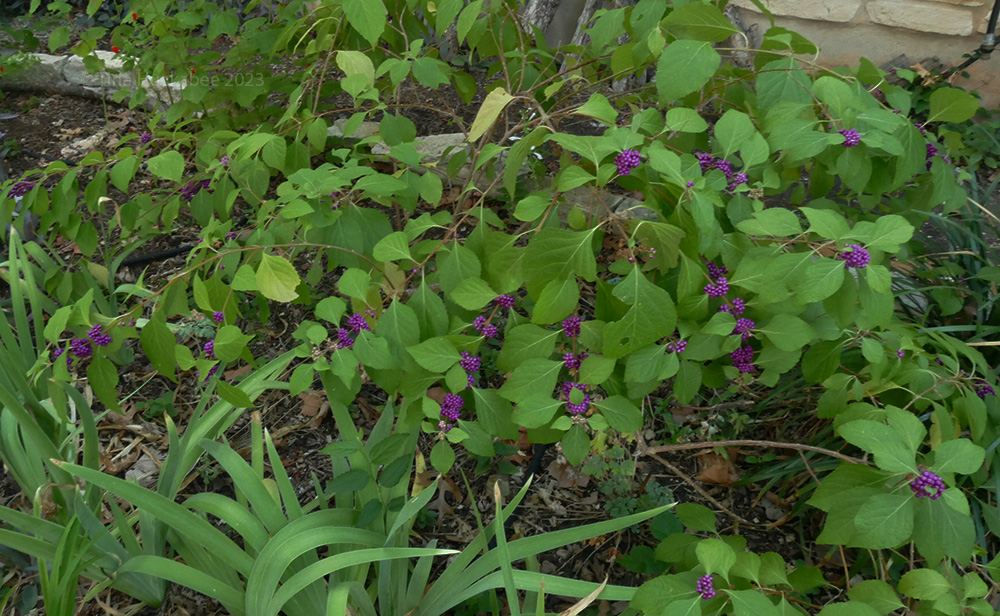
American Beautyberry, Callicarpa americana, is a hardy shade-to-sun deciduous shrub which provides yummy meals for Blue Jays, Mockingbirds and various mammals.

Dainty pink June blooms segue to light green berry clusters in July, which then color-up in August. By mid-September, the berries arrive at their disco-metallic, ready-to-eat form. Critters show up and critters eat. I haven’t snagged a decent shot of anyone nibbling on the berries, as foliage provides good cover. But nibble they have.

The first photos were taken weeks ago, but with wildlife noshing, most of the purple goodness that decorated the shrub, are gone with those bird and mammal meals. The Beautyberry still holds a few clusters of berries, which I expect will be eaten in the next few weeks. After that, with shorter and cooler days, the foliage will turn butter yellow and eventually drop to the ground, a mosaic of autumn which, in time, will add nutrients to the soil for future growing seasons.

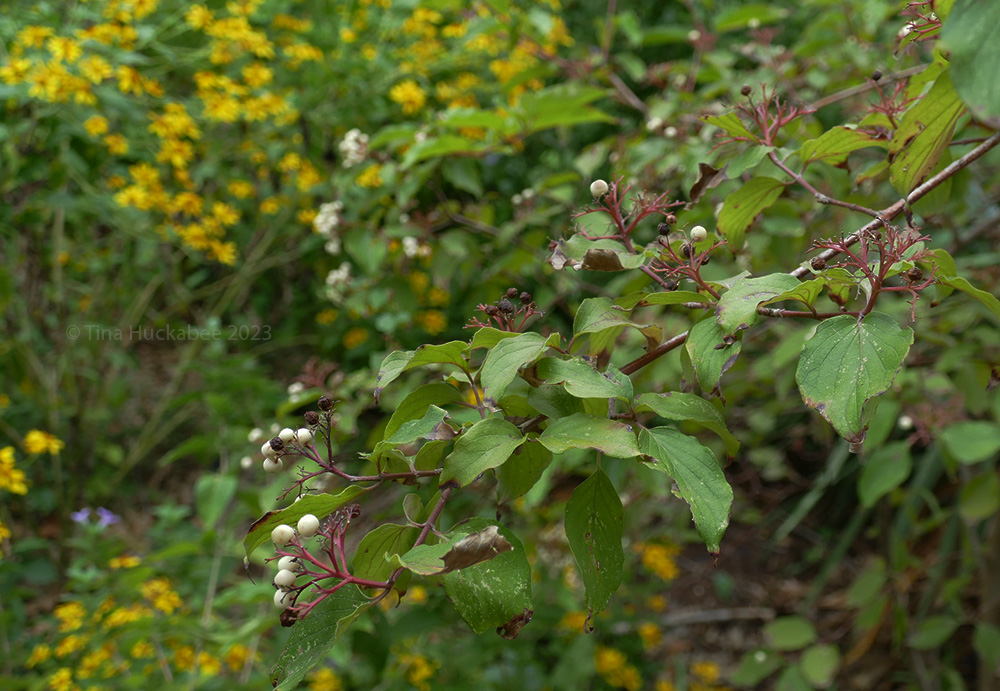
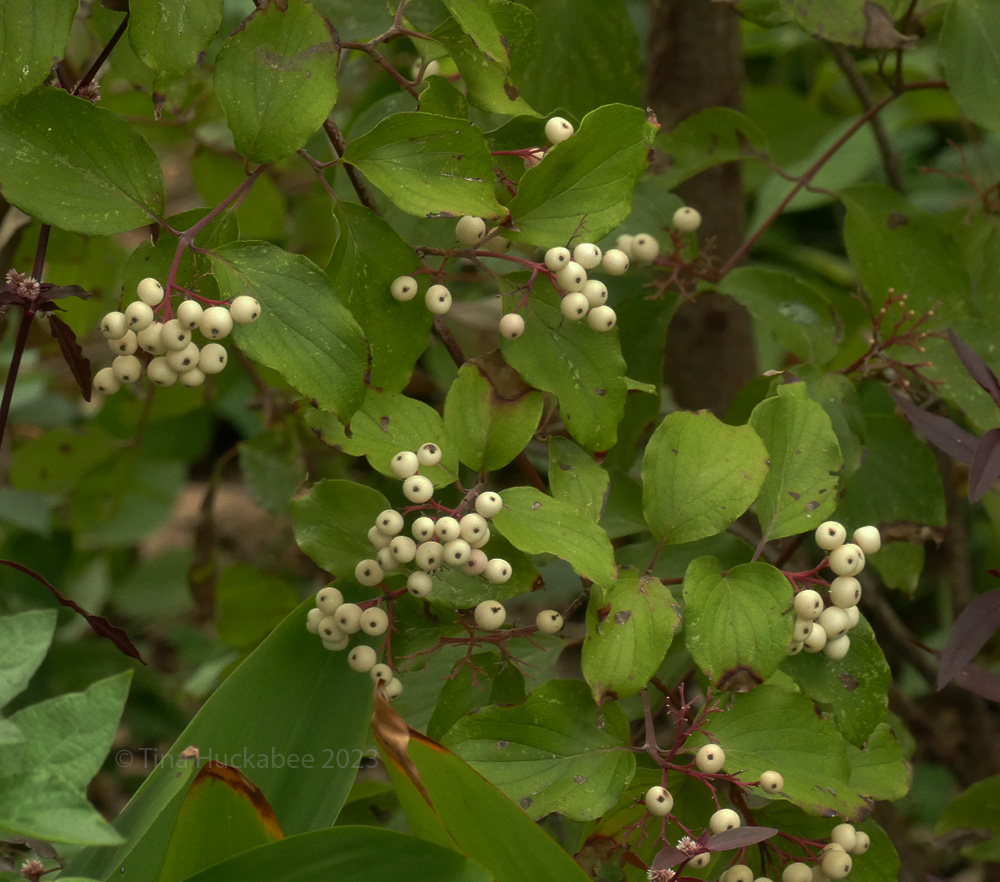
Another plant that resident and migratory birds enjoy is Roughleaf Dogwood tree,Cornus drummondii. This particular tree is situated behind my pond and provides good refuge for bathing birds to escape to when startled, or a restful spot to perch when fluffing wet feathers is required.

Birds nosh on the creamy white fruits which sit aloft wine-colored stems. Ignored berries have fermented, crinkled, and turned a deep black-blue.

The blast of yellow in the background comes from a couple of Plateau Goldeneye, Viguiera dentata, shrubs. Pollinators are all over these blooms right now and when the blooms end, birds will go ga-ga for the seeds. Once a freeze renders the shrub dormant, finches reportedly use dried leaves for their nesting material.

Before fall fruit development, Rough-leaf Dogwood flower creamy white blooms in April and May, attracting a variety of pollinators, especially fly and native bee species.

Wildlife friendly gardens require plants that are food sources, as well as havens from danger and for rest. These three plants are native to Texas and are excellent seasonal wildlife plants. All are tough plants and easy to grow, add form and structure for human admiration and important sustenance for wildlife. Autumn is a good time to plant perennials and trees here in Texas, so give native plants a whirl in your garden. You’ll appreciate their beauty and practice good stewardship on your plot of the Earth.

Ice Again

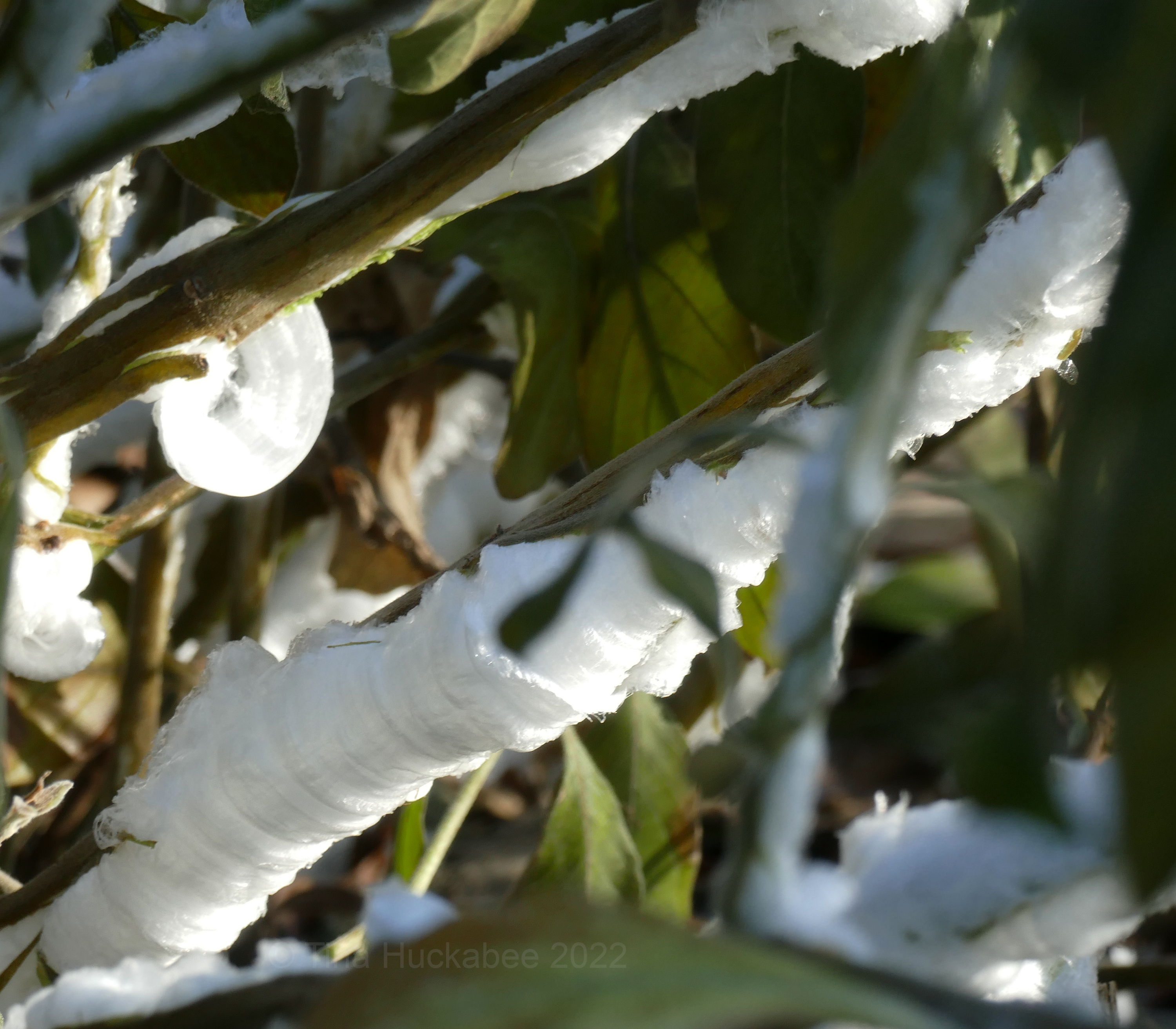
With each of this winter’s freezes and accompanying ice, I’ve assumed that the plants which create ice sculptures are done with their frosty shows until next winter. But with the latest round of mid-to-low 20s, more curling and swirling appeared, some on plants thus far unmolested by the cold, and some on plants that previously froze and were pruned.

These cut stems are all that remain of a mature Frostweed, Verbesina virginica, that I pruned in late January after an earlier hard freeze. Clearly though, there was just enough stem material left for the ice fairies to appear.

I hoped that the Mexican Honeysuckle, Justicia spicigera, would be spared a killing freeze this year and remain green. That hope was dashed Thursday and Friday as temperatures dipped to the lowest point so far this year. The wilted mush of the once bright green foliage will require pruning to the ground for each of these shrubs in my garden to make room for new growth.

On the positive side, the water-turned-ice-crystals in the stems created some lovely, if short-lived ice art.

I’m now in full winter perennial pruning mode. When I prune herbaceous perennials I typically leave 8 to 10 inches of stems, sometimes more. On the remains of a Plateau Goldeneye, Viguiera dentata, the ice formed, puff pastry style.

I think the January/February 2022 plant ice capades has completed its final act. After the upcoming year of growth, it’ll be interesting to see if early freezes in November/December bring an encore performance.