A New Day

My new day starts before light with coffee in the catio, as the cats keep me company. They sniff the humid, warm morning while I sip and watch the dark sky turn pink and yellow at the horizon, beyond my oak trees. Then it’s play time inside with the cats, all wands-with-fluffy-feathers, jingly bells, and happy purrs. At some point, I’m in the back garden for the first round of look-sees in the morning sun, feeding the pond fish, and hanging a couple of bird feeders. Then, it’s time for the dog’s walk.

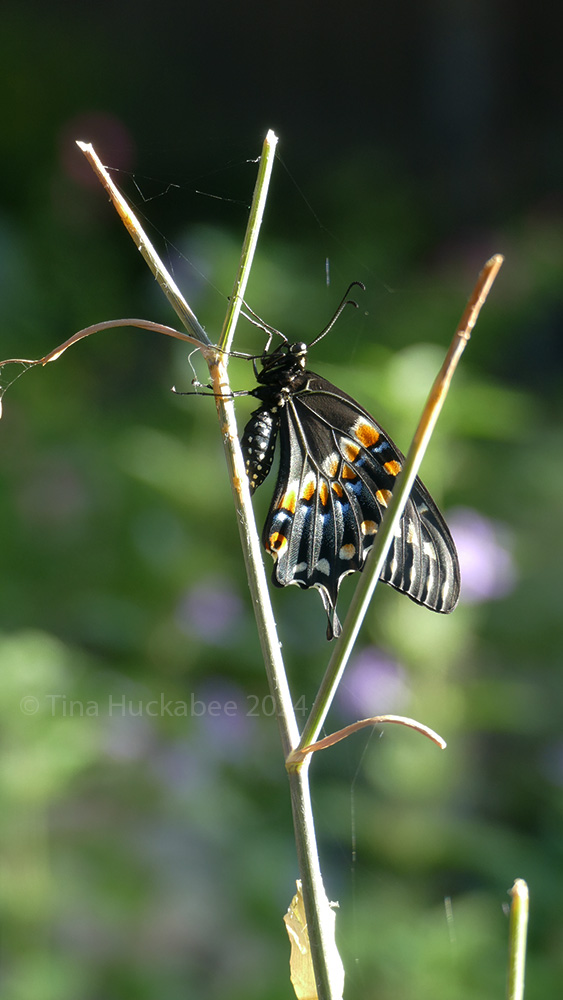
On a recent morning, if I’d been more alert during that first round in the garden, I would have seen two Black Swallowtail butterflies emerging from their temporary homes, the homes where they morphed from worms to wings. Alas, it was later in the morning, as their wings dried the the bright sun, and before take-off for their new day as adults, that I noticed and appreciated, their beauty.

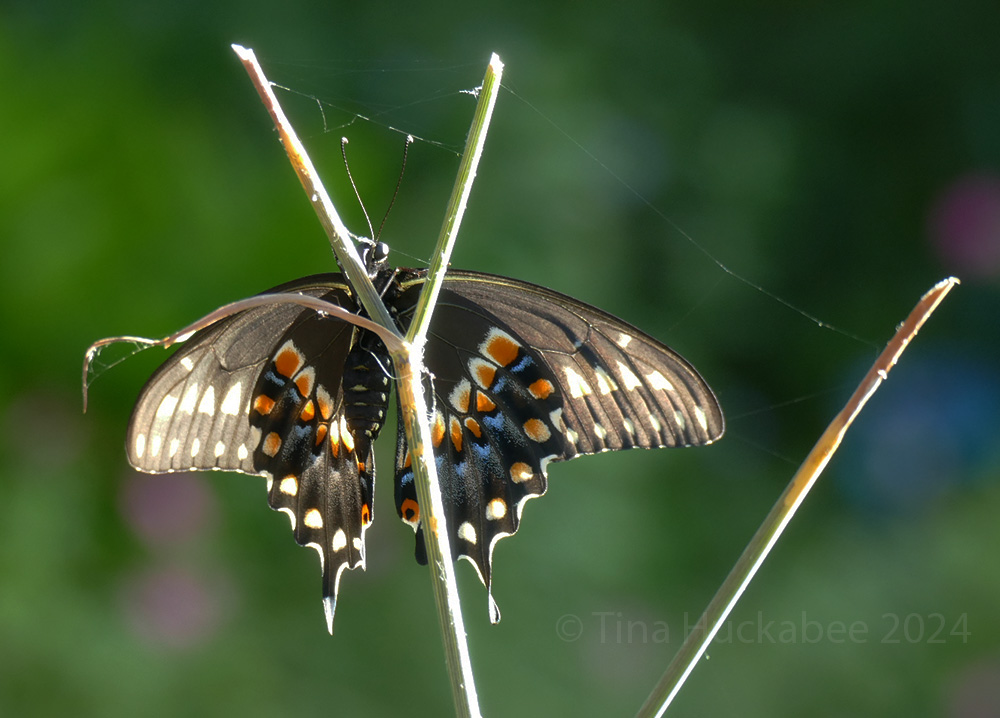
The butterfly situated at the top of a fennel stem caught my attention first.

I neglected to include the whole of its now-open chrysalis in this photo, just like I neglected to take any photos of both chrysalises in the two weeks they were in chemical flux. That was my bad to miss documenting those jewels. The chrysalises are stunning and look like they are lit from within. Maybe they are.

I like this view of the same insect. It’s rare that a butterfly demonstrates the whole of its underside in my presence, without my having to twist and turn and crane my neck for a glimpse or photograph.

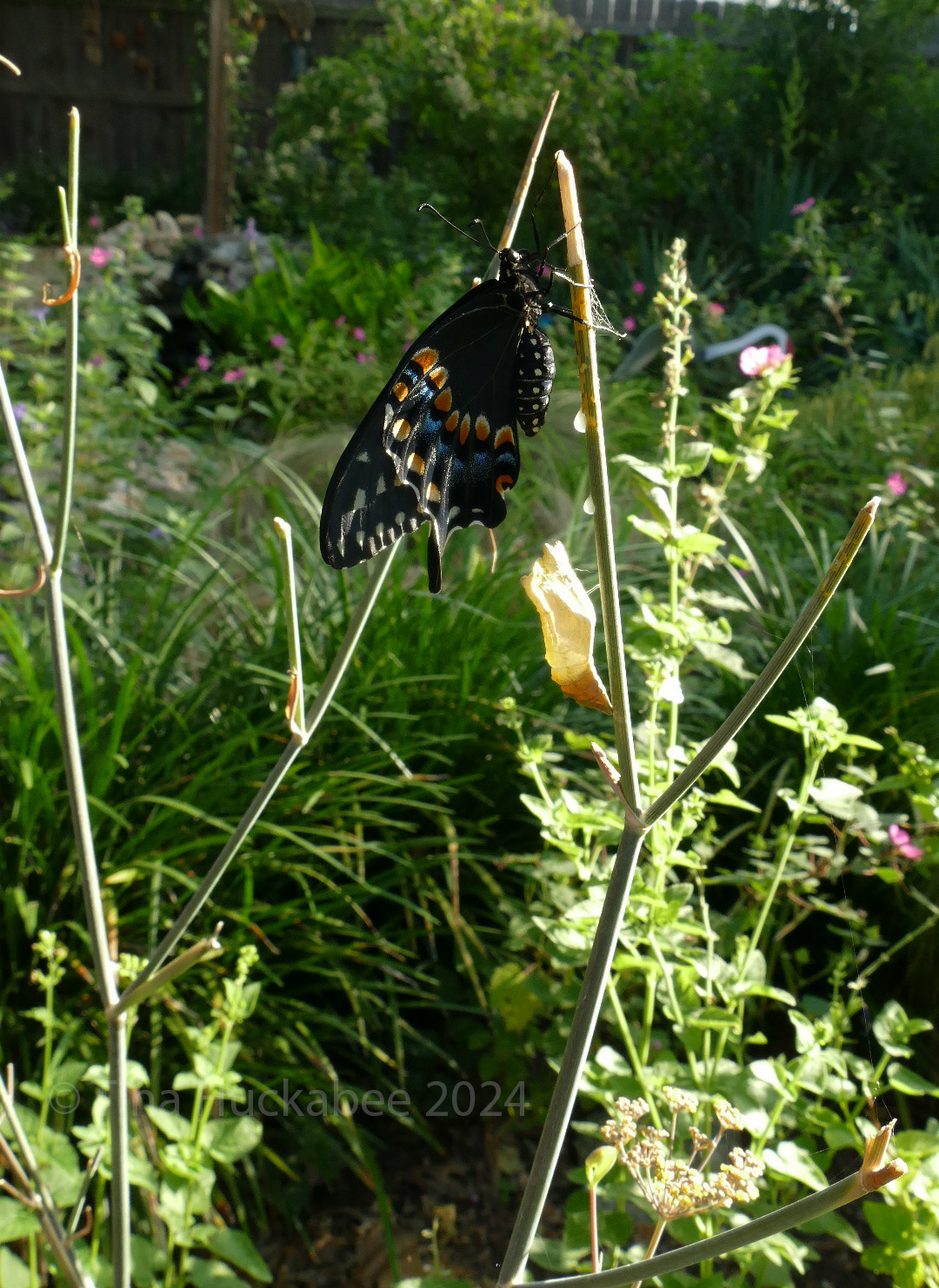
The second butterfly and its worm-to-wing home were stationed two stems over from the first.

You can see two drops of liquid settled on the stem, which spurted from the butterfly just before I snapped the photo. I assume this liquid is part of the chemical transformation from a caterpillar to a winged insect, and the reason why butterflies, after emergence from their chrysalises, must sit in the sun, opening and closing their wings until dry.

Shortly after I snapped photo, the butterfly took flight, to nectar and mate, to continue the cycle.

Big and Little

It’s always a pleasure to spot an unusual bird in the garden. Recently, I spied this tiny cutie, as it flitted and flashed between shrubs and trees, remaining immobile for only brief periods.

Though a rare sighting in my garden, this Blue-grey Gnatcatcher, Polioptila caerulea, isn’t out of its normal range. My garden sits in the orange area (breeding range), near the border with the purple (year-round range) area in Cornell’s map of gnatcatcher range.

I’ve seen gnatcatchers in the garden on two other occasions, years apart. Maybe they’re in my garden more than I realize or observe, as they’re tricky to identify, being diminutive speed demons, hiding in the bramble of bushes.

This one was on a rapid-fire feeding frenzy, zipping from shrub to shrub to tree, looking for insects and spiders, the gnatcatchers’ main sources of food. It perched a few times in my Red Bud tree, just long enough for me to say ‘hi’ and catch some shots of the catcher.

My last sighting was this aerodynamic pose in the second before the teeny gnatcatcher belted away, no doubt in pursuit of a yummy munchie.

The gnatcatcher is a little bird, but big birds are also around, and they’re usually predators hunting for prey. If you’re squeamish about seeing a predator with its prey, you’ll want to move on to your next gardening blog or bit of political news.

This handsome juvenile Cooper’s Hawk, Accipiter cooperii, was upsetting the Blue Jays and a bunch of other birds as it sat in my SIL’s garden early one morning. I snapped a couple of photos just before it flew off, but didn’t see it clutching its breakfast, an unlucky White-wing Dove, until I downloaded my photos.

Bird breeding season is just about completed; chicks have passed the fledgling stage and have matured to juveniles. Like this young hawk, they’re learning to fend for themselves. Next up in the backyard birding world is fall migration; it’s already started, but will peak in September/October. In my garden, I don’t see as many migratory birds in the fall as I do in spring, but maybe this year will be different. Either way, safe travels to the migrants and continued growth and learning for the neighborhood birds.

Pruning, Fretting, and Photos

My July garden is humming and buzzing along. With regular rain, and hot–but not yet scorching–typical Texas temperatures, pollinators, birds, and other assorted critters are rejoicing in the bounty of blooms and seeds. The garden is doing what it’s supposed to do: feed wildlife.

Summer is also a good time to reflect (ahem, gnash teeth and fret) about mistakes in the garden. I excel at gnashing and fretting, it’s one of my best things: Why did I plant that there–what was I thinking?? How have l let that beloved, beautiful plant become such a garden bully? That being said, this summer I haven’t spent much time in the garden until recently. Six to eight weeks before our toasty summer moves aside for…less toasty late summer /early autumn, light pruning and dead heading chores a good idea, and as I go, I plan for changes to the garden. While I’m noting problems and tidying messes, I appreciate the garden, where it is and what’s in it, at this moment in time.

American Bumblebees, Bombus pensylvanicus, abound! They’re favoring the remaining American Basket Flowers, Centaurea americana, but also visit the Mexican Orchid tree blooms and other flowers in the Aster family.

I caught this small, green metallic Sweat bee, Halictidae, as it rapidly zipped from flower to flower of the Cenizo shrub, Leucophyllum frutescens. Often called ‘Barometer Bush’ the lavender flowers appear when there is rain possibility. My shrub has bloomed fairly consistently this summer, to the delight of many winged things–and this gardener!

I was observing one of my favorite kinds of bees, the Horsefly-like Carpenter Bee, when I spied this curious character.

I knew it was a fly of some sort, rather than a bee, owing to its one pair of wings and its short antennae, and those impressive eyes. But what kind? I don’t think I’ve ever seen this insect before. Within a couple of clicks, I came across BugGuide’s page on the Southern Bee Killer, Mallophora fautrix. I love the way my bee killer clutches the stem, the rosy flowers of Autumn Sage, Salvia greggii, as colorful companions in the background. And that face, it’s adorable! The fuzzy legs look like they’re ready to spring into action–and they probably did, though I didn’t see it happen. According to information about bee killers, they perch on stems, awaiting a chance at hapless prey, ready to pounce on mostly honeybees and wasps. Well, my garden certainly has plenty of both kinds of meals for this dude. Good eating, bud!

The honeybee population in my garden is somewhat diminished as one of our hives, Woody, absconded earlier in June. If you’d like to read about absconding, this article is a good resource. At Woody’s previous hive check, all seemed well: there was capped and uncapped larvae, indicating a healthy, active queen, and some honey was being made. At the next hive check, shortly before we traveled in mid-June, there was no activity. Nothing. The bees were gone; they ate all the honey before they left, they didn’t say why they left, nor did they leave a forwarding address! I suspect they left because of some heavy rain, but only the bees know why they took off for different digs. I hope they landed in a safe place. Bees abscond sometimes (rain, or heat, or…whatever), but it’s a bummer for a beekeeper. Still, having one hive (which is thriving) to check on every two weeks makes hive checks quicker and I don’t mind that during the hot summer.

There are butterflies in my garden, but only this Large Orange Sulphur, Phoebis agarithe, deigned to stay relatively immobile for long enough to snap a pic. These yellows, and their smaller yellow cousins, are common in the late summer and autumn garden.

This coming week is a week of rain. Rain in July, what a concept! I’ve pruned some plants, now they’ll flush out with renewed glory. I’ve even transplanted some plants–a rarity in mid-summer–and those might just survive. The garden continues its production for summer and is preparing for a new season in just a few short months.