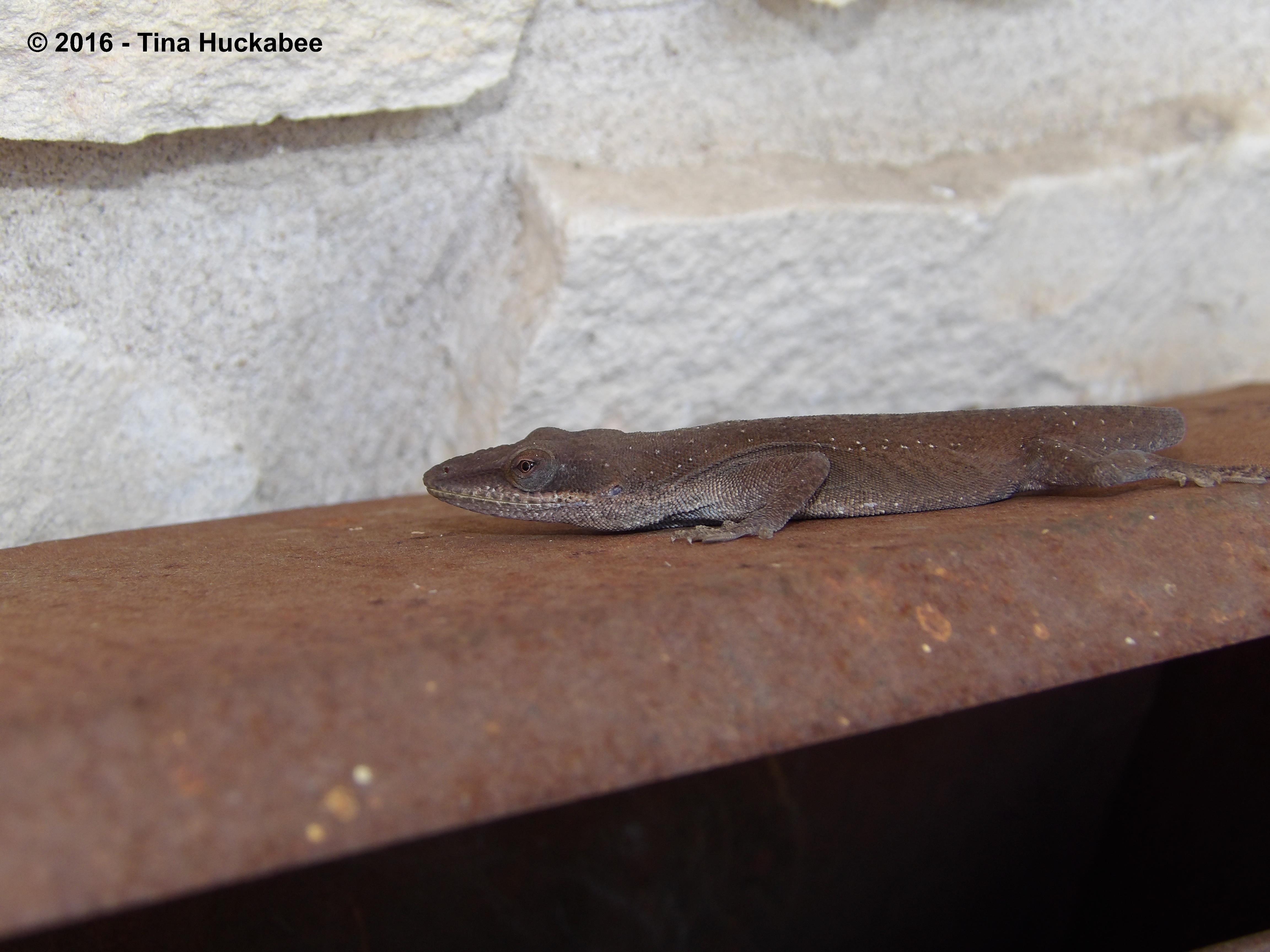
It’s the first Wednesday of the month and time for gardeners and garden bloggers to celebrate the wild critters that we share our world with. I’m still quite besotted with “my” backyard birds and have concentrated efforts on observing them this past month. But on a chilly morning, this winter-colors clad Carolina Anole, Anolis carolinensis, was hanging out, too cold to scramble away from my camera.

His coloration isn’t winter-only, but instead, camouflaged to match the limestone wall and rust-colored mail box. I’ve seen a few of these guys-n-gals this past month and plenty more will emerge as we move into our warm season. Green will be their primary color in most of their photos to come.
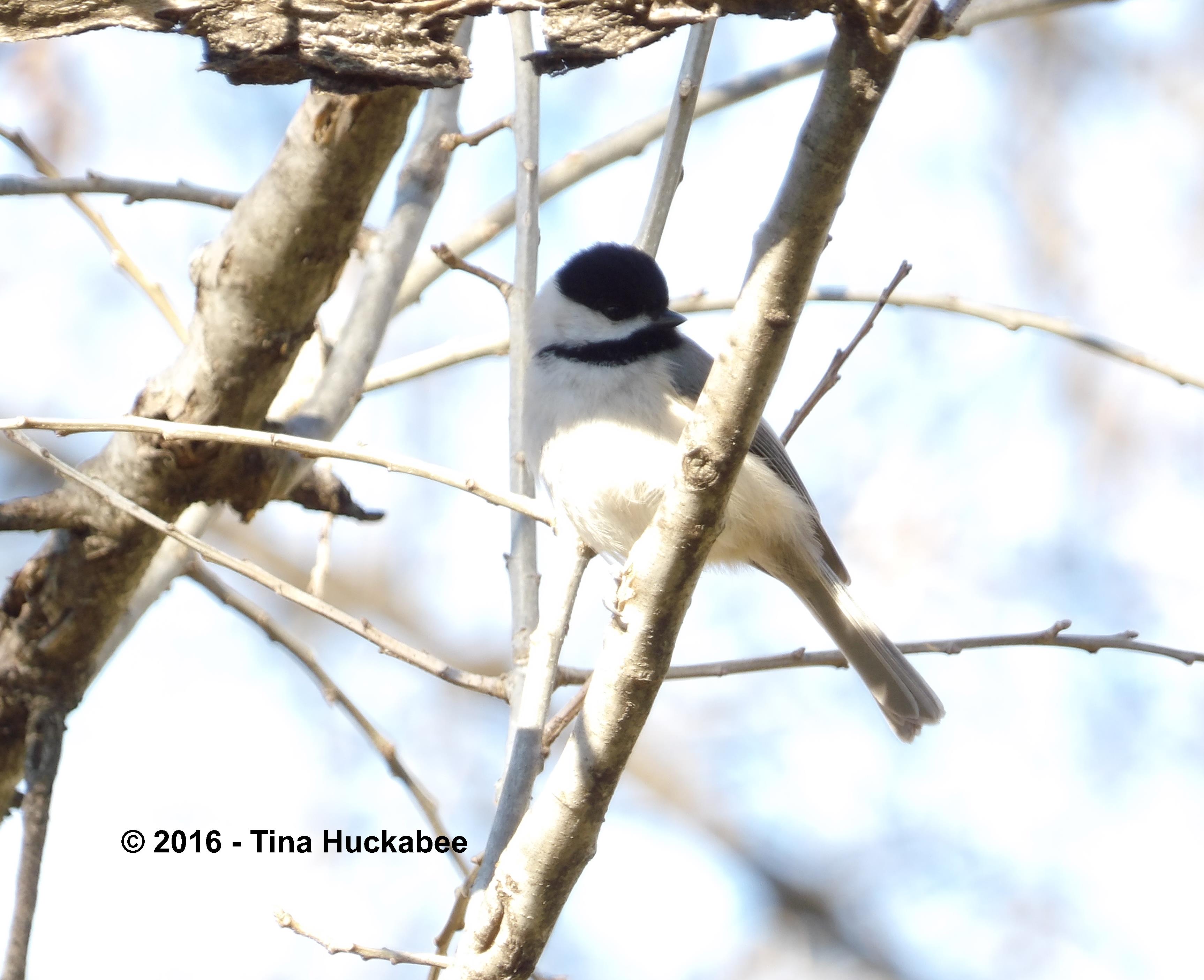
In experimenting with the Cornell Merlin app on my phone, I inadvertently discovered that when I play the song of certain birds–looking at YOU, Carolina Chickadee, Poecile carolinensis,
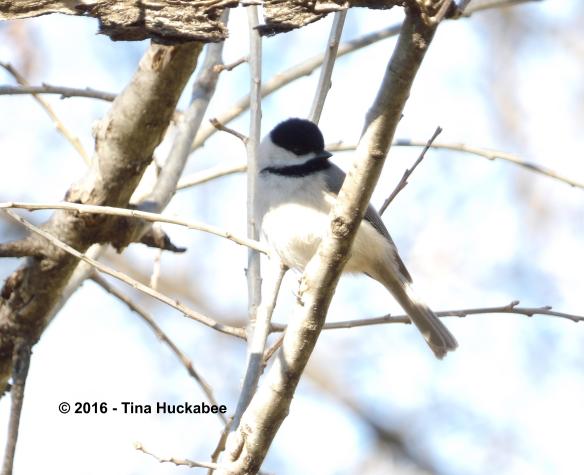
…the bird responds. Honestly, it was an accident the first time or two that I played the Carolina Chickadee vocalization on the phone and then noticed the real one was answering and flitting ever-closer to where I was sitting. Another time, I was showing a neighbor this cool trick and the same thing happened–the Chickadee answered and moved closer to where we were standing.
Poor guy. I’ve been messing with his little bird-brain and he can’t figure out where his rival Chickadee is located. Rest assured, other than the 3 or 4 times to confirm that the bird was actually responding the the phone’s Chickadee call, I haven’t played the Chickadee song since. I suppose that I shouldn’t be surprised a bird would react to the vocalization issuing from the phone. Knowledgeable and passionate birders, the ones who started birding as kids, learned and excel at bird vocalizations and it’s the method they employ to attract birds for observation and photography. I have zero ability whatsoever to vocalize bird calls, but, going forward, I’ll keep my trusty phone handy if I ever need to call a bird.
Maybe I’ll use the phone to call humans, too.
This little cutey has been a constant, though shy, visitor all winter.
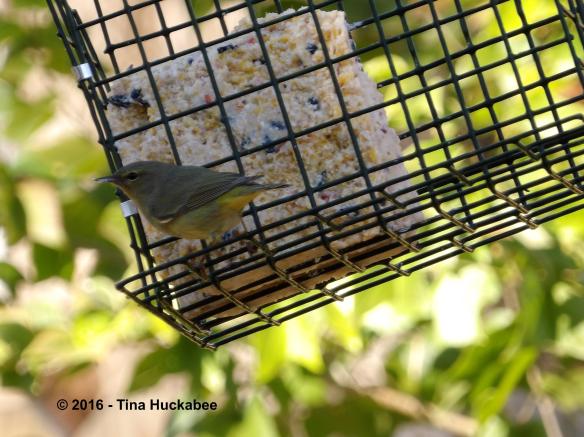
I’m reasonably confident that he’s an Orange-crowned Warbler, Oreothlypis celata, and he’s one of several birds that I don’t think I would have noticed if I wasn’t…well, trying to notice birds. Counting birds for Cornell Lab of Ornithology, which I wrote about here, has been good discipline for me. In keeping binoculars handy (I now have a greater appreciation of birders’ reliance upon those things) and actually using them when I’m observing birds, I’ve discovered that a remarkable variety of birds pass through and regularly visit my garden.
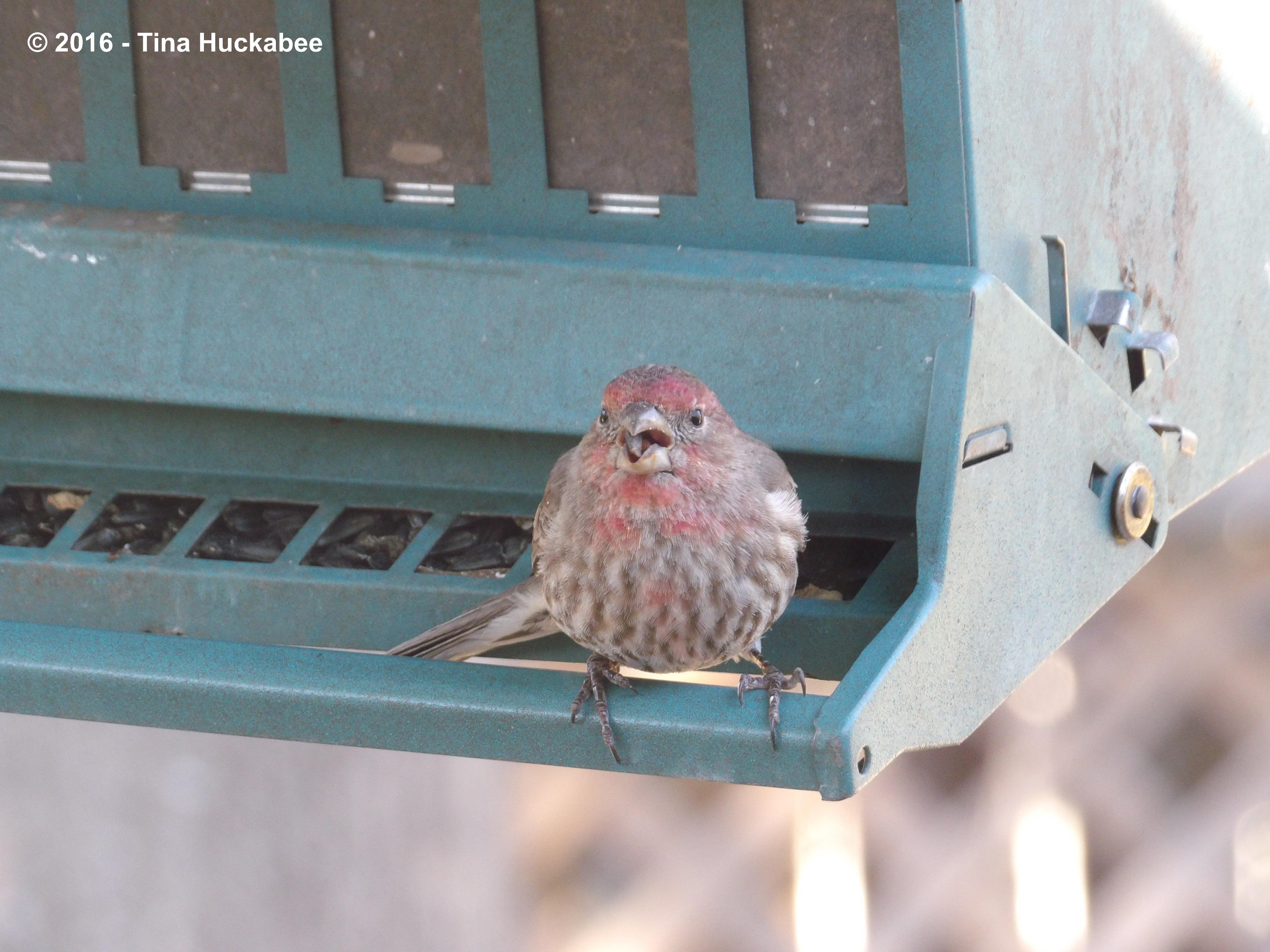
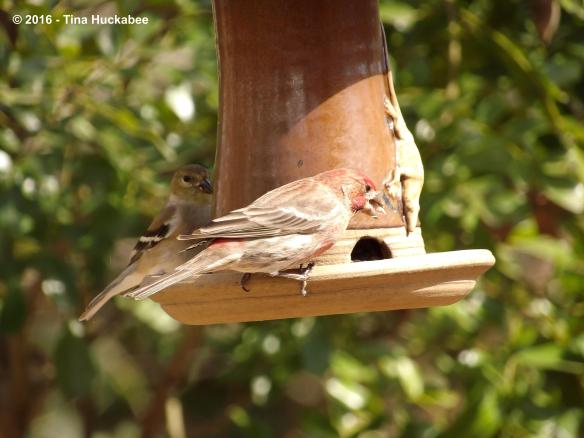
House Finch, Haemorhous mexicanus, couples are residents, year-round.

This House Finch male munches contentedly, though I guess his parents didn’t teach him to chew with his mouth closed.


And this,
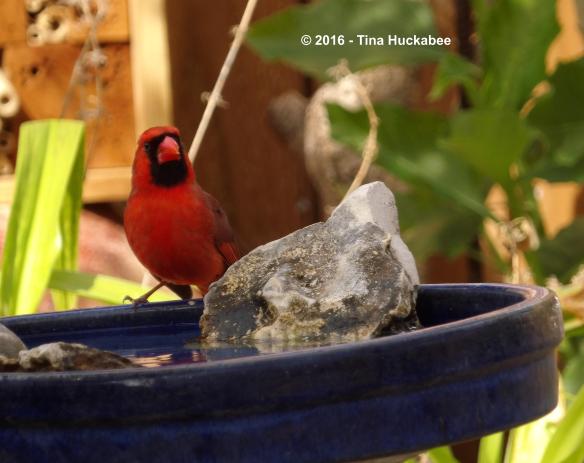
…is the monthly obligatory shot of the always stunning male Northern Cardinal, Cardinalis cardinalis, a pair of which are daily visitors.
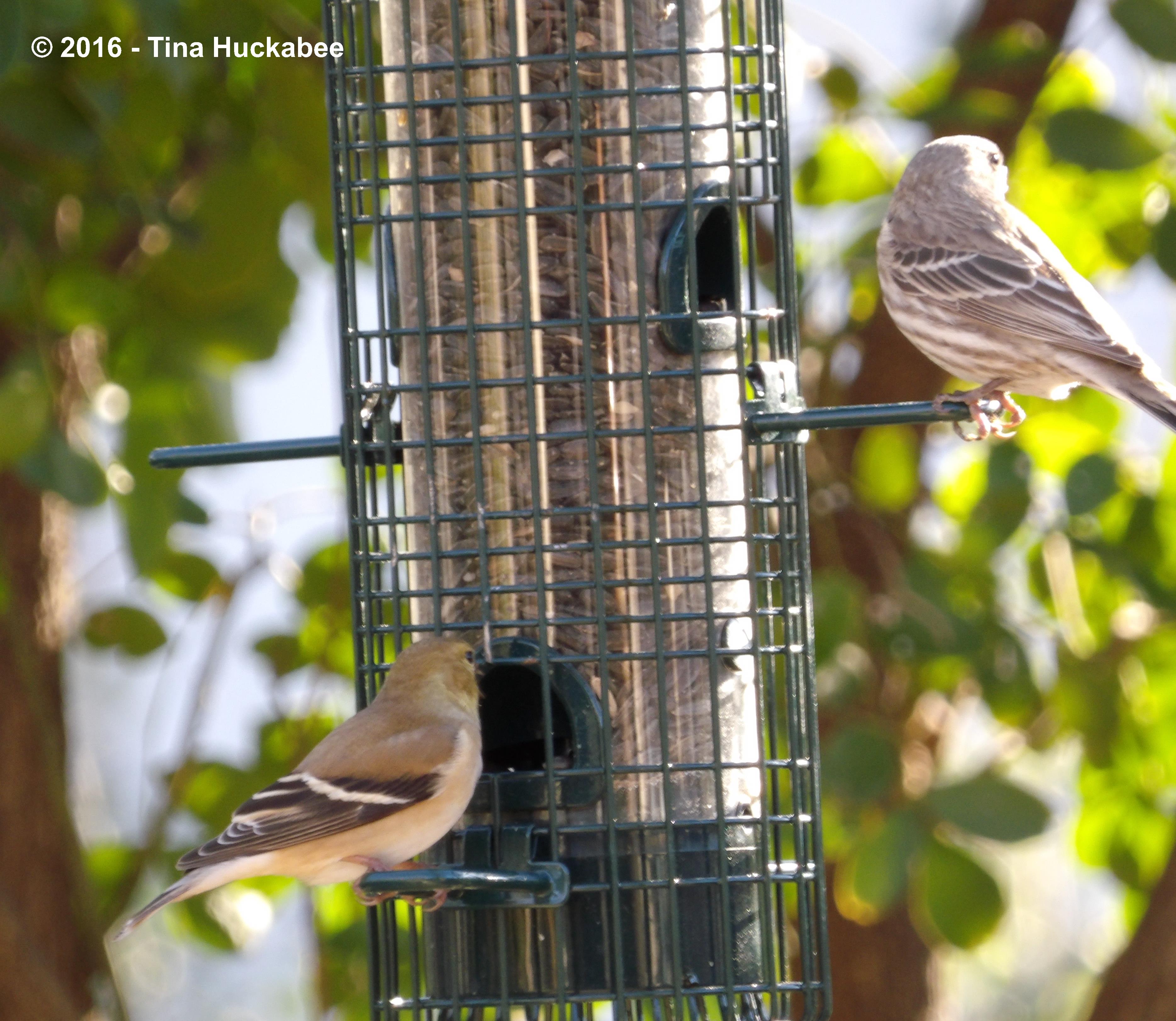
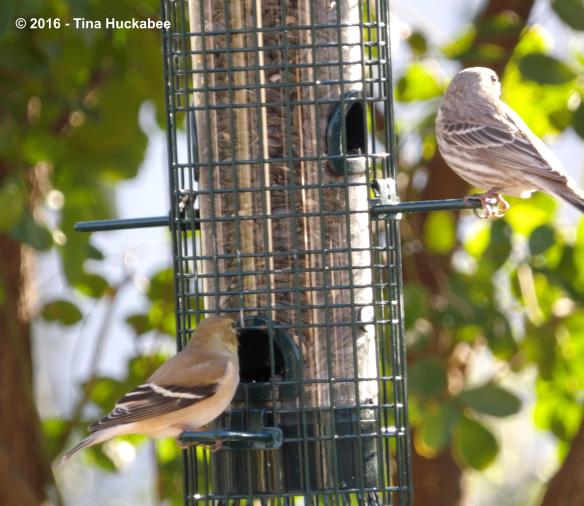
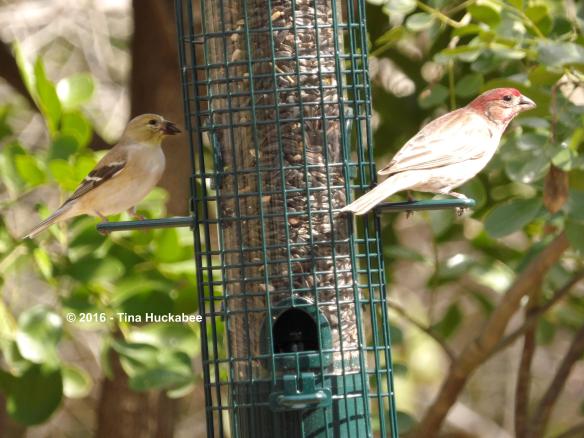
American Goldfinch, Spinus tristis, have been new and constant visitors to the garden. Such attractive and tiny birds, they brighten the late winter landscape. Sometimes I have as many as 15-20, though usually there are only 5-10 at any time at the feeder, birdbaths, or foraging on the ground.

I realized as I was perusing photos that I have no clear shots of the bright yellow and black mature males. I’ll have to fix that little glitch before they fly north for their summer breeding and nesting activities.
American Goldfinches and House Finches share the bounty well.
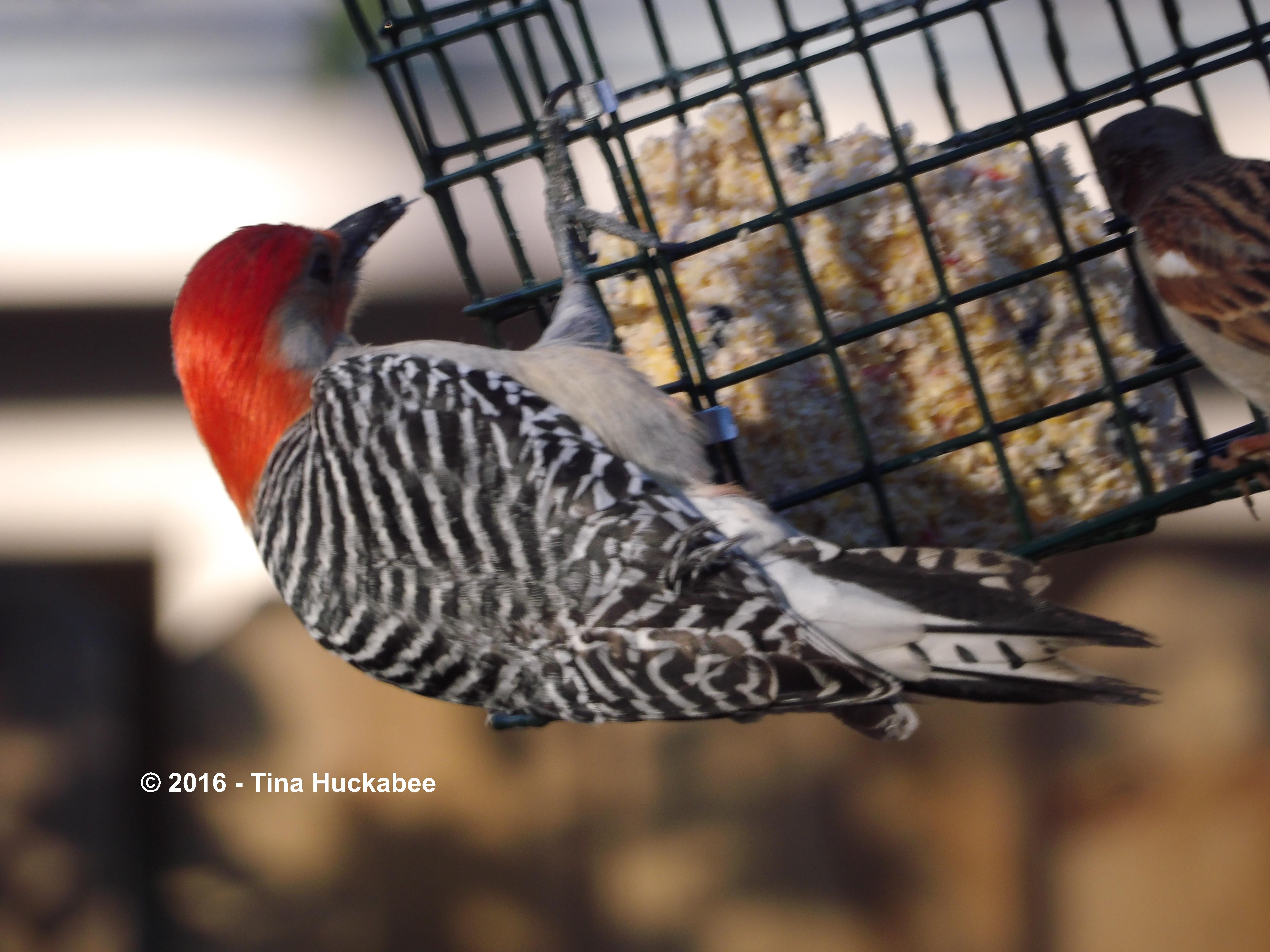
My red headed Red Bellied Woodpecker, Melanerpes carolinus, is a big fan of suet.

I still haven’t successfully caught that blush of red on his belly for which he is named, but he’s a pretty boy and always fun to watch and hear. His mate has also appeared a time or two, though she is shyer and doesn’t pose for pics as readily as he does–or maybe it’s that she doesn’t eat as much.
I’ve had to put away my suet, or at least have it out only when I’m at home and can supervise, because of an influx of these bad actors.

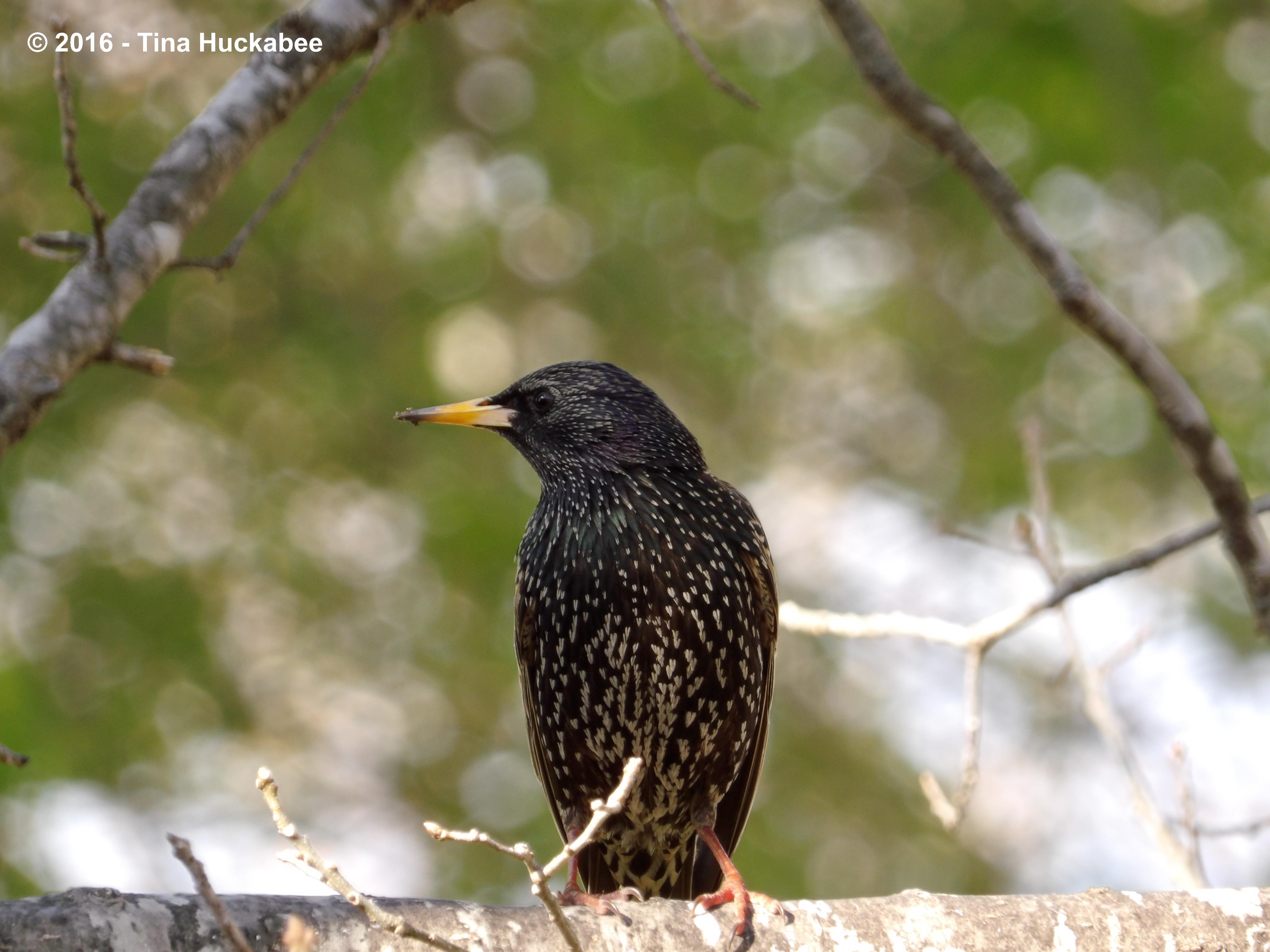
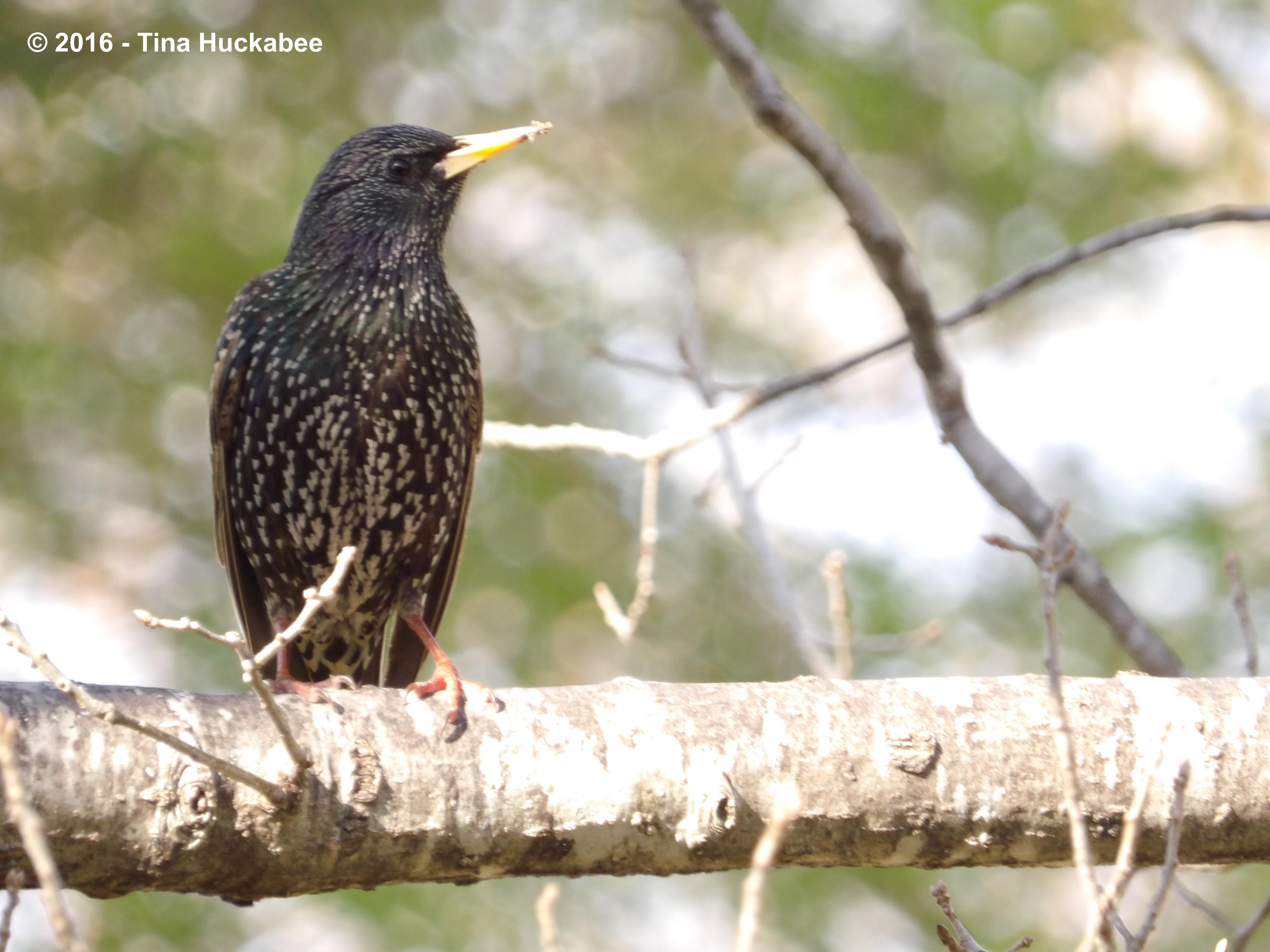
Yes, the European Starlings, Sturnus vulgaris, bane to native North American birds and bridges alike, have arrived–and in droves sometimes. Starlings are actually lovely birds with beautiful plumage,
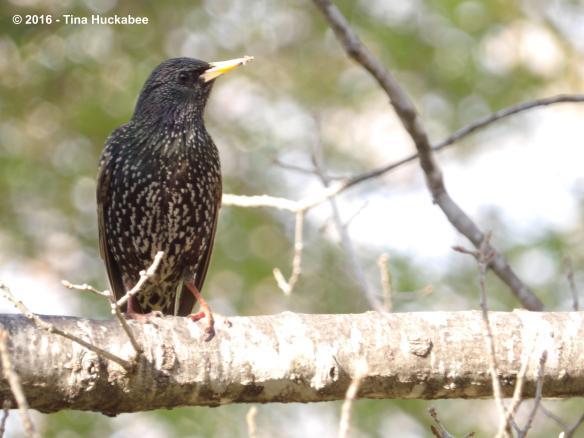
…and I’m fond of their vocalizations. But they’re so aggressive and greedy, and sometimes, downright mean to the other birds. My little warblers and finches don’t stand a chance against their bully behavior, though I must say, the Blue Jays hold their own. I know that Europeans (the people, not the birds) lament the decline of the Starlings in Europe, but they (the birds, not the people) have become truly problematic here in North America.
No, I’m not in favor of building a wall, but maybe we could arrange a swap?? How about some good European wine, beer, or cheese in exchange for some Starlings? Deal?
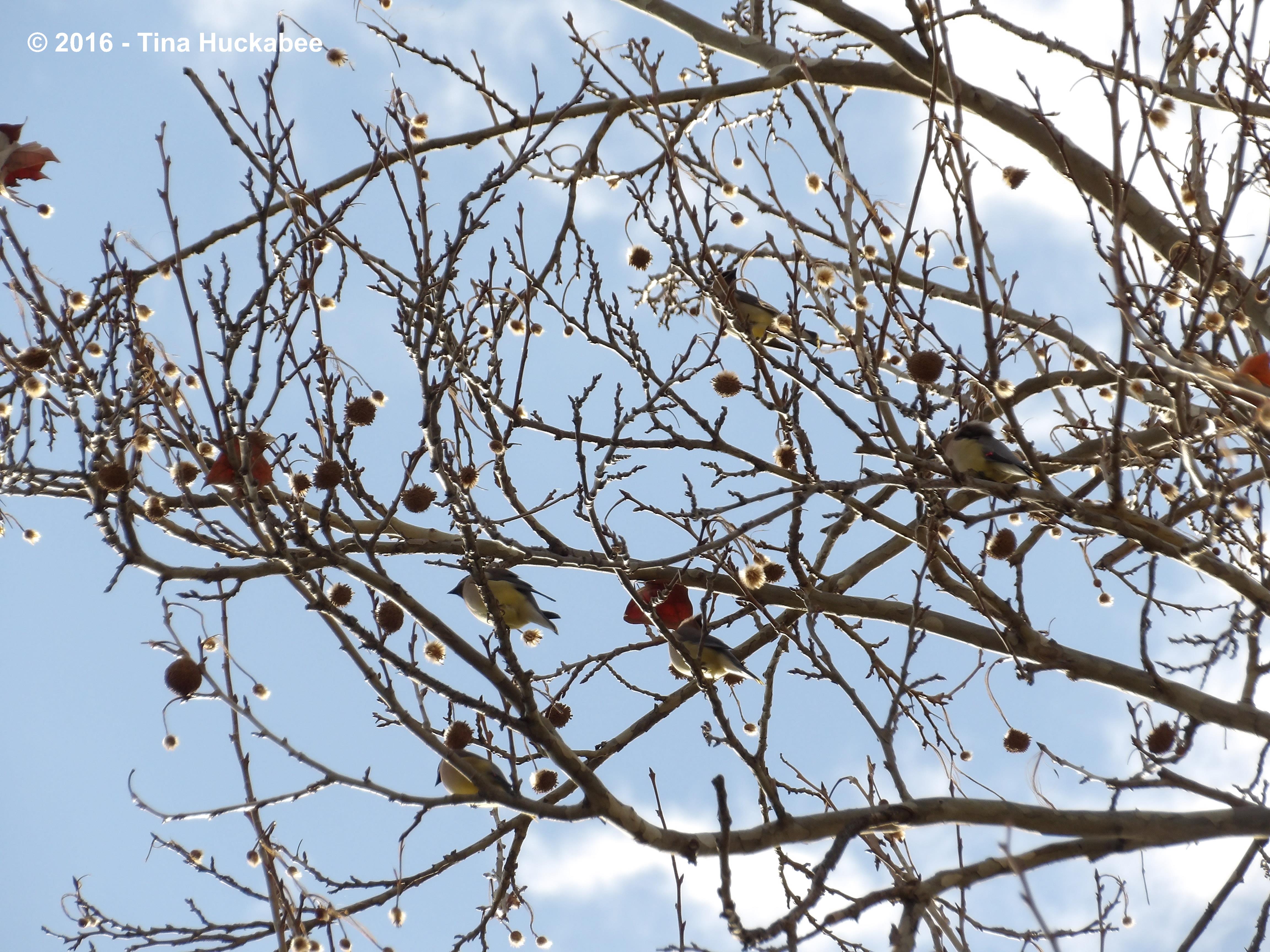
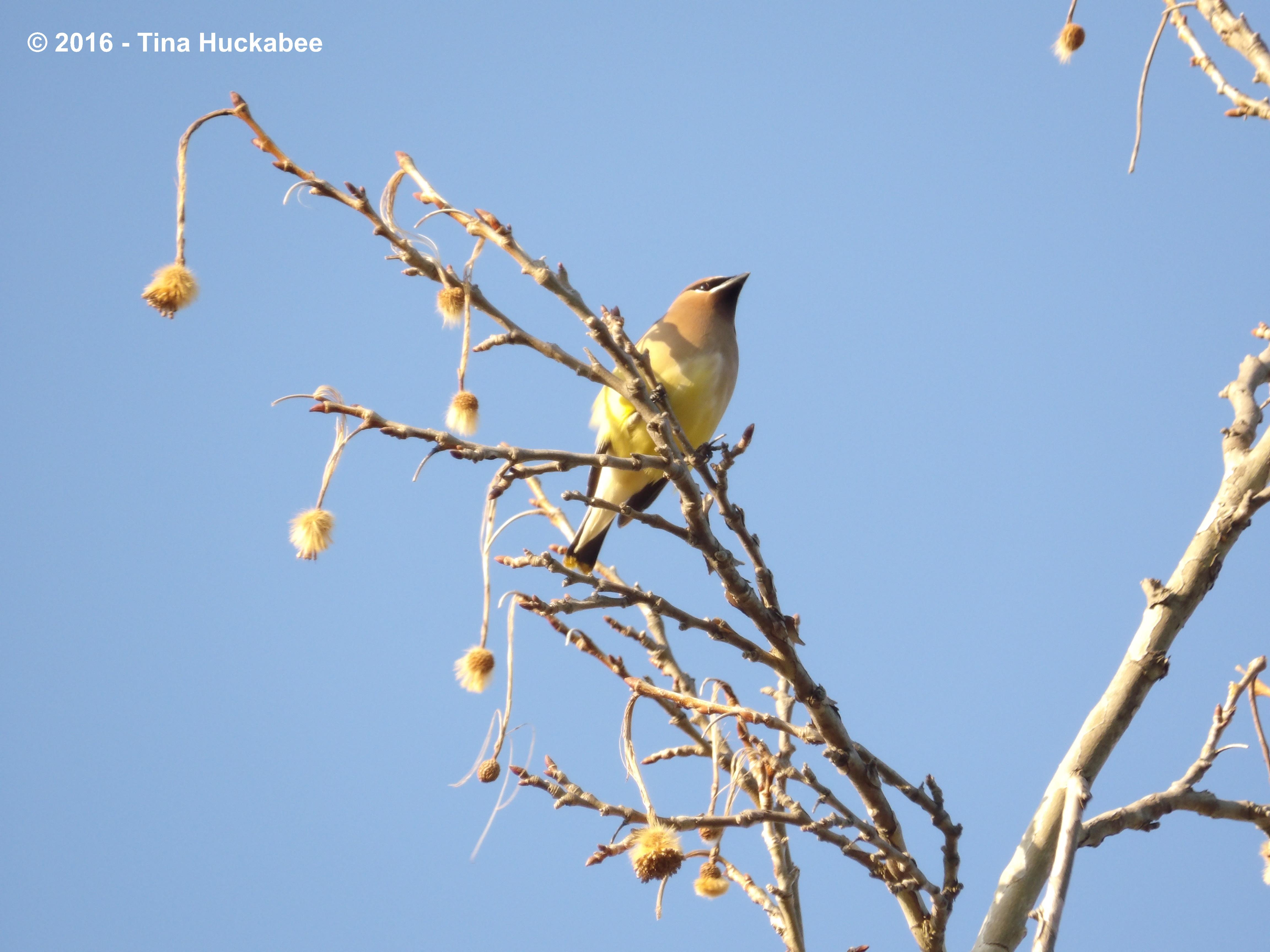
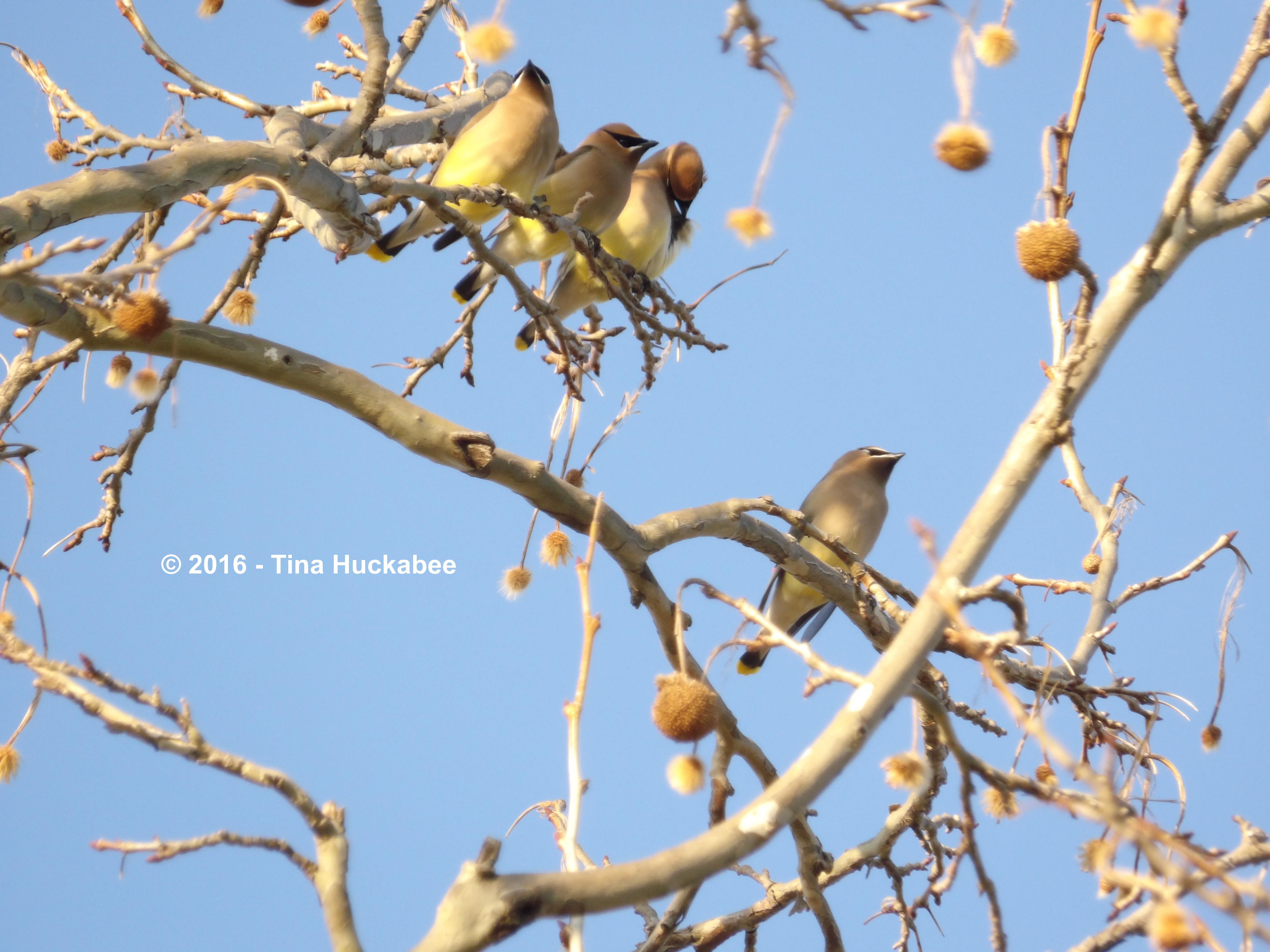
A happier and more welcome invasion is of this gorgeous bird, the Cedar Waxwing, Bombycilla cedrorum.
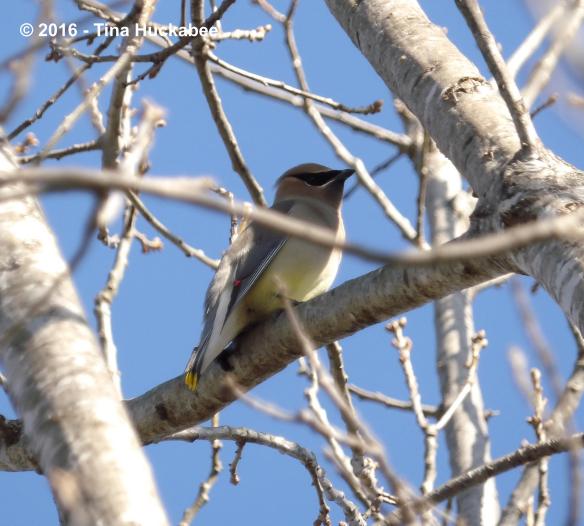
Oh, that strip of yellow on the tail feathers and that dash of bright red on the wing, not to mention the stylish face mask! I absolutely adore these beautiful, gregarious birds. They’re fun to watch, though they’re usually waaayyy up high in the trees, so I get to see a lot of Cedar Waxwing creamy lemon-yellow tummies. Cedar Waxwings swoop up in flocks landing near the top of trees, then swoop down again into the next tree, keening all the while. They’re such cheerful birds.
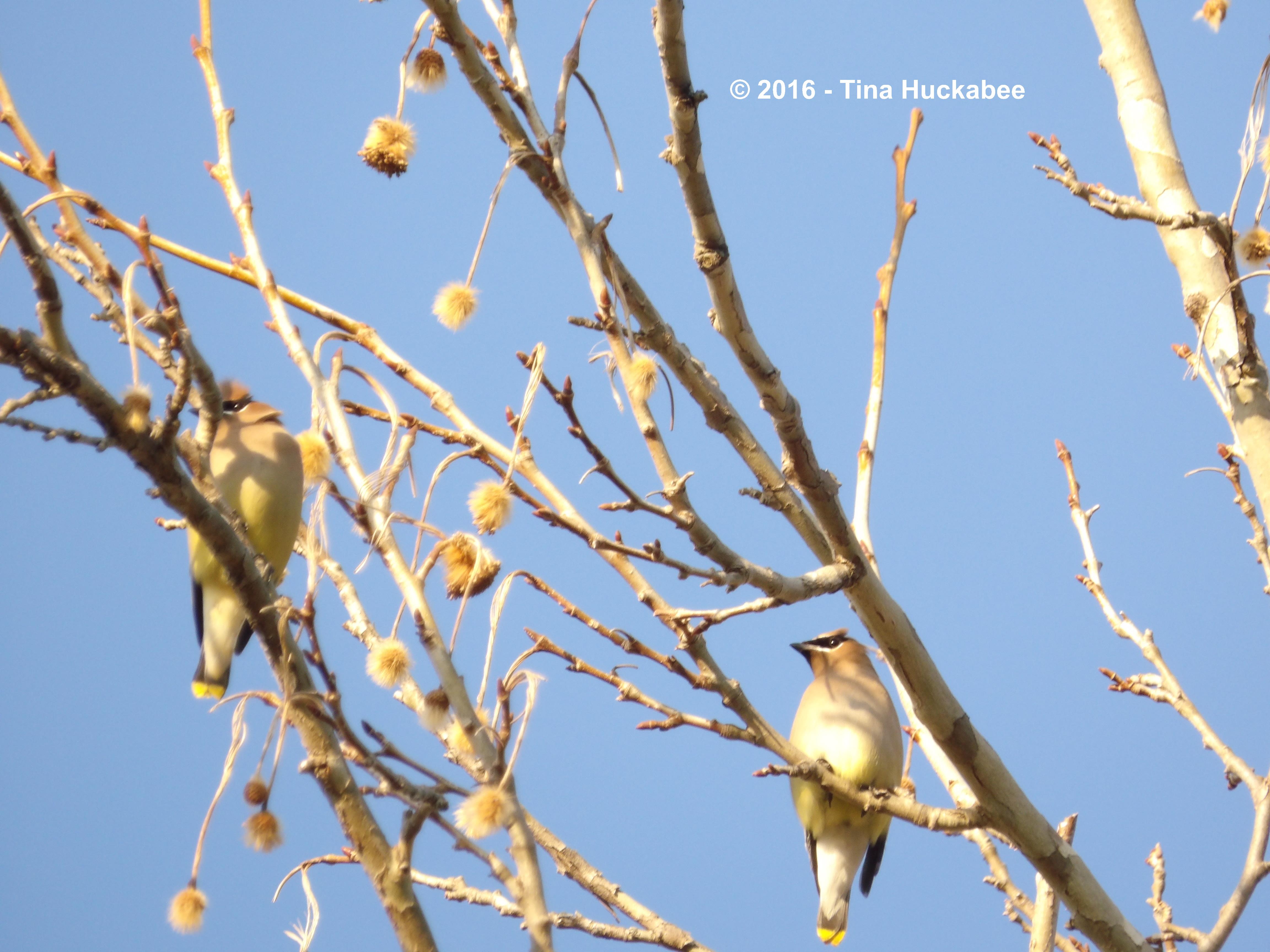
Their courting behaviors are charming.
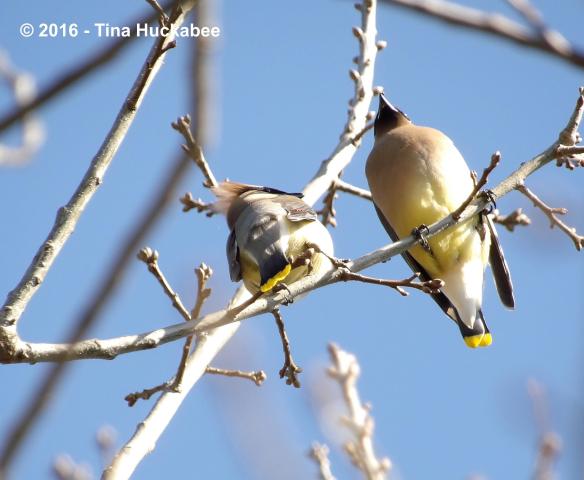
Cuddling up…
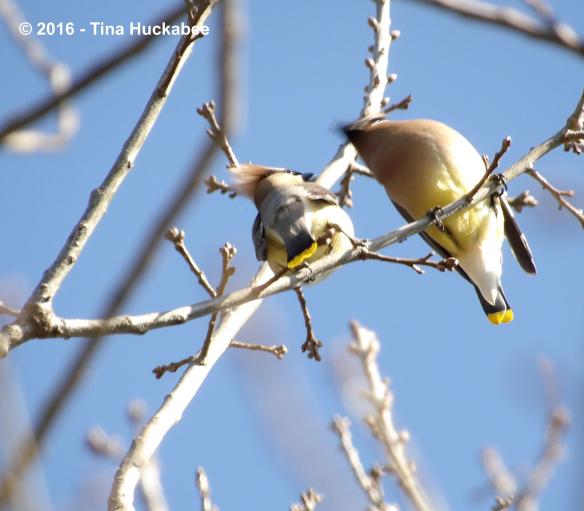
Leaning in close…
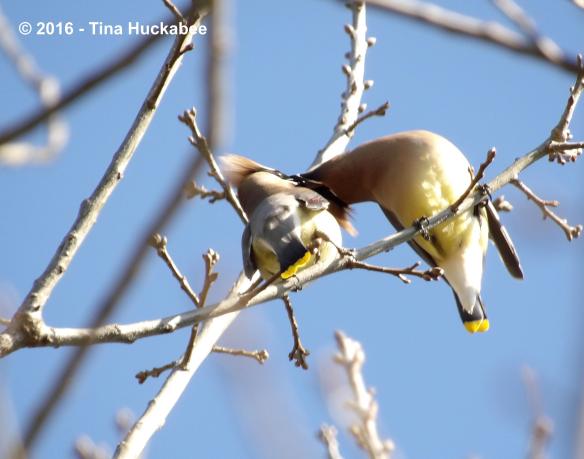
Kiss, kiss, smooch, smooch, flirty, flirty.
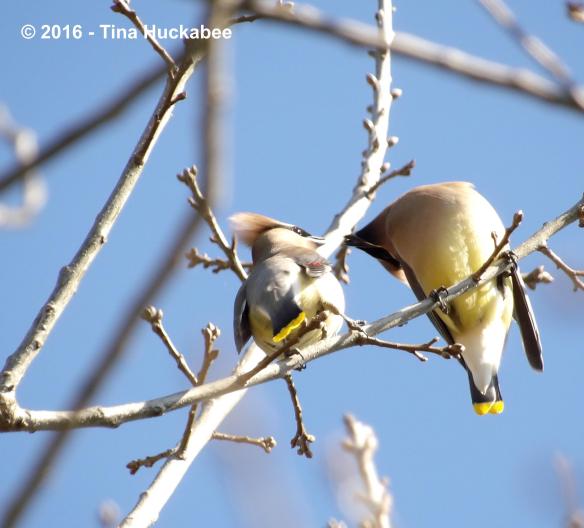
Oh, that went well!

Be still, my beating heart!

Shy again…
Sharing berries is love, or perhaps more accurately, a prelude to breeding.
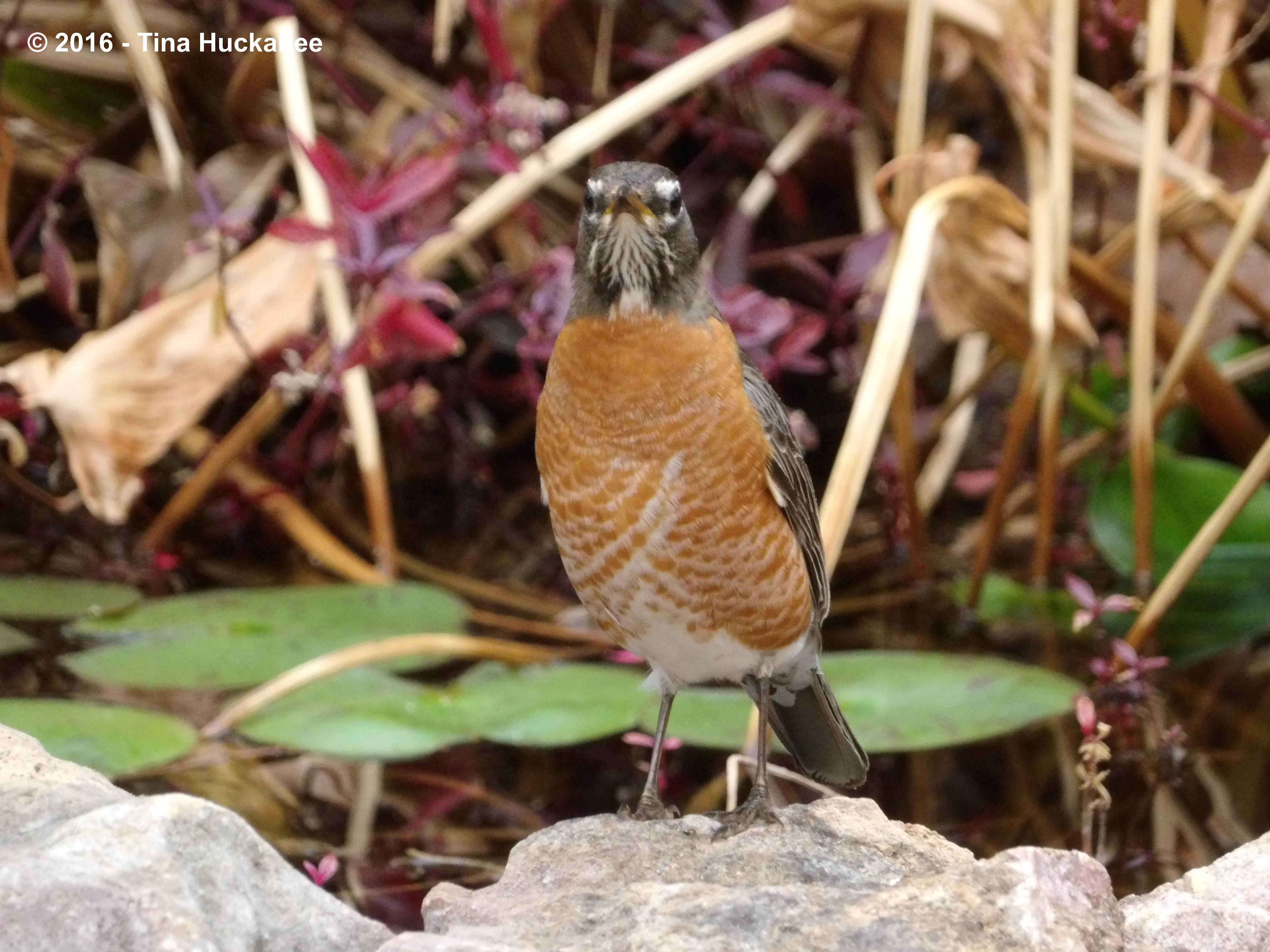
Look who stopped by the pond early one morning! A lone male American Robin, Turdus migratorius, popped in for a quick sip and a pose.

Sadly, I haven’t seen a Robin visit my garden in years. It was always a hit-or-miss with Robin sighting during late winter/spring migration, but in the past there were usually a few to observe. In recent years though, not a one has stopped by for a nosh and a drink. So, welcome Mr. Robin and please, bring your brethren for a visit.
Finally, there’s this young lady.

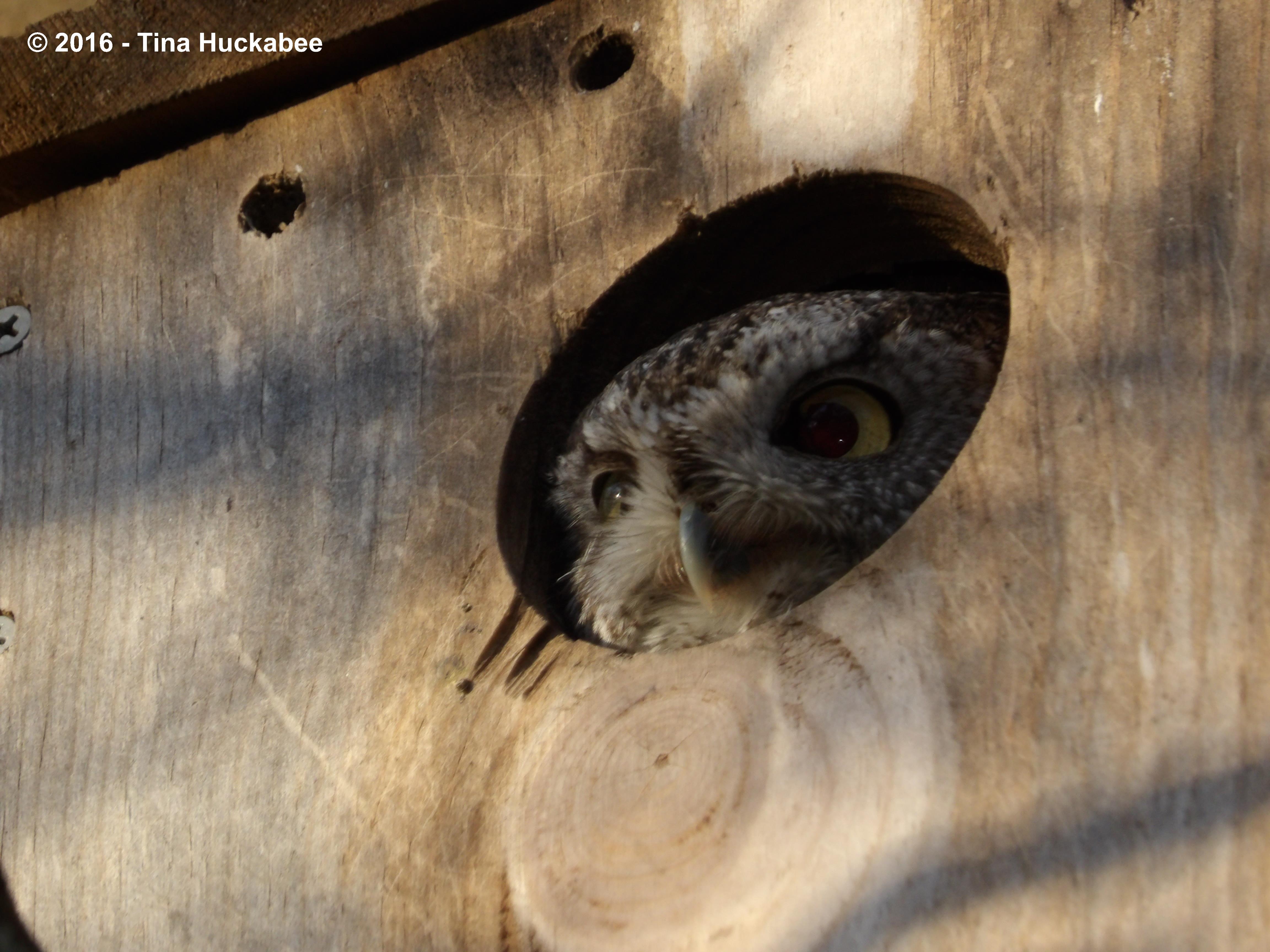
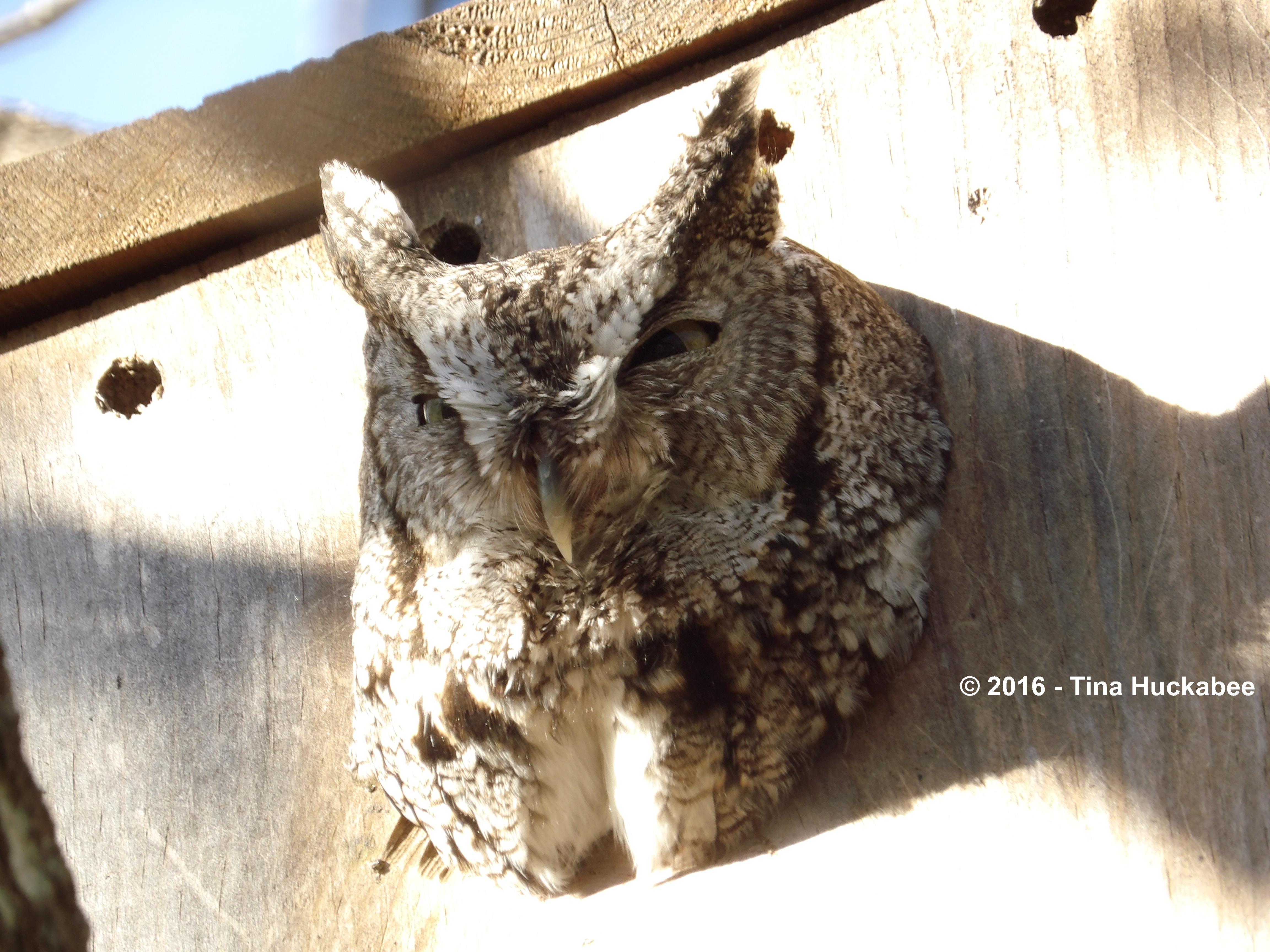
Mama-to-be Eastern Screech Owl, Megascops asio, has returned this winter and is settling in to the nest box a bit early this year.
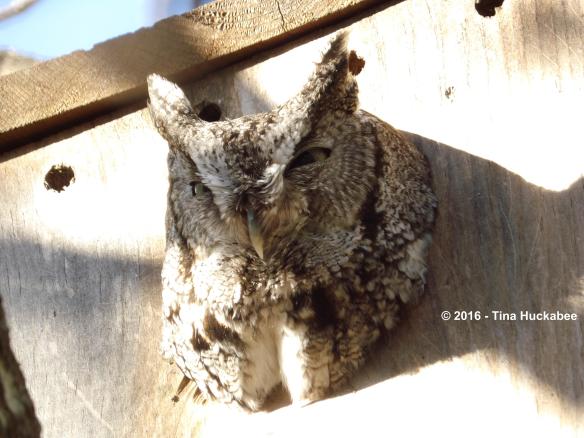
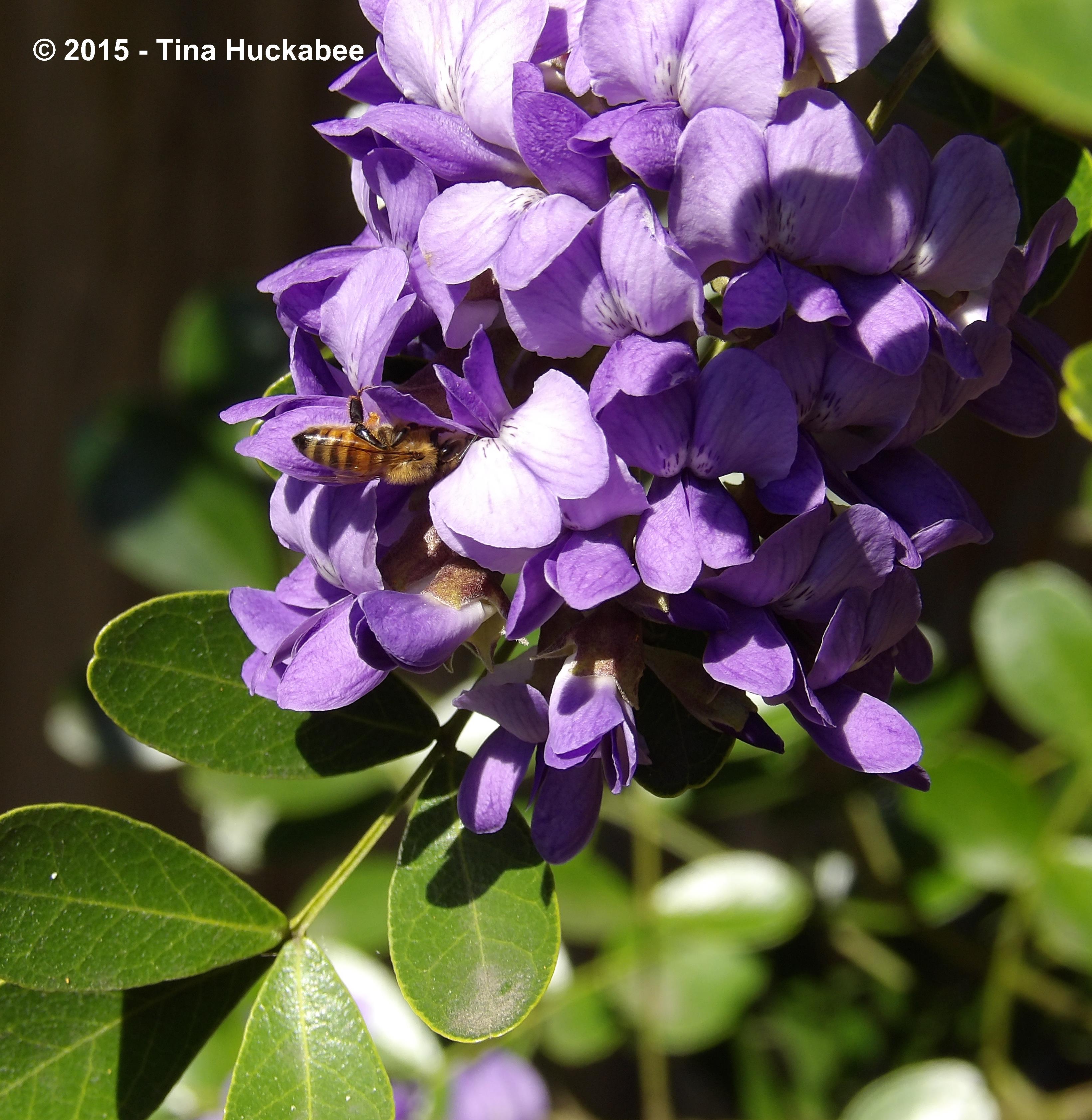
The winter has been mild (to say the least), so I suppose that explains the early move-in date. Dad-to-be was comfy, though wary of me, in the nearby Mountain Laurel tree on Sunday, keeping watch and looking dashing.
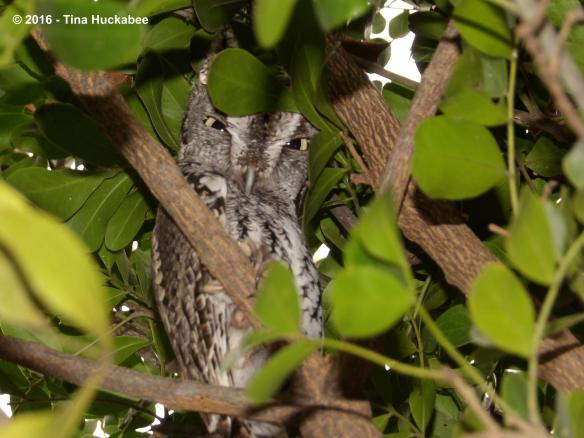
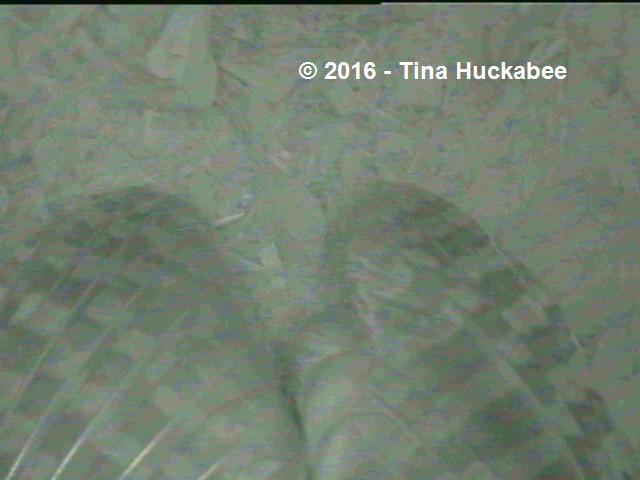
The Blue Jays, Cardinals, and the little birds keep me apprised to the owls’ whereabouts and when I hear their complaints, I know where the owls are roosting. I’m thrilled the owls are back this year and will keep my fingers crossed that all goes well for them and their brood. We installed a bird cam in December so we have a view inside the nest box this year. There’s not much to see right now, but when Mama is sleeping in the box, this is view:

For reference, you’re looking at the top of her head and down her back. Her eye is just above my last name.
When Mama is looking out of the box, the view inside is this:
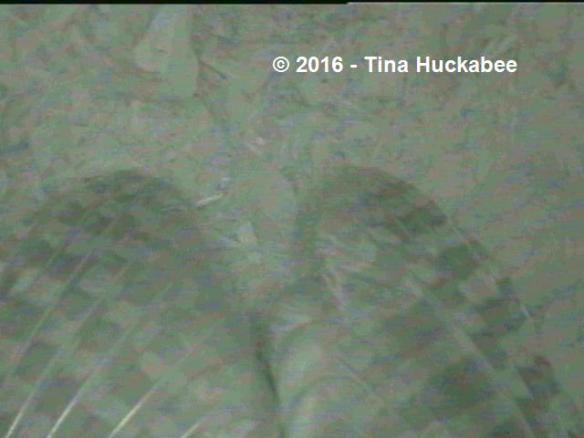
You can see her two wings, resting down, side-by-side.
If there are no glitches with the wiring or camera, we should be able to see the eggs and then the chicks, in all their fuzzy cuteness. It should be an interesting experience. As I mentioned to a friend about viewing the goings-on of an owl family: You know, tearing apart songbirds, mice, and lizards. Fun stuff.
Mama wasn’t in the box yesterday, so that’s a bit concerning (especially because there is a Great Horned Owl pair also nesting in the neighborhood). As she’s been settled in for a week, it’s odd that she wasn’t there. Plus, I didn’t hear any trilling the previous night. I’m hoping she just stayed out late and needed to crash at a friend’s place–but time will tell.
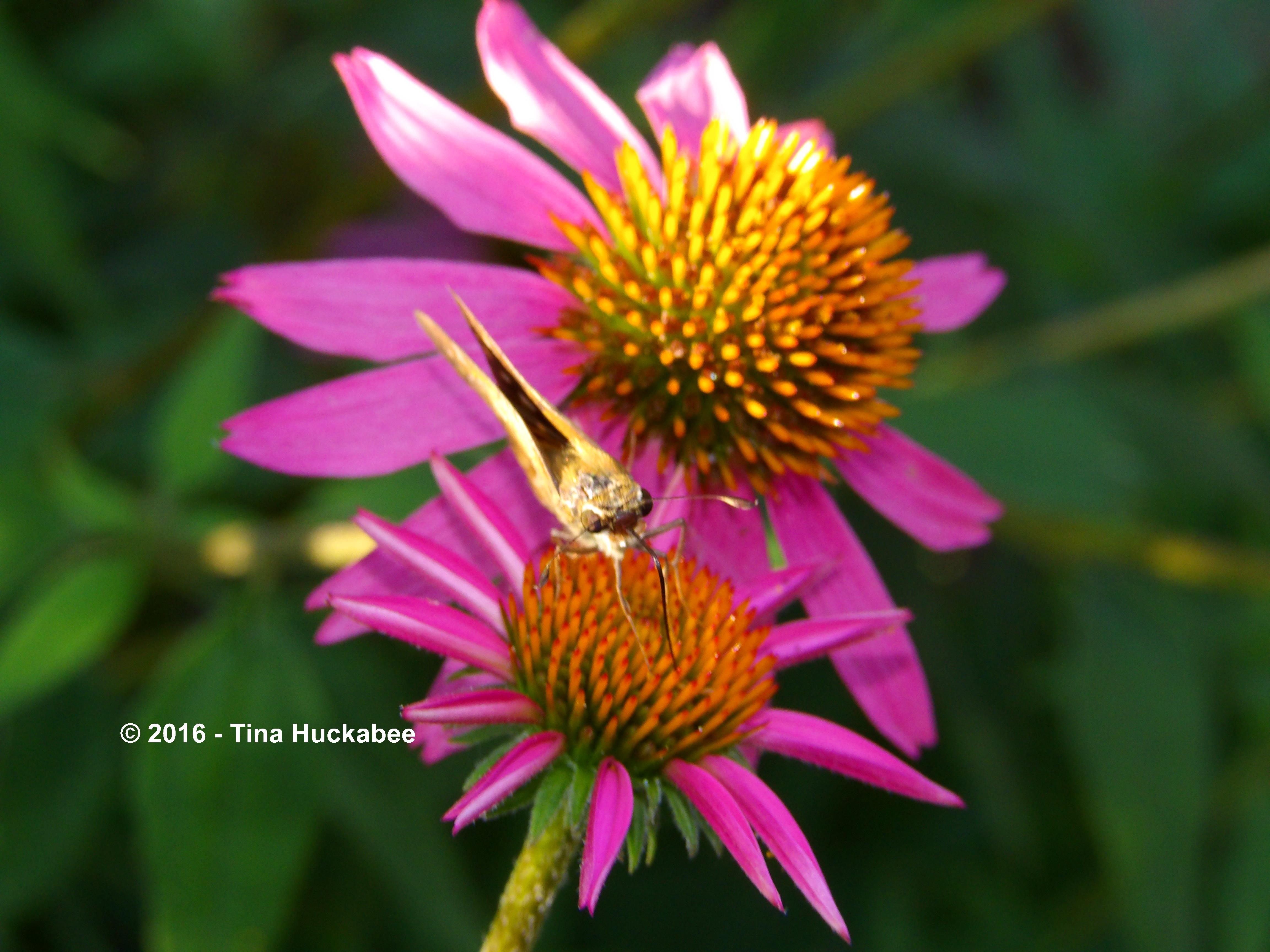
The native bees, honeybees, and butterflies are waking up and beginning to make their presence known in the garden–buzzing, breeding, nesting, flying. They’ve been a little too fast for this pokey photographer to capture, but with some practice and good luck, there will be a variety of insect goings-on in the coming month to share for the next Wildlife Wednesday.
Did wildlife visit your garden this past month? Please post for March Wildlife Wednesday–share the rare or mundane, funny or fascinating, beneficial or harmful critters you encounter. When you comment on my post, please remember to leave a link to your Wildlife Wednesday post so readers can enjoy a variety of garden wildlife observations.
Happy wildlife gardening!