It’s Spring, Y’all!

Poppies are poppin’ and honeybees are rockin’. Honeybees are all in the poppies’ innards, their pantaloons (corbiculae) laden with pollen as their work takes them from flower to flower. Most of my garden is abloom with native Texas plants, but this European poppy is the descendant of seeds given to me by a German neighbor decades ago. The poppies appear annually in January when delicate foliage rises upwards during the cool season, then buds reveal glorious red and purple in April.

It’s spring, y’all. Trees are leafing out, perennials and annuals are showing off their eye-catching wares. March was dry and warm, though rain and chilly temperatures have made a come back. Flowers are opening, pollinators are working, and birds entertain with song.

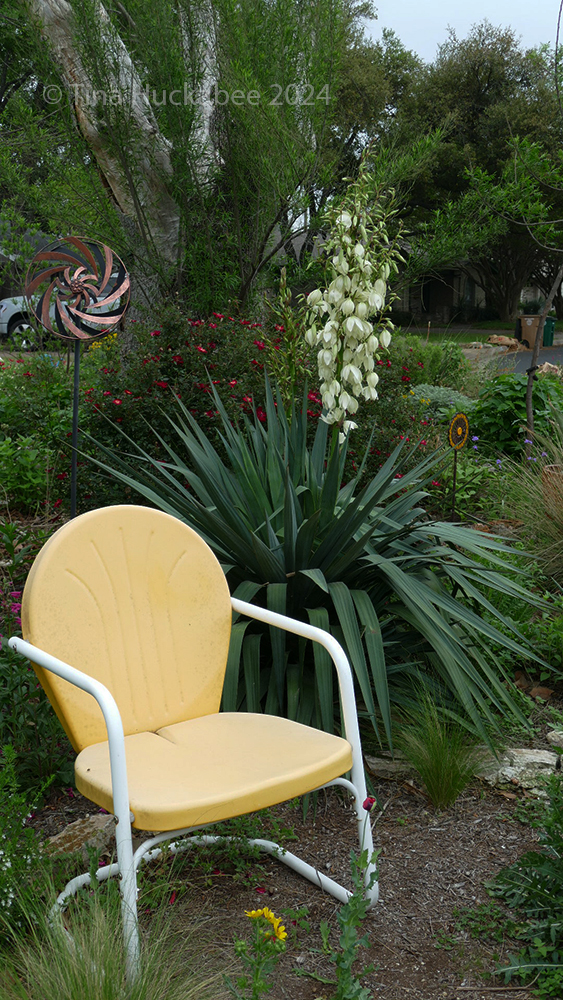
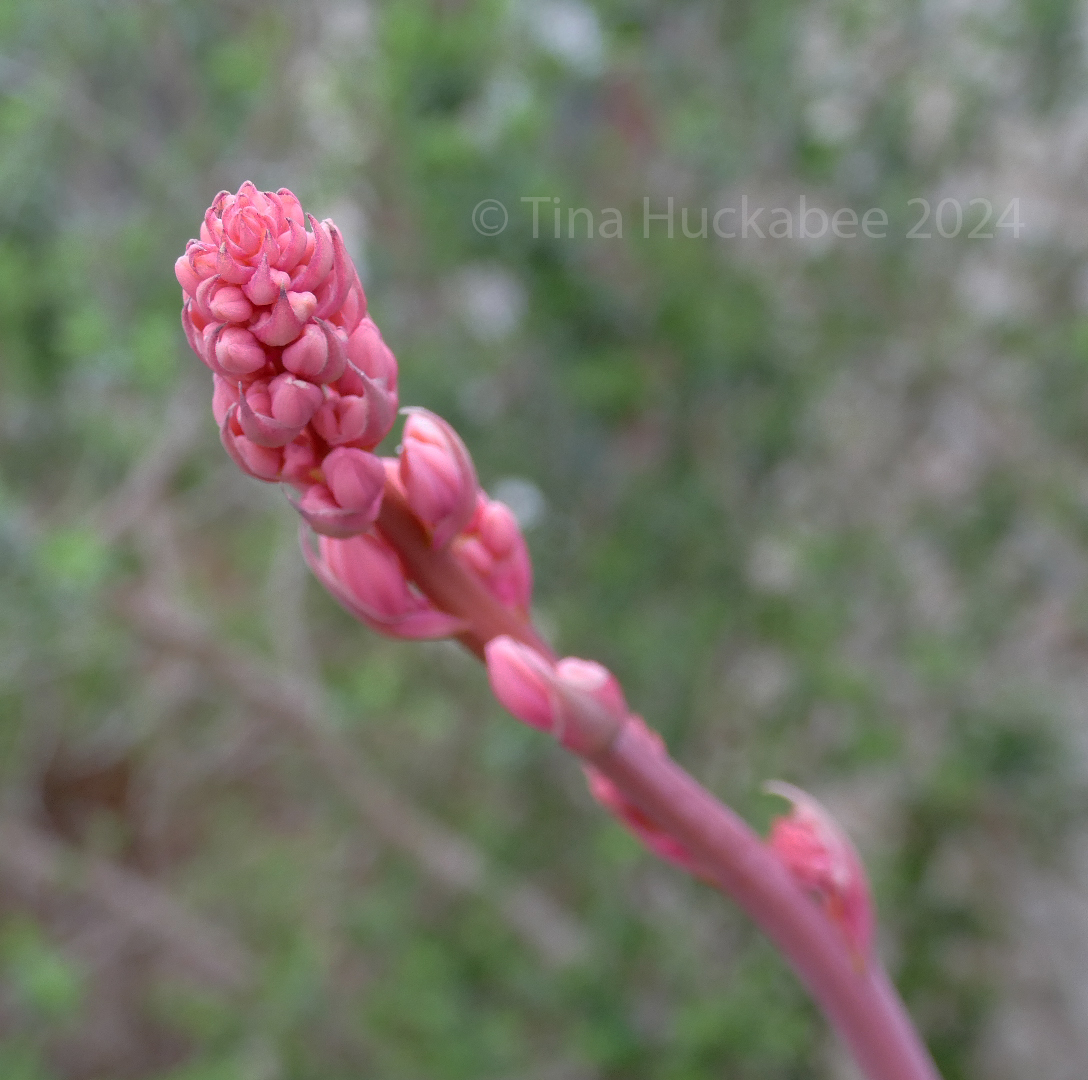
Two of my Soft Leaf yucca, Yucca recurvifolia, are in a blooming mood, guaranteeing they’re not outperformed by the red, red roses of Martha Gonzalez. I grow five of these yucca plants in my front garden. The plan was that each spring, upon maturity, the yuccas would all produce their dramatic flower spikes at the same time. This has never happened. This spring, three recalcitrant yucca individuals are refusing to send up spikes. Wishing the plants would bloom in concert with one another isn’t working. Alas, they will do their own thing.

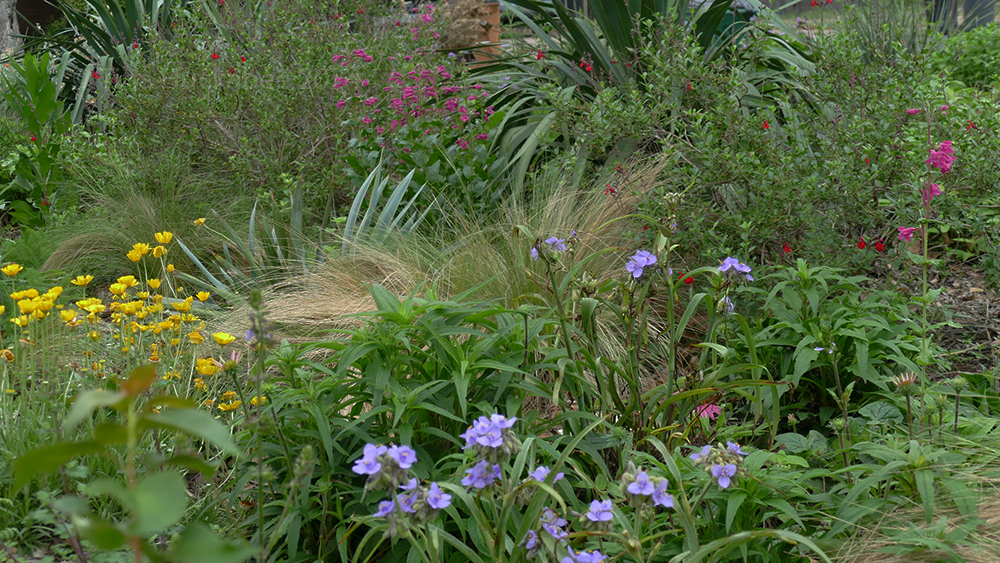
Cool season, orangy Desert Mallow, Sphaeralcea ambigua pair nicely with pretty, purple Spiderwort. Tough plants both, they’re situated at the street side of the garden, full west sun. The mallow is a shrub, the spiderwort a cool season plant that will disappear in the heat, showing up again in late fall or winter.

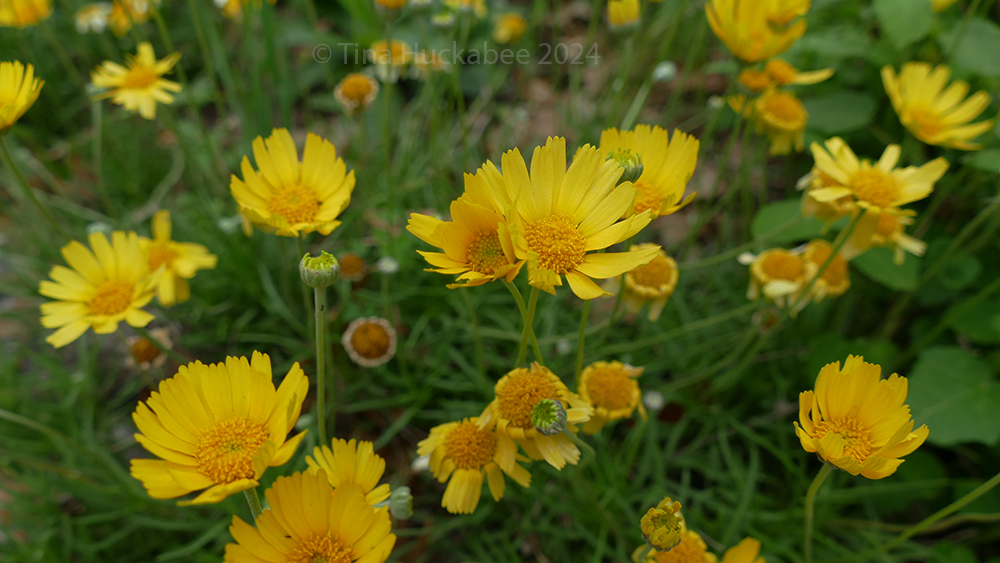
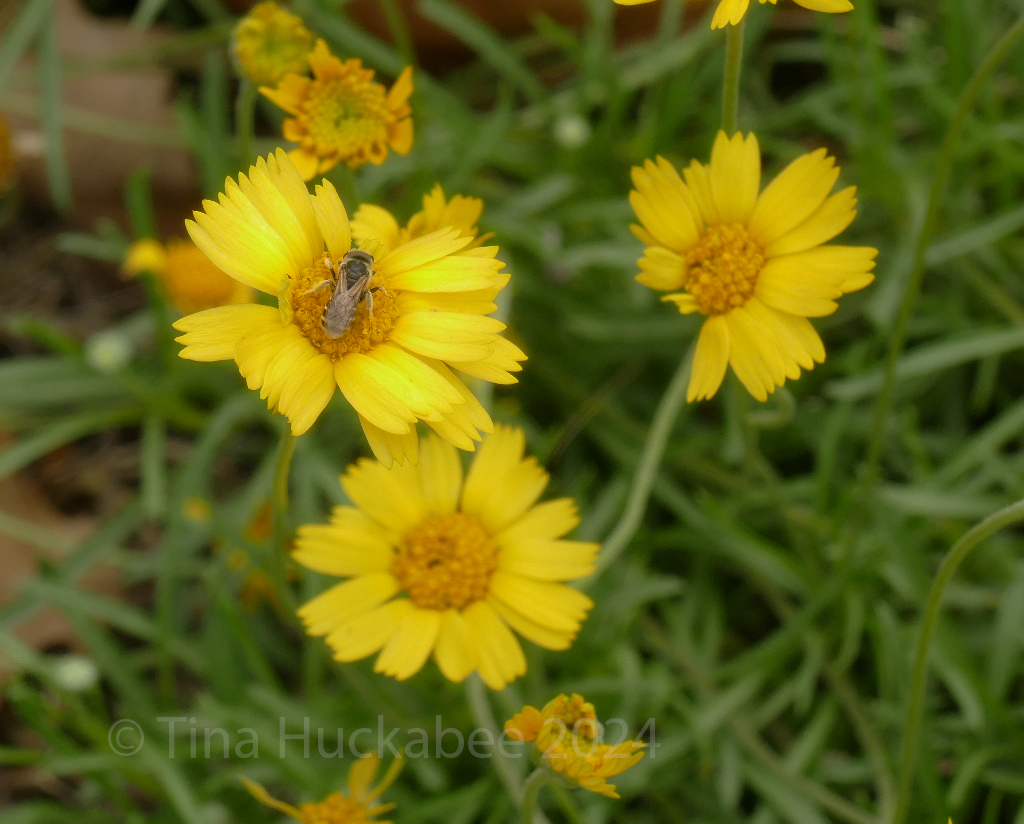
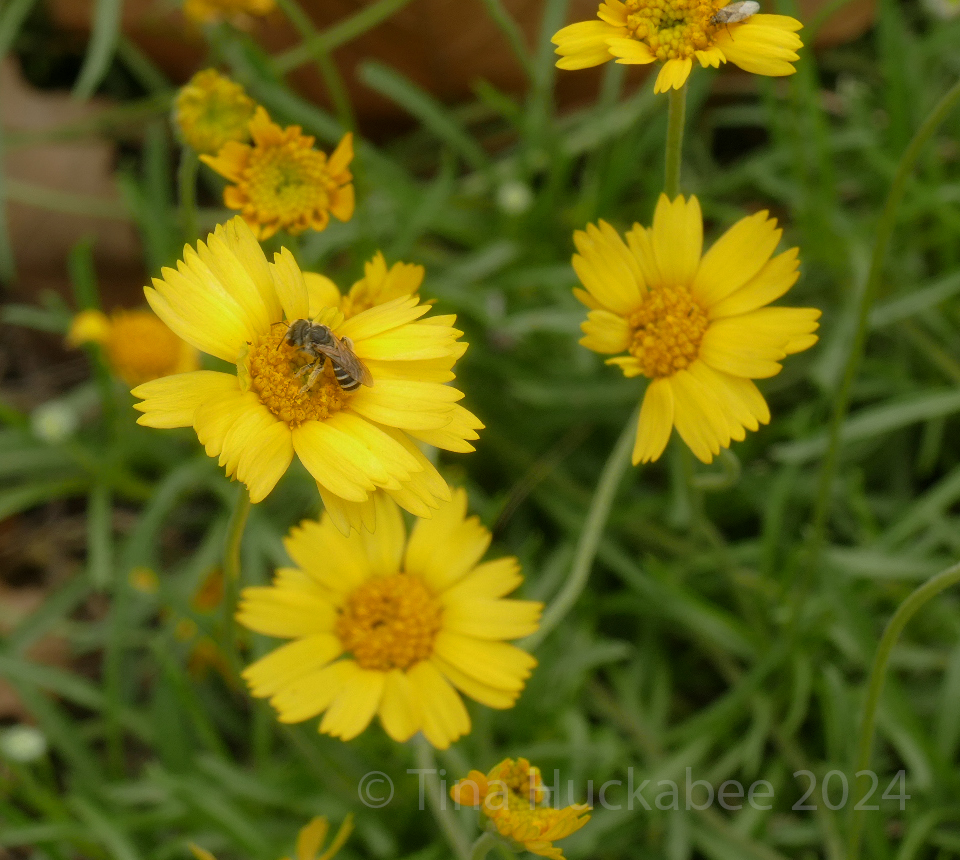
Four-nerve Daisy, Tetraneuris scaposa, dances in the breeze, their yellow faces turned to the warm sun. But are they missing something?

There it is! A native bee, maybe in the Melittidae (oil collecting bee) family. The bee landed in the pollen-plenty center of the sweet daisy flower, working the flower for the bee’s benefit and the plant’s future.

A side view of the bee highlights pollen stockings on its legs and cool abdomen racing stripes.

Hill Country Penstemon, Penstemon triflorus, is in full swing now, with mostly night moths as its main pollinators. If there are hummingbirds around, I’ve yet to spot them, but they won’t miss this pink beauty when they arrive in my garden. In my last post, I profiled the first one to flower, but now all five individuals have caught up and are playing their parts in the pink parade.

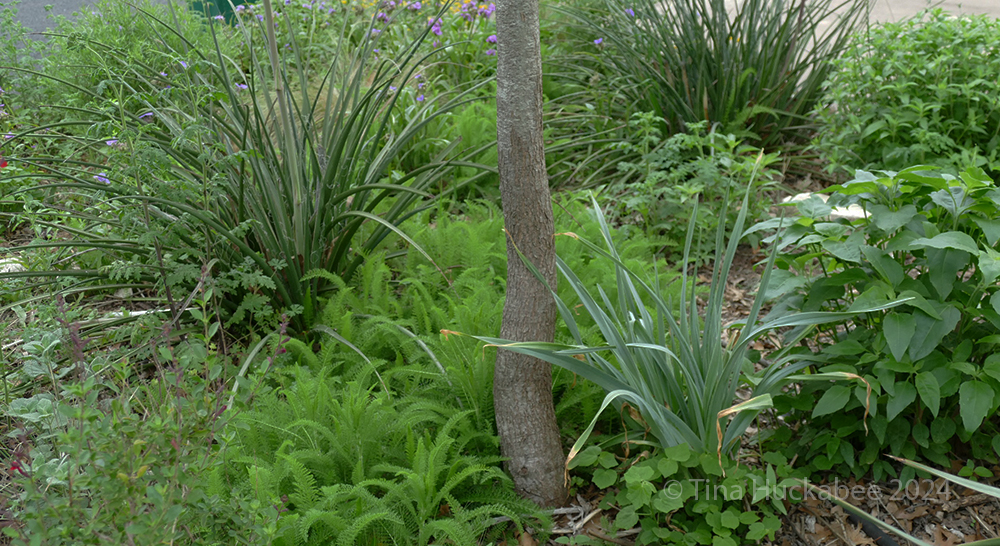
The greens are greening-up too, thank you very much. Foliage certainly has its own beauty and purpose, not outdone by flashier colors. In this photo, two evergreen Red Yucca, Hesperaloe parviflora, mix with spring-green Yarrow, Achillea millefolium, and the foliage of other Texas perennials: Plateau Goldeneye, Viguiera dentata and Zexmenia, Wedelia acapulcensis var. hispida. Just emerging from the soil is the scalloped foliage of Pam Puryear’s Pink Turk’s Cap, a cultivar of native Turks Cap, Malvaviscus. The trunk of a young Red Oak, probably planted by a Grey Squirrel, bisects the greening vignette .

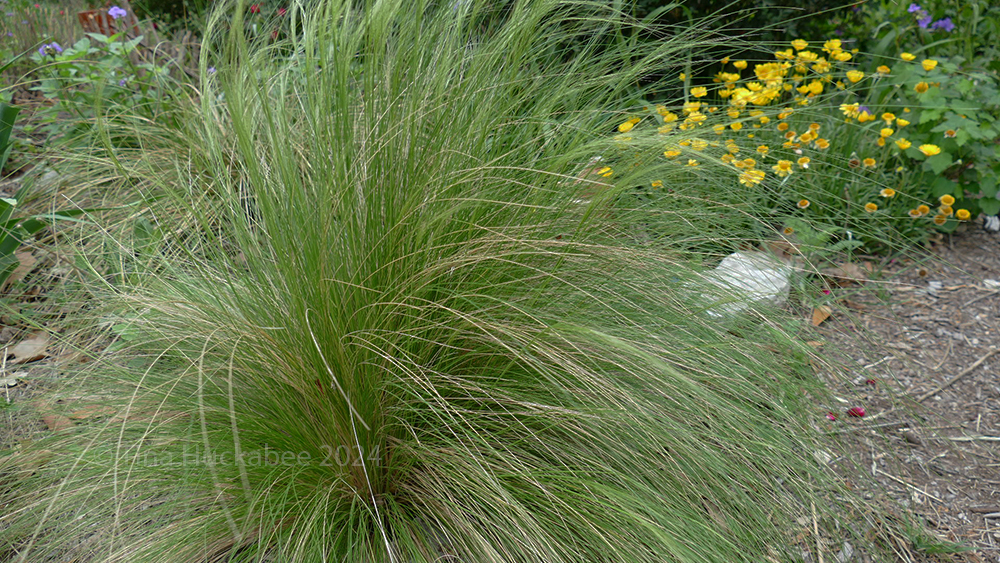
Beautiful Mexican Feathergrass, Nassella tenuissima, pops up here and there, graceful in form and color.

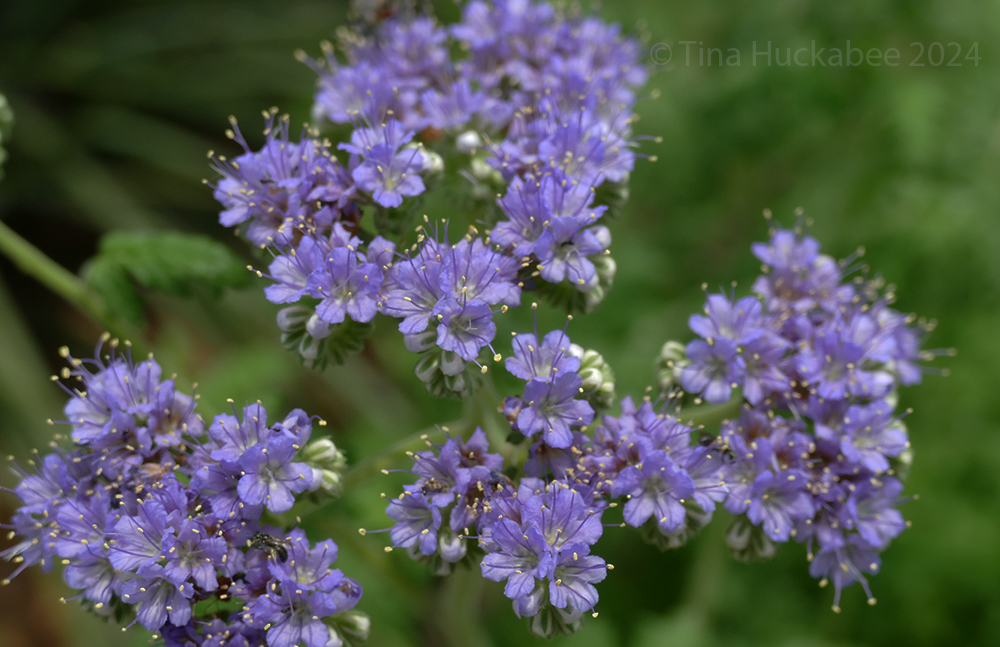
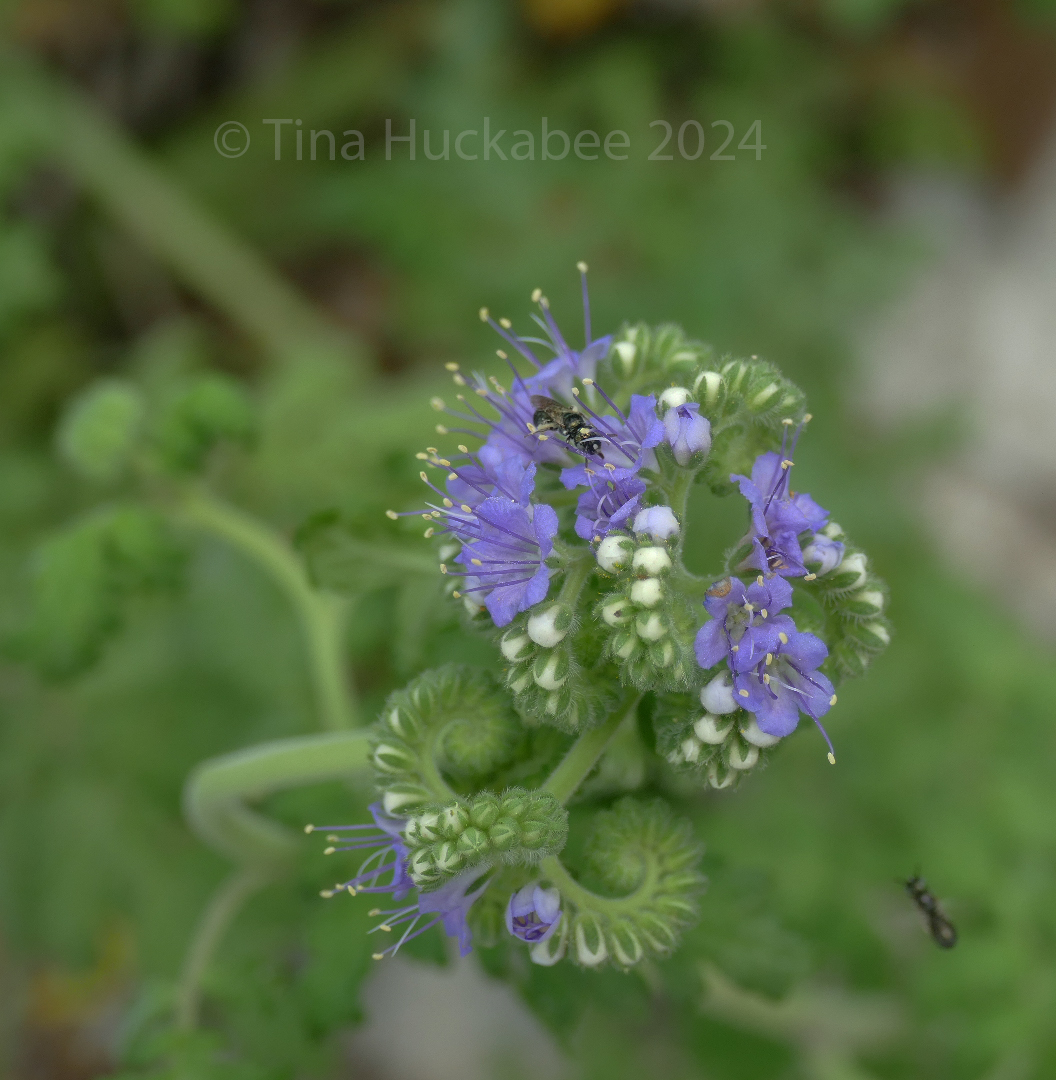
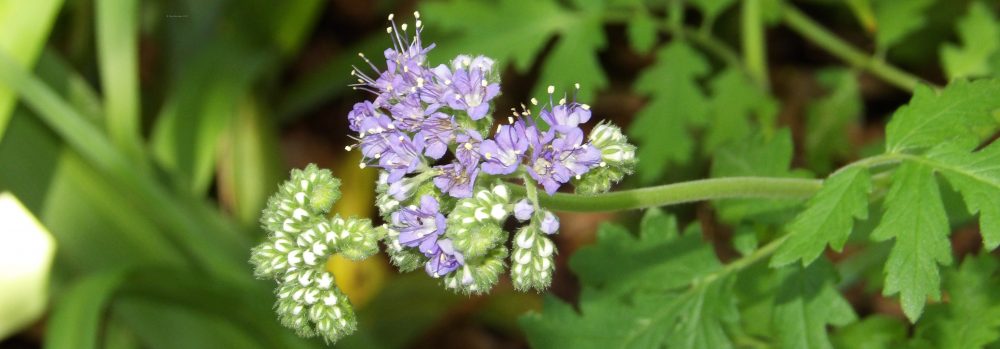
The primacy of Blue Curls or Caterpillars, Phacelia congesta, is nigh. Lovely blue-purple florets unfurl along a spine, beckoning pollinators to visit and gardeners to admire. There’s a tiny native bee on this cluster set, do you see it?

If not, here’s another flower cluster hosting a similar busy bee, one more zooming in for some action.

Each day, more of these annual wildflowers are opening for business. Soon, I’ll watch as myriad pollinators, particularly small native bees, skippers, and true bugs, visit these blooms. Aside from the color, texture and form of the plants, the garden is alive with movement and life of those who rely on the plants for survival.

Spring has definitely sprung. The weave of form and color mark each morning-to-nightfall, and change is a constant. Pollinators are in fine form and migrating songbirds are passing through, resting from their travels and nibbling insects and seeds that drop.

Spring is the definition of beginnings, a confirmation of living.

Red Yucca, Hesperaloe parviflora

Too Early, Then Right on Time

Early in February I noticed that a year-old Hill Country Penstemon, Penstemon triflorus, decided to send a bloom stalk upwards. There were no blooms, only the promise of pink bells to come, but way too early for this late March/April bloomer, especially given capricious winter weather. This particular individual was certainly eager for spring’s arrival.

The plant itself is hardy throughout the year; an evergreen, ground-hugging rosette being the typical form of this pretty perennial during late summer, autumn, and winter months. Gracing the garden in the height of spring with a cluster of bloom stalks, luscious pink flowers open to the delight of native bees, moths, and gardeners.

This one? A little too early, a bit too restless.

On February 22nd, ahead of a cold spell that would plunge Central Texas to the low 20s for 48 hours or more, I popped a bucket over the tender bloom stalk, then covered the bucket with an old blanket. I had no worries about the plant itself–it shrugs off ice and cold–but a tender bloom stalk is vulnerable to frigid temperatures and I hoped to save this one for its proper show time. I should add that I have seven individual plants and only this character yearned for an early spring, all the others lay green and dormant, biding their time for longer and warmer days.

I’m glad that I took the time to cover the plant, because in just a few week’s time, the stalk grew taller, dotted with lovely, bell-shaped flowers, ready for pollinators and persons to enjoy.

This early-bird penstemon remains the only one blooming, though its kin are ramping up for their pink parade. In the next month, pink bells, fluted and highlighted with stripes, will beckon insects to explore their offerings.

Weirdly, as great as this native Texas perennial is, it’s hard to find in nurseries and I haven’t had any luck seeding it in my gardens. I’m protective of the specimens that I’ve purchased and grown and you can see why.

Spring is here, time to bloom!

The Sparkle of Spring

Just about a week ago the trees woke up. I noticed teeny, tiny green leaves (truly, just nubs) appearing on my Rough-leaf Dogwood, Cornus drummondii. My attention was then turned to the larger bits of green sparkling in my Possumhaw, Ilex decidua, backlit by early morning sun.

The first glittery leaves decorated lower limbs on the multi-trunk little tree. The upper parts, reaching for the sky, waited a day or two for their sparkles.

Life got busy–the normal stuff of course–but we also spent most of Friday in a local emergency room where my husband was diagnosed with mononucleosis (talk about reliving your high school years!) and I didn’t have time to pay attention the the emerging foliage all around.

The Hub is fine; he’s very tired, but being a good patient by drinking plenty of fluids and resting. The trees aren’t resting one little bit, exploding with green of various shapes and hues, all exhibiting sparkling effects to one degree or another.

Spring flowers are showing off too; they refuse to let foliage get all the attention and accolades.

Spring is here. Plants are growing and blooming, birds are building nests and mating. I’ll take it all as symbols of hope and affirmation of life.