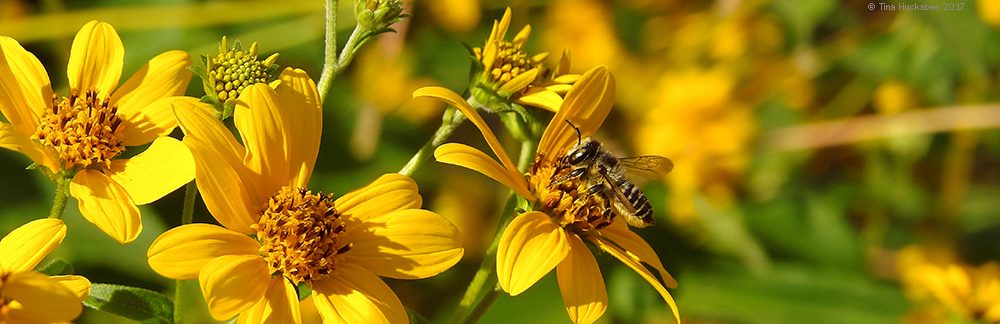
The sandpaper feel of its foliage is what gives Roughleaf Dogwood, Cornus drummondii, its common name. I’ve always thought that the beauty of this small tree deserved a more poetic name, perhaps in praise of its graceful form or lauding its creamy blooms and fruits.
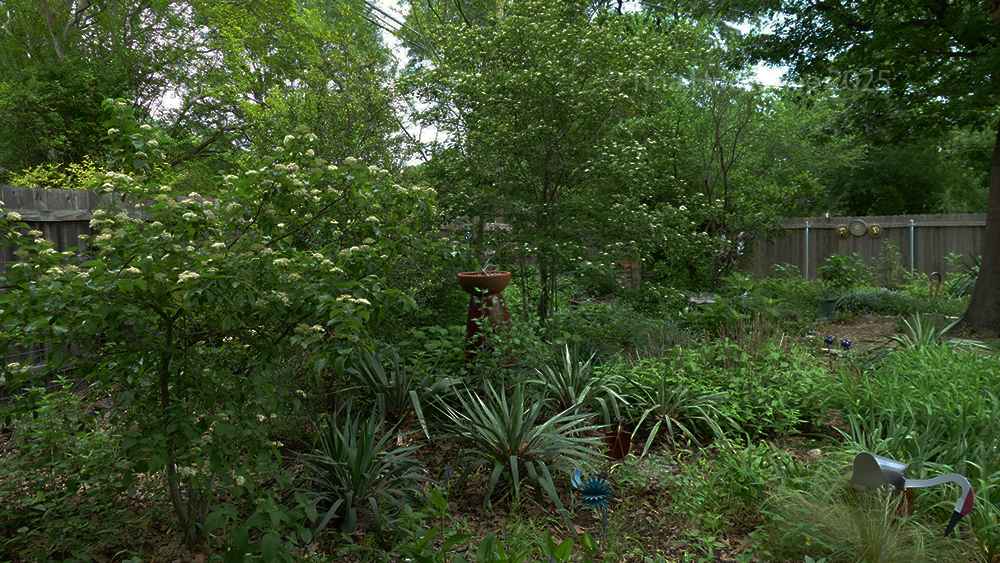
Regardless, I’m pleased to house two of these lovelies in my back garden. Excellent wildlife plants, these little trees are the gifts that keep on giving: pollinator magnet blooms, lush foliage for wildlife cover, hardy-drought resistant additions to the garden, yummy fruits for native and migrating birds, and purple-to-mauve-to-pink golden fall color for all to admire.
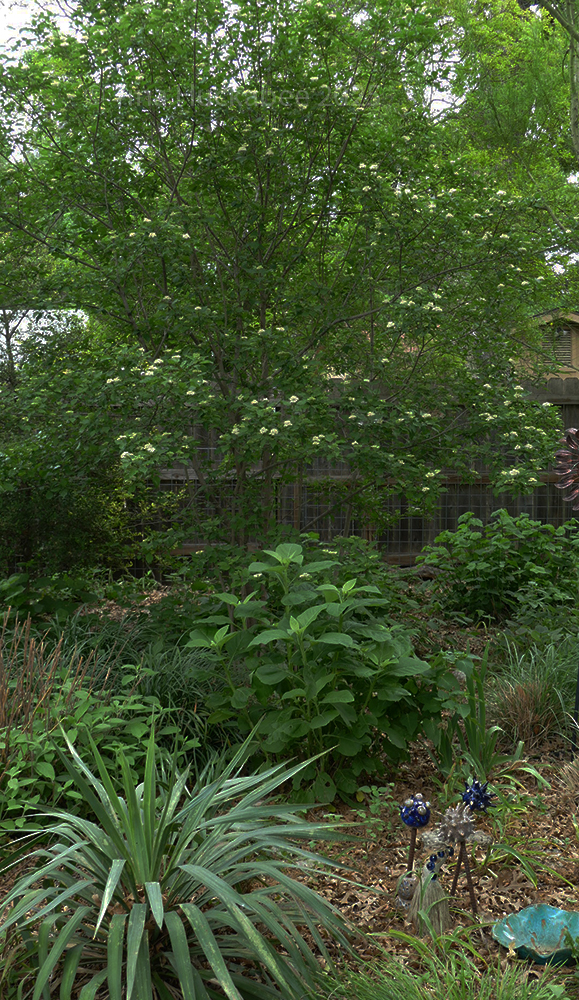
The petite flowers bloom in mounds from March through May. Mine are mostly done.
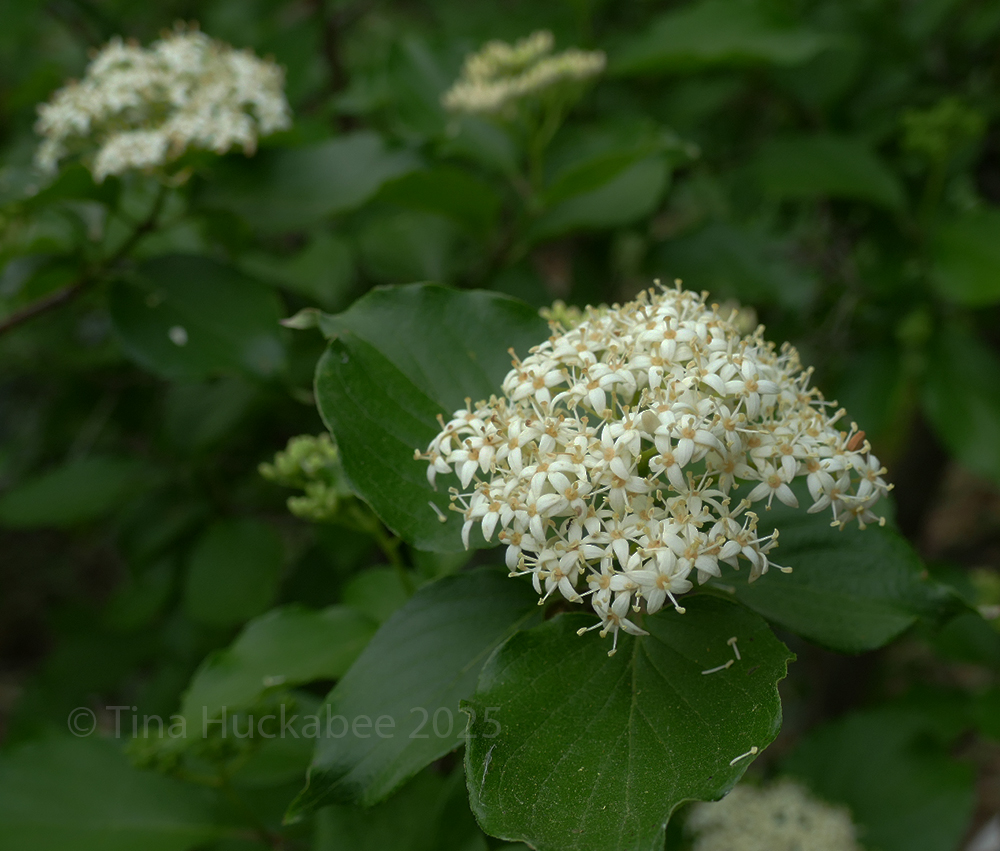
The flowers attract a wide variety of pollinators. Each blooming season seems to host one particular kind of insect as the primary sipper of the good stuff. Last year, I recall that different species of syrphid flies were 2024’s insects of rough-leaf choice. In other years, migrating Monarchs have stopped by in decent numbers. Always, the home-grown honeybees partake of the dogwood’s offerings.
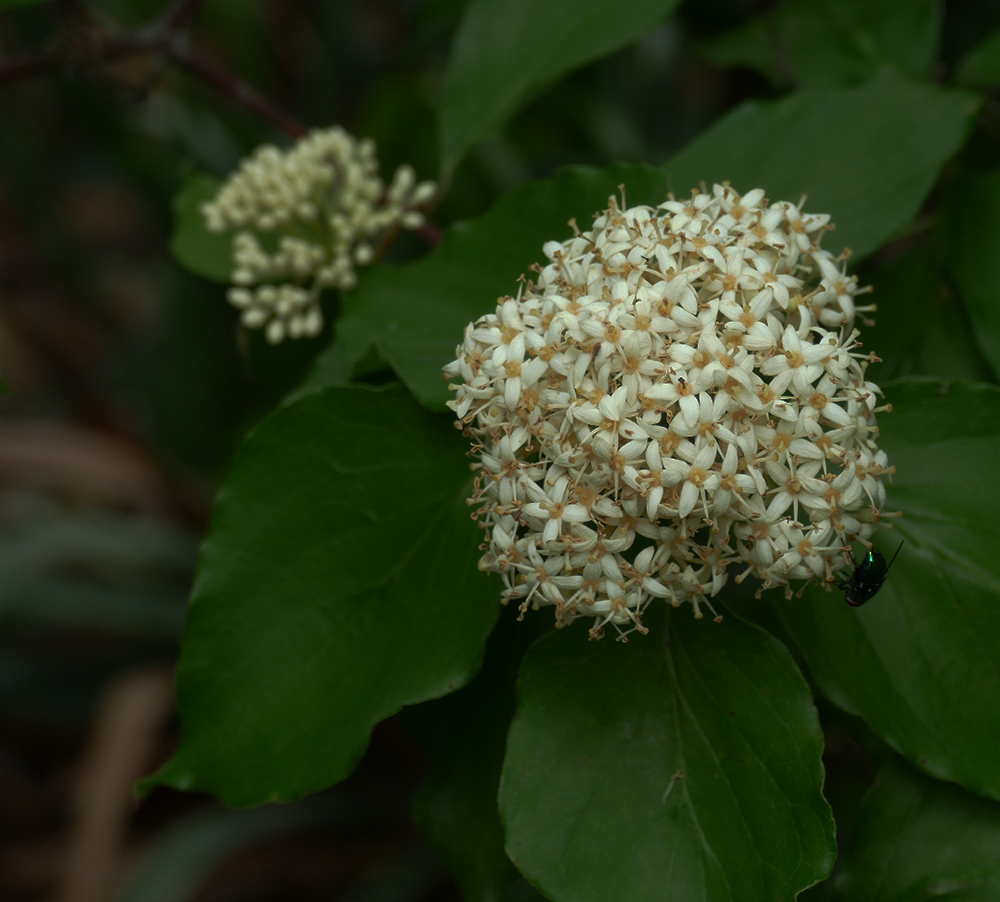
This blooming season it was iridescent Blow Flies, Calliphoridae, who were the primary beneficiaries of the nectar and pollen of the dogwood blooms. There were others who pollinated, like our resident honeybees, and I viewed some smaller butterflies at the flowers, but the Blow flies were the most numerous visitors.
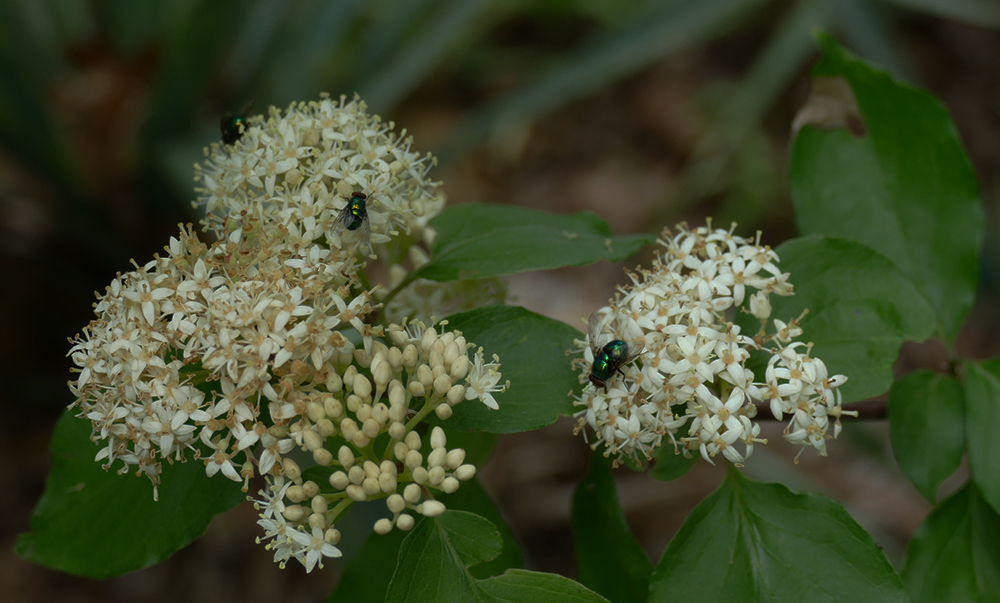
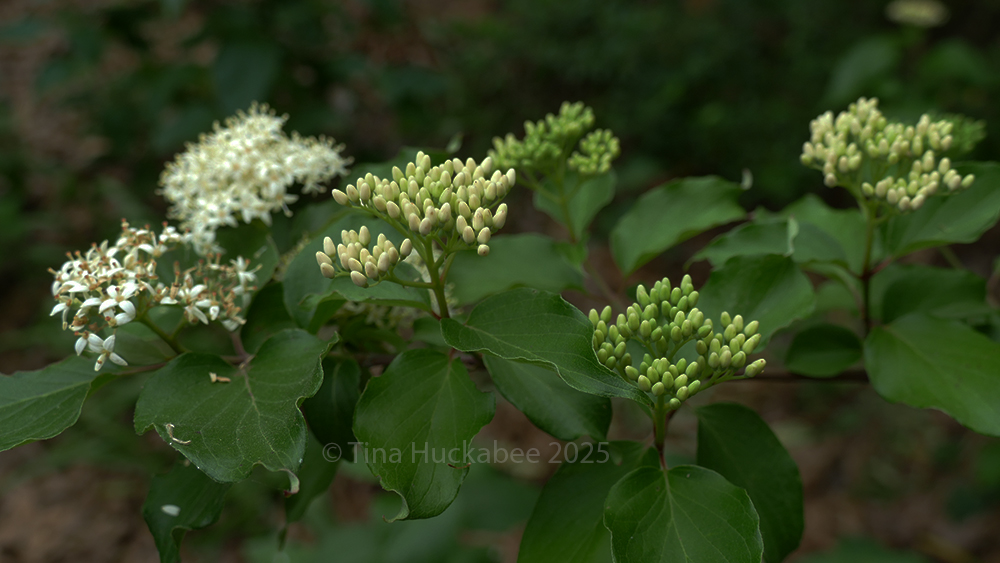
Once the flowers have bloomed and provided, the beginnings of the berries is nigh.
In this photo, note the assorted stages: in the lower background, buds are just opening; in the foreground, flowers that are done, leaving the ovaries to become fruits; and to the right, an uneaten fruit from last season. In the course of rain, heat, ice, and wind the once-luscious berry is darkened, hard, and presumably unappetizing.
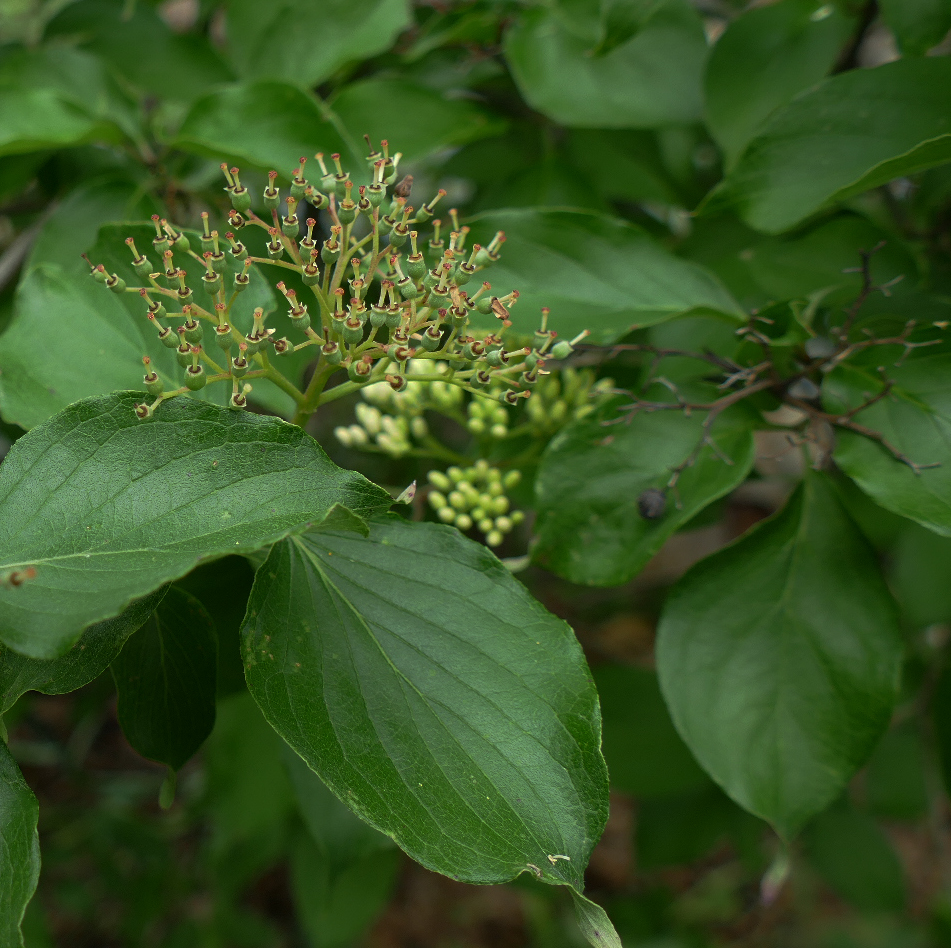
These are a few of the fruit sets from this spring’s floral bounty.
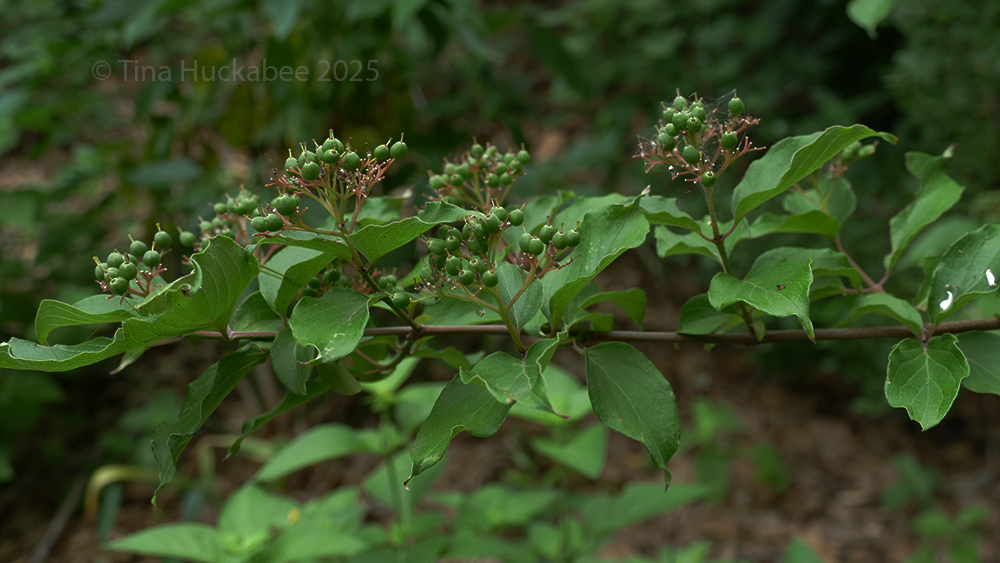
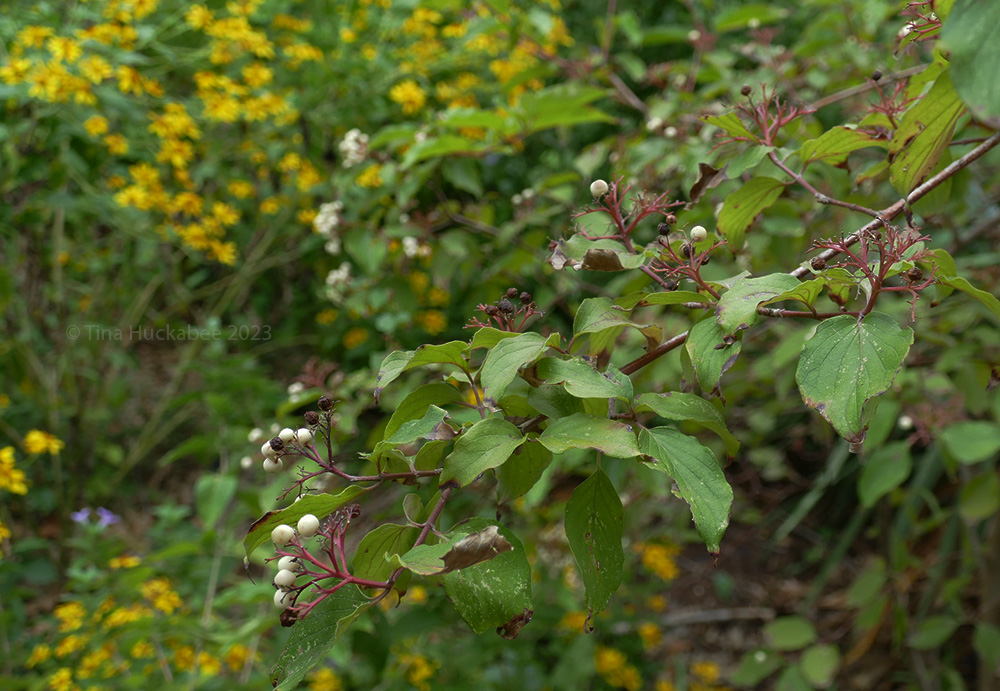
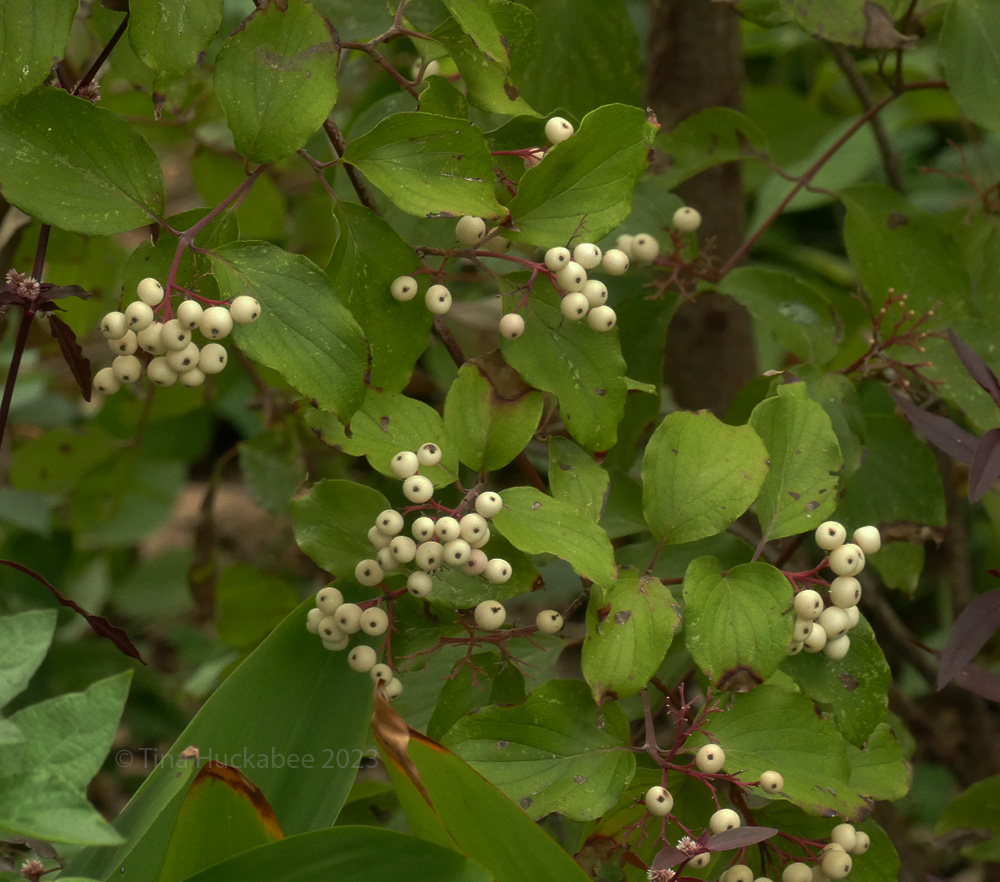
By August, the small green spheres will grow larger and milky-white. Blue Jays, Northern Mockingbirds, migrating neo-tropical birds, plus squirrels and other mammals will feast on juicy fruits. The fruits of the dogwood are drupes: skin with a fleshy outside and seeds inside. Drupe is a fun word.
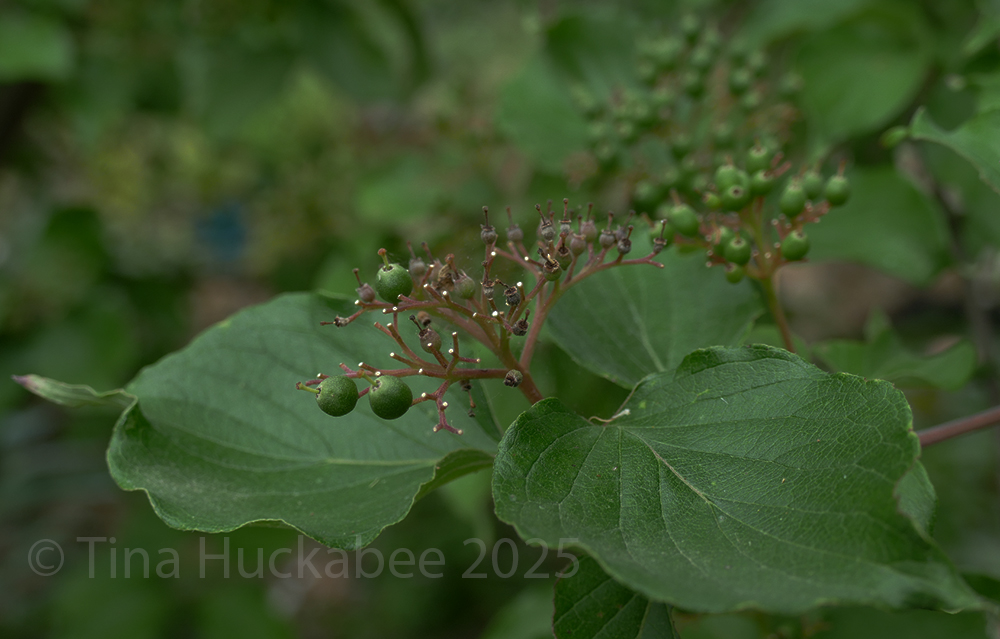
As summer arrives, revving up its hot-rod heat, these little trees will remain green and lush. Birds will rest and hide, and berries will ripen for late summer/autumn snacks.
Wildlife is sustained, the gardener smiles.



 My Gardener Says...