Butterflies and Blue Curls

Like peanut butter-n-jelly or mac-n-cheese, butterflies-n-wildflowers form a classic pair. My personal aphorism defining wildlife gardening is, if you plant them (wildflowers), they (pollinators) will come. This proves especially resonant in a spring season with ample rain followed by generous sunshine.

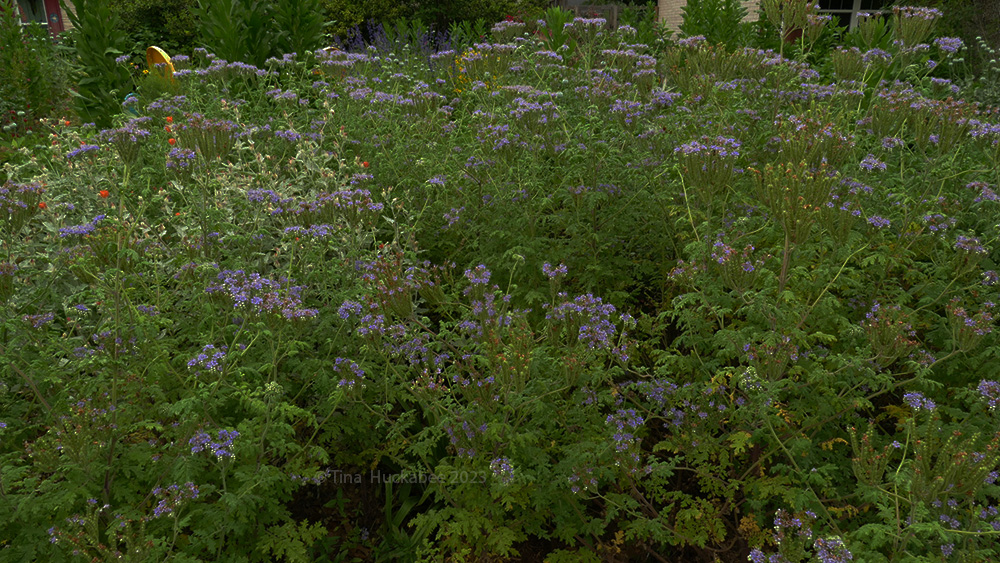
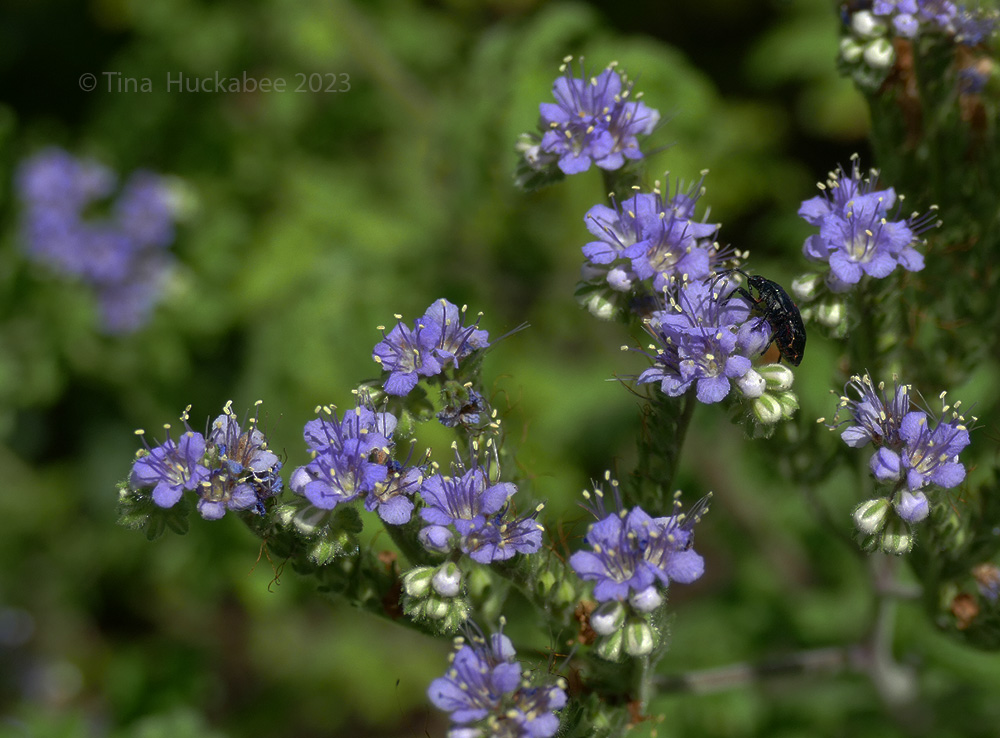
Blue Curls or Caterpillars, Phacelia congesta, bloom beautifully from March through May, attracting a huge variety of pollinators to the blue/purple flowers, which unfurl along a cluster as the diminutive flowers open. Pollinators, especially butterflies, are ga-ga for Blue Curls’ bounty. Sunny days bring fluttery life to the space above and around blooming Blue Curls, all manner of winged things in constant movement. Other pollinators, like beetles and true bugs, reach the pretty little flowers through multi-legged walk-a-bouts.

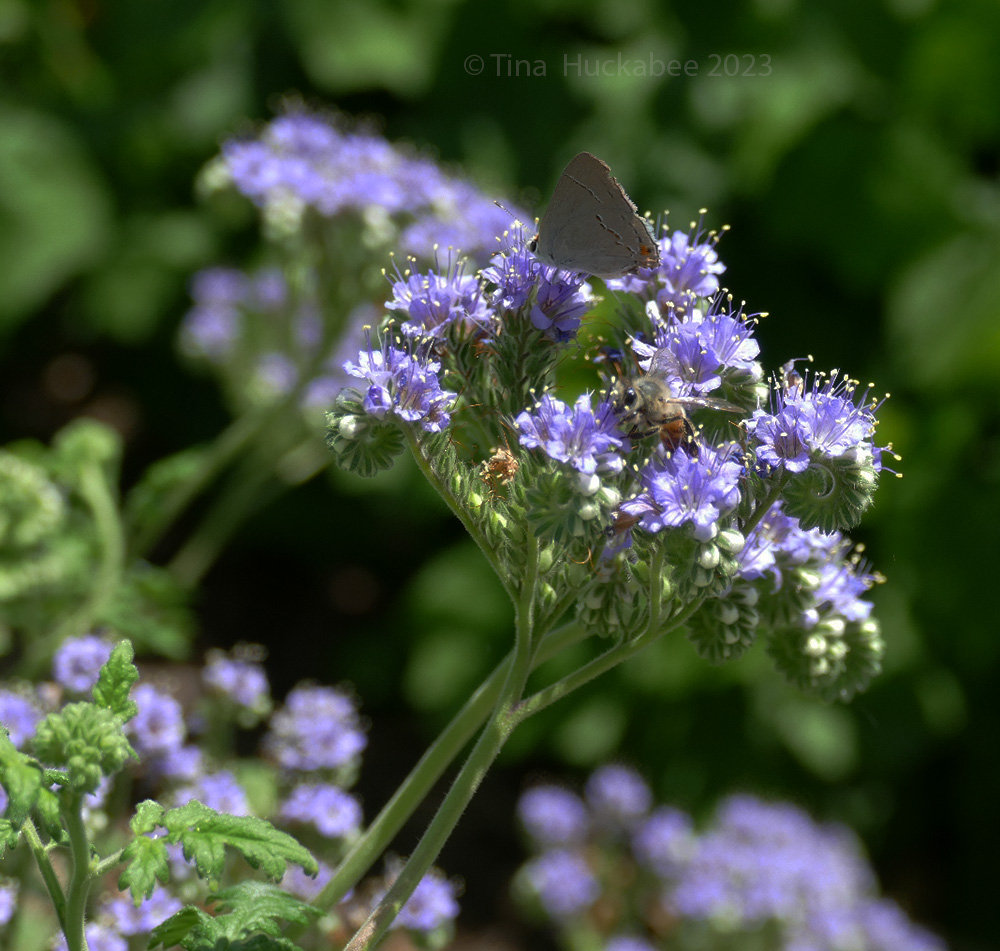
Here, two Grey Hairstreaks nectar on the flowers while another waits in the background. Maybe that one is full of rich nectar, and sits, resting and digesting.

This hairstreak feeds, but is it alone?

Looking directly down from the small butterfly, another pollinator (a walking stick type insect or a nymph of some sort?) seemingly sips from a flower. I didn’t see this insect when I snapped the shot, only noticing once I downloaded the photo to my laptop. I scrolled through pages of iNaturalist Austin, but there are a gazillion insects listed and I don’t have the time to suss out this guy’s identity. Any suggestions as to what this well-camouflaged critter might be?

Monarchs migrated through Austin, though few visited my gardens. A Blue Curls cluster beckons, a Monarch cousin–the Queen butterfly–alights, nectars and pollinates.

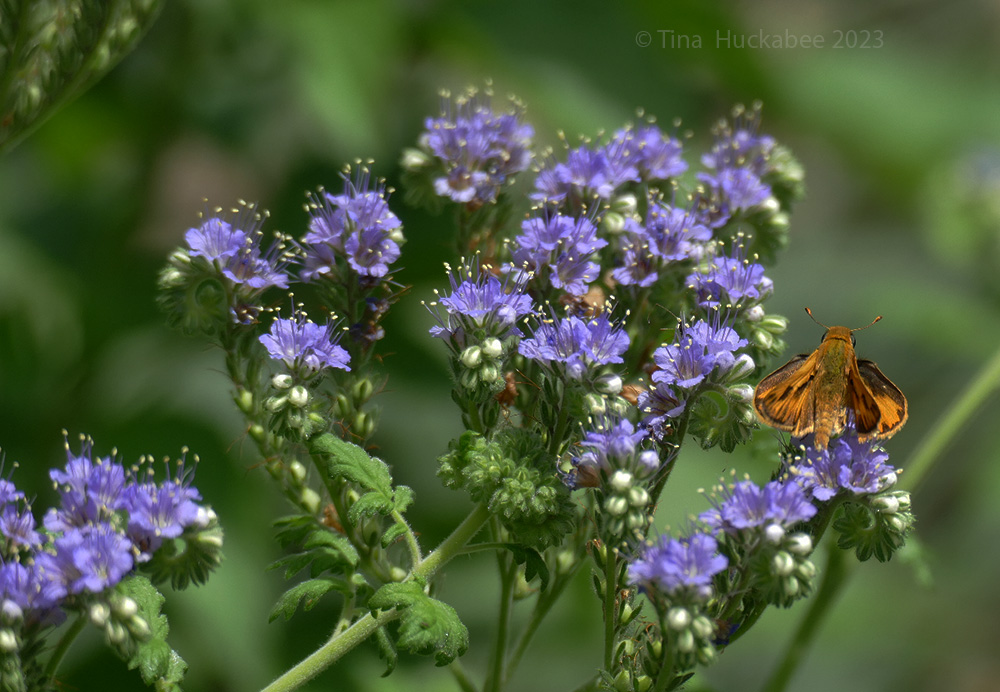
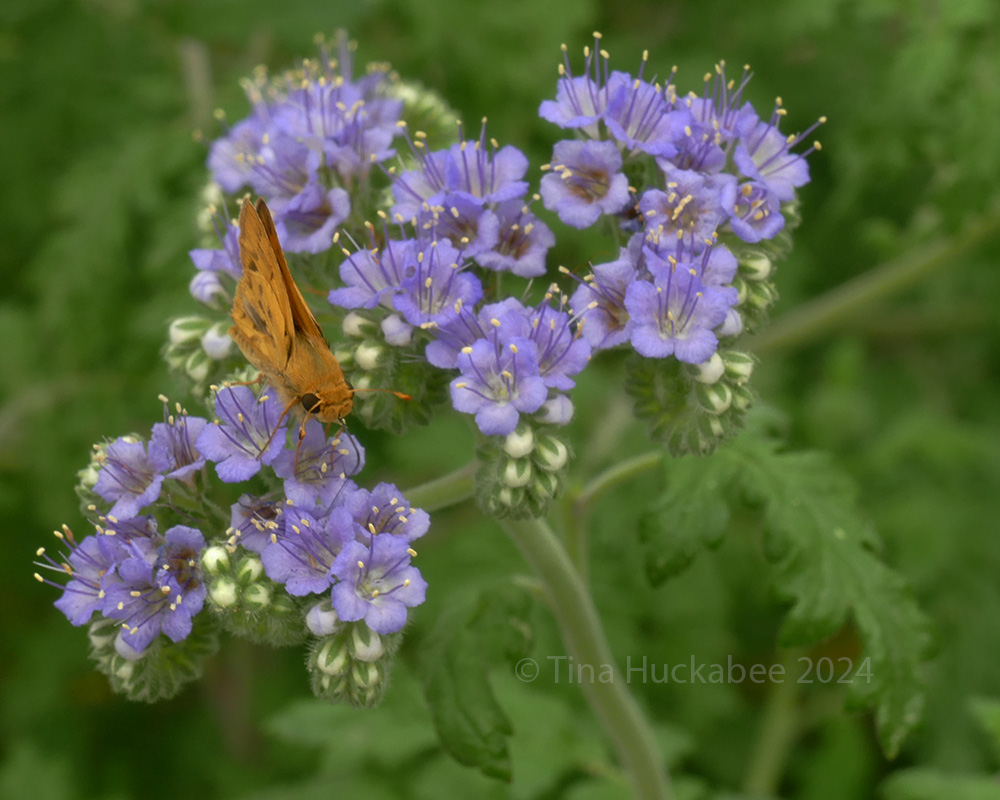
Smaller butterflies like hairstreaks, skippers, metalmarks, and sulphurs frequent Blue Curls, often alongside other pollinators, all sharing dining on a given cluster of flowers. In particular, Fiery Skippers, like Grey Hairstreaks, are abundant.

I think this Fiery Skipper’s coloring complements its Blue Curls meal.
Native bees, especially the tiny Lasioglossum, or sweat bees, also favor Blue Curls. Flies of various sorts cavort amongst the Curls.

This Horace’s Duskywing, a rare find in my garden, provides a dramatic contrast with its Blue Curl plant of choice.

Blue Curls are annuals, living their full life cycle in one year: seeds; germinated seedlings; mature plants with flowers; seeds, once again, after flowers are finished. My Curls are past their peak of blooming, beginning their seed production. I’ll leave the individual plants until the seed heads are brown, then I’ll prune the stalks to the ground and shake all available seeds into the garden for next year’s crop. The Blue Curl seeds (as well as other perennial and annual seeds) are currently providing meals for migratory birds. I’ve observed Lincoln Sparrows, Common Yellowthroats, Clay-colored Sparrows, Yellow Warblers, and Painted Buntings eating from these plants in the last few weeks. Seeds and insects on plants make up most of migratory birds’ meals.

Once the Blue Curls of 2024 are history (aside from their dormant seeds snoozing on the soil), the heat-loving summer perennials and annuals will step up to provide cover and sustenance for bees, birds, butterflies, and other garden critters.

The cycle continues, unbroken, in a native plants, wildlife-friendly garden.
Garden Blues

My garden has the blues and I couldn’t be happier about it.

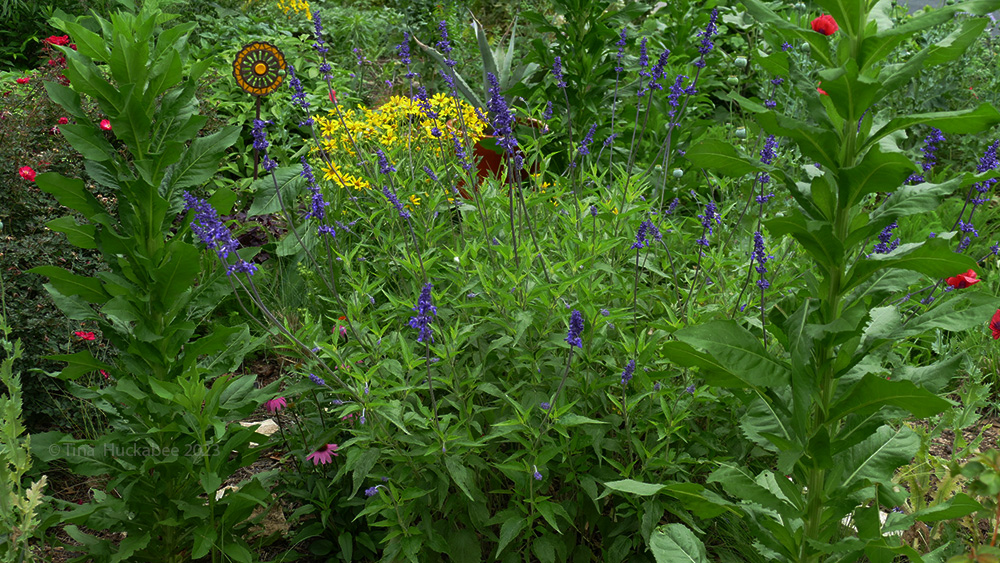
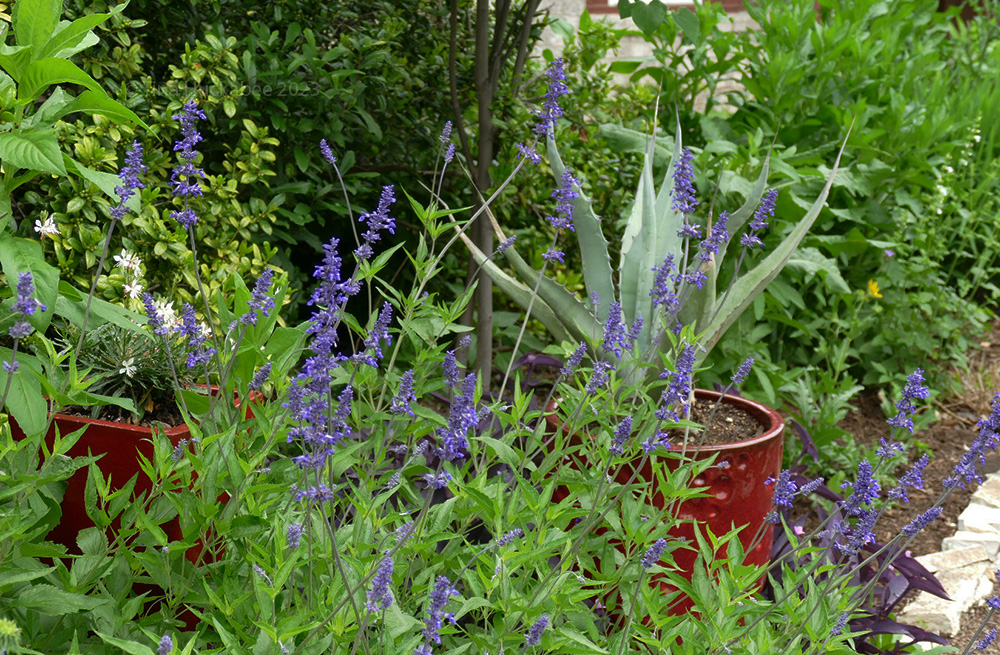
The full sun front garden is bursting with color in its second year of being, the blues not depressing either the garden or the gardener. I’m fond of blue flowers and grow several different species, most of which are native to Texas.

In this new garden I’ve planted five clumps of perennial Mealy Blue Sage ‘Henry Duelberg’, Salvia farinacea; all come from a plant I purchased years ago. This salvia is a late spring/summer/early fall bloomer and spreads by both seed and root. I should add that while it spreads, I don’t consider it aggressive; if a sprig pops up, it’s easy-peasy to yank out. It’s a dream to transplant: pull up a clump with roots, stick said clump in the ground, water a few times and it grows and blooms, beckoning the pollinators!

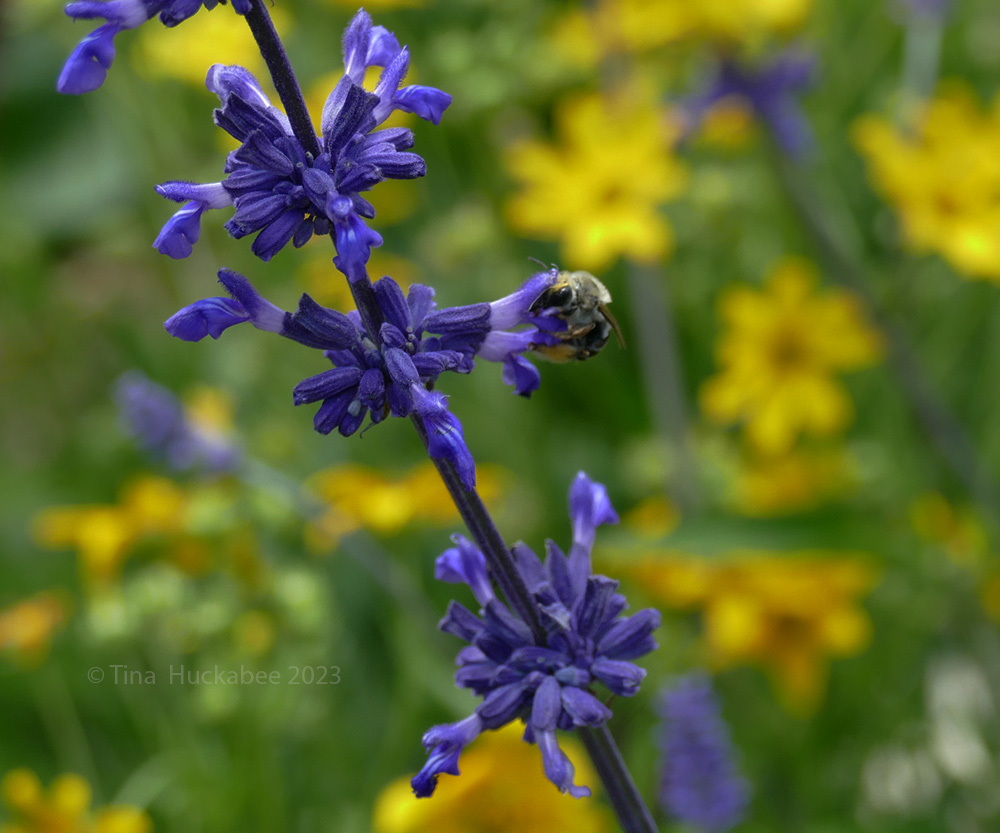
Mealy Blue Sage is favored by a wide variety of pollinators, like this honeybee. She is all-in for these small blooms.

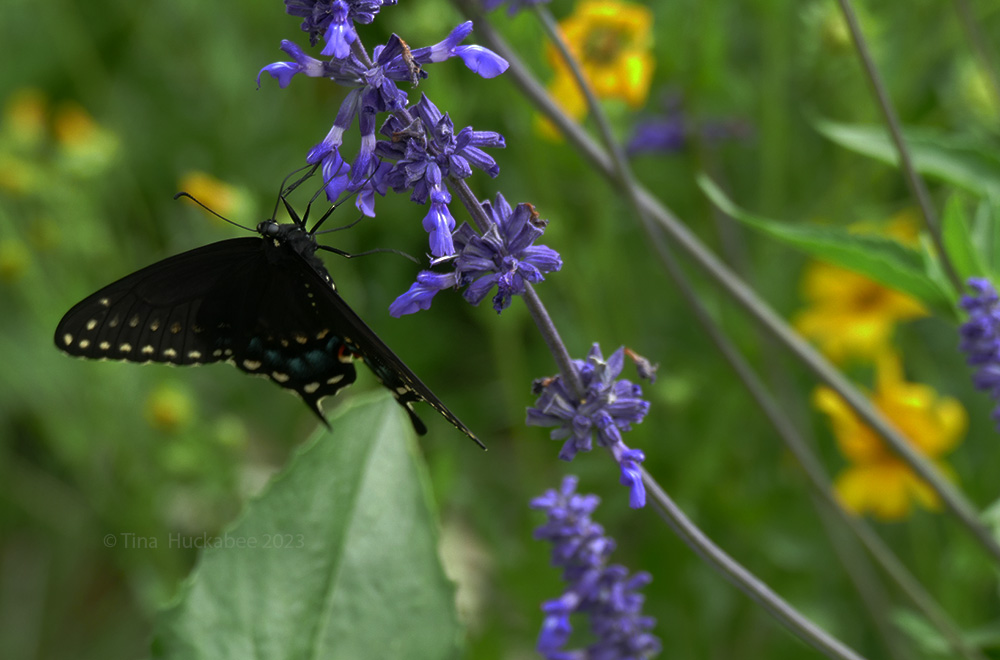
Bigger pollinators, like this Black Swallowtail, Papilio polyxenes, are fans of the mealy blues, too.

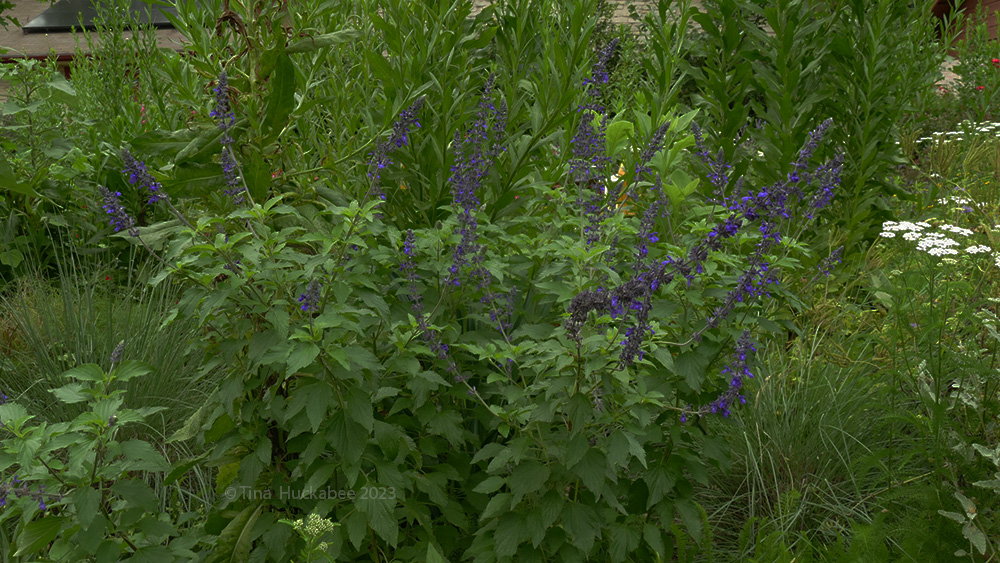
Another blue that makes me cheerful is Indigo Spires, Salvia x ‘Indigo Spires’. This perennial is a hybrid cross of the native Salvia farinacea and Salvia longispicata. I planted this specimen in my back garden a couple of years ago where it received some afternoon sun, but when the front garden morphed to full sun, I moved it there where it would get most-of-the-day sunshine, be a happier plant, and bring on the blues. Indigo is bigger than the ‘Henry Duelberg’, with longer bloom spikes and larger leaves.

Many years ago when my back garden was full sun, I grew an Indigo Spires. In late summer and fall afternoons, there were often fifteen to twenty American Bumblebees working these blooms. Sadly, I haven’t seen that many bees on this plant, but the bees that are around definitely make a bee-line for these blues.

If there was an award for blues in the garden, I think it would go to the Blue Curls, Phacelia congesta. I didn’t mean to have so many this year and I should have culled some of the seedlings, but I am a softy. I have a hard time removing seedlings of desirable plants unless I have someone who will take them to another garden space. These are Texas annual wildflowers, so leaving them in place didn’t stress me too much as I knew that they’d be done with their show by mid-May when I could remove them, making room for the summer perennials.

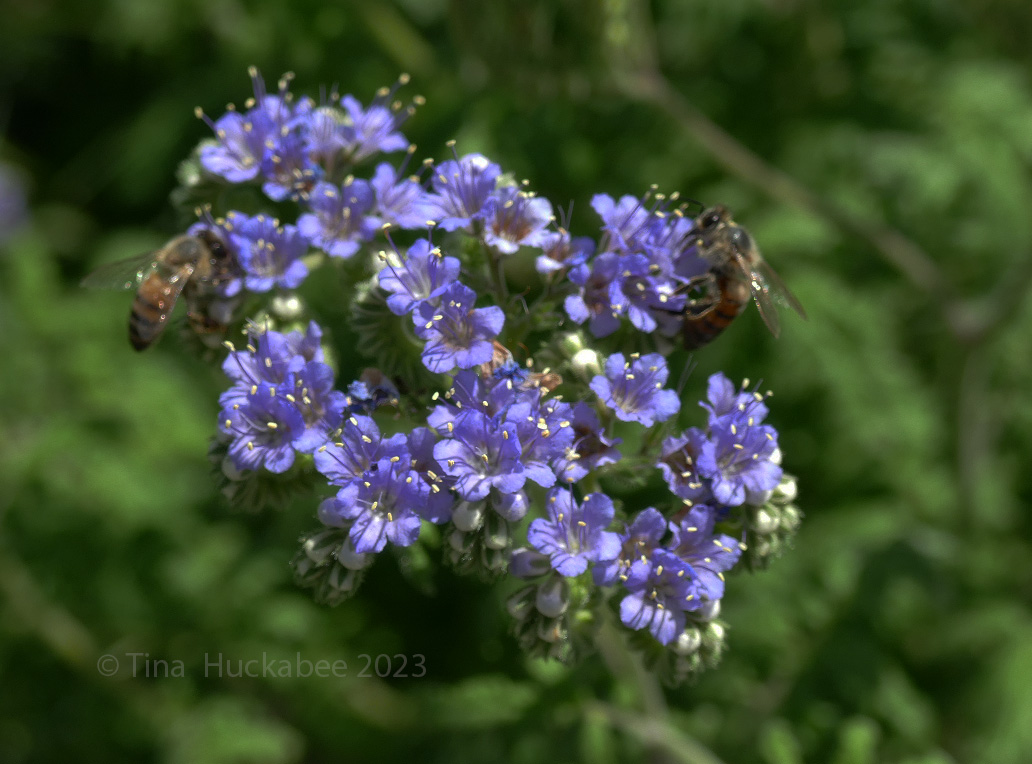
When the Curls reached the zenith of their flowering, there was a constant gentle buzzing in the garden and movement throughout the garden’s air. Honeybees, Carpenter bees, a myriad of tiny native bees, skippers and larger butterflies all flock to partake of these charming blue-violet flowers.

Honeybees sharing a meal of Blue Curl nectar and pollen.
Honeybee and Grey Hairstreak each mind their own business as they sip the sweet stuff.
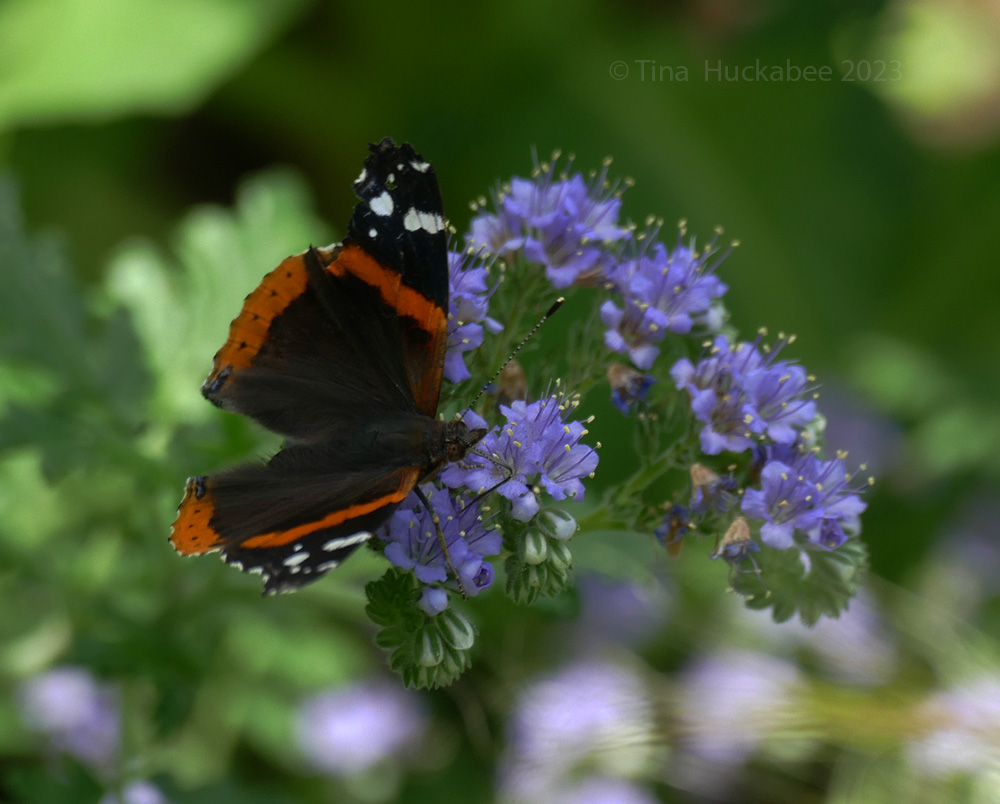
Red Admiral (Vanessa atalanta) on a Blue Curl.
Fiery Skipper (Hylephila phyleus) lights up the blues!

A variety of beetles and leaf-footed bugs got into the act of working these sweet blue blooms! Everybody, it seems, loves Blue Curls.

As the Curls’ blooms faded and the seeds developed, migrating songbirds were in the garden from dawn to dusk. I witnessed Common Yellowthroats, Lincoln’s Sparrows, Clay-colored Sparrows and Lesser and American Goldfinches noshing on the seeds and, no doubt, some of the tiny insects that were also on the plants. As these migratory birds fly northbound from my garden, they’ll pass along seeds to other places for next year’s wildlife.

Blue Curls are a cornucopia for wildlife. The insect and bird song, color, and life that these blue beauties brought to the garden during March and April eclipsed all other plants in the garden.

That’s why I didn’t remove them!

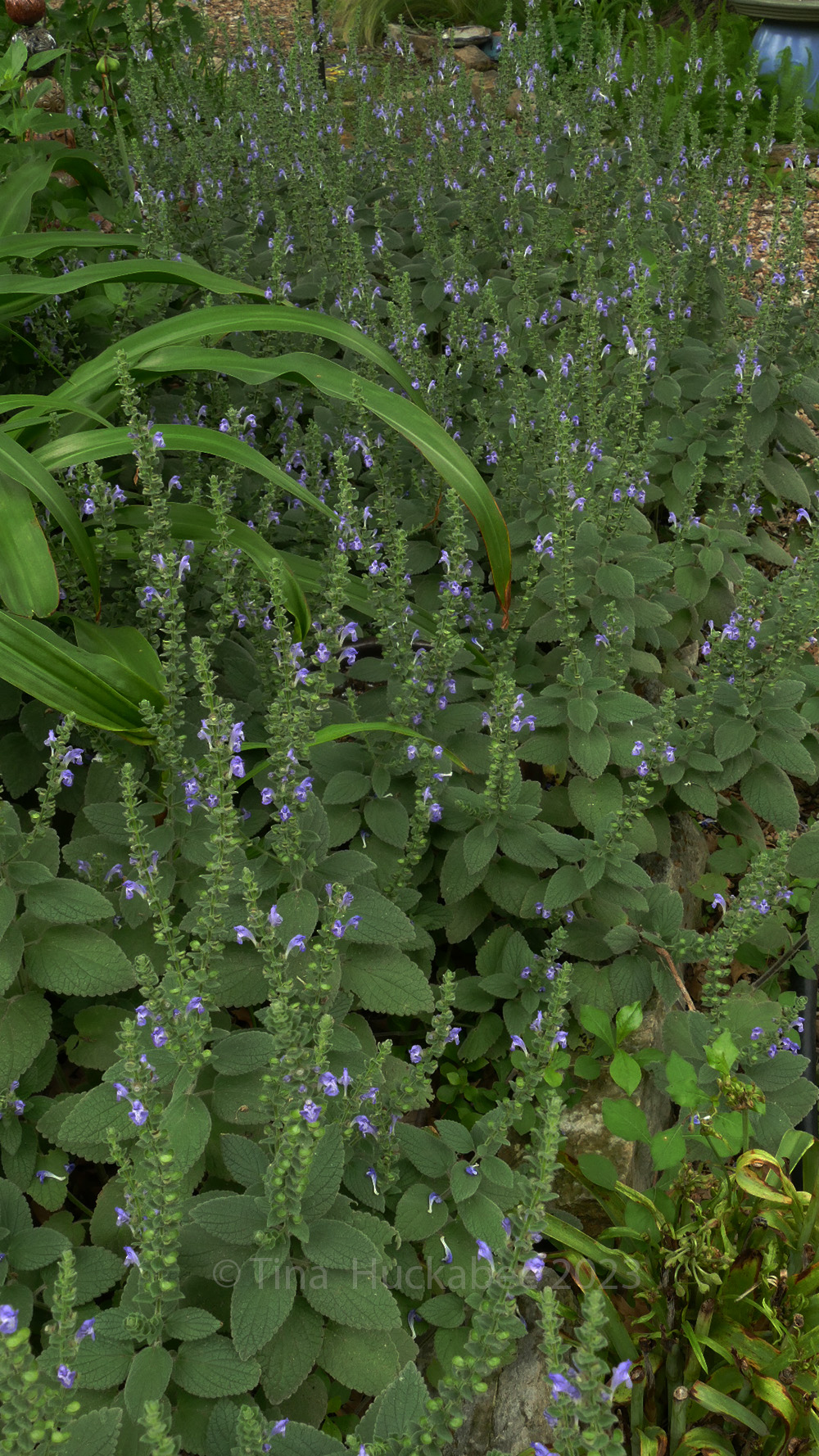
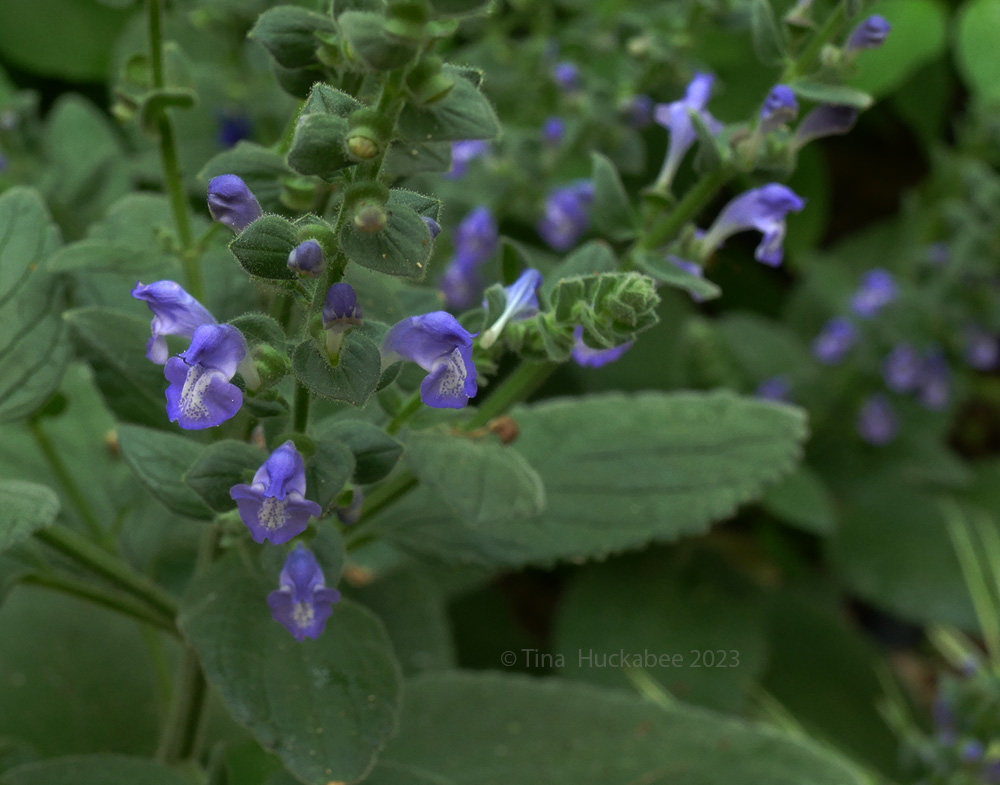
In the back garden, things are shadier, but the blues reign. Another violet-blue flowering plant is the perennial Heartleaf Skullcap, Scutellaria ovata and it thrives in part-shade.

Velvety, grey-green foliage accompanies these diminutive blooms.

The grey-green stalks with fuzzy foliage appear in winter, fresh color against the freeze-rendered browns and tans. Heartleaf Skullcap spreads as a ground cover, adding blue bloom spikes atop the foliage from late spring through mid summer. Summer’s heat ends the blooms and fades the foliage; the plant eventually disappears. The gardener helps that process by shearing to the ground or pulling up the plant. Thick roots lie dormant in the soil, safe from the Texas heat, waiting patiently until cool winter, when it emerges with fresh stems and foliage, ready to grow and begin its cycle in the garden for a new season.

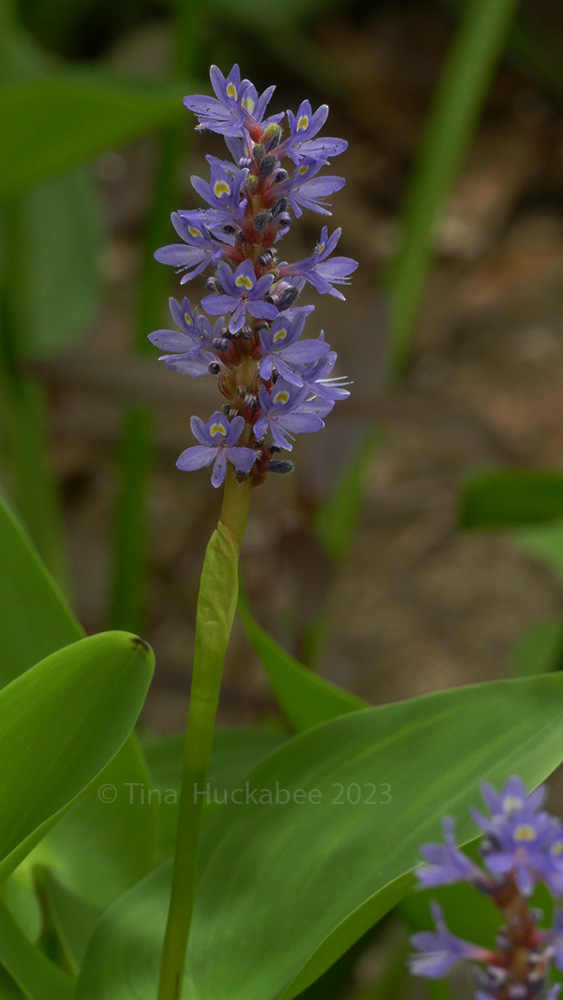
The pond’s water lilies are pink and yellow, but its bog plant, Pickerelweed, Pontederia cordata, rocks teeny violet-blue flowers borne on spiky stems. The plant sits in slow-moving water, blue spikes rise above luscious foliage.

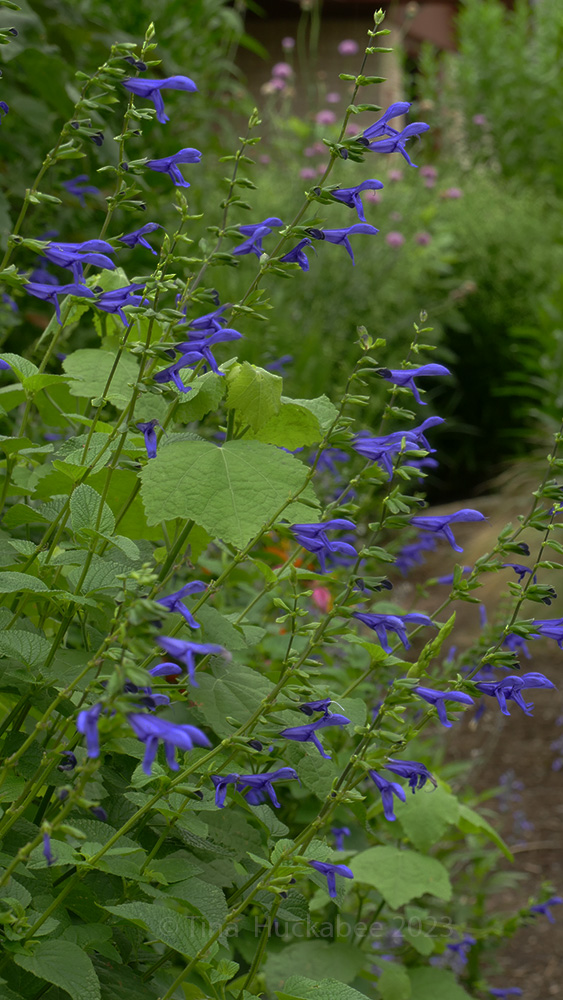
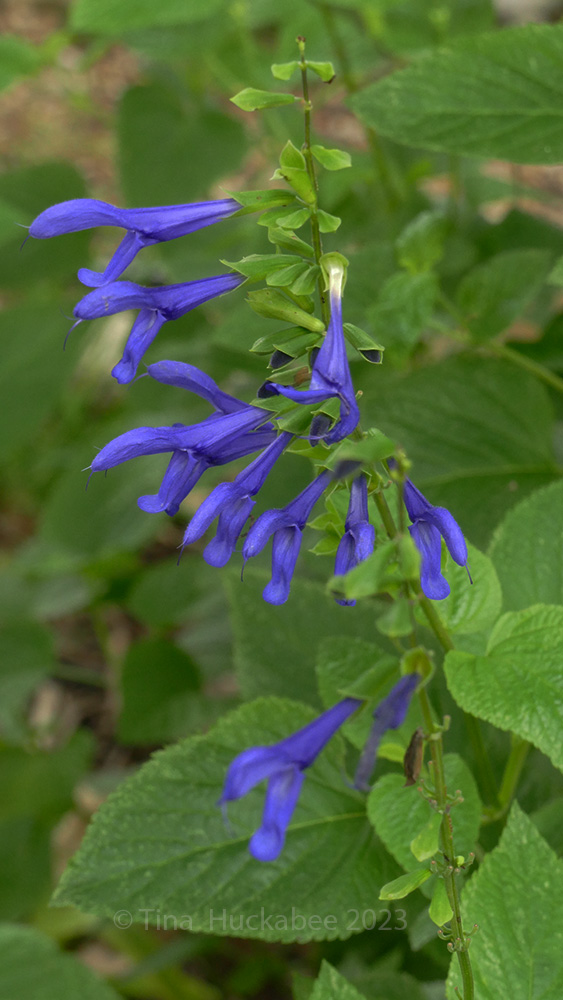
Many of my blues suggest a liaison with lavender or violet, but this final blue is a true blue: spring and autumn blooming Majestic Sage, Salvia guaranitica.

This is the only non-native blue that I grow; its home base is in Central and South America. A gorgeous, rich blue, the plant is colorful in spring and autumn, choosing to rest during the sweltering summer months. Most of the bees that visit nectar steal, though my honeybees and some of the tiny native bees crawl deep into the blooms for their sweet treat.

I grow a few other blues that will sing their songs in late summer and fall. The blues in a garden are the kind of blues we should welcome–for their beauty and for what they provide for the wild things we share space with. Add some blues to your garden, you’ll be happy you did!

First Day

It’s the first day of Spring: a season of hope, renewal, life.

If you’re able, go for a walk; wave to your neighbors and say ‘hi’ from a safe distance. 

Observe the fresh, green growth on trees and bursts of color with flowers.   Listen to birdsong; watch expectant parent birds carry leaf and grass to their nesting sites. 

Life continues.

Open your windows, breathe in deeply the passing breeze.   Keep in touch with loved ones:  help your neighbors, especially the elderly and others,  most vulnerable.  

Stay safe.