Bumbling in Baskets

The annual American basket-flowers are nearing the end of their cycle. There are still a few stalwarts blooming, but basket-flower foliage is crispy, most flowers are spent, and seeds are scattered and scattering. Those flowers still flowering are doing what flowers do: opening prettily for the gardener and supplying sustenance for the pollinators.

Pollinators–native bees, honeybees, butterflies and hummingbirds–are active at the baskets in the early morning hours, before searing, oven-like heat sets in and the baskets close for business. Just after daybreak, there are many honeybees and nearly as many American Bumblebees at the baskets, partaking of the flowers’ gifts.
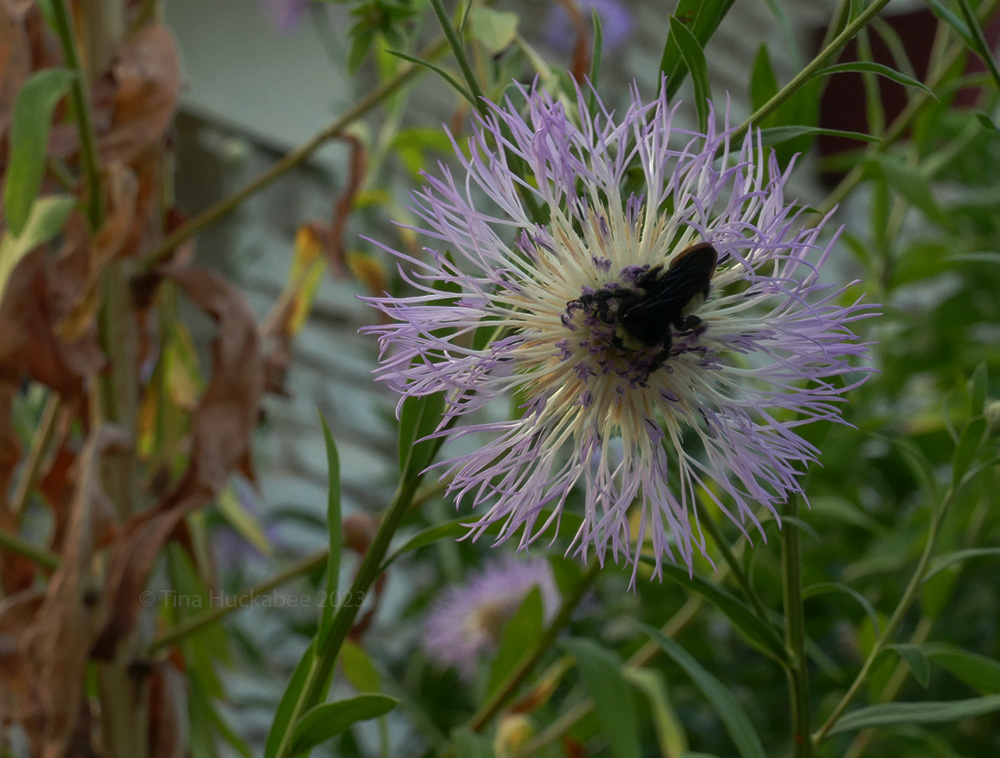
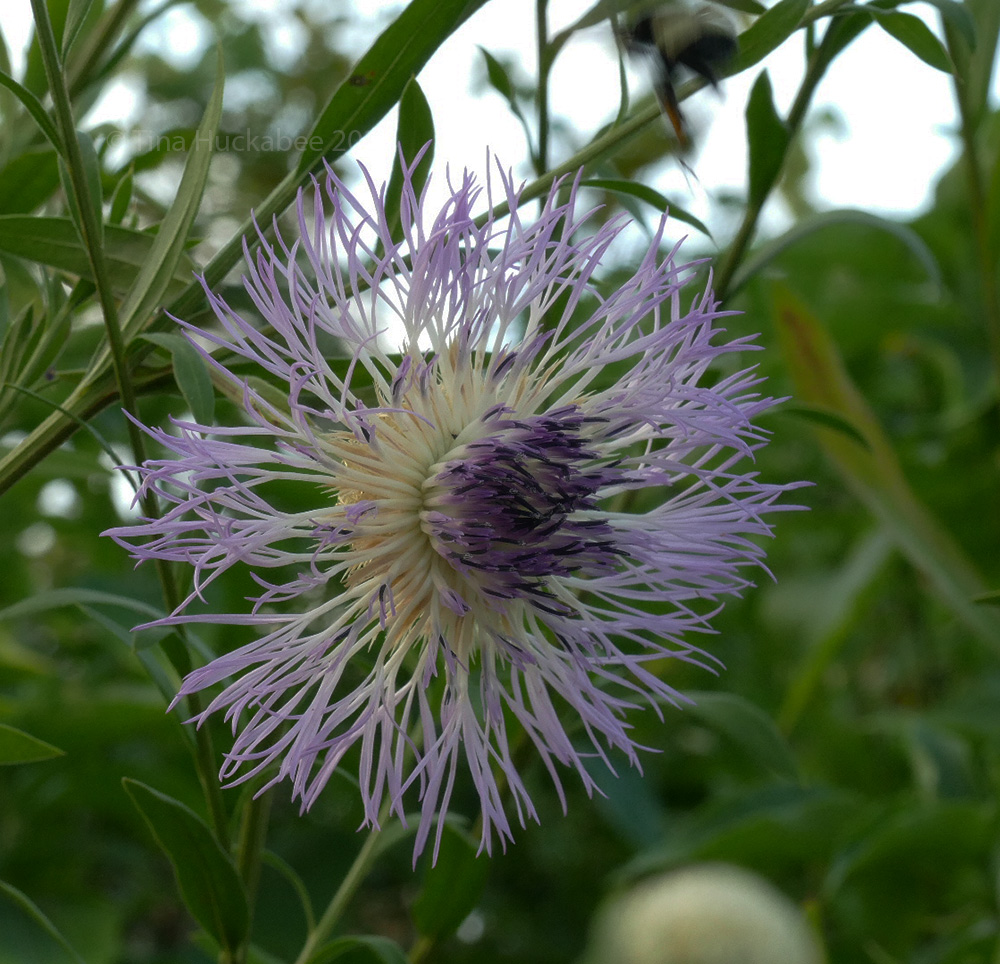
The Bumbles crawl in, around, and through the lavender filaments, adorning themselves with pollen, afterwards moving to the next available bloom. The insects buzz by one another, focused on their next landing, seemingly aware that sharing space is a necessity. Some rules of the road are employed by these critters, as there’s never a crash, nor a disputed landing spot.

Bee butt!

The bumblebees move constantly, with determination, alighting on as many flowers as possible in the few hours that the flowers beckon.

I estimate that in a week’s time, there will only be a few of these stunning wildflowers remaining in the garden. I’ll miss them with their glorious, elegant blooms, dramatic heights, and wildlife they attract, but time moves on, seasons evolve, plants change and die. It’s time. Pollinators will segue to other flowering plants as the garden advances into August.

Thousands of seeds have dropped, a few picked up by birds and maybe squirrels; most lie dormant in the soil for the near future. Winter’s cold and rain, coupled with spring’s dew and longer days will encourage germination and growth of the seeds. Most of the seedlings which appear will be pulled and composted, but those left will continue their path towards beauty and life. Next summers’ bounty is already in play.
Summertime Dream

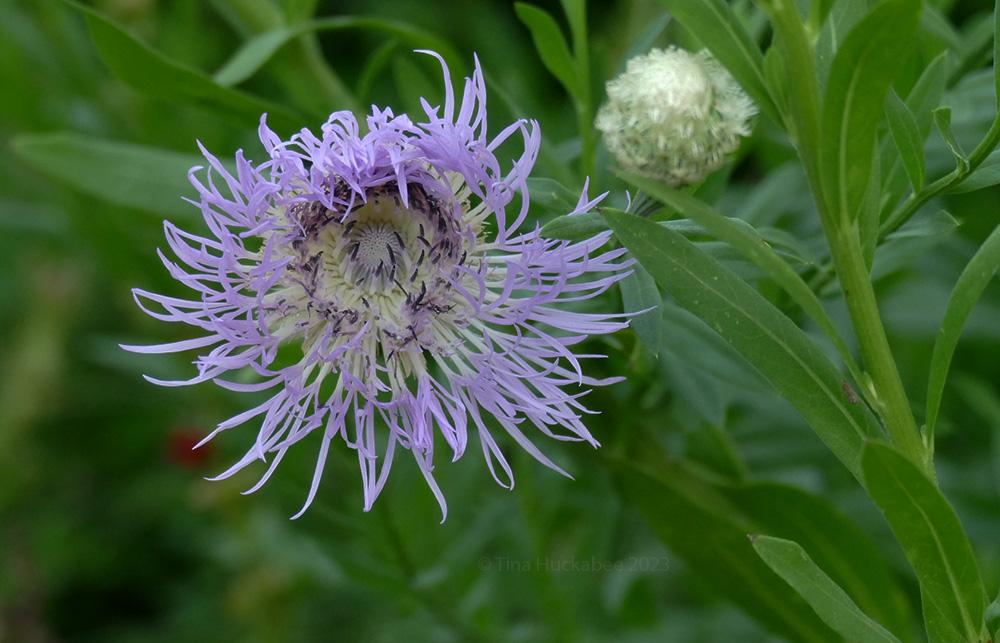
With an appreciative nod to the great Gordon Lightfoot, the garden is a Summertime Dream. Yes, there’s twittering in the trees, but there’s also plenty of buzzing and fluttering in and around the blooms. Currently, some of the premier buzzy/fluttery magnets are the prolific American Basket-flower, Centaurea americana.

Whether at the beginning of the bloom cycle,

…or toward the end,

…these pink-to-lavender beauties host a myriad of pollinators–day in and day out. Big or small, bee or butterfly (or hummingbird),

Native bee, perhaps Striped Abdomen bee, Melittidae
Black Swallowtail, Papilio polyxenes,

…active pollinators fill the air space of the garden, alighting on many blooms, especially nosing in on these fringed flowers.

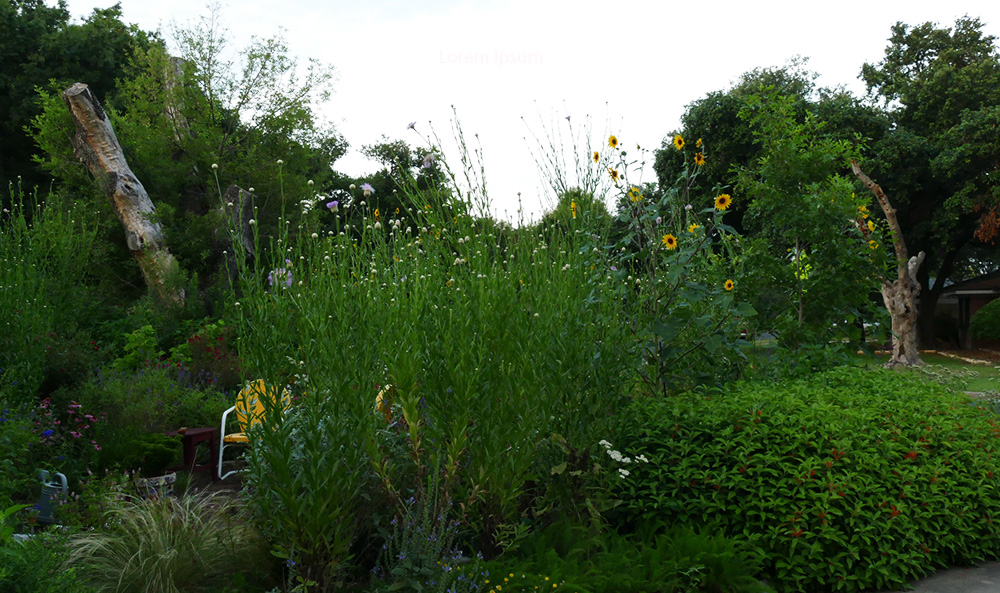
This is the third year I’ve grown this wildflower. Last year, each individual stalk was tall, but in the drought, not nearly as tall as this year’s crop of baskets. Plenty of rain in April and May encouraged Jack-in-the-Beanstalk growth of the basket flowers and I was remiss in pruning the reach-for-the-stars flower stalks.

I managed to prune this bunch below and I’m happy with their height and bushy character.

Next year (next year, I always say next year!), I’m removing 95% of the seedlings (this year, it was a mere 85%) and pruning 100% of those that remain. The tall growth is fascinating to observe, but these plants simply get too, too tall for this garden. I cut down five or six of the tallest because they tipped over in heavy rain and wind.

I’m fond of these flowers and welcome them as annual visitors. The color, form, and size of the blooms are glorious, but their most important contribution is that they provide so much to so many: pollinators partake of the luscious blooms and at the end of that cycle, songbirds snarf the seeds.

This next week, June 19-25, is National Pollinator Week celebrating all things about pollinators. Check out the Pollinator Partnership for information on how you can help heal your part of the world by partnering with pollinators. Even a small garden of native plants and trees that provide food and protection for larvae and nectar and pollen for adults will benefit pollinators and the wider ecosystem.

Additionally, it will add beauty and joy to your everyday life.

Small Minor bee and Green Sweat bee on American Basket-flower

Texas Dandy

In February, I posted about the non-native dandelion that is common in gardens and pathways pretty much everywhere. Though most people consider it a weed, I have no argument with that little flower, since it’s an early bloomer for pollinators.

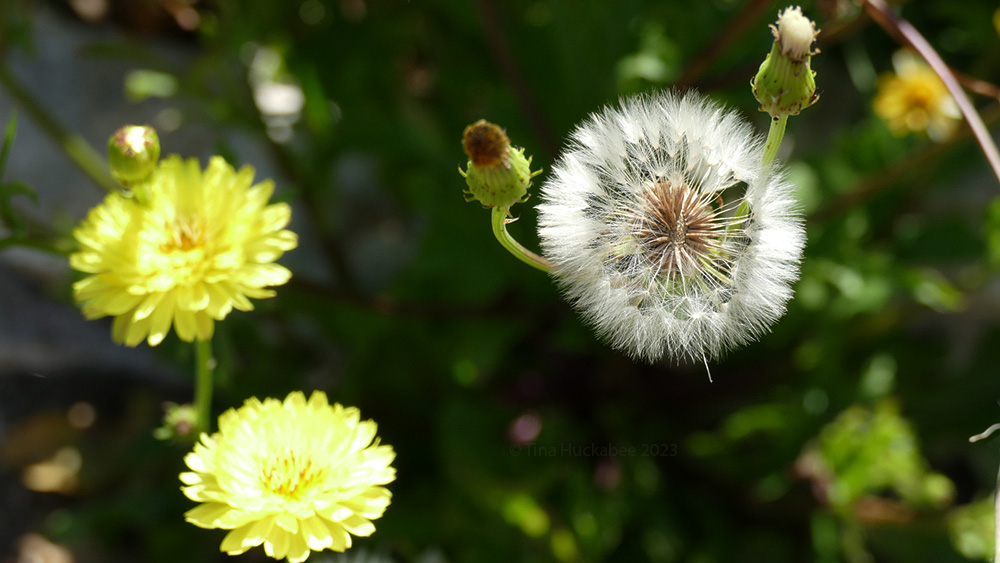
Fast forward about six weeks with spring in full swing, and the native dandelion, Texas Dandelion, Pyrrhopappus pauciflorus, has made itself comfortable in my garden. Here it is, upfront and on stage, Four-nerve Daisy, Tetraneuris scaposa, waving in the background.

This little aster is a paler shade of yellow, more butter-yellow, than many other native yellow asters. The lower portion of its anthers are colored a deep maroon, which contrasts nicely with the soft yellow.

The flowers open in the mornings, though I’ve noticed that they are sleepy heads and it’s well after sunrise before they greet the day. The blooms close by mid-afternoon.

Like other flowers in the Asteraceae family, the seed heads are snowy white puff balls, just waiting for that perfect breeze to carry them off to land in another home.

In my garden, I haven’t seen any of the typical bee/butterfly/other pollinators nosing around the blooms. Instead, there’s often a cucumber beetle in the center, presumably doing the business of pollinating.

This individual planted itself just outside the bounds of the garden, which is typical; these usually grow in the pathways of my garden.

It’s a complementary plant alongside the planned garden, though it’s not the only one that invited itself to join the community.

The wide-leafed plant situated just behind and to the right of the Texas Dandelion is a volunteer American Basket Flower, which I wrote about last year. And next to that is a Coast Germander, Teucrium cubense, that appeared last year as well, uninvited, but not necessarily unwelcome. Not an aster, but instead in the mint, or Lamiaceae family, the dainty white flowers bloom non-stop and the foliage was evergreen all winter.

I think all three unplanned additions are dandy!