Bumbling in Baskets

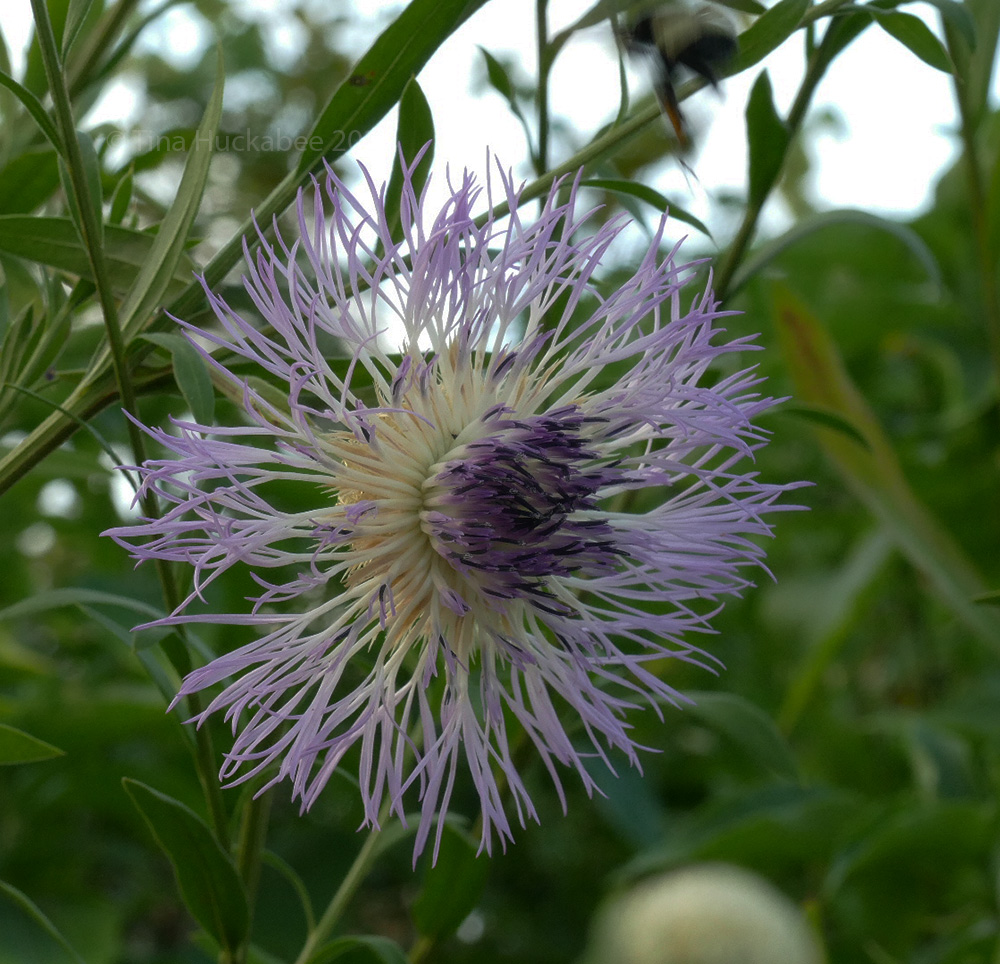
The annual American basket-flowers are nearing the end of their cycle. There are still a few stalwarts blooming, but basket-flower foliage is crispy, most flowers are spent, and seeds are scattered and scattering. Those flowers still flowering are doing what flowers do: opening prettily for the gardener and supplying sustenance for the pollinators.

Pollinators–native bees, honeybees, butterflies and hummingbirds–are active at the baskets in the early morning hours, before searing, oven-like heat sets in and the baskets close for business. Just after daybreak, there are many honeybees and nearly as many American Bumblebees at the baskets, partaking of the flowers’ gifts.
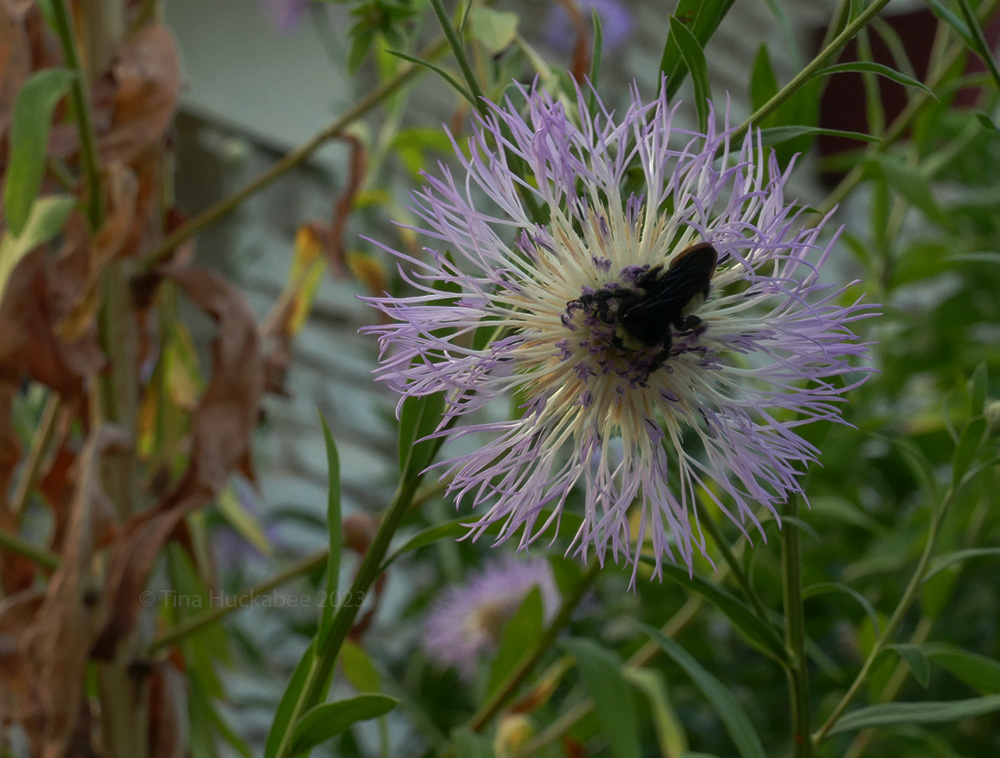
The Bumbles crawl in, around, and through the lavender filaments, adorning themselves with pollen, afterwards moving to the next available bloom. The insects buzz by one another, focused on their next landing, seemingly aware that sharing space is a necessity. Some rules of the road are employed by these critters, as there’s never a crash, nor a disputed landing spot.

Bee butt!

The bumblebees move constantly, with determination, alighting on as many flowers as possible in the few hours that the flowers beckon.

I estimate that in a week’s time, there will only be a few of these stunning wildflowers remaining in the garden. I’ll miss them with their glorious, elegant blooms, dramatic heights, and wildlife they attract, but time moves on, seasons evolve, plants change and die. It’s time. Pollinators will segue to other flowering plants as the garden advances into August.

Thousands of seeds have dropped, a few picked up by birds and maybe squirrels; most lie dormant in the soil for the near future. Winter’s cold and rain, coupled with spring’s dew and longer days will encourage germination and growth of the seeds. Most of the seedlings which appear will be pulled and composted, but those left will continue their path towards beauty and life. Next summers’ bounty is already in play.

Bumbling

I often bumble. I bumble out of bed early mornings, bumbling down the hallway to feed cats as they mew their kibble requests around my feet. Then, bumbling to the kitchen, I grind coffee beans, though to add to the morning bumbling is the sad reminder that the freshly ground coffee is no longer of the caffeinated kind, a reluctant nod to caffeine intolerance developed and morning wake-up routine compromised. At some point, I bumble out of doors, greeting the sunrise in the garden, sometimes with camera in hand (if I don’t bumble and forget to grab it).

What don’t bumble are American Bumble Bees. They move about their chosen nectar plants buzzing gracefully and intentionally from bloom-to-bloom, gentle in movement, determined in task, beautiful to observe.

In late summer and through autumn cooler, I’ll see Bumble bees in my garden. They feed from many flowers, but in my garden, their proboscis-down favorite is the blue-blooming Henry Duelberg sage, Salvia farinacea ‘Henry Duelberg’. Each morning, there are 3 or 4 at this lovely native hybrid, the Bumbles often sharing the blooms’ bounty with other pollinators who enamored with this plant.

Two decades ago I grew a related perennial, a large Salvia x. ‘Indigo Spires’, which is a hybrid of S. farinacea and S. longispicata. It was taller than the ‘Henry Duelberg’ and had longer bloom spikes; the blooms were also a rich purple-blue. In those years, the late summers and autumns saw the plant hosting15 or 20 gentle, giant bumbles each day, all working the blooms, minding their own business, adding life and movement to the garden. At some point, the bees disappeared, I suspected (though don’t know for certain) that their disappearance was related to the conversion of a nearby untouched field to a development of neighborhood housing. While that new housing addition has been positive for the neighborhood in many ways, the missing bees were, and are, missed. Bumble bees nest in the ground and require undisturbed ground. Urbanization (cement walkways, asphalt streets, swaths of non-native turf) isn’t kind to ground nesting bees, as well as other beneficial insects. In my garden, I have several uncultivated areas–no garden plants, no turf, no mulch–and have seen insect ground nests in those areas. I’m betting that the bees that visit my garden also have other places where they’ve set up their homes and nurseries, and with some good luck and knowledgeable human hosts, those areas will remain protected.

I don’t know if the numbers of bumble bees that my garden once hosted will ever return to their former glory, but I’ll certainly continue to leave open space and plant food sources for them, supporting their full life cycle.