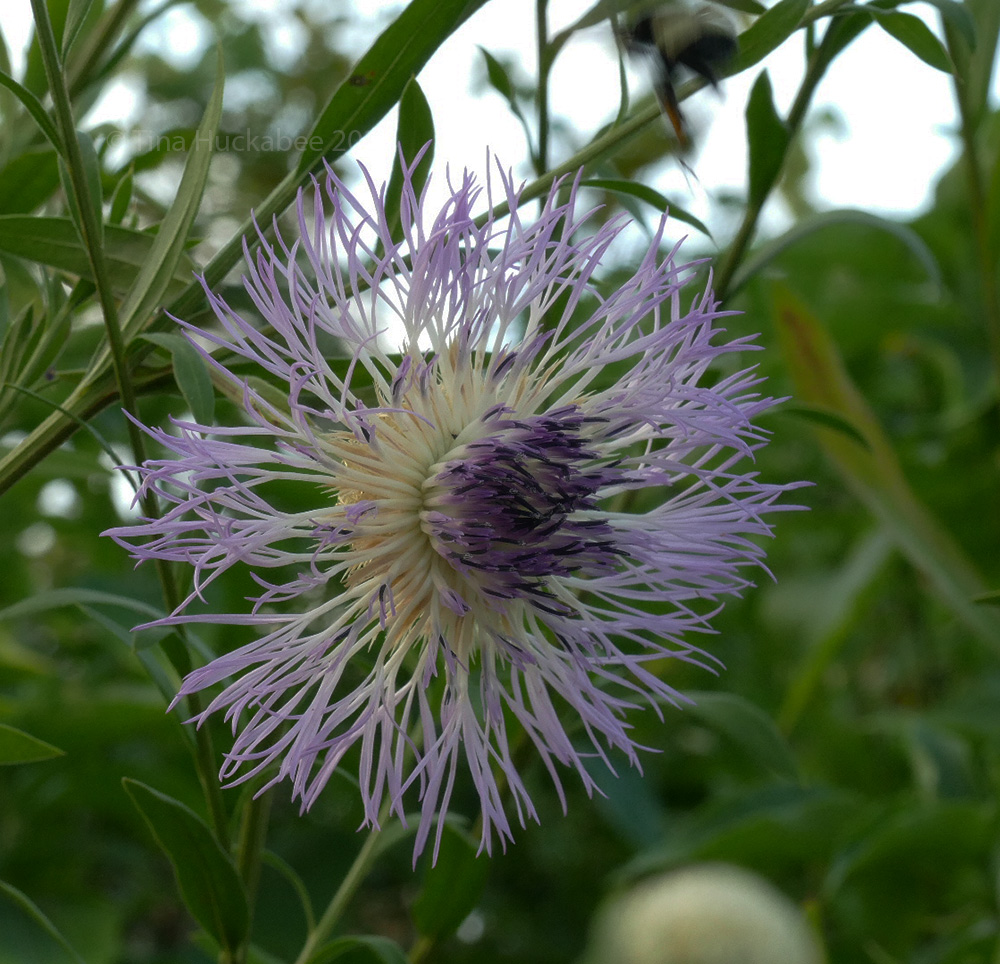
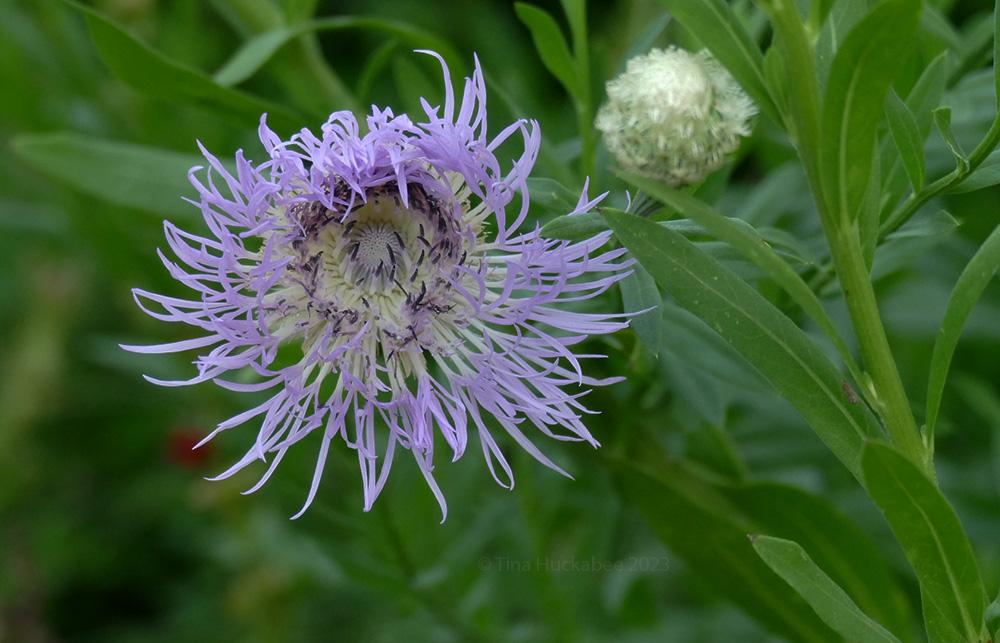
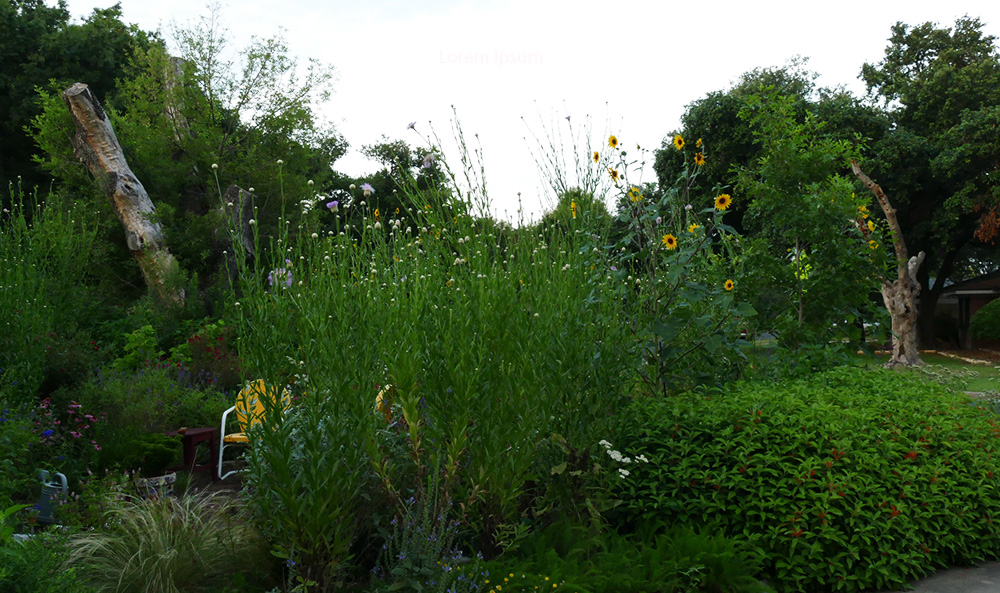
The annual American basket-flowers are nearing the end of their cycle. There are still a few stalwarts blooming, but basket-flower foliage is crispy, most flowers are spent, and seeds are scattered and scattering. Those flowers still flowering are doing what flowers do: opening prettily for the gardener and supplying sustenance for the pollinators.
Pollinators–native bees, honeybees, butterflies and hummingbirds–are active at the baskets in the early morning hours, before searing, oven-like heat sets in and the baskets close for business. Just after daybreak, there are many honeybees and nearly as many American Bumblebees at the baskets, partaking of the flowers’ gifts.
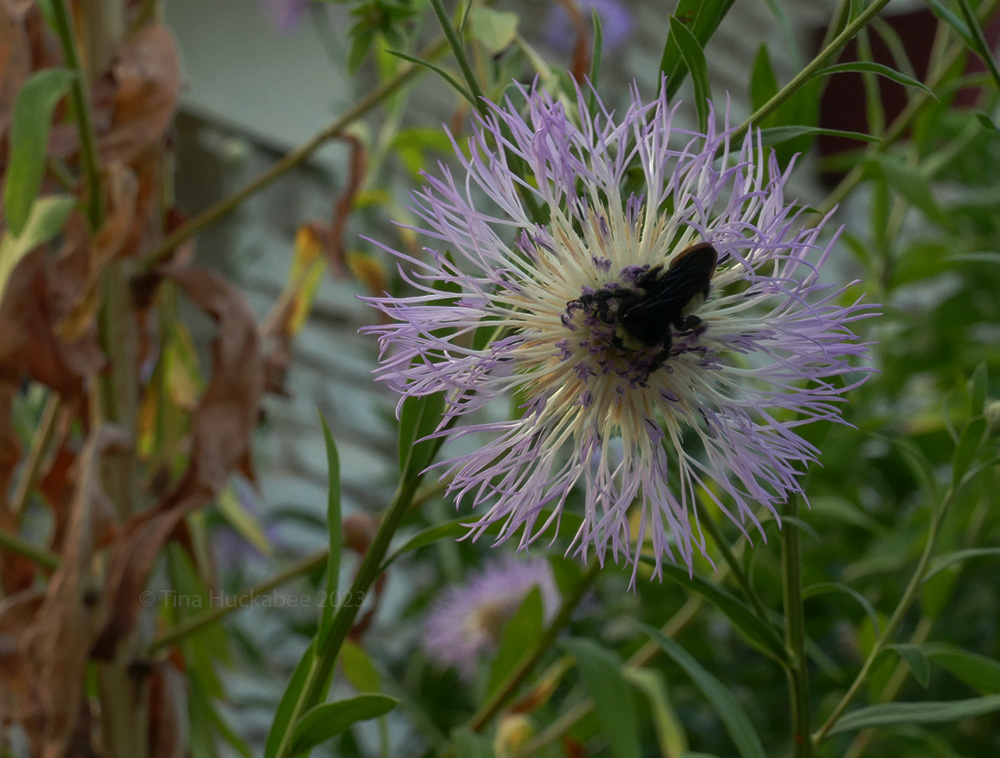
The Bumbles crawl in, around, and through the lavender filaments, adorning themselves with pollen, afterwards moving to the next available bloom. The insects buzz by one another, focused on their next landing, seemingly aware that sharing space is a necessity. Some rules of the road are employed by these critters, as there’s never a crash, nor a disputed landing spot.

The bumblebees move constantly, with determination, alighting on as many flowers as possible in the few hours that the flowers beckon.
I estimate that in a week’s time, there will only be a few of these stunning wildflowers remaining in the garden. I’ll miss them with their glorious, elegant blooms, dramatic heights, and wildlife they attract, but time moves on, seasons evolve, plants change and die. It’s time. Pollinators will segue to other flowering plants as the garden advances into August.

Thousands of seeds have dropped, a few picked up by birds and maybe squirrels; most lie dormant in the soil for the near future. Winter’s cold and rain, coupled with spring’s dew and longer days will encourage germination and growth of the seeds. Most of the seedlings which appear will be pulled and composted, but those left will continue their path towards beauty and life. Next summers’ bounty is already in play.






 My Gardener Says...