Unknown's avatar

About Tina

I’ve gardened in Austin, Texas (zone 8b) since 1985. I garden with low maintenance, native and well-adapted non-native plants to conserve water and reduce workload. I also choose plants which attract wildlife to my gardens. I’ve completed the Travis County Master Gardener and Grow Green program (through the city of Austin). I’ve volunteered for a number of public and private gardens, as well as consulted and designed for private individuals. Formerly, I managed Shay’s Green Garden at Zilker Botanical Gardens and Howson Library Garden for the City of Austin. My garden is a certified Monarch Waystation and a Wildlife Habitat.I blog about my garden adventures at: https://mygardenersays.com/ I love blooming things and the critters they attract. Tina Huckabee

The Heat Goes On. And On.

Hellish.

Really, there’s no other way to describe this summer’s heat. Last week, Austin broke its 2011 record for consecutive days over 100F and there’s no end in sight. Don’t ask me how many days have skyrocketed over 100F, I haven’t kept up and I don’t want to know.

Despite the willful ignorance of some, this is the new normal.

As the days have become noticeably shorter, early mornings are lovely. I’m usually out in the garden before 6am, not-yet-perspiring, coffee-in-hand, enjoying the “cool” breeze. By 8am, sun up and death rays activated, it’s pretty hot. My son lives in Irbel, Iraq and we trade how hot was it today stories each time we talk. We’re about 7 degrees cooler than Irbel and with better infrastructure. Yes, Texas’ electric grid has held. So far.

All that said, the garden has held up well against the heat and drought. I water the whole garden with in-place soaker hoses (the tire-like kind that sweat) about every three weeks, with some targeted hand-watering as needed for new plants, plants that don’t have a soaker hose nearby, and container plants. It’s more watering than I usually do, but not so much to be annoying.

The photos which follow were all taken in early mornings, the garden being at its freshest when the day is young. At the end of each day (heck, by the middle of each day!), blooms are shuttered, leaves are crinkled, and the garden cringes with the heat, rendered bleached by the strength of the sun’s rays.

This is the shadiest section of my garden and it’s received almost no water this summer.
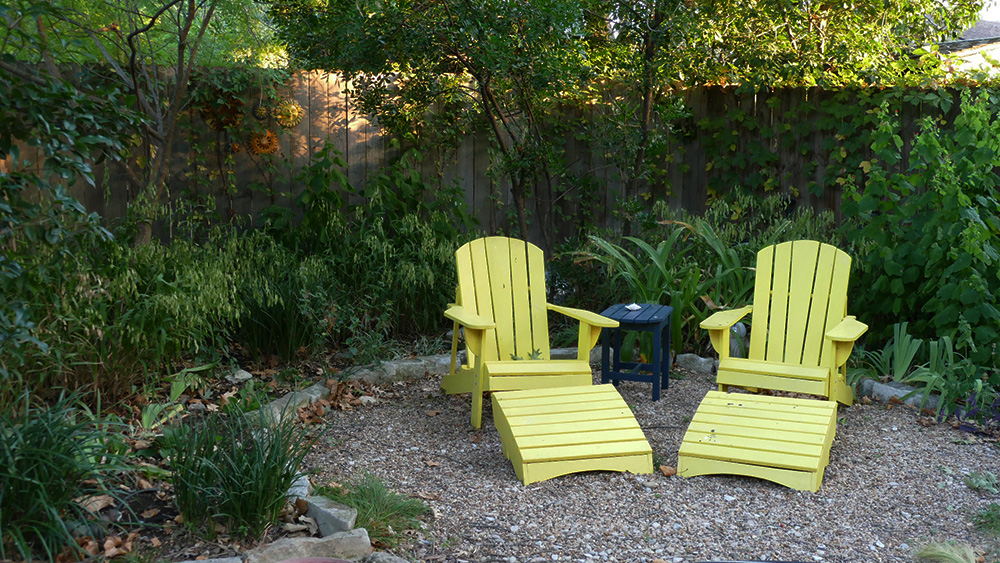
There aren’t many summer bloomers here, only the Turks’ cap, Malvaviscus arboreus, and Mexican Orchid tree (off photo) but the garden is green and lush; birds and squirrels bop through for seeds and such.

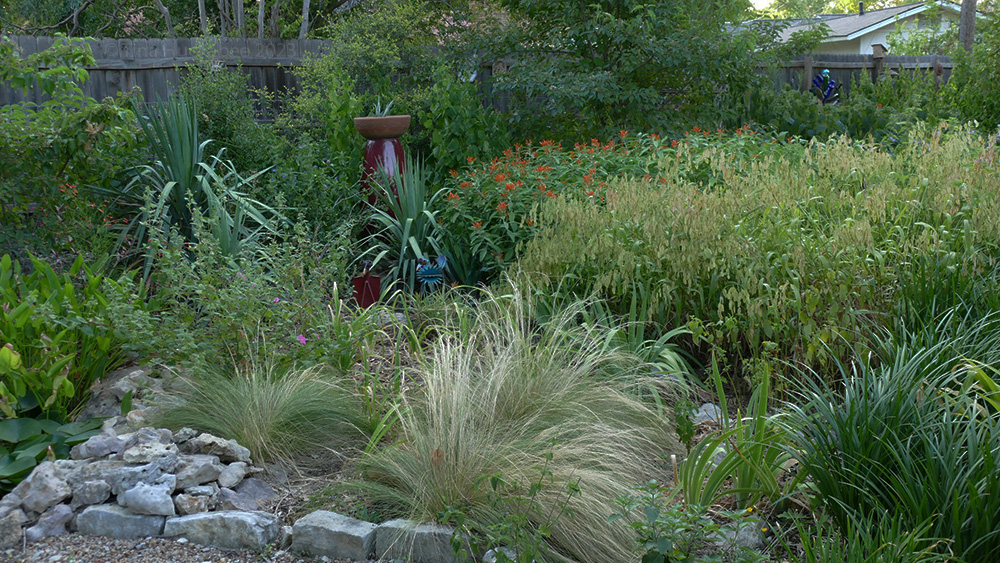
The main part of my back garden gets half-day sun at varying times of each day and the plants have been good sports about summer’s heat.
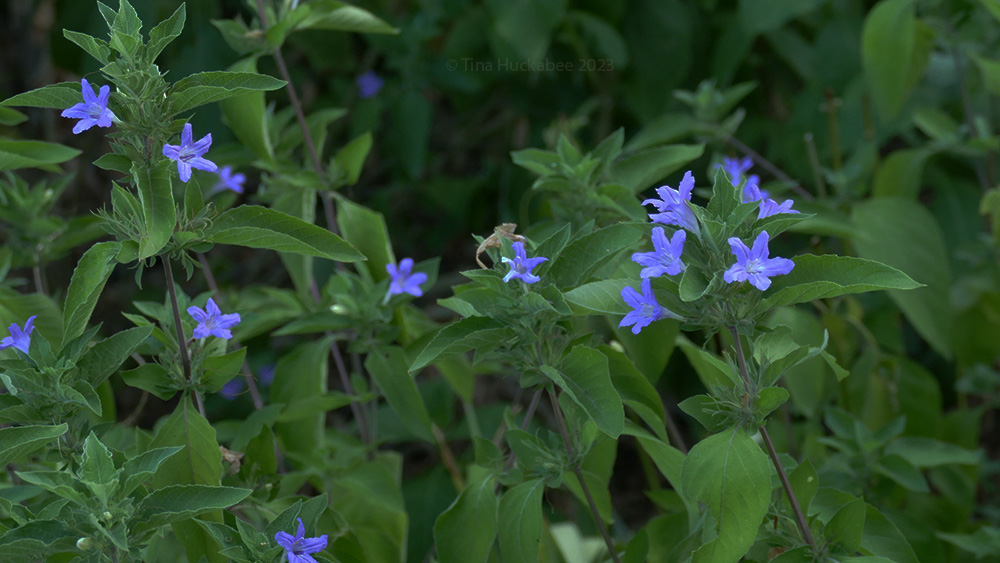
One of the best drought and heat tolerant plants I grow, and especially great in shade/part-shade, is the native Drummond’s Ruellia, Ruellia drummondiana.
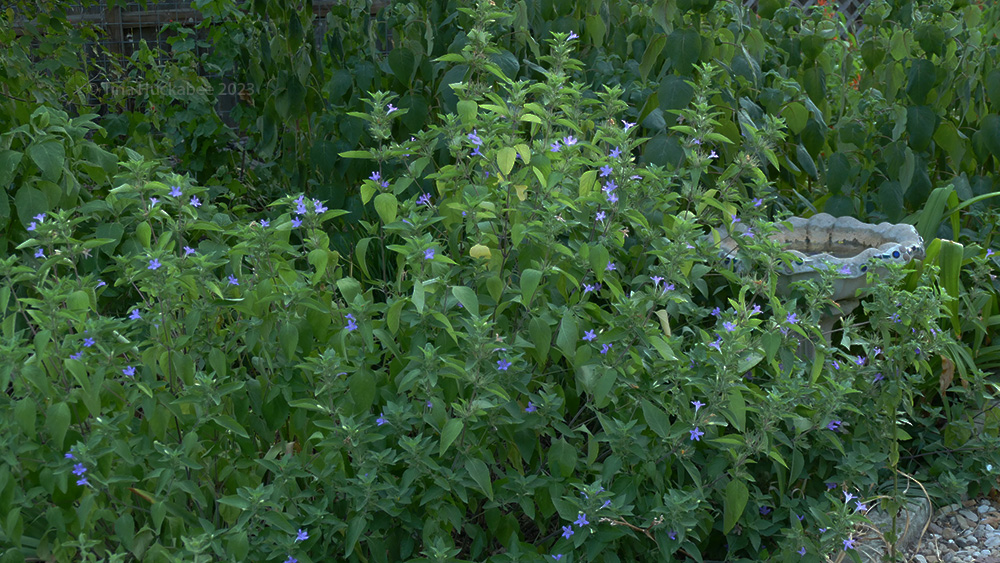
The flowers close by mid-day (NO ONE likes this heat!) but are lavender lovelies each morning, open for bee business. I mostly grow this perennial in the back garden, as my full-sun front garden fries the foliage. I’m grateful it’s blooming, but it hasn’t bloomed as well as during a ‘normal’ summer.
In my back garden, I’ve opted for tough foliage plants that aren’t thirsty and needy like Soft-leaf Yucca, Yucca recurvifolia and Giant Liriope. Turk’s cap (tall plant, left in photo) and the Mexican Honeysuckle, Justicia spicigera (orange flowering shrub in background) are heat-loving prolific bloomers, providing for pollinators when other plants have shut down bloom production.
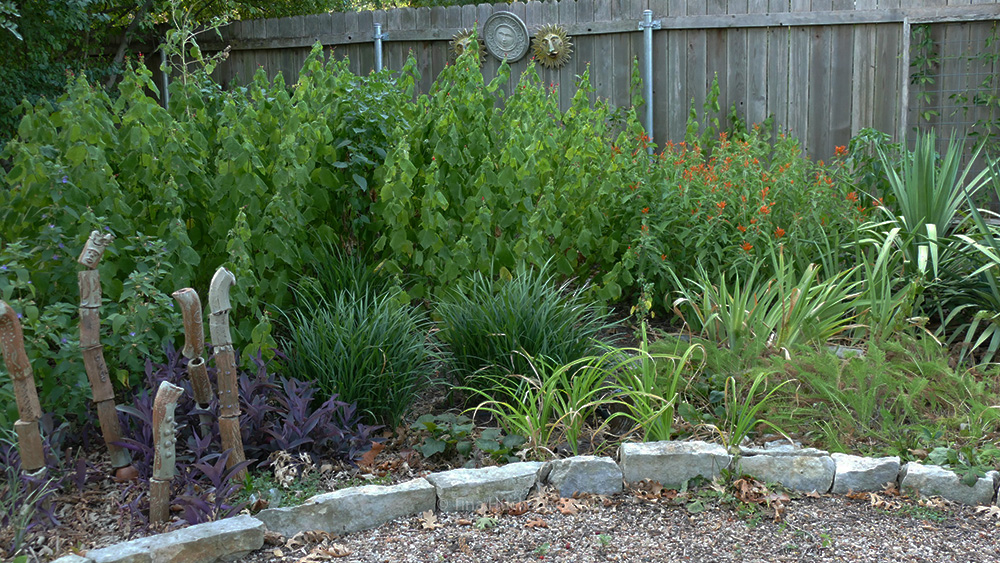
Earlier in the summer, the orange daylilies put on quite a show, but now, it’s all about their grassy foliage. Purple heart, Tradescantia pallida, is colorful and in wetter years, adds its pretty pink blooms, though they’re scarce now. Common Yarrow (right in photo) makes a lacy ground cover.

In the front garden, the searing Texas sun blasts its rays from early morning until late evening.
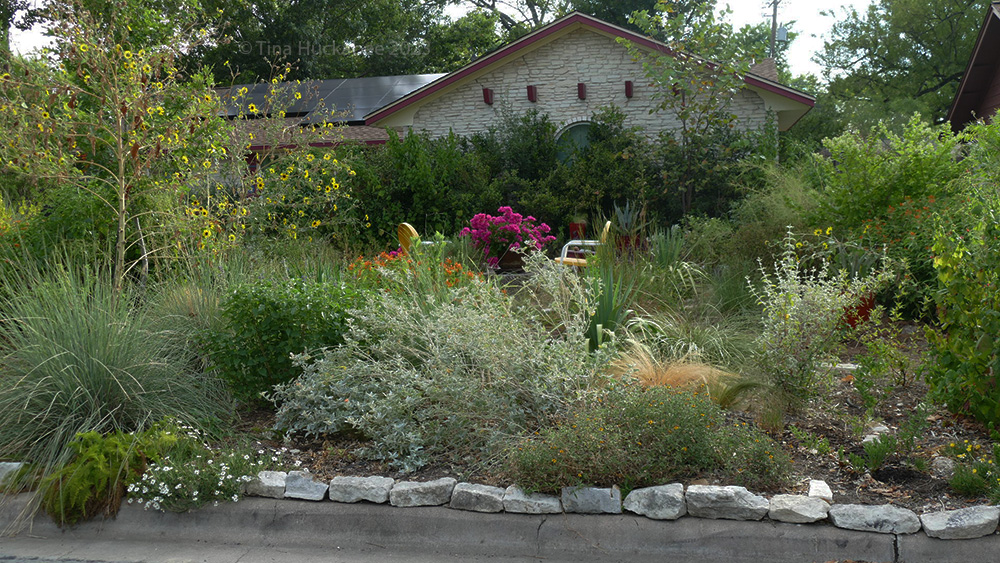
Native grasses are lush and full, smaller trees are growing apace, and perennials and shrubs are holding their own, some in bloom, others opting for dormancy. There are still a couple of sunflowers blooming; sadly, the American Basket flowers are done for the year.

The sitting area only hosts humans during early morning or at sundown, but the bougainvilleas don’t mind the lack of human company, as long as the sun is shining and they have their daily drink of water.
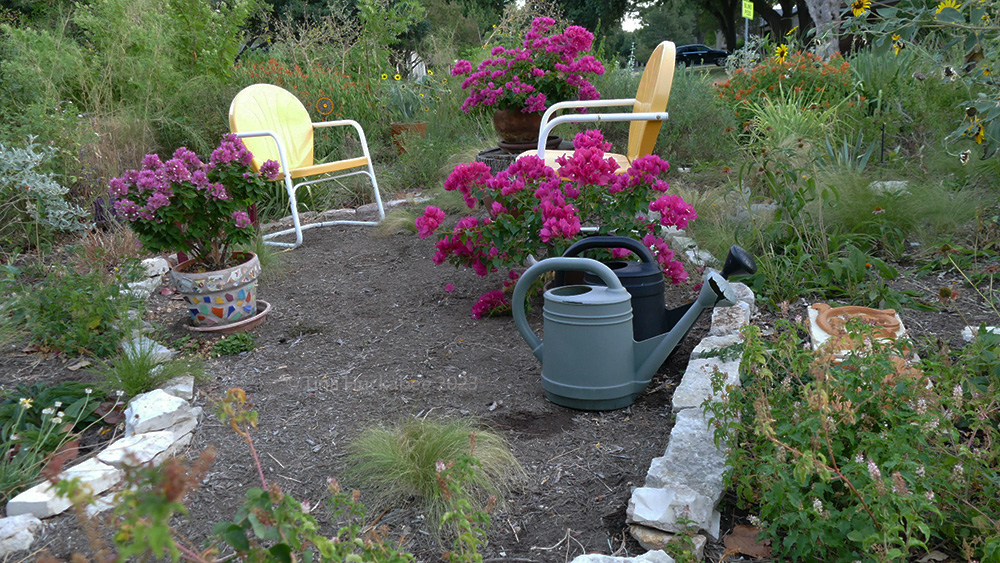
Overall, I’m pleased with how the garden is faring, but I’ll make some changes when summer is done and temperatures moderate. There are some mistakes (aren’t there always?) in plant choice and placement that are glaringly obvious with the challenging summer conditions.

As I recall, when the heat and drought finally broke in 2011, Austin enjoyed a most glorious autumn. Here’s hoping that this year is a repeat of that year: gentle rain at just the right time, September (and going forward) cooler days, a garden that flourishes, with gardener who is grateful.
Bumbling in Baskets

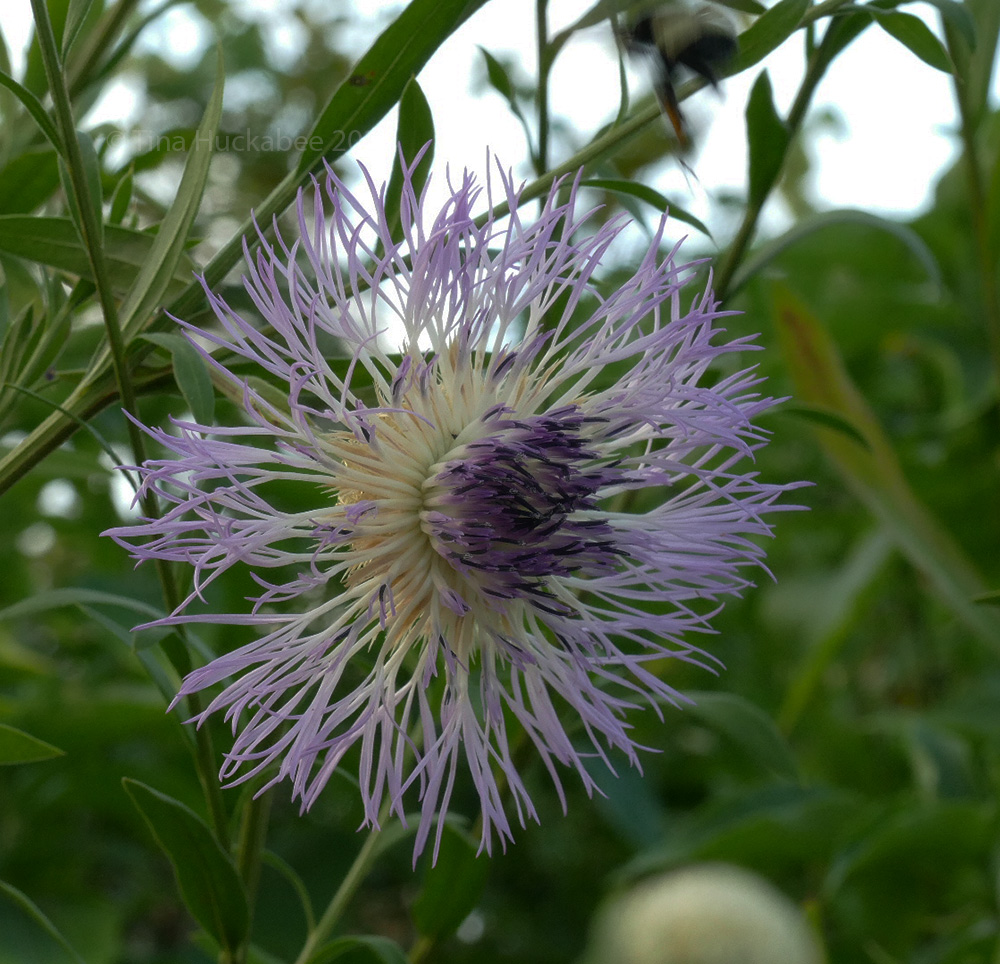
The annual American basket-flowers are nearing the end of their cycle. There are still a few stalwarts blooming, but basket-flower foliage is crispy, most flowers are spent, and seeds are scattered and scattering. Those flowers still flowering are doing what flowers do: opening prettily for the gardener and supplying sustenance for the pollinators.

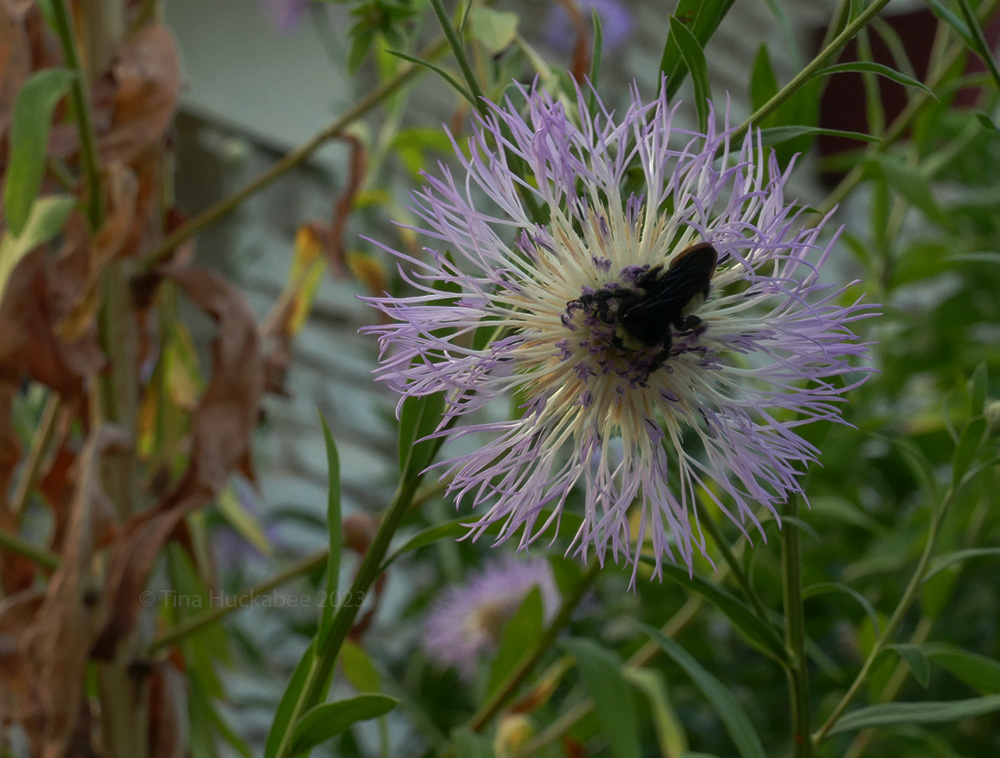
Pollinators–native bees, honeybees, butterflies and hummingbirds–are active at the baskets in the early morning hours, before searing, oven-like heat sets in and the baskets close for business. Just after daybreak, there are many honeybees and nearly as many American Bumblebees at the baskets, partaking of the flowers’ gifts.

The Bumbles crawl in, around, and through the lavender filaments, adorning themselves with pollen, afterwards moving to the next available bloom. The insects buzz by one another, focused on their next landing, seemingly aware that sharing space is a necessity. Some rules of the road are employed by these critters, as there’s never a crash, nor a disputed landing spot.

Bee butt!

The bumblebees move constantly, with determination, alighting on as many flowers as possible in the few hours that the flowers beckon.

I estimate that in a week’s time, there will only be a few of these stunning wildflowers remaining in the garden. I’ll miss them with their glorious, elegant blooms, dramatic heights, and wildlife they attract, but time moves on, seasons evolve, plants change and die. It’s time. Pollinators will segue to other flowering plants as the garden advances into August.

Thousands of seeds have dropped, a few picked up by birds and maybe squirrels; most lie dormant in the soil for the near future. Winter’s cold and rain, coupled with spring’s dew and longer days will encourage germination and growth of the seeds. Most of the seedlings which appear will be pulled and composted, but those left will continue their path towards beauty and life. Next summers’ bounty is already in play.

Rocky’s Visit

Austin is home to many (some say too many!) Eastern Fox Squirrels, Sciurus niger. These natives are both charming and annoying, adding comedic energy to the garden; there’s never a dull moment with these fuzzy-tailed characters. While some (occasionally including yours truly) find these cute critters irritating, squirrels play an important role in the dissemination of native plants by their consumption of seeds and disposal afterwards. In short, squirrels plant a lot of trees.

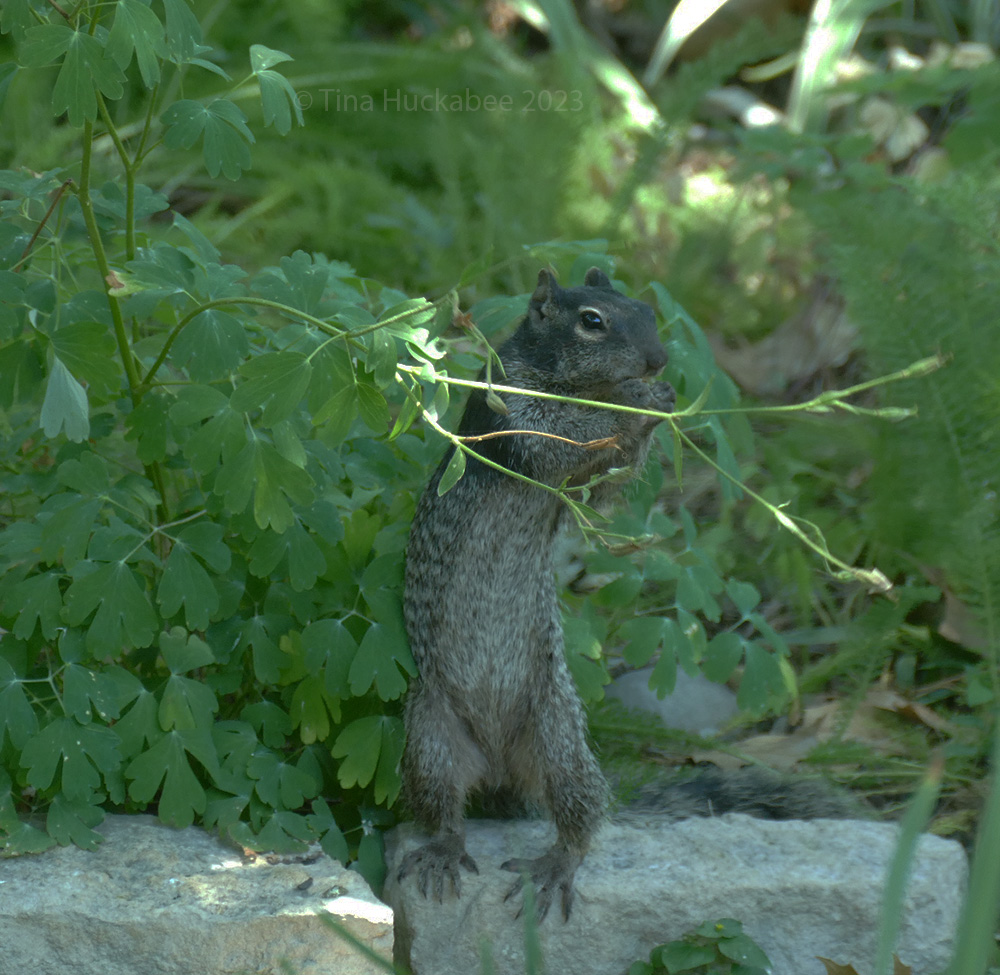
Recently, I looked out my kitchen window and saw a Rock Squirrel, Otospermophilus variegatus, nosing around in the garden, which was quite a surprise. I know Rock Squirrels are native in parts of Texas, but I’ve never seen one in my garden or anywhere else in Austin.

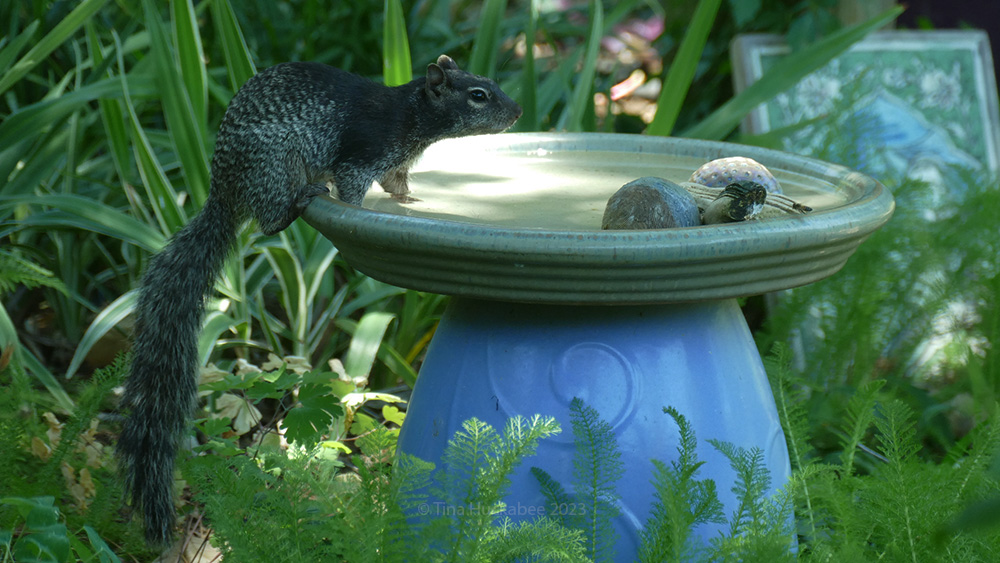
Austin (Travis County) lies at the eastern edge of these squirrels’ range; they’re more common in the Hill Country areas. Apparently, Rock Squirrels here in Central Texas tend to be brownish in coloring, though those further west are black to grey. This fella is definitely a westerner and I wonder if he’s a sub-species, Otospermophilus v. buckleyi. He’s quite a handsome fella, too–look at that fluffy tail! He’s also a little bigger than my pet-like Fox Squirrels.

True to what I read about Rock Squirrels, he helped himself to some greens, in this case, the leaves, stems (and seeds?) of a Yellow Columbine. Rocky also likes to munch on other seeds and foliage, as well as insects.

After his snack, a nice, cool drink of water finished his meal.

I moved on to other adventures that day and never saw Rocky again. I hope he returns; it would be interesting, maybe fun, and no doubt exasperating to host two squirrel species in the garden.

I suppose I should be careful what I wish for, after all, they are squirrels!