Turk’s Cap (Malvaviscus arboreus var. drummondii): A Seasonal Look

Turk’s cap, Malvaviscus arboreus var. drummondii was one of the first native plants that I became acquainted with when I began my native plants gardening adventure.

P1050454_cropped_3618x2880..new

P1050451.new

IMGP0449_cropped_3000x2875..new

From the beginning, I was smitten.

Over the years, I’ve  planted  seven Turk’s Cap shrubs, all of which spread and developed into large specimen plants which anchor several of my garden beds during the course of the long growing seasons here in sunny Austin, Texas.

P1050486.new

P1040034_cropped_2605x1696..new

Turk’s Cap is a native southern United States plant, but is also native to Mexico and Cuba.  There are cultivars of this plant, like ‘Big Momma’, (who names these??) , that are listed as herbaceous perennials in USDA gardening zones 7-10.  Though this native Texan dies to the ground during our normal winters (except in South Texas), this hardy shrub emerges every spring and gifts to the garden and wildlife a long and prolific parade of blooms and fruits.IMGP0440.new

The Turk’s Cap is not picky about soil, nor does it need much water once established. Considered an understory plant, Turk’s Caps are best in shade,

P1040406.new

…but flourish in full sun and anything in between.  In full sun, the leaves will turn downwards, darken, and crinkle in a manner that many gardeners find unattractive.   The plant looks like it’s struggling in the blazing sun and heat, but even under those conditions, Turk’s Cap is a tough and drought hardy perennial. All of my Turk’s Cap shrubs grow in shade to part-shade and in fairly heavy soil, but I’ve seen others perform beautifully in full sun while planted in sand.    In shade and part shade though, the foliage is lush and suggestive of plants that are tropical mallows–which Turk’s Cap is!

P1040410.new

Turk’s Caps are classified as shrubs, but I always think of them as a forming in a cluster or thicket and as performing more like herbaceous perennials.   They tend toward the amorphous–shooting upwards and outwards from their thick roots after winter and reaching for the sky throughout spring, summer and into autumn.

P1050988.new

P1050496_cropped_2471x3059..new

During a wet spring, Turk’s Caps grow quickly, adding lots of stem length and leafy greens.  Over the course of the growing season, those stems can flop over and look rangy, especially once heavily laden with masses of blooms. That’s a fine way to go if you’re aiming for a casual, wild garden.  But if structure in the garden is a goal, Turk’s Caps can and should be pruned.   Here is an example of a wayward limb.

P1070815.new

P1070816.new

The snipped off wayward limb allows a more formal look.  This group,

P1070800.new

.P1070817.new

…is one that I should have pruned back after our heavy rains in the spring and early summer (2015).  I failed to complete that little chore and now this shrub has limbs flailing and falling this-a-way and that.  I don’t think this is horrible and certainly bees, butterflies and hummingbirds have no issue with wonky limbs, but the human Turk’s Cap tender who prefers a tidier look, should keep this hardy shrub checked. This example is more representative of how I like my Turk’s Caps:

P1070818_cropped_4013x2792..new

Actually, this large bunch is one of the first Turk’s Caps that I planted and is over 20 years old.

To keep the mature Turk’s Cap well-shaped, I prune up the outside limbs to about 2 feet in height, the next group inward to about 3-4 feet in height, in a graduated form, shorter to taller, toward the middle of the shrub.  In general, I only prune for shape in late spring, with the occasional lopping off, as needed, in late summer or fall. It’s an easy, quick chore and I only prune what needs pruning.

P1050452.new

Here in Austin, Turk’s Caps emerge from the ground in early spring with  fresh and vibrant green foliage.

P1030336.new

P1030340_cropped_4484x2861..new

Depending upon rainfall, Turk’s Caps will grow in a moderate to rapid pace.  If the spring is wet, the stems grow to about 4-5 feet, sometimes reaching 6 feet tall by late May, but often with little bloom development.  During drought, moderate or otherwise, the foliage growth is slowed, but flower development (at least in my garden) isn’t retarded at all.  Personally, I prefer Turk’s Caps during drought–these shrubs grow and bloom, without the rank limb development that occurs in wet years; the shrubs don’t require pruning under those circumstances and that’s a good deal for the lazy gardener.

Ahem.

Turk’s Caps begin their flower show in late spring (May in Austin) and the blooming continues throughout the summer months, with no rest.  Summer is when Turk’s Caps shine.

IMGP9794_cropped_3072x2297..new

P1050452.new

Or rather, bloom like crazy.

IMGP0439.new

The shrubs produce masses of blooms, each day, with each bloom lasting for several days. In a cluster, one can find buds, blooms and those destined to become fruits.

P1070812.new

The petite flowers are stunning:  they remind me of a jaunty turban, complete with pollen plume.

IMGP2393_cropped_3078x2695..new

P1070809_cropped_2972x3124..new

The Turk’s Cap belongs in the Mallow or Malvaceae family, thus sharing many characteristics with other hibiscus plants. The ruby-red, tiny hibiscus blooms never quite open.

P1070797.new

IMGP0275.new

Bees of all kinds, butterflies, and hummingbirds love these blooms.

P1070810.new

P1070831.new

Additionally, because the Turk’s Cap shrubs form thicket-like,  birds and lizards use it for cover.   Turk’s Caps are considered moderately deer resistant.

One of the things you’ll notice in these photos are holes in the foliage.  During some summers, there is munching of the wide and wonderful Turk’s Caps foliage.

IMGP0328_cropped_4295x2733..new

IMGP2044.new

In the American garden of the past century, sterile, non-insect attracting plants were the desired garden outcome.  As we have come to realize that wildlife is seriously threatened and in decline, the wildlife-friendly gardener recognizes that insects, often the larval stage of important pollinators like butterflies and moths, will eat foliage.  Furthermore, it’s actually okay that they eat foliage–that’s what they’re supposed to do and that’s what the plant is there for.  The plant won’t die; it’s uncommon for an insect herbivore to actually kill its host plant.  It happens, but it’s not the norm.  Are the holes unattractive? Well, it depends upon whether you want foliage that looks unreal–completely pristine and untouched–or whether you understand that there is a powerful and complex food chain mechanism at work in your garden.   I like to think that the holes in the foliage are feeding beneficial insects that become pollinators or perhaps, food for  birds or small mammals.  Acceptance of some leaf damage is all about  perspective and some knowledge of the natural world. Remember that plants were invented to serve insects, birds, and mammals.

IMGP2393_cropped_3078x2695..new

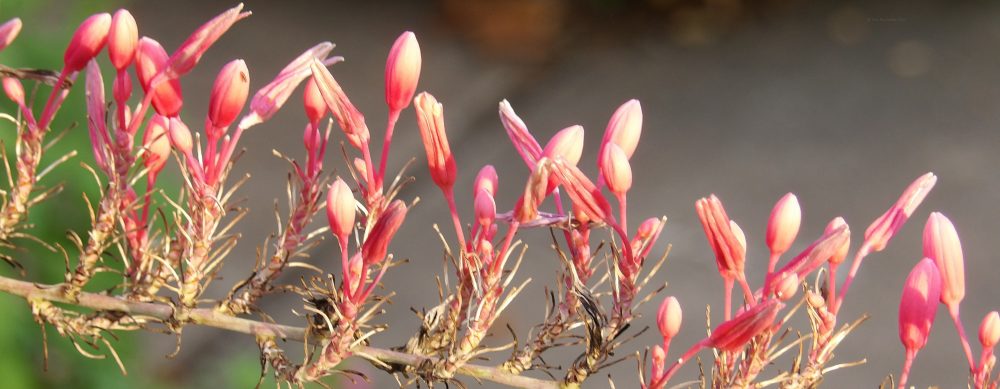
Once fall is firmly in play, with its shorter days and eventually, cooler nights, Turk’s Cap shrubs cease blooming.  Here in Austin, that occurs in October. The fruits begin developing in late summer,

P1070830_cropped_3456x3018..new

P1070827.new

IMGP1829.new

…and turn a luscious red during the fall months.   I’ve never tasted them (not sure why, I should correct that!) but the fruits reportedly taste like apples.  The Spanish name for Turk’s Cap is Manzanilla, which means “little apple”–and you can clearly see why.

IMGP2476.new

In my garden, Blue Jays and Mockingbirds are particularly fond of these fruits.

As the days and nights cool, the Turk’s Cap foliage turns yellow.

IMGP2545.new

It’s not a particularly spectacular fall foliage display and in fact, the limbs lose some foliage and the plant becomes sparse and spindly during the cooler fall and early winter months, prior to the first hard freeze. In late fall, If my Turk’s Caps look sloppy, I trim them up just a bit  to give the shrub a neater look.

IMGP2974.new

IMGP2544.new

The meager foliage in late fall is in striking contrast with the lushness that is the signature of the spring, summer, early/mid fall growth pattern.

IMGP0332_cropped_2696x3331..new

In my urban garden, it takes a hard freeze to completely knock the Turk’s Caps to the ground for the duration of winter.

IMGP5109.new

At that point, sticks rising from the ground is what a Turk’s Cap shrub is. I let the leaves fall as mulch and then, when I can no longer stand the brown gloom,

P1020747.new

…I whack them back to the ground.  That singular event, usually undertaken in late January or early February, is the major pruning that this plant requires.  The result a minimalist garden look, to say the least. It’s a good idea to pair Turk’s Cap shrubs with evergreen or structured plants so that the minimalist look is, well, minimized.  Here in Austin, winters are variable–sometimes they are consistently chilly with freezes throughout on a regular schedule; sometimes winters are very mild with no freezes at all.  In mild no-freeze winters, I usually prune the still-green limbs with a few new leaves to about 12 inches from the ground in February.

The toughest situation for plants is when a hard freeze occurs early (I define “early” as anytime in December), with the remainder of winter being mild–no hard freezes at all.  In that situation, Turk’s Caps will flush out with new growth in January or early February.  No worries though for an established Turk’s Cap plant; the early growth will be slow and if there is a hard freeze once the new growth appears, the freeze will damage the leaves and maybe the stems, but the tough plant will survive.  At that point, prune to where there is green on the stem, sit back and let spring happen.

I’ve paired some of my Turk’s Cap shrubs with a native Texas groundcover, Heartleaf Skullcap, Scutellaria ovata ssp. bracteata, because I like the combo of the bright green Turk’s Cap foliage mixed with the subtler, softer Heartleaf foliage throughout late winter and spring.

P1030337.new

P1030495.new

Very nice.

Once past winter’s chill, Turk’s Caps flourish–in foliage and blooms.

P1050992.new

Turk’s Cap is a staple plant in my garden.  Lovely and reliable, it’s a rich wildlife plant, as well as being a water wise and low-maintenance plant for the gardener.

Spring

P1040233.new

Summer

IMGP2392.new

IMGP2104_cropped_4429x2949..new

IMGP9795_cropped_1852x1787..new

Fall

IMGP0464.new

IMGP0480.new

IMGP2107.new

Winter

IMGP5107.new

Turk’s Cap is a plant that any gardener who is interested in feeding wildlife, while also enjoying a long blooming cycle, should add to the garden.

IMGP1348.new

P1070811.new

You’ll be happy you did.

I’m glad to join with Gail of clay and limestone to profile our wonderful native plants.  Check out the link to learn about other native plants.

Cool White

Austin in August is not cool. Austin itself is cool (as we’re constantly reminded), but it is toasty here during our summer months and August is the sweaty king of this heat-challenged time of the year.  I think (hope!!) that the peak of the hot Austin summer has passed and we gardeners can look forward to the  “second spring” flush of blooms which grace our gardens in September, October and November. Until those glorious fall months, there is some cool in my garden in the form of the night-blooming Datura, Datura wrightii.

P1070722.new Also known by a variety of poetic names like Sacred Thorn-apple, Jimsonweed, and Angel Trumpet, this dramatically blooming perennial shrub is a widespread North American native.  The stunning flowers open at sundown,

P1070713.new P1070715.new

P1070716.new

…and are available for viewing by gardeners and nectaring by moths throughout the night,P1070721.new

….into the early morning hours.P1070727.new

I wasn’t quick enough document with the camera, but two small native bees busily worked in the center as the flower was closing early morning.  Wild bee breakfast!

The foliage is described as “coarse”, but I’ve always liked the muted grey-green color and the open form of this shrub.P1070775.new

P1070773.new

The foliage on my Datura has been a food source for something this summer and I’m guessing that the larvae of some variety of Sphinx Moth  have enjoyed the greenery.  I haven’t seen any caterpillars, only the many holes they’ve decorated the Datura leaves with.

P1070774.new

I have seen Sphinx Moths in the garden this summer.

All parts of this plant are toxic and  it’s well-known for its narcotic qualities; Datura was used in religious ceremonies of some Native Americans.

Viewing these blooms is a sublime experience for me.

P1070718.newP1070720.new

Wildlife Wednesday, August 2015

As a general rule I’m not a conspiracy theorist.  However, this past month I’ve begun to think that they’re all out to get me.  Or rather, they’re conspiring against me, so that I don’t get them–in photograph form, that is.  The them I refer to is all the wild critters that inhabit and visit my gardens.  This past month, whenever I spied an interesting garden visitor nectaring, breeding, or otherwise creeping, crawling, or flitting,  I struggled to fetch or focus my camera quickly enough to snag a photo.  I’ve come to believe, cross-species, that there’s an understanding among the wildlife in my gardens:  Hey! Tina’s got her camera–let’s vamoose!!  And vamoose they did.  Even when strolling into the gardens, camera in hand and ready for a wild photo shoot, those in the garden, right there, busily slurping on a bloom or nipping at a seed suddenly, weren’t.

Is it my breath?

IMGP9710.new

I do have lots happening–bees a’buzzing, butterflies a’flying, birds a’twittering, but they don’t seem to want to mug for the camera.

IMGP9625.new

Maybe it’s just too darn hot.

IMGP9630_cropped_2898x3014..new

It is hot.  The dog days of summer have settled in Austin, but it’s also the first Wednesday of the month and time to celebrate wildlife in wildlife gardens.

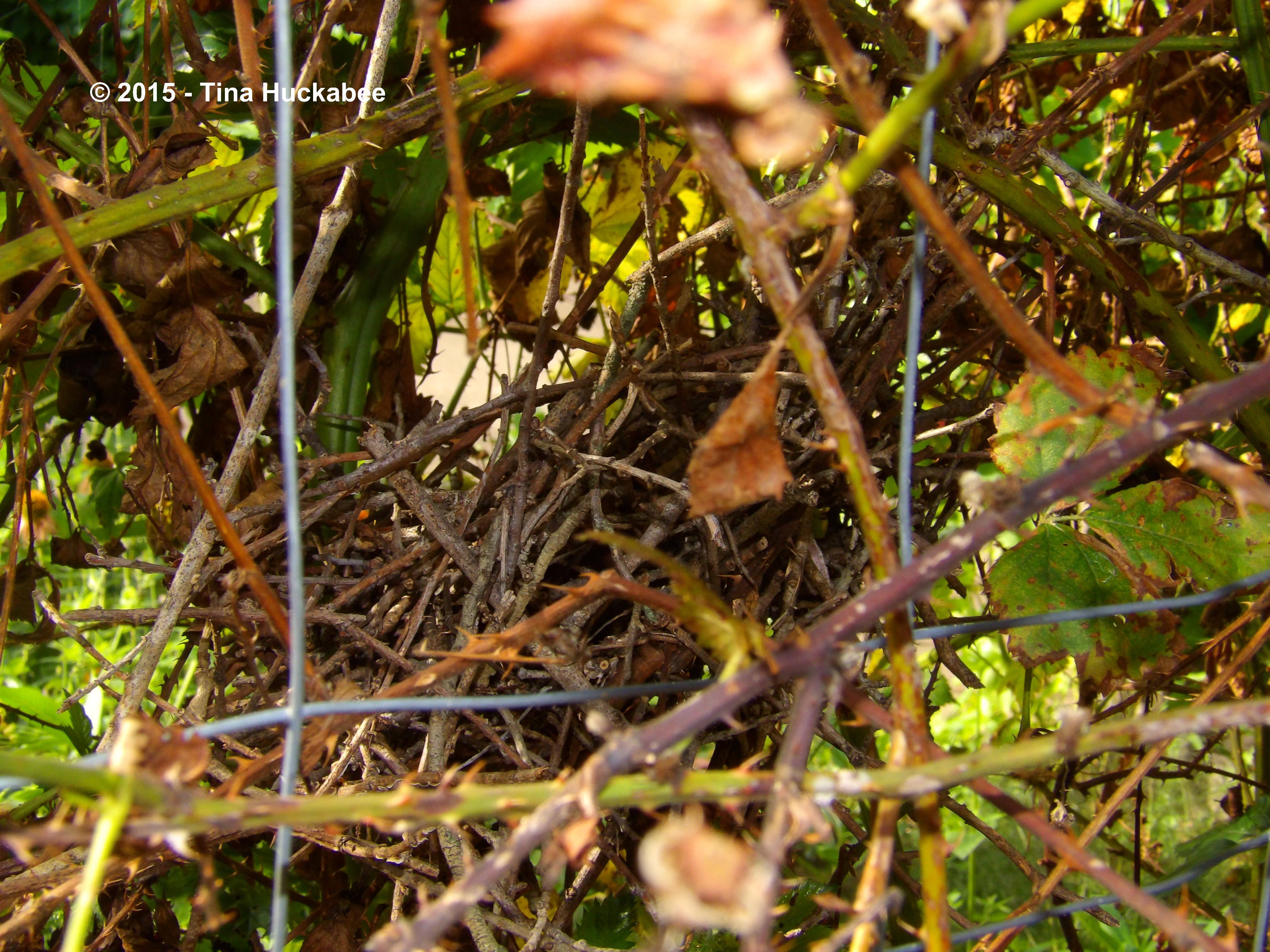
There were a few things that didn’t scamper away from me like this nest that I discovered while pruning the blackberry bramble.

IMGP9214.new

I have no idea who this belonged to and I don’t know when it was built.  I didn’t see it during blackberry season (May), so I assume it was built afterwards.  I wonder what happened to the builders and/or the residents?

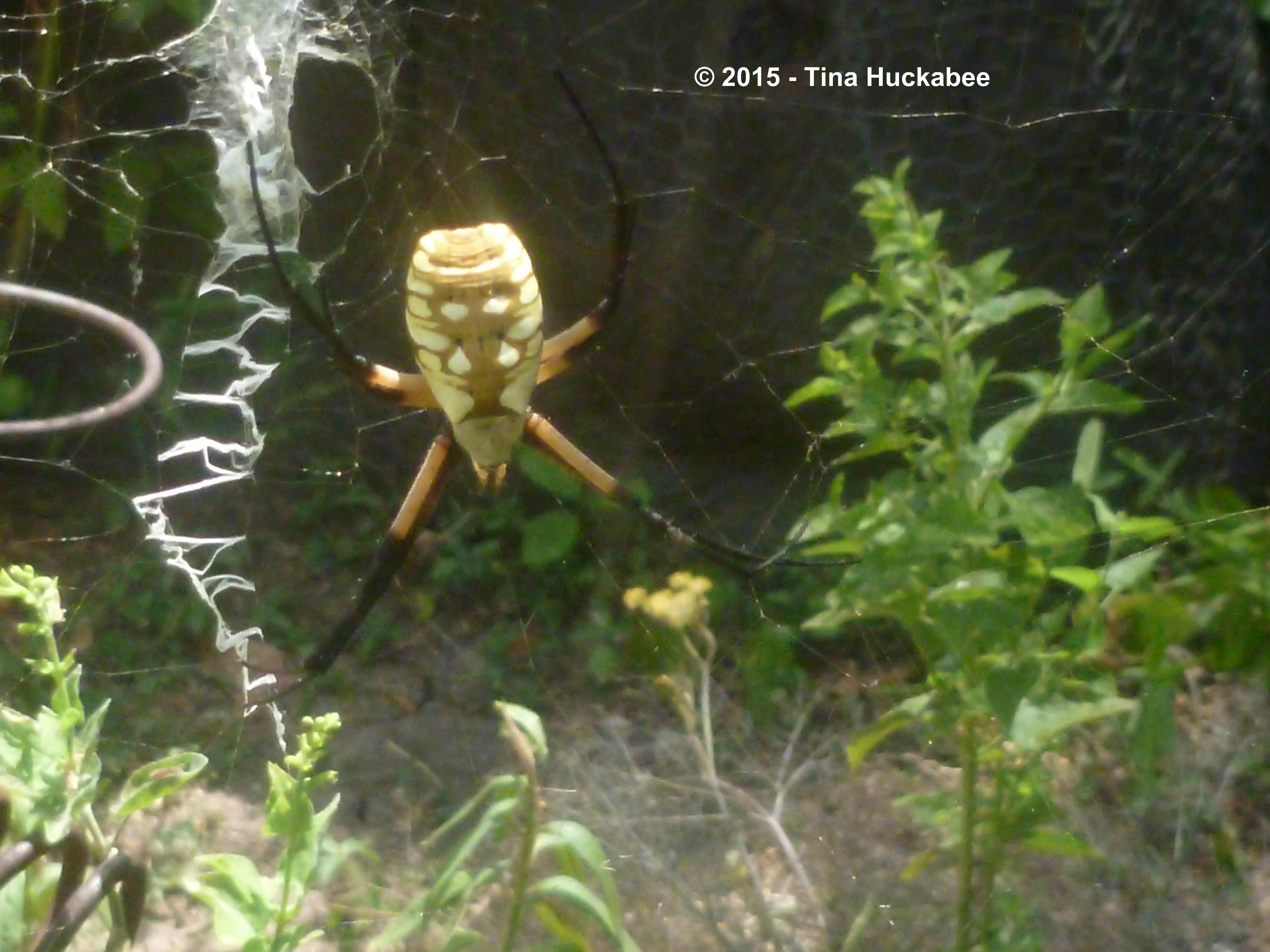
On the other side of the blackberry vine this beauty has built a lovely summer home.

P1070472.new

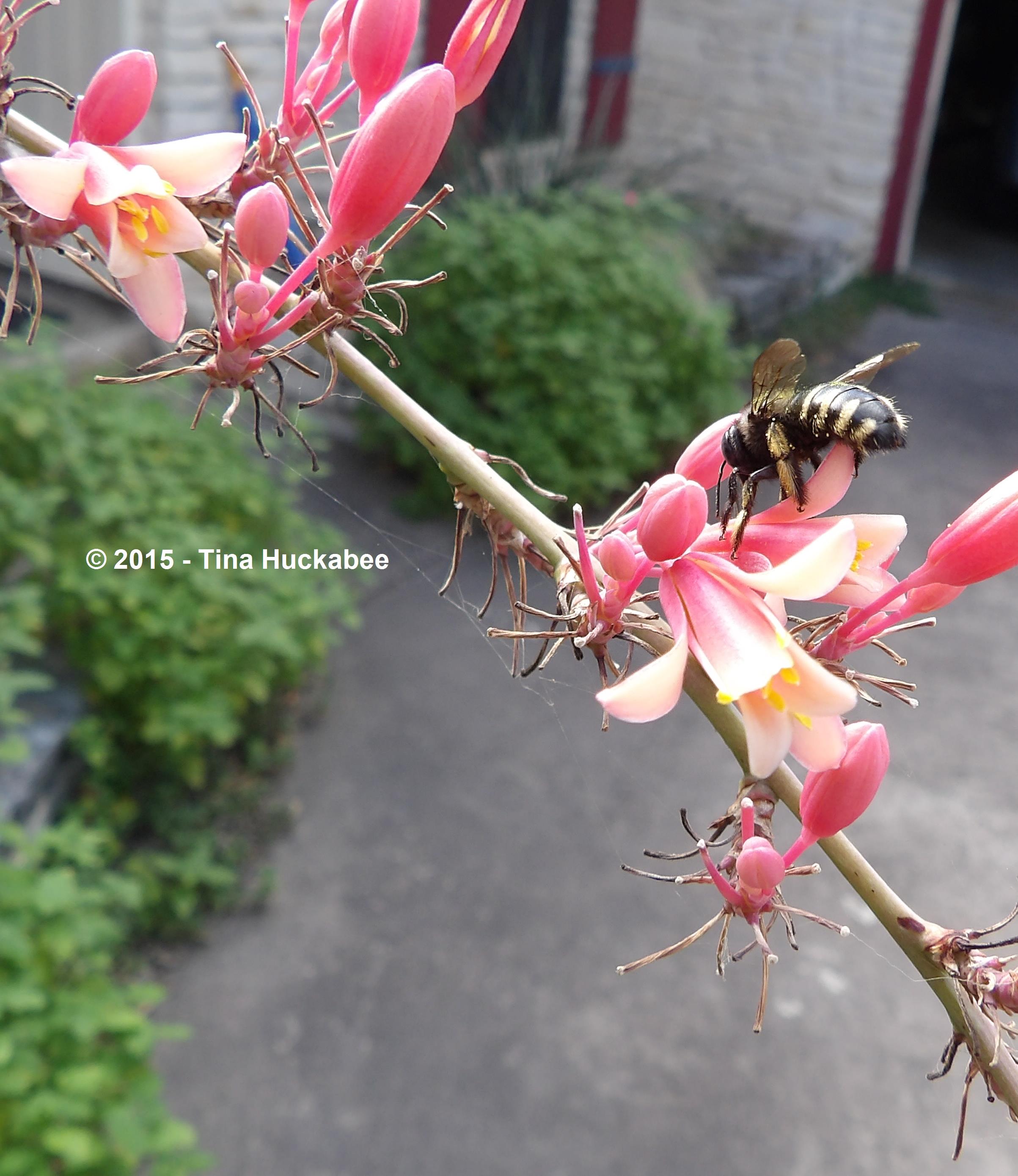
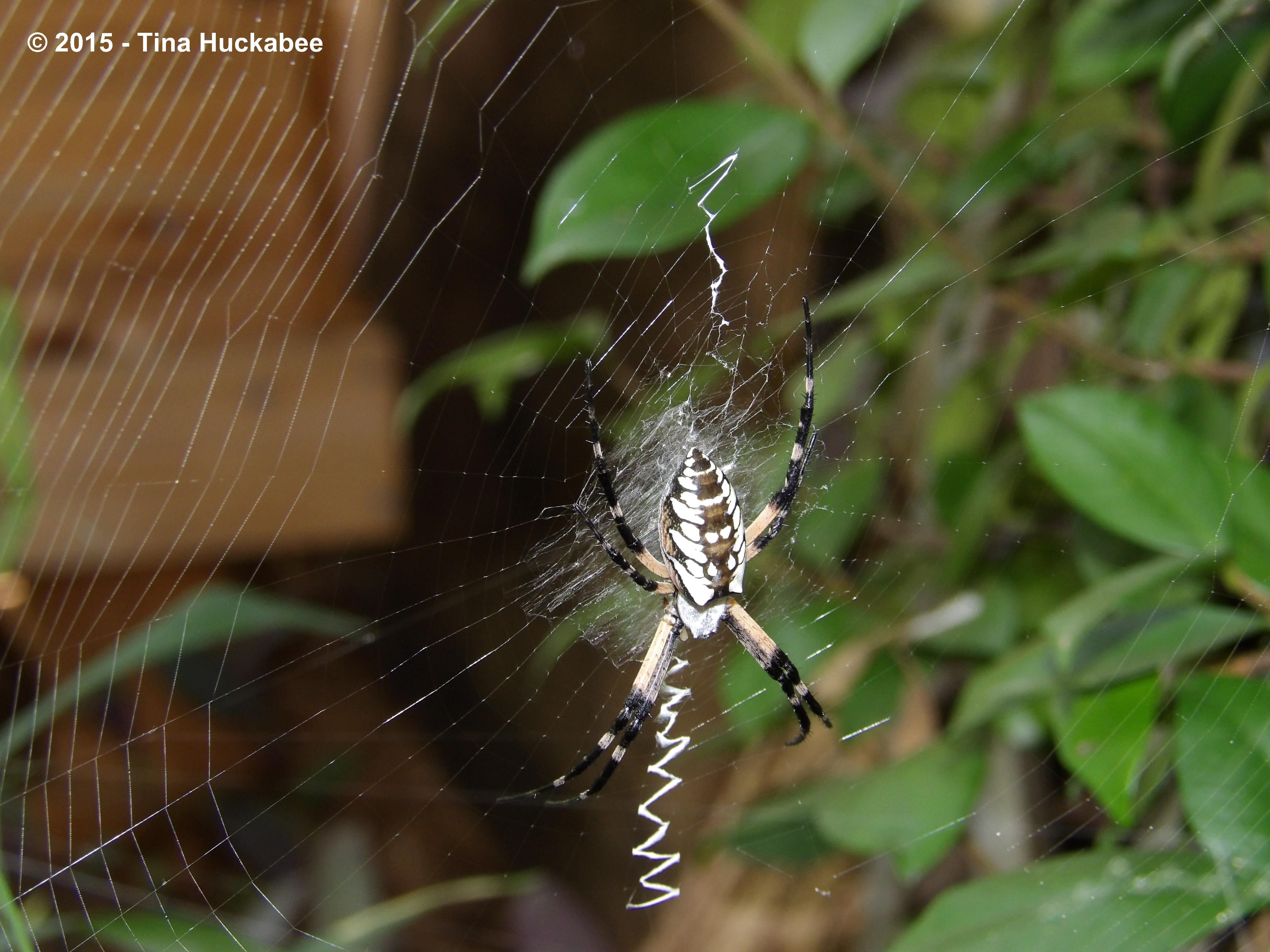
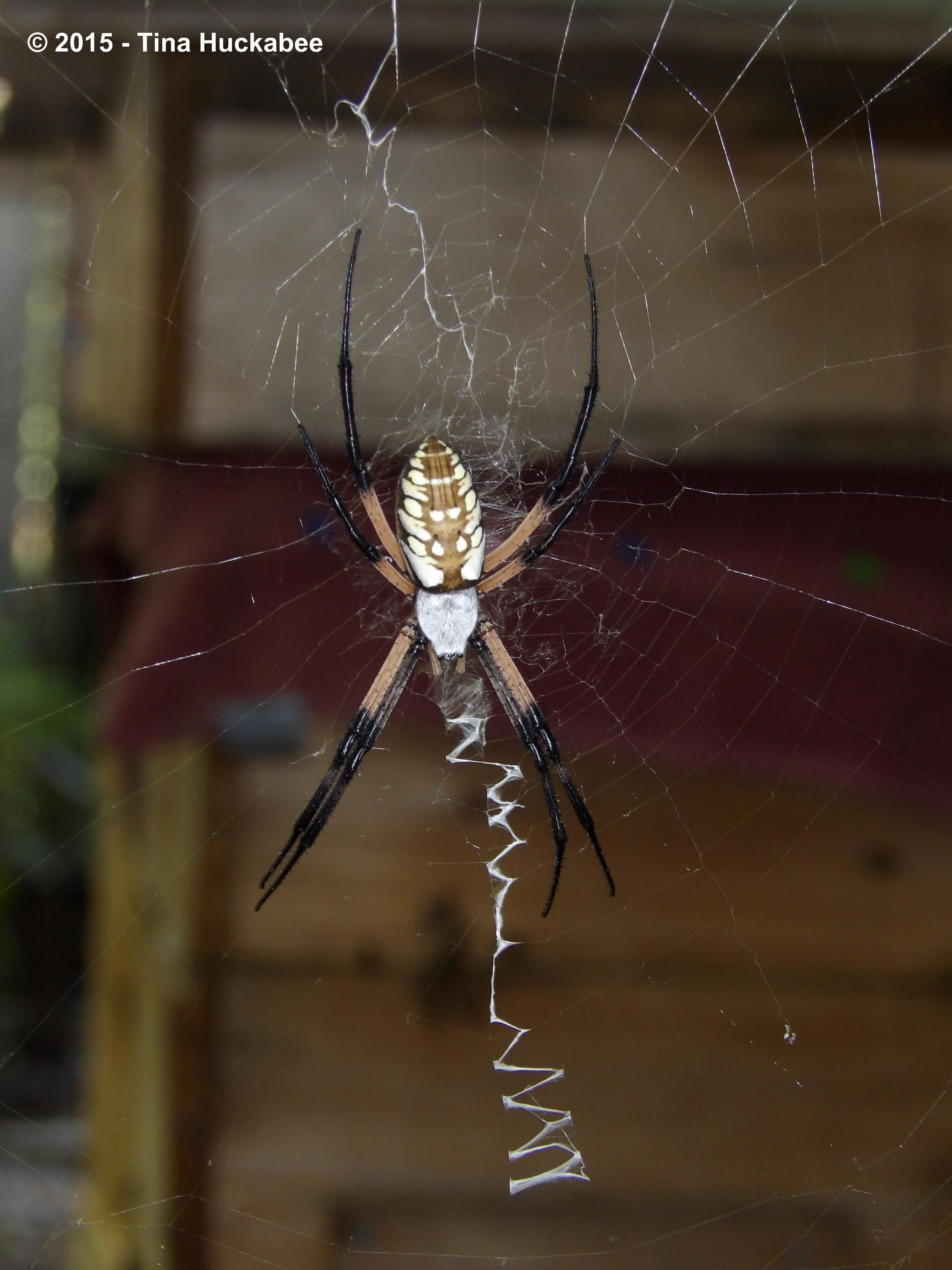
A deadly home though for anyone who bumbles into her webbing, but I welcome these common garden spiders, the Black and Yellow Argiope, Argiope aurantia.  I saw that she caught some of the insects that were chewing on some of my veggies and milkweed plants which are nearby.   I definitely have mixed feelings about her hunting as I know she also caught at least two of my beloved Horsefly-like Carpenter Bees, Xylocopa tabaniformis,  like this one.

IMGP9637_cropped_2406x2779..new

Another Black and Yellow Garden spider set up shop in the back garden, as well.  If you’re a regular reader, maybe you’ll recognize the wooden structure in the background?

IMGP9387.new

Yup, she hunting honeybees and I know that she caught at least one.  No doubt, there were others ensnared in her web.

IMGP9674.new

It’s been a couple of years since I had these spiders in my gardens; some years they’re common, some years not.  I take a hands-off approach to spiders, insects and most critters in the garden.  Even with a very compromised local environment (lots of sterile lawns and few pollinator gardens), my garden space is healthier and relatively balanced if I let everyone do their thing, even if it means eating some of my favorite insects.

Sniff.

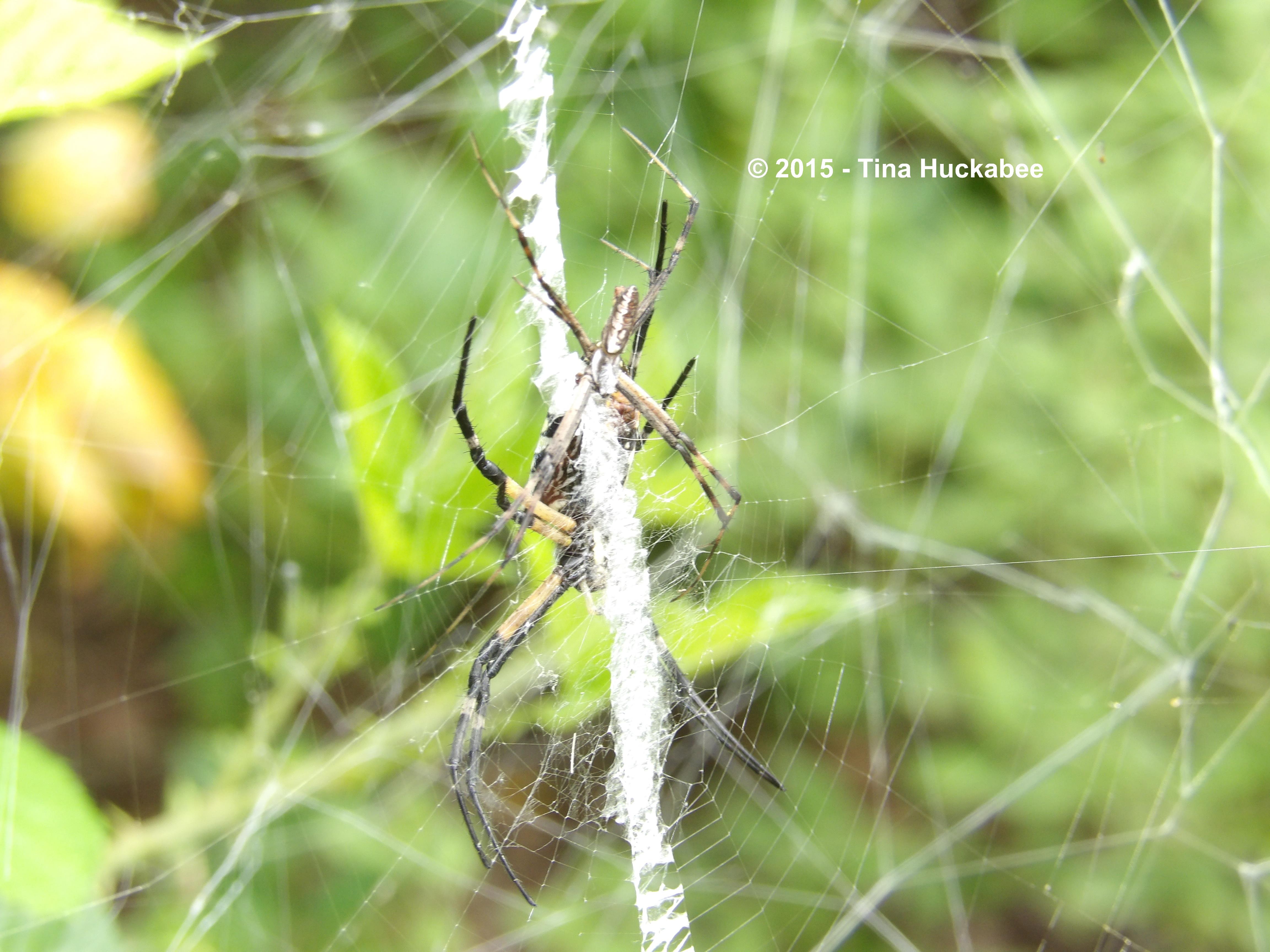
The male spider is much smaller and cruises around gardens,

IMGP9373.new

….looking for a female to mate with.  I guess these two are enjoying their summer fling.

IMGP9371_cropped_2591x3106..new

More spiders in my garden’s future….

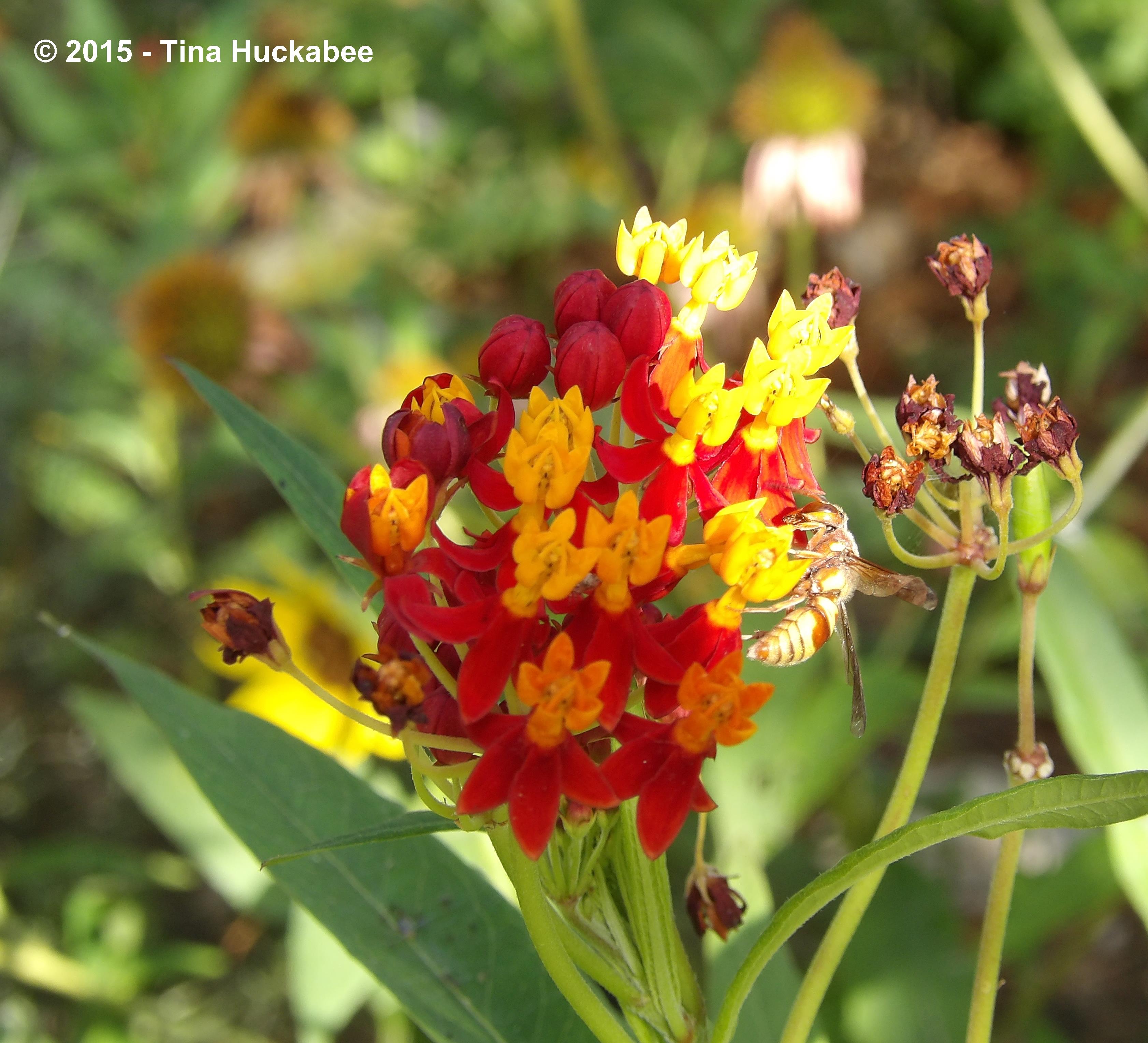
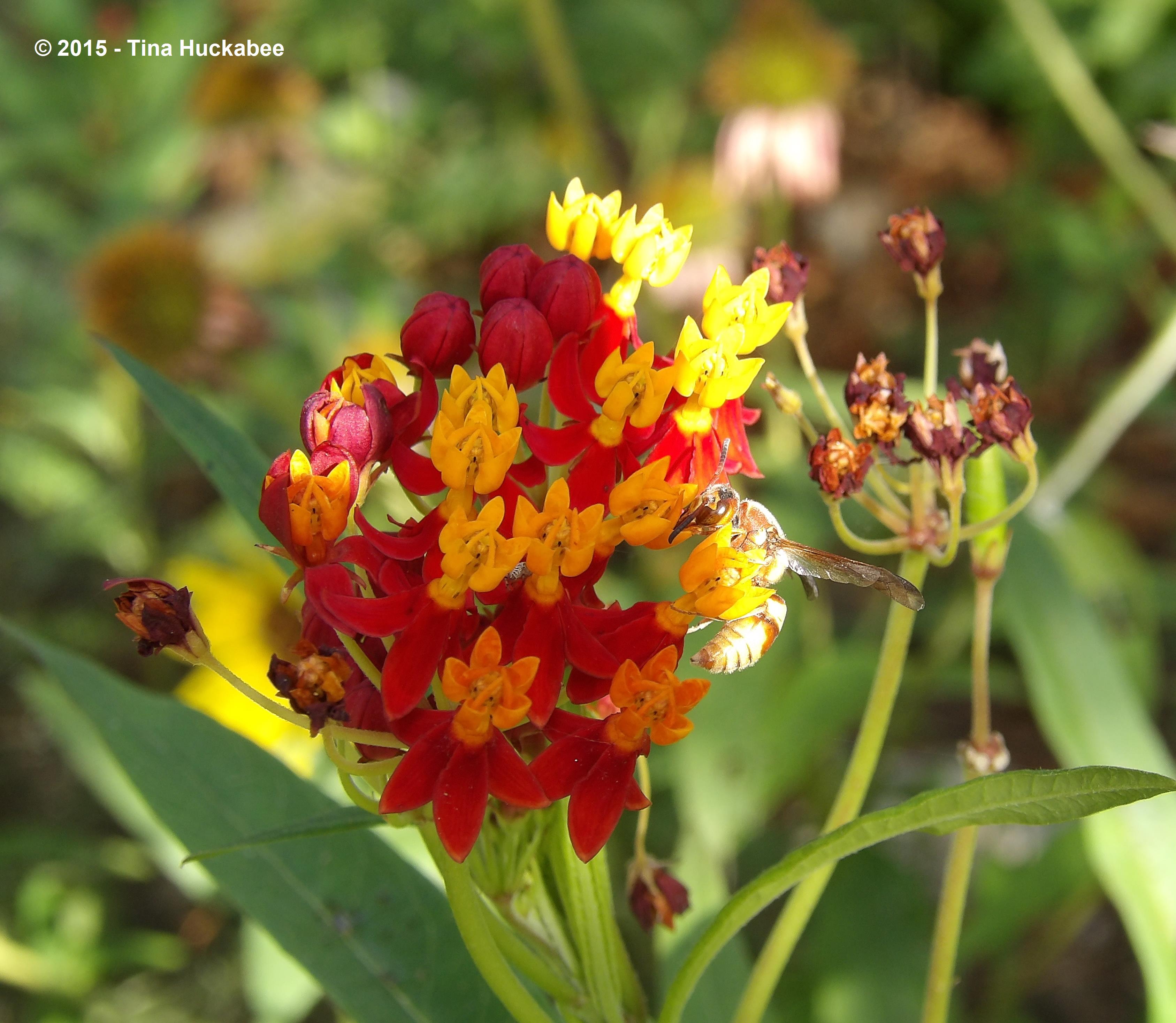
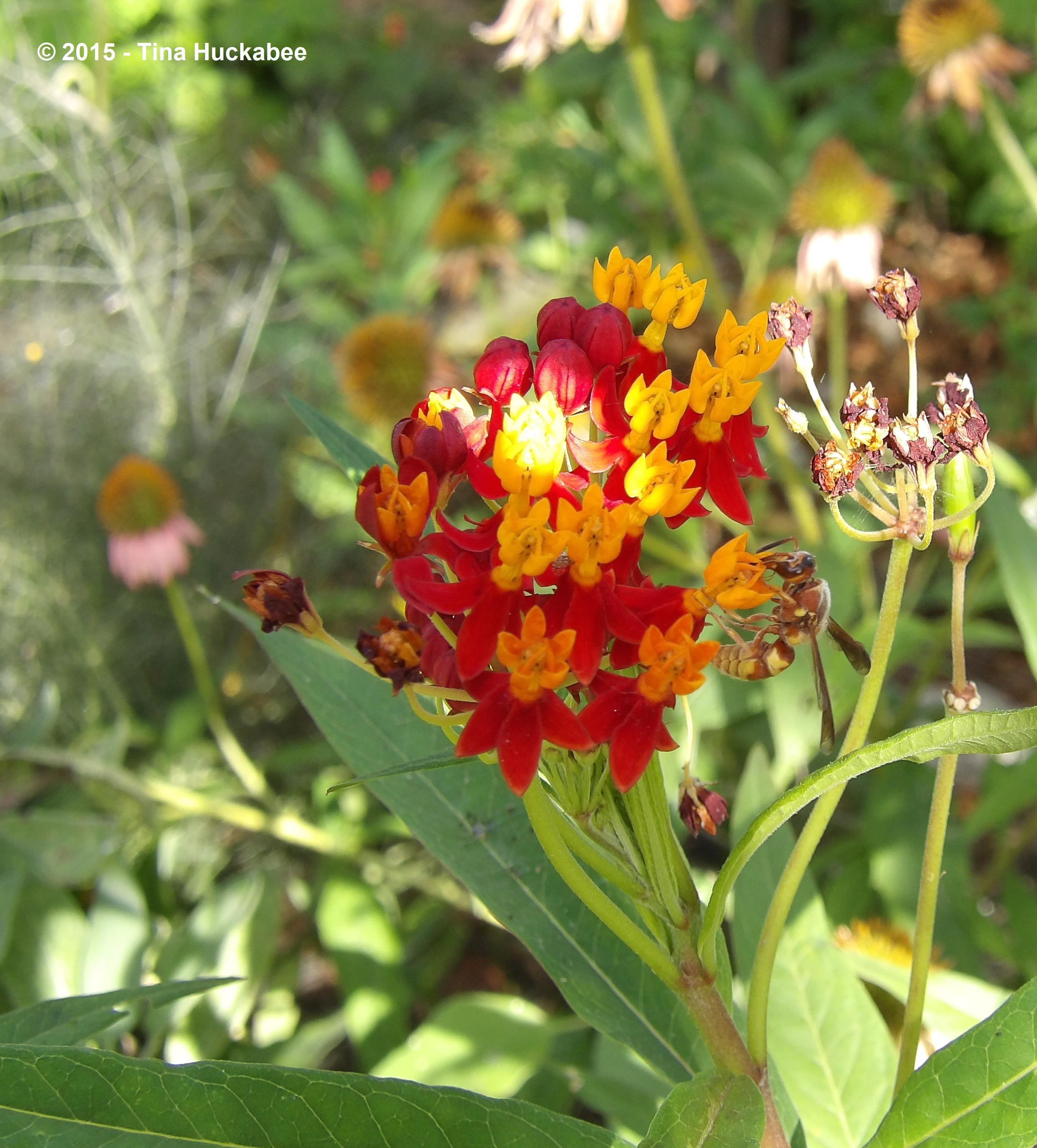
Other beneficial garden inhabitants are wasps, like this social Paper Wasp, Polistes exclamans.
IMGP9635_cropped_3365x3056..new

This insect is widespread in Texas and much of the South. I’ve seen a number of them this past month–resting on leaves, feeding at blooms, and sipping at bird baths.
IMGP9634_cropped_3374x2936..new

IMGP9633_cropped_2756x3051..new

Paper Wasps are  nectaring insects and categorized as social because they live in groups with a breeding queen and workers, though many wasps are solitary and are also common in Texas gardens.  These particular Paper wasps build nests that are made of cellulose, either out of wood or paper, with cells similar in design to honeybee combs; nests hang from a single stem attached to some object. I know I’ve seen the nests around my property, but of course couldn’t find one to photograph for this post. However, you can see one here.

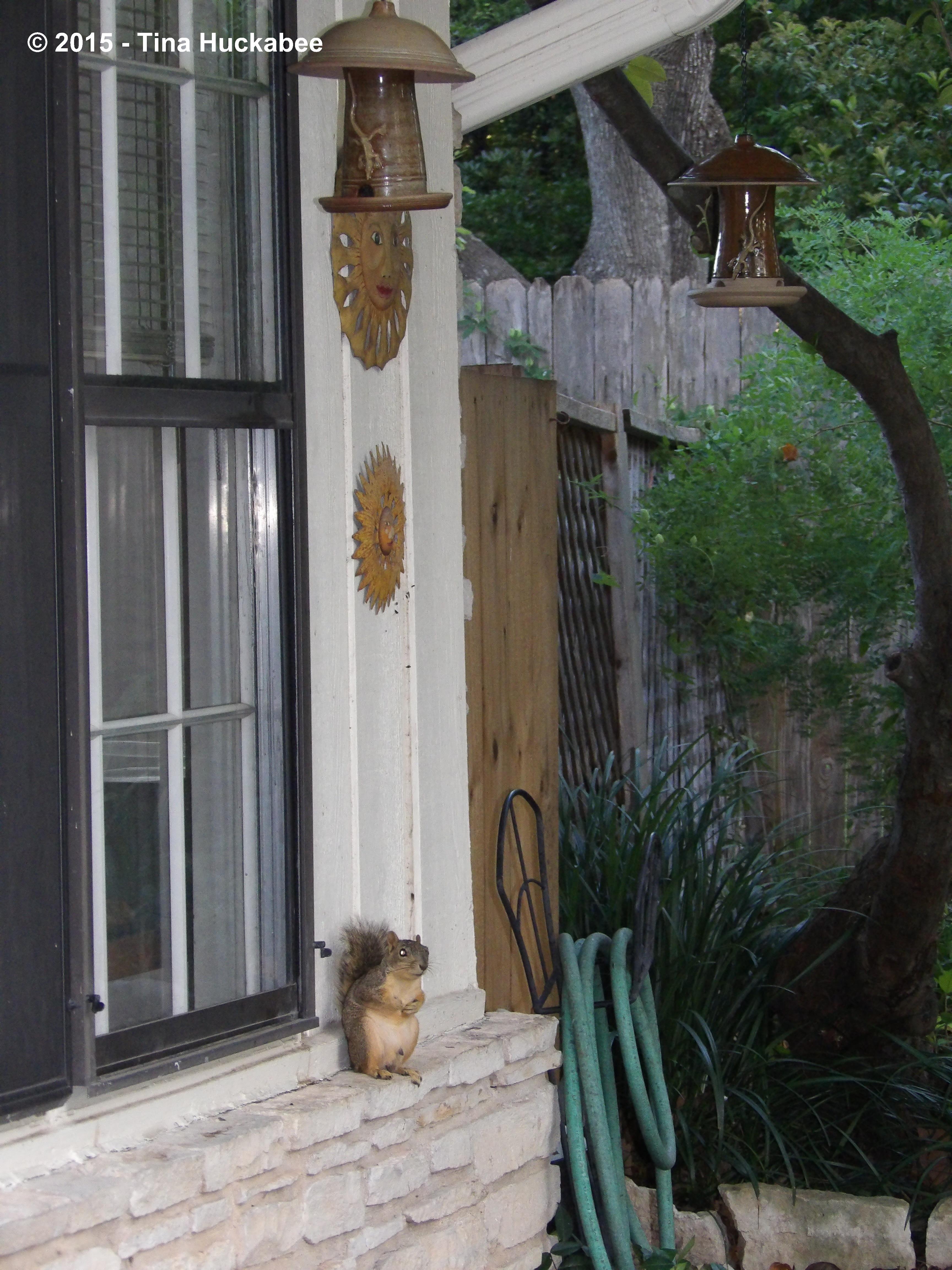
The squirrels are not happy with me. I don’t always fill the bird feeders, but I am this summer. By default and population, I’m also feeding the squirrels.   Several of these enterprising rodents began climbing up and then hanging onto the solar screen while nibbling seeds at the ceramic feeder in front of the kitchen window. They were emptying this feeder in front of the kitchen window in less than a day.  NOT cool. I finally removed the screen, to their great frustration.  Since then, the screen-vanquished squirrels have tried, in vain, to figure out how to get to the feeder.

Glass is not so easy to hang onto.

IMGP9622.new

One morning, this little guy sat on the window ledge, looking quite despondent at his inability to reach the feeder.  I swear that he had his arms folded and was tapping his foot in annoyance.

It’s a good day when I can out-smart the squirrels.

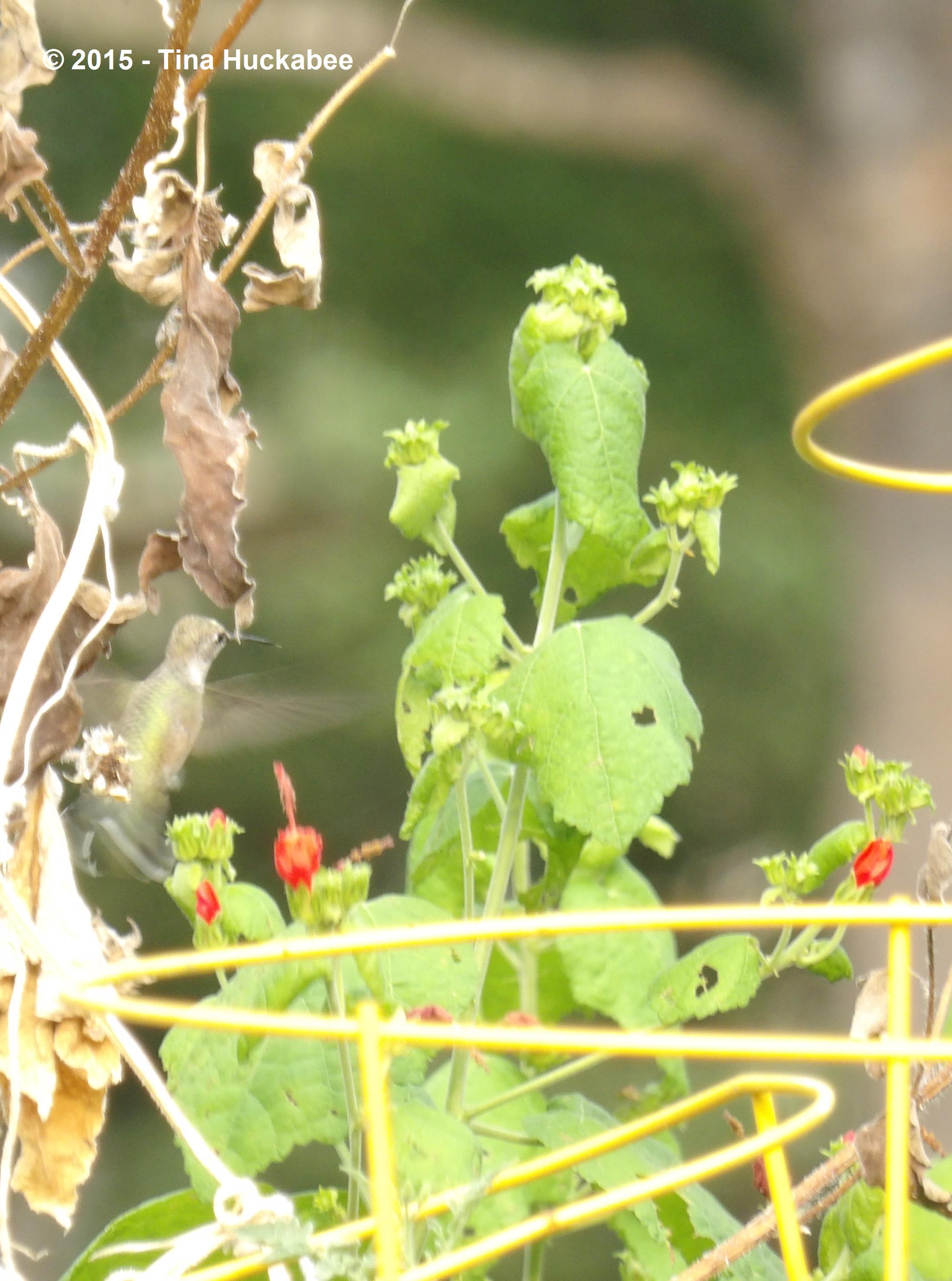
These female Black-chinned Hummingbirds, Archilochus alexandri (or maybe it’s the same one) have visited on a regular basis.  In the first set of photos, the flower-of-choice is the Big Red Sage, Salvia penstemonoides,

IMGP9290.new

IMGP9288.new

IMGP9282.new

…and in this second set, the meal source are blooms of Turk’s Cap, Malvaviscus arboreus.

IMGP9774_cropped_2198x2958..new

IMGP9773_cropped_2875x2295..new

I’ve seen one or more Black-chinned males and male Ruby-throated Hummingbirds-alas, no photos other than those above though.    They’re hard to catch, these winged jewels, but I’m enjoying their visits, however fleetingly, as they feed at the plants they favor in my garden.

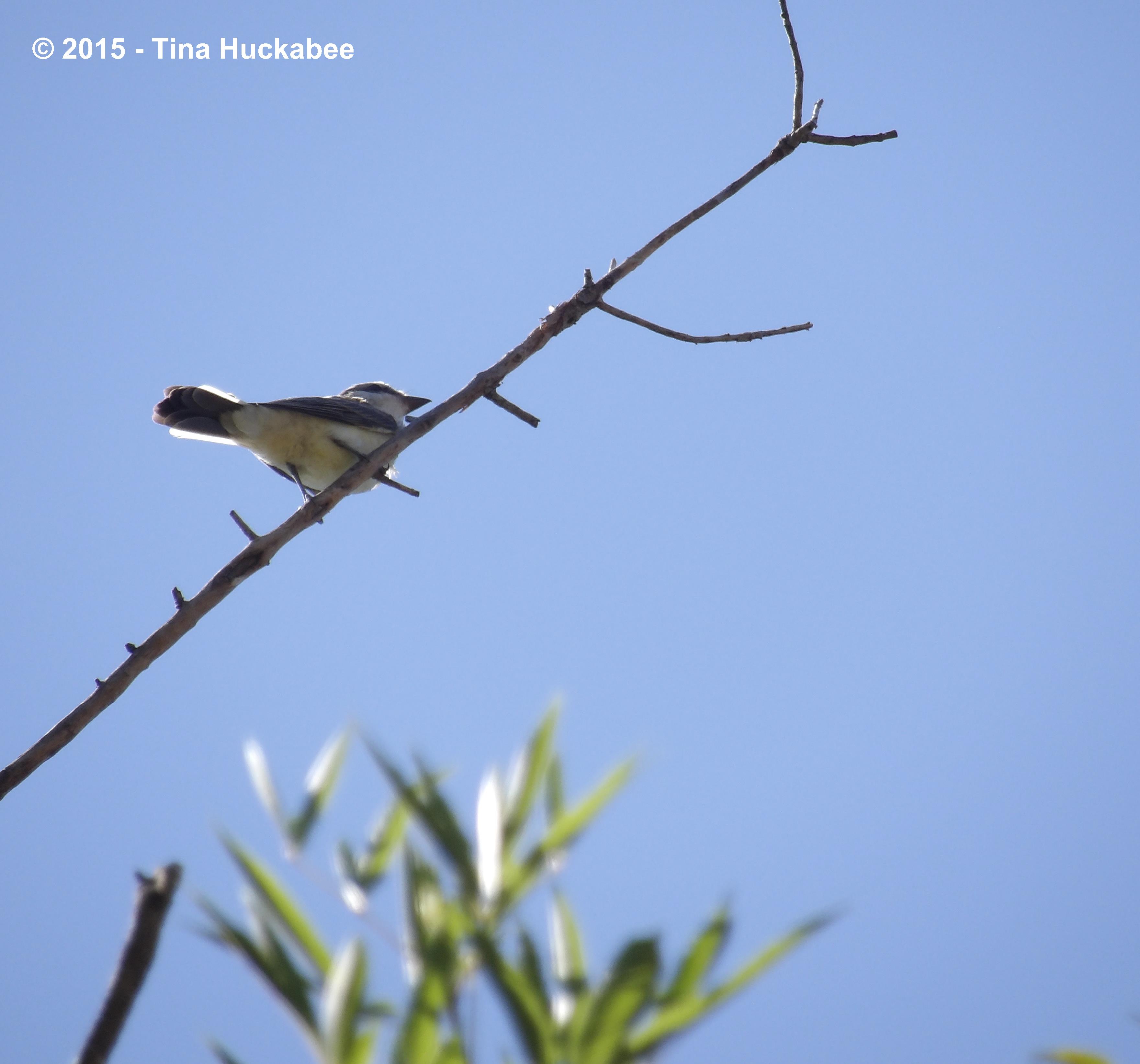
For several days in mid-July, I was  hearing an unfamiliar bird call.  I couldn’t find the singers for the first day or so, then finally spotted the jazz-like crooners.

IMGP9688_cropped_3521x3286..new

The Logger-head Shrike, Lanius ludovicianus, is a year-round resident of much of the United States, though I’ve never seen one–ever.  I was surprised to see several of them, though all I could photograph was their lower halves, due to their perching high in neighbors’ trees around my gardens.  They have a varied diet, but also eat insects.  Were they after my honeybees?  Hmmm.  I heard them, finally saw a few, then I left town for a bit.  I’ve heard none since.  Too bad.

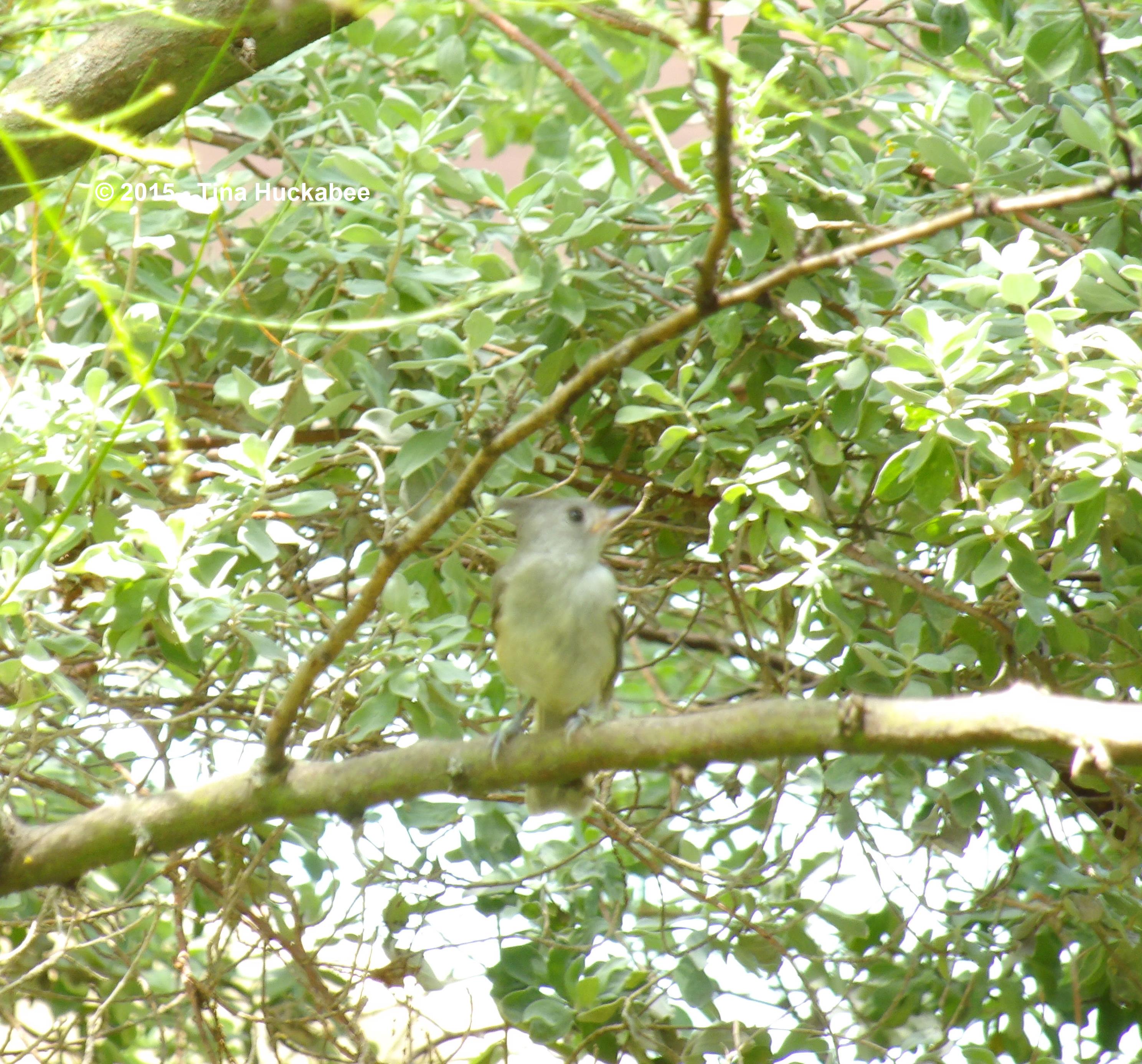
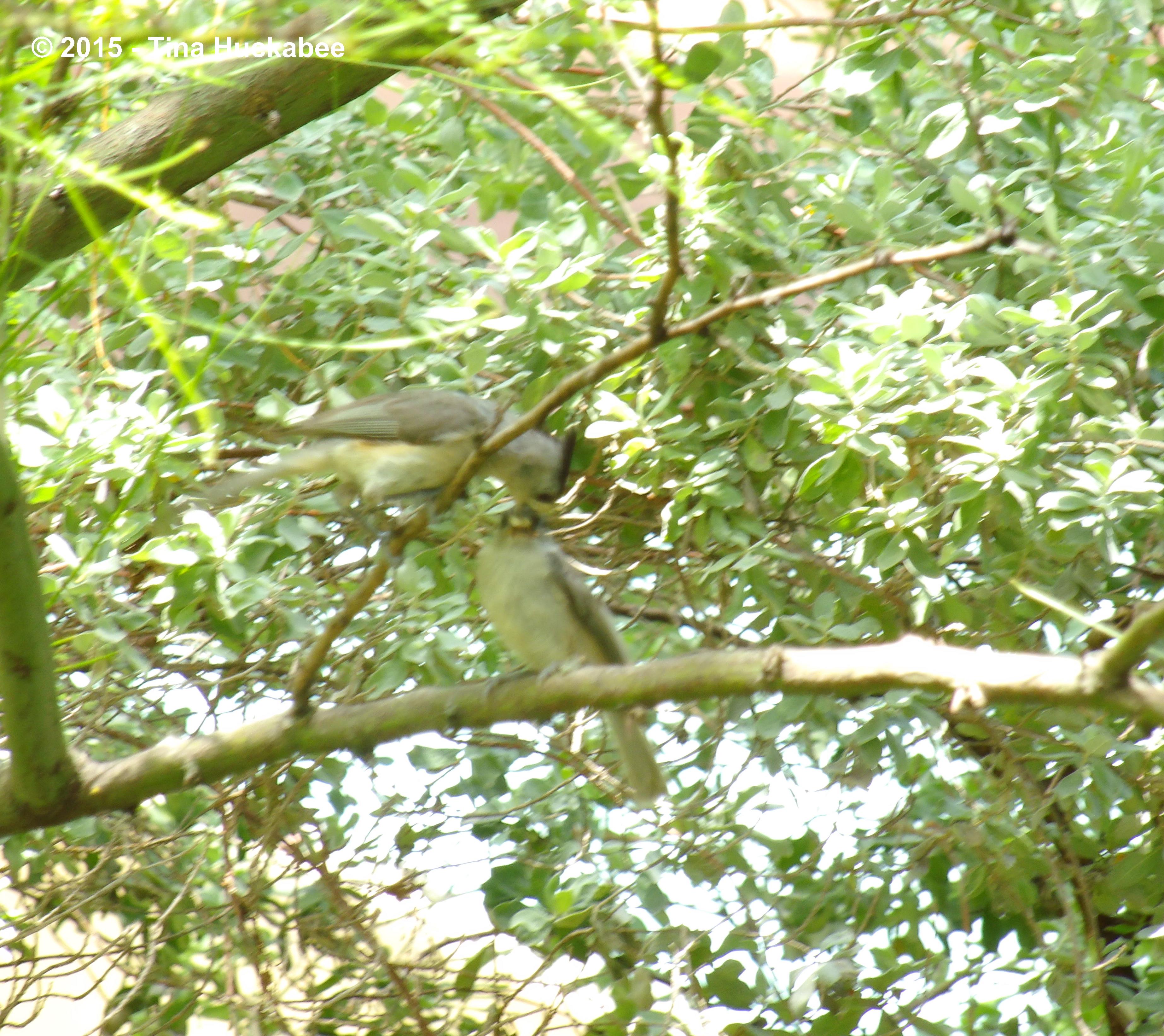
I loved watching this parent  Black-crested Titmouse, Baeolophus atricristatus, feeding a young’n.

IMGP9259_cropped_2927x2710..new

IMGP9260_cropped_2976x2774..new

IMGP9268_cropped_3692x3286..new

Actually, I guess it was the young’n that I really watched, as he/she looked this way and that for this parent to show up with the seed.  Adorable, and gratifying that there’s enough to feed the next generation.

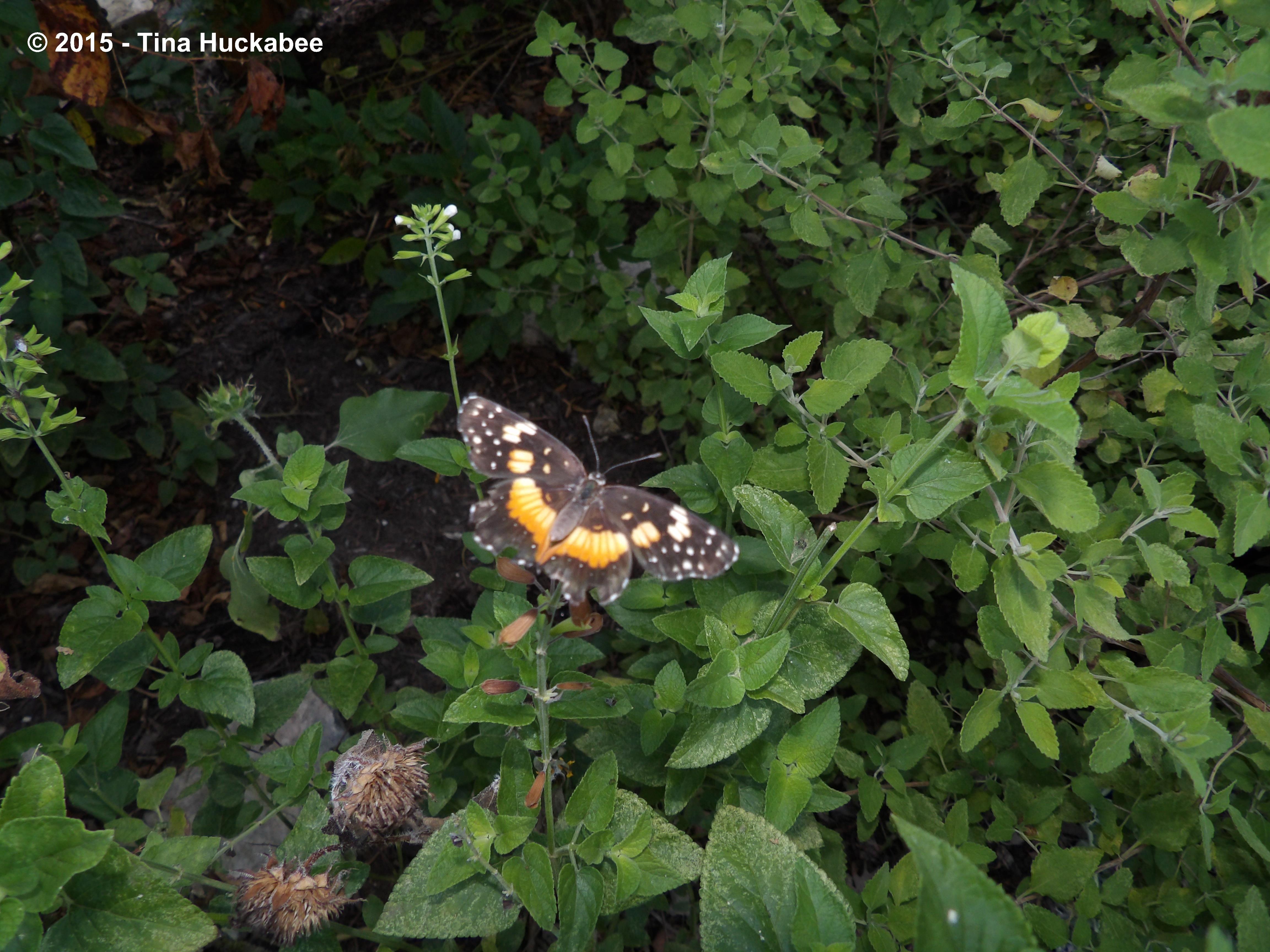
This lovely little Bordered Patch butterfly, Chlosyne lacinia, flitted in the garden for days before I could catch this mediocre shot.

IMGP9610.new

The host plant for this pretty are sunflowers, which are plentiful in my gardens this summer.

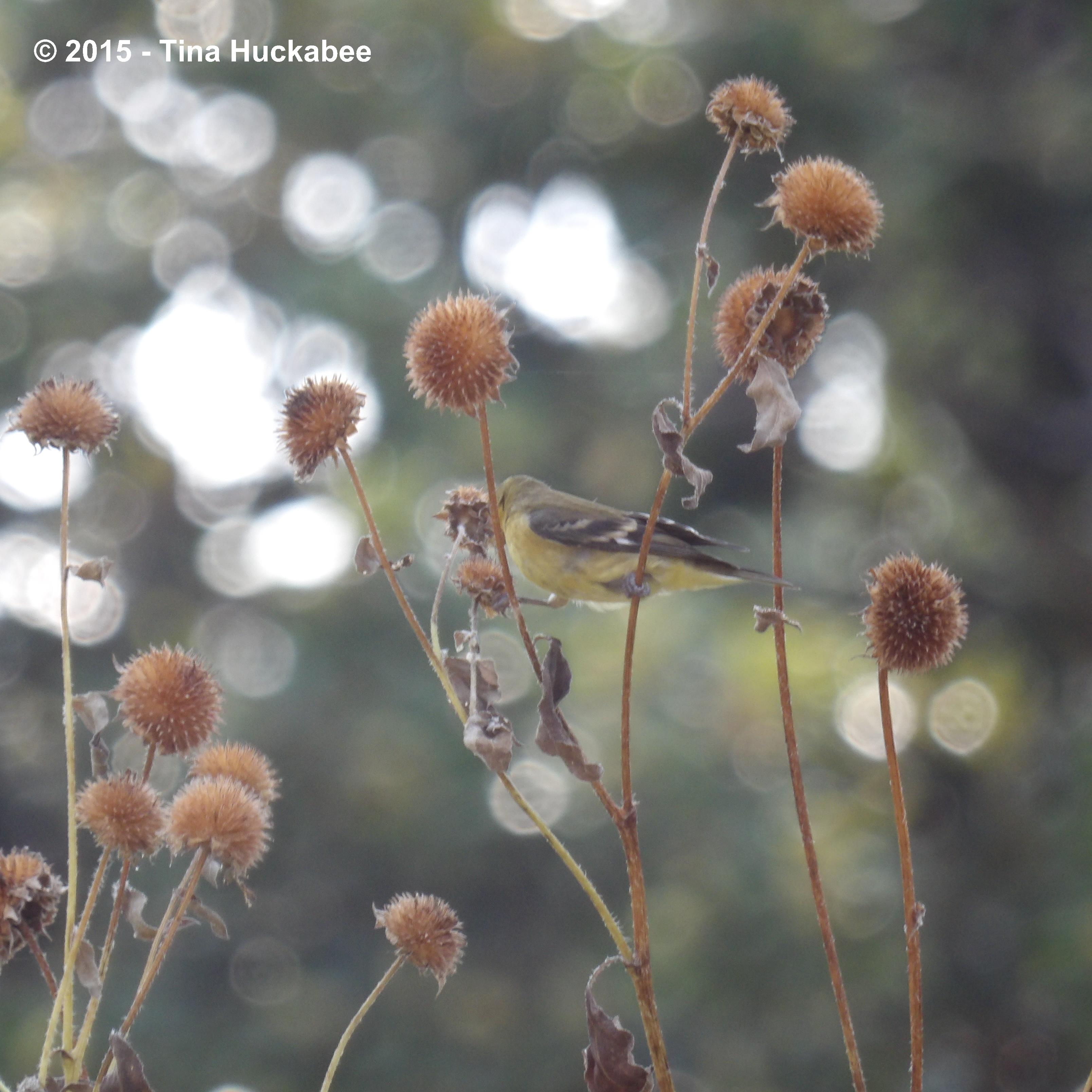
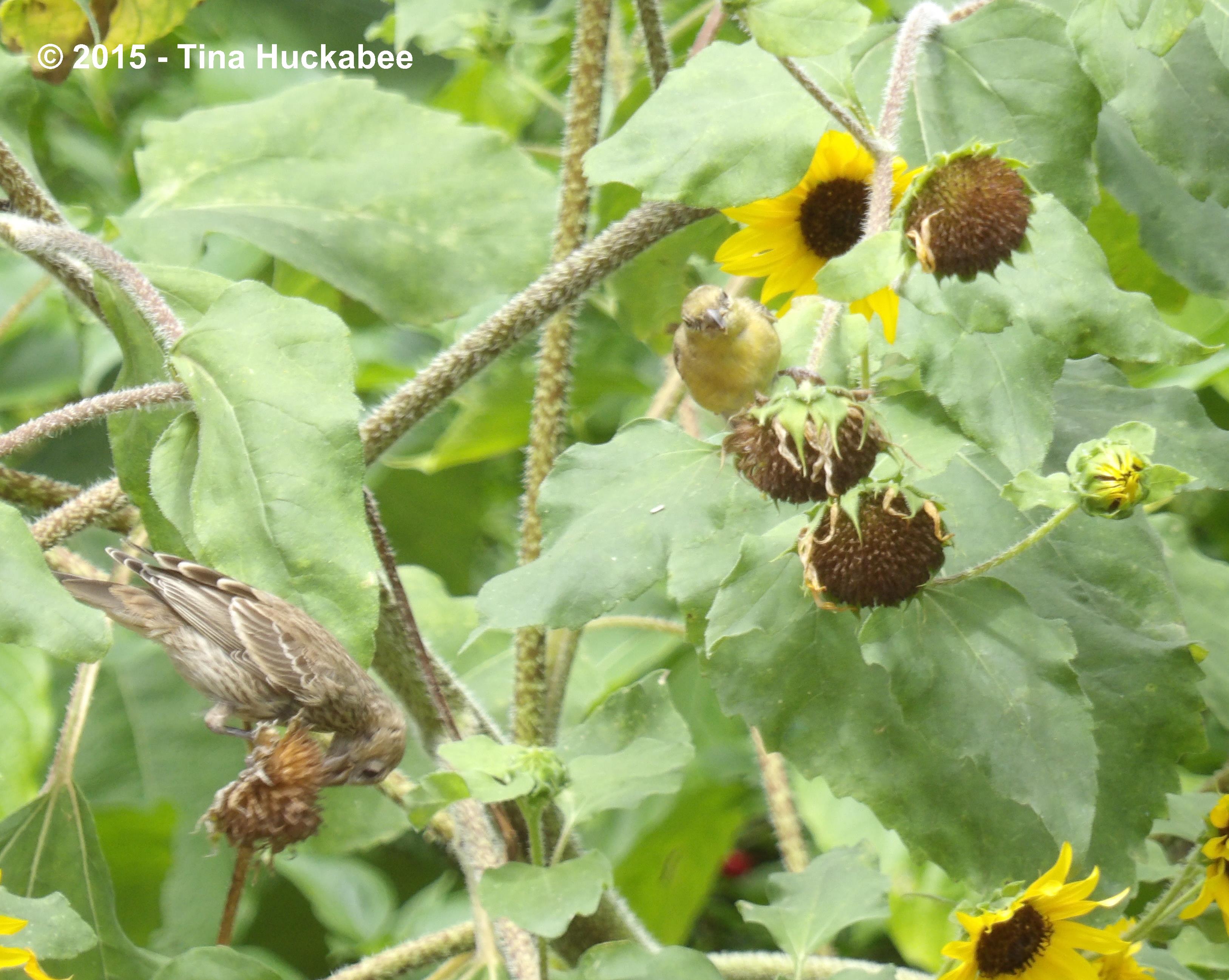
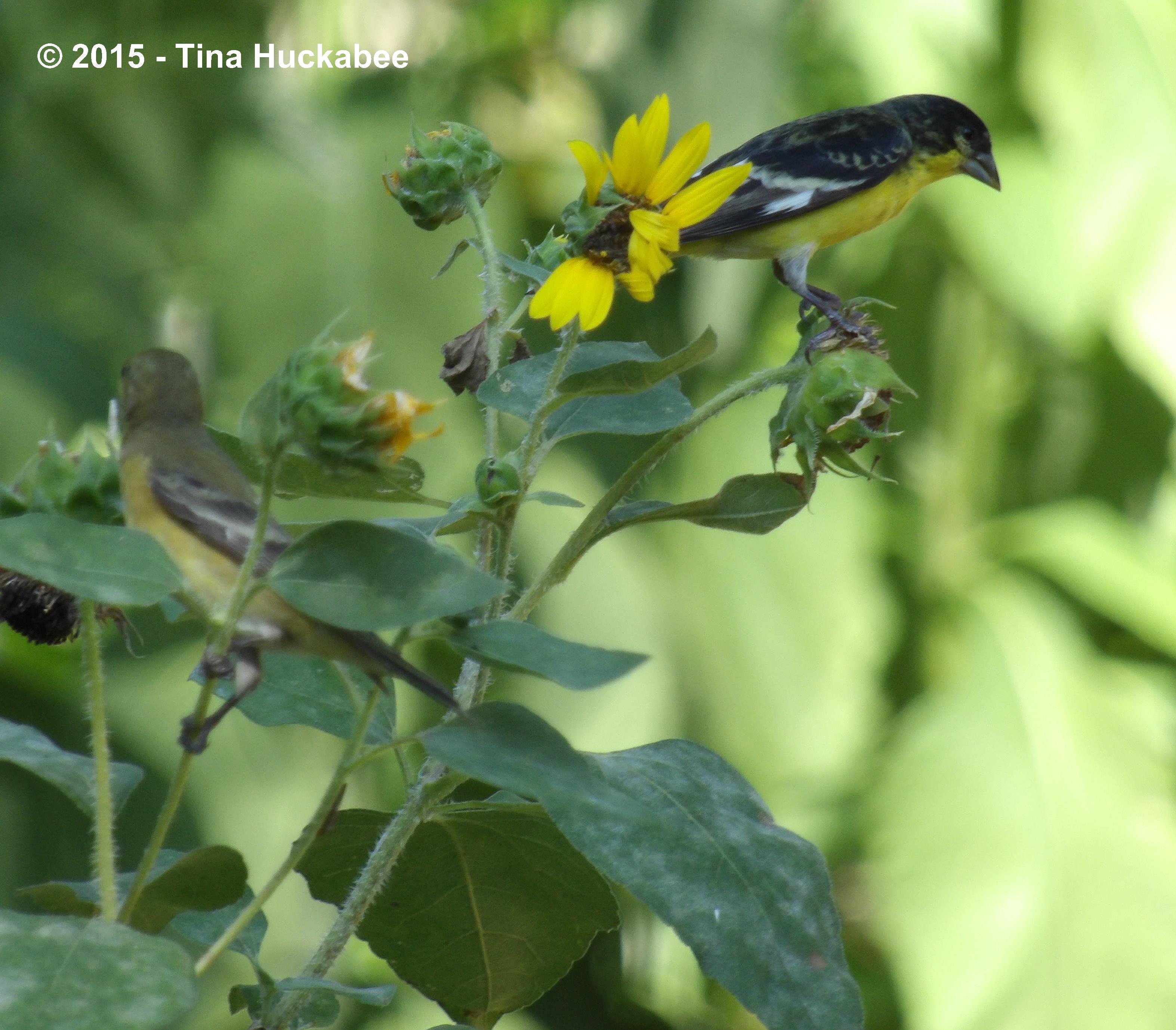
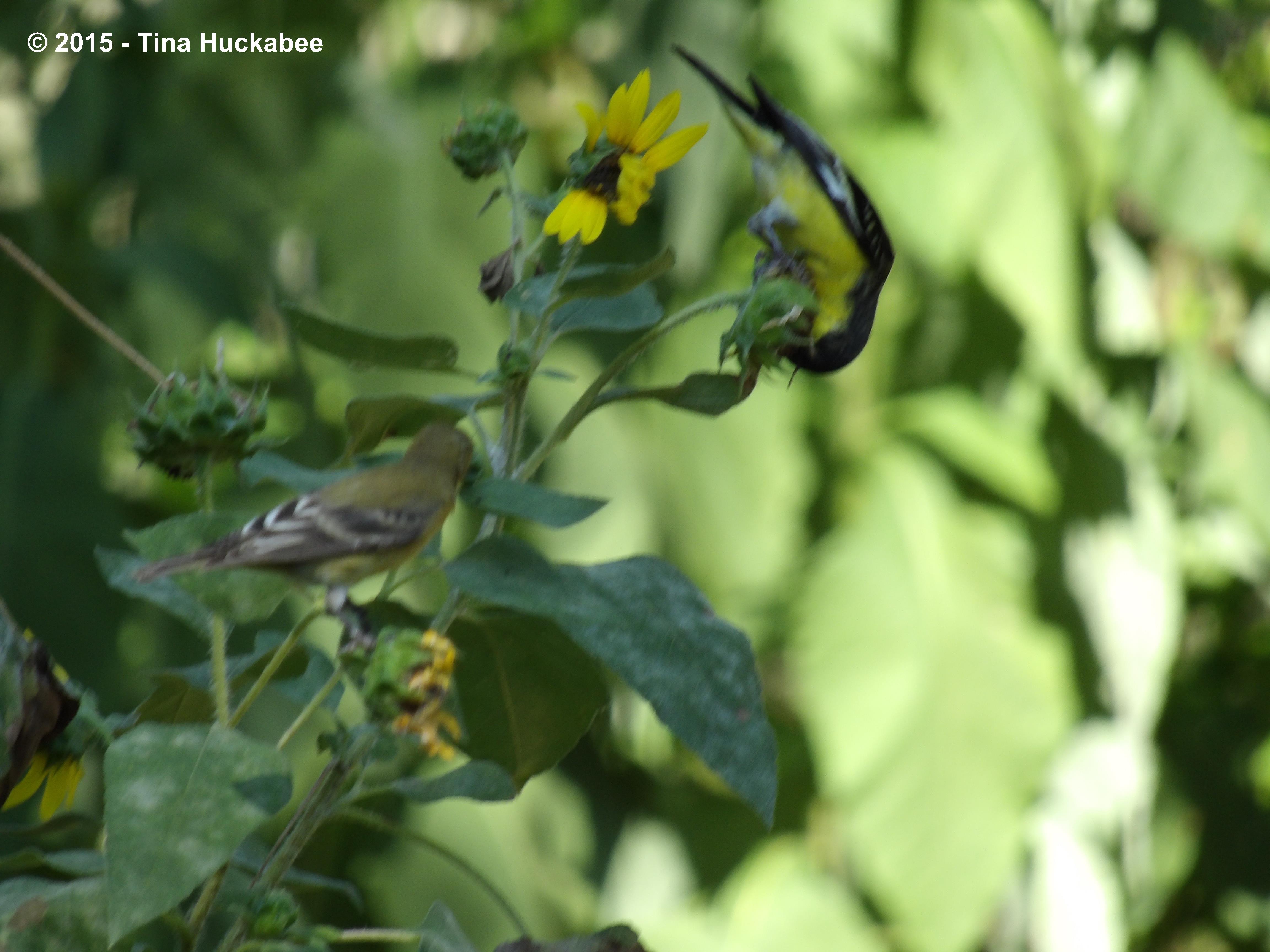
Feeding on the going-to-seed sunflowers are the Lesser Goldfinch, Spinus psaltria, gang–boys and girls alike.

IMGP9715_cropped_3216x3216..new

IMGP9653_cropped_2700x2793..new

IMGP9659_cropped_3147x2755..new

Lessers love the seeds of Asteraceae plants, like sunflowers.  I chuckle as they hang upside-down for their food; it’s a neat trick, though I’ll take my meals at the table, thank you very much.

IMGP9658.new

These guys-n-gals will soon finish up with the tall spring-germinating, summer-towering sunflowers.  I’ve already pruned a couple of stalks because there was little left on them, either in bloom or seed form.  But several sunflowers still have viable blooms, which the honeybees and butterflies are feeding on and seeds which the Lessers and also House Finches and Sparrows, are enjoying.

IMGP9215_cropped_3254x2595..new

To the “pretty plant” gardener–one who wants the sterile, pristine lawn or perfect, non-insect attracting bloom-n-foliage plants, I’m sure my sunflowers look hideous.  But to myriad wildlife–bees, butterflies, moths, syrphid flies, and a variety of birds, the stalks are beautiful for their life-giving  bounty.  And that is what wildlife gardening is all about.

I lamented that I didn’t have much to show and tell for this month, but I guess there was enough. Thank you critters–for your presence and for enlivening and completing my garden.

Kudos to all of you who garden for wildlife, no matter how much or little:  you’re part of the solution.  I hope your gardens received wildlife visitors this month and that you will join in posting for August Wildlife Wednesday. Share the rare or mundane, funny or fascinating, beneficial or harmful critters you encounter. When you comment on my post, please remember to leave a link to your Wildlife Wednesday post so readers can enjoy a variety of garden wildlife observations.

Happy wildlife gardening!

**Just a quick and timely addendum. This article is from the Washington Post via. Cornell Lab of Ornithology. A must read for anyone who understands the wastefulness and pointlessness of the American lawn.

Also, the original, beautifully written essay from Ohioan Sarah Baker about her experience in allowing her property to become a wildlife habitat.