I guess the adage if you build it, they will come, is true, or at the very least when building insect hotels, the saying suggests some level of accuracy. For February’s Wildlife Wednesday, I wrote about our building and placing of two insect/bee hotels in the garden. While building these things isn’t necessary to provide homes and nesting spots for bees and other insects, they are fun, quirky additions to a garden and they lend some architectural gravitas to a wildlife habitat.
So far, the houses/hotels have been a big hit with some of the native bees!
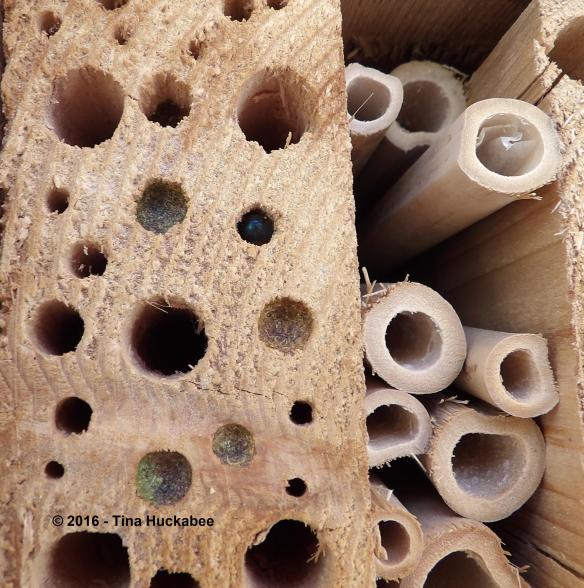
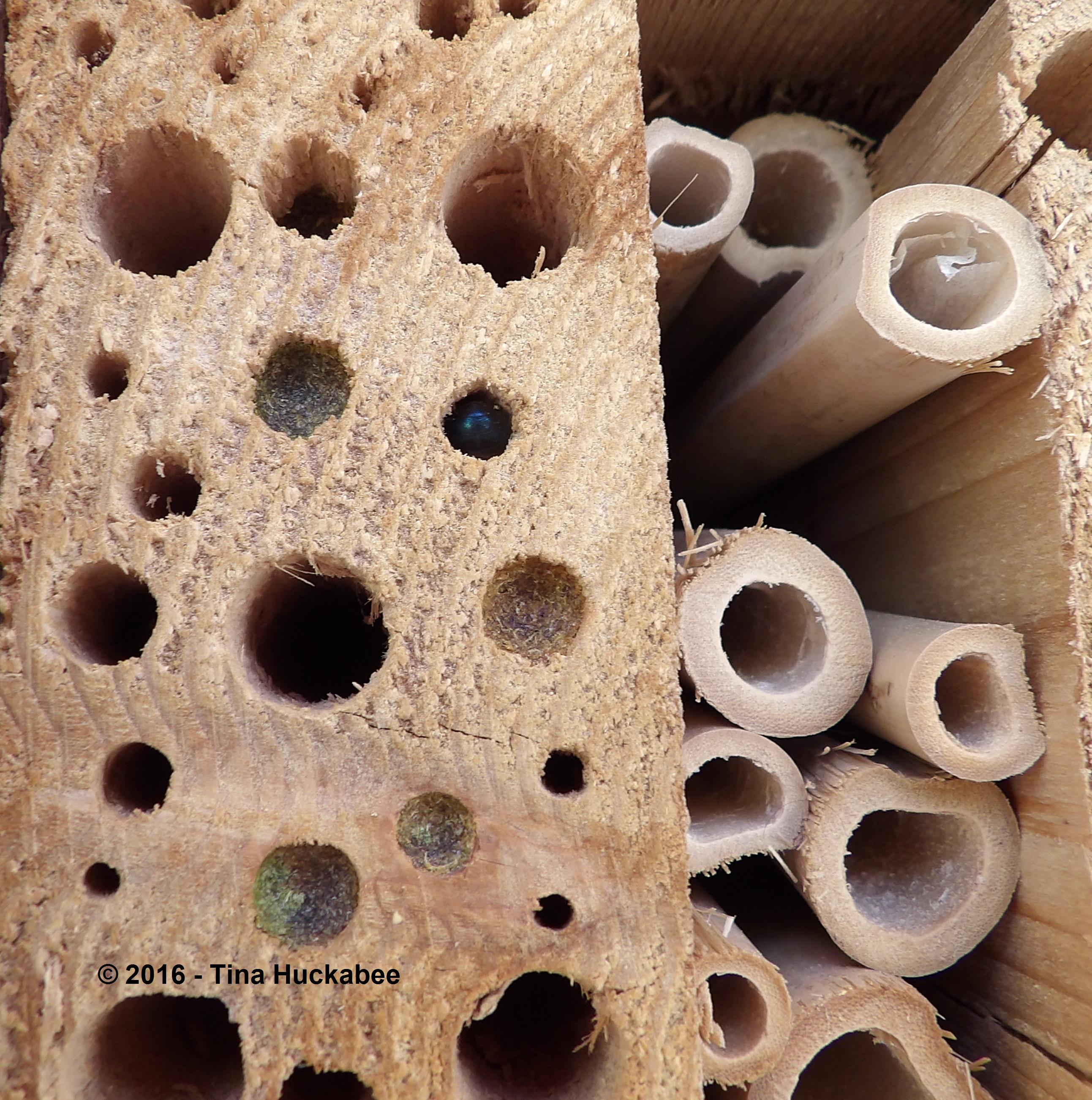
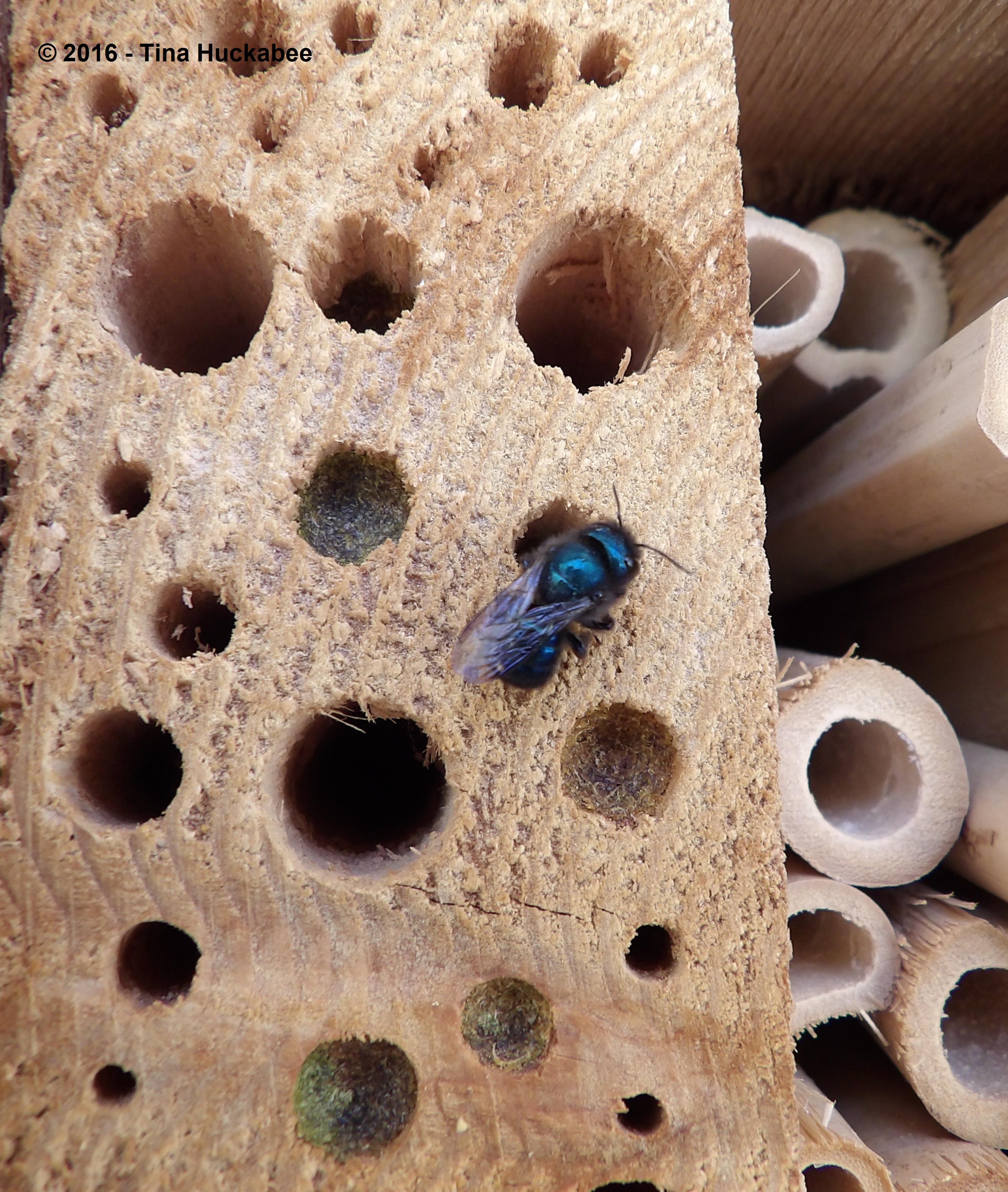
Some of the bee holes are filled providing protection and nourishment for the larvae.
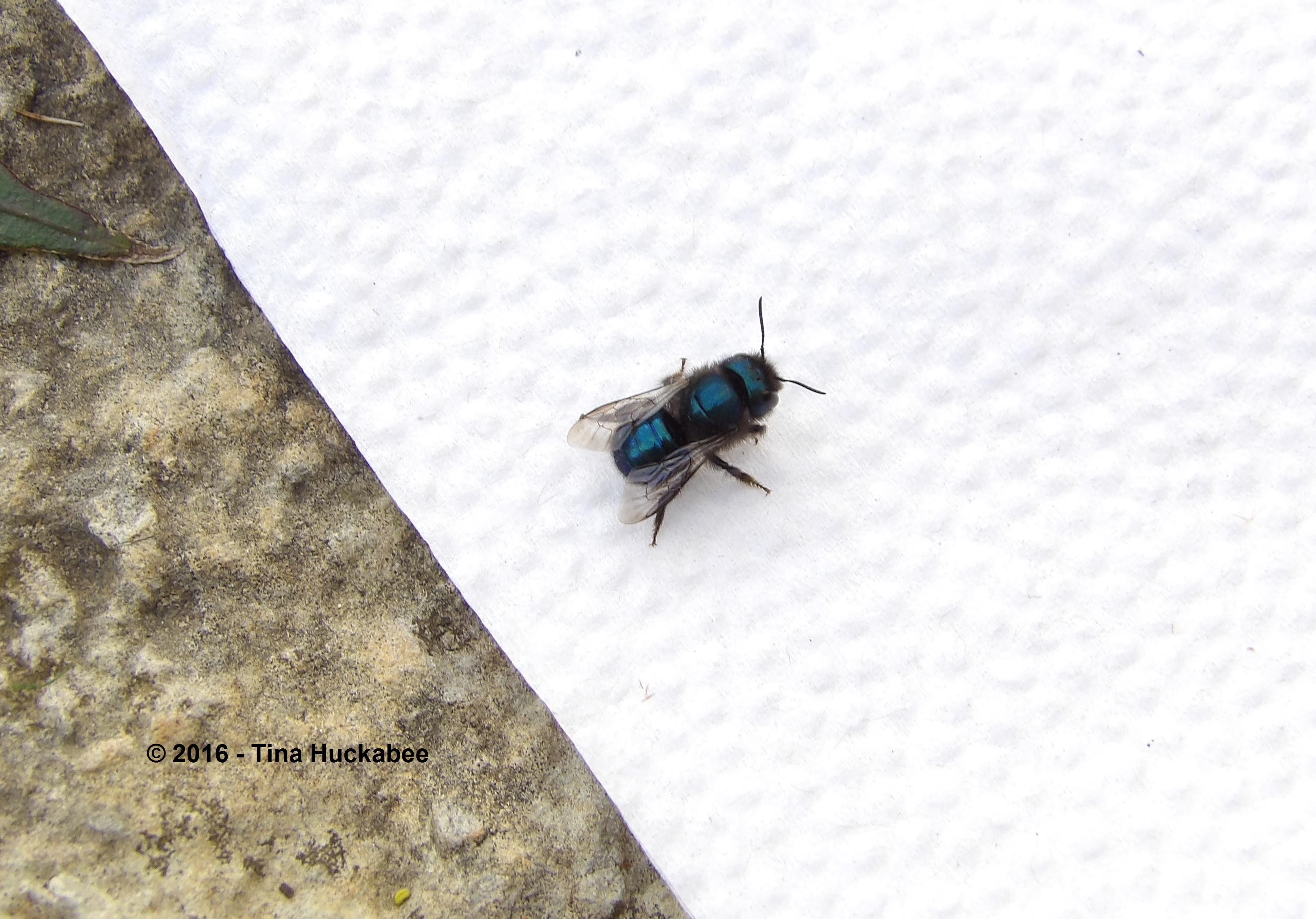
Specifically, one set of native bee species, the Blueberry bee, Osmia ribifloris, has really taken a shine to the new housing available in the neighborhood. [Upon further reading, I believe that this bee is the Blue Orchard Bee, Osmia lignaria. Both of these bee species are categorized as mason bees and the USDA article (linked above) describes the early spring behavior that exactly matches the behavior of “my” little bees. Regardless, the bees are valuable and desirable pollinators to attract to the home garden. And, they’re really cute and interesting to observe.]

Wayward Osmia ribifloris rescued from my kitchen.
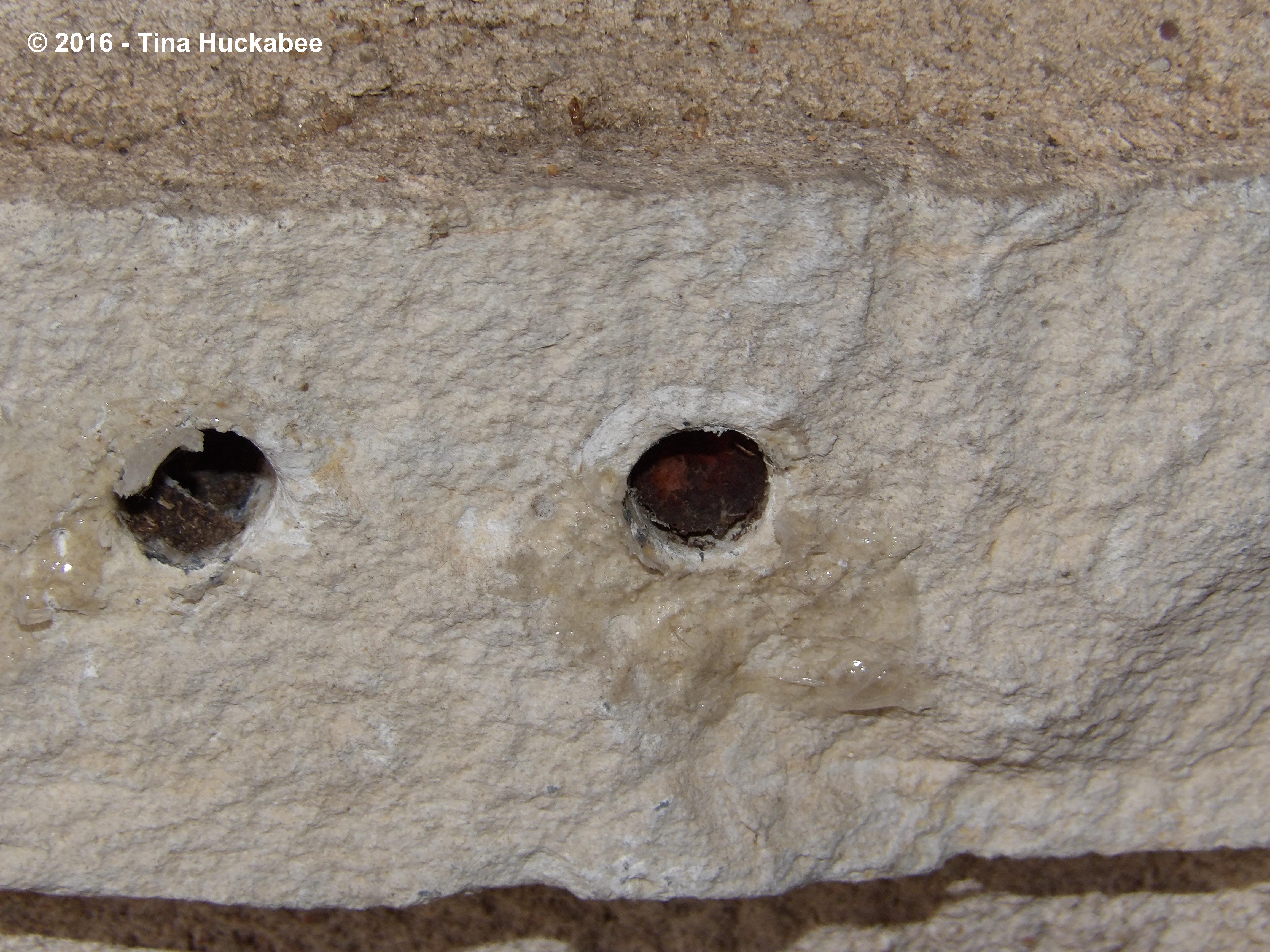
I should add that the identification of this bee species is subject to update–if you recognize this beauty and I didn’t identify the bee correctly–please let me know. The O. ribifloris O. lignaria is a mason bee and judging from the holes in masonry of my back patio, I see why this species is categorized thus!
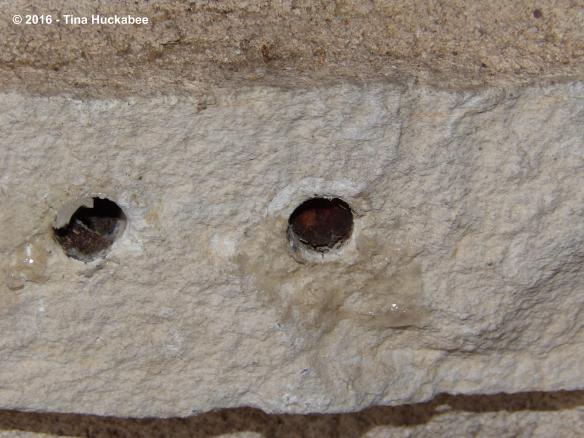
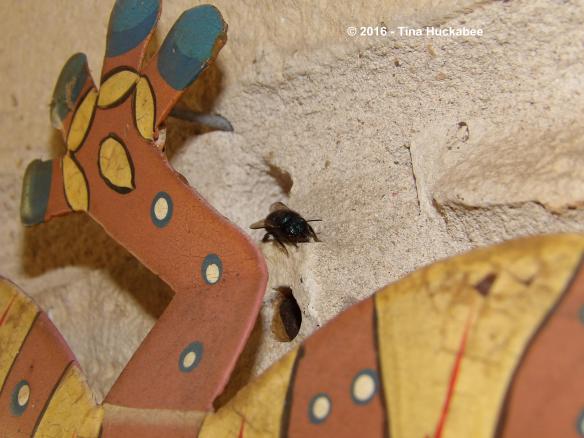
Osmia ribifloris searching for just the right hole for her nest.
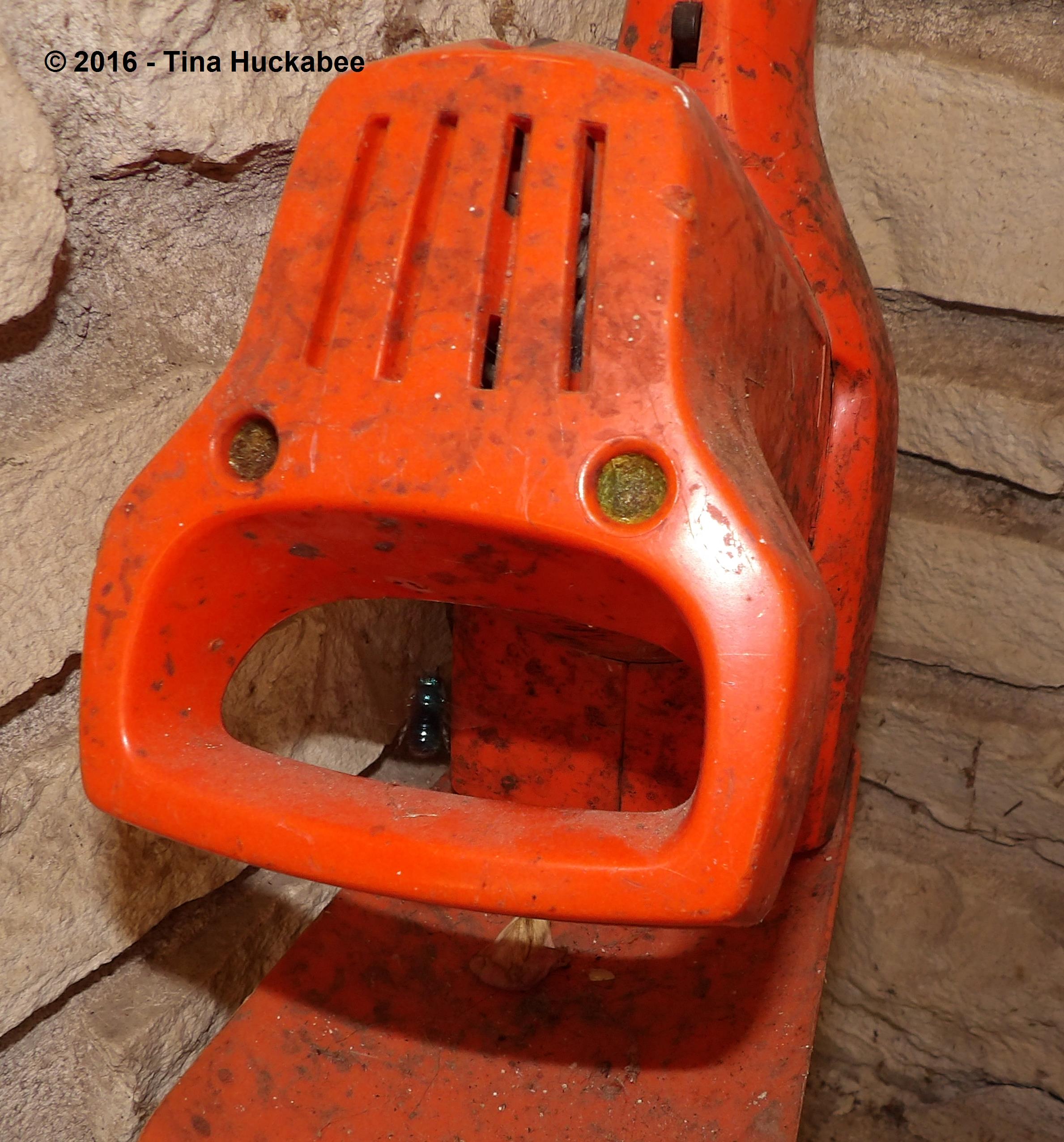
Additionally, these bees also build their nests in the screw holes of my two electric leaf blowers and an electric trimmer that I failed to store in the garage prior to the bees deciding that it’s time to raise up their families.

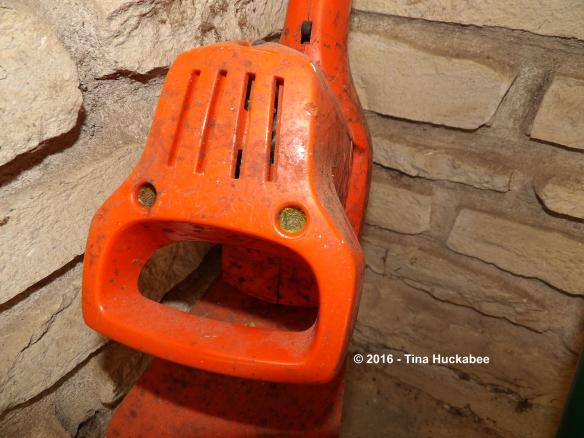

Osmia ribifloris searching for another nesting site.
That’s what I mean when I suggest that insect hotels aren’t required–bees are quite opportunistic and imaginative when finding cozy spots for their progeny. Regardless, the bee hotels are charming and I’m tickled that the bees are using them for their nesting/nursery bed-n-breakfast hotels. Several O. ribifloris have busily laid eggs and safely tucked in those eggs and future larvae.


Fascinating to observe, it takes an individual bee a couple of hours to pack the hole with pollen and soil. In my attempts to photograph the bee action, I stood for periods of time, camera at the ready, watching one, or more, bees at work. Each bee flies into her chosen hole and disappears for upwards of 5 or 6 minutes. Then each zooms out and off again, disappearing for 5-10 minutes while foraging for more nest-building stuff before returning to the hole. The process repeats until the holes are filled almost to the rim.
As the hole fills up with packing material, the bee is visible at the mouth of the hole, working and wiggling her bee magic so the bee babies are well-nurtured as they develop.
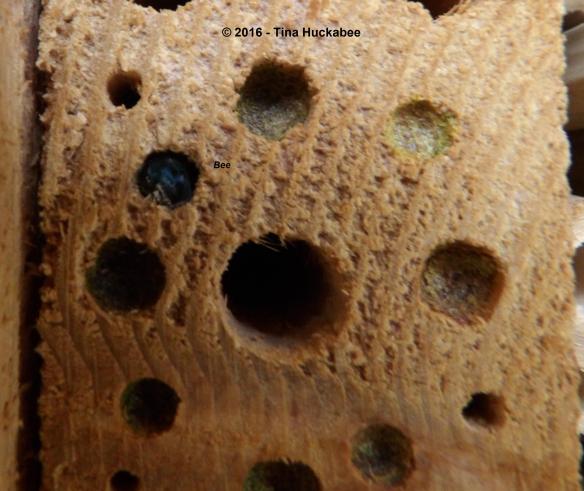
What native bees use as “packing material” varies, but it usually includes pollen (often from specific plants), soil/mud, and sometimes leaf material. Ever had perfect little holes taken out of rose leaves? There’s no doubt that was the work of some leafcutter bee variety as she was building her nest.

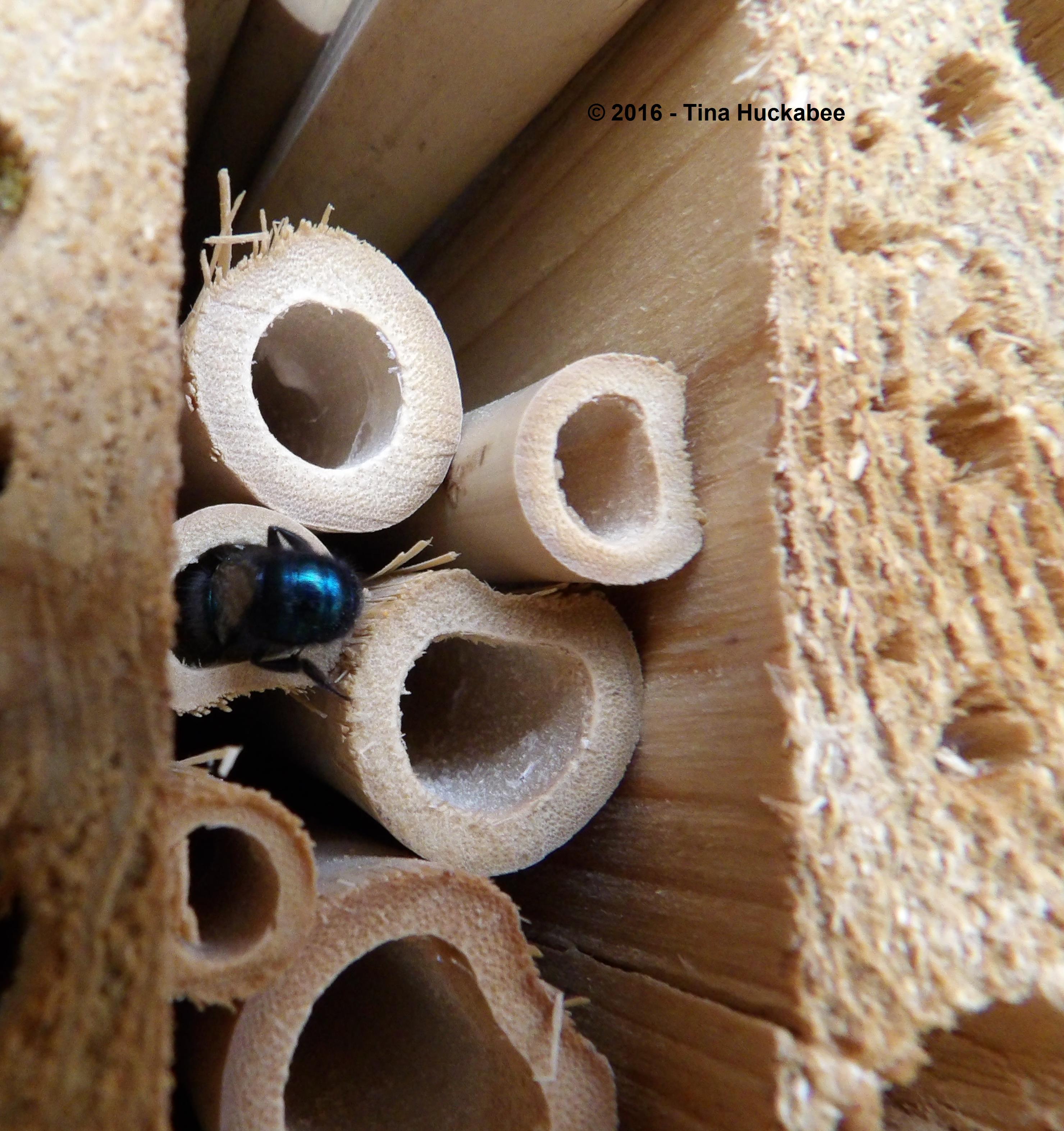
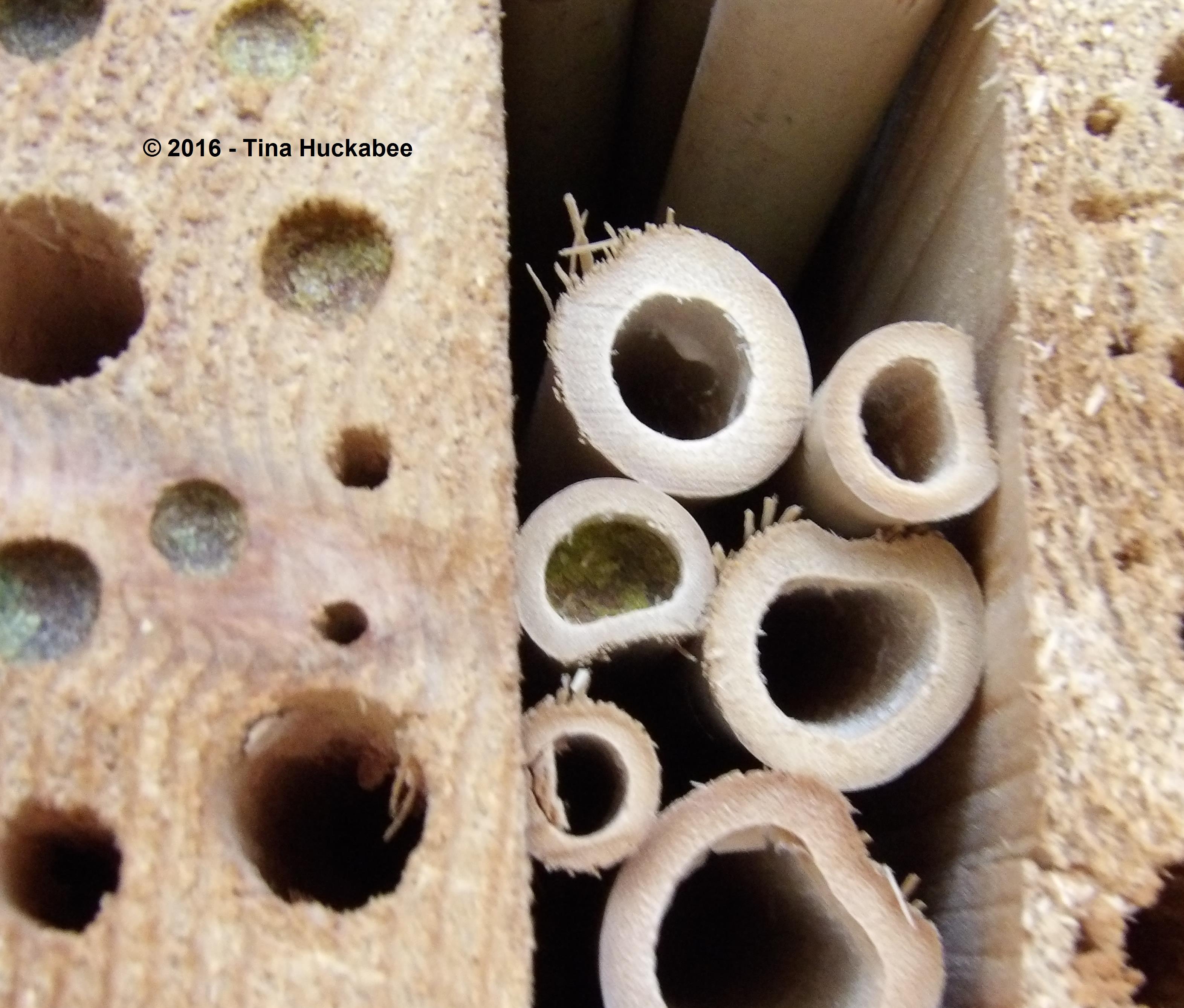
Not only have the O. ribifloris bees filled the drilled holes, but they’ve utilize the cut bamboo pieces for their nests.
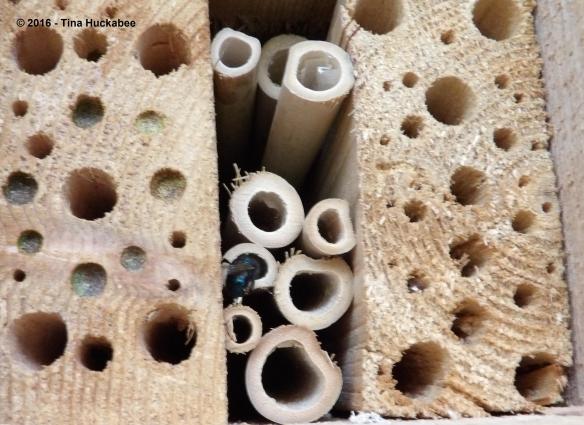

The bamboo hole was filled in one afternoon by the industrious bee.
Since taking these photos, other holes have been filled, but really, how many pollen filled-hole photos do you want to see?
My original plan for the insect hotel was to stack them, one on top of the other in a shady corner of my garden.

But after the squirrels (I always blame garden mischief on the squirrels) knocked them over–several times–it became obvious that a plan B was in order. I hung the smaller of the two on a pillar of the back patio,
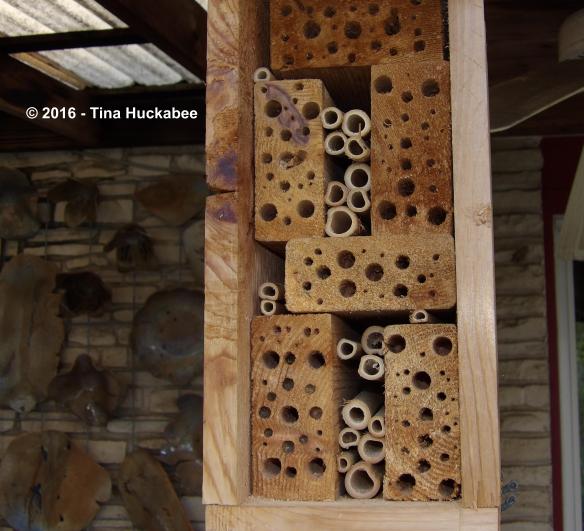
…and affixed the larger of the two on the fence. Because the fence-placed bee house wasn’t getting any bee action, and was difficult to get close-up photos of without tromping all over plants and soil, and was soaked during heavy rain, I’ve recently moved it closer to the back patio and in a more protected area.

This is also a spot where I can more easily observe the comings and goings of bees without crushing emerging, or emerged, plants–or tripping over rocks. So far, for whatever unknown reason, I still haven’t seen any bees nesting in that house.
Oddly enough and for now, these O. ribifloris are the only species choosing to nest in the insect hotels, but I don’t think I’ve seen them working any of the many blooms that are currently available in the garden. Perhaps I’m not out in bee-watching mode at the time they’re working flowers, but it is curious that they aren’t bees I typically see in my garden. I haven’t followed any back into the garden while observing their nest-building because I’ve been too focused (more like too distracted) on checking photos I’ve taken of their work in and on the nests. Not following one of these intrepid bees was probably a missed opportunity.
Nonetheless, I’m pleased that native bees of several sorts are plentiful in the garden this spring, busy at their flowering work.

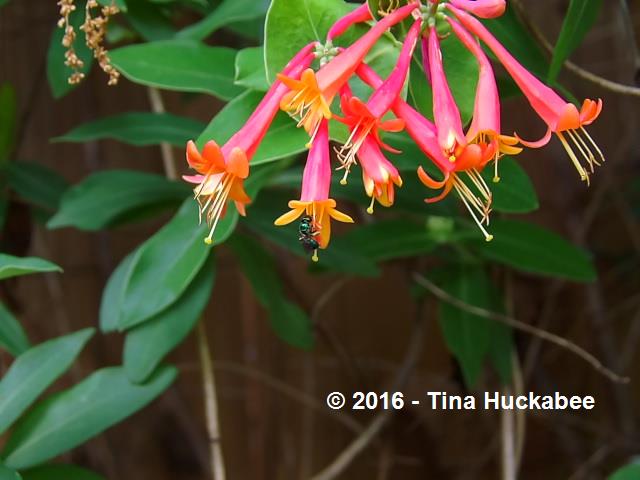
Sweat Bee (Augochloropsis metallica) at a Coral Honeysuckle bloom.

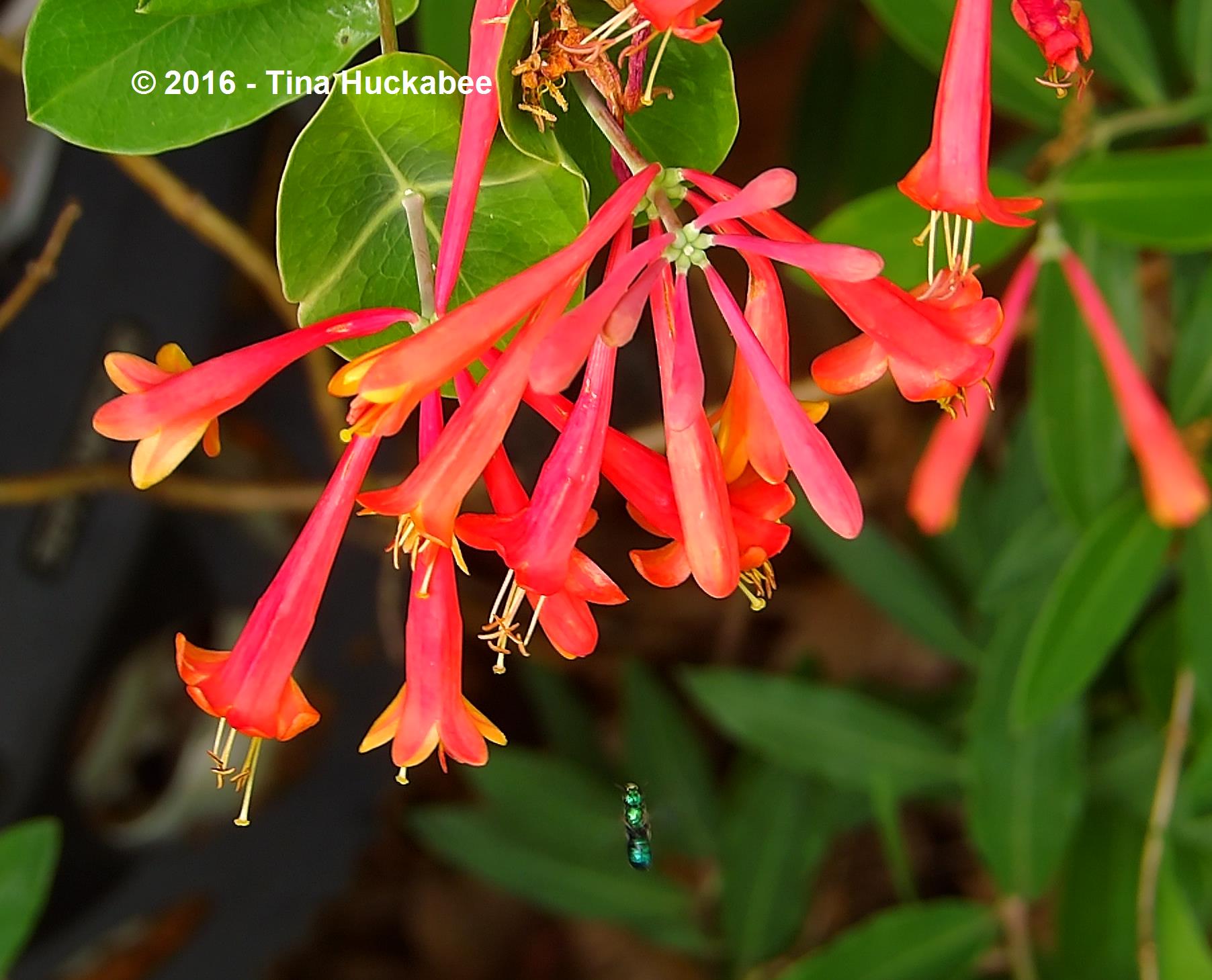
Sweat bee flying in for a bloom landing.

Horsefly-like Carpenter bee (Xylocopa tabaniformis) at a Coral Honeysuckle bloom cluster.

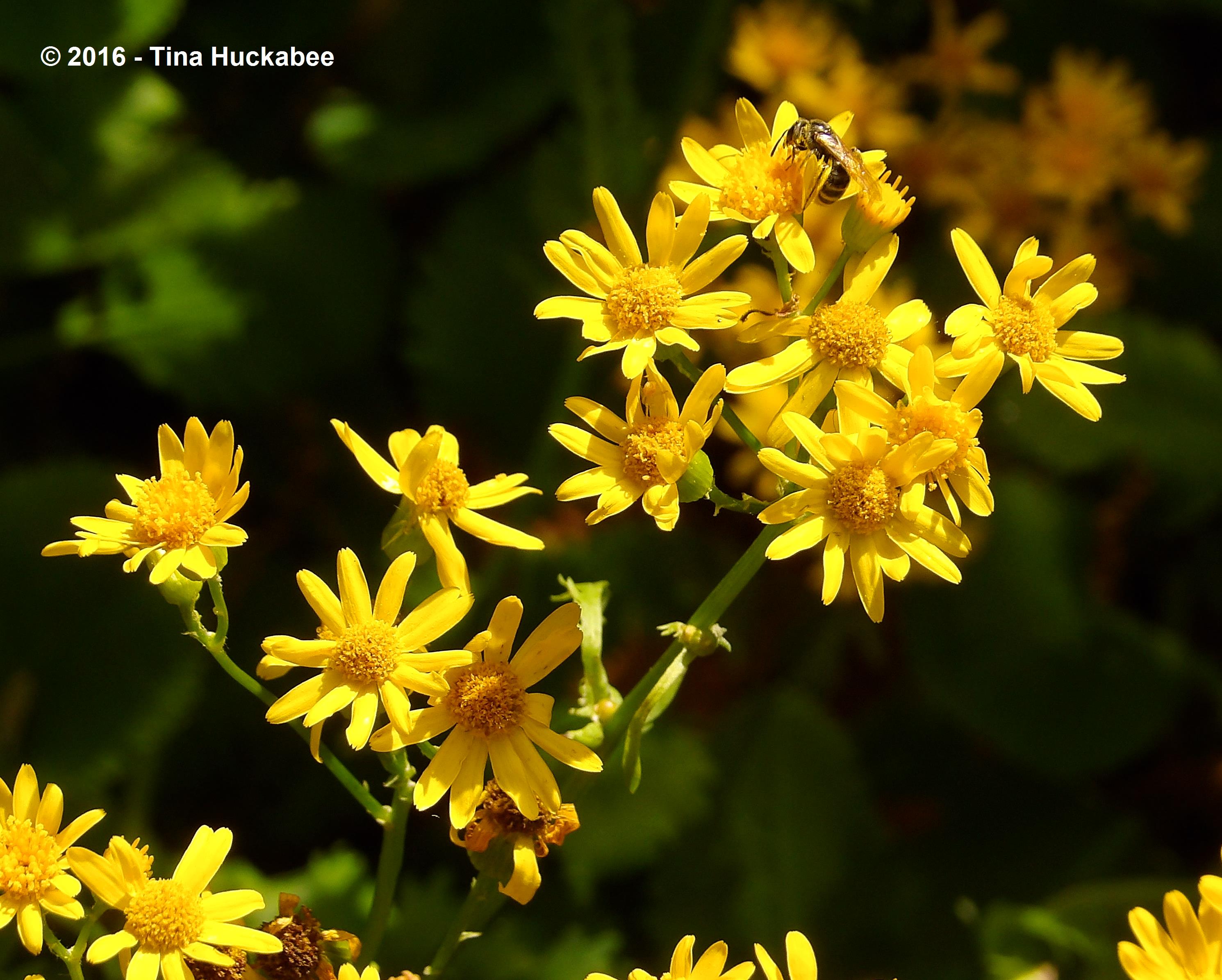
Sweat bee (Lasioglossum spp.) (?) at the blooms of Golden Groundsel.

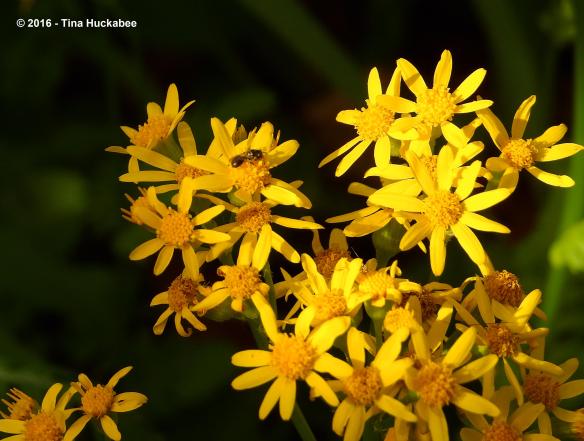
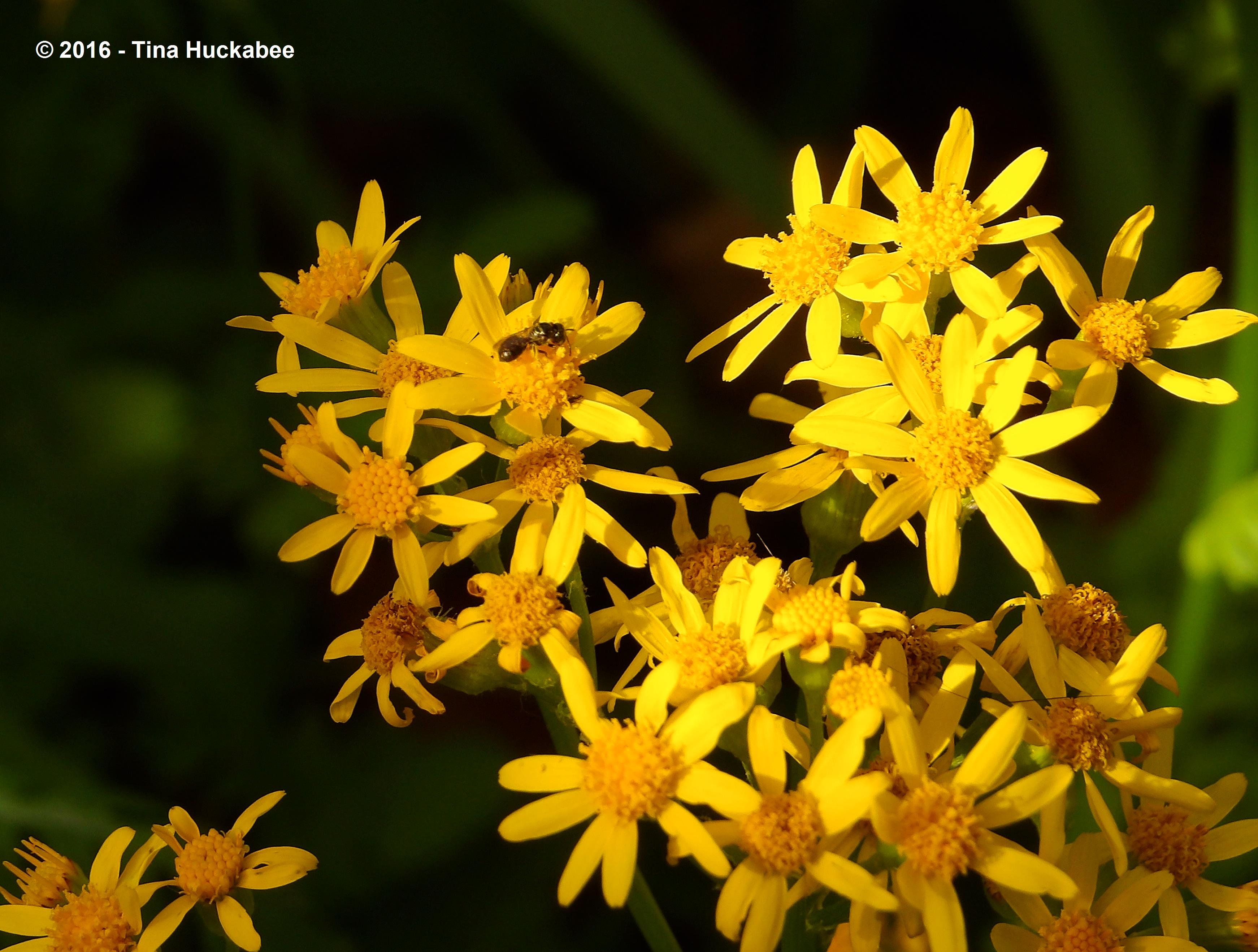
Small carpenter bee (Ceratina spp.)(?) at Golden Groundsel.
For more information about native bees and how you can make your garden appealing to them, check out this link from the Xerces Society.





















 My Gardener Says...