Owlets!

Fluffy, feathery, floofy owlets have hatched! Two were born on Sunday, the third on Monday. Tiny and fragile, they’re covered with fine, white down; it’s hard to believe that these helpless little creatures will grow into fierce hunters.
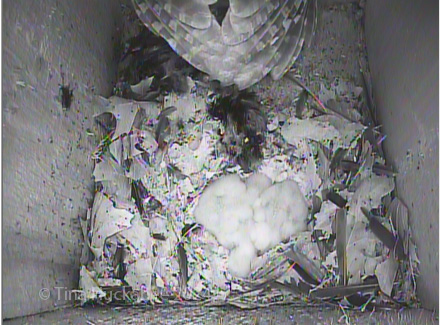
Mama’s tail feathers fill the top of the photo. The dark splotch just below are the remains of a bird or rat–I can’t quite tell; food tends to shift around a bit. You’ll notice the scattering of feathers amoung the nesting material.

Uptown Girl is an attentive parent and Shy Guy is now perched in the oak tree, very near the nest box. His job is to protect the nestbox and hunt for his family. He’s delivered a couple of rats and at least one bird, (sob, I think it was a Carolina Wren), as meals for mama and babies. Eastern Screech Owls enjoy a varied diet, which is one reason why they’re so successful in urban areas. Meals range from insects to earthworms, toads and frogs, rodents and birds.

In the weeks that the female was in the nest box awaiting her bundles of joy, she slept quite a bit. Now, she’s more active, with nearly non-stop feeding and cleaning of the chicks. She and the chicks do have some quiet, restful moments throughout the day and often, the chicks are nestled under mama’s warm, feathered body. When the chicks are awake, I’m enjoying their peep-peep songs, such sweet little sounds, though probably indication hunger. Mama continues to trill during the day.

Early in the mornings (about 6AM) when I first check the owl cam, she’s not usually in the box, though she typically returns shortly afterward. Just before sundown, she goes out, but only briefly. As the chicks grow, her absences from the box will become longer and more frequent, as she’ll also hunt; it’ll take two adults to feed these hungry, growing chicks.

It feels weirdly invasive to watch these beautiful animals in their intimate family life, but it’s fascinating to observe the preparation for and parenting of their offspring. Though a few days since the segue from eggs to chicks, the chicks have grown and in a month’s time, they’ll fledge. Their development, supervised by their parents’ excellent training, will continue in more natural settings, less observable by human eyes.

Pretty Pollen Powerhouse Plant

The spring garden is popping with all sorts of pollen-laden plants and pollinators are punctilious in their pollination proclivity. In particular, bees–both native and honey–are performing their tasks, adding to the pulchritude of the garden and the procreation of new plants.

Five Desert Globemallow shrubs, Sphaeralcea ambigua, that now grow in my full-sun garden, are powerhouse plants with pretty flowers; honeybees are passionate about these blooms. Four of the shrubs are pictured here, two in front, and two on either side toward the back, near the wall of the house. One shrub grows prolifically off-camera. I’m pleased as punch that I now have the perfect place to grow these peachy/sagey plants.

All five were damaged by the week-long hard freeze in January, but have rebounded with aplomb. I’m pumped about their growth and blooms.

Sun or clouds, honeybees visit the dreamsicle mallow blooms daily; they exit the blooms sprinkled with pollen, and buzz forth, from one bloom to the next. I can’t help but wonder: is it possible that honeybees become too pollen-packed to fly to their hives?

While Desert Globemallow is native to North America, it isn’t native here in Central Texas and can be a pain to procure. Mine have produced a couple of seedlings; with some good luck and careful transplanting, sharing of plants is in the plans.

In its native range of Nevada, Arizona, California, Utah and parts of Mexico, Globe Mallow tends to a longer bloom time than I’ve enjoyed here in humid Austin. These pretties’ bloom production will become pokey once summer’s heat pummels the garden. Except for occasional freeze damage during winter, the foliage is perfectly attractive year-round.

A tiny ant heads in one direction along the petal while the honeybee heads in another, finished with her work on this flower.

Prolific blooming at its finest, the Desert Globemallow flowers are preferred by pollinators and the pride of this gardener.

A Riff on Pink-n-Blue

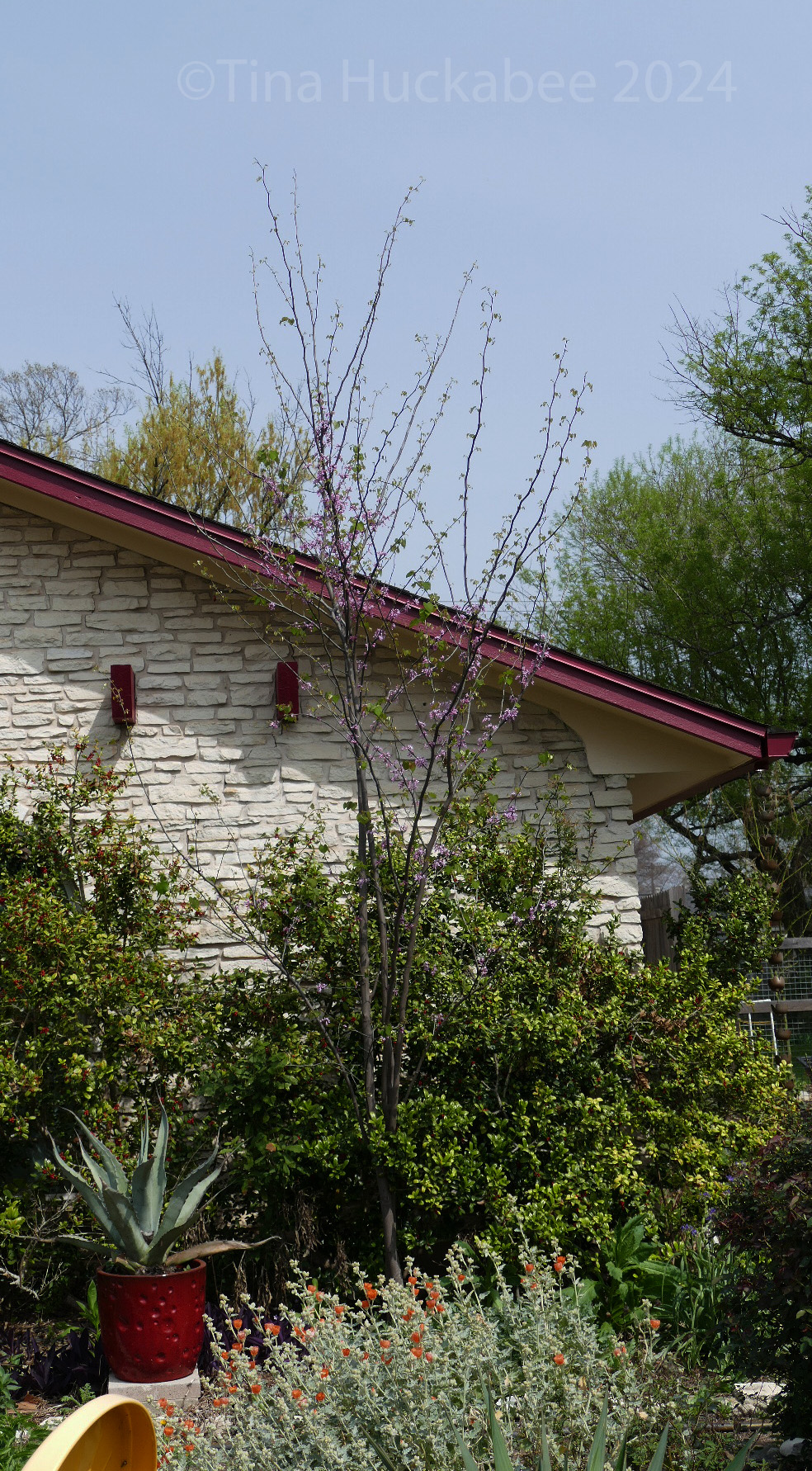
Riffing on a recent post from Steve at Portraits of Wildflowers, I’m enjoying my own celebration of the annual pink-n-blue spring happening. It was Steve’s post that reminded me that I do have a redbud tree and that maybe, just maybe, it might be loaded with blooms this year. This little tree has grown apace since the front garden shed its shady ways and began thriving in full sun after the removal of a large, ice-storm damaged Arizona Ash tree.

The plant seeded itself in this spot 10-plus years ago. It didn’t grow much and never bloomed, though the foliage certainly looked to me like redbud foliage.

Absent other clues, I just wasn’t 100% certain what it was–until last spring. Last March a few of the signature dainty pink flowers, hugging close to the limbs, appeared. Yes! A redbud tree! I was tickled pink!

Once the tree was exposed to full sun, it took off in height and width, and this spring for the first time, it is in full flower production. Blooms have appeared throughout the limbs, in concert with the unfolding heart-shaped leaves.

There are several kinds of redbud trees which grow here in Texas. I believe that this one is an Eastern Redbud, Cercis canadensis var. canadensis, mostly due to its glossy leaves. There are a number of these trees in my neighborhood and there are several small seedlings in other spots in my garden.

As I’ve observed the blooms, tiny native bees seem to be the primary pollinators. On a breezy day, they’re hard at work, but difficult for me to capture in a photo.

The common name for this tree describes the red buds, before blooms open. But it’s the lovely shape, lush foliage, and sweet pink flowers that most people remember about this tree and its relatives.

Pink blooms and blue skies–spring has sprung!