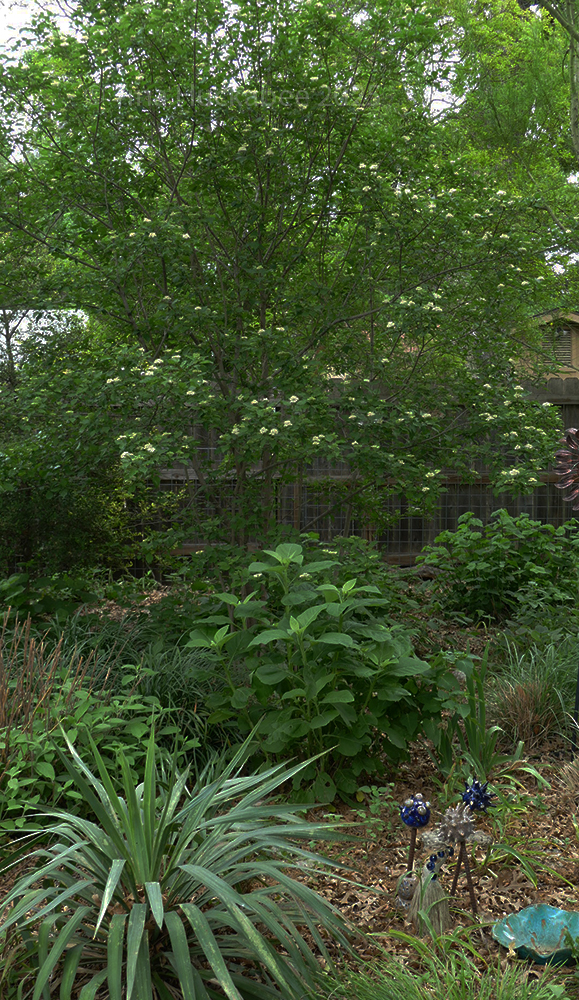
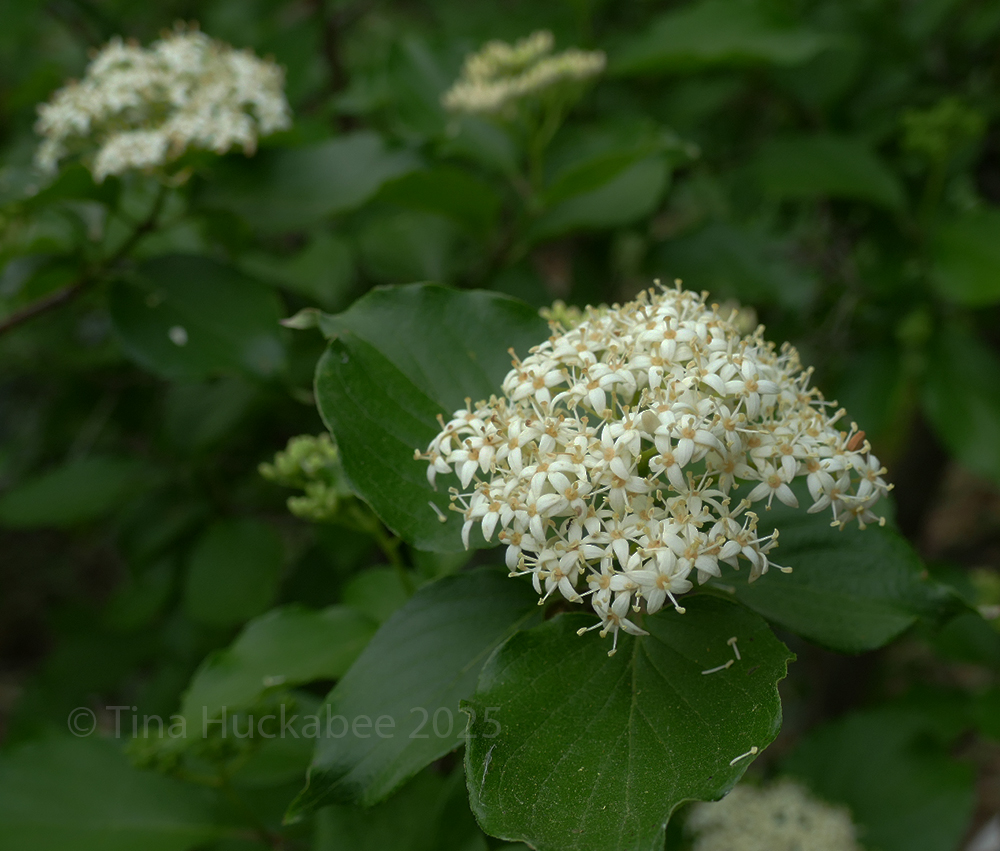
The sandpaper feel of its foliage is what gives Roughleaf Dogwood, Cornus drummondii, its common name. I’ve always thought that the beauty of this small tree deserved a more poetic name, perhaps in praise of its graceful form or lauding its creamy blooms and fruits.
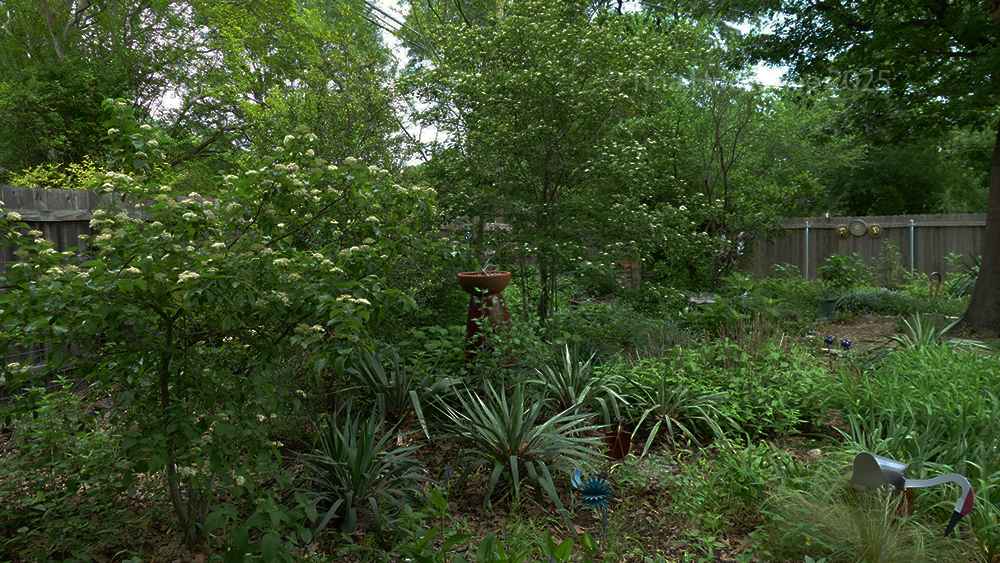
Regardless, I’m pleased to house two of these lovelies in my back garden. Excellent wildlife plants, these little trees are the gifts that keep on giving: pollinator magnet blooms, lush foliage for wildlife cover, hardy-drought resistant additions to the garden, yummy fruits for native and migrating birds, and purple-to-mauve-to-pink golden fall color for all to admire.
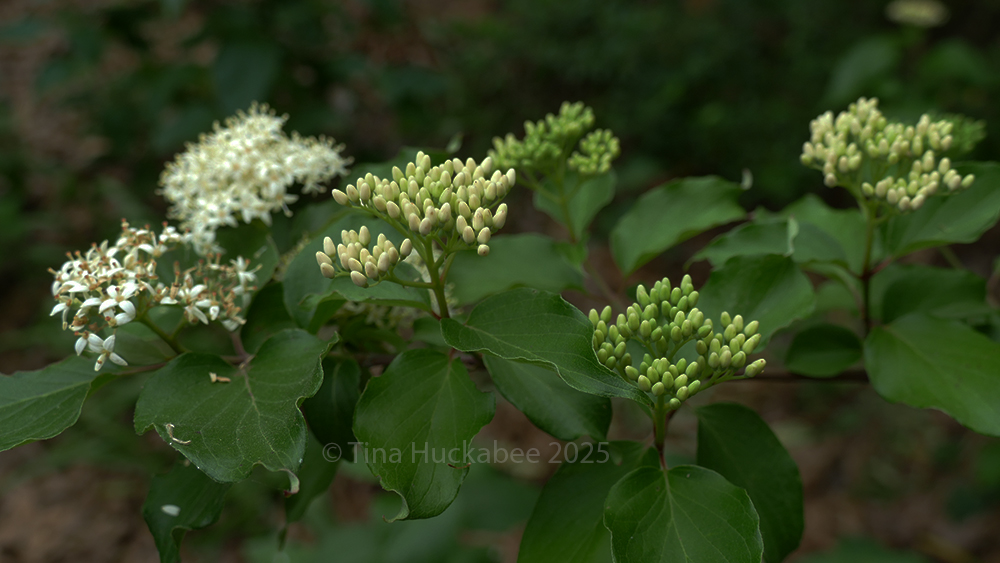
The petite flowers bloom in mounds from March through May. Mine are mostly done.
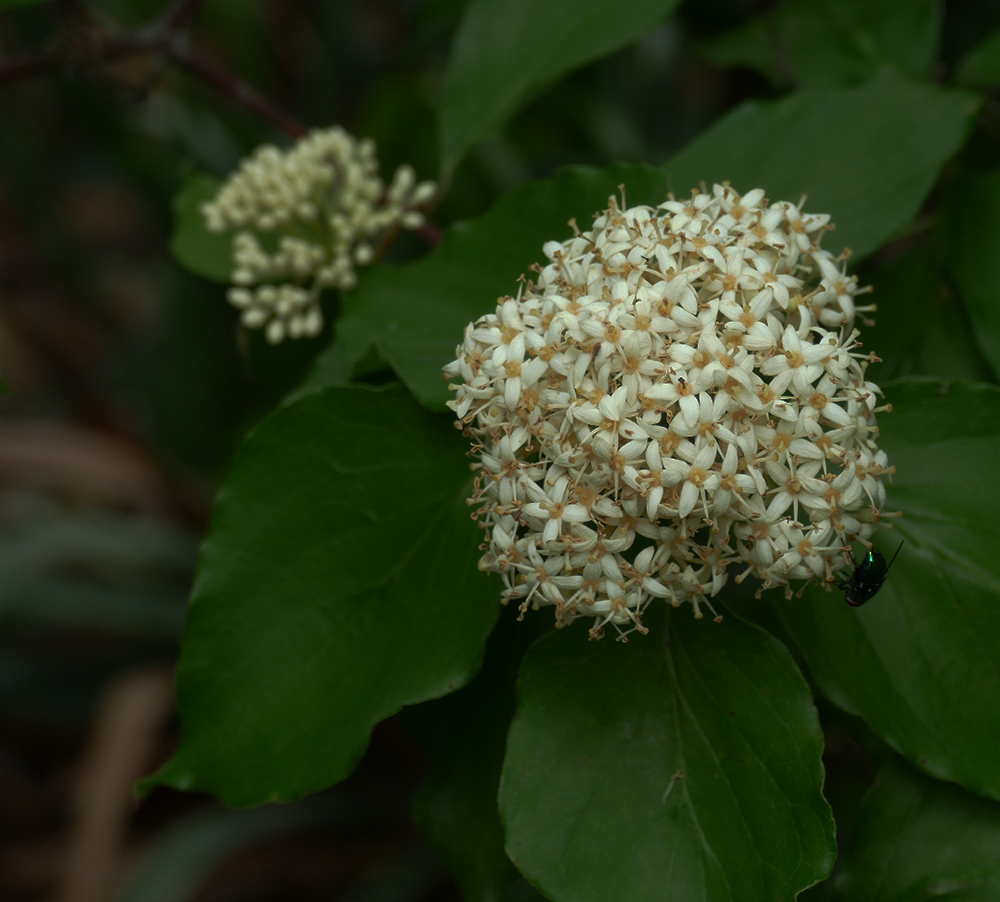
The flowers attract a wide variety of pollinators. Each blooming season seems to host one particular kind of insect as the primary sipper of the good stuff. Last year, I recall that different species of syrphid flies were 2024’s insects of rough-leaf choice. In other years, migrating Monarchs have stopped by in decent numbers. Always, the home-grown honeybees partake of the dogwood’s offerings.
This blooming season it was iridescent Blow Flies, Calliphoridae, who were the primary beneficiaries of the nectar and pollen of the dogwood blooms. There were others who pollinated, like our resident honeybees, and I viewed some smaller butterflies at the flowers, but the Blow flies were the most numerous visitors.
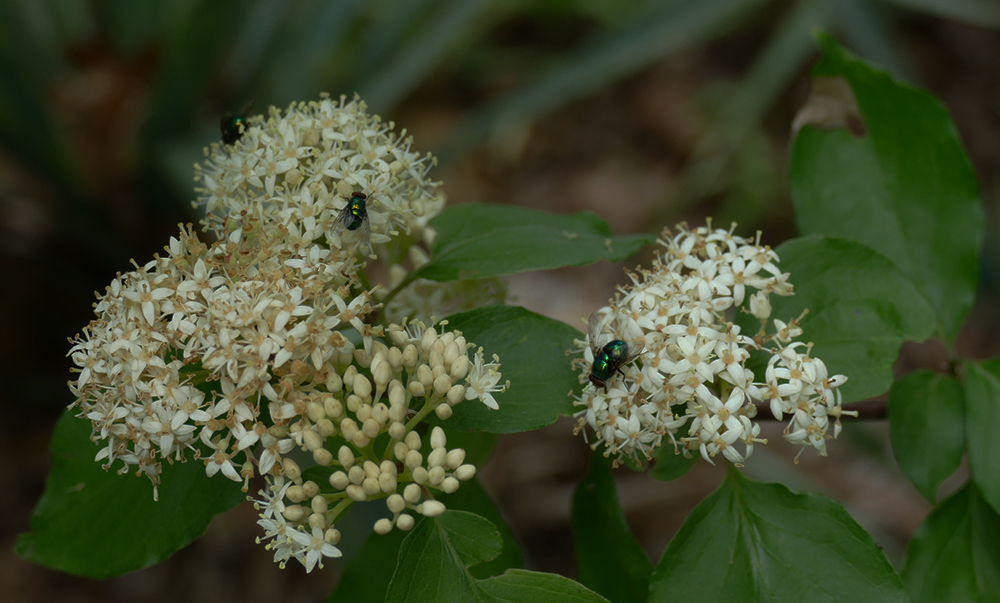
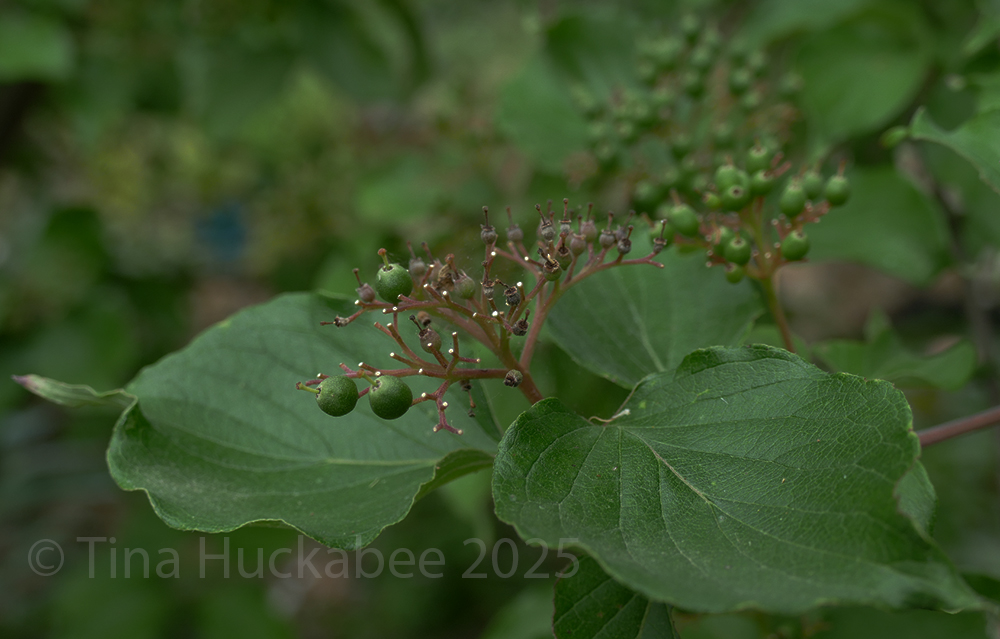
Once the flowers have bloomed and provided, the beginnings of the berries is nigh.
In this photo, note the assorted stages: in the lower background, buds are just opening; in the foreground, flowers that are done, leaving the ovaries to become fruits; and to the right, an uneaten fruit from last season. In the course of rain, heat, ice, and wind the once-luscious berry is darkened, hard, and presumably unappetizing.
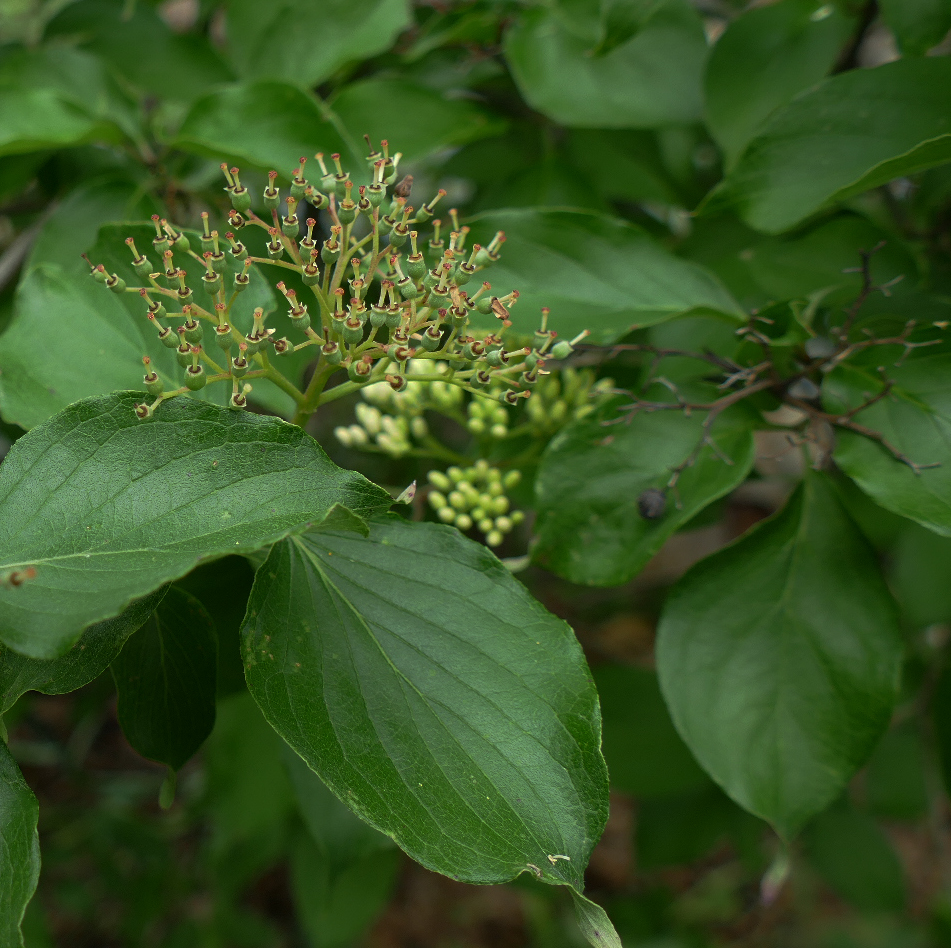
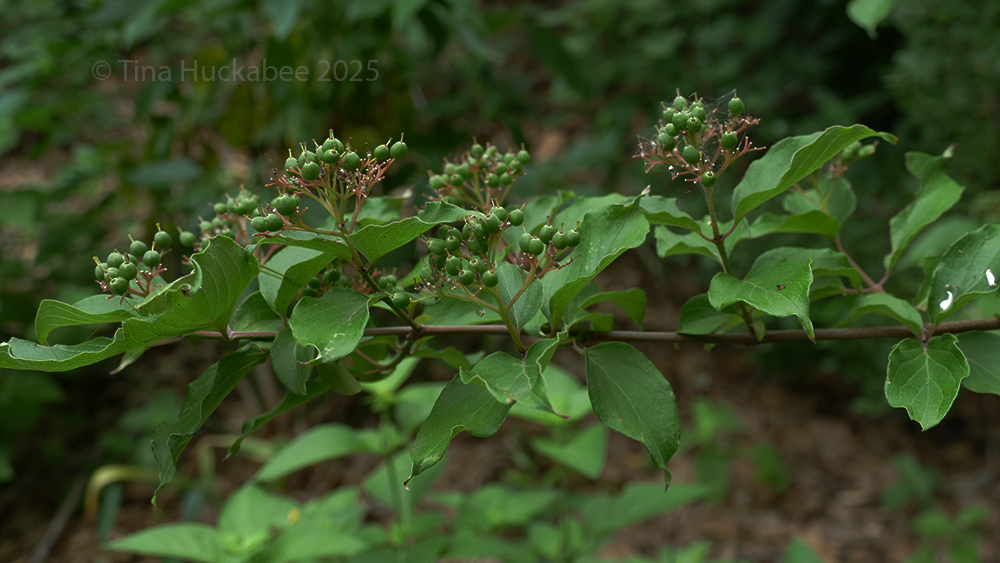
These are a few of the fruit sets from this spring’s floral bounty.
By August, the small green spheres will grow larger and milky-white. Blue Jays, Northern Mockingbirds, migrating neo-tropical birds, plus squirrels and other mammals will feast on juicy fruits. The fruits of the dogwood are drupes: skin with a fleshy outside and seeds inside. Drupe is a fun word.
As summer arrives, revving up its hot-rod heat, these little trees will remain green and lush. Birds will rest and hide, and berries will ripen for late summer/autumn snacks.
Spotting the birds that migrate through Texas in spring (and autumn!) is always a thrill. I live in Central Texas, a major flyway in North America, and enjoy a front row seatto bird migration because my garden is packed with blooming and seed-setting native plants, large native trees, and plentiful water sources. Weary, feathery travelers who seek rest and refueling will visit–briefly–from March through June as they head northward to breed.
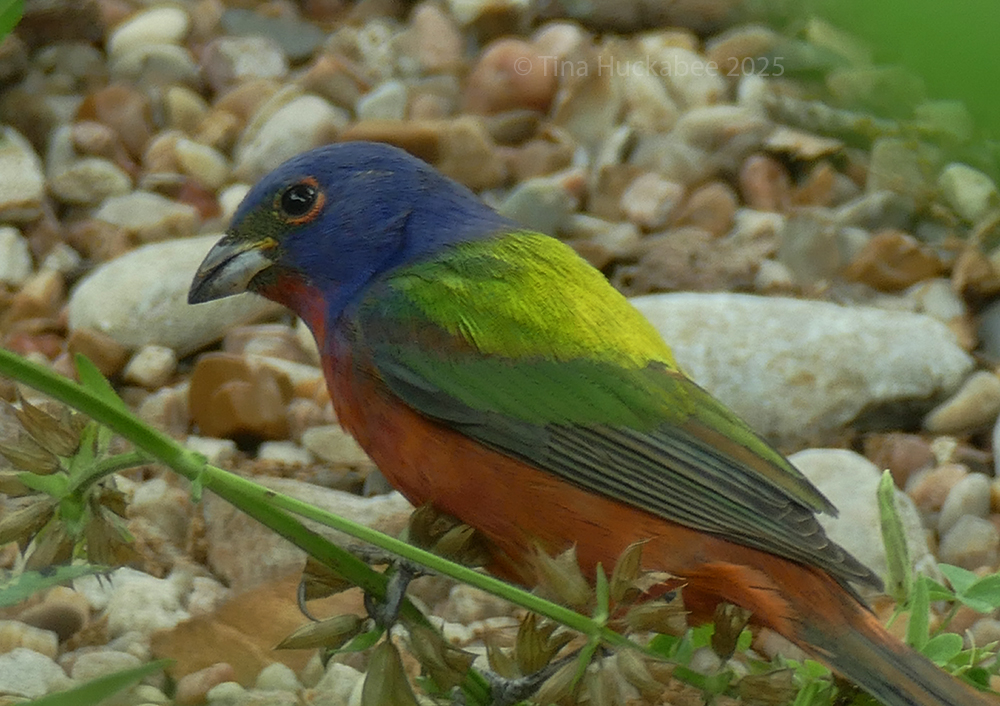
Each late April/early May, a handful of Painted Buntings, Passerina ciris, swoop in to nosh on the seeds of Lyre-leaf Sage, Salvia lyrata, and Mexican Feathergrass, Nassella tenuissima. The crew this spring were particularly skittish, resulting in this being the only reasonably clear shot I managed. That’s okay, though: sometimes it’s instructive and enjoyable to put the camera down and simply watch these vibrant birds.
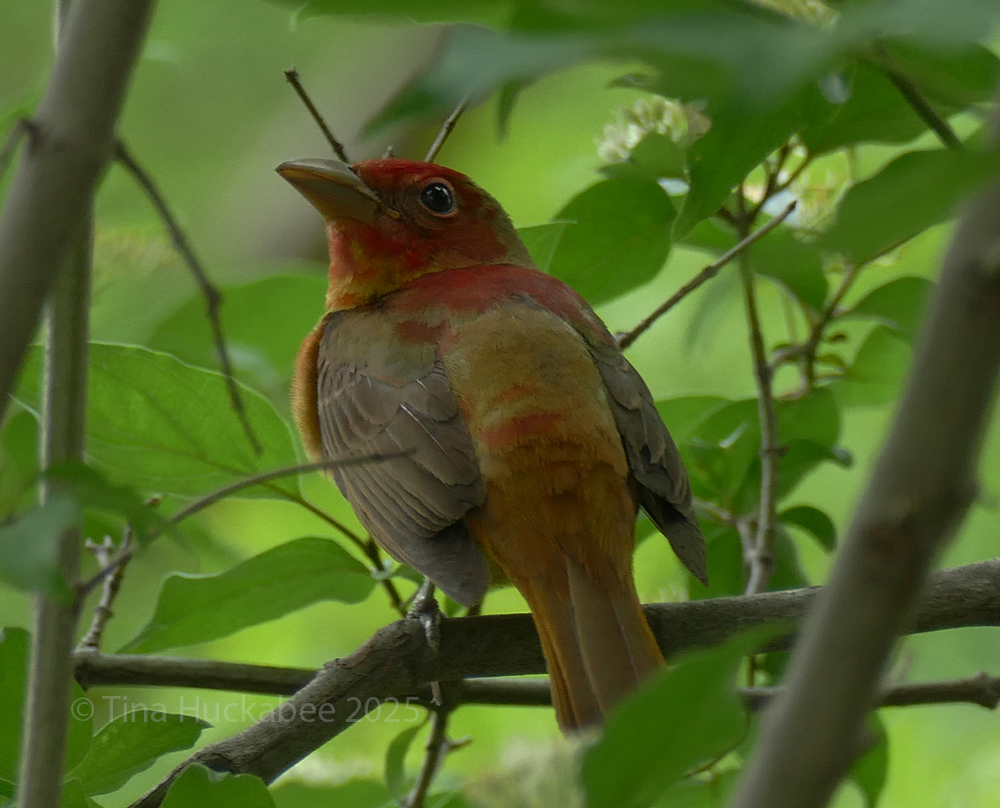
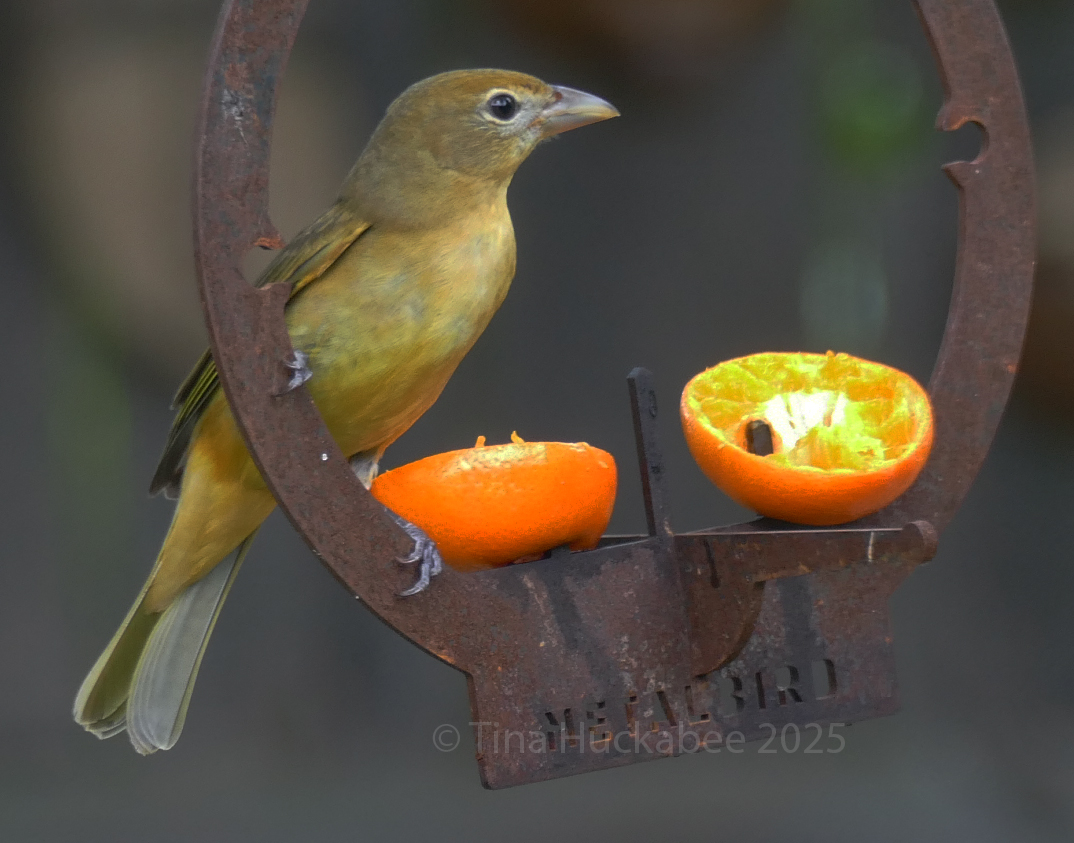
The first few days of May always brings in a trio of Summer Tanagers, Piranga rubra. Typically the visitors include an adult male and female, plus one juvenile male; I’ve speculated that they migrate as a family unit. No scarlet male showed up this year and I missed seeing him. But the juvenile male, all splotchy gold-n-red, zipped around the garden and hung out in trees. More importantly, from the tanager’s perspective, he spent his time around the bee hive where he snatched honeybees. Summer Tanagers hunt bees and wasps and my garden has plenty of both to offer.
The adult female also nibbled unfortunate bees, but was entranced with the tangerine slices that I offered for migrating orioles.
I didn’t notice the dark thing in the orange until I downloaded this photo, but I observed bees enjoying the oranges. Maybe the tanager came for the bee, then discovered the juicy joy of orange juice!
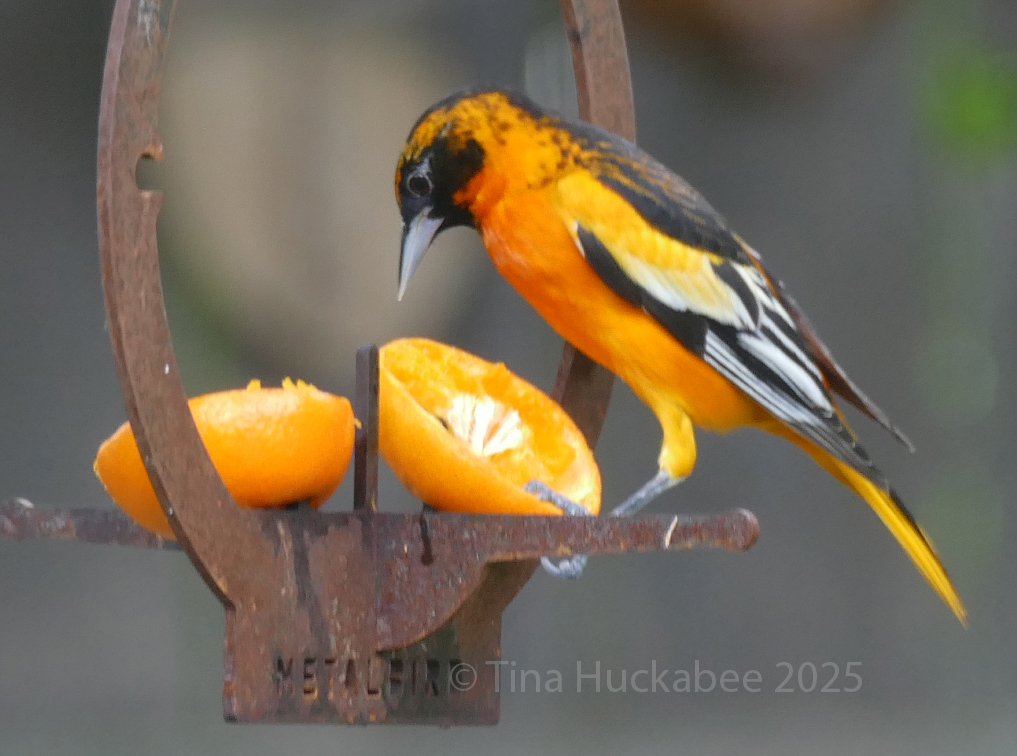
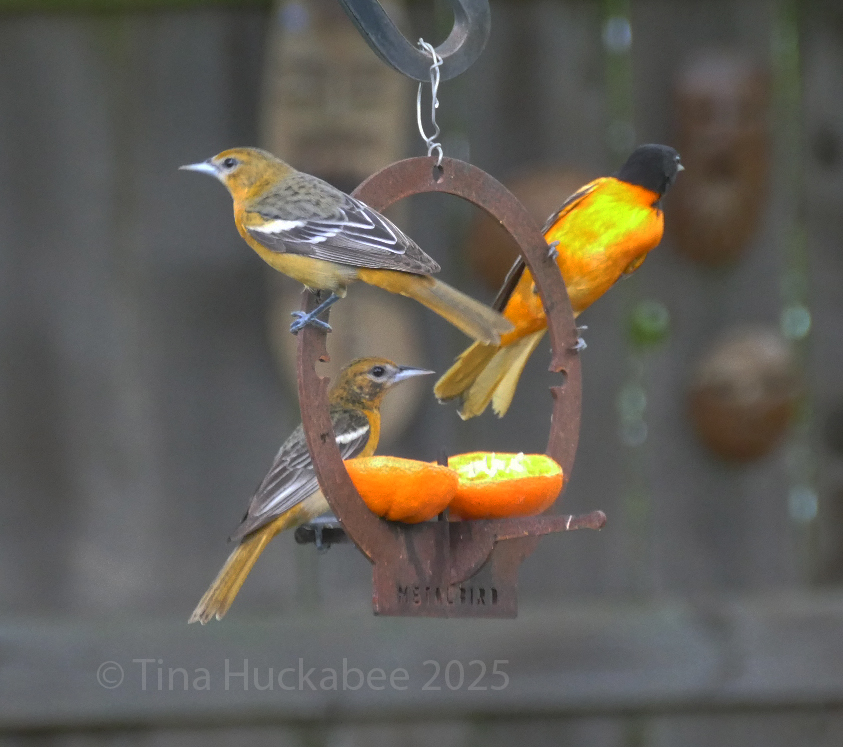
Various oriole species migrate through Central Texas. Some years there are quite a few, other years I observe only one or two, or none. This was a good spring for Baltimore Oriole, Icterus galbula, observation! A band of showy orange-n-black birds made their avian selves at home in the garden for a few days, mostly due to the offering of oranges and tangerines, which orioles love. My neighbor (and sister-in-law) also offered orange slices, so the migrants dined at two sets of gardens during their lay-over in Austin.
This oriole feeder, gifted to me by my SIL, proved a good spot for the orioles to perch-n-eat and the oriole-watcher to watch-n-photograph. I recall that these are two different (probably) juvenile male Baltimore Orioles, the photos taken on different days.
This threesome includes an immature female (left), an adult female (bottom/back), and an adult male. With only two slices, I wonder how they divvied up taking turns at the oranges? There was another photo that I didn’t download to this post that showed a female clearly chastising the male, no doubt for his rude behavior at the orange bar.
Along with the formal orange feeder, I stuck orange slices on a potted American Agave and these two handsome adult males didn’t mind the prickly posts at all. Yes, I was poked a couple of times, but also didn’t mind the extra feeding station for the orioles.
Both my SIL and I caught a shot at one female Bullock’s Oriole, Icterus bullockii. As I downloaded photos, I recognized that this bird has a white tummy, which is not a characteristic of the other orioles. Neither of us saw a male, but it’s likely one was around, we just missed him.
In addition to the birds that I saw and photographed, scads of smaller warblers and sparrows, too quick and too hidden in the plants to observe, are in the garden. Interestingly, the little birds–warblers, sparrows, and finches–are more likely found in my front garden which provides plenty of food (seeds and insects), as well as cover. Unfortunately, as a bird watcher, I don’t have an unobtrusive spot where I can spy on birds and remain unseen. Every time I amble outside, there’s a whoosh of wings and a chitter of alarm calls; they’re not thrilled with my presence. Lincoln and Vesper Sparrows, Lesser Goldfinches, and Common Yellow-throats have all been in the mix of the front garden bird fest. I’m certain there are lots of others when I’m not watching.
Additionally, a couple of Indigo Buntings, Passerina cyanea, hung out in my Possumhaw Tree and that was a treat. I saw them through my binoculars, but catching a photo with all that foliage as a distraction was a no-go. I was thrilled to see the Indigo Buntings, they’re stunningly beautiful birds.
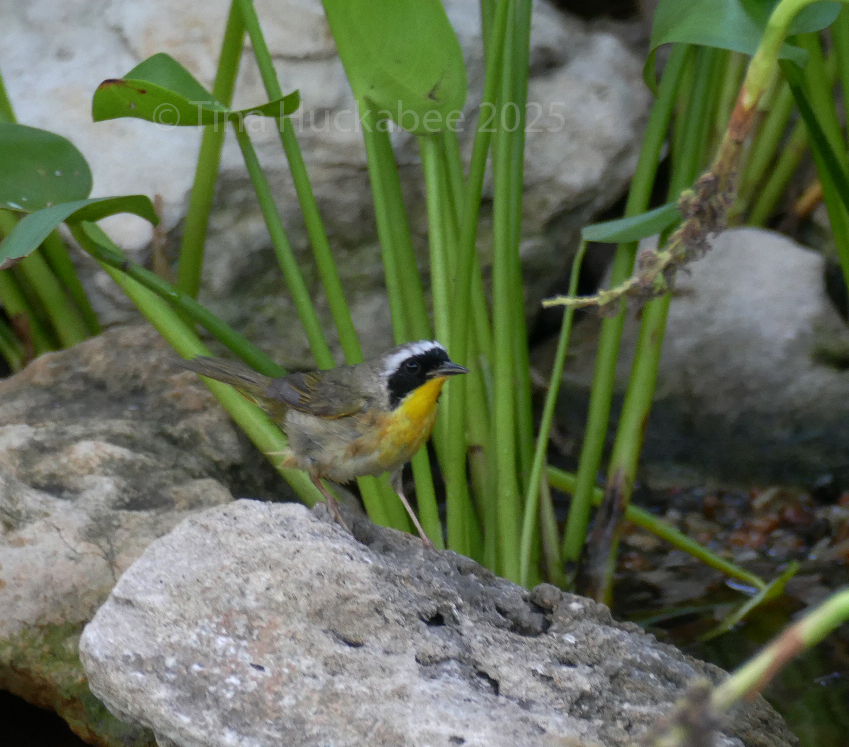
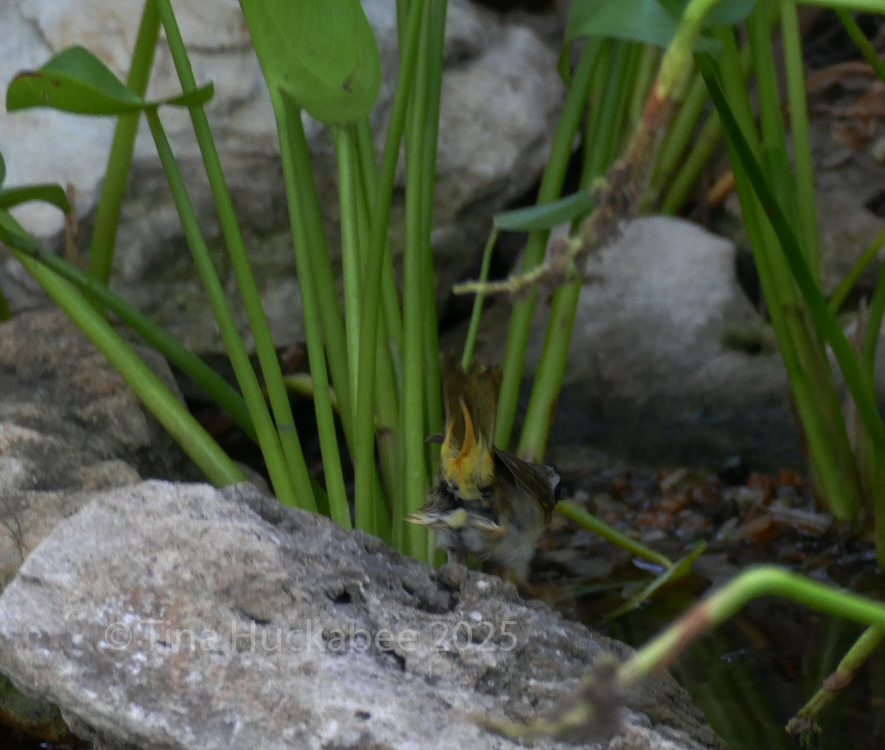
I finally snagged some shots of a darling male Common Yellowthroat, Geothlypis trichas, late one evening at the pond in the back garden. He was certainly flitty, but I could hide at the catio while he bathed in the bog section of my pond.
He danced along the rocks,
…and then it was a bums-up before another splash in the shallow bog water.
Several Yellow Warblers, Setophaga petechia, at least one Magnolia Warbler, Setophaga magnolia, and who knows how many other migratory birds, have stopped in my garden to rest and eat. Migratory season is winding down, but not yet done. These birds are all headed to northern places to breed. They’ll raise their families up north, then sometime in August, they and their offspring will make their way southward, completing the migration cycle once again. I’ll wait and watch for them.
Poppies are poppin’ and honeybees are rockin’. Honeybees are all in the poppies’ innards, their pantaloons (corbiculae) laden with pollen as their work takes them from flower to flower. Most of my garden is abloom with native Texas plants, but this European poppy is the descendant of seeds given to me by a German neighbor decades ago. The poppies appear annually in January when delicate foliage rises upwards during the cool season, then buds reveal glorious red and purple in April.
It’s spring, y’all. Trees are leafing out, perennials and annuals are showing off their eye-catching wares. March was dry and warm, though rain and chilly temperatures have made a come back. Flowers are opening, pollinators are working, and birds entertain with song.
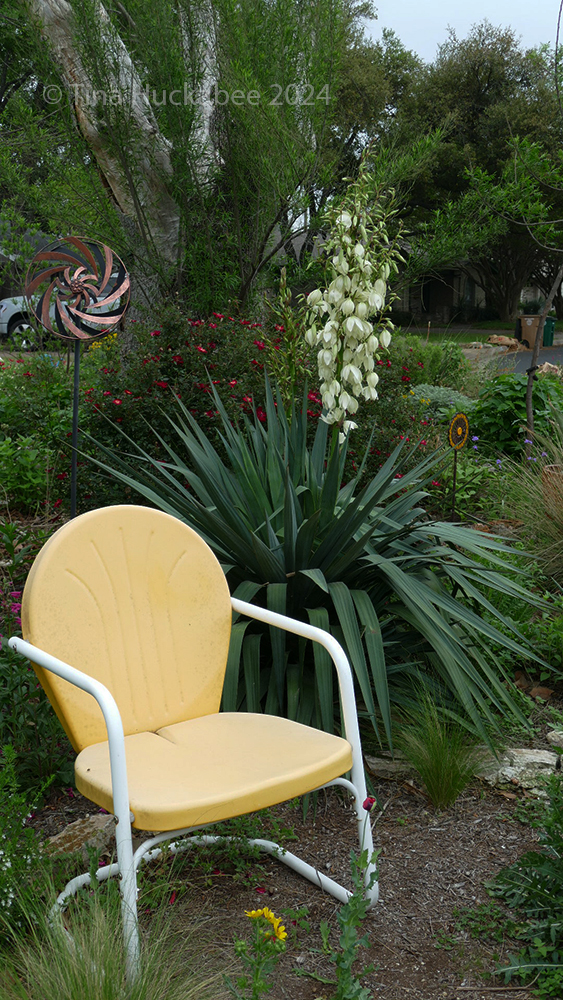
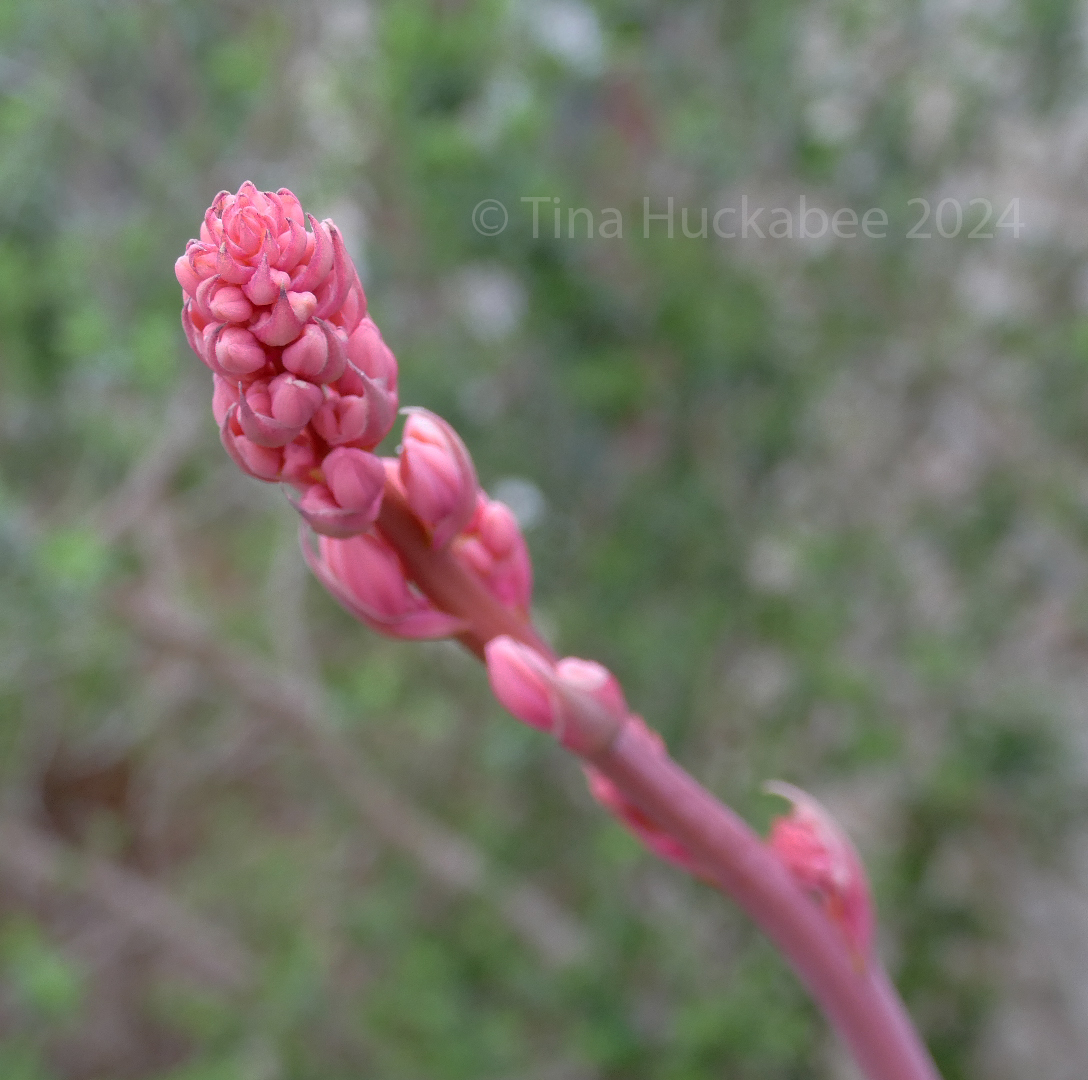
Two of my Soft Leaf yucca, Yucca recurvifolia, are in a blooming mood, guaranteeing they’re not outperformed by the red, red roses of Martha Gonzalez. I grow five of these yucca plants in my front garden. The plan was that each spring, upon maturity, the yuccas would all produce their dramatic flower spikes at the same time. This has never happened. This spring, three recalcitrant yucca individuals are refusing to send up spikes. Wishing the plants would bloom in concert with one another isn’t working. Alas, they will do their own thing.
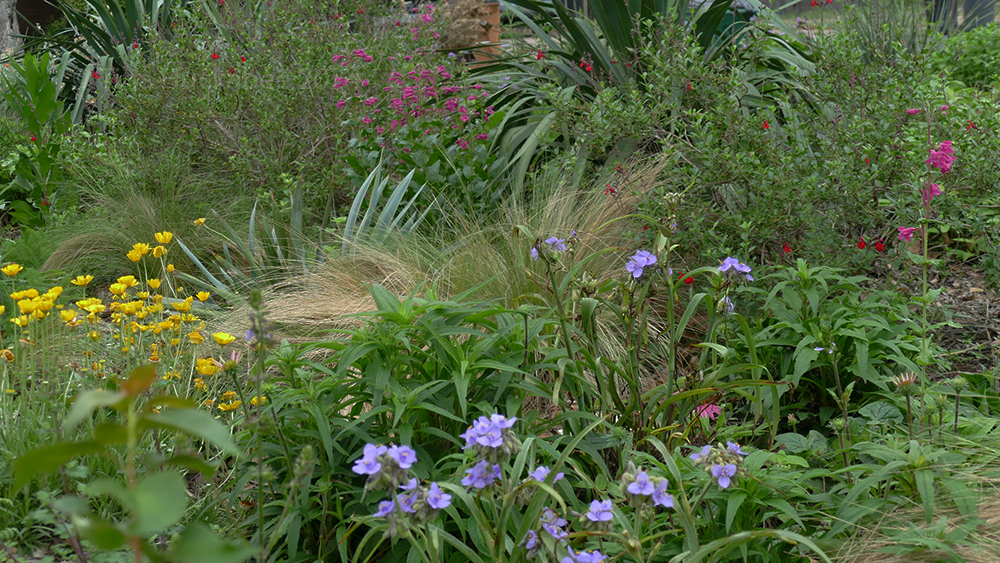
Cool season, orangy Desert Mallow, Sphaeralcea ambigua pair nicely with pretty, purple Spiderwort. Tough plants both, they’re situated at the street side of the garden, full west sun. The mallow is a shrub, the spiderwort a cool season plant that will disappear in the heat, showing up again in late fall or winter.
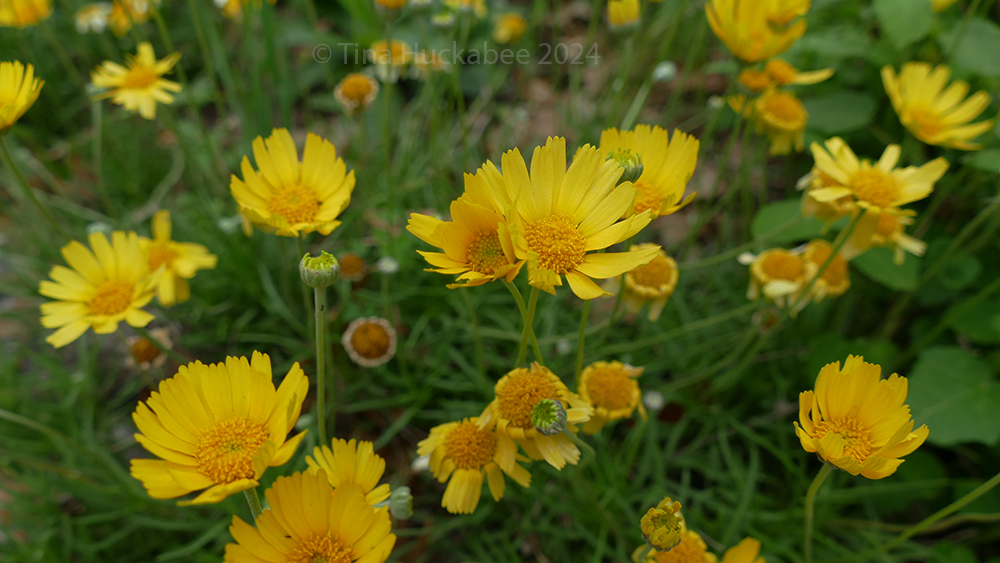
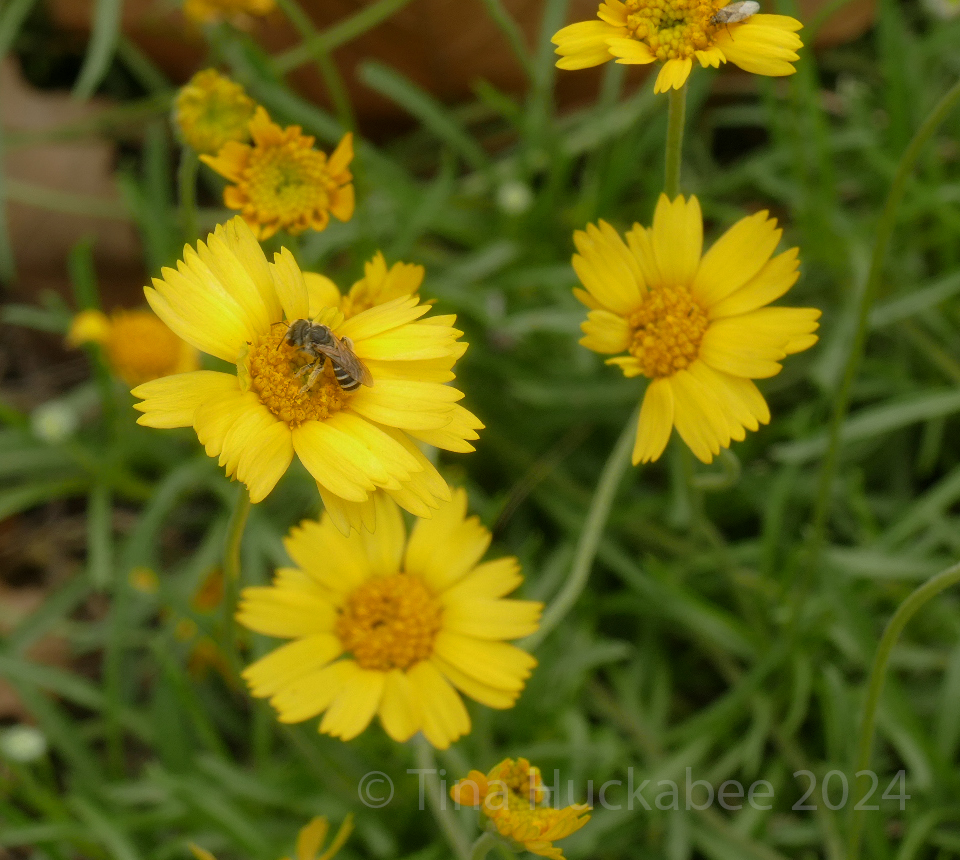
Four-nerve Daisy, Tetraneuris scaposa, dances in the breeze, their yellow faces turned to the warm sun. But are they missing something?
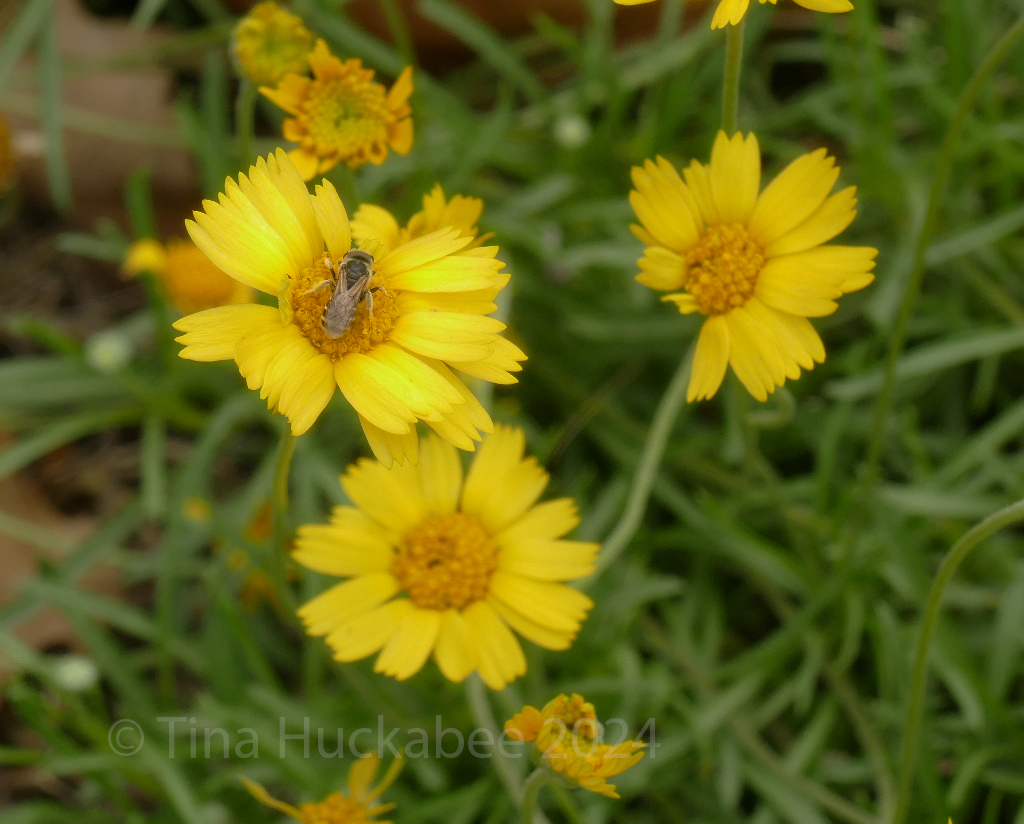
There it is! A native bee, maybe in the Melittidae (oil collecting bee) family. The bee landed in the pollen-plenty center of the sweet daisy flower, working the flower for the bee’s benefit and the plant’s future.
A side view of the bee highlights pollen stockings on its legs and cool abdomen racing stripes.
Hill Country Penstemon, Penstemon triflorus, is in full swing now, with mostly night moths as its main pollinators. If there are hummingbirds around, I’ve yet to spot them, but they won’t miss this pink beauty when they arrive in my garden. In my last post, I profiled the first one to flower, but now all five individuals have caught up and are playing their parts in the pink parade.
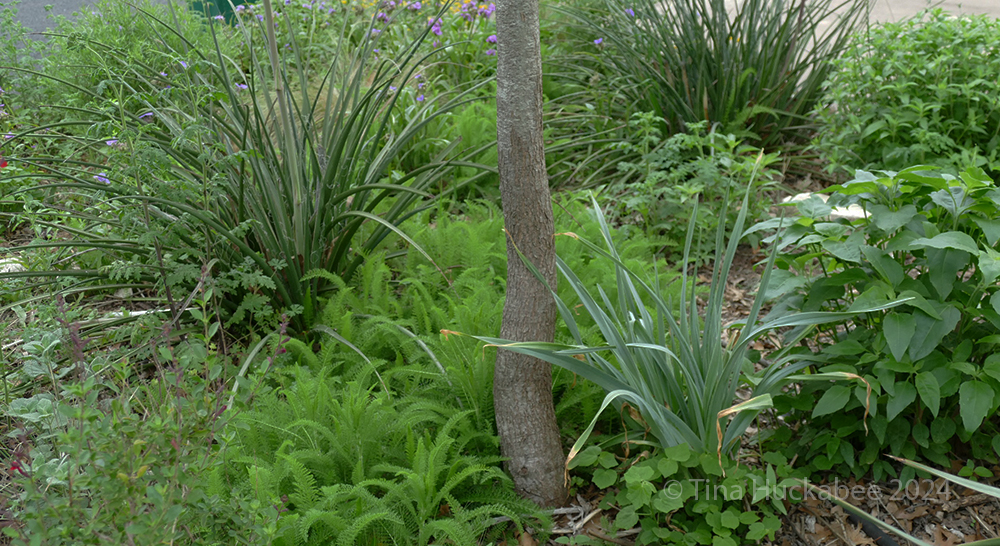
The greens are greening-up too, thank you very much. Foliage certainly has its own beauty and purpose, not outdone by flashier colors. In this photo, two evergreen Red Yucca, Hesperaloe parviflora, mix with spring-green Yarrow, Achillea millefolium, and the foliage of other Texas perennials: Plateau Goldeneye, Viguiera dentata and Zexmenia, Wedelia acapulcensis var. hispida. Just emerging from the soil is the scalloped foliage of Pam Puryear’s Pink Turk’s Cap, a cultivar of native Turks Cap, Malvaviscus. The trunk of a young Red Oak, probably planted by a Grey Squirrel, bisects the greening vignette .
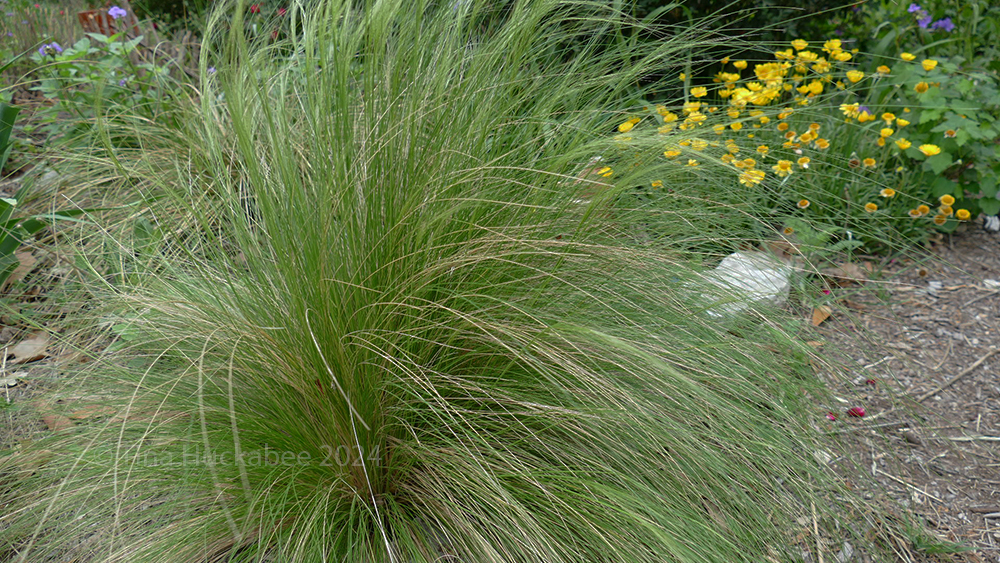
Beautiful Mexican Feathergrass, Nassella tenuissima, pops up here and there, graceful in form and color.
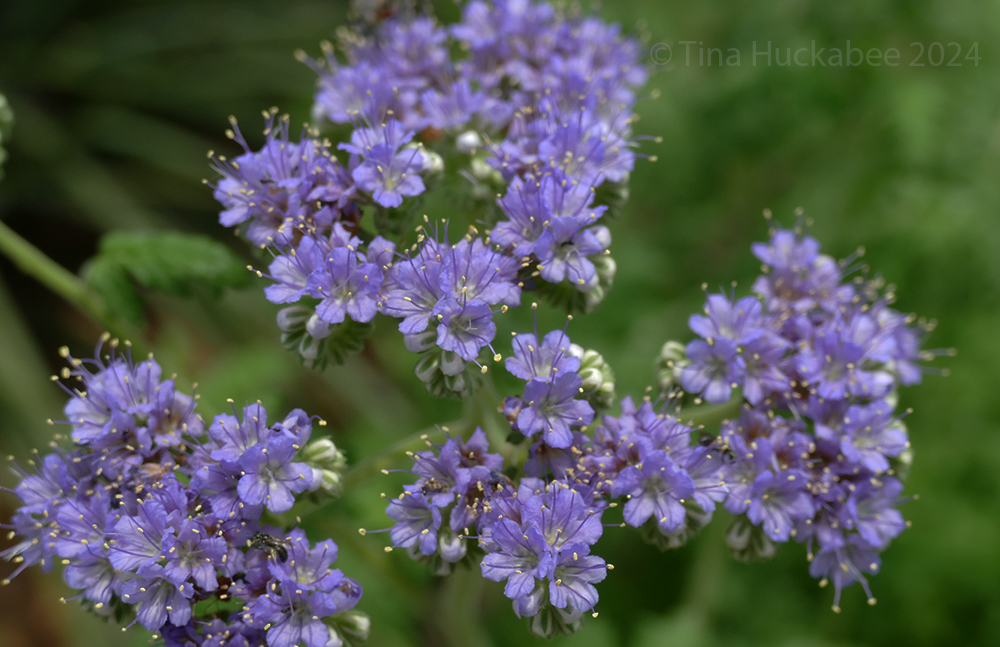
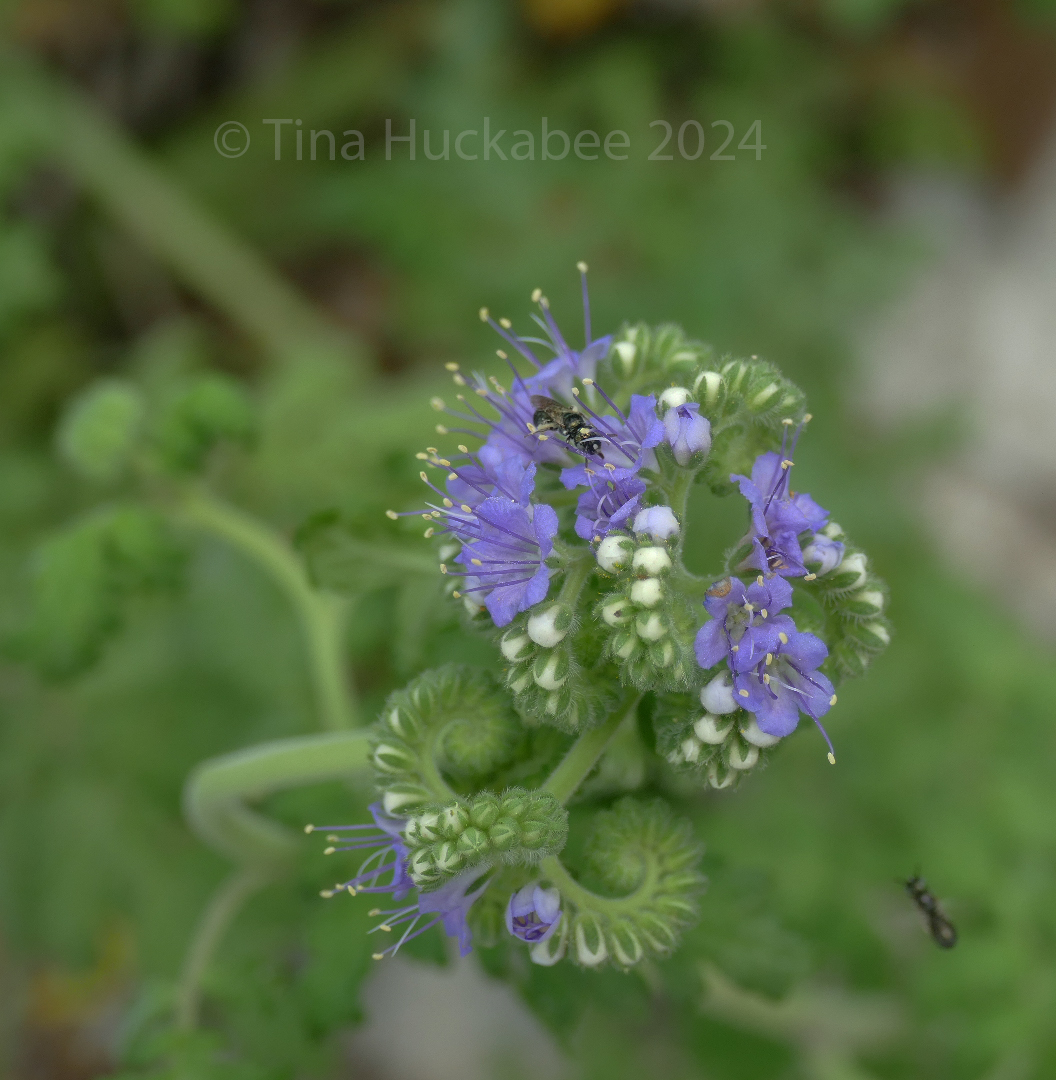
The primacy of Blue Curls or Caterpillars, Phacelia congesta, is nigh. Lovely blue-purple florets unfurl along a spine, beckoning pollinators to visit and gardeners to admire. There’s a tiny native bee on this cluster set, do you see it?
If not, here’s another flower cluster hosting a similar busy bee, one more zooming in for some action.
Each day, more of these annual wildflowers are opening for business. Soon, I’ll watch as myriad pollinators, particularly small native bees, skippers, and true bugs, visit these blooms. Aside from the color, texture and form of the plants, the garden is alive with movement and life of those who rely on the plants for survival.
Spring has definitely sprung. The weave of form and color mark each morning-to-nightfall, and change is a constant. Pollinators are in fine form and migrating songbirds are passing through, resting from their travels and nibbling insects and seeds that drop.
Spring is the definition of beginnings, a confirmation of living.






 My Gardener Says...