It’s So Nice to See You!

On yesterday’s walk around the neighborhood with Duke the Dog, I saw some Texas Dandelions, Pyrrhopappus pauciflorus. Several are growing in neighbors’ lawns, others rise up from cracks in walkways; they grow where they land and aren’t picky plants. I lamented that none of these cheery plants had so far appeared in my own garden yet, though they typically show up, where they like, pleasing this gardener and providing for the pollinators. The non-native dandelions have bloomed since February, and are mostly done. I certainly don’t mind those flowers as they serve as an early source of nectar for the honeybees and other pollinators that wing through the late winter garden.

On this bright, cool morning I spied a sunny, Texas dandy bloom, stem and leaves holding the buttery bloom aloft, as it cuddles with a Mexican Feathergrass, Nassella tenuissima.

A different view of this pretty pair also shows some European poppies dotting the background, along with new bloom spikes of Henry Duelberg Sage, Salvia farinacea.

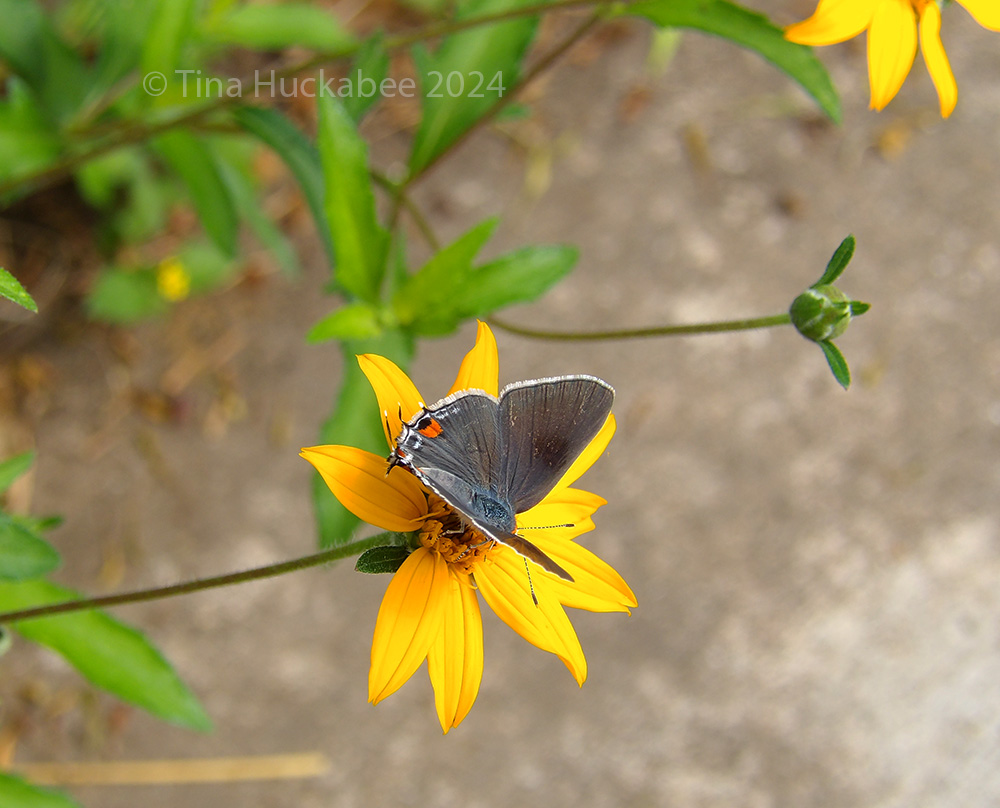
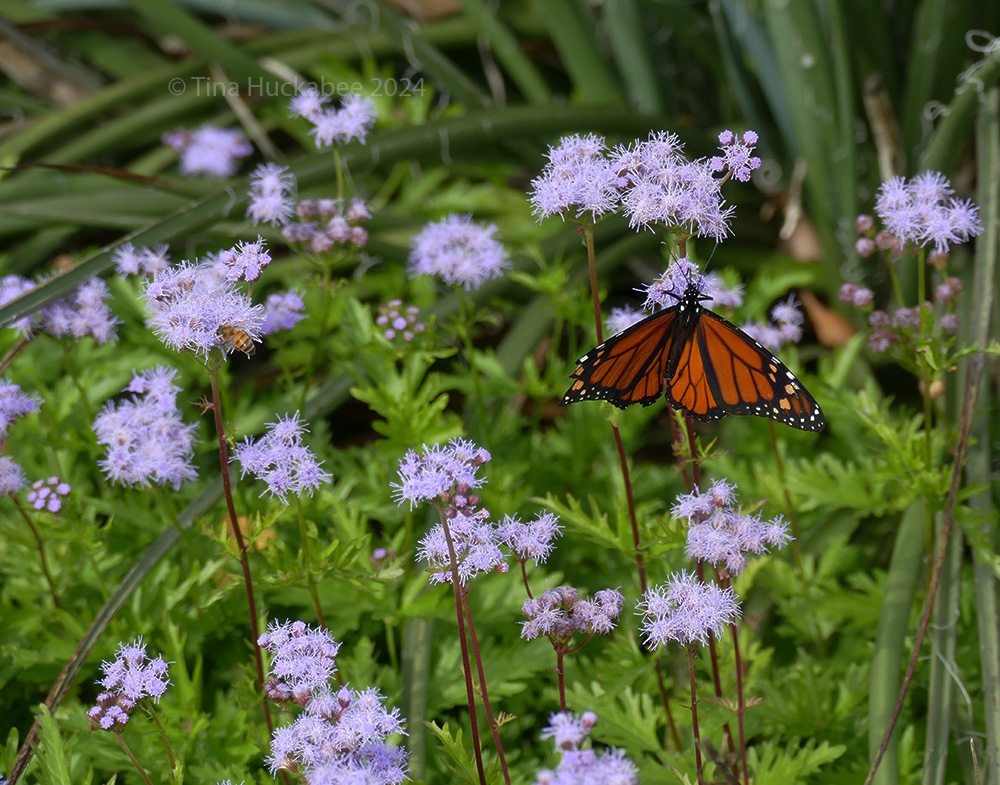
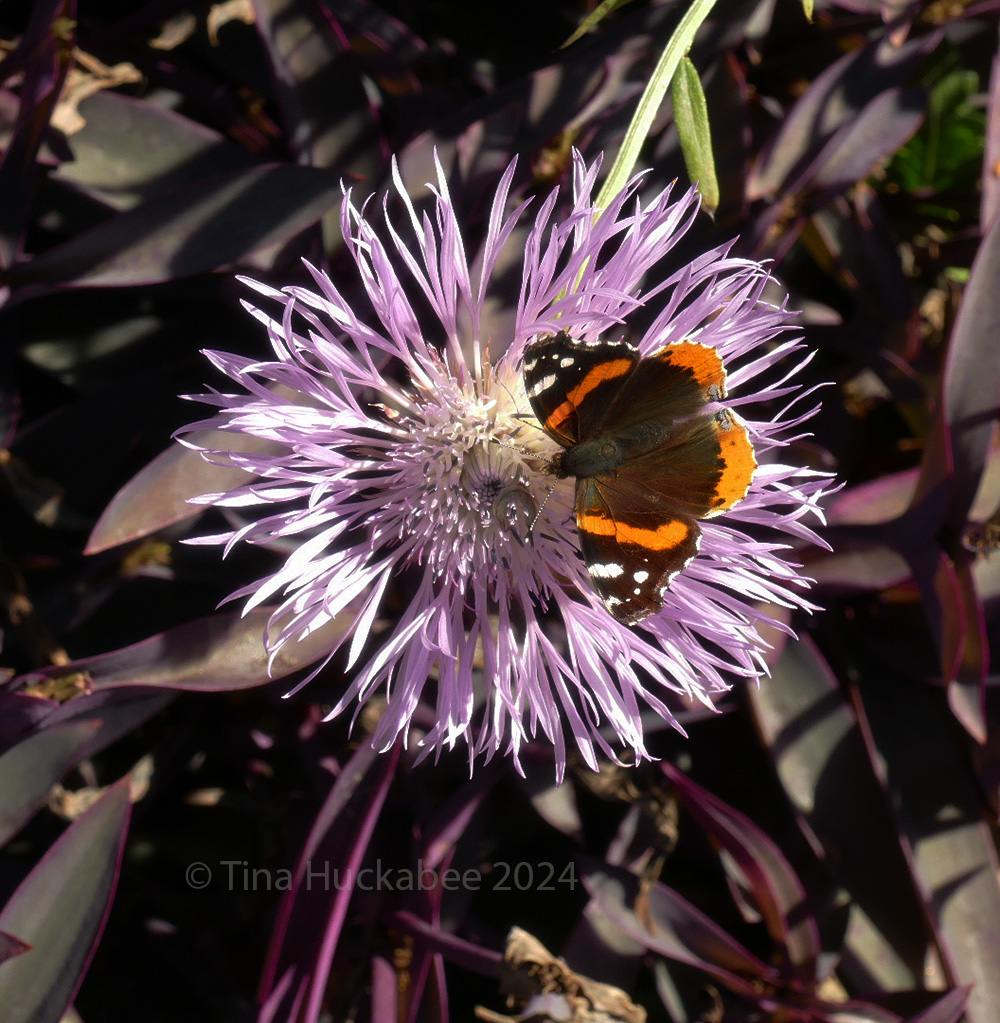
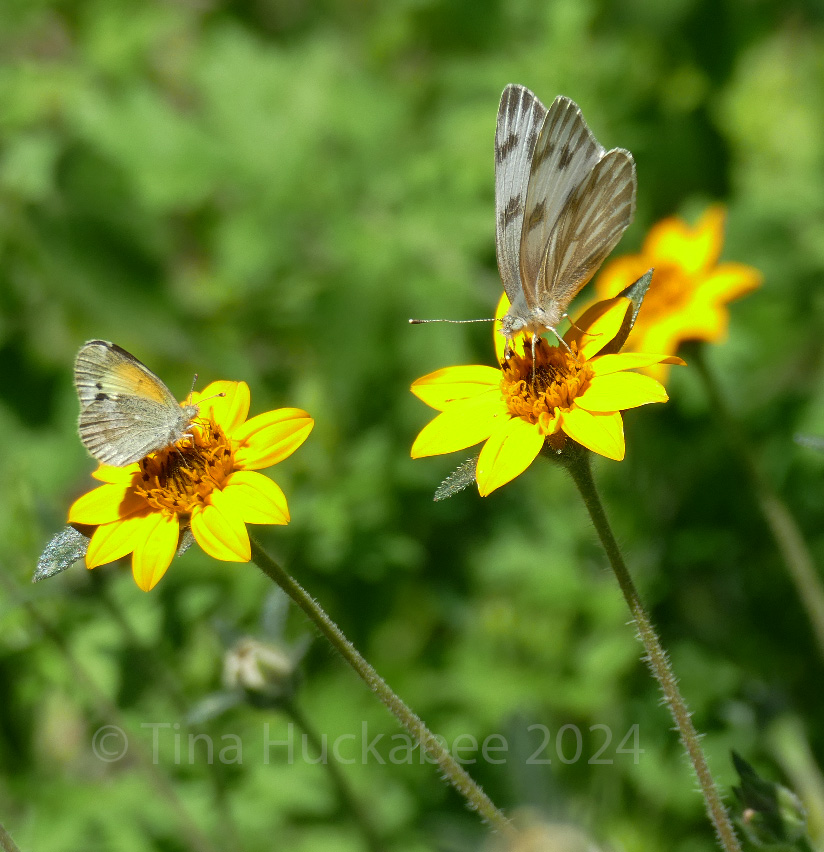
The only thing that would make these scenes better would be some pollinators in action. Alas, the chilly wind this morning probably slowed their work.

Nevertheless, it’s so nice to see you–all of you! Happy Spring, y’all!

A Riff on Pink-n-Blue

Riffing on a recent post from Steve at Portraits of Wildflowers, I’m enjoying my own celebration of the annual pink-n-blue spring happening. It was Steve’s post that reminded me that I do have a redbud tree and that maybe, just maybe, it might be loaded with blooms this year. This little tree has grown apace since the front garden shed its shady ways and began thriving in full sun after the removal of a large, ice-storm damaged Arizona Ash tree.

The plant seeded itself in this spot 10-plus years ago. It didn’t grow much and never bloomed, though the foliage certainly looked to me like redbud foliage.

Absent other clues, I just wasn’t 100% certain what it was–until last spring. Last March a few of the signature dainty pink flowers, hugging close to the limbs, appeared. Yes! A redbud tree! I was tickled pink!

Once the tree was exposed to full sun, it took off in height and width, and this spring for the first time, it is in full flower production. Blooms have appeared throughout the limbs, in concert with the unfolding heart-shaped leaves.

There are several kinds of redbud trees which grow here in Texas. I believe that this one is an Eastern Redbud, Cercis canadensis var. canadensis, mostly due to its glossy leaves. There are a number of these trees in my neighborhood and there are several small seedlings in other spots in my garden.

As I’ve observed the blooms, tiny native bees seem to be the primary pollinators. On a breezy day, they’re hard at work, but difficult for me to capture in a photo.

The common name for this tree describes the red buds, before blooms open. But it’s the lovely shape, lush foliage, and sweet pink flowers that most people remember about this tree and its relatives.

Pink blooms and blue skies–spring has sprung!

They’re Off!

Winter placed its chilly hands on the garden these last two days, including gifting a thin layer of ice in the backyard birdbaths this morning. But the weather pattern is in flux with each passing day as the march toward winter’s end and spring’s beginning commences here in Central Texas. Later this week, the forecast is for high 70s, possibly warmer. Even without that warm smooch, the plants in my garden are raring to go and ramping up for the 2024 growing season.

On a cloudy day last week, I noticed (as yet uneaten) fruit on the Possumhaw Holly, Ilex decidua, keeping company with emerging new foliage. I like this great example of seasonal transition period. Blue Jays, Northern Mockingbirds, and Grey Squirrels are feasting on the fruit, but I’m waiting for a flock of Cedar Waxwings to swoop in and render the fruit a sweet memory.

Four-nerve Daisy, Tetraneuris scaposa, never stops blooming, though some of mine were freezer-burned in January during a very cold week. Now? The sunny yellow blooms are spring-bright and open for pollinator business.

This small (maybe?) native Halictidae bee found a sweet spot for nectar sipping and pollen gathering one afternoon. I didn’t disturb its hunt for the sweet stuff as I puttered in the garden.

Four-nerve Daisies are barely damaged by most freezes, but in the above photo, on the right side, you can see a bloom stalk that would have flowered in late January, except for that one deep-frozen week. The other bloom stalks emerged post-hard freeze.

On another day, another, different native Halictidae bee, busily works a daisy bloom.

Some of the earliest blooms in my garden (and occasionally some of the latest) are Spiderworts; a handful have emerged from green foliage to grace the garden and feed hungry pollinators. A favorite early flower for many types of bees, from mid-March until mid-May, my garden will be awash in an array of purple-to-pink blooms.

Those plants whose blooms appear later in spring and summer are flushing out with verdant foliage, like this rosette of Blue Curls (also called Caterpillars), Phacelia congesta.

A couple of young Blue Curls accompany a robust rosette of American Basket-flower, Centaurea americana. Both promise plenty of flowering and pollinator action later this year. The rich green foliage is a welcome change from winter’s muted tones.

This potted American Century Plant, Agave americana, enjoys some foliage friends in the form of one European Poppy (right), a Blue Curl (left), and a front-n-center Carolina geranium, Geranium carolinianum.

I grow five Desert Globemallow shrubs, Sphaeralcea ambigua. This gorgeous plant is a cool season bloomer here in Central Texas and requires full, blasting sun and decent drainage. Ruffly, sage-green leaves pairs beautifully with Dreamsicle orange blooms.

This globemallow withstands hard freezes, but if the temperature falls in the the teens–or lower–damage will occur. My shrubs experienced some freeze damage in January’s freeze, but all are producing blooms on the healthy stems–much to a variety of bees’ delight.

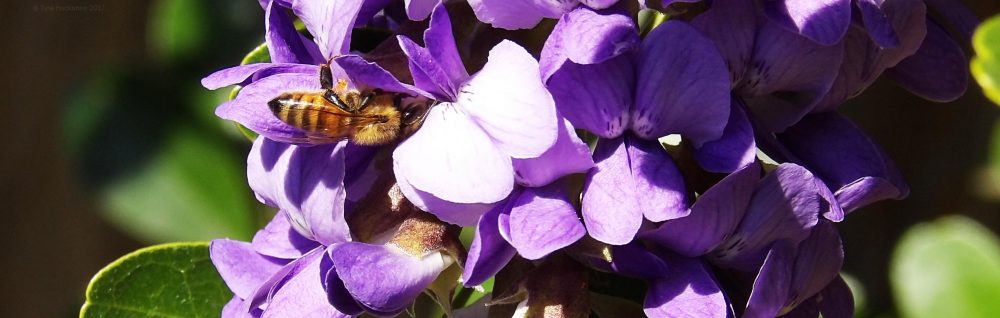
Honeybees are out and about, collecting for the the hive!

I fed the honeys during that cold week, but there’s been enough flowering (I think…) during most of this winter, plus both hives had honey stores. Our first hive check is on the to-do list for this next week to assess how the ladies are and how much honey, if any, remains from last season.

I’ve been engaged with winter pruning of the garden, but I’m nearly done. I let leaves remain on the ground, further protecting and nourishing life, and eventually decaying for future growing seasons.

The garden has awakened, its inhabitants ready to live and reproduce. Plants and critters are in sync with their companion life-cycles.

It begins, anew.