Along with a bevy of flowery blooms, late summer and autumn showcases the graceful good looks of native grasses. Native grasses are attractive year-round but really strut their stuff in autumn. I’ve grown the shade-loving Inland Sea Oats, Chasmanthium latifolium for years and love them, but grasses requiring the intense Texas sun I could only admire in other gardens. Now that my front garden is sun-drenched, native grasses have a place and they have shined.
I’m besotted with Gulf Muhly, Muhlenbergia capillaris. I was never successful in growing these pink, frothy pretties, until appropriate, sunny conditions developed. I now have plenty of sun-baked spots and four new Gulf Muhly have nestled in nicely.
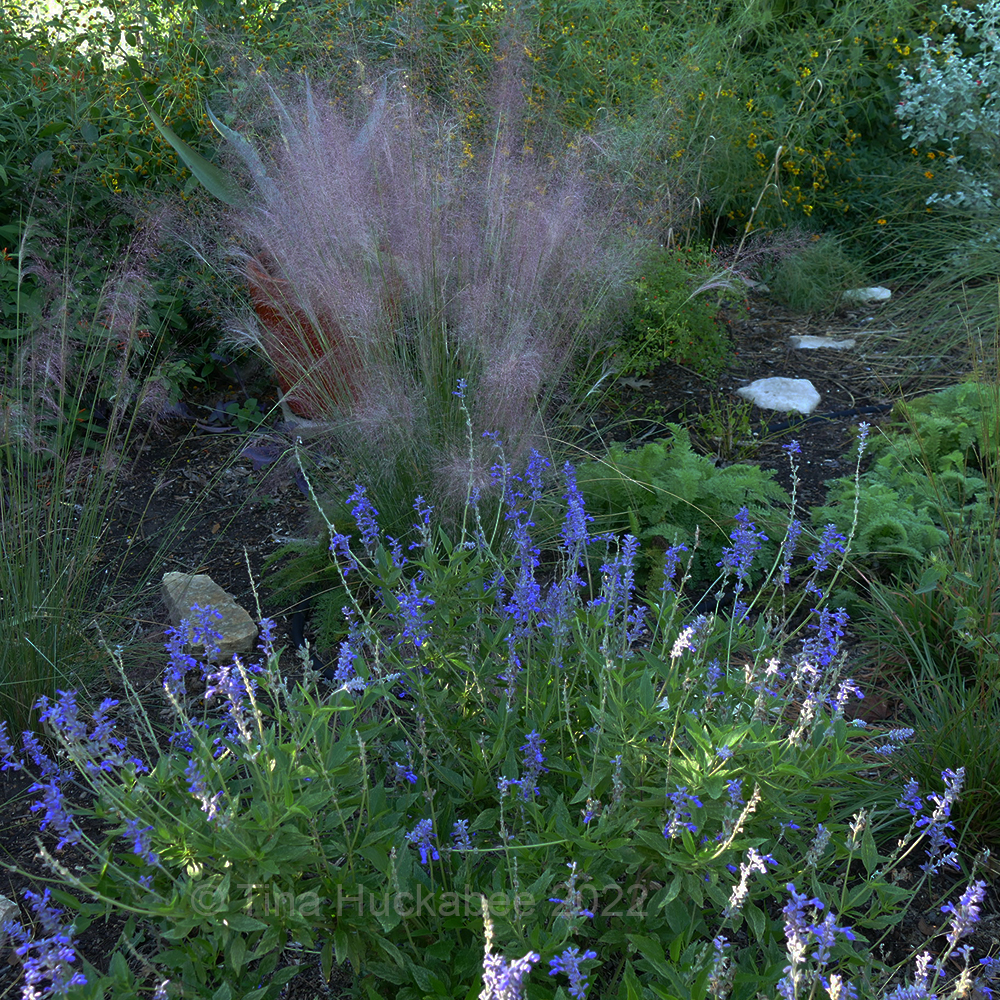
Two older Gulf Muhlies have grown well in another spot for a couple of years, but in my re-vamped sunshiny space, there are an additional four individuals. These muhlies are slender, shapely green throughout spring and summer, but in October, their pink-purple plumes add gauzy elegance and a swath of color in the last days of the growing season.

A closer view of this purple-pink magic.

I planted an arc of four muhlies, though only one has powered up the color in full. These have been in the ground less than a year and since this photo was taken, the other three, while still behind in the fluff, have filled out well. Gorgeous whether in sunny or cloudy conditions, they add softness and movement in the garden.

I have successfully grown a couple of Lindheimer’s or Big Muhly, Muhlenbergia lindheimeri, for a few years. Another beautiful plant year round, the lacelike plumes develop in autumn, catching the sun’s rays and swaying with the wind.

These three fit well together in the garden!

This is my oldest Big Muhly and it’s always a stunner.

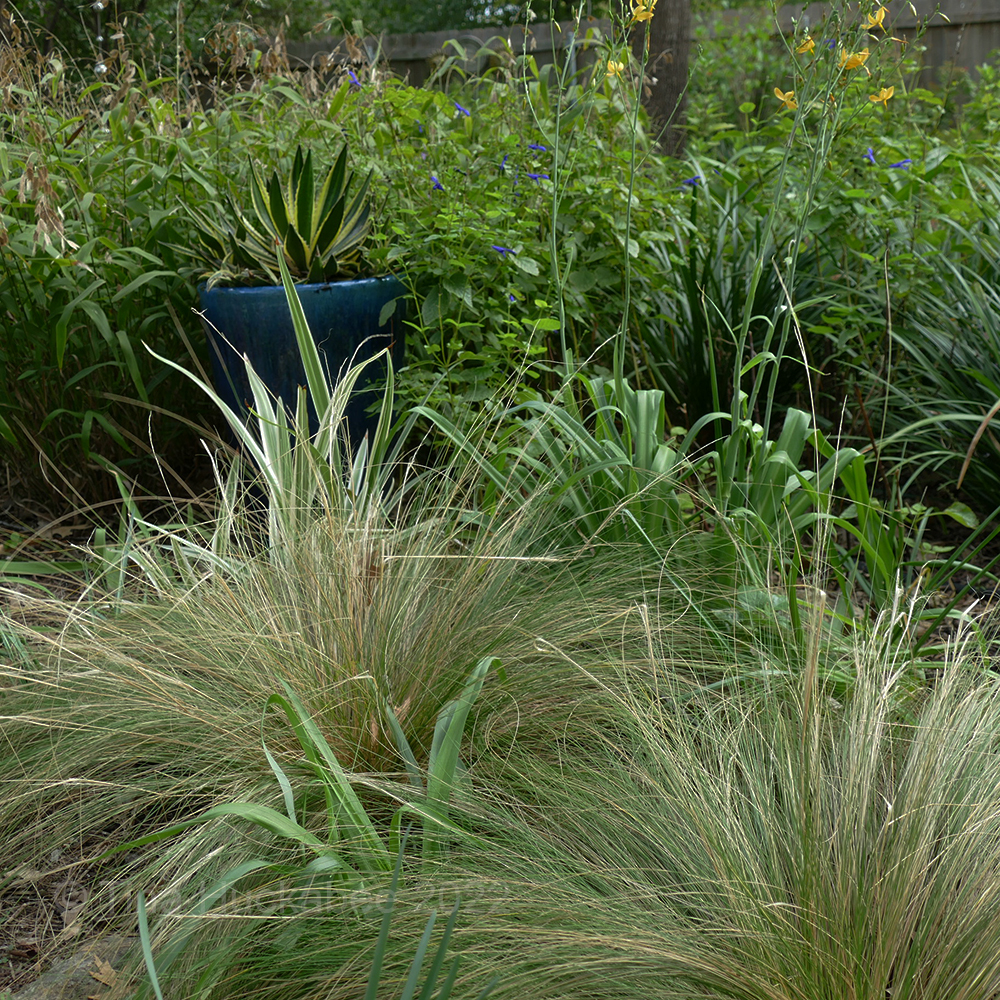
Spring and summer silvery Mexican Feather Grass, Nassella tenuissima, have switched their colors to autumn toasty, with a hint of sage. These small grasses fit well in a variety of settings and like all the native grasses, are tough, hardy plants. I’ve had more luck with this grass in part-shade, but am pleased with how they’ve fared in full sun.
In the new sun garden I’ve added three Little Bluestem, Schizachyrium scoparium. I like this little grass, tidy and dainty, though confess some disappointment that its autumn color hasn’t yet materialized as advertised.

You can see the green clumps and the stems that shoot upwards in fall. There are even some cottony seed heads already formed on one of the plants.

This spot actually gets a little bit of fall shade as the angle of the sun is lower, so I’m in the process of moving the trio to a nearby spot which I think will get full sun in summer and fall. In fact, the third of the trio I’ve already moved:

This one has some nice burgundy/rusty foliage action, not fully in fall garb, but more in line with the typical autumn colors of Little Bluestem. This individual never developed its vertical stems because when I allow my younger cat, Lena, in the garden (supervised and only for a few minutes!) she loves to munch this particular grass.
Maybe Little Bluestem needs something eating it to get fall color??
This post completes a short series highlighting the autumn Texas garden delights of birds, blooms, pollinators, and grasses. Our summers are hot, but the payoff in utilizing native plants in our wonderfully long growing season is an autumn filled with color, movement, texture, and life. And isn’t that what’s a garden should be?










 My Gardener Says...