Blue Eyes Smilin’

Each January, a sprig of “grass” emerges from a crack in my limestone patio. I look forward to its appearance, as I know that a sprinkling of cheery little blue blooms will decorate the diminutive stalks during March and April. I don’t know where this Blue-eyed Grass, Sisyrinchium angustifolium, came from and it’s never reproduced anywhere else in my garden. I have seen clusters of them scattered in the turf at the park adjacent to the local elementary school, but I don’t know of any closer to my garden.

Not actually a grass, this sweet patio gift is a member of the iris family. Each year, I promise that I’ll look for, and collect, seeds; each year I forget. This year is no exception on the promise end of things, but I have made a note of watching it carefully as the blooms fade, in hopes of gathering seeds to sow in fall somewhere else in my garden.

Such dainty, dancy things, they wave gently with spring breezes, happily blooming where there aren’t any other blooms to compete and over-shadow.

Look at that cute face!

Next year, seeds and seed-gathering willing, they’ll grace an additional area of the garden.

As I thought about the title of this post, “Blue Eyes Smilin’ ” popped into my head, obviously a riff on the song that made Willie famous, Blue Eyes Crying in the Rain, though it was written by Fred Rose. That song has been in my head all day, so I’m sharing.

Texas Dandy

In February, I posted about the non-native dandelion that is common in gardens and pathways pretty much everywhere. Though most people consider it a weed, I have no argument with that little flower, since it’s an early bloomer for pollinators.

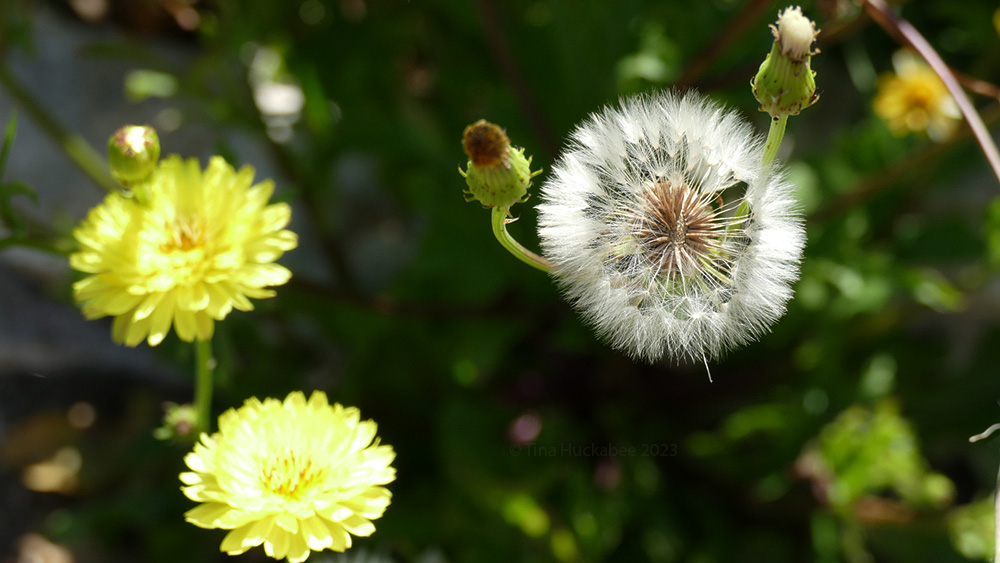
Fast forward about six weeks with spring in full swing, and the native dandelion, Texas Dandelion, Pyrrhopappus pauciflorus, has made itself comfortable in my garden. Here it is, upfront and on stage, Four-nerve Daisy, Tetraneuris scaposa, waving in the background.

This little aster is a paler shade of yellow, more butter-yellow, than many other native yellow asters. The lower portion of its anthers are colored a deep maroon, which contrasts nicely with the soft yellow.

The flowers open in the mornings, though I’ve noticed that they are sleepy heads and it’s well after sunrise before they greet the day. The blooms close by mid-afternoon.

Like other flowers in the Asteraceae family, the seed heads are snowy white puff balls, just waiting for that perfect breeze to carry them off to land in another home.

In my garden, I haven’t seen any of the typical bee/butterfly/other pollinators nosing around the blooms. Instead, there’s often a cucumber beetle in the center, presumably doing the business of pollinating.

This individual planted itself just outside the bounds of the garden, which is typical; these usually grow in the pathways of my garden.

It’s a complementary plant alongside the planned garden, though it’s not the only one that invited itself to join the community.

The wide-leafed plant situated just behind and to the right of the Texas Dandelion is a volunteer American Basket Flower, which I wrote about last year. And next to that is a Coast Germander, Teucrium cubense, that appeared last year as well, uninvited, but not necessarily unwelcome. Not an aster, but instead in the mint, or Lamiaceae family, the dainty white flowers bloom non-stop and the foliage was evergreen all winter.

I think all three unplanned additions are dandy!

Fuzzy Wuzzy

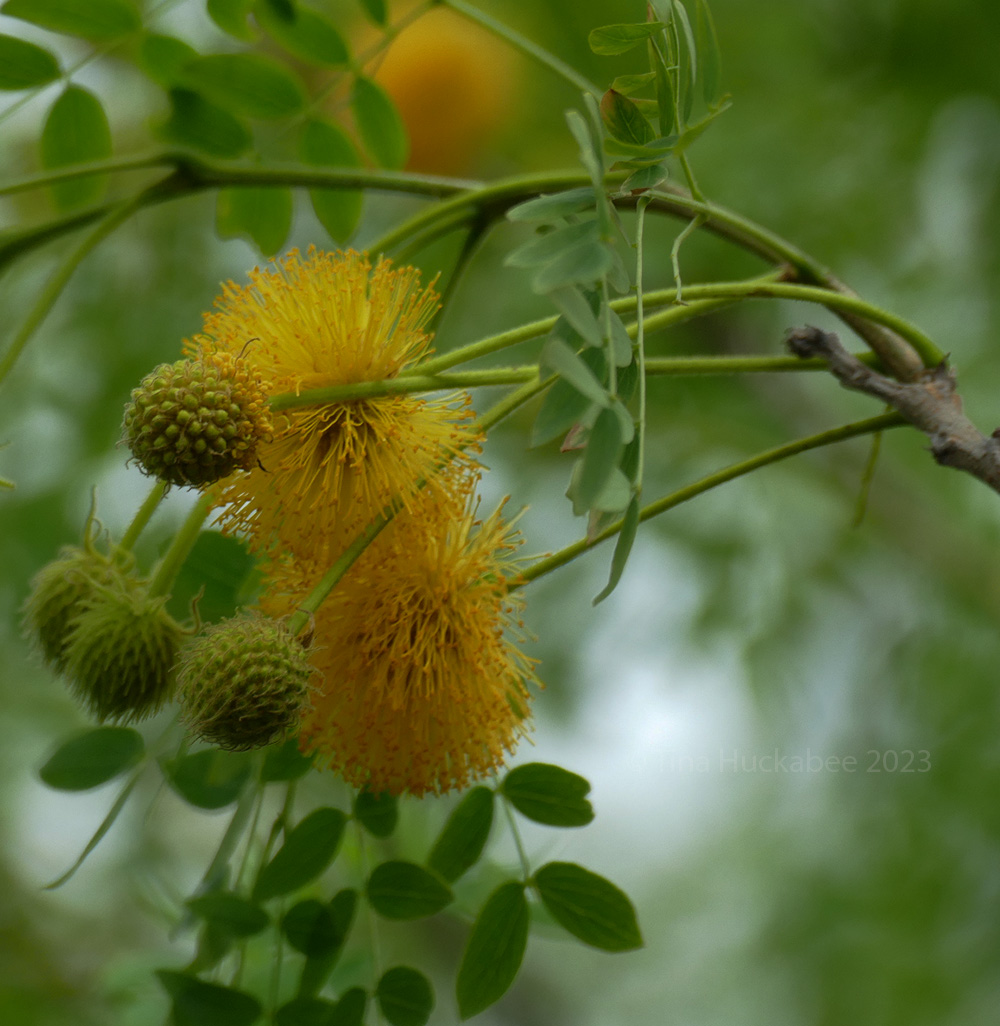
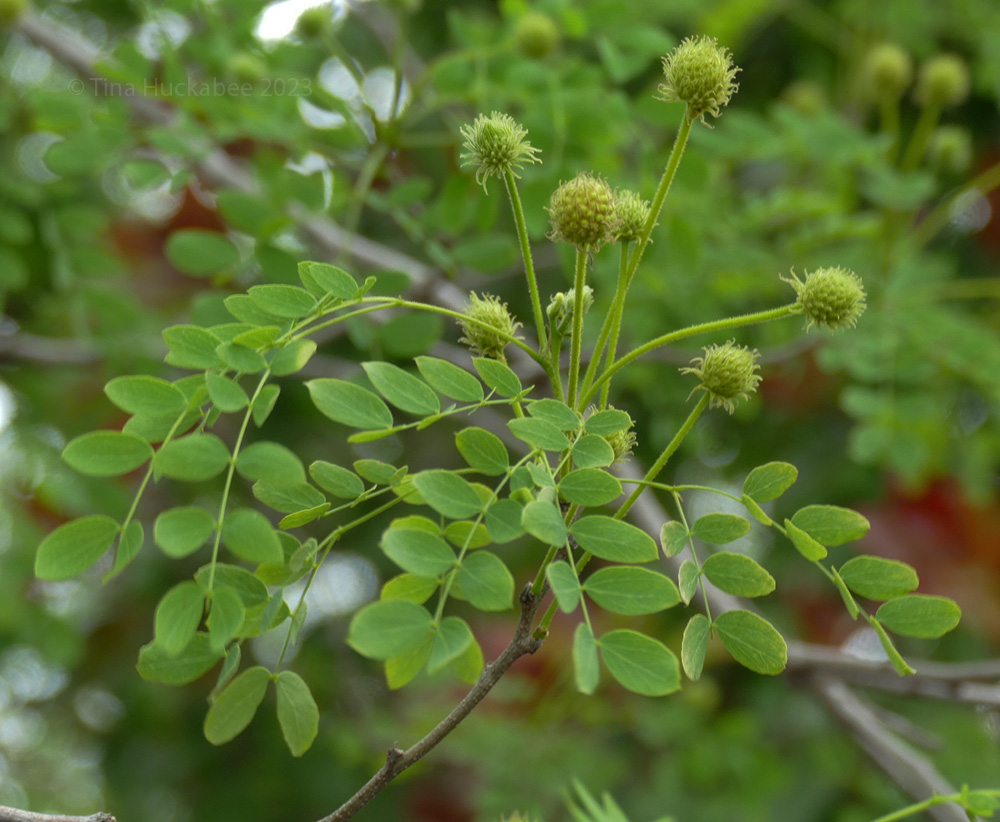
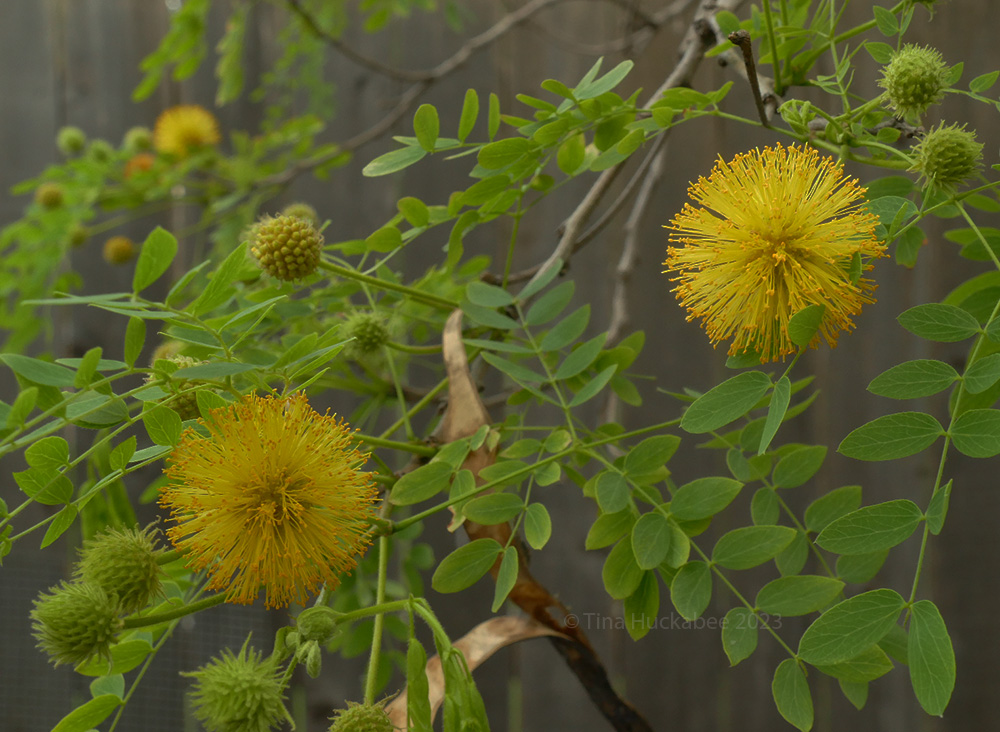
Spring is progressing apace, new foliage and flowers appearing, posthaste. My diverse garden community offers varied, interesting blooms, each with their own timeline for appearing, each with their own story and role in this ecosystem. Puffy and playful, the fuzzy spring looms of the Goldenball Leadtree, Leucaena retusa, are glorious golden decorations in a shady part of my garden

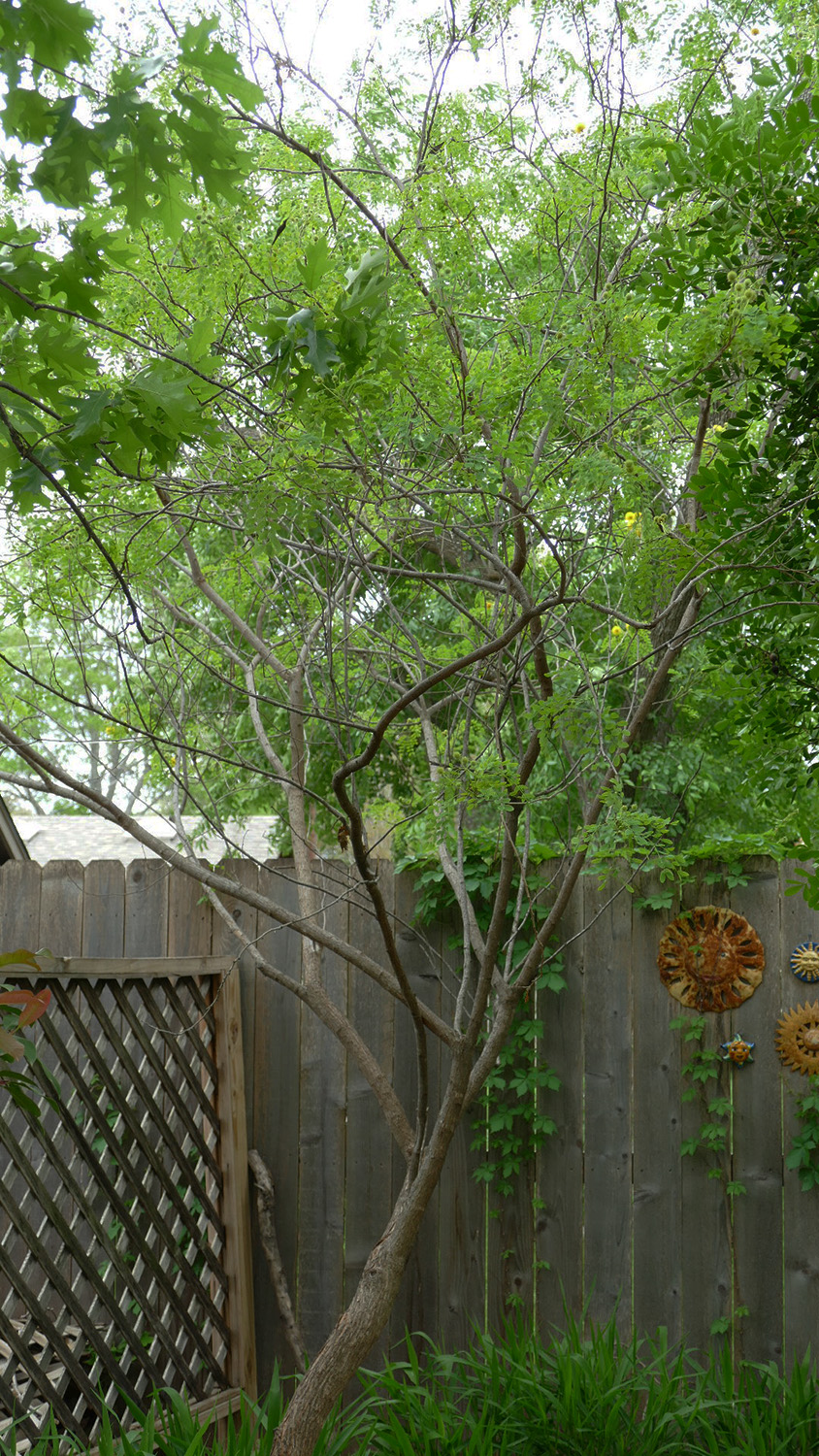
This tree is also called Little-leaf tree, or Lemon ball tree–names I find poetic–and except for the ‘goldenball’ part, I find the moniker Goldenball Leadtree a bit klunky. If I’d been asked, I might have named it Golden Koosh Glory tree, or Magnificent Yellow Fuzzy-Wonder tree. Nomenclature aside, what isn’t klunky is the lovely, airy form of this tree.

Shortly after the foliage appeared, blooms begin.

Goldenball Leadtree is a small, shade to part-shade tree, perfect for a small to moderate sized urban garden.

The tree in near full bloom mode.

Flowers begin developing in early March, shortly after the foliage returns from winter’s dormancy. Blooming peaks in April, and slowly declines through May and June. Autumn rains often bring a late season gift of a few of these fuzzy delights. Foliage is delicate and little leafed, colored in pretty, bright green, until a hard freeze unceremoniously drops the leaves.

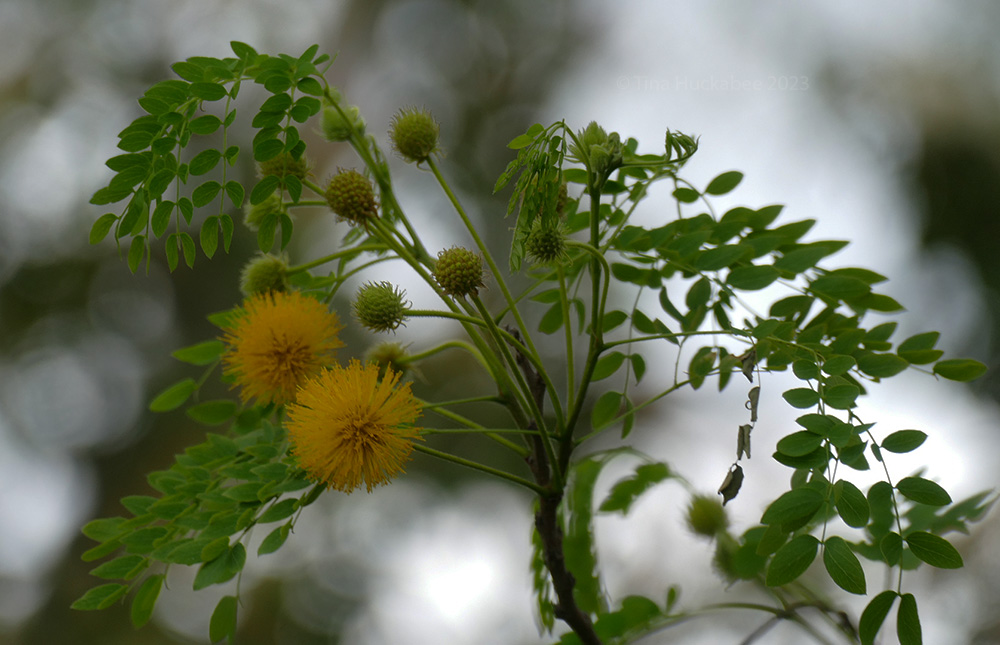
Developing buds remind me of certain unripe berries.

In sunshine or shade, the tree is a joy in the garden.

The Goldenball Leadtree is in the Pea, or Fabaceae family. Most of the other plants that I grow producing fuzzy flowers belong to the Aster, or Asteraceae, family. I also grow plants that aren’t fuzzy in their flower form, but once they’ve gone to seed, fuzzy, usually soft, structures carry seeds on the wind to parts unknown.

In the light shade of the Goldenball Leadtree, sits a stand of more golden goodness, a small patch of Golden Groundsel, Packera obovata. Diminutive ray flowers accompany the larger goldenball blooms in their early spring show. Once the blooms are done, cottony-soft seed balls appear, awaiting wind, landing in a new place.

Spring is a bounty: lush green, color galore. These are but two of the flowering plants in my spring garden. What’s flowering in yours?