Longer days are bright with sunshine, interrupted occasionally by appreciated rainfall; the spring blooming season is here. With each passing day, sprouts emerge, previously shy blooms unfold, and the landscape’s winter muted tones segue to varieties of green, sparkling with rainbow colors. On a recent cloudy, humid early morning a few spring things caught my eyes.
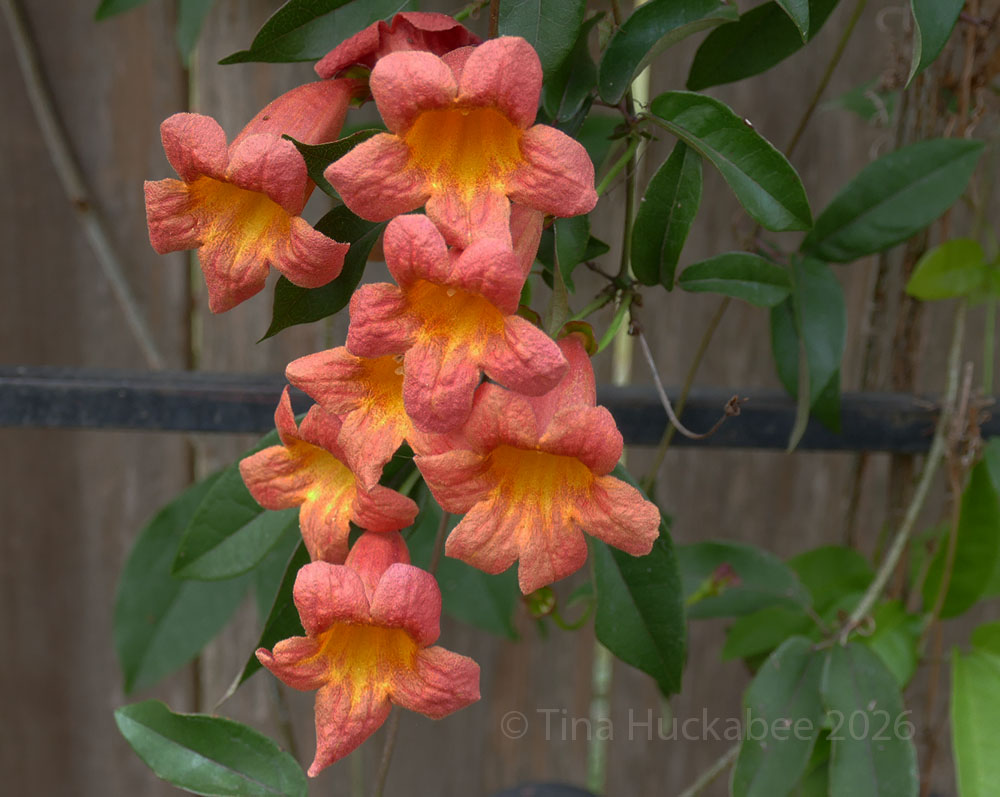
Crossvine, Bignonia capreolata, is an early blooming vine here in Central Texas. Though the flowers were ready for them, pollinators were scarce; it was too early and too flush with the promise of rain. Orange-yellow flowers are open for pollinators and will bloom, at least for a time. In my garden, native bees are prime visitors to these pretties.
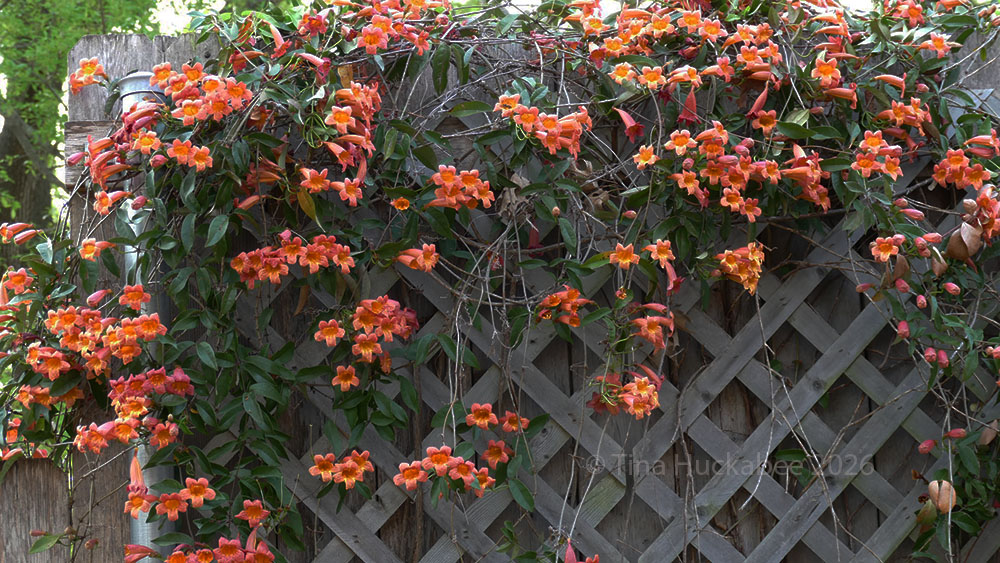
Crossvine doesn’t have a long bloom season. There is the initial, which lasts a few weeks, then usually a second crop later in spring. I see scattered blooms throughout summer.
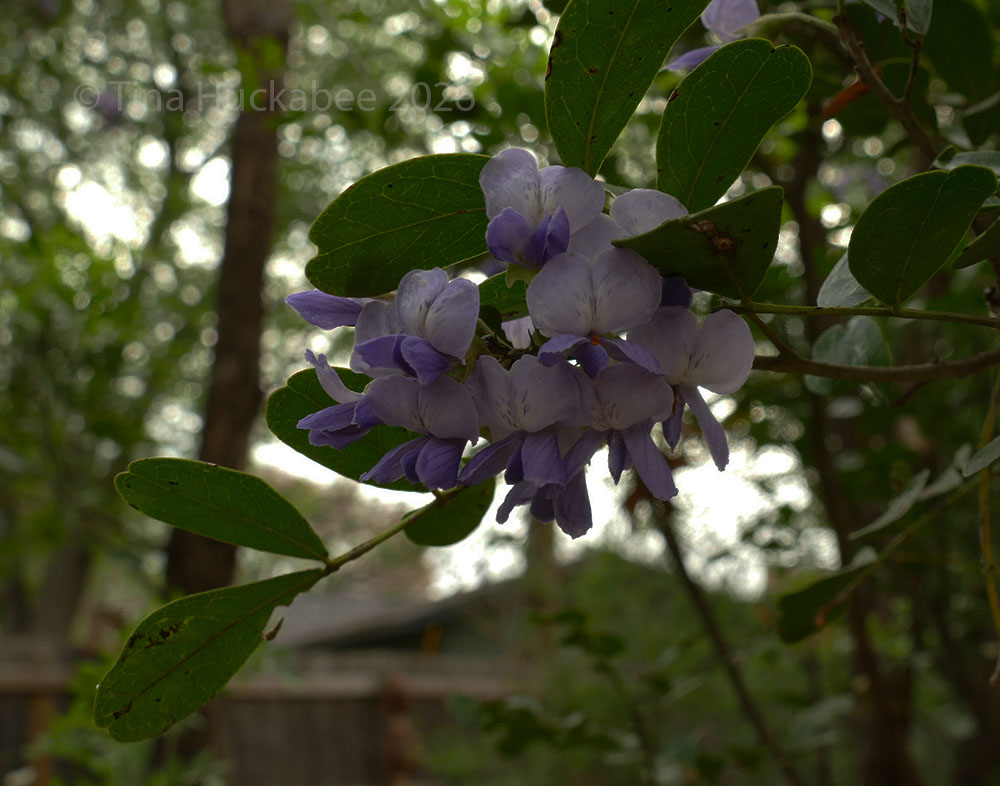
My very old Texas Mountain Laurel, Dermatophyllum secundiflorum, is on its way out of this life. Most of the top portions are bare, dead wood, but at the base where most of the foliage resides, a flush of blooms have danced their way to opening, purple bliss in color, grape soda in fragrance. The Laurel was one of the first things I planted decades ago and its been in decline for a while.
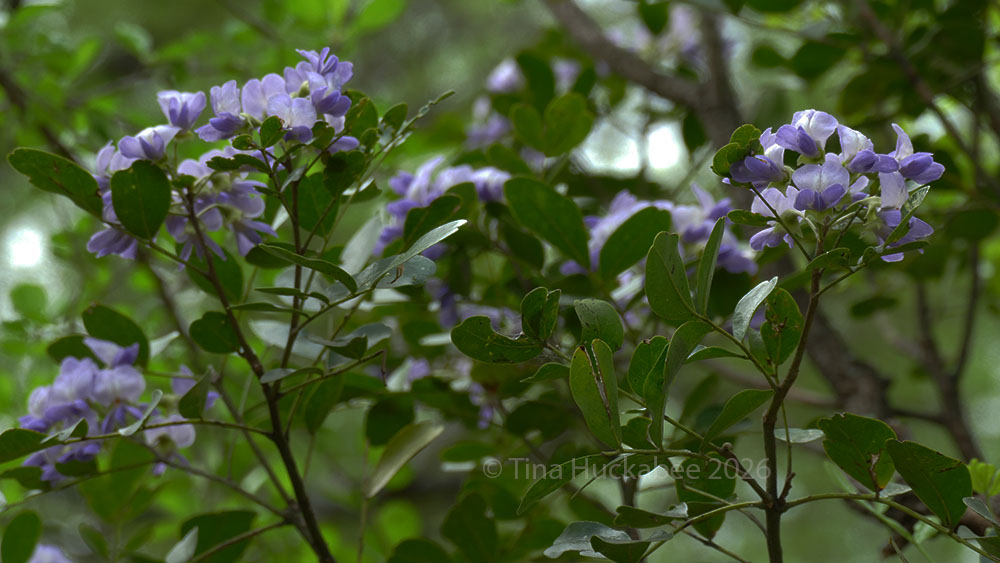
I’m pleased with my Laurel’s purple clusters this spring and the flowers are in sync with other laurels; all around Austin the Texas Mountain Laurels have been especially gorgeous these past weeks. I guess they really do like drought! I won’t remove the tree until all hope of foliage and flowers is gone as birds like to perch on the branches for safety, squirrels like to nibble their meals up in the tree, and the gardener admires the old tree’s legacy and hardiness.
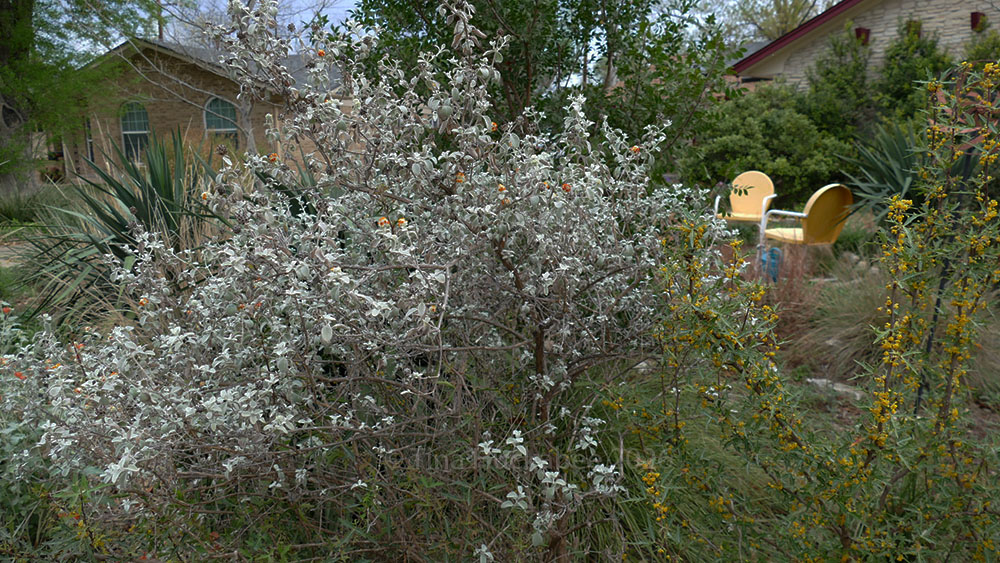
I love the unwieldy, silver-leafed Wooly Butterflybush, Buddleja marrubiifolia. Throughout the year, it stands as a signature specimen, a welcome change from greens in the garden. Interestingly, the Lady Bird Johnson Wildflower Center’s link mentions that the shrub is deciduous (looses its leaves during winter) and needs protection from hard freezes. Not so, mine! I’ve never protected it from any of our sporadic hard freezes and it stands full and grey/silver in all weather. It’s located facing west and near the street, so may it sit in a warmer micro-climate and is thus protected and ever full of foliage.
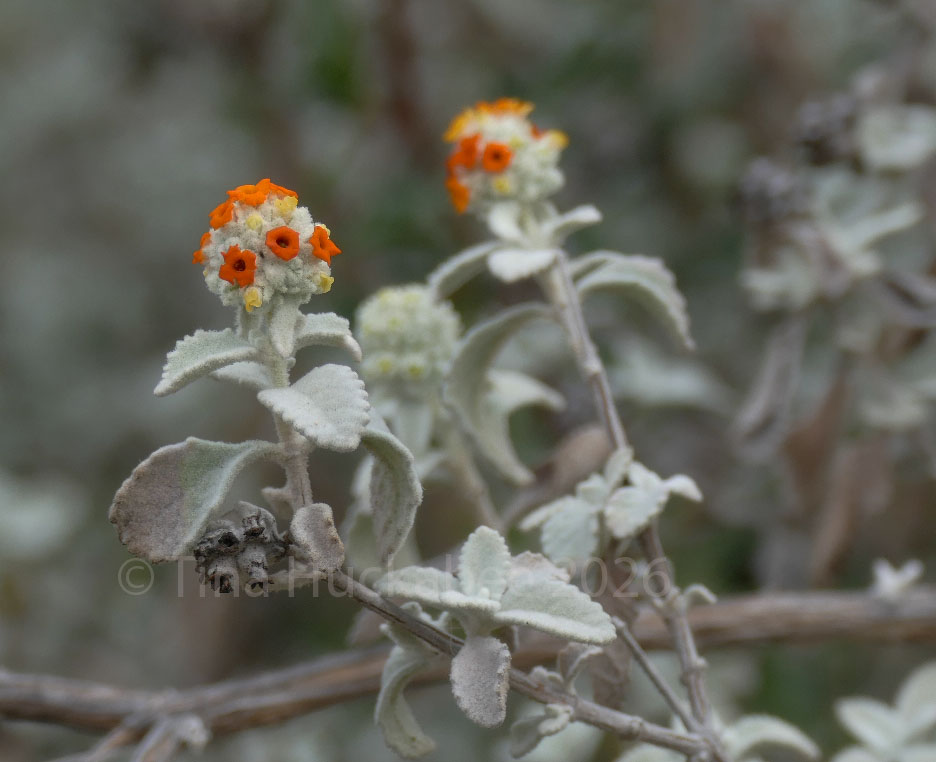
The Butterflybush’s darling petite flowers perch on terminal balls and attracts many kinds of butterflies, big and small. I typically see the pollinators for this plant later in the year.
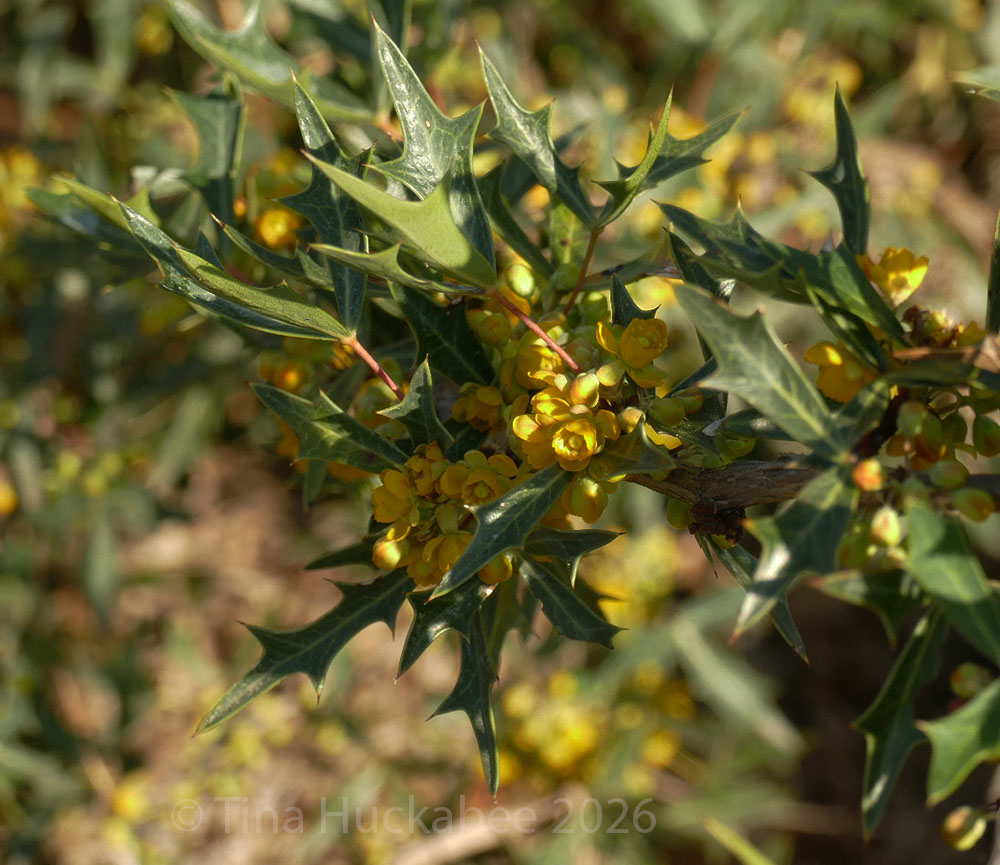
Another rangy plant which is a neighbor to the Butterflybush, are two specimens of Agarita, Mahonia trifoliolata. I’ve always wanted Agarita in my garden and finally planted these two 5 years ago when my front area became full sun. Each has grown apace, producing early yellow blooms for bees, followed by yummy fruits for birds and mammals. Humans also enjoy the berries, which can be made into wine and jelly, though this human is glad to leave the fruits for the critters.
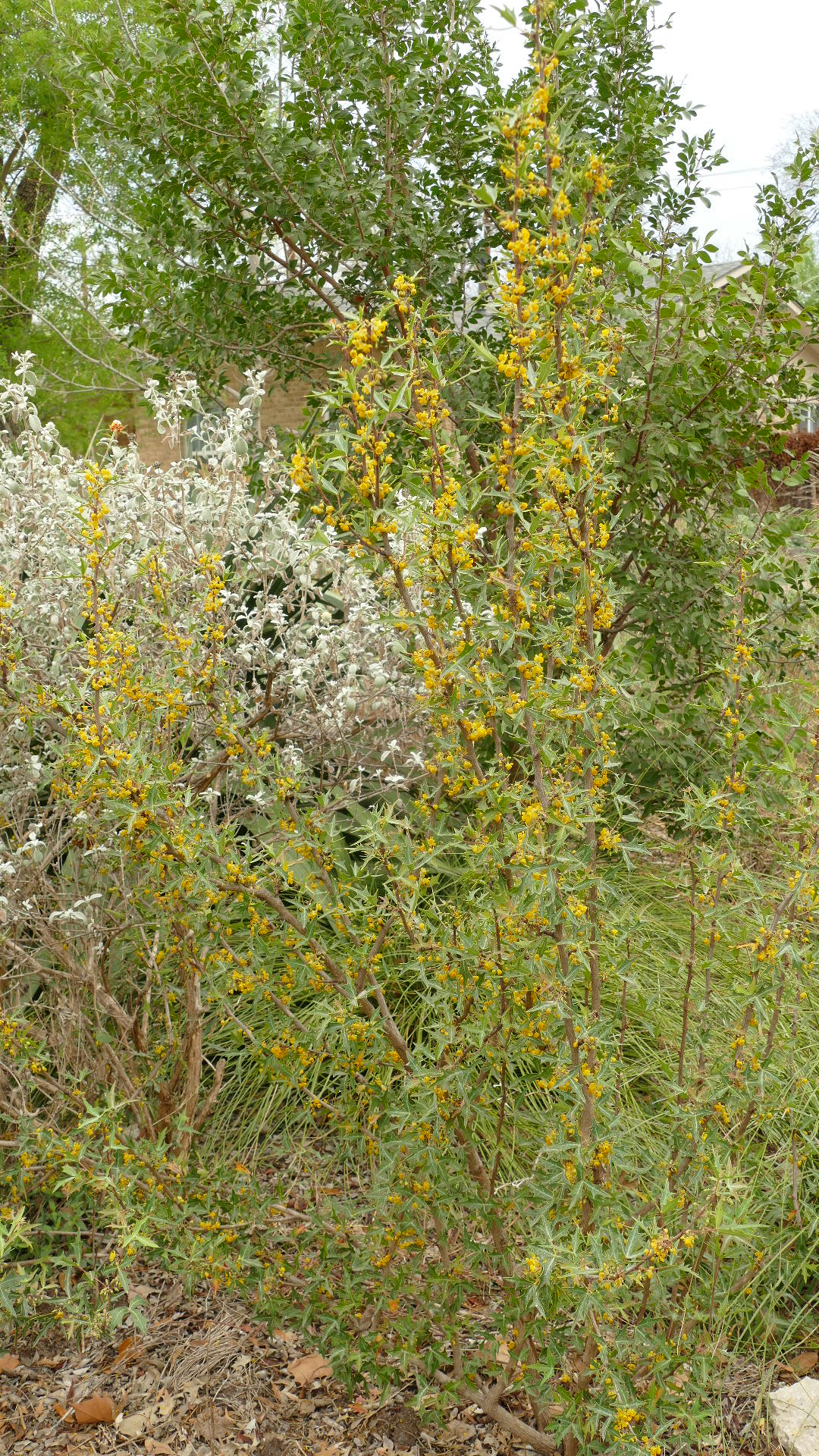
The small flowers are honey-sweet and attract honey and native bees. The only thing I don’t like about the Agarita are its spikey, ouchy, leathery leaves! I’m not a fan of plants that hurt, but I’ve made an exception for the worthy Agarita!
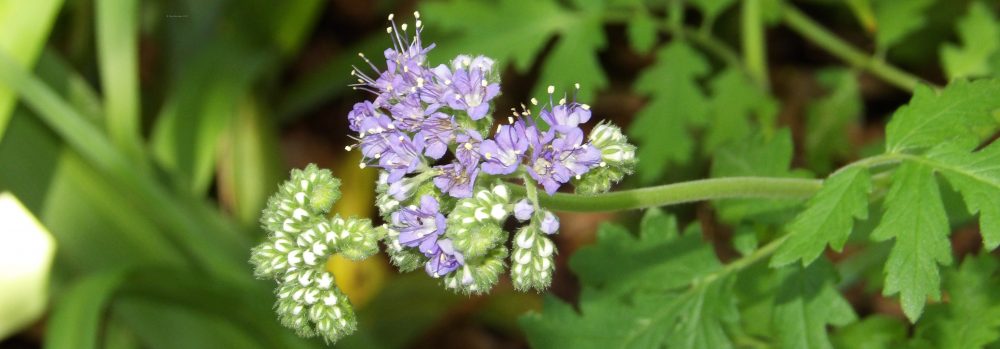
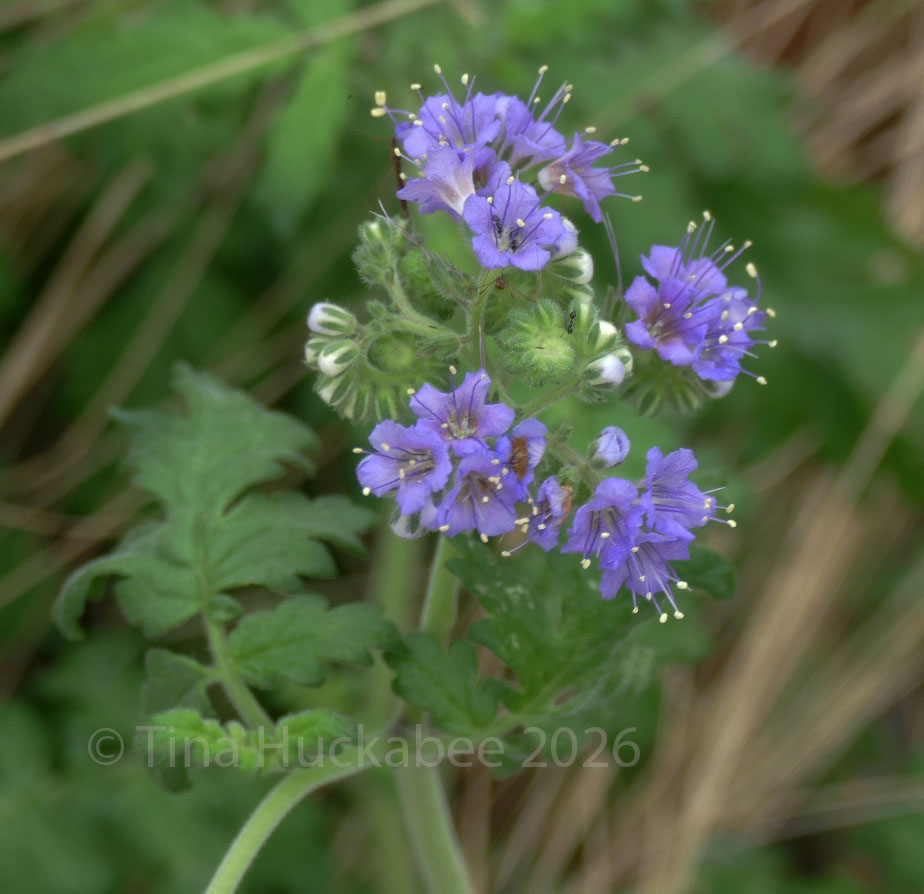
A super early bloomer this spring is one of the annual Blue Curls (or Caterpillars), Phacelia congesta. I have gobs of these annual spring wildflowers that re-seed themselves, but they don’t usually bloom until late March or April. Popular with the pollinators, I’m always amazed at the great variety that show up when these cute things are blooming. If you look carefully, you can see what look like two ants in one of the top blooms. I can’t tell from the photo, but it’s possible that these insects are tiny native bees. Once the blooms set their tiny seeds, migrating birds munch those seeds and help spread these beauties to other places. I see volunteer Blue Curl plants all over my neighborhood in lawns. Sadly, I’m sure most of those plants are mowed down well before growing tall enough to bloom.
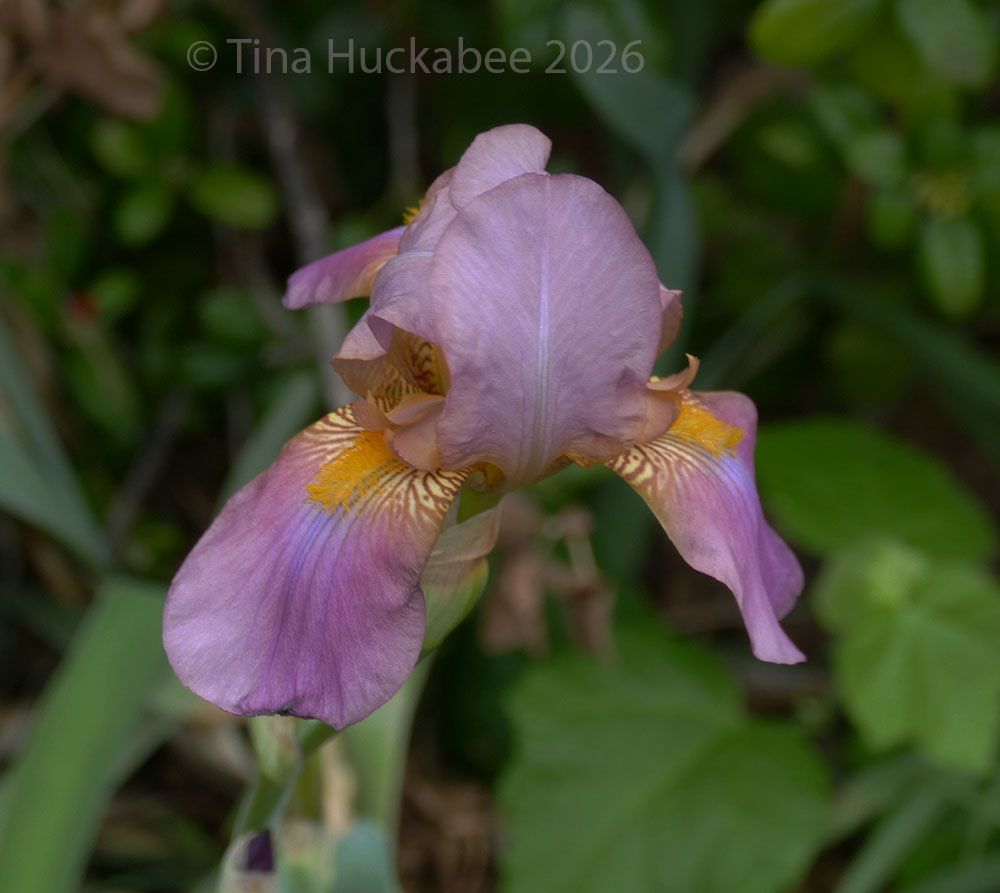
Iris blooms are ubiquitous to spring gardens everywhere and mine have begun their frilly floral presentations this week. I don’t know the variety as these bulbs were here in the garden when we moved in. In addition to being lovely and large flowers, they are a fragrant addition to the garden.
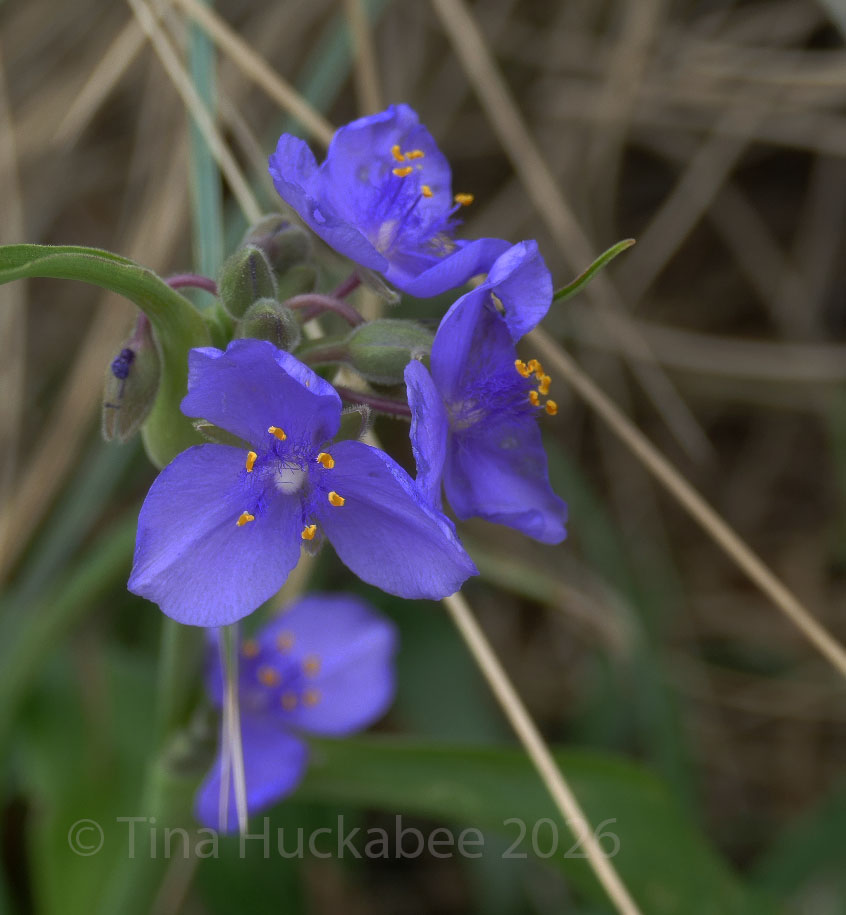
Our winters are short and not too difficult, save for a week here, or week there. Even so, when the green-n-color production begins, it’s hard not to be grateful for nature’s cycles and bounty. Spring is all about renewal and life, so go outside and enjoy!










 My Gardener Says...