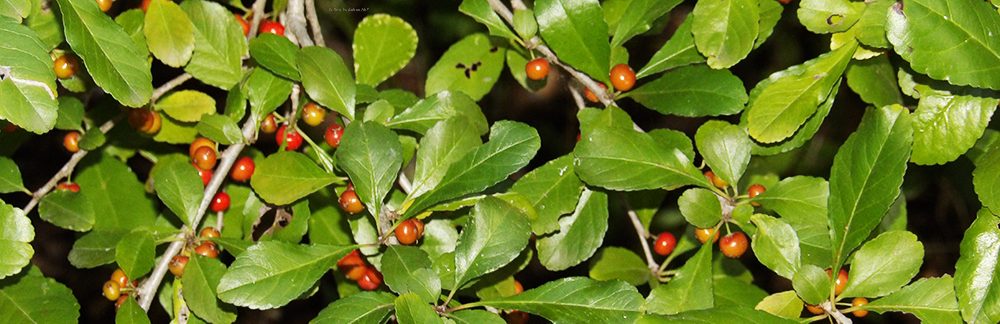
Pruning, Fretting, and Photos

My July garden is humming and buzzing along. With regular rain, and hot–but not yet scorching–typical Texas temperatures, pollinators, birds, and other assorted critters are rejoicing in the bounty of blooms and seeds. The garden is doing what it’s supposed to do: feed wildlife.

Summer is also a good time to reflect (ahem, gnash teeth and fret) about mistakes in the garden. I excel at gnashing and fretting, it’s one of my best things: Why did I plant that there–what was I thinking?? How have l let that beloved, beautiful plant become such a garden bully? That being said, this summer I haven’t spent much time in the garden until recently. Six to eight weeks before our toasty summer moves aside for…less toasty late summer /early autumn, light pruning and dead heading chores a good idea, and as I go, I plan for changes to the garden. While I’m noting problems and tidying messes, I appreciate the garden, where it is and what’s in it, at this moment in time.

American Bumblebees, Bombus pensylvanicus, abound! They’re favoring the remaining American Basket Flowers, Centaurea americana, but also visit the Mexican Orchid tree blooms and other flowers in the Aster family.

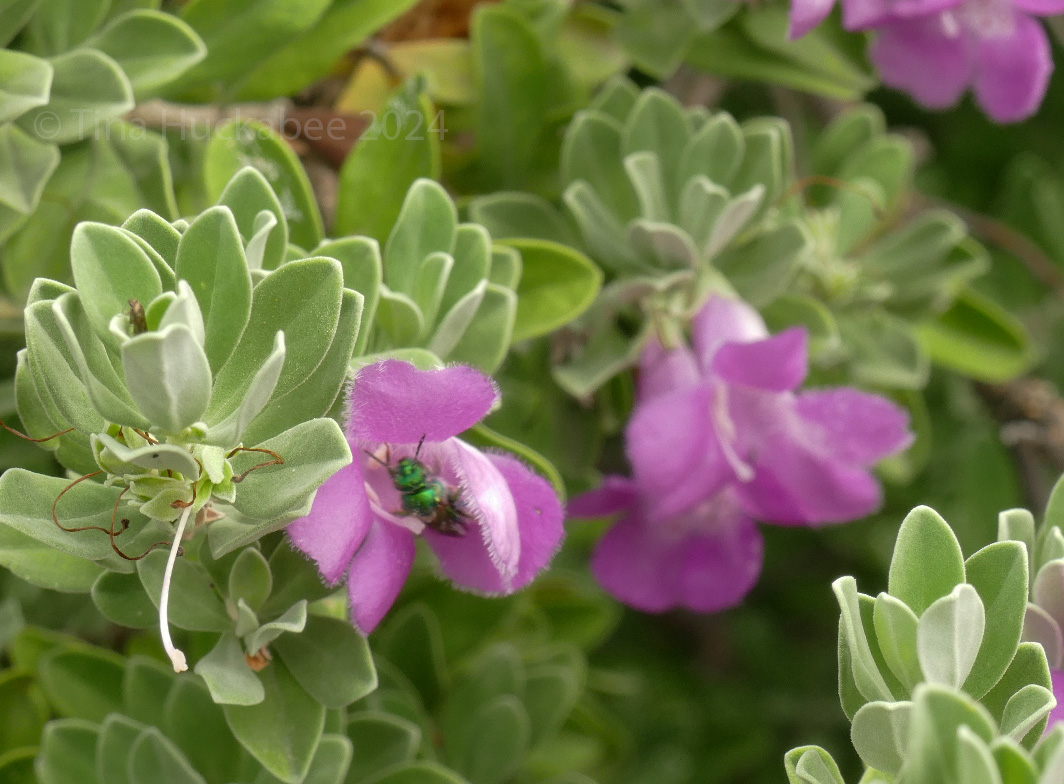
I caught this small, green metallic Sweat bee, Halictidae, as it rapidly zipped from flower to flower of the Cenizo shrub, Leucophyllum frutescens. Often called ‘Barometer Bush’ the lavender flowers appear when there is rain possibility. My shrub has bloomed fairly consistently this summer, to the delight of many winged things–and this gardener!
I was observing one of my favorite kinds of bees, the Horsefly-like Carpenter Bee, when I spied this curious character.
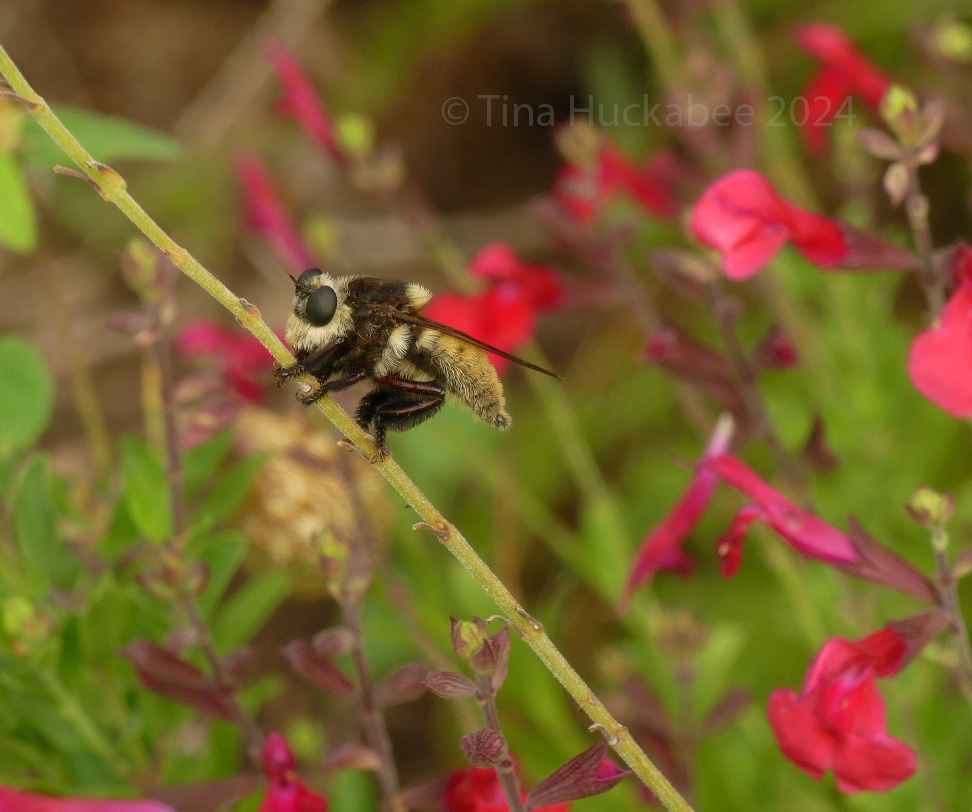
I knew it was a fly of some sort, rather than a bee, owing to its one pair of wings and its short antennae, and those impressive eyes. But what kind? I don’t think I’ve ever seen this insect before. Within a couple of clicks, I came across BugGuide’s page on the Southern Bee Killer, Mallophora fautrix. I love the way my bee killer clutches the stem, the rosy flowers of Autumn Sage, Salvia greggii, as colorful companions in the background. And that face, it’s adorable! The fuzzy legs look like they’re ready to spring into action–and they probably did, though I didn’t see it happen. According to information about bee killers, they perch on stems, awaiting a chance at hapless prey, ready to pounce on mostly honeybees and wasps. Well, my garden certainly has plenty of both kinds of meals for this dude. Good eating, bud!

The honeybee population in my garden is somewhat diminished as one of our hives, Woody, absconded earlier in June. If you’d like to read about absconding, this article is a good resource. At Woody’s previous hive check, all seemed well: there was capped and uncapped larvae, indicating a healthy, active queen, and some honey was being made. At the next hive check, shortly before we traveled in mid-June, there was no activity. Nothing. The bees were gone; they ate all the honey before they left, they didn’t say why they left, nor did they leave a forwarding address! I suspect they left because of some heavy rain, but only the bees know why they took off for different digs. I hope they landed in a safe place. Bees abscond sometimes (rain, or heat, or…whatever), but it’s a bummer for a beekeeper. Still, having one hive (which is thriving) to check on every two weeks makes hive checks quicker and I don’t mind that during the hot summer.

There are butterflies in my garden, but only this Large Orange Sulphur, Phoebis agarithe, deigned to stay relatively immobile for long enough to snap a pic. These yellows, and their smaller yellow cousins, are common in the late summer and autumn garden.

This coming week is a week of rain. Rain in July, what a concept! I’ve pruned some plants, now they’ll flush out with renewed glory. I’ve even transplanted some plants–a rarity in mid-summer–and those might just survive. The garden continues its production for summer and is preparing for a new season in just a few short months.
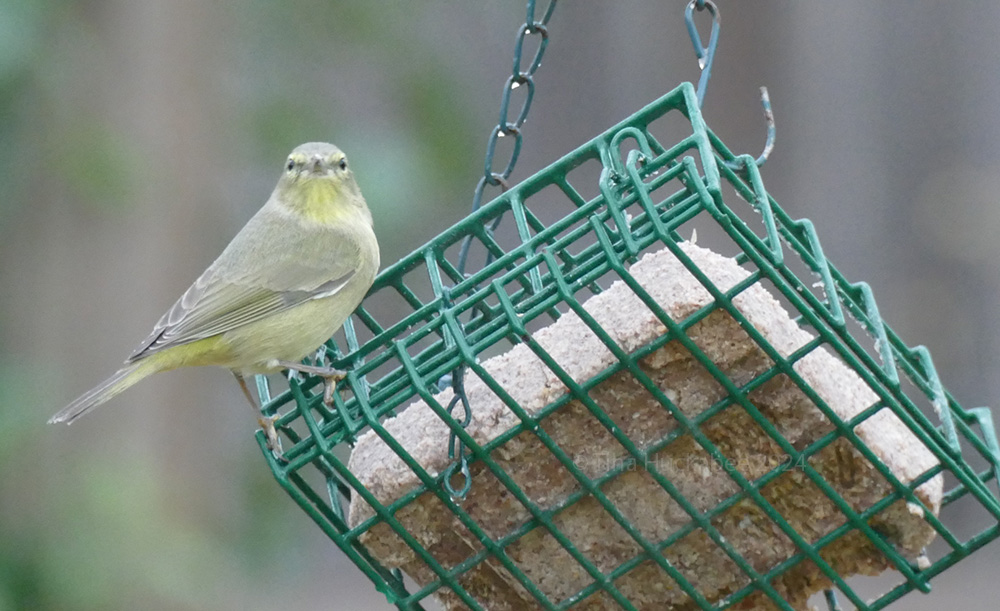
Winter Fat

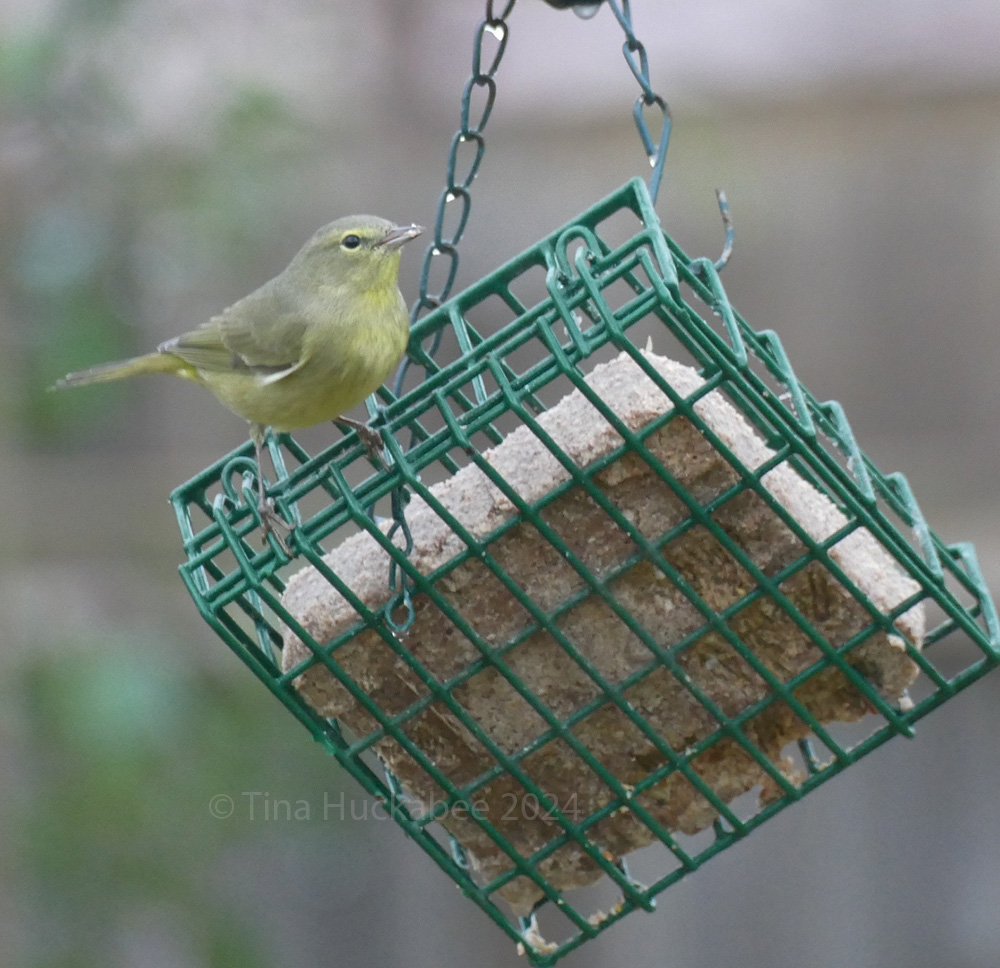
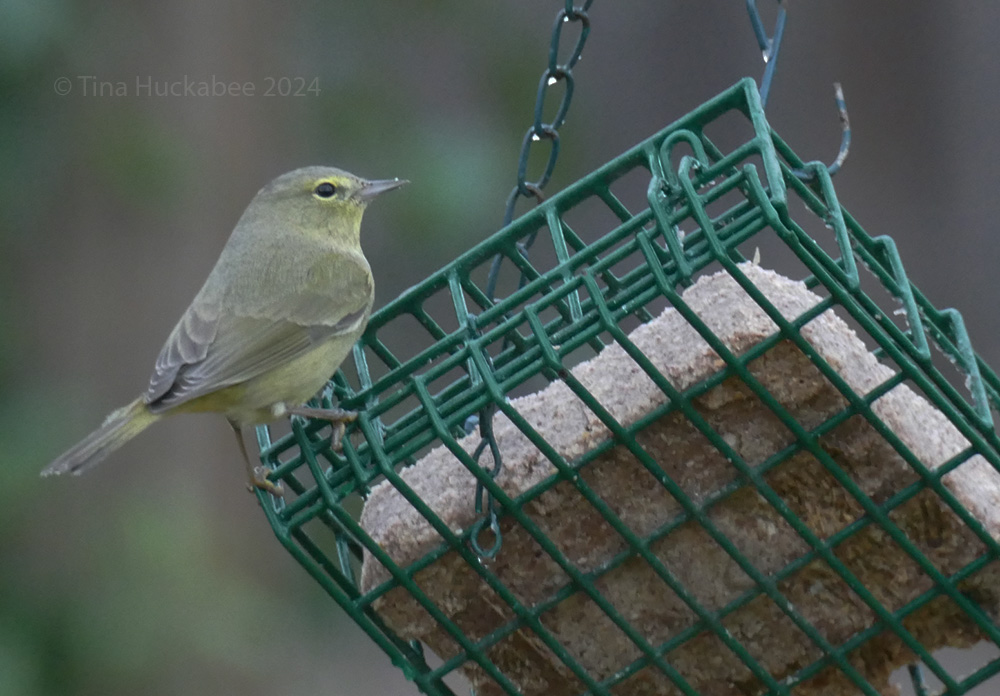
It’s suet season for the birds who visit my gardens. This over-wintering Orange-crowned Warbler, Leiothlypis celata, is a frequent nibbler of the peanut butter infused, commercial suet block.

I only offer suet in the cooler months of the year. Central Texas is far too warm from April/May until December, to set out suet. It melts in summer’s heat or turns rancid in balmy autumn; it becomes gross and the birds won’t touch it. Can you blame them? There are better alternatives for commercial bird food in those months: sunflower and safflower seeds, peanuts, and mixed varieties of seeds all give proper nourishment for birds, and while the birds are eating and jostling for the best perches, entertainment for humans. In winter, suet provides needed calories during cold temperatures, though black-oiled sunflower seeds and peanuts also supply healthy fat alternatives as well.

Using commercial bird seed in the yard is a wonderful way to observe, appreciate, and learn about our native and migrating birds. That said, native plants which have foliage, produce seeds and fruits, and host a variety of insects, are the best food sources for birds. Plants and birds evolved together over eons, and plants exist to feed and provide cover for critters. A garden full of native trees, shrubs, perennials, and annuals is not only beautiful, but more importantly, is alive with activity and life. Birds, pollinators, mammals, and reptiles seek food and shelter in a diverse ecosystem–no matter the size. Human caregivers of garden ecosystems can appreciate the garden’s beauty while enjoying the antics of those who need the garden to survive and thrive. A healthy, diverse garden community is vital for wildlife and a continual source of fun and learning throughout the year.

Winter is a good time to plan a new garden. Removing some (or all!) of your sterile, water-hogging, high maintenance turf, and replacing it with native plants is the way to bring nature home: to provide a safe place for wildlife displaced through urban encroachment, habitat loss, and improper chemical use.

So far this winter, the Orange-crowned Warbler is the only winter migratory visitor at the suet. I haven’t yet witnessed suet snacking from Yellow-rumped Warblers or Ruby-crowned Kinglets, though I fully expect to. Some resident birds, Carolina Wrens and Black-crested Titmice, have made a stop at the suet feeder part of their daily rounds and are suet buddies with the Orange-crowns. 

In my garden this winter, I’ve observed two Orange-crowned warblers, as well as one Yellow-rumped Warbler and one Ruby-crowned Kinglet. These three species are not native to Texas, but migrate south for the winter months; there are usually a few of each in my gardens from November through April. I enjoy their presence in the garden and having feeders allows me to observe them more easily. These flitty, tiny birds are challenging to observe in trees and shrubs! Once all the foliage from the trees has dropped, the birds are easier to see as they bop about the limbs, eating insects, and chasing one another in duels for the best eating spots.

This female noshes at the suet and peanut feeders several times each day. I buy my suet from Wild Birds Unlimited, but many bird fans make their own suet and there are plenty of recipes on the internet. 

Winter is a great time to bird watch and plan for the next garden season. Gardening with, or simply observing native plants is a small but powerful counter in a world where we as individuals have little control or positive influence. Spending time outdoors, listening to bird and insect song, creating and nurturing life and diversity with a native garden is a balm for an often broken world and a positive step toward a more hopeful future.

Yellow

There’s yellow,

…and then there’s yellow!

Autumn migration is in full swing! Year in and year out, a most dependable visitor to my gardens during both spring and autumn migrations are the eponymous Yellow Warbler, Setophaga petechia. Flitty, flighty birds, these little darlings are a treat to see. I nearly always have birds of both genders stop in for a time; sometime they come as couples, often, they visit separately.

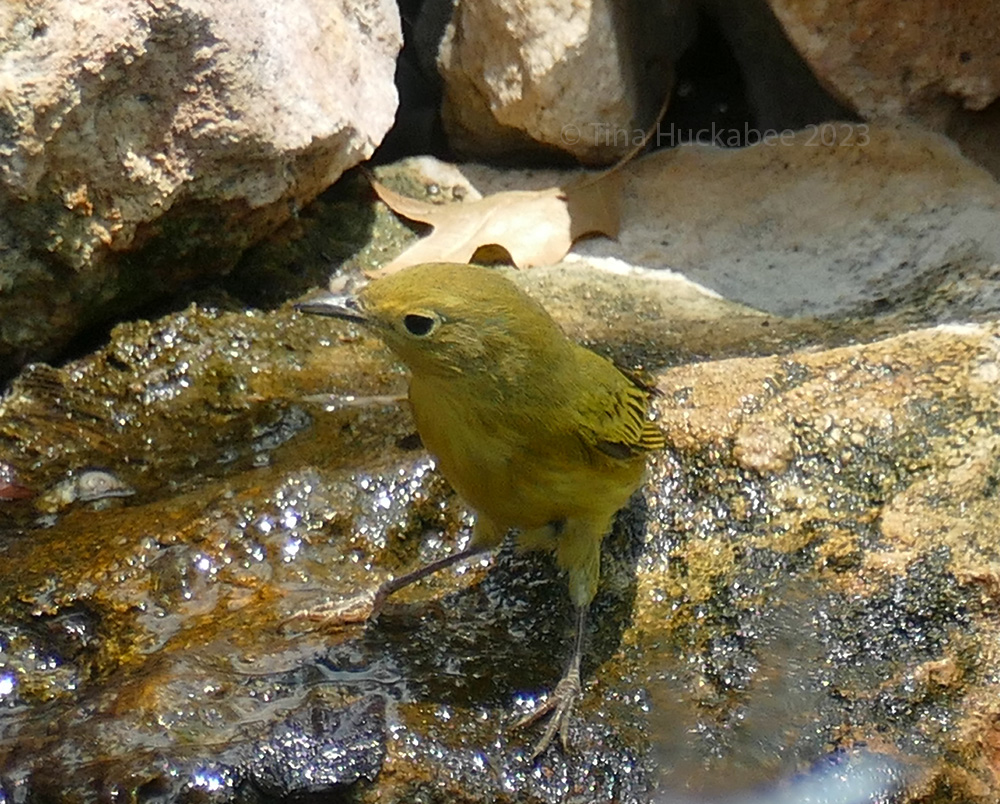
A female Yellow Warbler bopped around the Rough-leaf Dogwood, Cornus drummondii, growing near the pond. I planted this small native tree in this particular spot to give both resident and migratory birds a quick hiding place up and away from the pond. It also offers creamy fall fruits for noshing, if that’s on a bird’s menu.

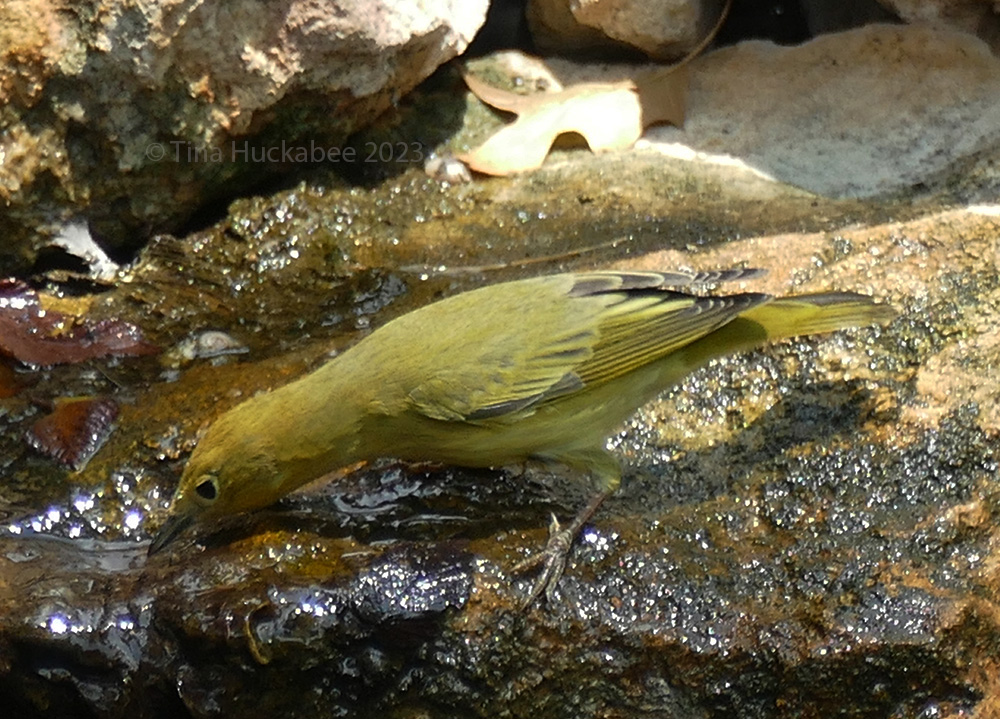
Ms. Yellow used the foliage wisely, cautiously peeking out before her forays to the pond.

There are plenty of spots for tired, hot, thirsty birds to settle in for a drink and a fluttery bath.

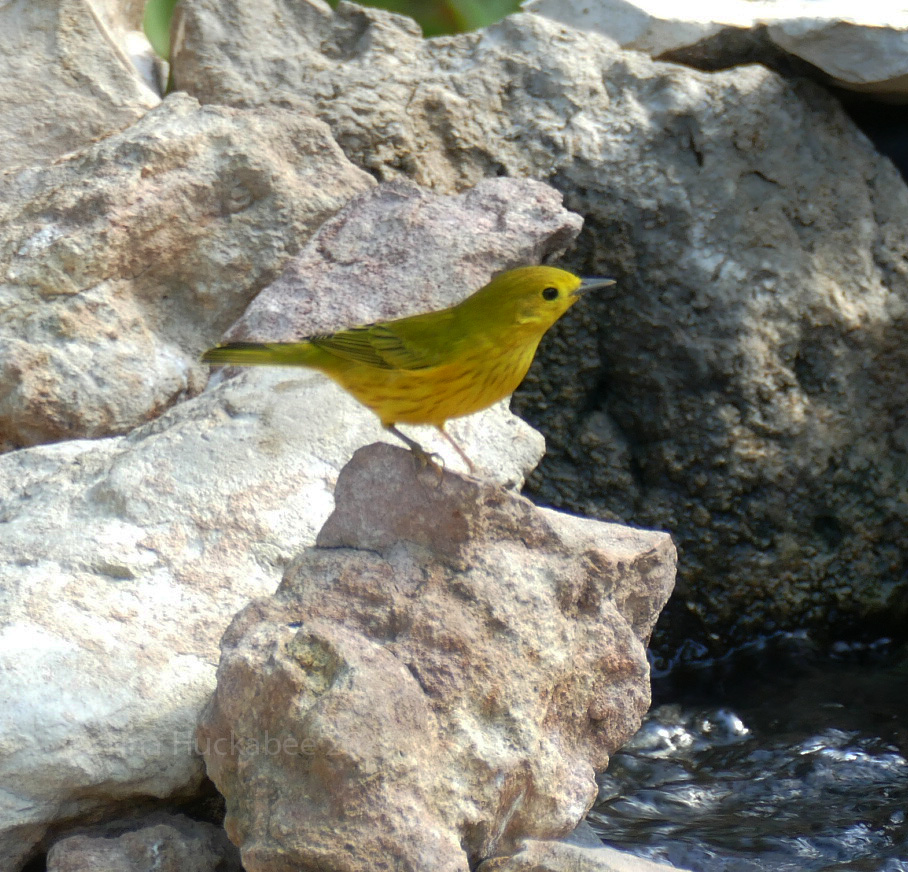
Later, her mate, or maybe a random Yellow dude on the same travel path, came by to check out the water feature.

In the avian world, the male birds are nearly always brighter and more colorful than their female partners. The Yellow Warbler male also rocks rusty streaking on its chest which the females lack.

The Yellow Warblers are heading to Central America and parts of South America, along with millions of other birds. They have treacherous travels ahead before they land in their wintering quarters. My garden, especially the pond, provides safety and respite for the stalwart wanderers and the maintenance of a wildlife habitat is a responsibility I’ve wholeheartedly accepted. Wildlife-friendly gardens are necessary in a world where buildings, roads, sterile lawns, and all manner of urbanization has damaged and reduced the natural world.