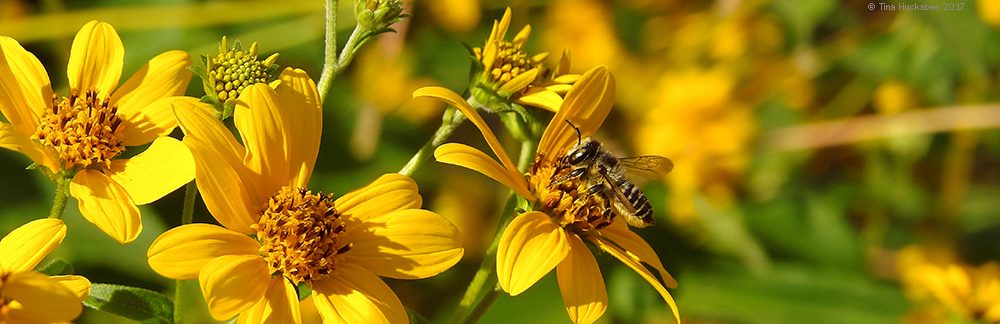
It was a slow start to the carpenter and bumble bee action this year, I assume because of the heavy rains experienced in Central Texas in May and June/early July. But recently the garden is a’buzz with honeybees and a variety of native bees, including the big, noisy carpenter and bumble bees.
This Horsefly-like Carpenter bee, Xylocopa tabaniformis, worked the prolific blooms of a Flame Acanthus, Anisacanthus quadrifidus, in my front garden.

These charming bees are probably my favorite bees. They’re noisy and buzzy, darling in looks. I love their racing stripes and melt at their dreamy blue eyes.
I like this up-side-down visage: bee-butt up pointed upward, proboscis-leading snout concentrated on the liquid deep in the tubular nectar fonts where the bee’s proboscis is headed.

Nectar stealing or nectar robbing is when an insect pokes or bites a hole in flowers that are too deep or small for the insect to enter from the open bloom. The insect then sips nectar without entering the flower’s innards, bypassing direct pollination.
Ole Blue Eyes here is just about to deliver its pointy proboscis, aiming for the fleshy, thin petal and the sweet stuff inside. The bee sliced the petal with its formidable mandibles to gain entry.
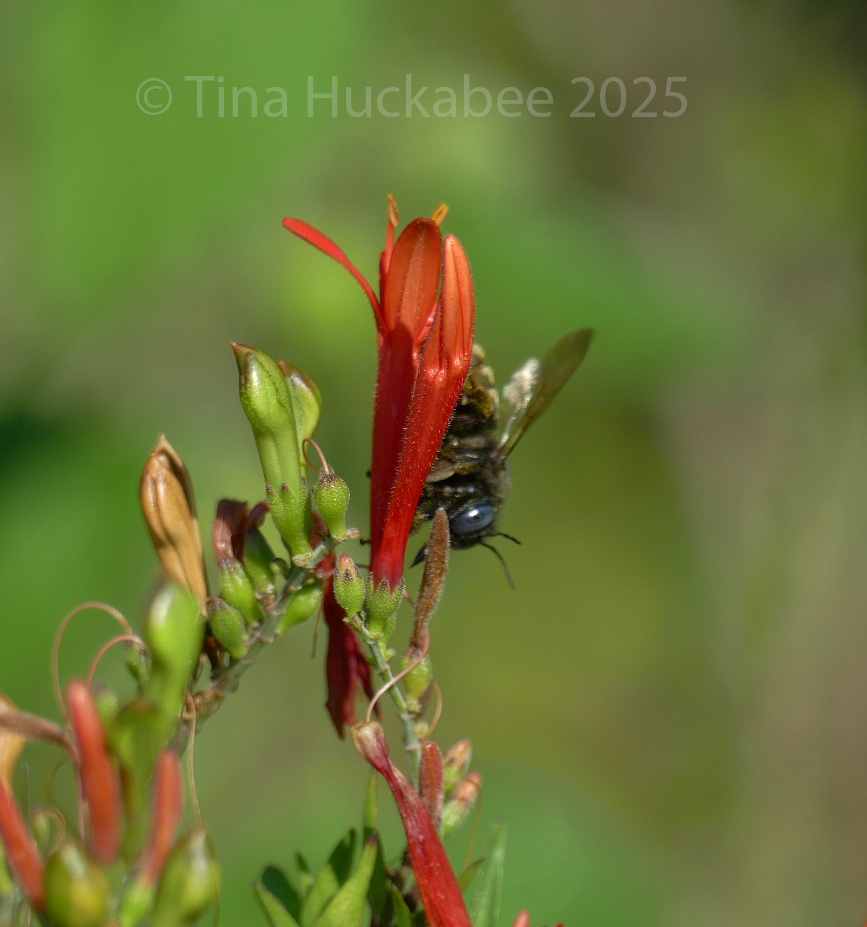
Bum-up view of the nectar-stealing, nectar-sipping bee. While direct pollination isn’t happening, you’ll notice grains of pollen sprinkled on Ole Blue Eyes’ body. It’s likely that some of those grains will play a role in pollination.

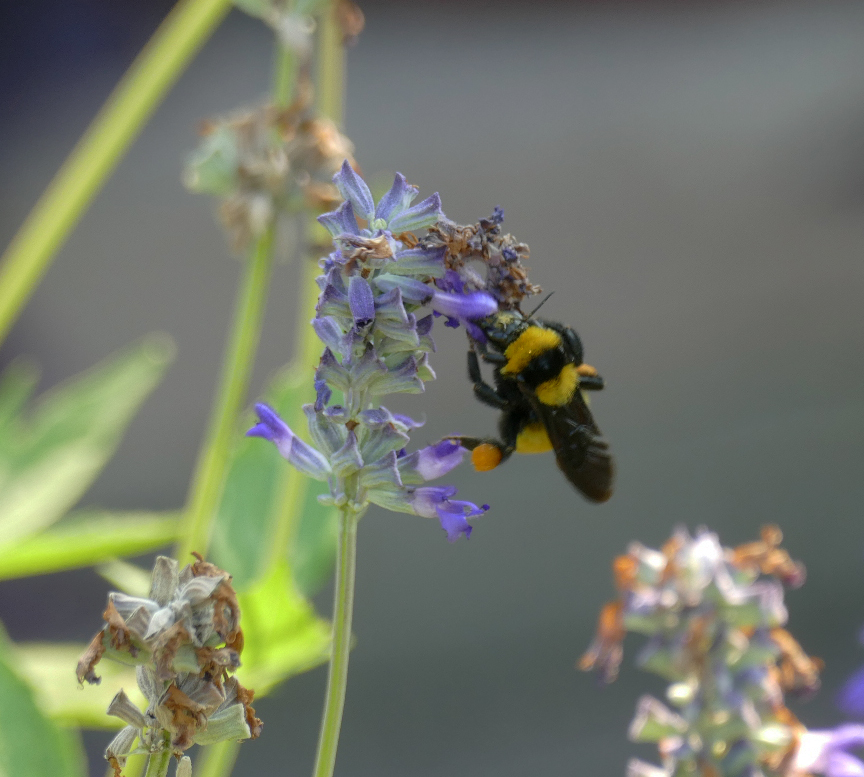
The other bees I’m seeing more of–and a big Huzzah! for that–are American Bumble bees, Bombus pensylvanicus. These graceful, yellow-n-black sweethearts are working many kinds of flowers right now, but a favorite bumble dining spot are the blue blooms of Henry Duelberg Sage, Salvia farinacea, ‘Henry Duelberg’. Notice the pollen booty on this bee’s pollen pantaloon, also known as a corbicula. If you look carefully, you can see a dab of golden on the other side of the bee–no doubt that pantaloon also carries a load of pollen.
My garden always enjoys more insect action, especially of the pollinator kind, as the growing season progresses. Heavy rains in spring and early summer often damage ground and wood nesters, so their procreation is slowed. Those insects rally as summer heats up and stable weather patterns settle in. In a healthy, diverse garden community, the pollinators persevere, the garden flourishes, and the gardener gives thanks.







 My Gardener Says...