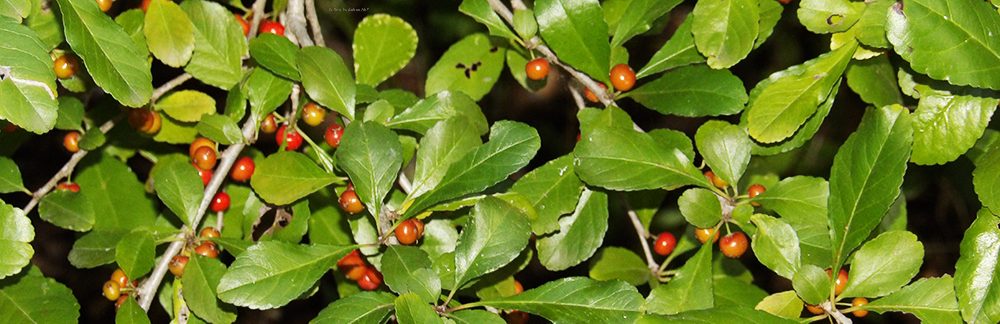
Virginia is for Lovers is a long-time advertising slogan used to appeal to tourists interested in visiting Virginia and it’s apparently been a successful one. My riff on that slogan is February is for Wildlife Lovers in celebration of Wildlife Wednesday during this month where love and pairdom is paramount: a month of hearts and chocolates–and the birds and the bees–though for our purposes here, it’s the birds and the butterflies.
February is the month when human couples send flowers, share candy and/or make reservations at absurdly expensive and noisy restaurants. But some of my backyard birds are also busy in the art of love, or at least, in the art of settling down to the business of wooing, mating, and preparing for a family of winged things.
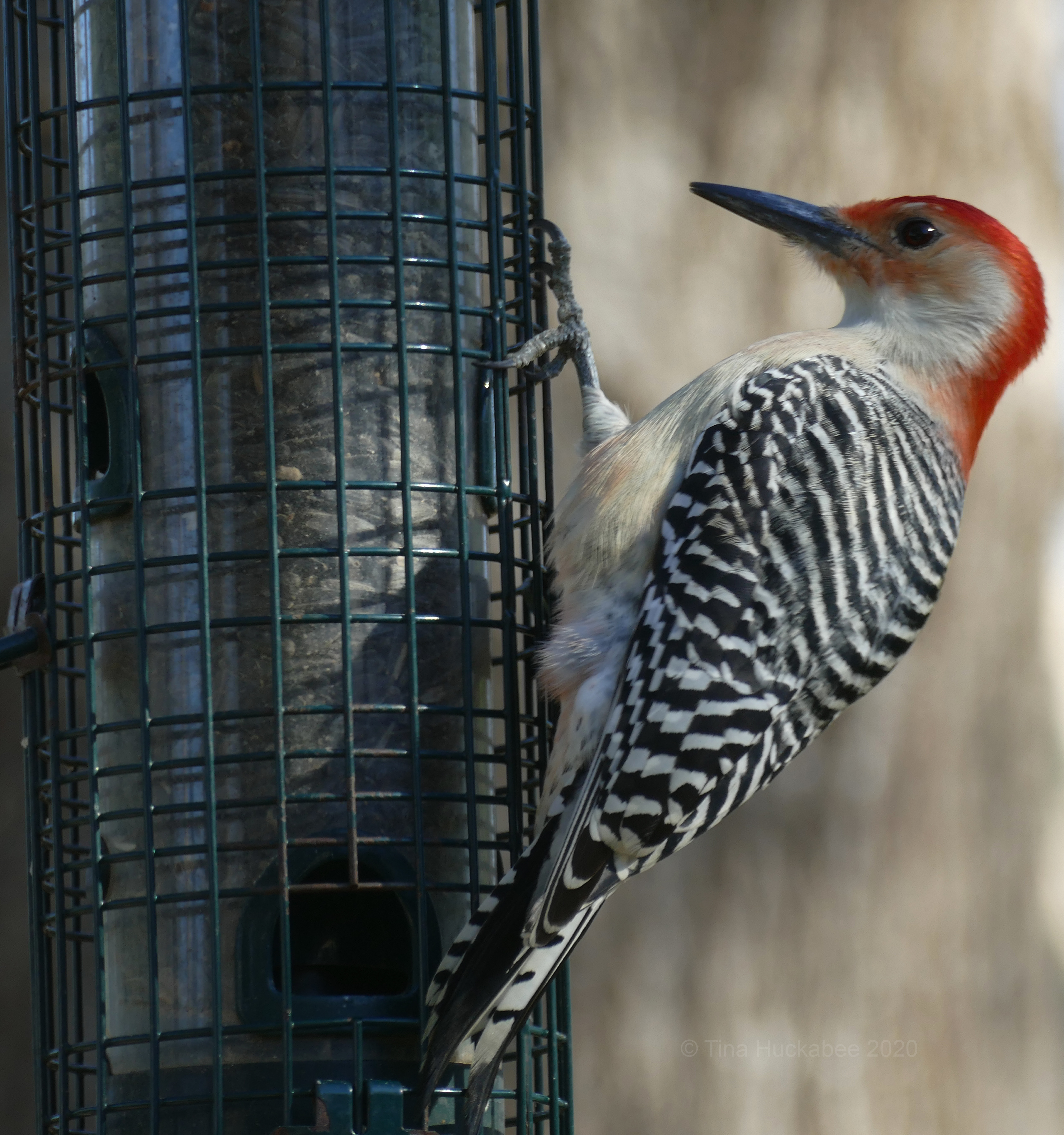
I typically see either the male or the female Red-bellied Woodpecker, Melanerpes carolinus, but I rarely see both partners on the same day. A couple of weekends ago, that paradigm changed, the female visiting first, in the tree.

It’s not a classically well-framed shot, but I love the stink-eye that she looks like she’s giving me. Red-bellied eye-rolling is about to commence!
After moving up along a main branch of my Red oak tree, she fluttered down to the black-oiled sunflower feeder for a quick snack. The female Red-bellies have little-to-no blush of red on their bellies and their splash of head red starts toward the back of their heads, extending down the nape of their necks.

A short while later, a handsome woodpecker chap visited the same tree and feeder.

“Did ya get a good shot of my rosy, woodpeckier chest?”
With more red on his face, head, and belly, he’s a brightly patterned catch. I assume these two comprise the same couple who raised two clutches of junior woodpeckers last year. Red-bellied woodpeckers are monogamous and each share in nest building and chick raising. The males choose the nesting site, starting the pecking work on the hole; if the female accepts the offer and the site, she and her partner finish the construction together: the couple that builds together, stays together! Red-bellies are known to use the same tree for their nests, but build a new nesting hole for each new set of eggs.
At about the time that the Red-bellied couple visited, I enjoyed a similar sighting of both a female, then male Downy Woodpecker, Dryobates pubescens, again on the same day. The female has no red on her cute little head, but she’s adorned in snazzy black and white on her head, wings and back, with a lovely white tummy.

The male Downy has a dab of red atop his head, accompanied by similar-to-his mate black and white patterned feathers. Like the Red-bellies, the Downies are monogamous and both partners parent offspring. Last spring I enjoyed the privilege of watching Daddy Downy teach his little one how to flit from tree-to-feeder, then back again. Daddy birds rock!

I look forward to a new set of woodpecker kids in the neighborhood. The Red-bellied Woodpeckers nested in my neighbor’s tree–the one that my SIL now owns–and I’m certain that my SIL will enjoy watching these charmers as they build the nesting hole(s) and once again, become parents.
I don’t know where the Downy Woodpeckers nest. They fly in a northwesterly direction from my back garden, but I don’t know what tree, or trees, they’ve chosen to secure their little ones in past breeding seasons.
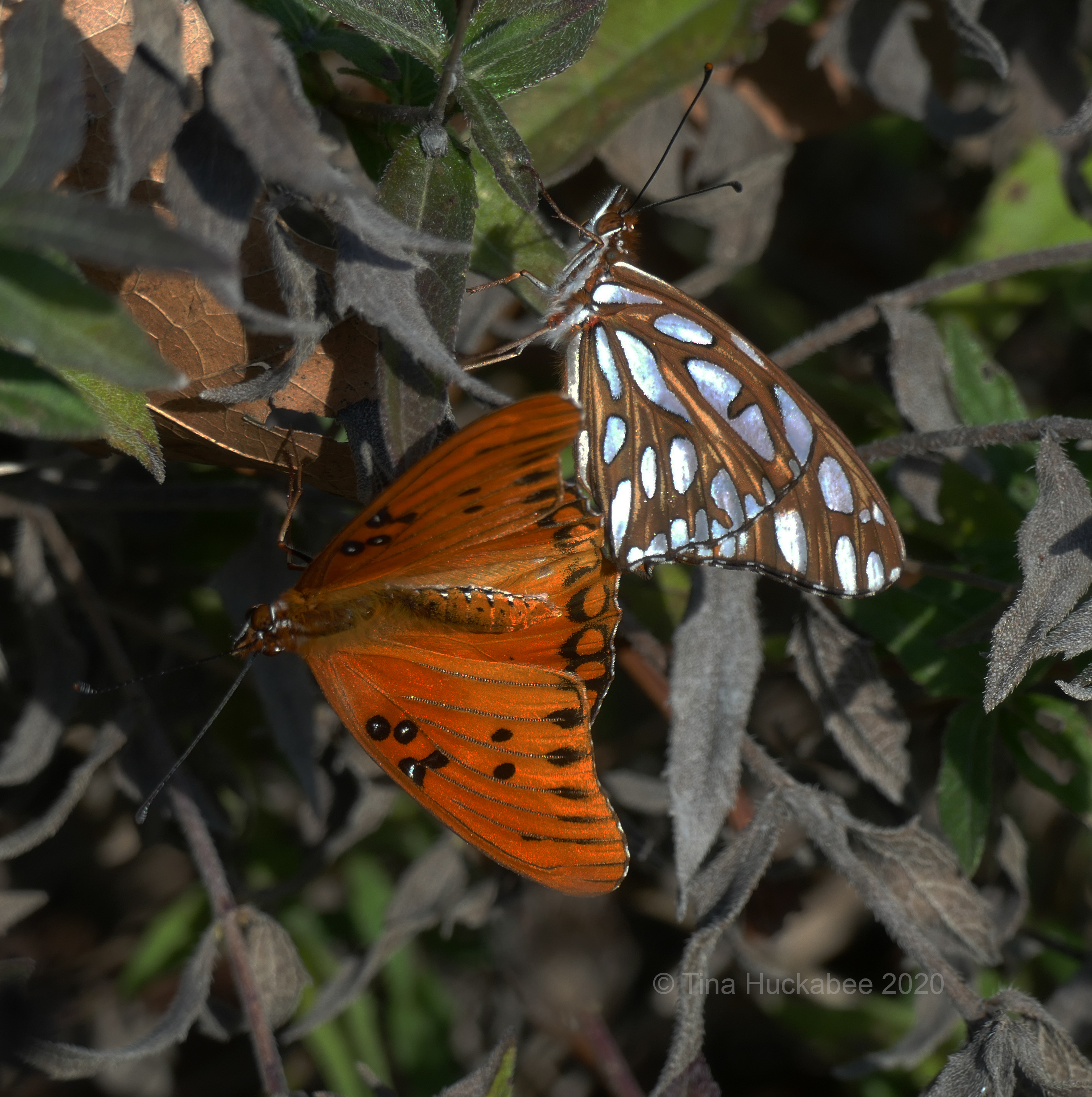
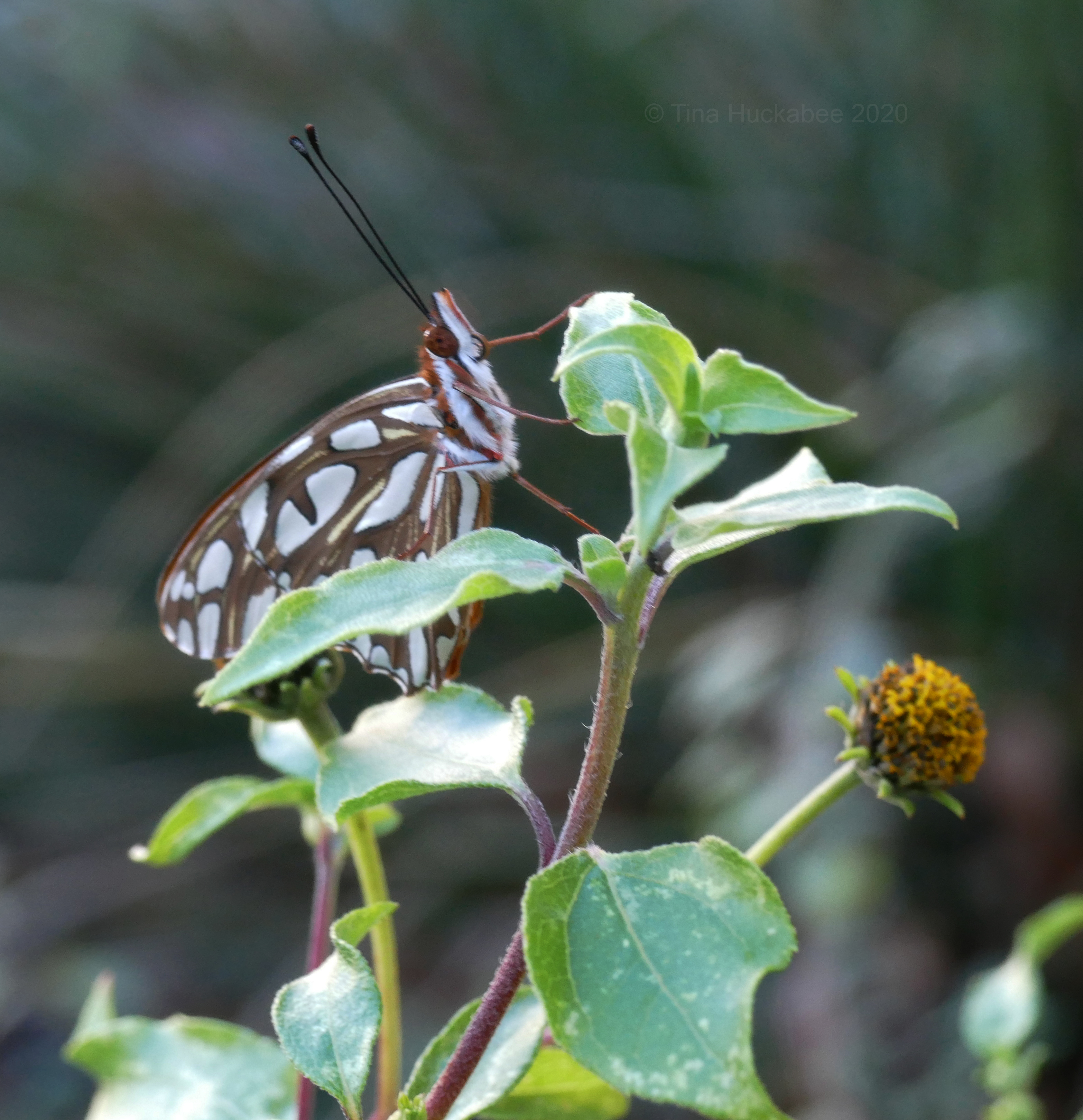
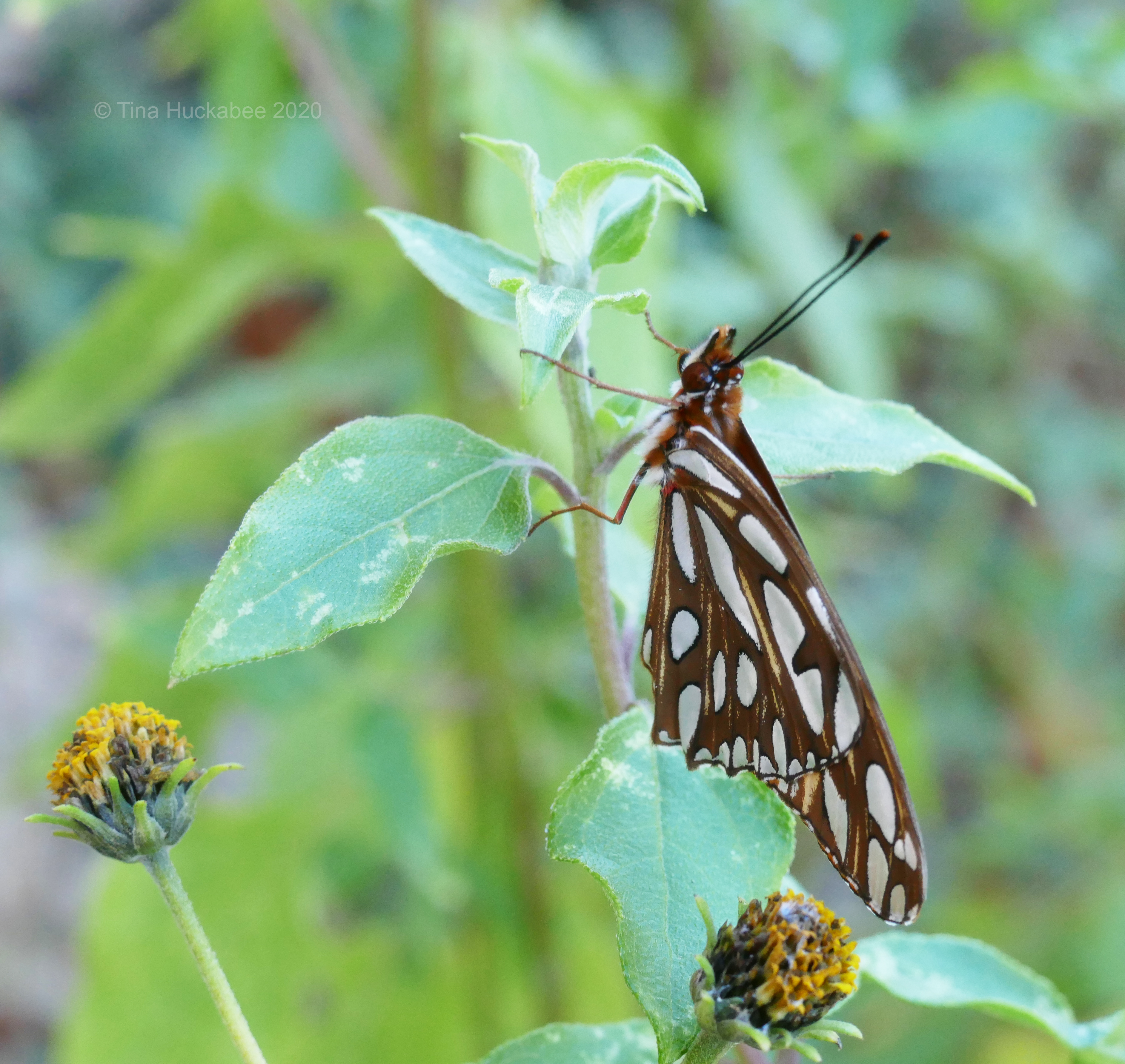
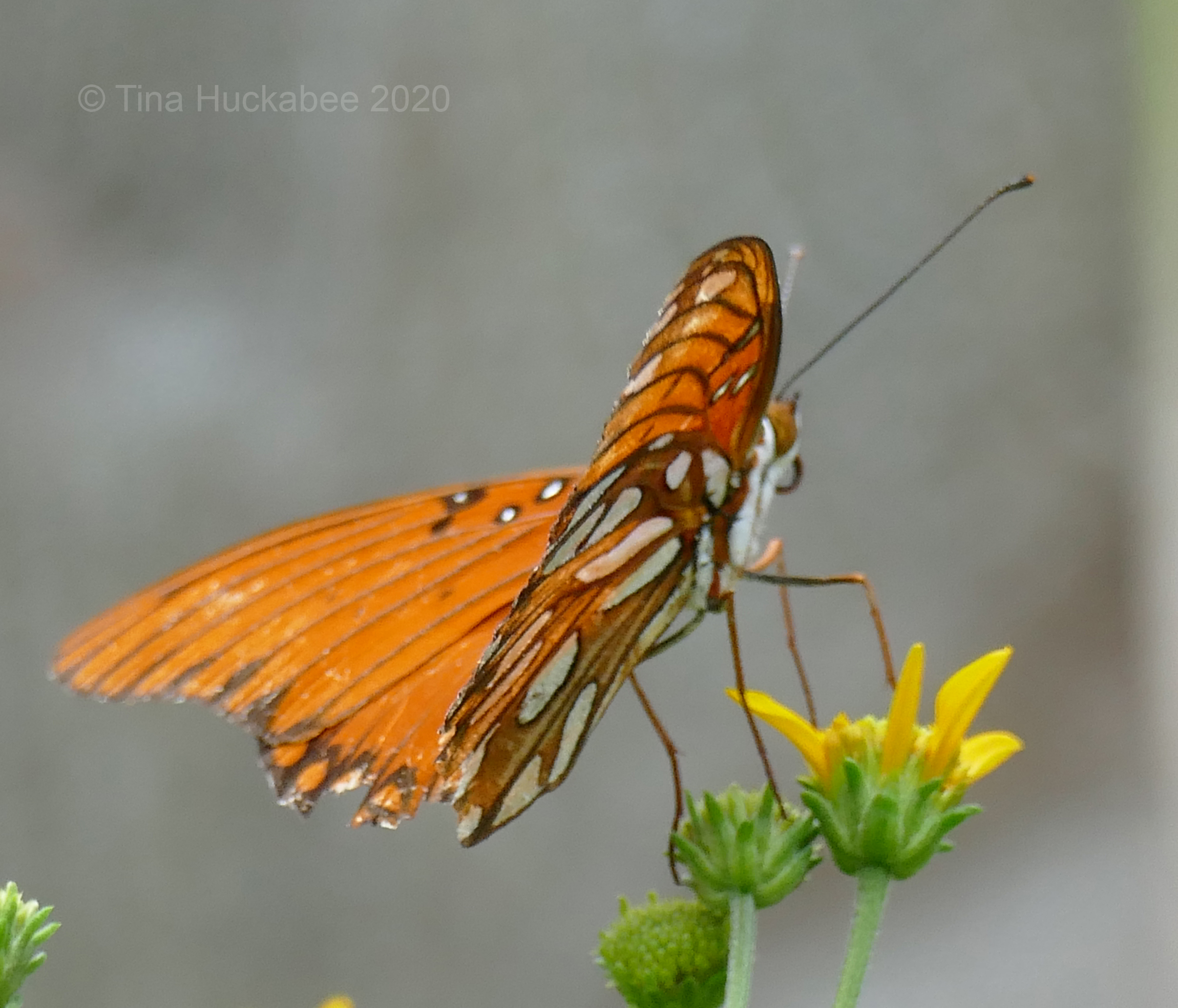
More pairing is underway with the mating of Gulf Fritillary butterflies, Agraulis vanillae. Butterfly wooing is quieter than bird wooing and mostly involves undulating flight patterns between the partners, who then rest somewhere as they seal the deal.

Due to our mild winter, there are active butterflies and not only Gulf Fritillaries, though they’re clearly in breeding mode with egg laying to follow. While I’d like to have some hard freezes (this month–NOT in March!), I haven’t at all objected to butterflies during this typically drab time of year. There are still some flowers for nectaring and my passion vine–the nursery for Gulf Fritillary caterpillars–is green and able to provide sustenance for the larvae, given that a hard freeze hasn’t yet killed it to the ground.
The breeding season for birds, butterflies, bees–and heck, everything else–is about to begin. It’s a time that gardeners can provide food, in the form of seeds and fruits, and with diverse choices of plants, as well as water and cover. If your garden is welcoming to wildlife, you can sit back and observe remarkable events in your garden: you’ll enjoy watching the wildlife lovers and their offspring and you’ll become a wildlife lover.
Please leave a link to your post when you comment here and happy wildlife gardening!


 My Gardener Says...