Wings

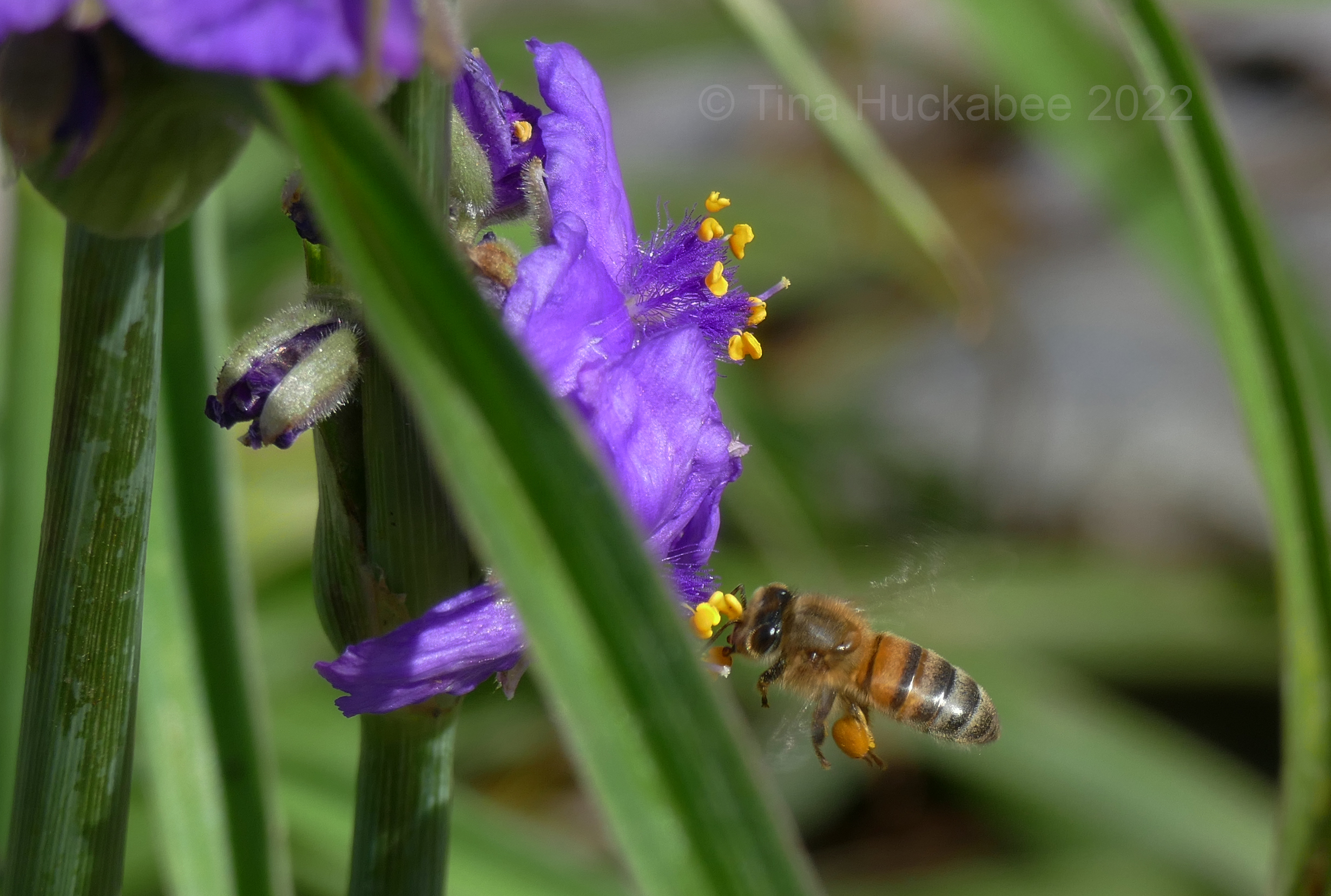
Wings are things year-round in my garden. Even in winter, there are, minimally, honeybees and Red Admiral butterflies zooming and flitting during those shorter days. But late summer and into autumn, winged insects are a constant source of activity, adding an “experientially rich” dynamic that is always present in a garden, but heightened in the latter months of the growing season.

As the days grow noticeably shorter (though not cooler) I’ve been out and about in the garden, and some of those times, remembered to bring the camera along.

The Southern Pink Moths are familiar in the garden, very often resting on plants in the salvia genus like this White Tropical sage, Salvia coccinea.

Southern Pink Moth, Pyrausta inornatalis

It’s nearly always sometime in July that I spy my first Bumble bees in the garden. They zoom in, buzzing like miniature planes, intent on working a set of blooms before departing for new territory and fresh flowers. This one worked the blue blooms of Henry Duelberg sage, Salvia farinacea ‘Henry Duelberg’ for several minutes. The bee was never still enough for me to capture a good shot, but it did its pollination duty, its proboscis stuck deep in the bloom for maximum slurping.

American Bumble Bee, Bombus pennsylvanicus

Zexmenia, Wedelia texana, is a pollinator magnet and attracts a wide variety of native flies and bees. This bee is probably a bee in the “hairy legged” category like a minor or digger bee. My best guess is that it’s a longhorn bee, but in this photo that’s hard to confirm, as its antennae are hidden, bee head buried deep in the bloom.

Native Apidae bee

There’s a whole crew of yellow and white butterflies that become very active in July and downright ubiquitous in the following months and they are all fast flyers. This Little Yellow cooperated with me while dining on another Zexmenia bloom. Have I mentioned that Zexmenia flowers are pollinator favorites?

Little Yellow, Pyrisitia lisa

Late summer is also when the hummingbirds are most active. Males, females, and juveniles are ramping up for migration southward and feeding on the abundance of flowering plants. This cutey fussed at me as I bumbled around, initially unaware that she was feeding nearby. She dashed to a branch and scolded me; I snapped a few shots. After moving to a more remote spot, I waited until she’d rested and felt comfortable enough to return to the Turk’s cap that she’d been feeding on before I rudely disturbed her.

Female Ruby-throated Hummingbird, Archilochus colubris

The Monarchs are coming through! It seems like the migration is early, but I welcome visits from these iconic butterflies. Gregg’s mistflower, Conoclinium greggii, is a preferred source of nectar for many butterflies and bloom in time for the autumn Monarch migration.

Monarch Butterfly, Danaus plexippus

Not pollinators, but predators, damsel and dragon flies got a late start this year, probably due to the winter storm in February. They’re everywhere now! A number of species visit my garden, mostly, though not exclusively, hanging around the pond. Their flight patterns are similar to those of bees rather than butterflies: less flitting, more zooming. They also rest for periods, like this one perched on a leaf of Pickerel Rush, Pontederia cordata.

Blue Dasher, Pachydiplax longipennis

And this one, sitting pretty atop unopened blooms of Texas craglily, Echeandia texensis.

A Queen butterfly, Danaus gilippus, nectars on a Gregg’s mistflower–just like its cousin the Monarch. I have Queens in my gardens on and off throughout the year. Smaller and more polka-dotty than Monarch, they do look similar enough that they’re often confused with Monarchs.

Queen Butterfly, Danaus gilippus

Another winged summer thing is the Gulf Fritillary, Agraulis vanillae. A colorful butterfly–cheery orange with white and black spots–this is a bright adornment in the garden. These feed on a variety of flowers, though I think this one had hatched from its chrysalis shortly before I found it on the spent blooms of a Lyre-leaf sage. The green in the background of this photo is the host plant for Gulf Fritillaries, passionflower vine, specifically Passiflora incarnata. This particular vine grows messily in a pebbled negative space with a surrounding garden. I leave the “weeds” in the space because…butterflies!!

Gulf Fritillary, Agraulis vanillae

I do have one “official” passionflower vine, purposely planted and growing on a trellis–a set of three seedling Passiflora caerulea which I transplanted a few weeks before the snow/ice storm in February. The seedlings weathered the storm, grew, and have produced several generations of fritillaries. Currently, those three vines are nought but stems, the foliage having been eaten away by ravenous caterpillars. I’m not worried about losing the plants; the vines should survive and with some autumn rain, flush out fully for further fritillaries.

While I was photographing the first fritillary, a butterfly buddy (also newly hatched?) joined in the fun, wings spread wide to dry–and maybe show off?

The Mexican orchid tree, Bauhinia mexicana, attracts lots of bees and big swallowtail butterflies. As I watched, this Giant Swallowtail, Papilio cresphontes, fed at the flowers, lumbered off, came back to the tree, flew off again–but returned to the luscious offering of the blooms.

Giant Swallowtail Butterfly, Papilio cresphontes

I grow White-veined pipevine, Aristilochia fimbriata, a lovely shade tolerant ground cover and a host plant for Pipevine Swallowtail butterflies, Battus philenor. This year, there has been a bumper crop of butterflies, chrysalises seemingly attached everywhere in the back garden. I’ve been fortunate to observe a couple of these beauties as they emerged from their cocoon and entered the world as winged adults. Pipevine Swallowtails are fast flyers and, while I observe their nectaring everyday, I’ve been missing to opportunity for a photograph until I found this one enjoying a Basket flower, Centaurea americana, and had my camera ready to shoot.

Pipevine Swallowtail Butterfly, Battus philenor

I’m fortunate to live in a place with a long growing season, so watching winged wonders is almost a year-round adventure. I hope you have some winged things in your garden, too! If not, maybe it’s time to get cracking and plant some nectar and host plants for butterflies and moths and a variety of blooming things for bees and hummingbirds.

A Sunflower Summer

It’s been a bright and sunny sunflower summer. I always have sunflowers in my summer garden, presumably gifts from the digestive systems of a variety of birds and their fuzzy-tailed sunflower seed-loving friends, the squirrels. These urban dwelling critters disperse the remains of black-oiled sunflower seeds taken from feeders, dropped unceremoniously to the soil, which then fulfills its role in nurturing growth. This year, the numbers and sizes of sunflowers are over-the-top–literally. Each stalk is huge and there are scads of them. I pulled out quite a few, some when were very small and others as they grew taller, but my pruning shears were no match for the sunflowers determination to define my summer garden.

I kept most of the sunflowers at the center and back of my gardens so they wouldn’t interfere too much with beloved seasonal perennials like creamy Yarrow, Achillea millefolium and cheery Zexmenia, Wedelia acapulucensis var. hispida.

My home sits on the curve of the street and has no sidewalk. Toward my sister-in-law’s (SIL) home (right side of photo), I allowed the sunflowers to reach their sunny faces to the sky and form a floral barrier to the end of the garden.

From the other side, you can see that my SIL also took a pruning shears-off attitude toward the sunflowers in her garden (again, right side of photo). If anything, she may have more of these yellow monsters than we do!

A head-on photo of our two gardens gives you some idea of the statements these sunflowers make!

Also, you’ll notice that the trees look like it’s still we’re still in winter. Arizona Ash trees are the signature trees in both our front gardens and these two trees were badly damaged by February’s winter storm. They will never recover and will never again be fully foliaged trees. The green that you see, along the trunks and the lower branches, is all the trees will ever produce. We’ll be removing our trees later in in autumn. My once shady, west-facing front garden will become a full sun garden and changes are required. Some of the current garden inhabitants won’t like the Texas sun beating down everyday and will be removed; sun-lovers like native grasses and sun-worshipping perennials and shrubs will thrive in the heat and blossom with the blasts of daily sun. I’m sure whatever sunflowers show up next year will be perfectly happy in the new conditions. The end of a tree is a sad, sad thing and the end of two adjacent trees doubly so. I’ll miss their cooling effects, sweet movement of foliage in the wind, and the activities and songs of birds taking refuge in their canopies.

The pollinators have worked the sunflower since opening day in April or May. Honeybees are especially fond of sunflowers and are often covered with pollen after they’ve spent some time nuzzled in the flowers.

As blossoms fade, seeds develop and a new set of feeders show up for that bounty. This male Lesser Goldfinch, Spinus psaltria, is one of many birds who’ve enlivened the fading stalks with their busy munching. Feeding alongside the goldfinches are doves (both White-winged and Mourning), House Finches, House Sparrows, and Carolina Wrens. Often when I step outside, there’s a whoosh of wings and scatter of birds as all the eaters take flight.

As the Lesser Goldfinch perches prettily, his belly is yellow; when he bends to eat seeds, his back sports cool white racing stripes!

The sunflowers are definitely the stars of the garden show, but it hasn’t been all sunshine with the sunflowers. For about 18 months, I’ve experienced random outbreaks of itchy, angry red rashes, typically on my legs and arms. I couldn’t figure out what was triggering the annoying and very uncomfortable rashes–until this summer. In conversations with my SIL and other sunflower-growing neighbors, I learned that they were experiencing reactions to the sunflowers, resulting in itchy rashes. I realized that it was the sunflowers that were causing my itchy-scratchies, but it couldn’t only be the sunflowers. The rashes have occurred in autumn and late summer, too, when these particular sunflowers (that come from bird feeder black-oiled sunflower seeds), are done for the year and pulled from the garden. With observation, I then recognized that the native Plateau goldeneye, Viguiera dentata that I grow and which blooms in late summer and fall, also was resulting in my rashes. Both plants are in the Aster, or Asteraceae, family of plants, and I grow quite a few other Aster plants: Purple coneflower, Zexmenia, Gregg’s mistflower, Blue mistflower to name a few. So far, I think I’m safe with most of the Aster family plants, as long as my contact is limited; just brushing against most of them (not the two main culprits) doesn’t to end with me scratching for days and looking for relief. When I have experience outbreaks, I’ve taken Allegra and I have a prescription hydrocortisone cream; both are helpful. Even so, it takes a week or more for the rashes to clear up.

I’ve always been a t-shirt and shorts girl-in-the-garden, but I’m now covering up when I have work to do: long linen pants, some shirts from The Hub, and equestrian gloves which cover my arms to the elbows. And, when it’s hot and sunny, a hat. In the new gardening get-up I’m avoiding new rash outbreaks and it’s good to know that I can still garden, even if I look ridiculous.

Picking Peanuts

Recently I’ve removed the safflower and sunflower feeders, as the finch eye disease has appeared in our neighborhood in several House Finches and I don’t want to assist in its spread. Poor little finches. House Finch eye disease, a conjunctivitis which eventually causes blindness, is caused by Mycoplasma gallisepticum and is a known problem for some kinds of birds who feed at feeders, primarily types of finches. (Check out the highlighted link above for more information about this disease.) Because the House Finches rarely eat peanuts, I’m leaving my two peanut feeders up and filled for the backyard bird visitors’ eating pleasure. For what it’s worth, my garden has scads of giant sunflowers and there’s no shortage of seeds for those who partake. I’ve observed House Finches, House Sparrows, Carolina Wrens, doves–and squirrels–hanging out amongst the sunflowers, nibbling this and noshing that. I’m sorry that the disease is spreading in my neighborhood, but with the sunflowers in bloom for the pollinators and seeding out for the birds and beasts, it’s a good time to remove the feeders and let birds feed like they’re supposed to–on plants which provide nourishment.

While I’m missing the cute House Finches close-up at the feeders, other resident birds are active and worth the watching. Downy Woodpeckers like this mature female, are always ready for peanuts. They are often the first to show up most mornings.

Her back and tail feathers show a beautiful pattern.

The local male (mate of the above female?) is darling with a bit of peanut in his beak and topped by his red hat.

The Downy Woodpeckers aren’t the only woodpeckers who love peanuts. Red-bellied Woodpeckers are also fond of the legume. This female is stunning with her bright red head and her stripey black-n-white wings.

The most vocal of the neighborhood songbirds are Carolina Wrens. After singing, this one captured its treasure and dashed to a secluded spot for a quick snack.

Carolina Chickadees come and go in my garden. Right now, a male and female and their offspring are regulars at the peanut feeders.

Always, there are Blue Jays. These guys and gals enjoy all the feeder offerings, but like so many birds, snarf peanuts with glee. This juvenile got a chance at one of the feeders without any pushy adults bullying him.

I have two feeders for shelled peanuts and a ceramic pot (which was supposed to be for a plant) for unshelled peanuts. Mostly the jays and the squirrels snatch these treats, but sometimes I see a Great-tailed Grackle or a Red-bellied Woodpecker snatching a prize. I put the unshelled peanuts out first thing in the mornings; once the peanuts are gone, the birds have to wait until the next day for more of these yummies.

Like the Carolina Wrens, the Black-crested Titmice come and go at the feeders, with the summer months being a big time for feeding. This is a parent and a fledgling sharing a meal.

As summer progresses and the bird families are grown up and mostly out of the nest, eating at the feeders slows a bit. For the next six weeks or so, it’s mostly the usual suspects in the garden. By late August, there will be whispers of migratory bird activity and after flights south, the winter warblers will settle in. During those times, peanuts will remain the flavor of the months.