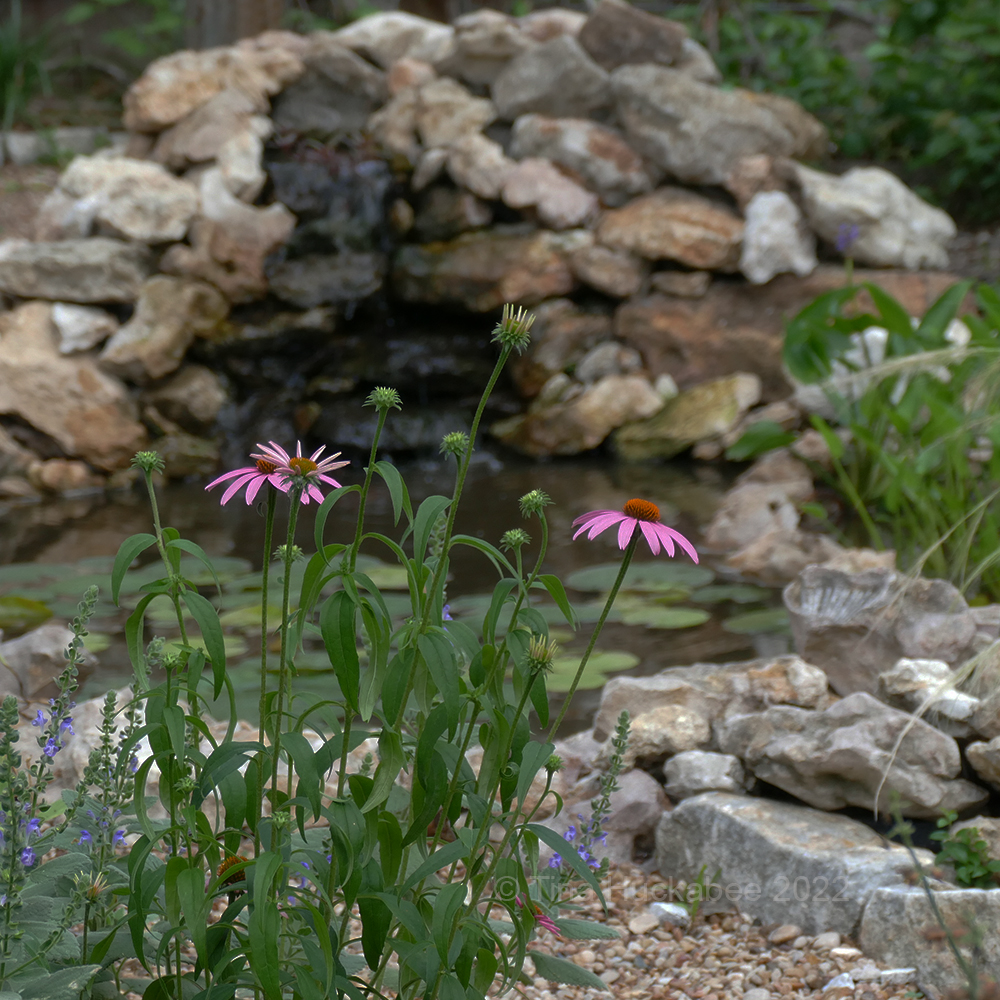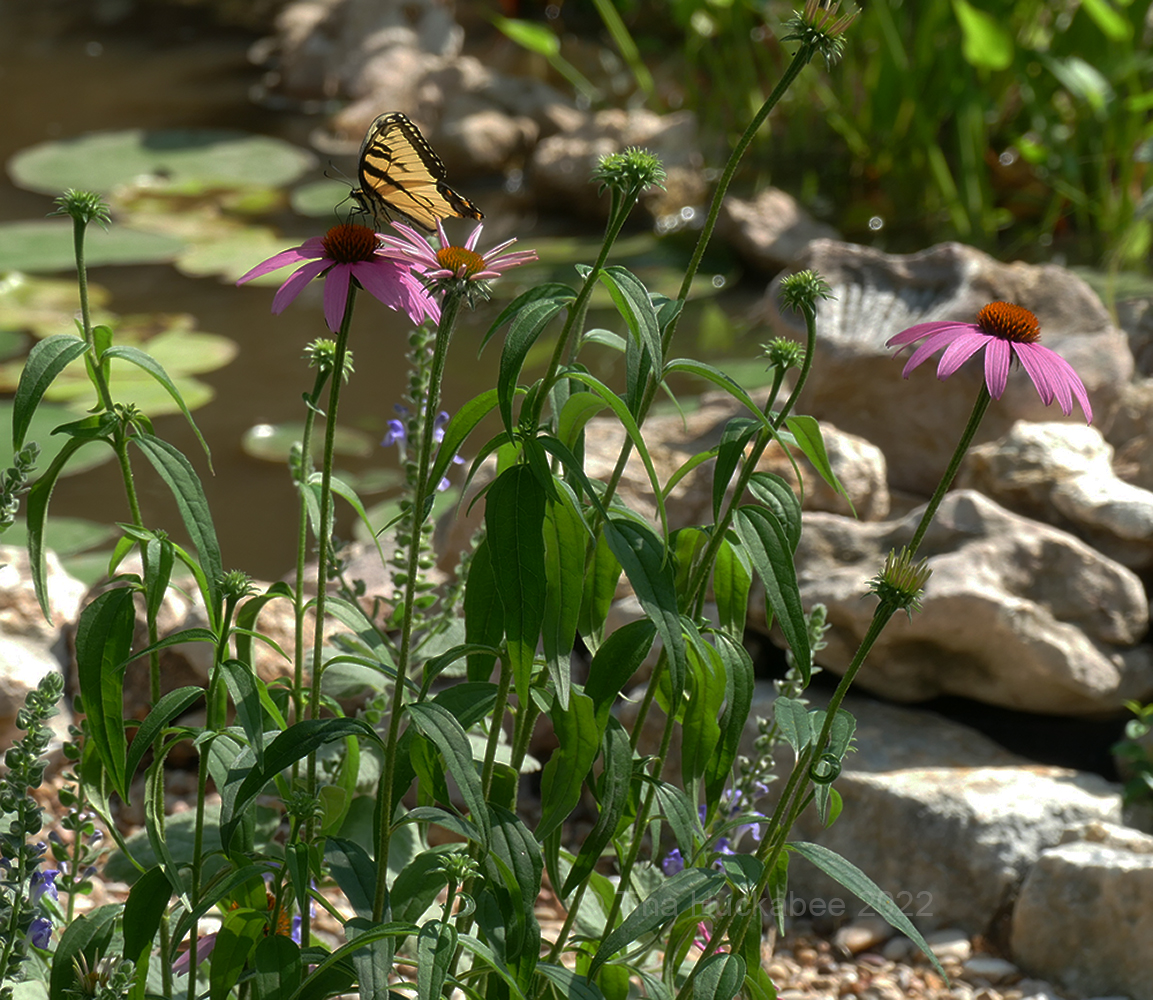
In honor of the World Bee Day 2022 I thought I’d post about our most recent addition of honeybees: meet “new” Woody!
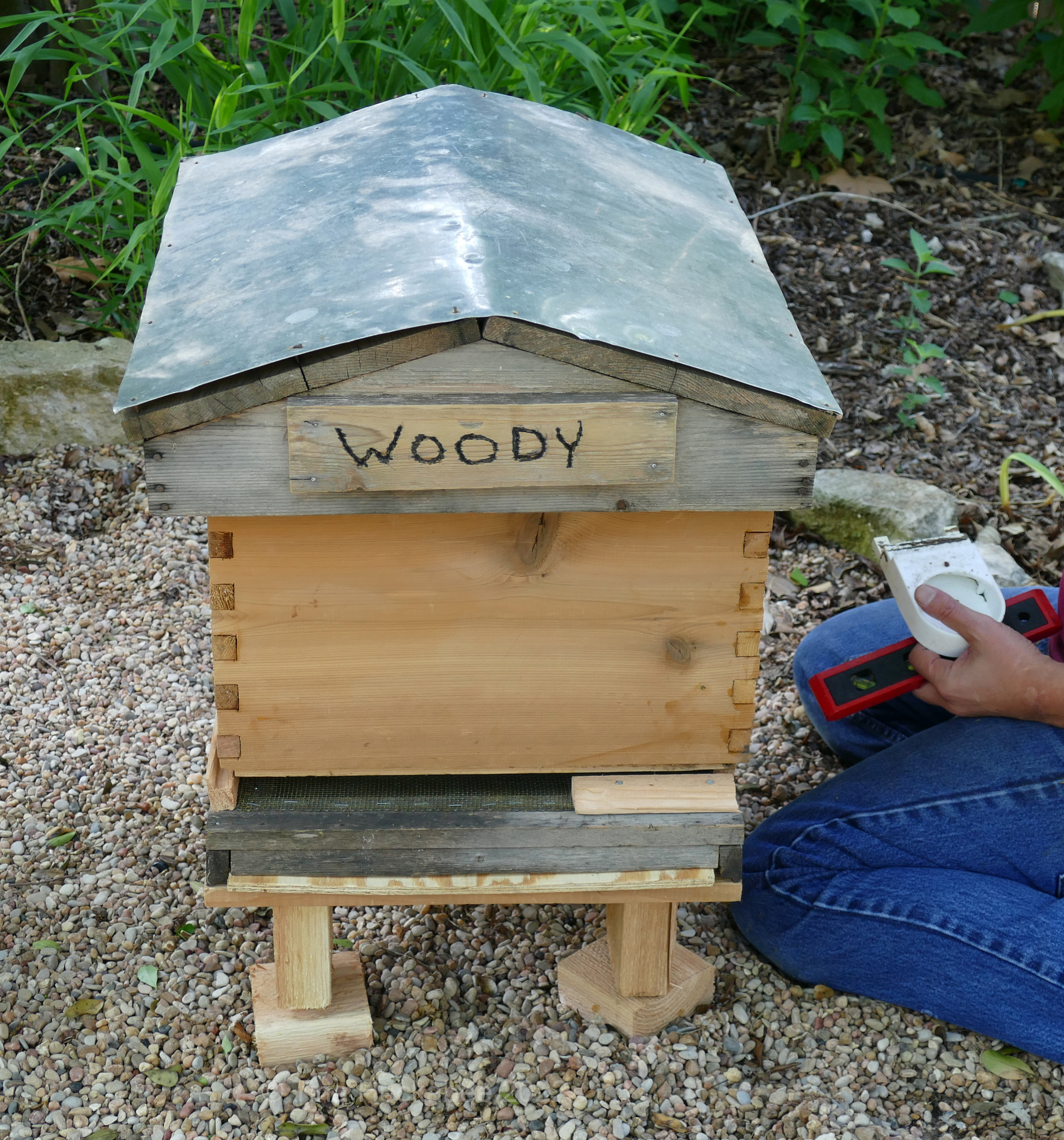
Last summer our honeybee colony, Woody, weakened (for unknown reasons) and was invaded by wax moths, which you can read about here. Since it was late in the season and too late to hive a new colony, we dismantled the physical hive and were left with only one hive, Bo-Peep. Over the course of winter, Bee Daddy cleaned and refurbished damaged hive parts and built some necessary new ones in preparation for a new colony of honeybees which arrived in late April.
Here’s our newest honeybee colony, packaged up, strapped in the car, and ready for the trip to their new home.

In this scary-to-most-people package are 10,000 worker bees and a mated, clipped-winged queen. Actually, the crew of honeybees aren’t frightening at all and are quite gentle. Even if a bee escapes the package, it hangs around its sisters and queen.
Pheromones are powerful things.
Since we began beekeeping, we name our hives after Disney/Pixar characters and the last couple of hives were Woody and Buzz and following those, Woody and Bo-Peep. If you know the Toy Story movies, you understand that Bo-Peep and Woody belong together. Am I right??

Here’s the new hive for Woody: a brood box ready with sugar water for feeding bees and building comb. The bees will forage for nectar and pollen immediately, but the sugar water helps the colony get a strong start. We’ll feed them for a couple of months, maybe longer, depending upon weather conditions.

The round metal circle at the top of the package is a can with sugar water; there are holes in the bottom to feed the bees while they await their new hive. About 2/3 of the sugar water was gone by the time we hived Woody. The queen is in a “queen cage’, in the package, but separated from the workers. She is constantly spewing out her pheromone vibes, assuring the colony’s devotion to her and to one another. The cage has two holes on either end of the little box, both of which are plugged with small corks. In this photo, the hole on the bottom is also covered by a strip of yellow tape, which I removed. I then removed the cork, revealing a plug of candy, which the workers and queen will eat through, physically releasing the queen within a few days into the hive to begin her life’s work.
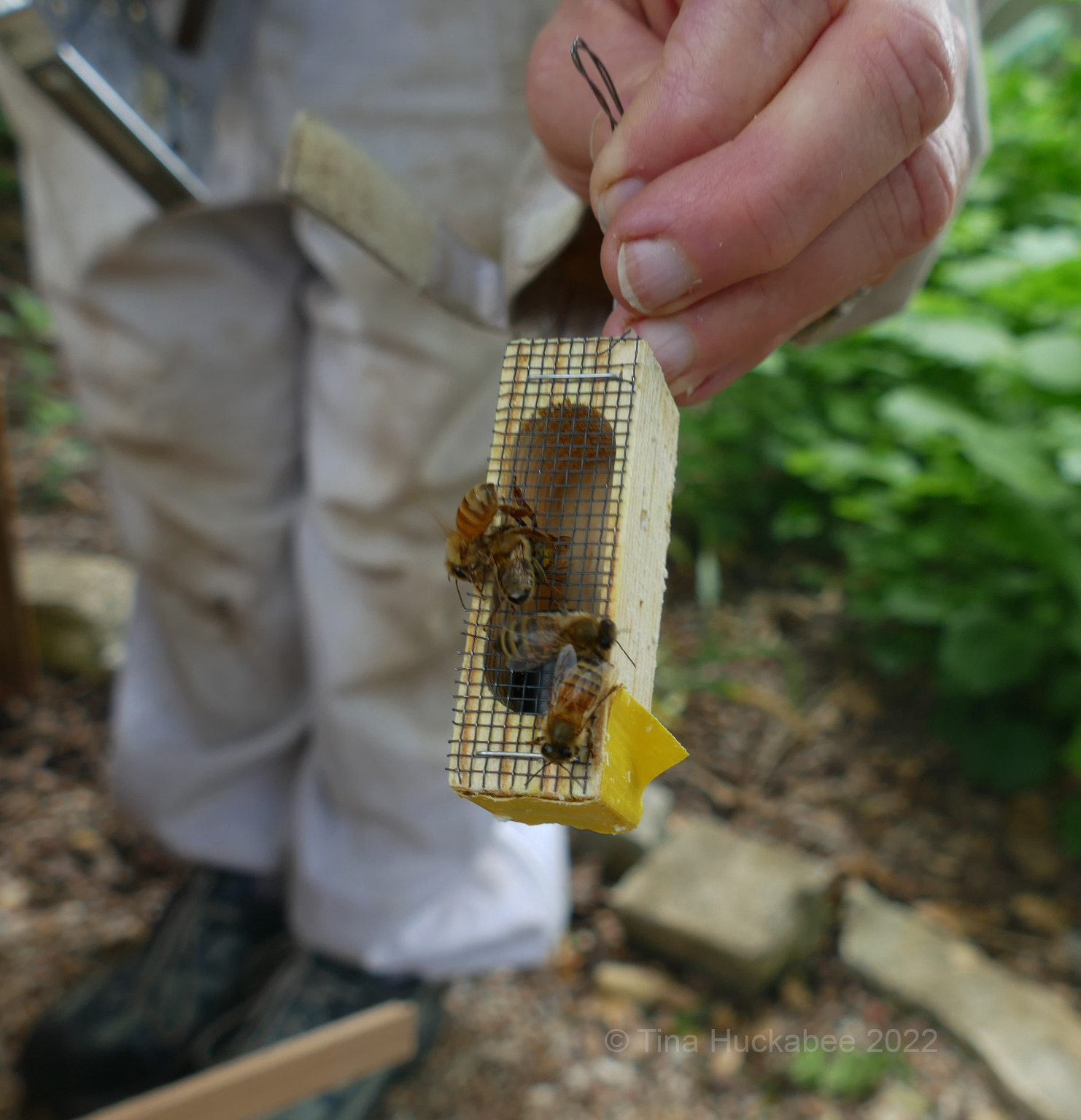
We stapled the queen cage to a frame fitted with commercial wax, called foundation; this is where the bees will build their comb.
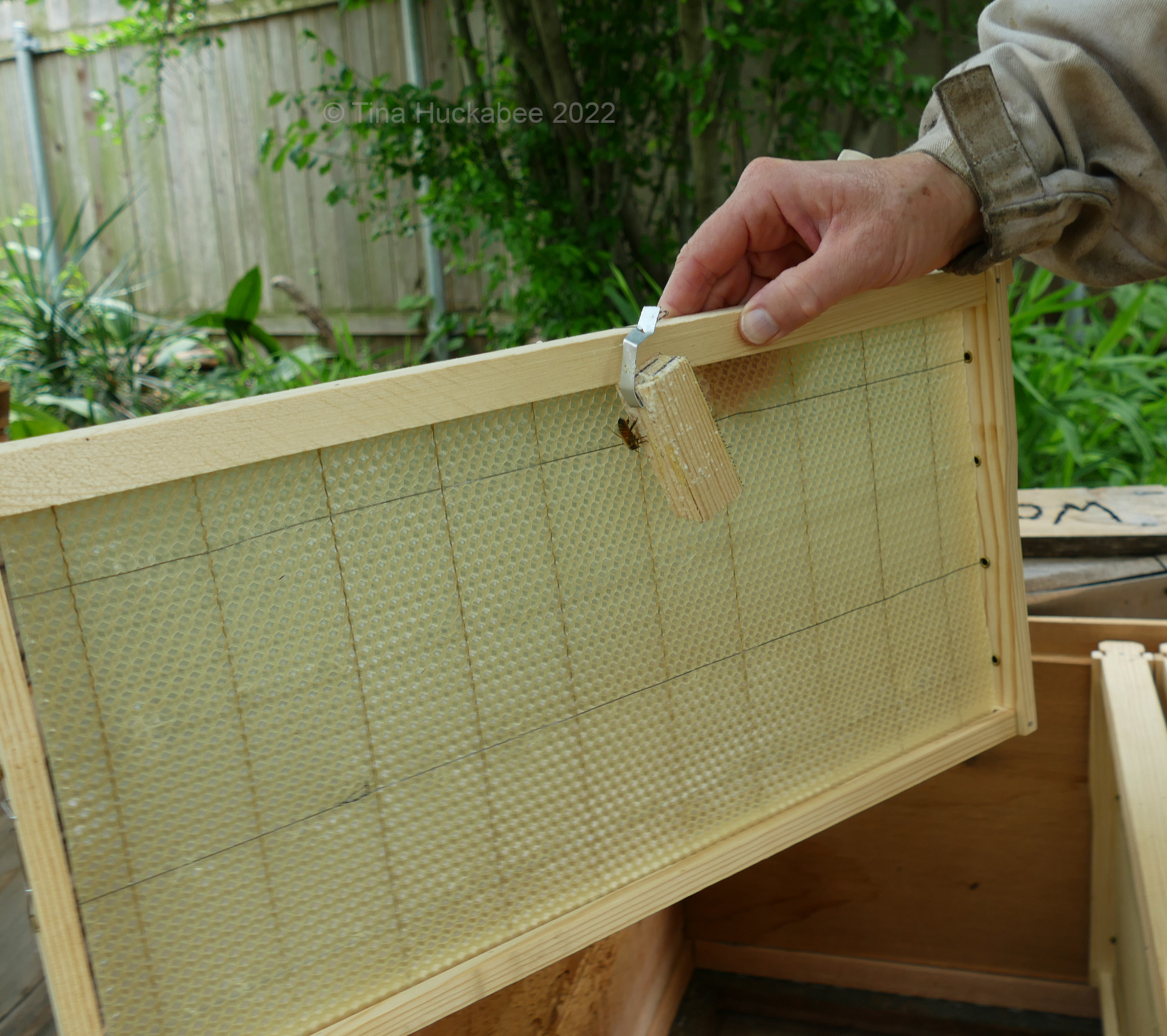
Bees don’t need foundation to build comb; they build comb because they’re driven to build comb. But giving them a base onto which they comb makes it easier for bees and the tidy frames allow for efficient checks of the hives. Extracting honey is also simplified with well-combed frames.

The photo isn’t clear, but if you look closely, you can see the elongated abdomen of the queen in the cage; she’s about 1/3 longer than the worker bees.

To hive a colony, we placed four brood frames with foundation in the brood box. The queen cage is attached to the center-most frame and the package of workers is placed in the open area of the box. That’s it, the colony is hived and we close it up!

We checked Woody about five days later and the queen was out of the cage and in the larger population of bees and they had already combed some of the frames and there was honey in some of the comb cells. When we checked, we removed the package and added more frames. Honeybees are in the hive doing all the things required to build their colony: caring for the queen, cleaning the hive, removing sick/dead bees, caring for eggs and larvae when they appear, foraging for nectar and pollen. As of a check earlier this week, half of the frames were combed, with plenty of capped and uncapped brood in that gorgeous new comb.
While beekeeping is complicated, it’s hard for me to imagine having a garden without honeybees, and for that matter, plenty of native bees, who are more than worthy of their own special day. Pollinators of all sorts are vital to the beauty and value of a garden and of the wider ecosystem.
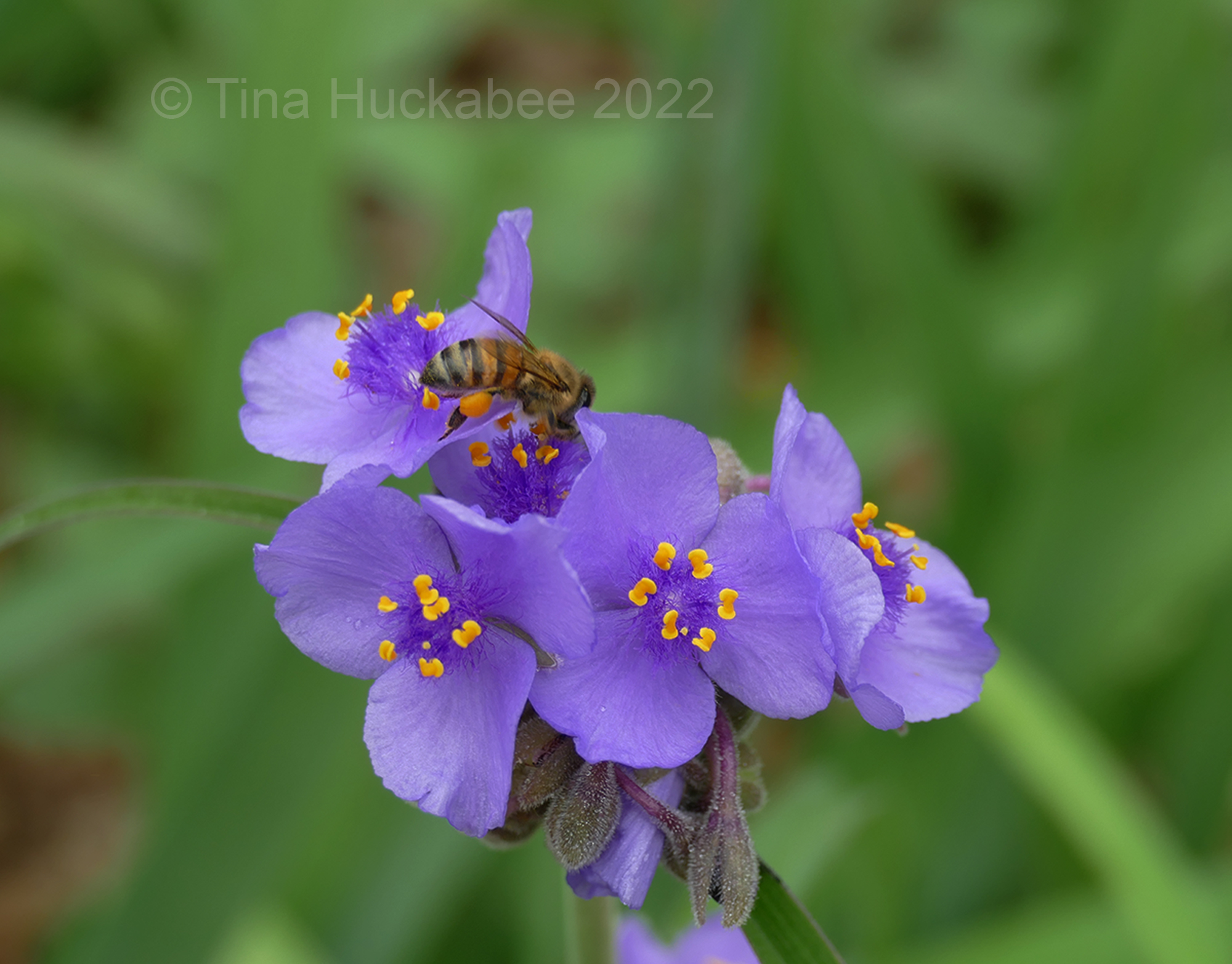
Go bees!