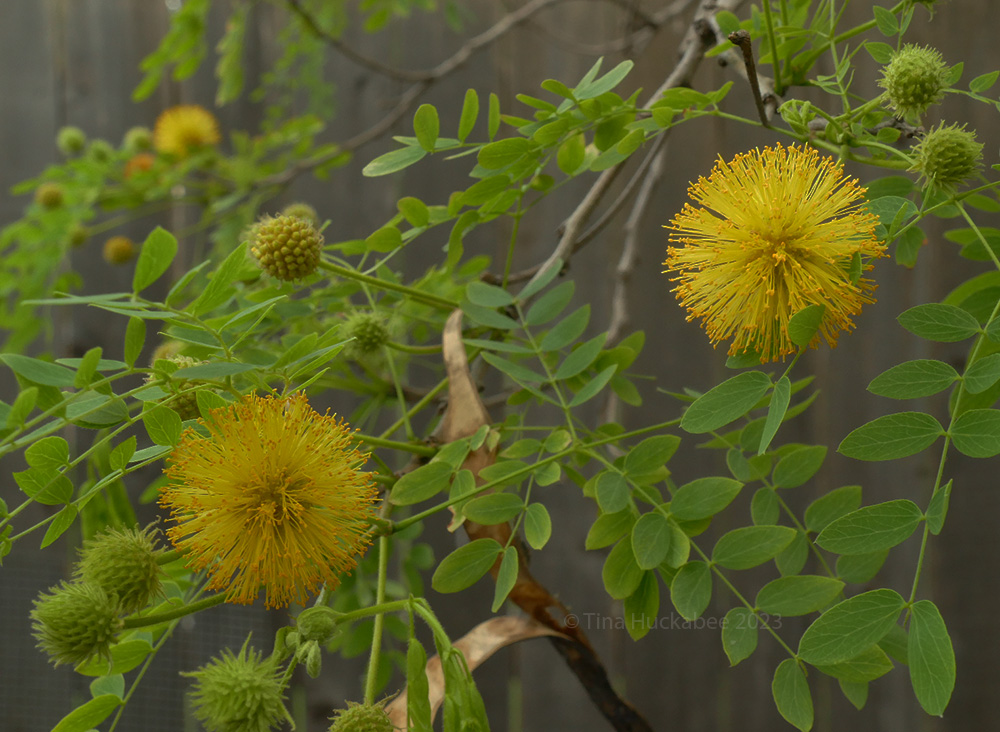
Spring is progressing apace, new foliage and flowers appearing, posthaste. My diverse garden community offers varied, interesting blooms, each with their own timeline for appearing, each with their own story and role in this ecosystem. Puffy and playful, the fuzzy spring looms of the Goldenball Leadtree, Leucaena retusa, are glorious golden decorations in a shady part of my garden
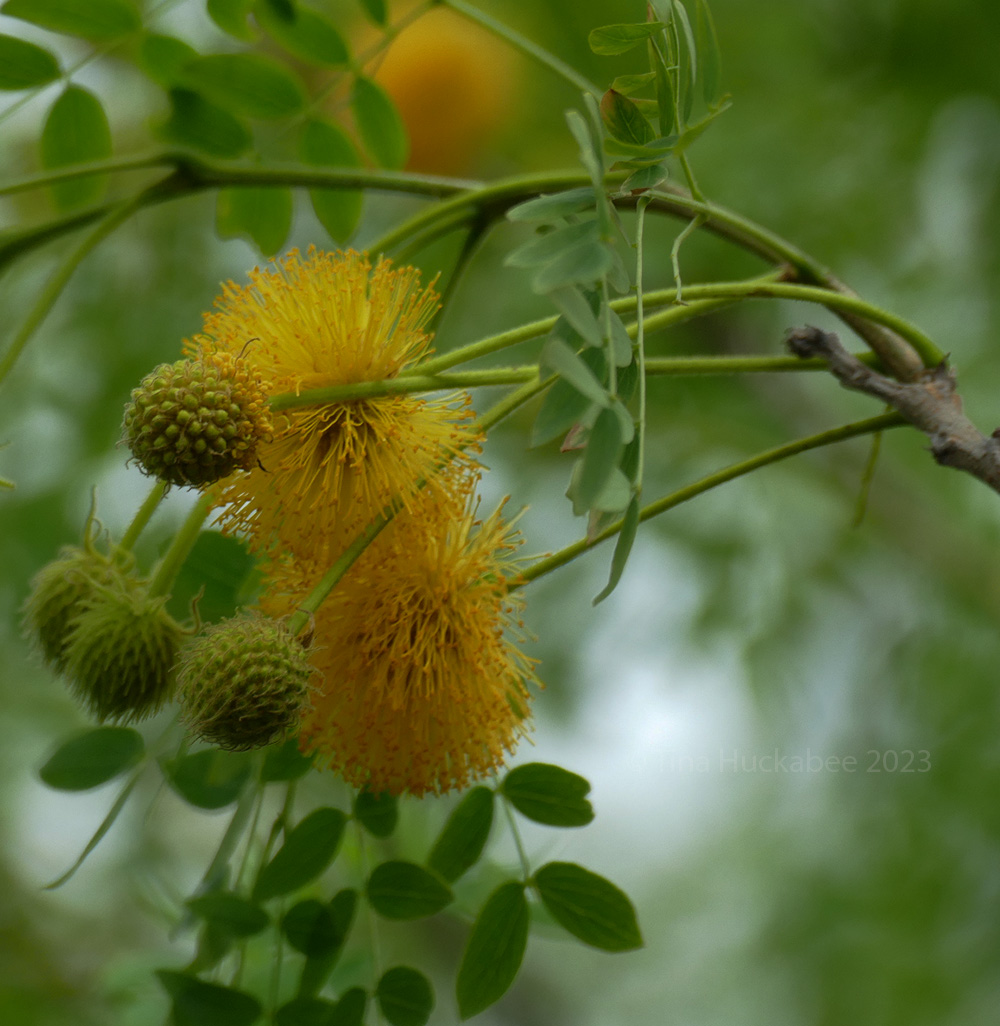
This tree is also called Little-leaf tree, or Lemon ball tree–names I find poetic–and except for the ‘goldenball’ part, I find the moniker Goldenball Leadtree a bit klunky. If I’d been asked, I might have named it Golden Koosh Glory tree, or Magnificent Yellow Fuzzy-Wonder tree. Nomenclature aside, what isn’t klunky is the lovely, airy form of this tree.
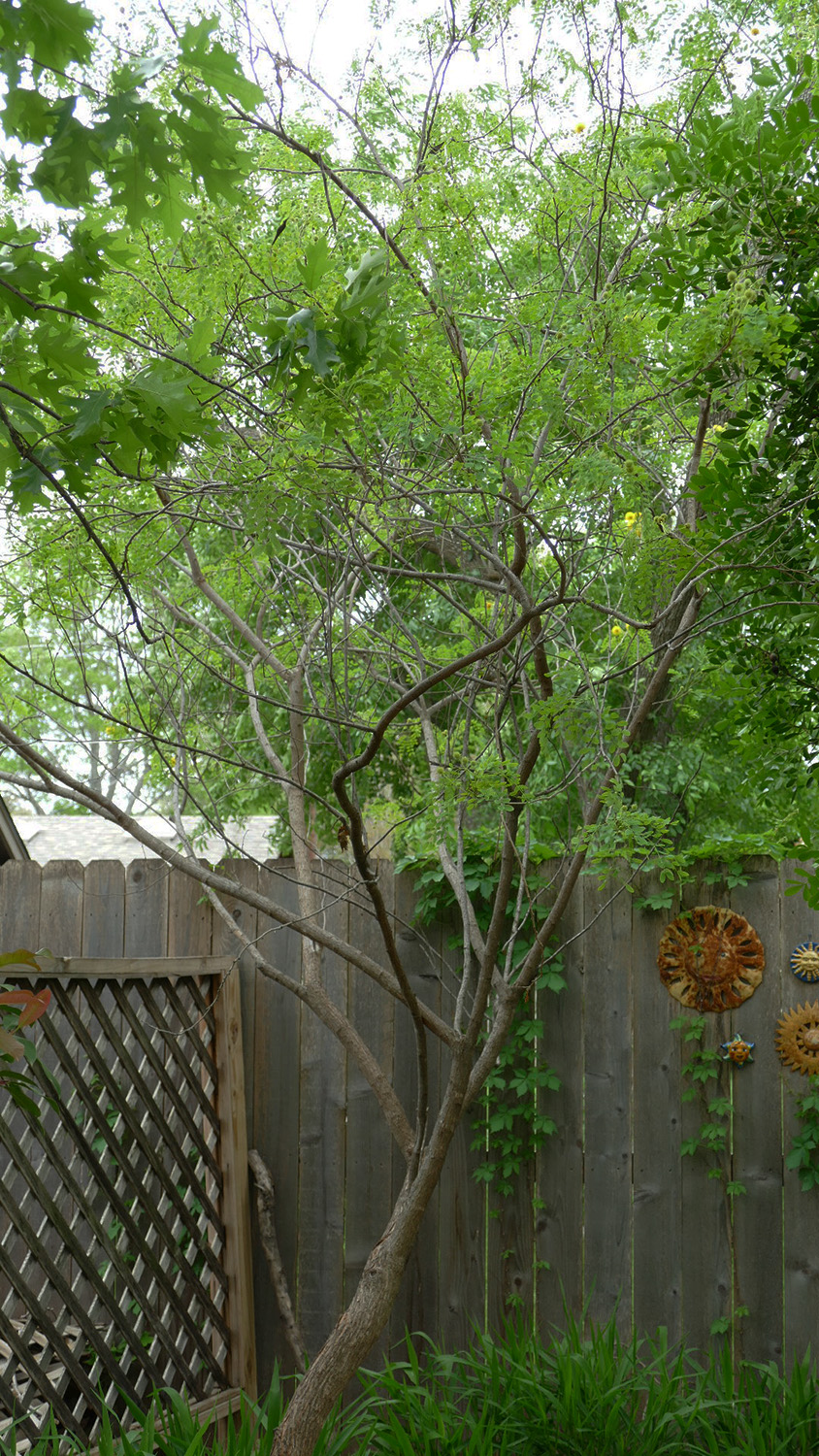
Goldenball Leadtree is a small, shade to part-shade tree, perfect for a small to moderate sized urban garden.

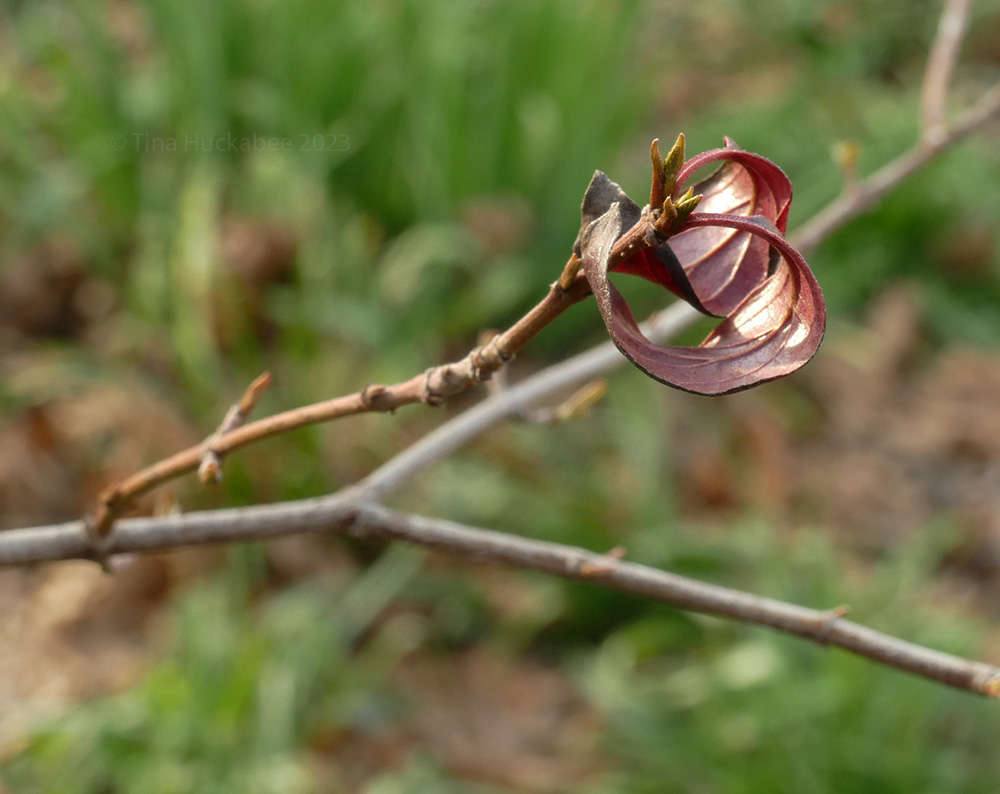
Flowers begin developing in early March, shortly after the foliage returns from winter’s dormancy. Blooming peaks in April, and slowly declines through May and June. Autumn rains often bring a late season gift of a few of these fuzzy delights. Foliage is delicate and little leafed, colored in pretty, bright green, until a hard freeze unceremoniously drops the leaves.
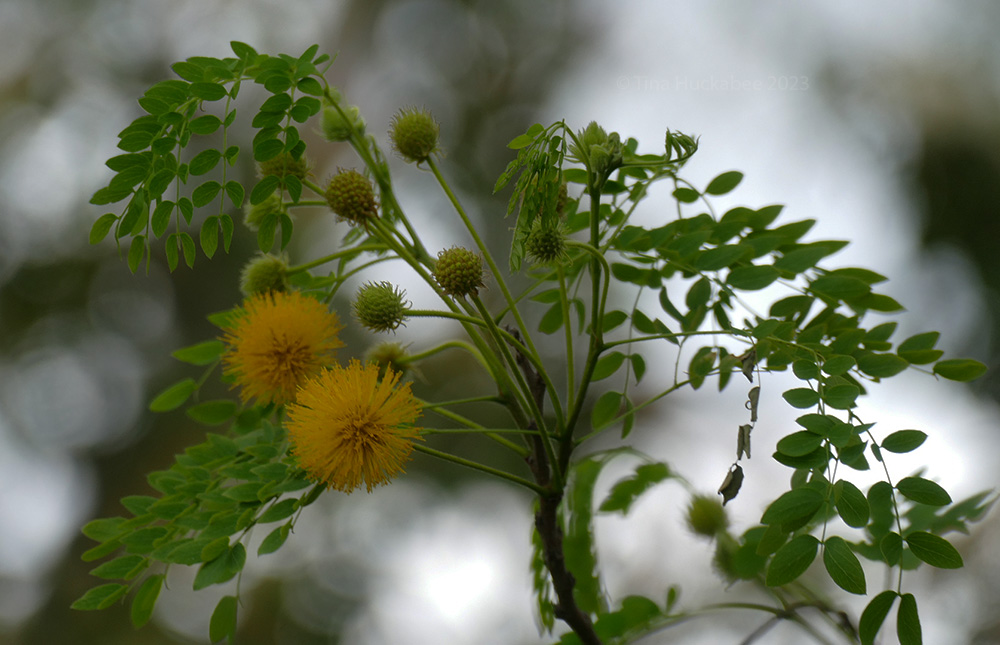
Developing buds remind me of certain unripe berries.
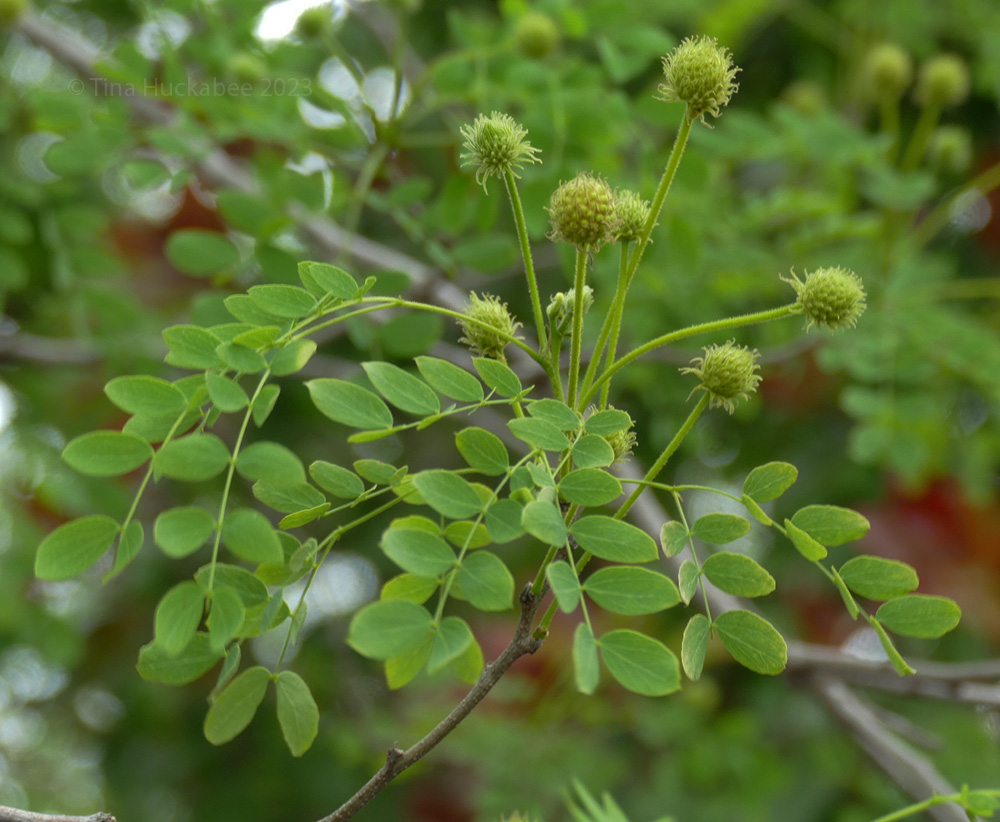
In sunshine or shade, the tree is a joy in the garden.

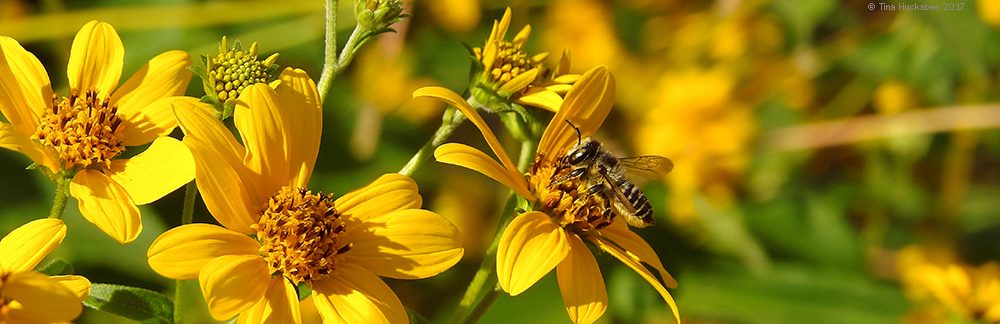
The Goldenball Leadtree is in the Pea, or Fabaceae family. Most of the other plants that I grow producing fuzzy flowers belong to the Aster, or Asteraceae, family. I also grow plants that aren’t fuzzy in their flower form, but once they’ve gone to seed, fuzzy, usually soft, structures carry seeds on the wind to parts unknown.
In the light shade of the Goldenball Leadtree, sits a stand of more golden goodness, a small patch of Golden Groundsel, Packera obovata. Diminutive ray flowers accompany the larger goldenball blooms in their early spring show. Once the blooms are done, cottony-soft seed balls appear, awaiting wind, landing in a new place.


Spring is a bounty: lush green, color galore. These are but two of the flowering plants in my spring garden. What’s flowering in yours?