Is it Me?

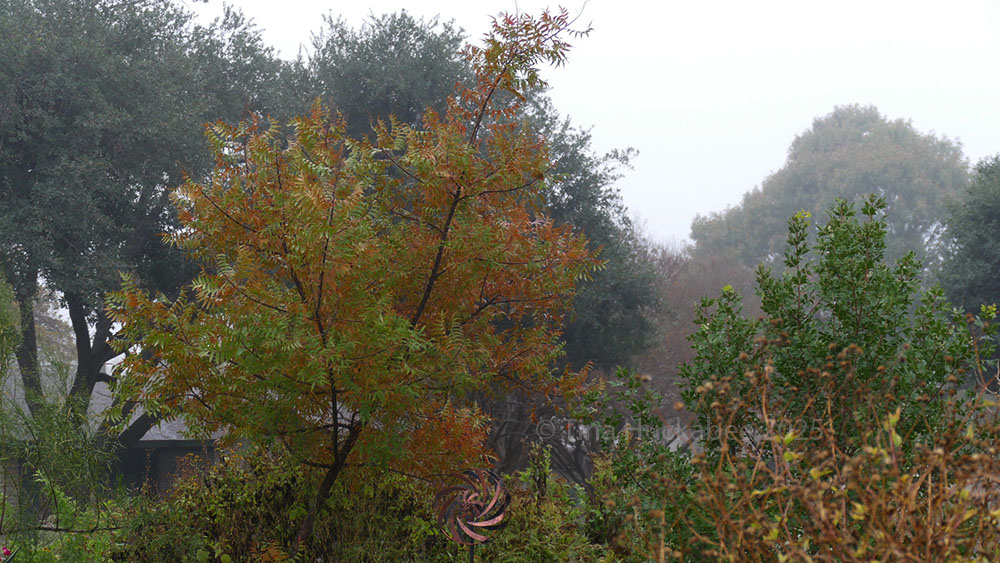
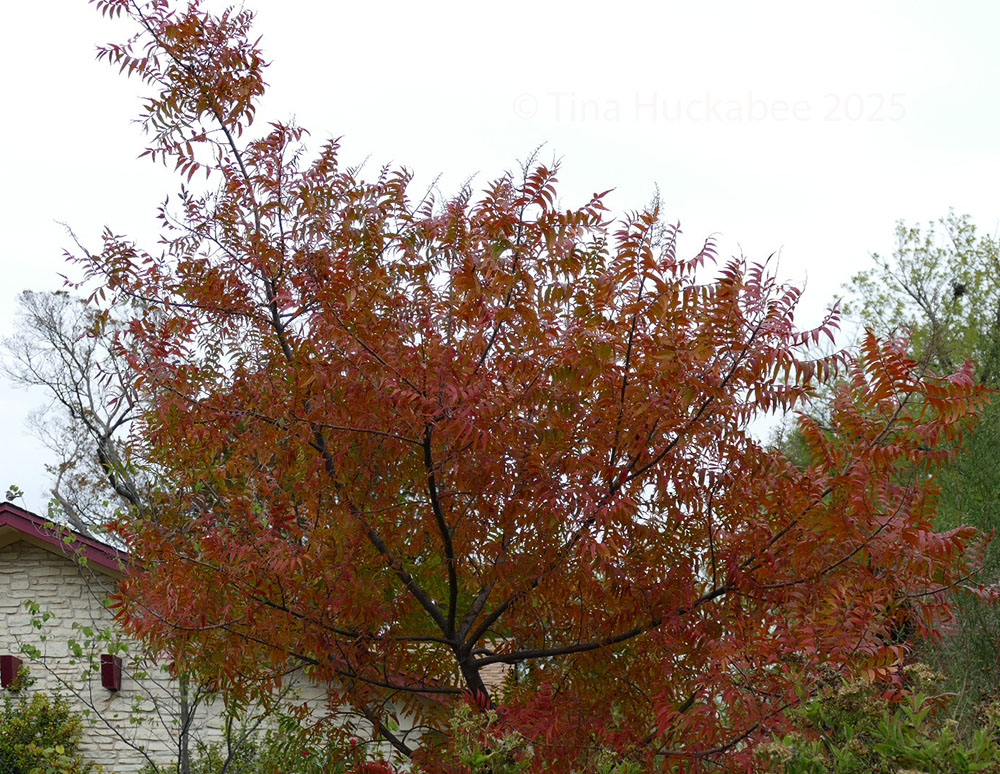
I was puttering in the garden recently and came across this Green Anole, Anolis carolinensis ambling along the bark of a Flameleaf Sumac, Rhus lanceolata. He and I exchange looks, while he postured with his rosy dewlap. I wondered if he was annoyed at my presence–that’s certainly happened before.

I greeted him with a howdy bud, what’s up? but he only offered me a side-eye glare. After a minute or two and a rustle from a nearby shrub, I spied another anole dropped to the soil and skittering away.

I guess it wasn’t me after all!

Bees A’buzz

It was a slow start to the carpenter and bumble bee action this year, I assume because of the heavy rains experienced in Central Texas in May and June/early July. But recently the garden is a’buzz with honeybees and a variety of native bees, including the big, noisy carpenter and bumble bees.

This Horsefly-like Carpenter bee, Xylocopa tabaniformis, worked the prolific blooms of a Flame Acanthus, Anisacanthus quadrifidus, in my front garden.

These charming bees are probably my favorite bees. They’re noisy and buzzy, darling in looks. I love their racing stripes and melt at their dreamy blue eyes.

I like this up-side-down visage: bee-butt up pointed upward, proboscis-leading snout concentrated on the liquid deep in the tubular nectar fonts where the bee’s proboscis is headed.

Nectar stealing or nectar robbing is when an insect pokes or bites a hole in flowers that are too deep or small for the insect to enter from the open bloom. The insect then sips nectar without entering the flower’s innards, bypassing direct pollination.

Ole Blue Eyes here is just about to deliver its pointy proboscis, aiming for the fleshy, thin petal and the sweet stuff inside. The bee sliced the petal with its formidable mandibles to gain entry.

Bum-up view of the nectar-stealing, nectar-sipping bee. While direct pollination isn’t happening, you’ll notice grains of pollen sprinkled on Ole Blue Eyes’ body. It’s likely that some of those grains will play a role in pollination.

The other bees I’m seeing more of–and a big Huzzah! for that–are American Bumble bees, Bombus pensylvanicus. These graceful, yellow-n-black sweethearts are working many kinds of flowers right now, but a favorite bumble dining spot are the blue blooms of Henry Duelberg Sage, Salvia farinacea, ‘Henry Duelberg’. Notice the pollen booty on this bee’s pollen pantaloon, also known as a corbicula. If you look carefully, you can see a dab of golden on the other side of the bee–no doubt that pantaloon also carries a load of pollen.

My garden always enjoys more insect action, especially of the pollinator kind, as the growing season progresses. Heavy rains in spring and early summer often damage ground and wood nesters, so their procreation is slowed. Those insects rally as summer heats up and stable weather patterns settle in. In a healthy, diverse garden community, the pollinators persevere, the garden flourishes, and the gardener gives thanks.

Dragons and Damsels

Always fascinating to observe, the insects of the Odonata order, Dragonflies and Damselflies, are regular–and welcomed–inhabitants in my garden. My pond, which sits in the back garden, is the main focus of the dragon and damsel action, but I observe these beautiful insects in all areas of my property. Interestingly, I haven’t observed as many dragons and damsels this year. I have no particular explanation as to why, but realized that the airspace around my garden wasn’t as busy as usual. That said, Odonata zoomies are increasing as we head in to late summer and I’m glad for that.

Odonates are found through out the world, excepting the polar regions. Texas hosts over 200 species, with well over 400 species living throughout the United States. All species live near water sources; the first and longest part of their lives as nymphs, called naiads, living exclusively in water. They morph through many stages, emerging as flying adults. Adult Odonates live in the air, their remarkable flying abilities key to their survival.

Dragonflies are generally larger and hold their wings at a right angle when perched.

Female Neon Skimmer, Libellula croceipennis

Stunning creatures, their aerial acrobatics are endlessly entertaining. I like that they’re willing to sit still for photos, they’re patient subjects.

Males aggressively patrol their territories, chasing one another and performing for their potential mates. These two perched somewhat amiably on the foliage of a Soft-leaf Yucca, though they kept their big eyes on one another.

Left–male Neon Skimmer, Libellula croceipennis; right–Blue Dasher, Pachydiplax longipennis

As well, they watched me as I ambled close-in for a shot. The Dasher zoomed upwards, took a spin around the garden, then landed in the same spot and waited for me to get his mug.

Sparkly, iridescent wings, lovely colors and patterns on heads, thoraxes and abdomens, these insects are predators, consuming a wide variety of insects, including mosquitoes (yay!), gnats, a variety of flies, and even butterflies and bees.

Female Band-winged Dragonlet, Erythrodiplax umbrata

Dragonflies tend to mate in the air, females depositing eggs in a near-by water source. I regularly witness the neighborhood Neon Skimmer females’ rhythmic motions as they lay eggs in my pond. I’m sure many of those eggs and hatchlings are gobbled by the fish, but enough survive that I see larger naiads in late winter/early spring when we clean our pond. We always rescue these critters, putting them in buckets of saved pond water, dumping them back into the pond once it’s cleaned.

Female Common Whitetail, Plathemis lydia

Neon Skimmers and Blue Dashers are currently the most common dragons in my garden. I find both kinds photogenic and a joy to watch.

The Dasher is particularly dashing!

Blue Dasher, Pachydiplax longipennis

Odonates regulate their body temperature, responding to their environment. When the tail is pointed upward, like above, it’s hot. When temps are cooler (or “less hot”), the insects remain stretched, with opened wings.

Damselflies are equally gorgeous, but smaller and more elusive. Here in Texas, there are about 70 species, with about 128 throughout the U.S. I tend to see damsels in my gardens near, but not at, the pond. They like to perch on plants and because they’re slender, are tricky to observe. I’m certain that I have as many damsels as dragons in variety and number, but I don’t see them nearly as often.

Damsels perch with their wings folded over their tails.

Female Double-striped Bluet, Enallagma basidens

Damselflies’ eyes are widely separated on their heads. Those big round orbs are hard to miss.

Male Familiar Bluet, Enallagma civile

Like their Odonata relatives, damsels are accomplished flyers. They fly fast, change directions on a whim, and fly to hunt and patrol territory.

I like this photo, taken in spring. It looks like the Kiowa Dancer’s tail is touching water, sending off ripples. In fact, the insect is perched on a rock, well over the bog water–newly cleaned–and swirling of its own action, rather than having been touched by the tail.

Male Kiowa Dancer, Argia immunda

Odonata are predators, but they’re also prey for birds and mammals. They are part of the intricate weave of a diverse biological community. They’re sensitive to environmental changes, requiring healthy, chemical free water sources and plenty of prey to eat. They’re also attractive insects, with charming physical features. They are a delight in the garden.

For more information about Texas Odonata, check out this link from Texas Parks and Wildlife.